
If you have ever stood in front of a hotel lobby wall or a residential facade and wondered how those perfectly textured stone surfaces were achieved without spending months on masonry labor, you have encountered stacked stone panels. They are the construction industry’s answer to a problem that has existed for decades: how do you get the visual weight and permanence of real stone cladding without the cost, timeline, and skilled-labor requirements of traditional stonework?
This guide cuts through the marketing language and gives architects, builders, and procurement teams the technical details that actually matter when specifying stacked stone panels. We cover material composition, dimensional standards, backing systems, performance thresholds, and the quality checks that separate a panel that lasts thirty years from one that delaminates after its first freeze-thaw cycle.
What Stacked Stone Panels Actually Are
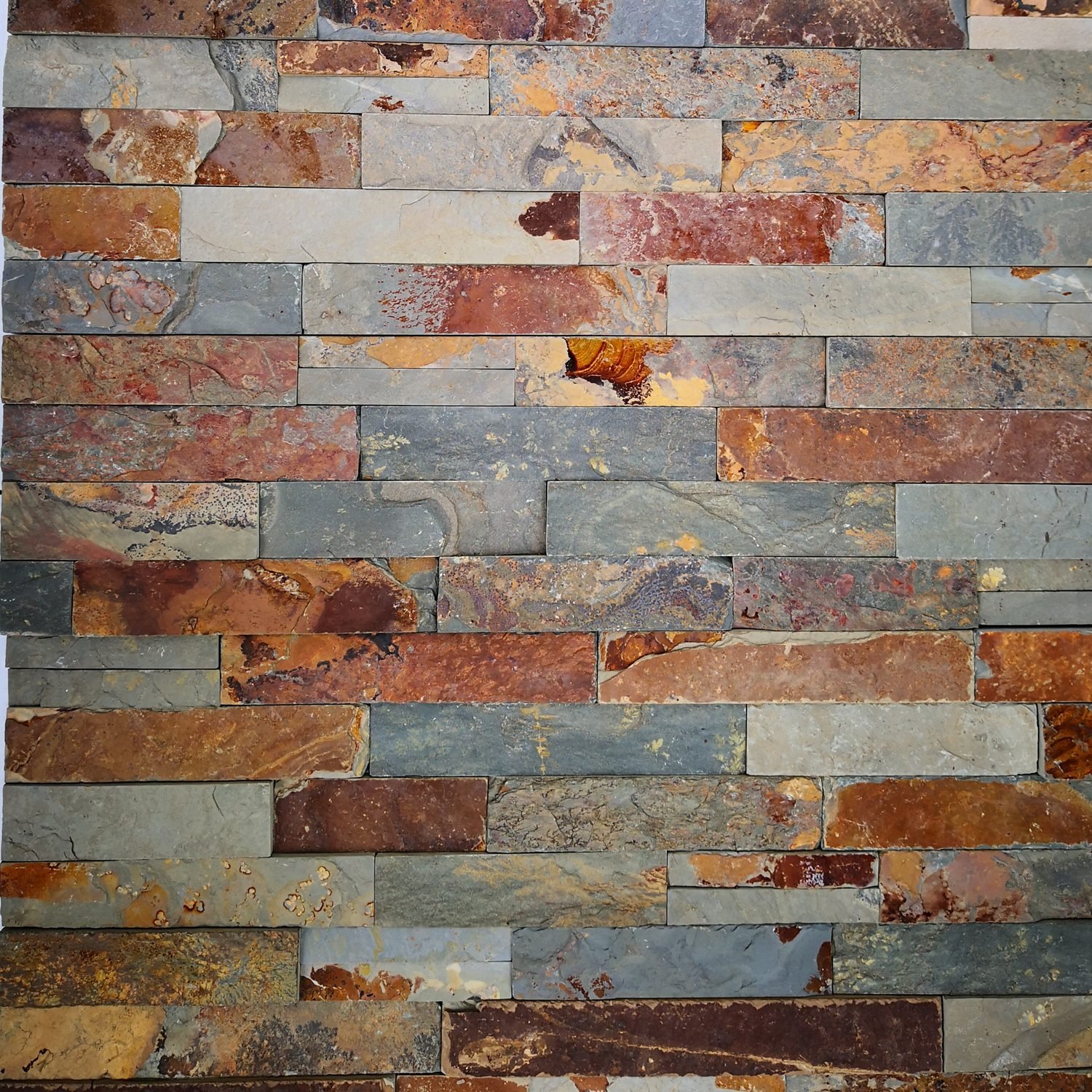
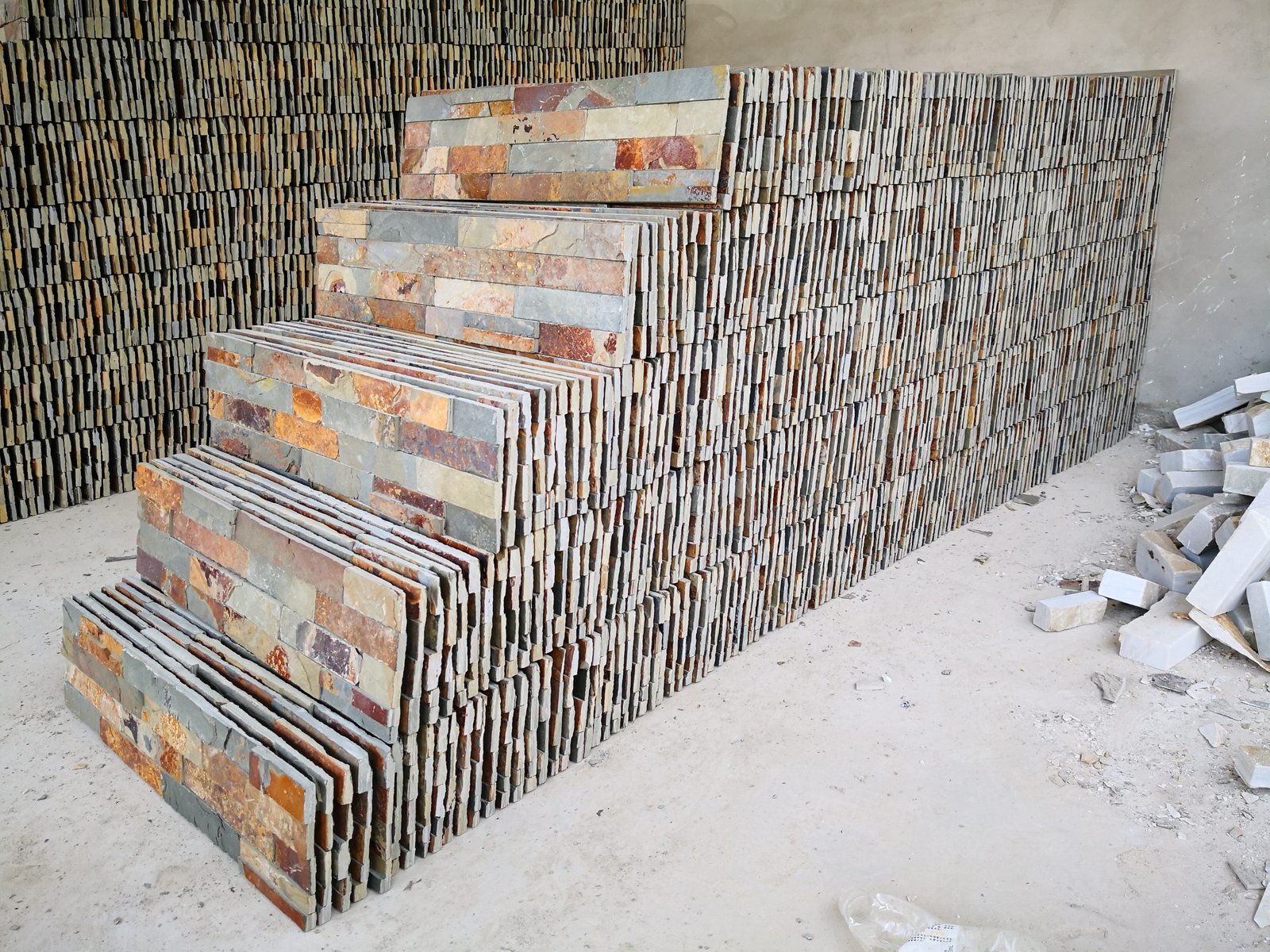
Stacked stone panels are prefabricated sheets of natural stone strips bonded together on a backing material in a factory setting. Individual stone pieces — typically thin-cut ledges of slate, quartzite, or sandstone — are arranged in a staggered pattern and permanently adhered to create a single installable unit. Think of them as stone “tiles” that come pre-assembled, ready to mount directly onto a prepared substrate.
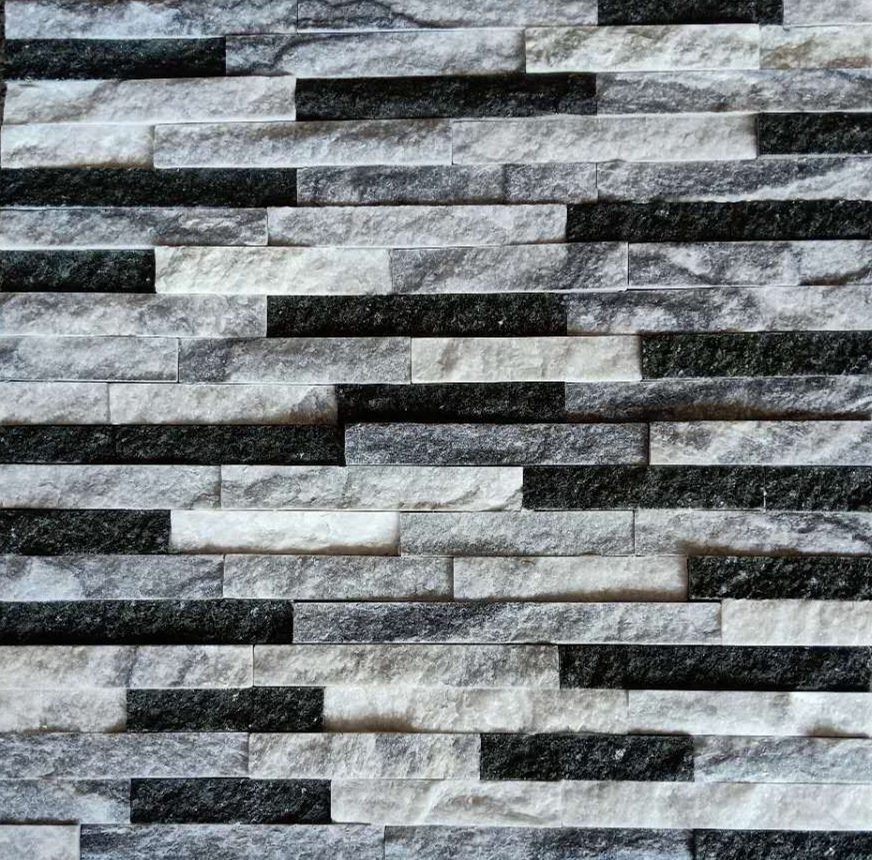
The key distinction from manufactured or faux stone is material origin. Stacked stone panels use 100% natural stone quarried from geological deposits, not concrete mixes poured into molds. Each panel carries the genuine color variation, mineral veining, and split-face texture that only real geological formation produces. When a specifier writes “natural stacked stone panels” on a submittal, they are calling out material that cannot be replicated by casting.
Standard panel dimensions in the industry run 15x60cm or 15x55cm — narrow enough to keep shipping weight manageable, wide enough to cover wall area efficiently. At a typical production facility like ours in Yixian County, Hebei Province (one of China’s primary slate and quartzite quarrying regions), a single line can output 80,000 m² of stacked stone panels per month, enough to supply multiple large-scale distribution partners simultaneously.
How They Are Made: From Quarry Block to Finished Panel
The manufacturing process determines whether a panel will perform on a building envelope or fail within a few seasons. Here is what the production chain looks like at a vertically integrated facility — one that controls the stone from extraction through final assembly.
Quarrying and Block Selection
Natural stone starts as large blocks extracted from the quarry face. The critical quality decision happens here: batch-specific vein selection. Stone from different veins within the same quarry can vary significantly in color, density, and mineral composition. A reputable factory pulls panels for a single order from the same vein to ensure color consistency across the entire shipment. Mixing veins is the fastest way to deliver a project where half the wall looks noticeably different from the other half.
Cutting and Splitting
Blocks are sliced into thin strips using infrared CNC diamond blade saws. The infrared guidance ensures dimensional accuracy within tight tolerances — typically ±1mm on length and width. After cutting, the face of each strip is hand-split or mechanically split to create the natural textured surface. This split-face finish is what gives stacked stone its three-dimensional depth; a sawn face would look flat and industrial.
Panel Assembly and Bonding
This is where the backing system enters, and it is arguably the single most important engineering decision in the entire panel. Individual stone strips are arranged in a staggered ledger pattern on the backing material and permanently bonded. Three backing systems dominate the market:
| Backing Type | Composition | Best Application | Weight |
|---|---|---|---|
| Marine-grade epoxy bond | Two-part epoxy resin on fiberglass mesh | Exterior walls, freeze-thaw climates, high-moisture areas | Lighter |
| Cement backing | Portland cement matrix on metal lath or mesh | Interior feature walls, moderate climates | Heavier |
| Mesh-backed (net) | Fiberglass mesh with adhesive | Light-duty interior applications, curved surfaces | Lightest |
For exterior applications in climates with seasonal temperature swings — which covers most of North America and Europe — marine-grade epoxy bond is the specification worth defending. It resists thermal expansion differentials between the stone and the backing, maintains adhesion through repeated freeze-thaw cycles, and will not degrade when exposed to moisture migration through the wall assembly.
Natural Stone Types Used in Stacked Panels
Not every stone species works for panel fabrication. The material must split cleanly, hold dimensional stability after thin-cutting, and bond reliably to the backing. Four stone types dominate production:
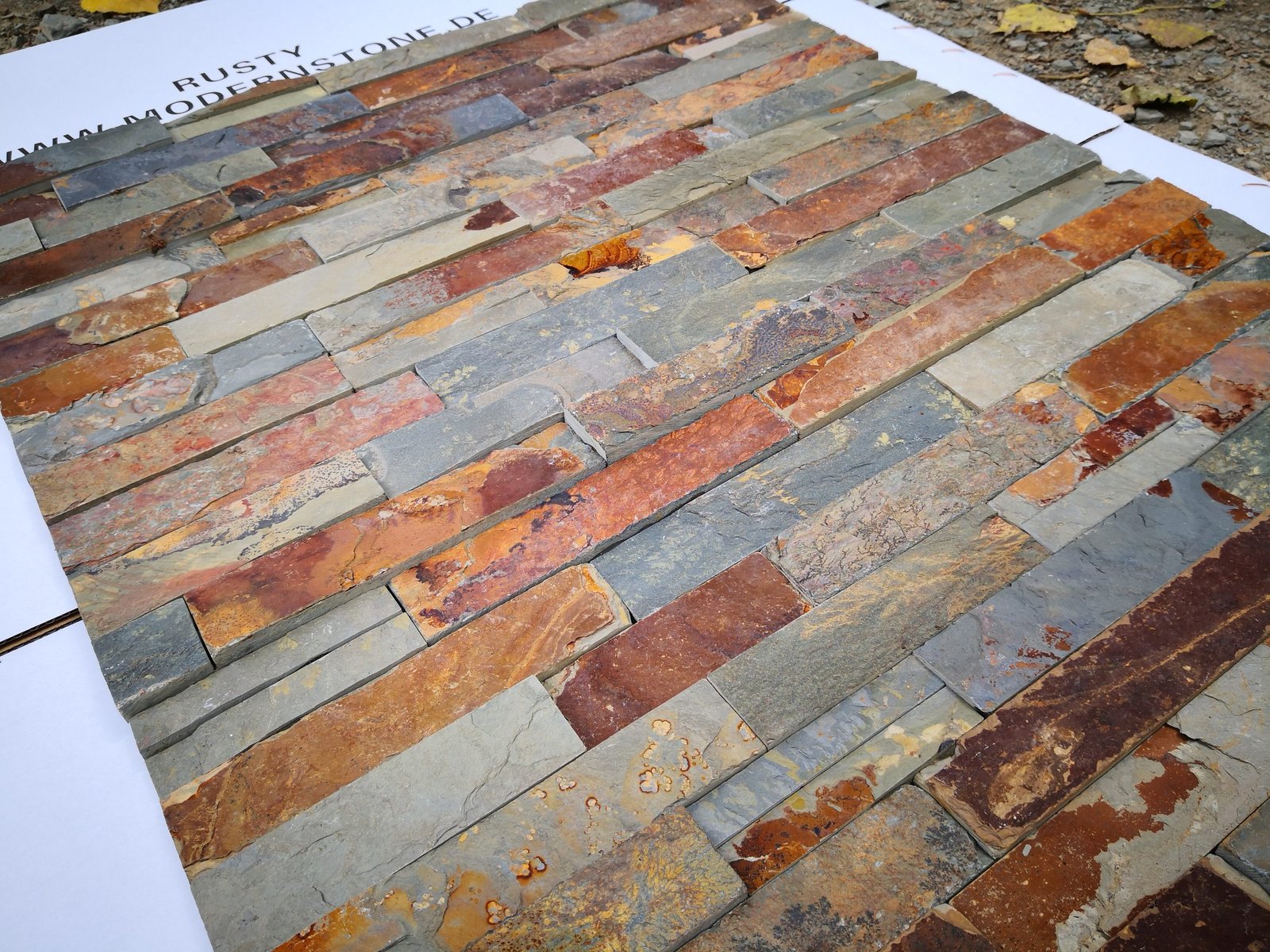
Slate
The workhorse of the stacked stone panel market. Slate’s natural cleavage planes make it ideal for thin-splitting, and its color range — from charcoal grey to rust, green, and multicolor — covers a wide design palette. Slate panels from the Yixian-Baoding quarry belt carry particularly consistent mineral composition due to the region’s metamorphic geology. Density typically runs 2,700–2,800 kg/m³, giving strong compressive and flexural strength.
Quartzite
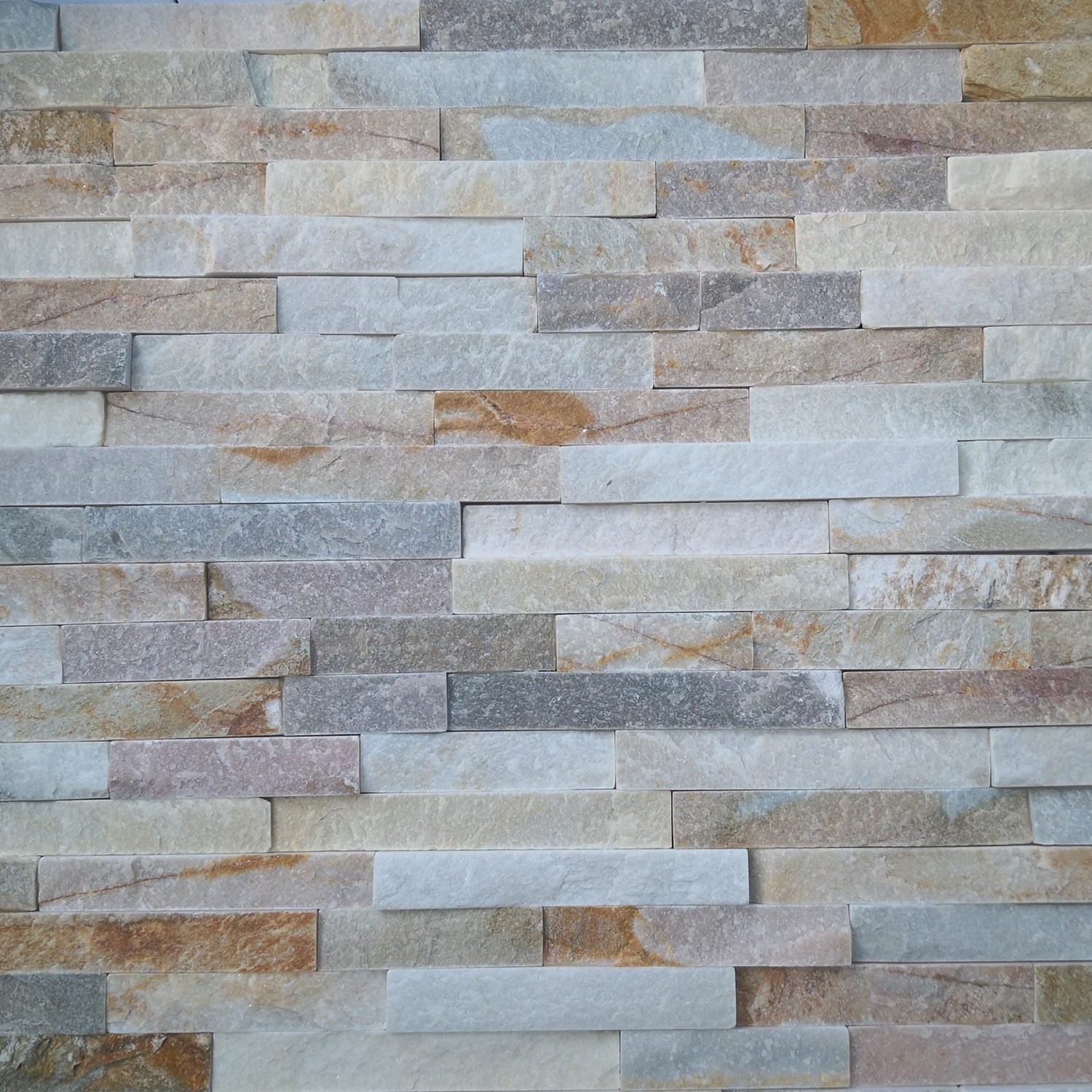
Harder than slate and more resistant to acid etching. Quartzite stacked stone panels are specified where chemical exposure is a concern (kitchen splash zones, pool surrounds, industrial settings) or where a lighter color palette is needed. White, cream, and gold-toned quartzites are popular for contemporary residential facades.
Sandstone
Warm earth tones — buffs, tans, and ochres — that suit Mediterranean, Southwestern, and desert-modern architecture. Sandstone is softer to work but produces a distinctive rounded-grain texture that reads as more organic than slate’s sharp cleavage faces.
Granite (limited use)
Used selectively for high-wear applications like commercial lobbies and transit stations. Granite’s hardness makes thin-splitting more difficult and panel weight higher, so it appears less frequently in standard stacked formats and more often in thicker veneer configurations.
Panel Sizes, Corner Pieces, and Coverage Calculations
Understanding dimensions matters for two practical reasons: ordering accuracy and labor planning. Here are the standard formats:
| Format | Dimensions | Pieces per m² | Typical Thickness |
|---|---|---|---|
| Standard flat panel | 15 x 60 cm | ~11 panels | 15–25 mm at face |
| Alternate flat panel | 15 x 55 cm | ~12 panels | 15–25 mm at face |
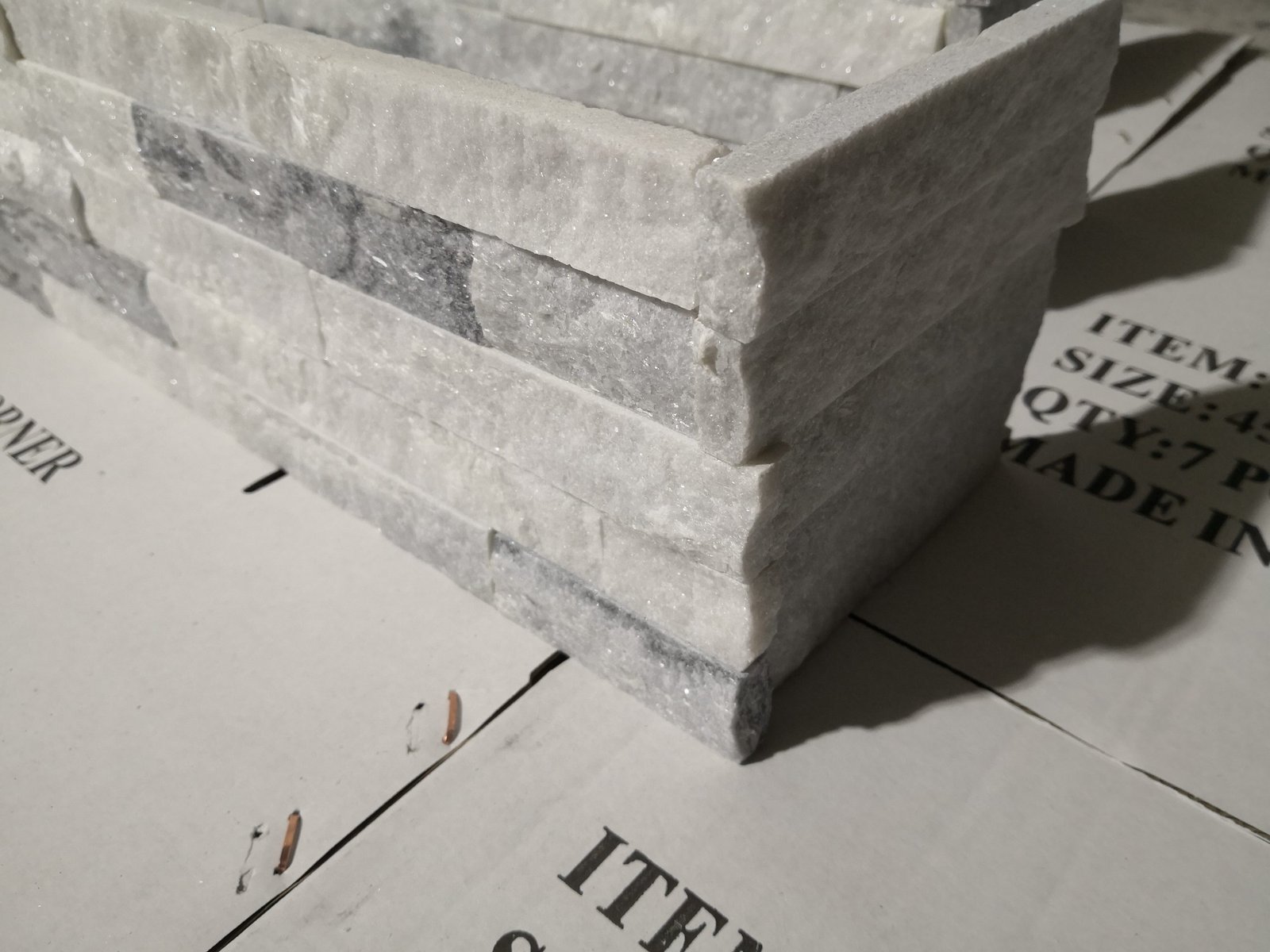
| L-corner piece | 45 x 15 cm (flat) + wrap | Per linear meter of corner | Matches flat panel |
The L-corner pieces deserve specific attention. These are factory-formed corner units that wrap a 90-degree external corner without requiring the installer to miter-cut stone on site. Pre-made corners reduce installation labor on corner sections by roughly 50% compared to field-cut alternatives. For projects with many external corners — column wraps, pilasters, building edges — the corner piece count should be calculated separately from flat panel coverage.
A practical ordering formula: calculate total wall area in m², add 10–15% for cutting waste and breakage, then separate the linear meters of external corners to determine L-corner piece quantity. A competent supplier will run this calculation with you during the quoting stage rather than letting you discover the shortfall on the scaffold.
Where Architects Specify Stacked Stone Panels
The application range has expanded well beyond the accent wall cliché. Current specification patterns in commercial and residential projects cluster around these use cases:
Exterior Building Facades
Full-height facade cladding on commercial buildings, multi-family residential, and hospitality properties. Stacked stone panels deliver the mass and permanence of traditional masonry at a fraction of the wall thickness and structural load. When installed on a properly waterproofed substrate with a drainage plane, the system performs as a rain-screen component that manages moisture without trapping it against the sheathing.
Interior Feature Walls
Hotel lobbies, restaurant dining rooms, corporate reception areas, and retail flagship stores. The split-face texture creates shadow patterns under directional lighting that add spatial depth without requiring additional architectural detailing. Interior installations are lighter-duty and can use cement-backed panels where moisture is not a concern.
Fireplace Surrounds and Hearth Walls
Natural stone is non-combustible — stacked stone panels carry an A-grade fire rating by virtue of material composition alone, not through chemical treatment. This makes them code-compliant for direct application around fireboxes without the firestop detailing required for wood or composite claddings.
Landscape and Pool Features
Retaining wall facing, water feature cladding, outdoor kitchen surrounds, and pool deck perimeter walls. Quartzite and slate panels resist chlorine splash and saltwater exposure, though sealing is recommended for prolonged submersion-adjacent applications.
Performance Characteristics That Matter to Specifiers
When an architect writes stacked stone panels into a project specification, the building official, the general contractor, and the building envelope consultant will all want data. Here are the performance parameters that show up on submittal checklists:
Freeze-Thaw Resistance
Natural slate and quartzite, due to their low porosity and high density, withstand repeated freeze-thaw cycling without spalling or delamination. Field performance data from installations in northern climates confirms reliable service in temperature ranges from -30°C to +50°C. The critical variable is not the stone itself but the backing bond — which is why marine-grade epoxy outperforms cement backing in cold-climate exterior applications. The epoxy maintains its adhesive properties through thermal expansion cycles that cause cementitious bonds to micro-crack over time.
Fire Rating
100% natural stone is inherently A-grade fire rated. No coatings, no chemical treatments, no intumescent layers required. This is a material property, not an applied feature, which means it does not degrade over the service life of the installation.
UV Stability
Natural stone does not fade under UV exposure. The color you install is the color that remains after twenty years of direct sunlight. This contrasts with manufactured stone veneer, where iron oxide pigments in concrete can shift noticeably under prolonged UV exposure, particularly in red, orange, and brown tones.
Salt Spray and Coastal Performance
For projects in marine environments — coastal residences, waterfront hotels, harbor-side commercial — natural stone panels resist salt crystallization damage that deteriorates concrete-based claddings. Quartzite and dense slate are particularly resistant; sandstone, being more porous, benefits from penetrating sealer in salt-exposure zones.
Stacked Stone Panels vs. Alternative Wall Claddings
Specifiers evaluate cladding options against each other. Here is how stacked stone panels compare to the alternatives that typically appear on the same project’s option matrix:
| Criteria | Natural Stacked Stone Panels | Manufactured Stone Veneer | Full-Thickness Masonry | Thin Brick / Tile |
|---|---|---|---|---|
| Material | 100% natural stone | Concrete + pigments | Natural stone, full block | Fired clay |
| Weight (per m²) | 35–55 kg | 30–45 kg | 120–200+ kg | 25–40 kg |
| Installation speed | Fast (pre-assembled panels) | Fast (similar panel format) | Slow (piece by piece) | Moderate |
| UV fade resistance | Excellent (inherent) | Moderate (pigment dependent) | Excellent | Excellent |
| Color authenticity | Genuine geological variation | Repetitive patterns visible | Genuine | Limited palette |
| Structural load | Moderate | Moderate | Heavy (may require structural reinforcement) | Light |
| Service life | 30+ years | 15–25 years | 50+ years | 20–40 years |
The honest read: manufactured stone veneer wins on upfront cost. Full-thickness masonry wins on mass and heritage credibility. Stacked stone panels occupy the middle ground where you get genuine natural stone at a panelized installation speed that keeps labor budgets intact — and with color variation that reads as authentic because it literally is.
Quality Standards and What to Verify Before Ordering
The difference between a reliable stacked stone panel and a problematic one often comes down to factory quality control processes. Here are the checks that procurement teams should require before signing off on a purchase order:
Three-Step Factory QC Protocol
A credible production facility runs quality control at three distinct stages, not just a final inspection:
- Raw material selection — incoming stone from the quarry is graded by color, density, and structural integrity before entering production. Off-spec material is rejected at this stage, not after it has been assembled into panels.
- In-process inspection — during panel assembly, bonding consistency, alignment accuracy, and backing coverage are checked at regular intervals. This catches epoxy voids, misaligned strips, and backing gaps that would create failure points.
- Pre-shipment final inspection — completed panels are sampled for thickness consistency, bond strength, dimensional accuracy, and visual grading before crating. Reputable factories provide inspection report videos alongside the shipment.
Thickness Tolerance
Standard thickness tolerance for stacked stone panels is ±2mm across the panel face. Wider tolerances create uneven wall surfaces that read as sloppy workmanship, even when the variation originates in the panel, not the installer’s technique.
Bond Strength Testing
Pull-off adhesion testing on sample panels should confirm that the stone-to-backing bond exceeds the stone’s own tensile strength. In practical terms: if you try to pull a stone strip off the backing, the stone should fracture before the bond fails. Any panel where the stone peels cleanly off the backing has an inadequate bond and should not be installed.
Certification Documentation
For commercial and institutional projects, expect to provide or request: Certificate of Origin (COO), material safety data sheets, test reports for compressive strength, flexural strength, water absorption rate, and freeze-thaw cycling results. ISPM 15 fumigation certificates are required for wood pallet packaging in international shipments. A reliable stone panel manufacturer will have these documents ready without requiring special requests.
Sourcing and Supply Chain Considerations
For B2B buyers — distributors, wholesalers, and project procurement managers — the supply chain details matter as much as the product specifications. Here is what to expect from a well-organized stacked stone panel supply operation:
| Parameter | Standard |
|---|---|
| Minimum Order Quantity | 1 x 20GP container |
| Production capacity | Up to 80,000 m²/month (stacked stone line) |
| Lead time (standard order) | 20–25 working days |
| Lead time (first order with custom packaging) | 25–30 working days |
| Sample delivery | 1–3 days from stock |
| Shipping port | Xingang / Tianjin, China |
| Trade terms | FOB Xingang, EXW, CIF, DDP available |
| Payment terms | 30% T/T deposit, 70% before shipment (with loading video and HD layout photos for confirmation) |
Packaging That Prevents Breakage
International stone panel shipping carries real breakage risk if packaging is treated as an afterthought. A zero-breakage packaging protocol includes: 3–5 layer reinforced corrugated cartons, fumigation-free plywood pallets (not solid timber — ISPM 15 compliance), 4–6 high-tensile steel band strapping, and industrial-grade airbag filling inside the container to prevent load shift during ocean transit. When done correctly, breakage rates at destination should be negligible.
OEM and Private Label Options
For distributors building their own brand, most established factories offer OEM packaging with custom box printing, branded pallet wraps, and marketing collateral inserts. The product itself remains identical; the packaging carries the distributor’s brand identity. Minimum order quantities for custom packaging are typically one full container.
Installation Essentials for Project Planning
While a complete installation guide falls outside this overview, project planners need to understand the core requirements to budget labor and schedule correctly:
- Substrate preparation — panels install over a clean, flat, structurally sound substrate. Cement board, concrete masonry, or properly prepared plywood (interior only) are standard. The substrate must be within 3mm flatness tolerance over a 2-meter straightedge.
- Waterproofing — exterior installations require a weather-resistive barrier (WRB) behind the panels. The panels themselves shed water at the face, but the wall assembly must manage any moisture that migrates through joints.
- Adhesive specification — polymer-modified thinset mortar, rated for the stone weight and the environmental exposure of the installation. Standard Type S mortar is insufficient for exterior vertical applications.
- Joint treatment — stacked stone panels are designed for tight, ungrouted joints. The ledged profile creates a natural shadow line between courses. Grouting stacked stone changes the visual entirely and is rarely specified.
For detailed step-by-step installation procedures for specific substrates, see our thin ledgestone installation resources and product-specific guides.
How to Get Started with Stacked Stone Panels
If you are evaluating stacked stone panels for an upcoming project or considering adding them to your product line as a distributor, the practical next steps are:
- Request physical samples (1–3 day turnaround) to evaluate color, texture, and panel construction quality in person.
- Share your project drawings or wall area measurements for an accurate quantity calculation, including flat panels and L-corner pieces.
- Review the factory’s quality documentation package — COO, test reports, ISPM 15 — to confirm compliance with your project’s specification requirements.
- For distributors: discuss OEM packaging options, pricing tiers by volume, and exclusive territory arrangements.
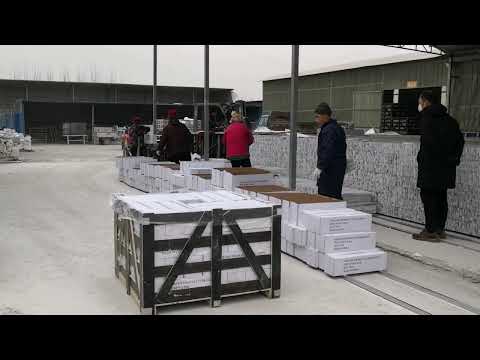
Watch: Stacked Stone Panel Production Process
Seeing the production process helps specifiers understand the quality control points that photographs alone cannot convey. This video walks through the factory production line from raw stone through finished panel assembly:
Frequently Asked Questions
What is the difference between stacked stone panels and stone veneer?
Stacked stone panels are a specific type of stone veneer — prefabricated panels with thin-cut natural stone strips bonded to a backing. The broader term “stone veneer” also includes individual thin stone pieces installed one by one, thin ledgestone, and interlocking Z-panel formats. All stacked stone panels are stone veneer; not all stone veneer is stacked stone panels.
Can stacked stone panels be used outdoors in cold climates?
Yes, when specified correctly. Panels with marine-grade epoxy bonding and natural slate or quartzite stone perform reliably in freeze-thaw conditions from -30°C to +50°C. The backing bond is the critical variable — cement-backed panels are less suitable for exterior freeze-thaw applications.
How much do stacked stone panels weigh per square meter?
Typical weight ranges from 35 to 55 kg per square meter depending on stone type and panel thickness. This is substantially lighter than full-thickness masonry (120–200+ kg/m²) but comparable to manufactured stone veneer. Structural calculations should confirm the wall assembly can support the dead load plus a safety factor.
How long do stacked stone panels last?
Natural stone panels with proper backing and installation have a service life exceeding 30 years. The stone itself is geological material that does not degrade — the limiting factor is the backing bond integrity, which is why marine-grade epoxy is specified for longevity-critical projects.
What is the minimum order quantity for stacked stone panels?
Standard MOQ is one 20-foot container (20GP), which typically holds 400–600 m² depending on panel thickness and packaging configuration. For initial evaluation, physical samples are available with 1–3 day turnaround.