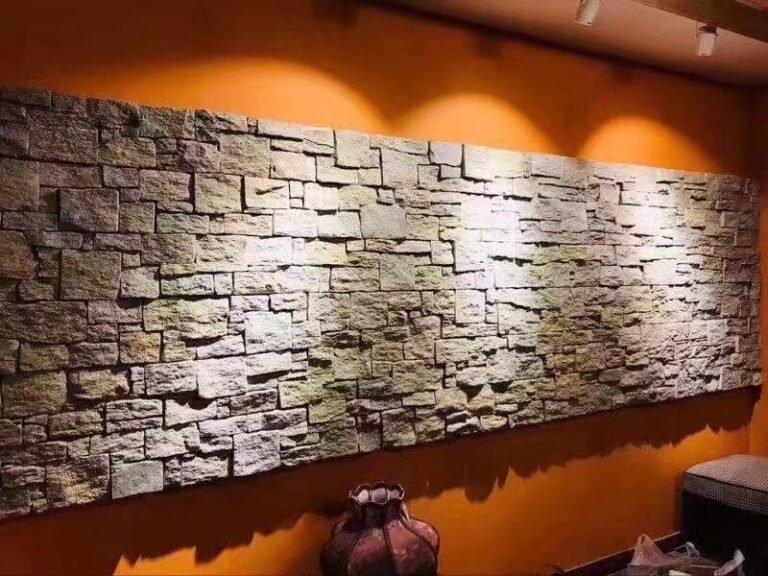
Farmhouse kitchens get their warmth from layered texture, and no layer does more than the wall behind the range. Traditional farmhouses used plaster, timber, and chimney stone. The modern version trades the chimney for a stone kitchen backsplash alternative: thin natural stone cladding run higher than a tile band, up behind the range hood or across the full wall, with the same hand-set look as the old hearth.
The practical case is as strong as the look. A full-height stone wall replaces dozens of square meters of grout lines with a masonry face that is dense, heat-resistant, and easy to wipe, and the panels hang at veneer weight so the framing does not change. For distributors and designers, it is also a larger material order than a tile band, which changes the average project value. A 3-meter run of wall to counter height carries 2.4 to 4.8 square meters of stone depending on how high the design runs, versus under a square meter for a typical 60cm tile band.
Top Stone Panels is the slate and quartzite exporter in Yixian County, Hebei, with quarry-owned sources and 18 years of container export history. Farmhouse and country-style kitchen walls are a recurring request, so we batch stone from the same quarry vein and hold thickness tolerance at three QC points, which is what keeps a run of panels flat on a kitchen wall.
- Four farmhouse stone kit designs: full-height field, bright white quartzite, cream counter band, and bronze hood accent.
- Panel formats scale to the zone: 15x60cm stacked stone for full walls, 36x10cm ultra-thin ledgestone for bands and shelves.
- Natural slate and quartzite carry an A-class fire rating and take a matte kitchen sealant.
- Stone veneer is a thin facing over a prepared substrate; the kitchen wall does not need structural reinforcement.
- Specify by wall area, add corners and shelf bands, and lock a color-mix layout before production.
1. Full-Height Field Behind the Range
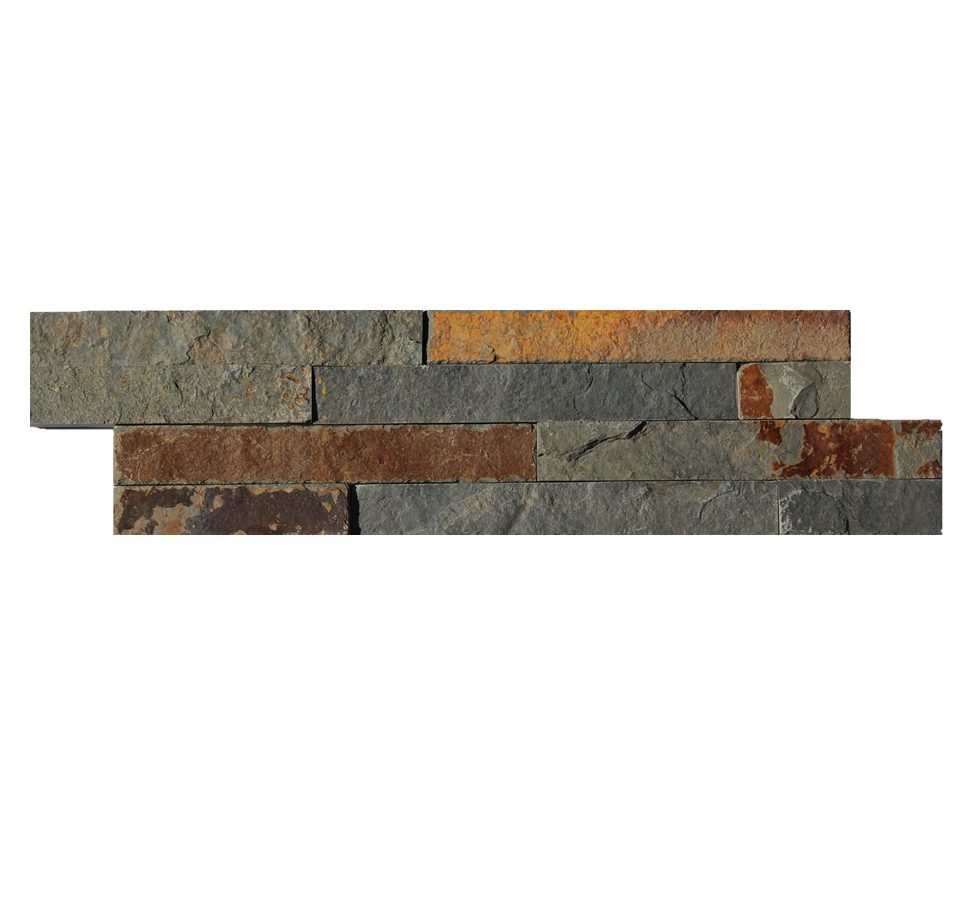
The signature farmhouse move is a full-height field of stone running from counter top to ceiling behind the range hood. Instead of a tile band stopping at 60cm, the wall continues to the ceiling, and the kitchen gains a masonry chimney feel without building a chimney. Standard stacked stone panels in the 15x60cm format give the field a clean running-bond rhythm; the rustic country multicolor split-face tone adds the warmth that a grey field lacks.
This design hides kitchen service well. Pot racks, magnetic knife strips, and the vent hood bracket all mount through a continuous stone surface, and the irregularity of the cleft face forgives the pipes and straps that a flat tile wall would expose. The full-height field also simplifies the color story: the wall becomes the accent, so the cabinetry and counter stay quiet.
Verdict
Best for the classic farmhouse look. The full-height field performs where tile bands stop, and the extra material lifts the material order. Budget for the run above the hood: the wall does not stop at counter height, so ordering must cover the full face.
2. Bright White Quartzite Full Wall
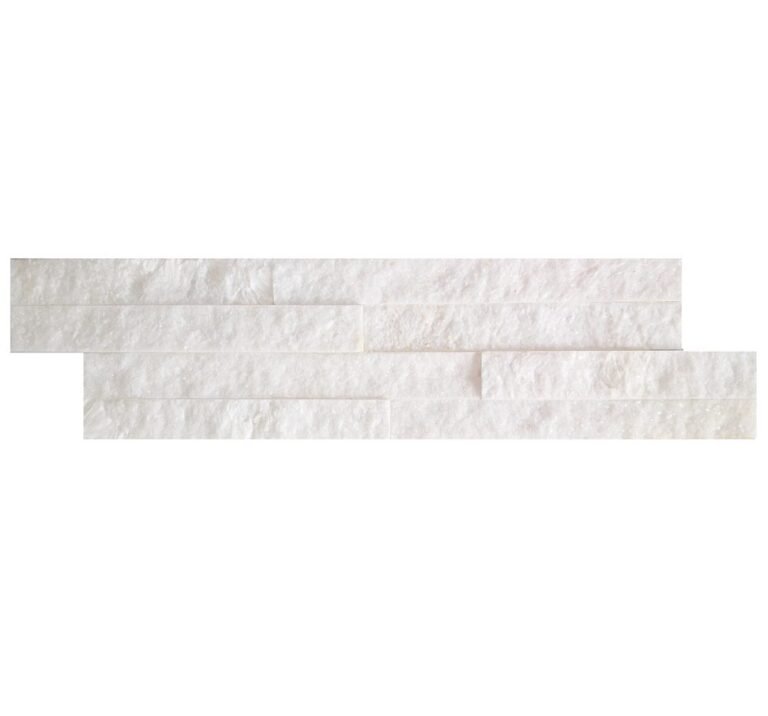
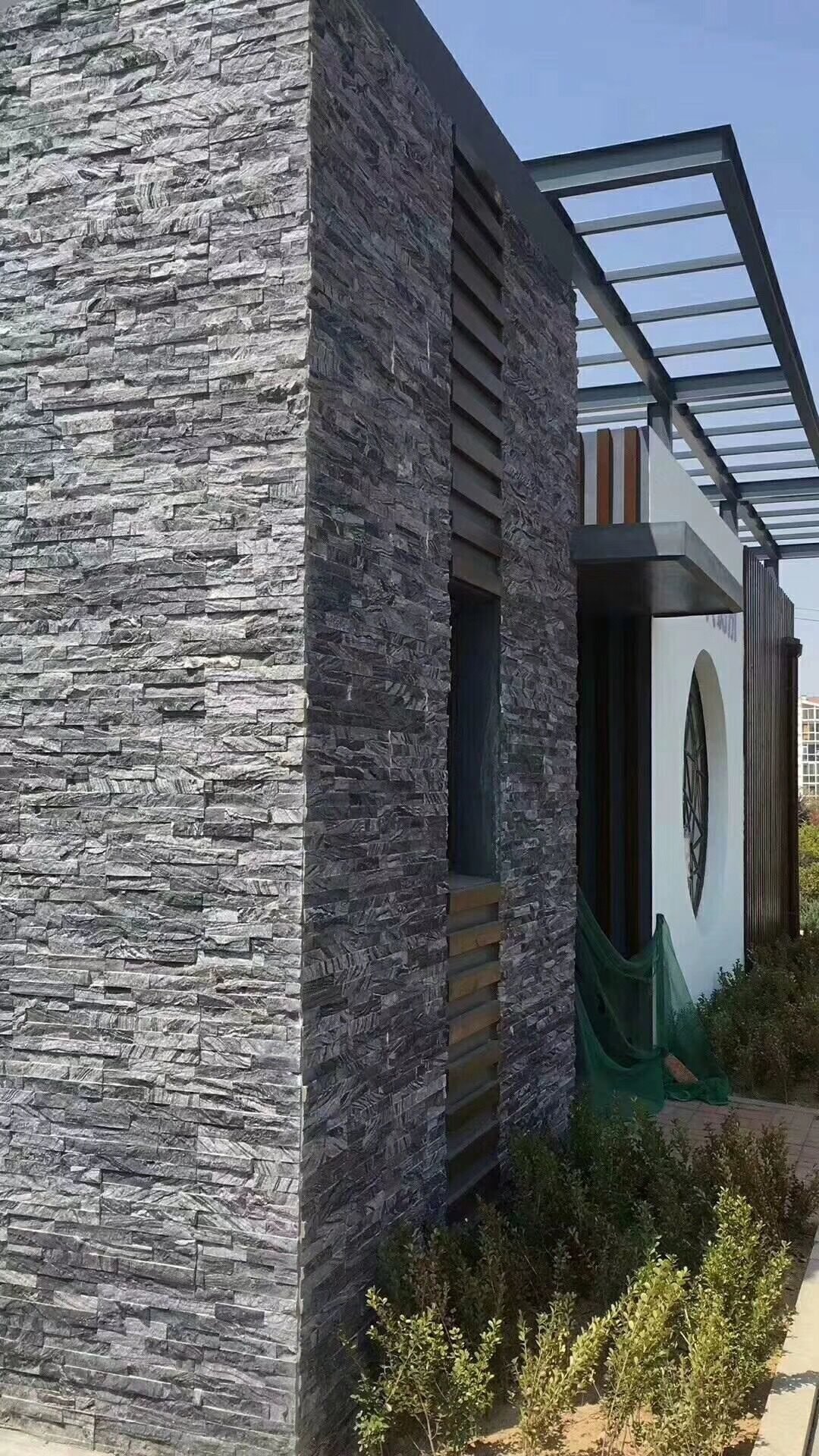
Farmhouse kitchens with white cabinetry need a wall that reads bright, and royal white quartzite delivers that without sacrificing texture. The ultra-thin ledgestone 36x10cm split-face panel in white quartzite gives a linear, mini-ledgestone rhythm that pairs with shaker doors, exposed timber shelves, and a matte black faucet. It is the same stone family used on European minimalist facades, scaled down to a counter-height band or run to the ceiling.
White stone asks one honest specification: batch continuity. A yellow-white shift across the wall reads as a repair, which is why the same-quarry-vein rule matters more here than on a grey field that absorbs variation. Top Stone Panels runs batch-specific vein selection as standard, so the container of white quartzite matches across the full wall rather than arriving in two tone lots.
Verdict
Best for bright farmhouse kitchens and coastal-white cabinetry. White quartzite keeps the room airy while the split face carries the texture. Order from one batch and ask for the color-mix layout before production.
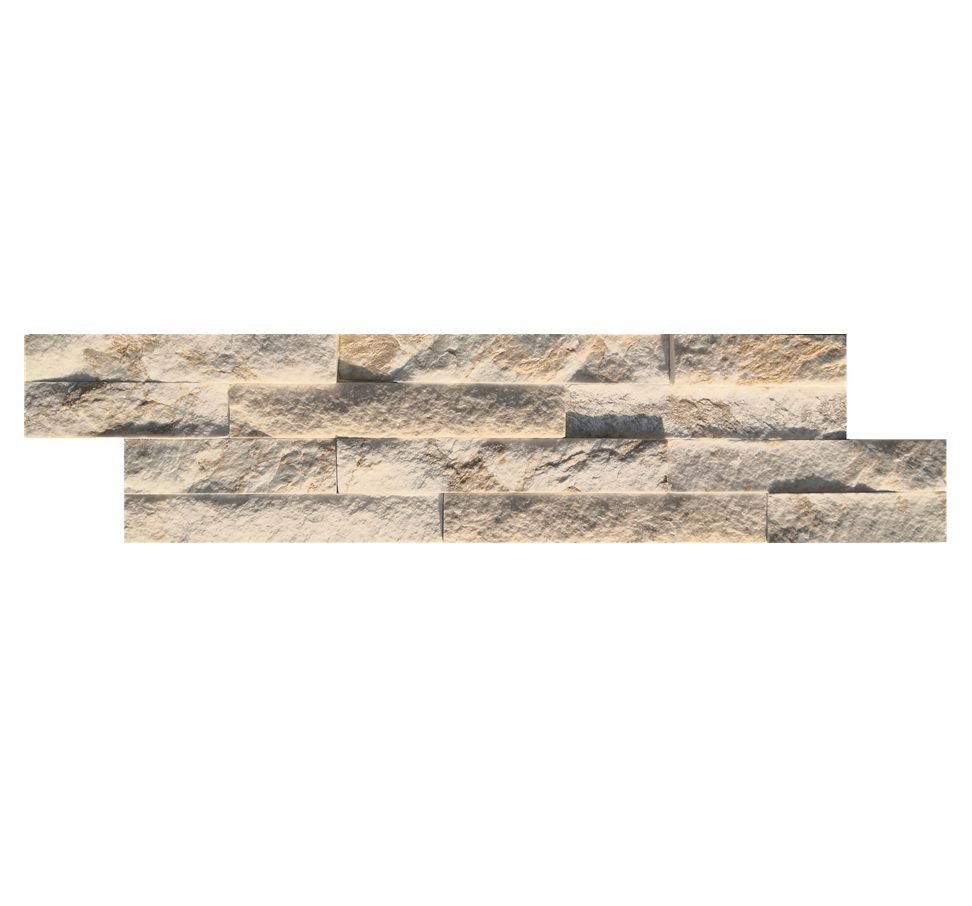
3. Cream Mini-Panel Counter Band
The cream counter band keeps the farmhouse kitchen soft without committing the entire wall to stone. A 40-60cm band of cream quartzite mini-panels runs behind the counter, between the countertop and the upper cabinets, then a winter-white field or plaster continues above. The band defines the work zone, and the shallow 36x10cm scale reads as refined rather than heavy.
The band design is the right first step for a kitchen that is not ready for a full wall. It uses a fraction of the material, installs in a single day over the standard backsplash substrate, and still delivers the hand-set textural look. Added detail: run a matching mini-panel shelf face or an open shelf bracket at the band line, and the band becomes a display surface instead of a trim strip.
Verdict
Best for light farmhouse kitchens and for buyers at the entry point of the stone-wall decision. The band proves the look on a small footprint and scales up when the client is ready.
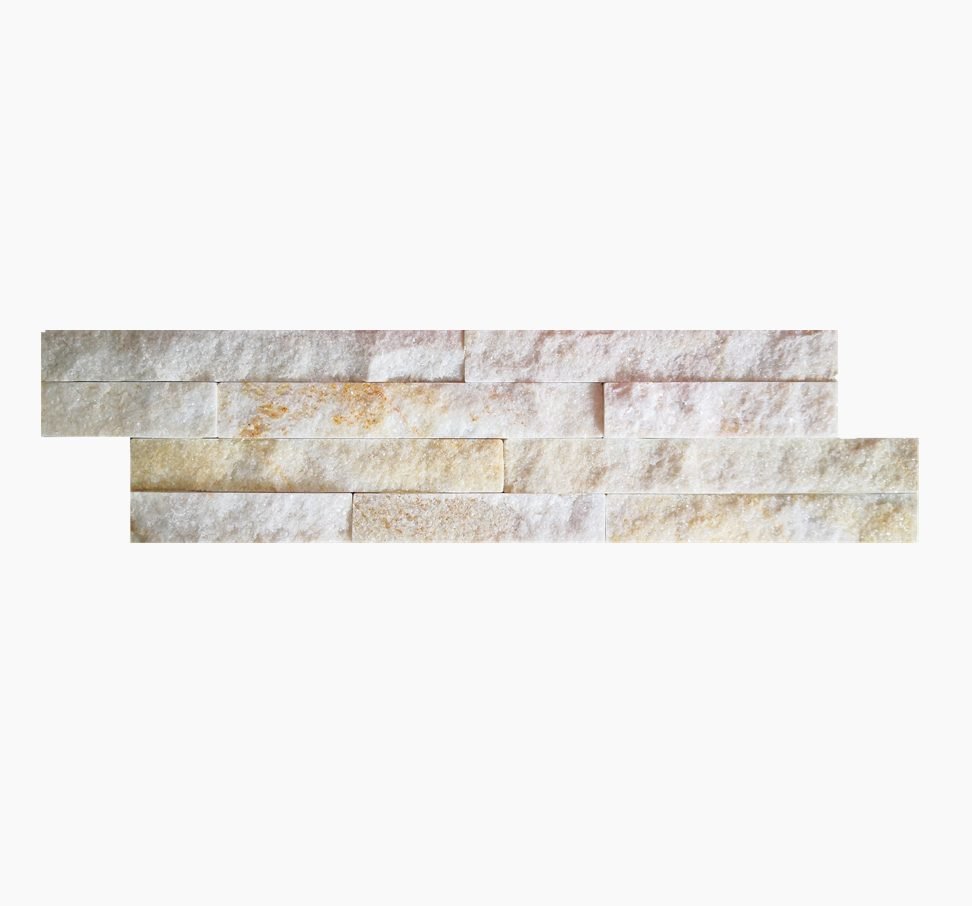
4. Warm Bronze Hood Accent
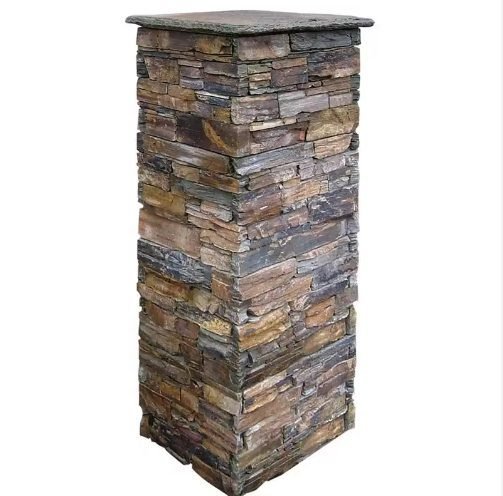
The bronze accent trades the full wall for a deliberate focal point: a patch of bronze sparkle quartzite around the range hood, the window wall, or the shelf niche, framed by a quieter field. Bronze and copper tones are the fast-growing farmhouse move because they warm a white kitchen without covering it, and the sparkle flecks give the hood zone a jewelry-like finish under under-cabinet light.
Bronze works best as a contained panel or a half-wall at the hood, not as a full kitchen field. The tone is strong enough to be the story, and over-use reads as cabin clutter. Pair it with the rustic country or snow-white field adjacent, keep the hardware in brushed brass, and let the hood patch carry the heat of the design.
Verdict
Best for the statement zone. The bronze accent is the lowest-material way to make a farmhouse kitchen memorable, and it photographs strongly for portfolio work.
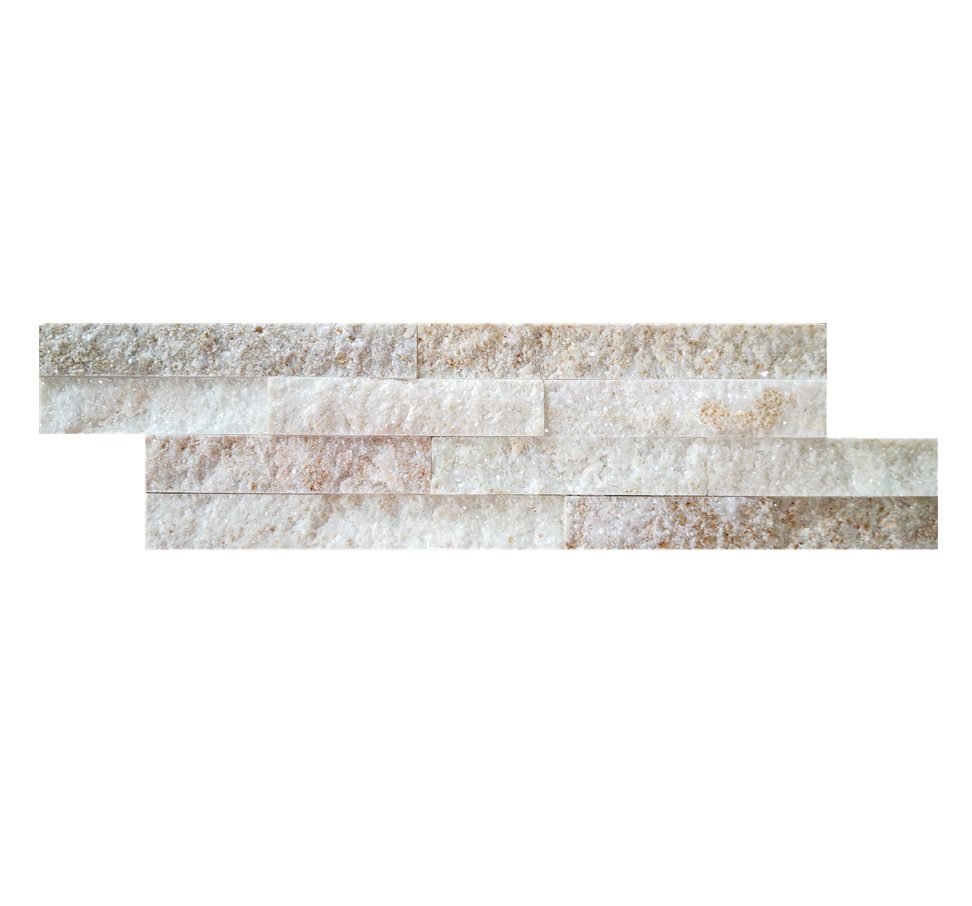
How to Choose the Right Stone Scale
Scale decides whether a kitchen stone wall looks farmhouse or formal. The tall 15x60cm stacked stone panel reads as masonry and belongs on full walls and range fields. The 36x10cm ultra-thin ledgestone reads as fine linear detail and belongs on bands, shelves, and accents. Loose split-face veneer gives the most irregular, hand-set look and suits the rustic end of the spectrum.
| Kitchen zone | Recommended format | Panel coverage | Character |
|---|---|---|---|
| Full wall behind range | 15x60cm stacked stone | 0.09 m² | Heavy, masonry, chimney feel |
| Counter band and shelves | 36x10cm ultra-thin ledgestone | 0.036 m² | Fine, linear, refined |
| Hood accent and niches | Mini-panel or mosaic tone | 0.036 m² | Jewel-like, focal |
| Rustic farmhouse texture | Loose split-face veneer | By piece | Irregular, hand-set |
Tone follows the cabinet color, not the reverse. Warm oak cabinetry pairs with cream, rustic country, and bronze tones. White-and-black kitchens take the royal white quartzite or the snow-white mini-panel, which photographs as crisp as the cabinetry it fronts. The safest ordering rule is the same as interior walls everywhere: lock the field and accent from one batch, request a color-mix layout, and confirm the tone under the kitchen’s actual lighting before production.
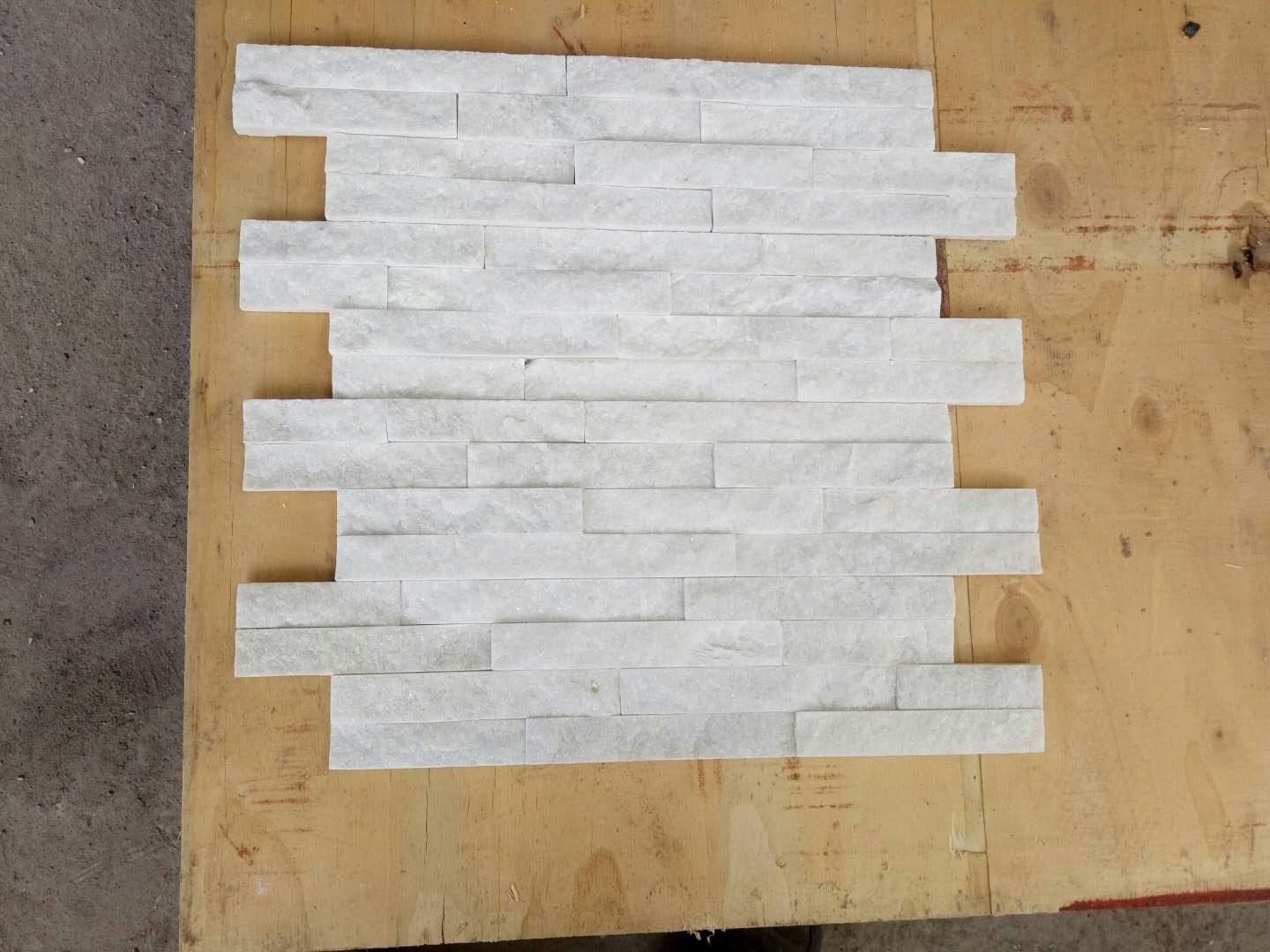
Which farmhouse look fits which kitchen? Choose the full-height field when the wall is the room’s main accent. Choose bright white quartzite when the cabinetry is white or grey and the space needs light. Choose the cream band as the entry point, when the budget or the walls want a smaller statement. Choose the bronze accent when you want one photographable detail without covering the room.
Planning a stone kitchen wall? Get the full material story in one pass: color-mix layout for field and accent zones, mini-panel counts for bands and shelves, and corner pieces for the returns. Top Stone Panels supplies quarry-owned slate and quartzite in stacked stone, ultra-thin ledgestone, and loose veneer formats, one 20GP MOQ.
Installation Considerations for Backsplash Zones
A kitchen stone wall installs over the same prepared substrate as the rest of the veneer wall, with three kitchen-specific rules. The range zone is hot, the counter zone is wet, and the whole face lives with cooking grease, so the details matter more than on a living-room feature wall.
- Heat. Natural slate and quartzite carry a natural A-class fire rating, so the range zone is safe. Keep the electrical and vent services behind the stone and out of the bond line, and torque the vent bracket into framing behind the panel, not into the veneer face.
- Moisture and grease. Seal the finished face with a matte natural-stone sealant and reapply it to the top joints every one to two years. A matte finish protects without turning the split face glossy.
- Substrate. Cement board, lath-and-mortar, or prepared plaster with full-bed adhesion, the same as any adhered veneer. Do not stick panels over painted drywall without a key.
- Shelf and bracket loads. Stone is facing, not structure. Mount pot racks, shelves, and the vent hood into framing or metal anchors behind the wall, then let the stone cover the fixings.
Cleaning stays simple: warm water and a pH-neutral cleaner, a soft cloth, and no acid sprays. The same stones that take a -30°C to +50°C cycle outdoors laugh at kitchen grease; the discipline is the sealant, not the stone. For interior panels beyond the kitchen, the Natural Stone Institute publishes care and sealing guidance for natural stone in homes. For more inspiration rooted in the same material family, the earlier kitchen backsplash design guide covers eight panel layouts across kitchen styles.
FAQ
What can I use instead of a tile backsplash?
Thin natural stone cladding works as a backsplash alternative: full-height stacked stone, ultra-thin ledgestone, or split-face veneer in slate and quartzite.
Is stone veneer good for a kitchen backsplash?
Yes. Natural slate and quartzite are dense, low-water-absorption stones that take a matte kitchen sealant, resist heat, and read as masonry rather than tile.
Do I need a special stone behind the stove?
Use a real stone face from a fire-rated natural material family; slate and quartzite carry an A-class natural fire rating, and the finish should be matte-sealed.
How thick is a stone veneer backsplash?
Thin veneer panels run roughly half an inch to an inch and a half in face thickness, which is why a kitchen wall needs no structural reinforcement.
Can you put stone veneer on a kitchen island?
Yes. Stone island panels work on the end faces and the plinth; mount heavy fixtures into the cabinet carcass, then cover the fixings with the stone.
How do you clean a stone kitchen wall?
Wipe with warm water and a pH-neutral cleaner, reseal the top joints every one to two years, and avoid acid cleaners on the stone face.
Conclusion
Farmhouse kitchens do not need another tile grid; they need layered texture, and thin natural stone delivers it at veneer weight with a truer material story. Full-height fields behind the range, bright white quartzite walls, cream counter bands, and bronze hood accents cover the spectrum from full commitment to a contained focal point.
Key Takeaways
- Scale to the zone: 15x60cm stacked stone for full walls, 36x10cm ultra-thin ledgestone for bands and accents.
- Natural slate and quartzite are A-class fire rated, dense, and take a matte kitchen sealant.
- Mount pot racks and vent hoods into framing, not the veneer face.
- Lock the field and accent from one batch and request a color-mix layout before production.
For specification support, start with a physical sample set from Top Stone Panels, matching the field and accent tones under kitchen lighting. Samples ship in 1-3 days and production runs 20-25 working days, so the kitchen wall on the drawing can be on the wall this order cycle.