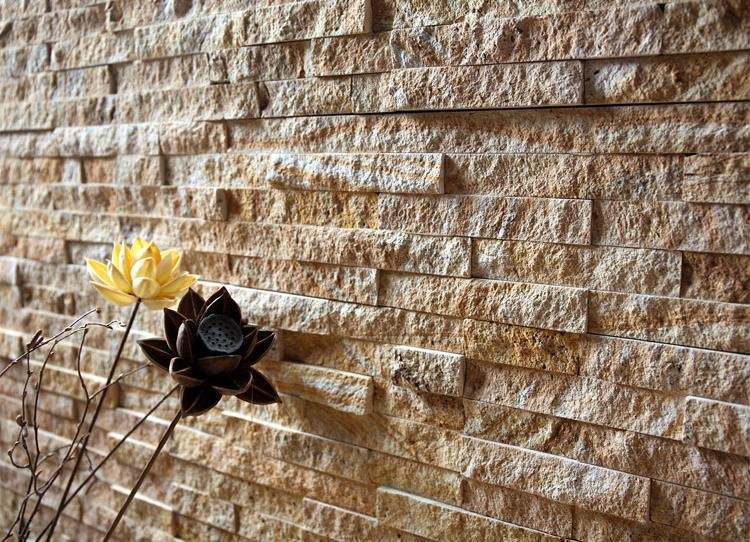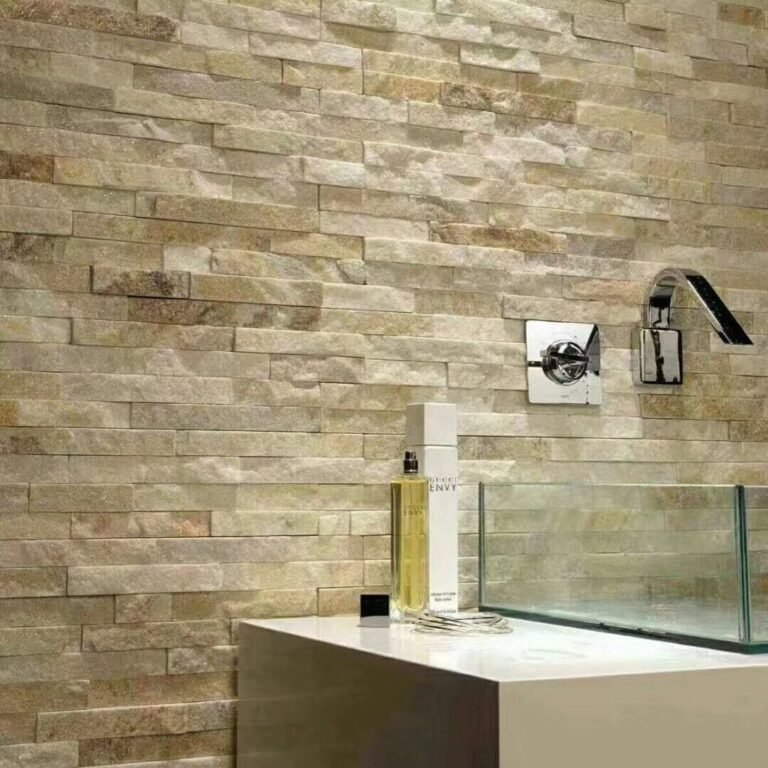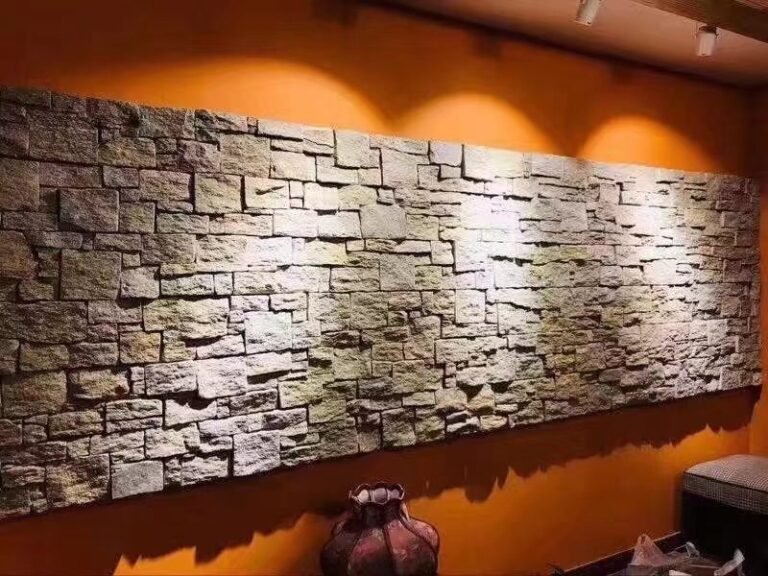
The demand for luxury pool environments has pushed natural stone to the front of the specification sheet. Residential and commercial pool projects across North America and Europe now routinely call for stone veneer on waterfall walls, raised edges, equipment screens, and surrounding decks. Among the available cladding options, stacked stone panels have become the default choice for vertical pool features—offering the texture and visual weight of full-thickness masonry at a fraction of the installed cost.
Stacked stone pools work because the material solves several design problems simultaneously. The split-face surface catches light and shadow, adding dimensionality to flat concrete pool walls. The panel format—typically 15 × 60 cm or 15 × 55 cm—keeps installation fast and consistent across large feature walls. And because the stone is 100% natural slate, quartzite, sandstone, or marble, it carries performance characteristics that manufactured alternatives cannot match: inherent UV stability, freeze-thaw resistance rated from -30°C to +50°C, and a Class A1 fire rating for projects that integrate fire bowls or fireplaces near the water.
This guide walks through five specific pool applications for stacked stone veneer, compares the best stone types for wet environments, and covers the installation and maintenance details that contractors and landscape architects need to get right the first time.
Why Stacked Stone Works for Pool Features
Pool environments are punishing on building materials. Constant exposure to chlorinated or saltwater spray, UV radiation, temperature swings, and chemical cleaning agents eliminates most cladding products within a few seasons. Natural stone veneer panels built from slate and quartzite handle all of these stressors without degradation, provided they are installed correctly.
UV stability. Unlike manufactured stone or resin-bonded aggregates, natural slate and quartzite do not fade, chalk, or delaminate under direct sunlight. The mineral composition is inherently UV-stable, meaning color and surface texture remain consistent across decades of sun exposure. This matters for pool feature walls that sit in full sun for eight or more hours daily.
Freeze-thaw resistance. In northern climates, pool surrounds experience repeated freeze-thaw cycles during the off-season. Top Stone Panels stone veneer is tested for freeze-thaw performance across a -30°C to +50°C range. The low porosity of quartzite, in particular, prevents water from penetrating the stone matrix, reducing the risk of spalling or cracking when temperatures drop below freezing.
Salt spray and chemical resistance. Saltwater pools have grown significantly in market share—industry data from the Pool & Hot Tub Alliance indicates that saltwater systems now account for a substantial share of new residential pool installations. Natural quartzite and slate resist salt crystallization damage and tolerate standard pool chemistry without etching or surface breakdown.
Slip resistance. The split-face texture of stacked stone provides a naturally rough surface that improves grip in wet conditions. This is relevant for raised pool edges, planter walls, and bench facades where swimmers may lean or sit. The texture is integral to the stone—not a surface coating—so it does not wear away over time.
A1 fire rating. Many luxury pool designs now pair water features with fire elements: gas fire bowls, linear fireplaces, or fire pits built into the pool coping. Natural stone veneer carries an A1 fire classification, the highest rating for non-combustible materials. This allows specifiers to combine fire and water features on a single structure without additional fireproofing measures.
Low water absorption. Natural slate and quartzite have low water absorption rates compared to sandstone or limestone. Lower absorption means less moisture migration through the stone, reducing the chance of efflorescence, mineral staining, and freeze-related damage in pool environments.
5 Pool Design Ideas Using Stacked Stone Veneer
Pool Waterfall Feature Walls
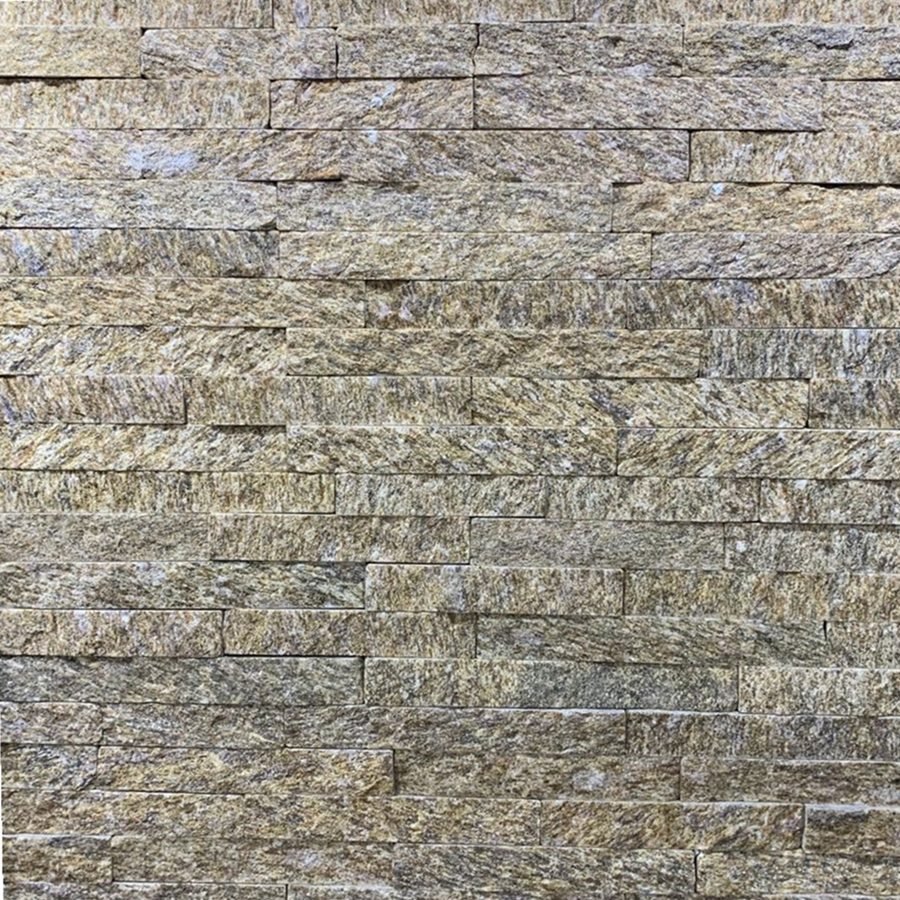
The waterfall feature wall is the most common application for stacked stone in pool design. A concrete or CMU wall is constructed behind the pool edge, typically 1.5 to 3 meters high, and clad with stacked stone veneer panels. Water is pumped to the top and cascades down the split-face surface, creating visual movement and ambient sound.
For waterfall walls, panel orientation matters. Installing 15 × 60 cm panels horizontally with a slight forward pitch (2–3 degrees) directs water flow across the textured face rather than behind the veneer. A weep system at the base of the wall allows any moisture that penetrates the cladding to drain back into the pool or a collection trough.
Dark-toned quartzite—charcoal, graphite, or dark bronze—works well on waterfall walls because wet stone appears richer and more saturated. Lighter slate tones create a brighter, more contemporary look. The choice often depends on the surrounding hardscape and the client’s preference for contrast.
Explore stacked stone panels for waterfall and water feature applications.
Raised Pool Edge and Spillover Walls
Raised pool edges create visual separation between the pool and the surrounding deck while serving as seating walls, planter backs, or sheer-descent water features. Stacked stone veneer applied to the exterior face of a raised bond beam transforms a plain concrete edge into a finished architectural element.
L-corner kits are particularly useful here. Standard stacked stone panels cover flat wall sections, but pool edges require clean 90-degree transitions at corners and column wraps. Pre-fabricated L-corner panels (available in 45 × 15 cm configurations) eliminate on-site mitering and produce a factory-finished corner that maintains the stacked profile around the turn.
Spillover walls—where water flows from a raised spa or shallow shelf into the main pool body—benefit from the same split-face texture. The veneer must be sealed on all exposed faces, including the top edge where water pours over, to prevent long-term saturation of the stone substrate.
Pool Equipment Enclosure Cladding
Pool pumps, heaters, automation panels, and chemical feeders need to be accessible but are rarely attractive. A stacked stone enclosure wall hides the equipment while matching the feature walls and water elements elsewhere in the design. This is one of the simplest applications: a framed or block structure clad on the exterior with standard thin stone veneer panels.
Ventilation is the key specification detail. The enclosure needs adequate airflow to prevent heat buildup around pool heaters and to allow chemical fumes to dissipate. Stacked stone panels can be installed with open louvers or slatted gaps at the top and bottom of the enclosure, maintaining the visual continuity of the cladding while meeting ventilation requirements.
Infinity Edge Backdrop Walls
Infinity edge pools (also called negative edge or vanishing edge pools) rely on a clean visual line where water flows over the edge into a catch basin below. A stacked stone wall positioned behind the infinity edge—either as a privacy screen, a garden backdrop, or a structural retaining wall—adds depth and contrast to the optical illusion of the vanishing edge.
For infinity edge backdrops, consider panel scale. Larger 15 × 60 cm panels in a running bond pattern create a calm, linear rhythm that complements the horizontal water line. Mixing panel widths or introducing a contrasting stone color at the waterline creates a deliberate visual break between the stone wall and the pool edge.
Stone columns clad in matching veneer can frame the backdrop wall, adding vertical emphasis and anchoring the design to the surrounding architecture.
Poolside Planter Boxes and Bench Facades
Built-in planter boxes and seating benches are standard features in commercial pool projects and high-end residential designs. Cladding these elements in the same stacked stone used on the main feature wall ties the entire pool environment together visually.
Planter boxes require drainage consideration: the stone veneer on the planter’s exterior face should be installed over a waterproof membrane, and the planter cavity should include a drainage layer to prevent soil moisture from migrating through the wall. For bench facades, the split-face texture provides a comfortable, grippy surface that swimmers can sit on without sliding.
Choosing the Right Stone for Pool Environments
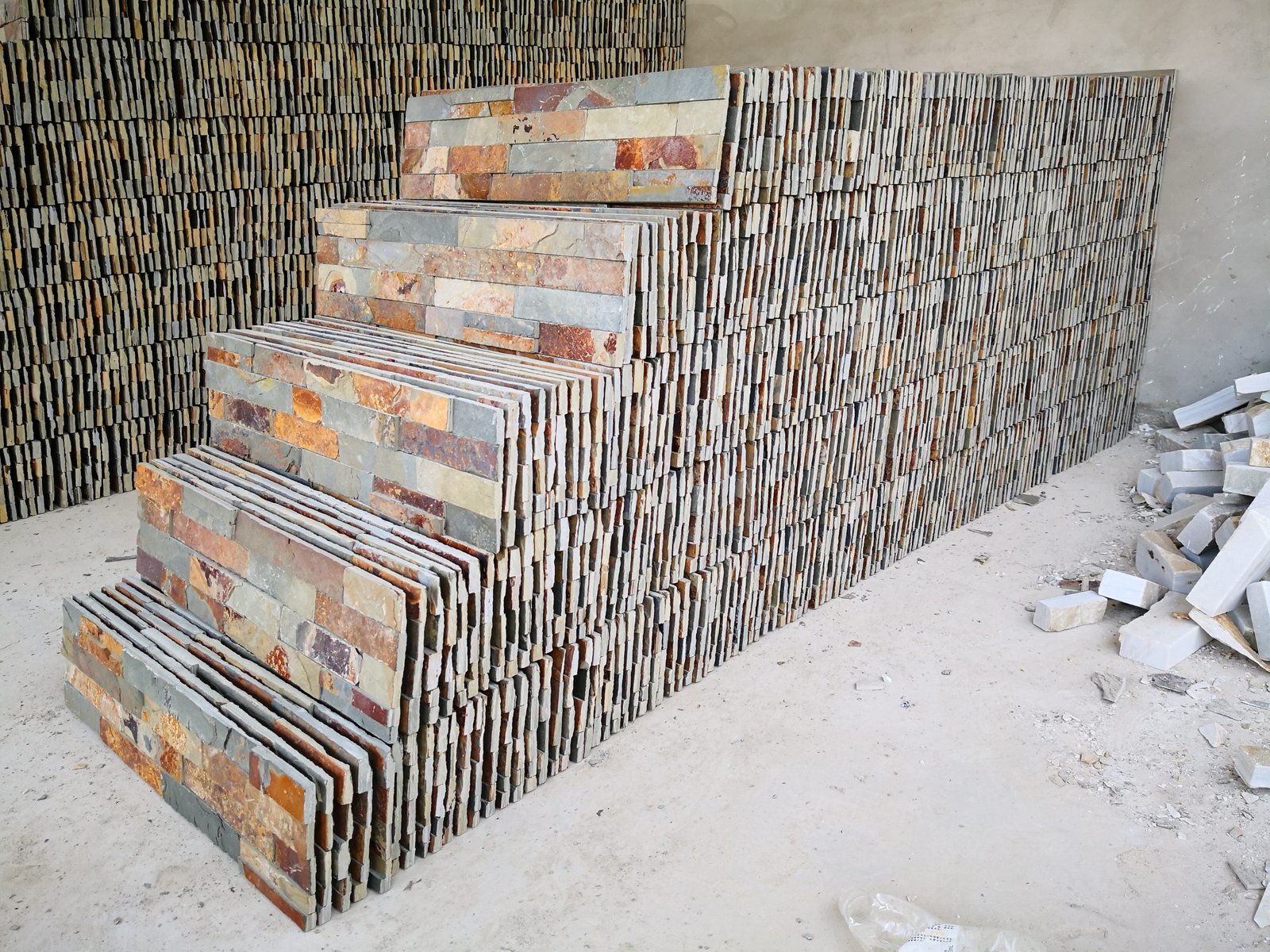
Not every natural stone performs equally well around water. The two most reliable choices for stacked stone pools are slate and quartzite, each with distinct properties that suit different project requirements.
| Property | Natural Slate | Natural Quartzite |
|---|---|---|
| Water absorption | Low (0.25–0.45%) | Very low (0.1–0.3%) |
| Density | Moderate to high | High |
| Surface texture | Naturally cleft, layered | Split-face, granular |
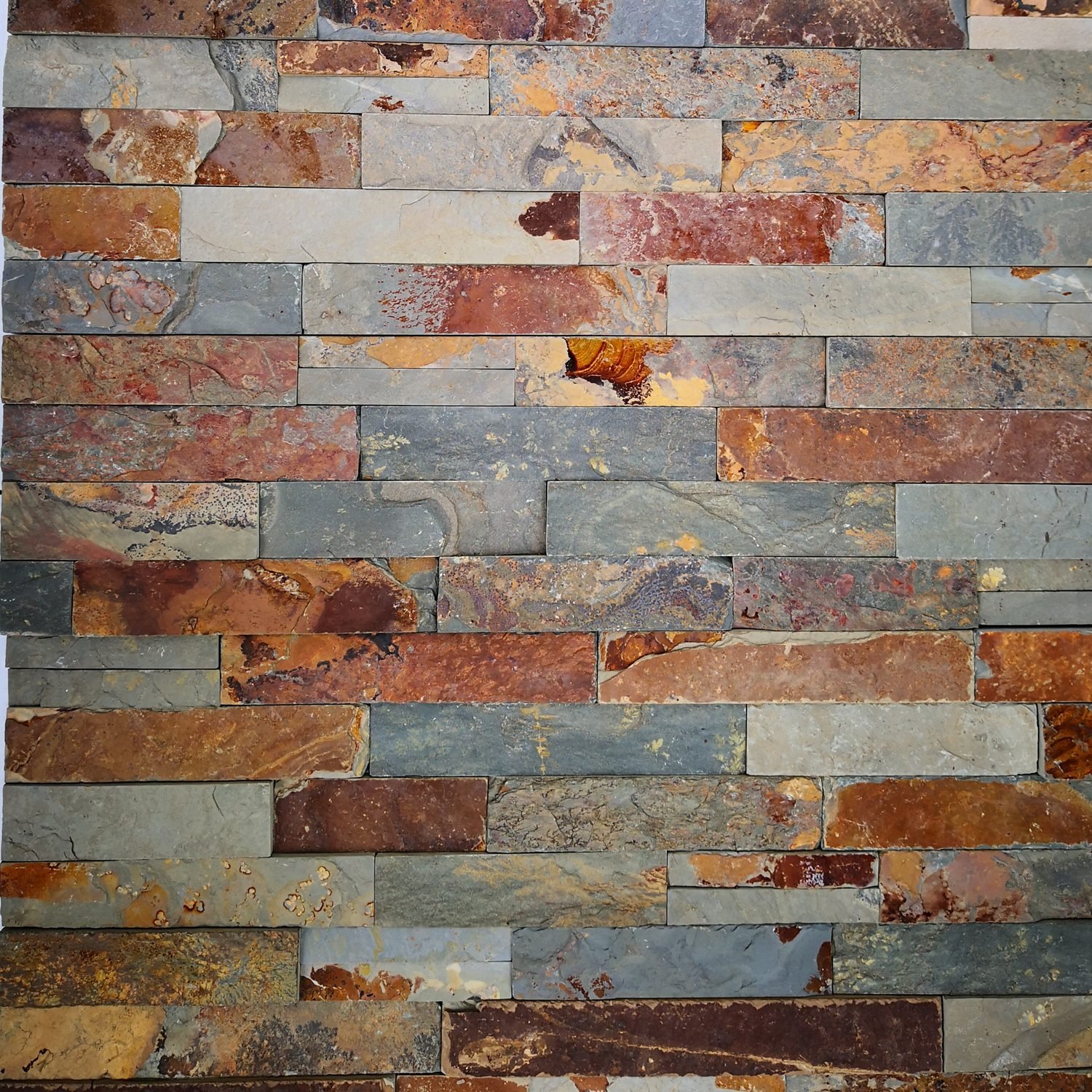
| Color range | Grey, green, rust, black | White, gold, brown, charcoal |
| Chemical resistance | Good | Excellent |
| Best pool application | Feature walls, planter facades | Waterfall walls, spillover edges |
Color selection matters more than most specifiers realize. Darker stones—charcoal quartzite, black slate—show less mineral staining from hard water and pool chemicals. Lighter stones such as golden quartzite or sand-colored slate look striking when dry but may develop visible calcium deposits in splash zones unless sealed and maintained regularly.
Batch-specific vein selection is critical for large pool projects. Natural stone varies between quarry runs. A waterfall wall installed in March should match the planter boxes installed in June. Top Stone Panels addresses this by photographing and cataloging each production batch, allowing contractors to request matched sets for phased installations. The infrared CNC diamond blade cutting process ensures dimensional consistency across batches—every panel is cut to the same tolerance regardless of when it was produced.
Flagstone for Pool Decks: Completing the Design
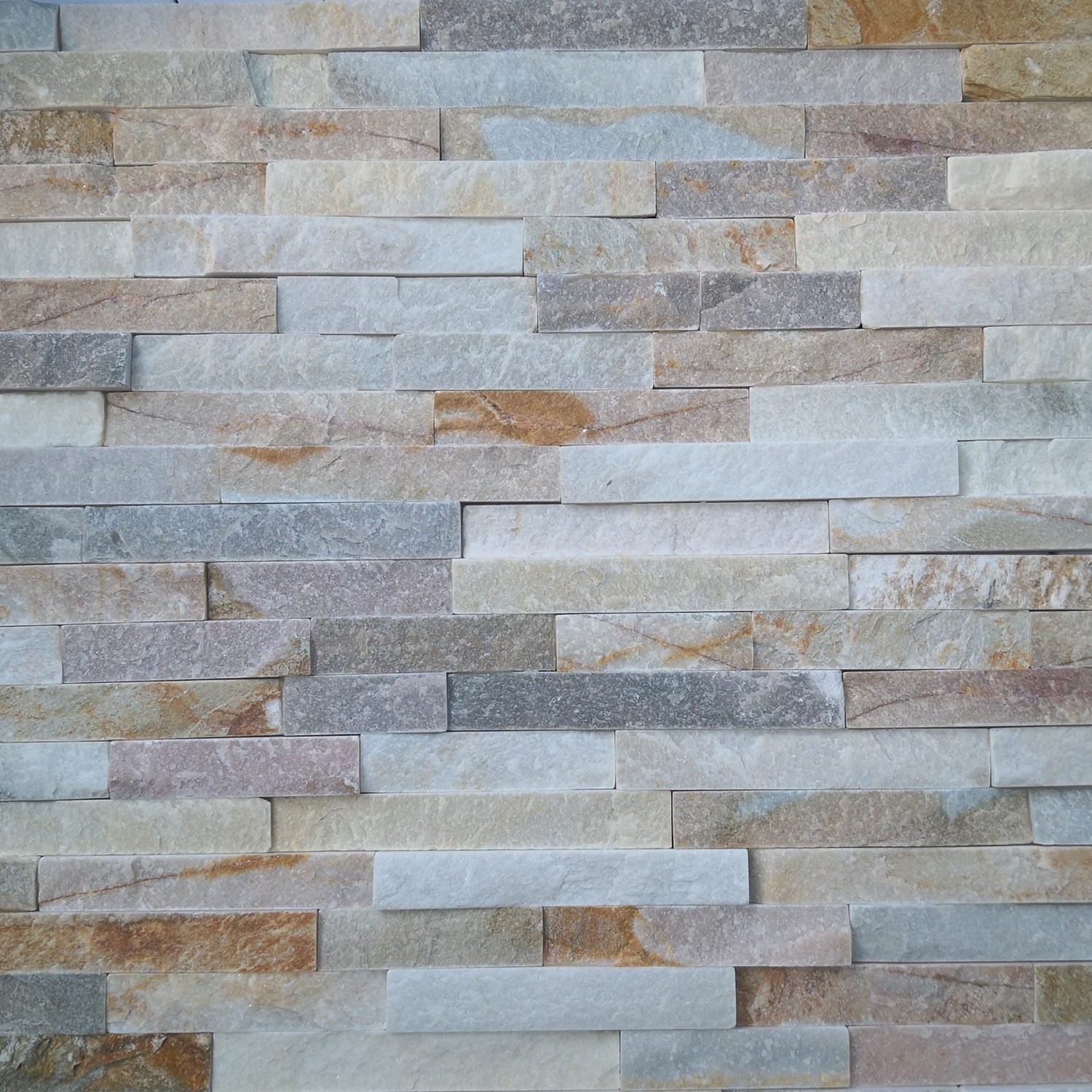
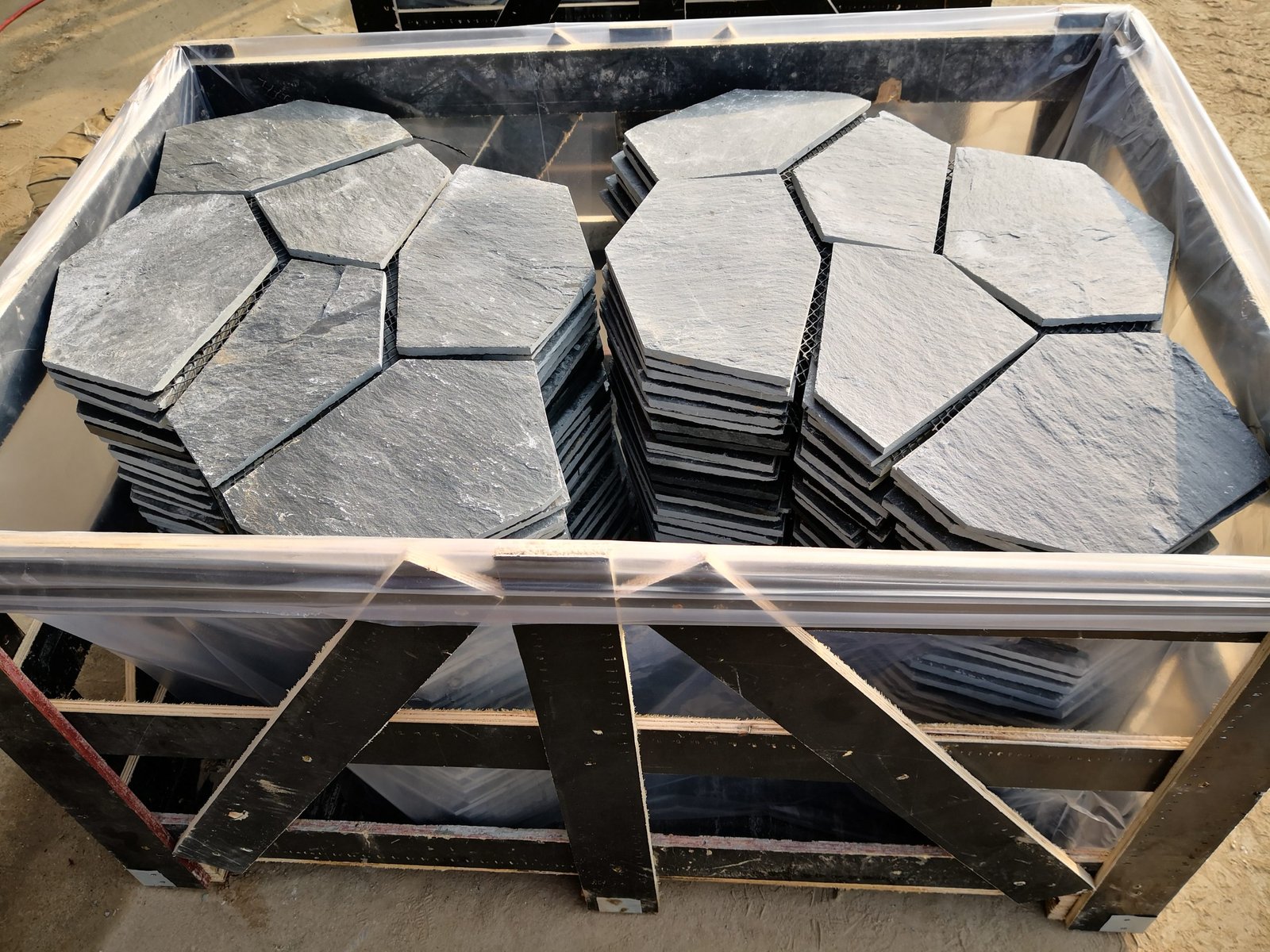
Stacked stone veneer handles the vertical surfaces—feature walls, waterfalls, enclosures, and bench facades. For the horizontal deck surface surrounding the pool, flagstone and crazy paving provide a complementary finish that unifies the design language.
Flagstone pavers, backed with mesh for dimensional stability, offer several advantages in pool deck applications:
- Non-slip surface. The natural cleft texture of flagstone provides reliable traction under wet, barefoot conditions—a baseline safety requirement for any pool surround.
- Salt and chemical resistance. Dense slate and quartzite flagstone resist the salt crystallization and chlorine exposure that degrade softer paving materials.
- Thermal comfort. Natural stone stays cooler underfoot than concrete pavers or composite decking in direct sun. Lighter-colored flagstone—particularly pale sandstone or cream quartzite—reflects more solar radiation and remains comfortable even in midday heat.
- Random geometric patterns. Crazy paving sheets are mesh-backed for easy installation and create an organic, non-repetitive surface pattern that contrasts effectively with the linear profile of stacked stone walls.
The design principle is straightforward: use stacked stone on every vertical surface and flagstone on every horizontal surface. The material palette stays consistent—matching or complementary stone types and colors—while the texture shift between split-face vertical and cleft-face horizontal adds visual interest without introducing additional materials.
Installation Considerations for Pool Stone Veneer
The stone itself is durable. Installation errors are what cause failures in pool environments. The following specifications apply to all stacked stone veneer applications within the pool splash zone (generally defined as any surface within 3 meters of the water edge).
Substrate preparation. Stone veneer must be bonded to a stable, rigid substrate. For pool feature walls, this is typically a poured concrete wall or a CMU (concrete masonry unit) wall with a scratch coat. Plywood, drywall, and wood framing are not acceptable substrates in pool environments due to moisture exposure.
Waterproofing membrane. A liquid-applied or sheet waterproofing membrane must be installed between the substrate and the stone veneer. This membrane prevents pool water and splash-back from reaching the structural wall behind the cladding. The MAPEI and LATICRETE product lines both offer pool-rated waterproofing systems compatible with natural stone adhesives.
Drainage plane. Behind the waterproofing membrane, a drainage mat or weep system allows any incidental moisture to drain downward and exit at the base of the wall. This is especially important for waterfall walls where water pressure against the veneer face is continuous.
Adhesive selection. Use a polymer-modified, waterproof thin-set mortar rated for natural stone and continuous moisture exposure. Standard unmodified thin-set is not suitable for pool applications. The adhesive should meet ANSI A118.4 or ISO 13007-2 C2 classification for improved adhesion in wet conditions.
Expansion joints. Temperature fluctuations around pools can be extreme—from cold pool water on one side of the stone to direct solar radiation on the other. Include soft expansion joints at every 3–4 meter interval and at all material transitions (where stone meets concrete coping, tile, or metal edging). Fill expansion joints with a flexible, color-matched sealant rated for pool immersion.
Sealing. After installation and grouting (if applicable), apply a penetrating, breathable stone sealer to all exposed stone faces. The sealer should be rated for pool environments—meaning it resists chlorine, bromine, and salt degradation without forming a surface film that can peel or yellow. Impregnating sealers based on siloxane or fluoropolymer chemistry typically perform best in this application.
Maintenance of Stone Veneer Around Pools
Natural stone veneer around pools requires minimal ongoing maintenance, but a structured care schedule extends the installed life and appearance of the cladding significantly.
Routine cleaning (weekly to monthly). Rinse the stone with fresh water to remove chlorine splash, salt residue, and dust. For feature walls with visible calcium or mineral buildup, use a pH-neutral stone cleaner diluted according to the manufacturer’s instructions. Apply with a soft brush, agitate gently, and rinse thoroughly.
Mineral deposit removal (seasonally). In areas with hard water, calcium carbonate deposits accumulate on stone surfaces near waterlines and splash zones. A dedicated stone-safe mineral remover—never hydrochloric or muriatic acid—dissolves the deposits without etching the stone. Apply, allow dwell time per the product label, and rinse with low-pressure water.
Sealer reapplication (every 2–3 years). Penetrating sealers gradually lose effectiveness as the active compounds break down under UV and chemical exposure. Test the sealer by sprinkling water on the stone surface: if it beads, the sealer is still active; if it absorbs immediately, reseal. Clean the stone thoroughly, allow 24 hours of dry weather, and apply a fresh coat of penetrating sealer.
Inspection (annually). Check expansion joints for sealant cracking or separation. Inspect the base of waterfall walls for signs of moisture infiltration behind the veneer (efflorescence or damp spots on the back side of the wall, if accessible). Replace failed sealant in expansion joints promptly to prevent water from reaching the substrate.
Long-term durability expectations. Properly installed and maintained natural stone veneer in a pool environment has a service life measured in decades, not years. The Natural Stone Institute notes that correctly specified and maintained natural stone cladding can exceed 50 years of service life. Slate and quartzite do not degrade under UV exposure, do not rust or corrode, and do not support mold or algae growth on sealed surfaces. The most common failure point is not the stone itself but the adhesive bond or waterproofing membrane—which is why substrate preparation and installation quality matter more than the stone selection.
Sourcing Pool-Grade Stone: What Landscape Contractors Need
For distributors, landscape architects, and pool contractors managing multiple projects or large-scale commercial installations, sourcing consistency and supply reliability are as important as the stone’s physical properties.
Production capacity and lead times. Top Stone Panels manufactures stacked stone panels at a capacity of 80,000 m² per month and flagstone at 30,000 m² per month. Standard lead time is 20–25 working days from order confirmation, shipping from Xingang/Tianjin port. For North American projects, transit adds 25–35 days by sea to West Coast ports or 35–45 days to East Coast ports.
Container mix flexibility. A single 20-foot container (the minimum order quantity) can hold a mix of stacked stone panels, L-corner kits, and flagstone pavers. This allows contractors to order all pool-area stone in one shipment, reducing freight costs and simplifying site logistics. A typical pool project might include 80 m² of stacked stone for feature walls, 20 linear meters of L-corners, and 120 m² of flagstone for the deck—all fitting within one container.
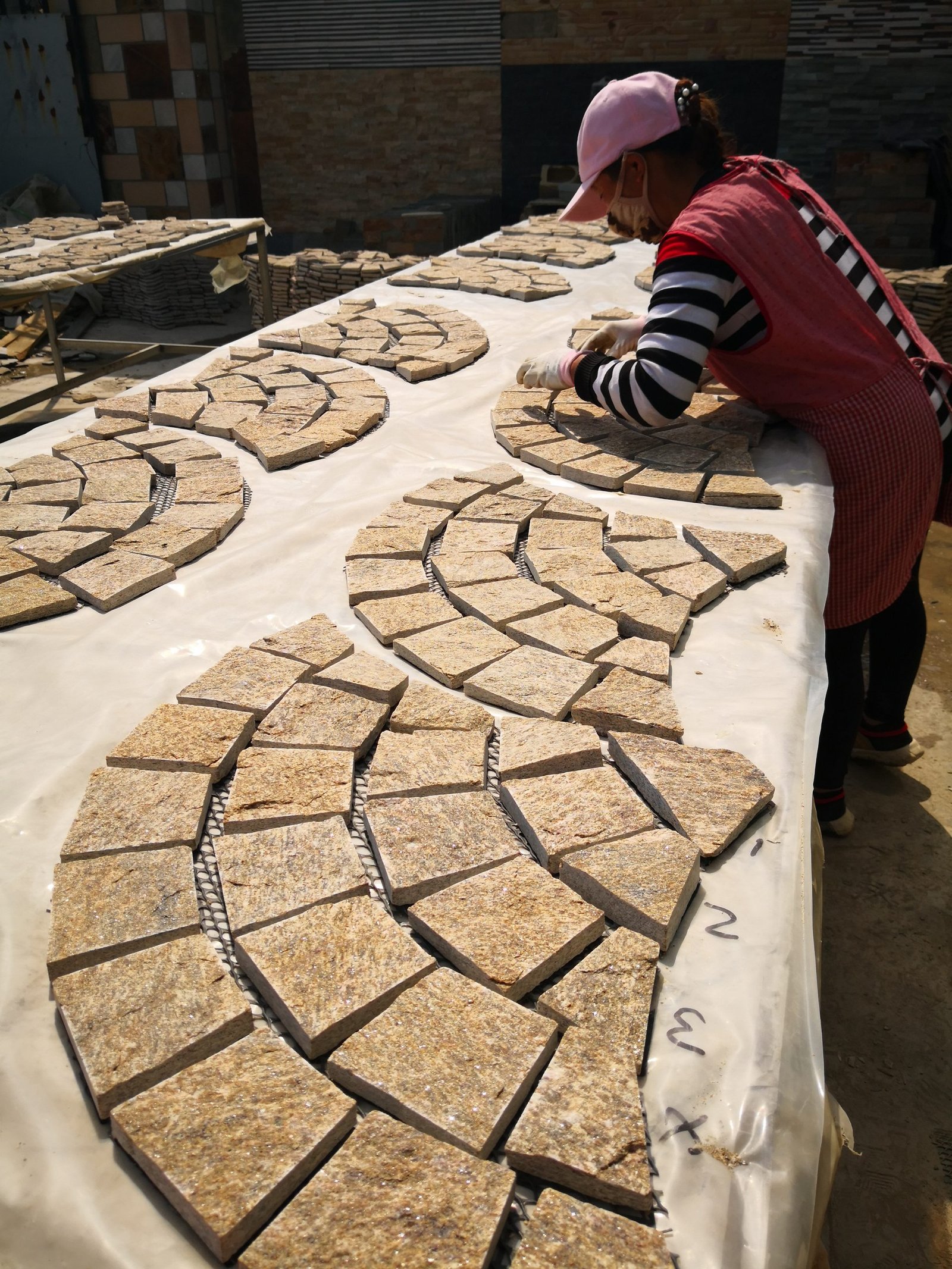
Quality control protocol. Every production run goes through dimensional inspection (panel thickness, length, width tolerances), visual grading (color consistency, vein alignment, surface defects), and bond-strength testing on the backing system. Panels use marine-grade epoxy bond, cement backing, or mesh backing depending on the application. The infrared CNC diamond blade cutting process produces panels with consistent dimensions across the entire order.
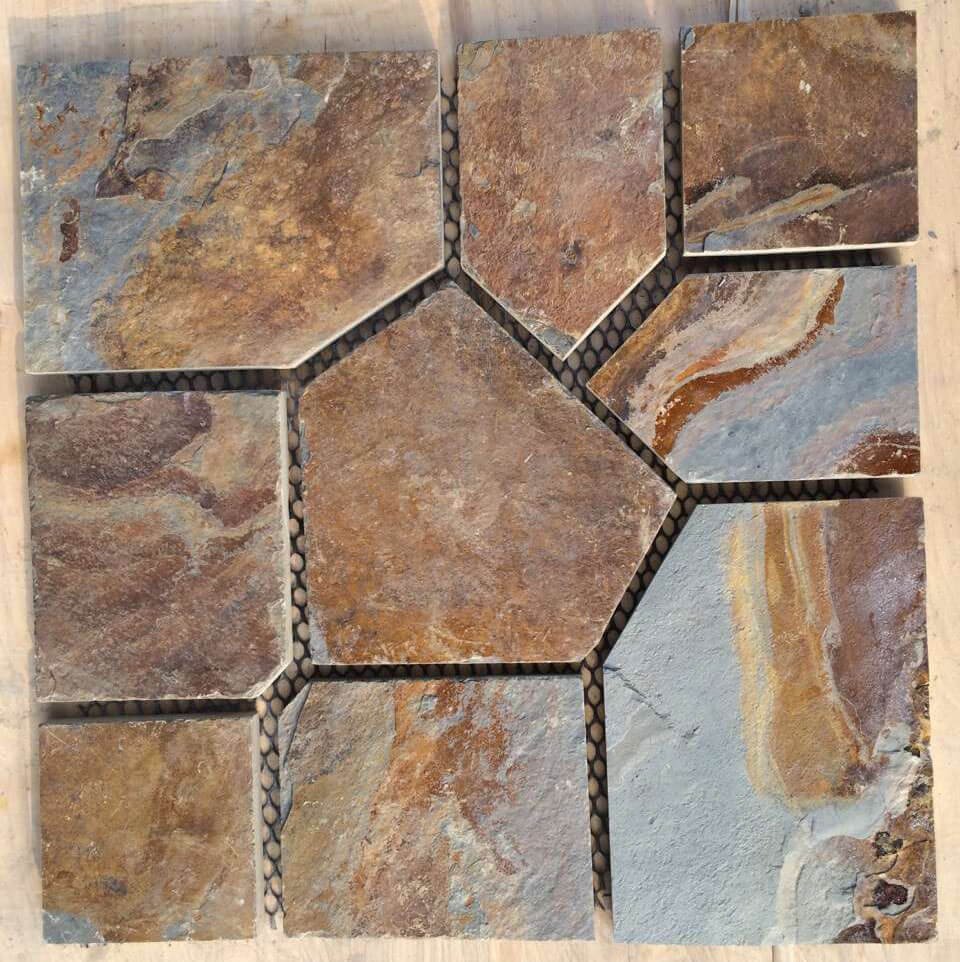
Zero-breakage shipping. Stone breakage during ocean freight is a common concern for importers. Top Stone Panels uses a zero-breakage packaging protocol: 3–5 layer reinforced cartons, palletized and secured with steel bands and inflatable airbags inside the container. This system has maintained a near-zero breakage rate across 220+ container shipments per year over 18+ years of operation.
Sampling and specification support. Contractors can request physical samples before committing to a full order. Sample sets include the specified stone type, color range, and backing configuration, allowing on-site evaluation of color match, texture, and compatibility with the project’s adhesive and waterproofing systems. Technical data sheets covering water absorption, flexural strength, freeze-thaw performance, and fire ratings are available for specification writers.
Frequently Asked Questions
Can you use stone veneer around a pool?
Yes. Natural stone veneer panels made from slate or quartzite are suitable for pool environments when installed over a waterproofed substrate with marine-grade adhesive. The stone’s low water absorption rate and resistance to UV, freeze-thaw cycles, and salt spray make it a durable cladding choice for pool feature walls, waterfall surrounds, and raised edges.
What stone is best for pool surrounds?
Natural quartzite and slate are the top choices for pool surrounds. Quartzite offers high density and low porosity, which resists chlorine and saltwater exposure. Slate provides a naturally textured, slip-resistant surface. Both materials withstand freeze-thaw cycles from -30°C to +50°C and carry an A1 fire rating for projects that include fire features near the water.
Is stacked stone waterproof?
The stone itself is not waterproof, but natural slate and quartzite have very low water absorption rates. For pool applications, stacked stone veneer must be installed over a proper waterproof membrane with a drainage plane behind the panels. A penetrating sealer applied after installation adds an extra layer of moisture protection.
How do you maintain stacked stone around a pool?
Maintenance is minimal. Rinse the stone periodically with fresh water to remove chlorine or salt residue. Use a pH-neutral stone cleaner for tougher mineral deposits. Reapply a penetrating sealer every 2 to 3 years depending on exposure levels. Avoid acid-based cleaners, which can etch the stone surface over time.
Can stacked stone veneer be used on pool waterfalls?
Yes. Stacked stone veneer panels are widely used to clad pool waterfall feature walls. The split-face texture creates visual depth as water cascades over the surface. Panels should be bonded with a waterproof, polymer-modified adhesive rated for continuous moisture exposure, and the substrate must include a waterproofing membrane and drainage system.
Start Your Pool Stone Project
Top Stone Panels supplies pool-grade stacked stone veneer and flagstone direct from our factory in Hebei, China. With 18+ years of export experience and 220+ containers shipped annually, we provide the production consistency, container-mix flexibility, and zero-breakage packaging that landscape contractors and distributors rely on.
Request a sample set or project quote: Contact Top Stone Panels
MOQ: 1 × 20GP container · Lead time: 20–25 working days · Port: Xingang/Tianjin