Importing stone to the USA looks simple on a supplier quote: pick a product, agree an FOB price, and wait for a container. Then the entry lands at a US port and the real conversation starts — HTS codes, duty deposits, an ISF filed before the vessel even sailed, wooden crates that must carry an IPPC stamp, and a customs bond with your name on it. The buyers who clear fast treat customs as part of the buying decision. The buyers who get surprised treat it as bad luck.
This guide walks the full import path in order: classifying the product, reading the applied duty, filing the security forms, meeting packaging rules, and building a landed-cost budget before you sign an order. Every number here is either a published US tariff fact or first-party shipping data from Top Stone Panels, a Yixian slate and culture-stone factory that exports 220+ containers a year from Xingang.
- Classify first: worked granite panels sit in HTS 6802.23 at about 4.2% MFN duty, most other worked stone in 6802.29, and worked slate in 6803.00 at duty-free MFN.
- Chinese-origin stone adds China-specific tariffs on top of MFN — an across-the-board 20% applied since March 2025, plus Section 301 rates on many lines — so always confirm the applied rate before booking.
- Ocean imports need an Importer Security Filing (ISF, 10+2) filed 24 hours before loading, and a formal entry with duty deposit within 15 days of arrival.
- Every wooden pallet and crate must be ISPM 15 treated and IPPC stamped, or CBP can refuse the container at the dock.
- Buyers who want a fixed price ask for DDP: duty, freight, and handling land in one quote instead of a post-arrival surprise.
- Why Stone Entries Fail at the Border
- HTS Classification: Code First, Duty Second
- Duties and Tariffs: Reading Your Applied Rate
- ISF and the Entry Process
- ISPM 15 and Wooden Packaging
- Documents That Keep the Paper Trail Short
- FOB, CIF, or DDP: Who Owns the Border Step
- Landing Cost: Build the Container Budget
- US Market Entry Checklist
- FAQ
- Conclusion
Why Stone Entries Fail at the Border
Stone never fails customs for being stone. It fails for being sloppy. A crate arrives with no IPPC stamp, so an inspector flags the entry. An invoice describes “stone panels” with no HTS number, so the broker chooses a worse code and the duty jumps. A forwarder forgets the ISF and the shipment pays a penalty per day. Each mistake costs a week and a few hundred dollars; stacked together, they turn a 25-day production cycle into a 40-day import.
The pattern is predictable. The fix is a checklist built before the PO, not a scramble after the arrival notice.
Good importers treat classification, duty, and packaging as spec items. They write them into the order before the factory schedules production, because every one of them is cheaper to fix on paper than at the gate.
HTS Classification: Code First, Duty Second
The US Harmonized Tariff Schedule (HTS) decides your duty, your quota exposure, and sometimes which agency reviews your entry. Classification comes before price in the decision order — the code selects the rate.
Raw stone imports live in Chapters 25 and 26: blocks and slabs under 2515 (marble) or 2516 (granite, sandstone, and other monumental stone) are mostly duty-free, because the US imports raw rock for processing. The moment you import worked panels — cut, split-faced, edged, or mounted on mesh — the product moves to Chapter 68, where duty behavior changes.
| Product | HTS family | Typical MFN duty |
|---|---|---|
| Granite panels, tiles, and worked pieces | 6802.21 / 6802.23 | About 4.2% |
| Other worked stone (quartzite, sandstone, slate-faced panels not elsewhere specified) | 6802.29 | About 4.2% |
| Worked slate and articles of slate | 6803.00 | Free at MFN |
| Marble blocks and slabs (unworked or roughly split) | 2515 | Free |
| Granite blocks and slabs (unworked or roughly split) | 2516 | Free |
Two classification traps hit stone buyers regularly. First, a factory invoice that says “stone panels” without a code leaves the codification to the broker, and brokers default to the highest applicable rate. Second, backer boards change classification: a stone-faced panel laminated on cement or a rigid backing can be argued out of Chapter 68 depending on construction, which is exactly why the HS code guide for stone cladding spends time on backing materials. Put the final 10-digit code on the PO and check it against the actual product before production.
Verify line rates directly in the USITC HTS lookup — the printed rates above are the MFN starting point, not the final applied number once origin and trade measures are added.
Duties and Tariffs: Reading Your Applied Rate
The applied rate on a Chinese stone shipment is a stack, not a single number. It always includes the MFN column-one duty. For Chinese-origin goods it usually adds China-specific layers on top, and those layers have changed repeatedly since 2018.
- MFN duty — the baseline column-one rate: about 4.2% for worked granite and other Chapter 68 stone, free for slate and raw blocks.
- Section 301 duties — China-specific tariffs added through 2018-2019, reaching 25% on many manufactured goods; worked-stone lines were covered across those rounds, and exclusions and revisions have shifted coverage since.
- Across-the-board additional tariff — the IEEPA measure that reached 20% on all Chinese-origin goods from March 2025. It applies on top of MFN and Section 301, making most Chinese stone imports subject to well over 20% total duty, depending on the line.
- Fees and charges — CBP adds a merchandise processing fee and, for ocean imports, harbor maintenance fees on the shipment value.
The math example buyers ask for first: a container of worked granite panels with an FOB value of US$10,000 pays about US$420 at the 4.2% MFN rate — before any China-specific layer is added. That US$420 is the honest baseline. The applied total depends on the effective tariff wave in place on the date of entry, so the number to rely on is the one your customs broker quotes in writing at booking time.
Factory-side support changes the duty story too. Top Stone Panels ships its thin stone veneer panels and stacked stone with a full export file — commercial invoice, packing list, COO, ISPM 15 certificate, and a pre-shipment inspection video — so the buyer’s broker has every document needed to support the declared classification from day one.
ISF and the Entry Process
Two regulatory checkpoints frame every ocean import to the USA: the ISF before loading, and the formal entry after arrival.
Importer Security Filing (ISF, “10+2”). For any container arriving by sea, the 10+2 rule requires shipment data — seller, buyer, consignee, HTS description, container number, and six more elements — filed at least 24 hours before the vessel departs for the USA. Your forwarder or broker files it. Missing or late ISF filings draw penalties that start around US$5,000 per violation, which is the single most expensive paperwork mistake in the whole import.
Entry and entry summary. Once the vessel arrives, the importer of record (or their broker) files entry and deposits estimated duties. CBP releases the cargo, then reconciles the entry summary. Merchandise not entered within 15 days of arrival goes to general-order storage, where daily fees stack while you untangle the paperwork.
Bond and importer of record. A continuous or single-entry customs bond covers the duty obligation. The buyer — not the factory — is the importer of record, which means your US entity holds the liability for classification and value. That is the single best argument for buying through a licensed customs broker on the first container.
The practical flow is: broker files ISF → vessel loads → vessel arrives → broker files entry + duty deposit → CBP releases → entry summary reconciles. The whole cycle adds seven to fourteen days to your calendar after arrival, before drayage to your warehouse.
ISPM 15 and Wooden Packaging
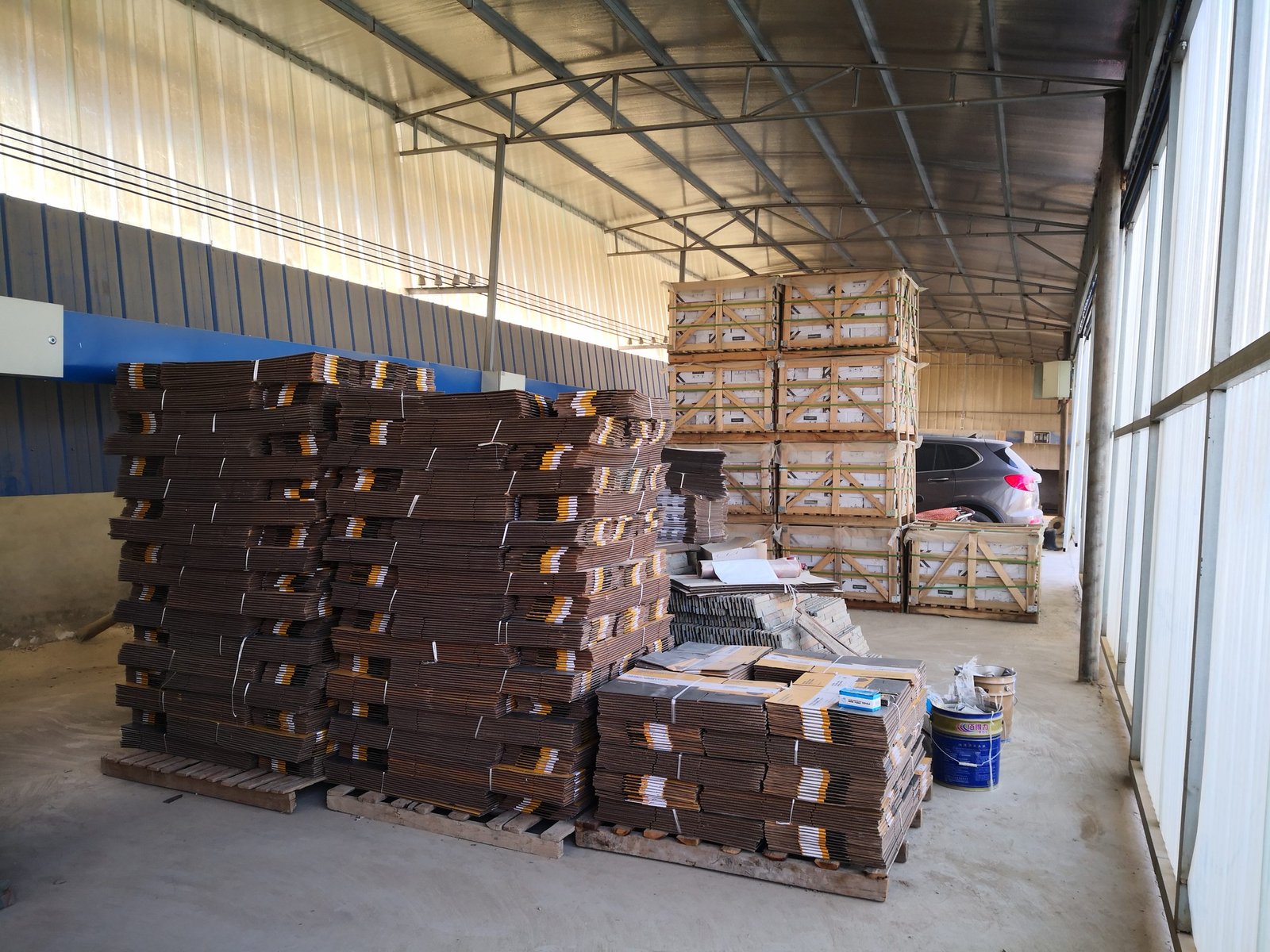
Every piece of solid wood in a stone container — pallets, crates, dunnage — must comply with ISPM 15: heat treatment to a core temperature of 56°C for 30 minutes, or fumigation with methyl bromide, stamped with the IPPC mark. The US has enforced this for two decades, and CBP inspectors know exactly what the mark looks like.
A missing or forged-looking stamp is a live reason to hold an entry. The container sits at a CES (container examination station), the buyer pays storage and demurrage, and the order arrives three weeks late. Reports of wood packaging being the trigger for a stone shipment hold — the ISPM 15 rule itself is the standard reference — are common enough that careful buyers put the stamp requirement in the PO.
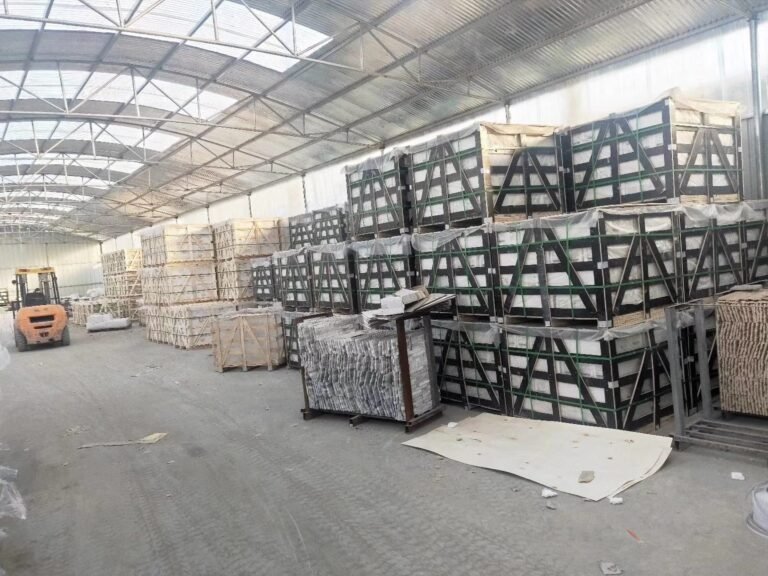
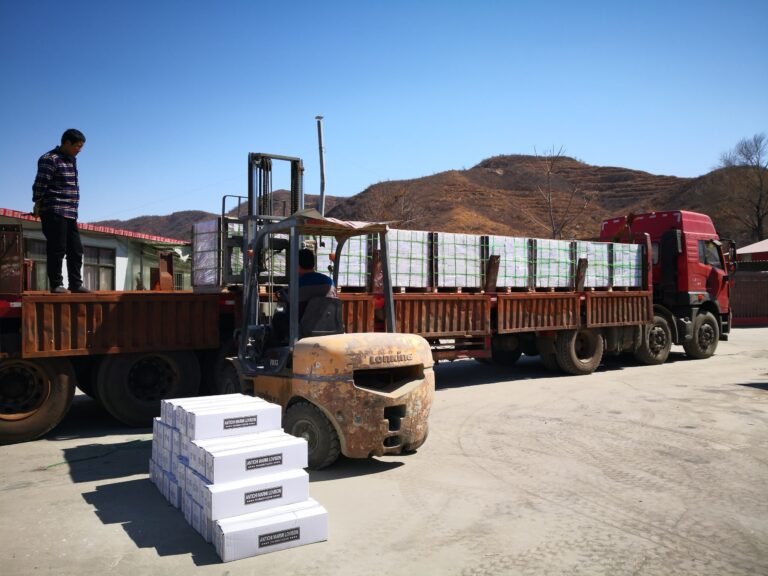
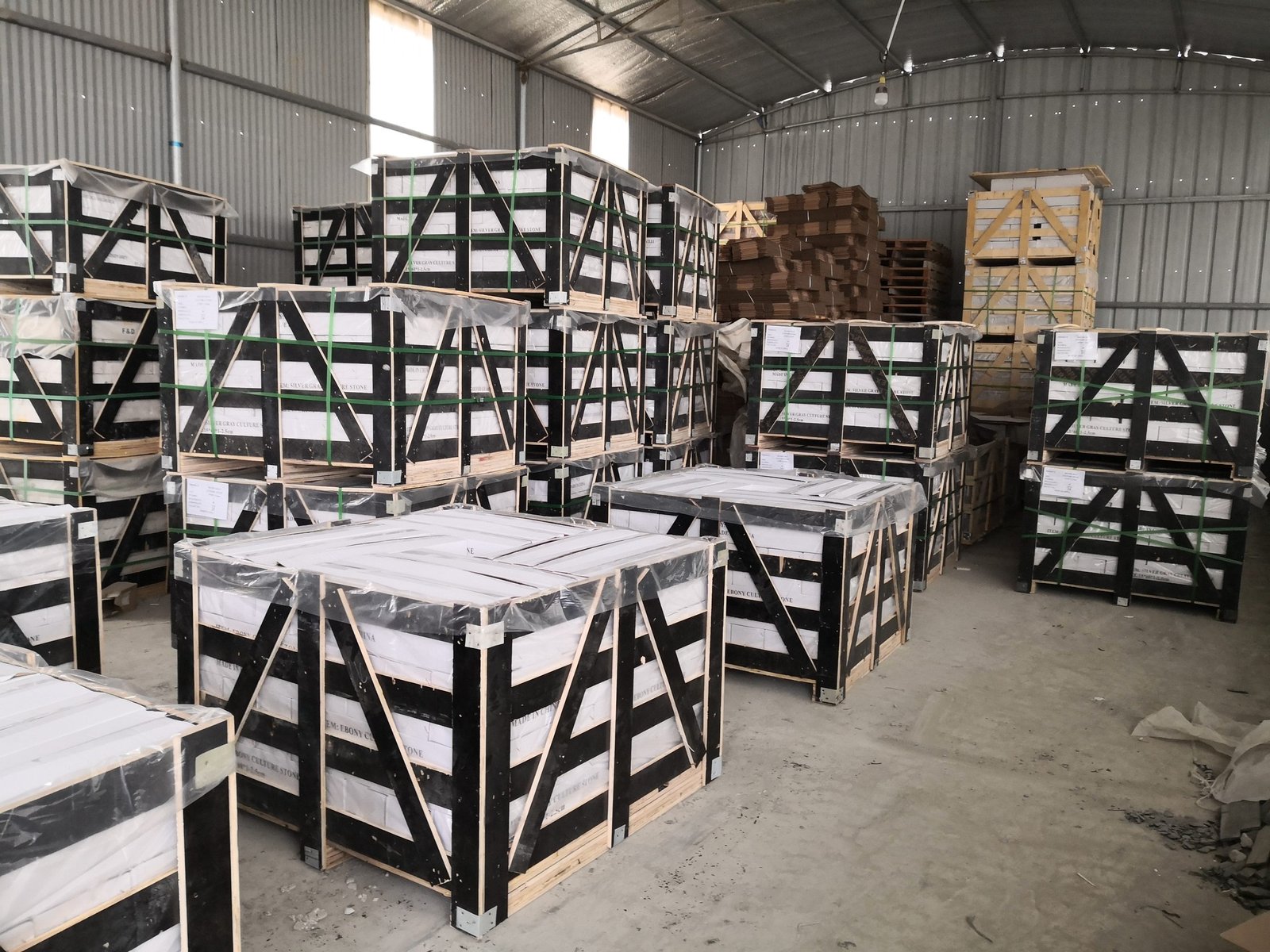
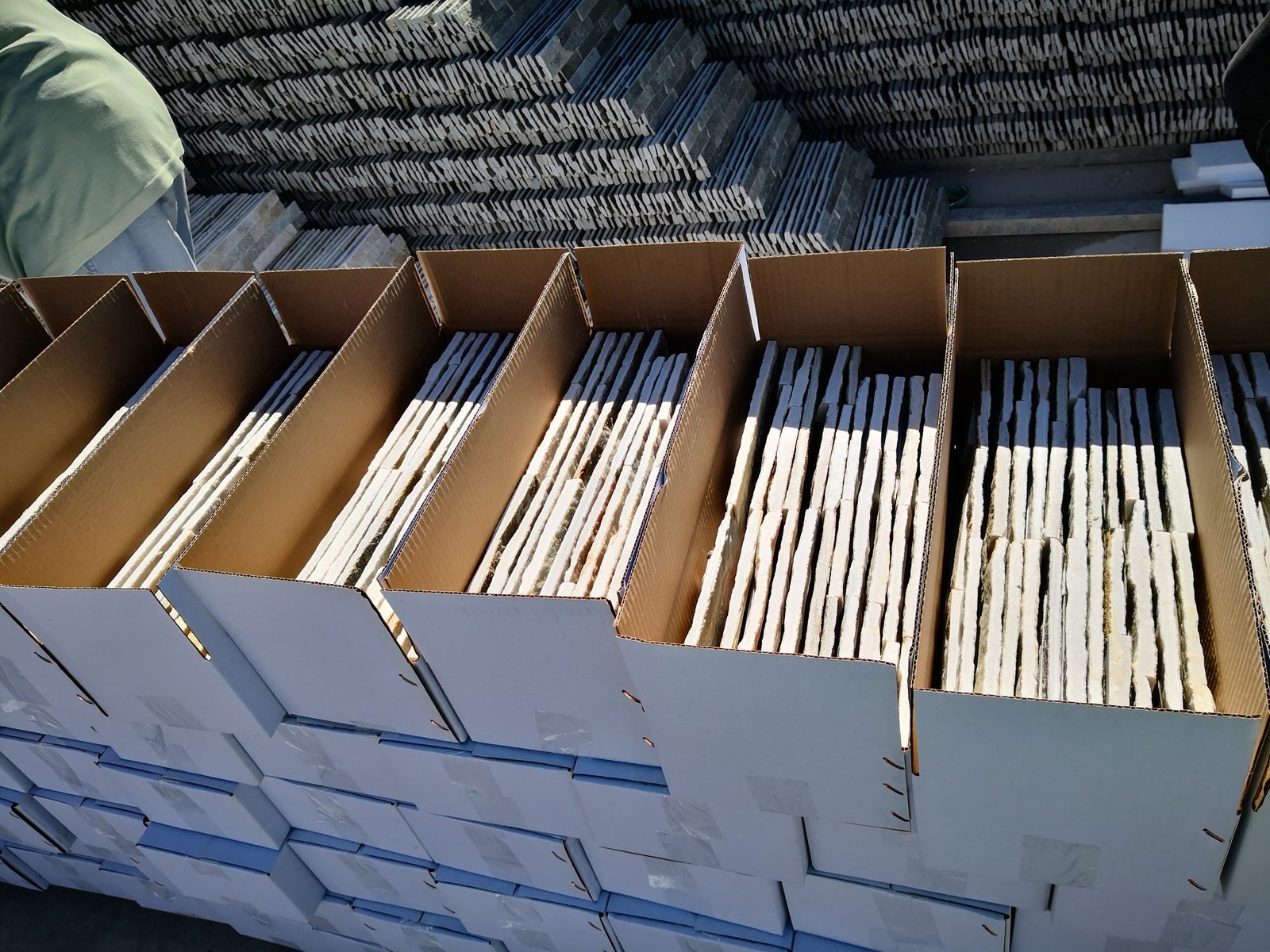
Top Stone Panels writes ISPM 15 into its packaging standard: fumigated or heat-treated wooden pallets and crates under the zero-breakage packaging protocol, with 3-5 layer reinforced cartons and 4-6 steel straps per unit. The buyer does not have to chase the certificate — it ships with the cargo, and the factory will provide the ISPM 15 certificate before the container leaves the yard.
Documents That Keep the Paper Trail Short
Customs runs on documents, and the deck for a stone import is small. Missing one item turns a standard entry into a query, so assemble the set before the vessel sails:
- Commercial invoice — unit prices, quantities, HTS-aware descriptions, and incoterms. The description must match the packing list and the actual goods.
- Packing list — cartons per pallet, pallets per container, weights and dimensions; CBP uses it to cross-check the invoice.
- Bill of lading — the transport contract and proof of shipment.
- Certificate of origin — origin affects the applied tariff stack; a China COO supports the declared origin and any trade-preference claim.
- ISPM 15 certificate — covers the wood packaging treatment.
- Pre-shipment inspection record — the QC photos or video that back the declared grade and condition.
The stone export documents guide covers the invoice, packing list, and bill of lading line by line, and the certificate of origin guide explains when a COO is required versus a formality. If your factory can only produce a commercial invoice, treat that as a warning — the six-document set is table stakes for B2B importing.
FOB, CIF, or DDP: Who Owns the Border Step
The incoterm selects who handles the border step, and with US customs that decision is worth thousands of dollars. FOB Xingang hands the cargo to the buyer’s control at the port of shipment; the buyer arranges freight, imports, and US clearance. CIF gives the seller freight and insurance up to the destination port, but the buyer still owns entry and duty. DDP makes the supplier responsible for delivering to a US address — including duty, customs clearance, and final delivery.
For a first-time importer, DDP is the least surprising route: one price covers the container to your door, and the tariff risk sits with a supplier that ships the route weekly. For a buyer with a broker and a regular lane, FOB keeps control of the clearance and usually wins on cost.
That choice is a real fork, and picking without a model is guesswork. The incoterms for stone exports guide and the FOB vs CIF comparison walk through which term fits which buyer. Top Stone Panels quotes all four terms — EXW, FOB Xingang, CIF, and DDP — so the buyer chooses the control point rather than being forced into one.
If you are new to the border side, CBP’s basic import and export guide is the official starting point for entry, duties, and importer responsibilities, and it is worth a read before your first broker call.
Payment terms sit beside the incoterm decision. The standard factory cycle is 30% T/T deposit with 70% paid before shipment against loading video and dimensional photos, a structure the T/T vs LC guide breaks down; escrow or an LC fits buyers who need bank protection on larger orders.
Landing Cost: Build the Container Budget
A landed-cost model is a spreadsheet line per head of cost. Build it before the PO, because the difference between FOB and total is often 30-50% of the purchase price.
| Cost line | Who owns it under FOB | What it is |
|---|---|---|
| Ex-works / FOB value | Buyer | The factory quote for the goods packed for export |
| Ocean freight + insurance | Buyer (or seller under CIF) | Xingang to US gateway port; service varies by lane |
| MFN duty + China-specific tariffs | Buyer | Applied rate at entry, and the largest variable line |
| Broker, bond, MPF, harbor fees | Buyer | Entry, bond coverage, and per-shipment processing fees |
| Drayage + destination warehouse | Buyer | Port to door or warehouse, with any demurrage |
Two lines deserve special attention. Duty is a percentage of the CIF value, so freight insurance inflates the duty base — a nice-looking low freight rate can cost more in duty arithmetic. Demurrage is a clock: every day a container waits for inspection or documents is billed by the carrier, and the bill usually surprises first-time importers.
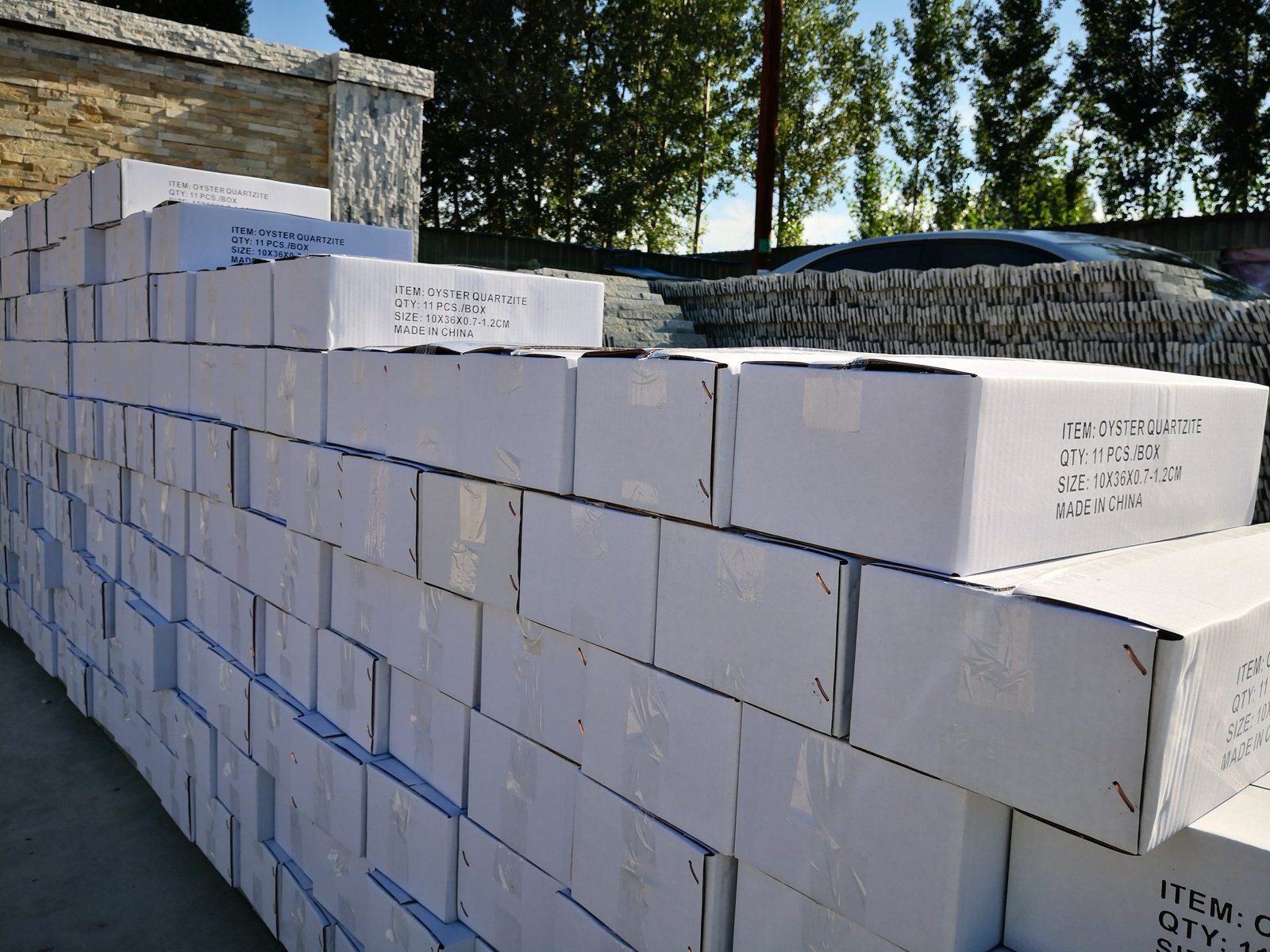
Compare the same container on FOB and DDP before you choose. The stone cladding cost breakdown shows how FOB, freight, and landed cost line up on real order sizes. If the DDP number beats your internal total, the border step belongs in the factory contract.
US Market Entry Checklist
Print this before you order the first container. Each line closes a failure mode from earlier in this guide.
- Fix the 10-digit HTS number on the PO and confirm the factory’s product matches it — worked granite 6802.23, other worked stone 6802.29, slate 6803.00, or a broker-reviewed code.
- Get your ISF data sheet ready at least 5 working days before the vessel loads; your forwarder or broker files it 24 hours ahead.
- Require an ISPM 15/IPPC-marked pallet and crate standard in the PO, with the certificate shipped with the cargo.
- Name your customs broker before the container leaves the yard, so the entry is prepared in parallel with the voyage.
- Model landed cost on FOB and DDP side by side; decide who owns the border step.
- Confirm payment terms — the standard 30/70 T/T cycle, an LC, or escrow — before production starts.
- Verify the applied duty in writing with the broker, since China-specific tariffs shift; never rely on last year’s rate.
Every line is checkable in minutes, and every one moves the failure risk from the port back to the planning table.
FAQ
How much does it cost to import stone from China to the USA?
The container cost is the sum of FOB value, ocean freight and insurance, applied duty, broker and port fees, and drayage. The duty line alone is roughly 4.2% at MFN for worked granite, with China-specific additional tariffs layered on top for Chinese-origin goods.
What is the tariff on natural stone imported from China?
The applied rate is MFN duty plus China-specific measures: the 4.2% baseline for most worked stone (free for slate), Section 301 duties on covered lines, and the across-the-board additional tariff that reached 20% in March 2025. Confirm the live rate with a broker at booking.
Do I need a customs broker to import stone?
Yes for a first or second container. A licensee broker files the ISF, prepares the formal entry, deposits duty, and manages general-order risk; the buyer remains the importer of record and owns the liability.
What documents are required to import stone into the USA?
Commercial invoice, packing list, bill of lading, certificate of origin, ISPM 15 certificate for wood packaging, and the ISF filing. A pre-shipment inspection record protects the declared grade and condition.
Can I buy stone DDP from a Chinese factory?
Yes. Top Stone Panels quotes DDP to US addresses, which includes freight, insurance, duty, and clearance in one price. It suits buyers who want a fixed landed cost rather than managing the border step themselves.
Conclusion
Importing stone to the USA rewards buyers who plan the border before the factory. Classification selects the rate, tariff layers set the real cost, and ISF, entry, and ISPM 15 decide whether the container clears fast or sits in storage.
- Put the 10-digit HTS code on the PO and verify the product matches it before production.
- Model the applied duty with your broker in writing, because China-specific rates have moved repeatedly since 2018.
- Write ISPM 15 pallet and crate treatment into the supplier contract, with the certificate shipped with the cargo.
- Compare FOB with a DDP quote for the same container before you own the border step.
Top Stone Panels ships stacked stone panels, thin veneer, Z-panels, flagstone, and columns from Xingang with the full export documentation set — COO, ISPM 15, and pre-shipment inspection video — under EXW, FOB, CIF, or DDP. Request a landed-cost quote at topstonepanels.com and test the numbers before you order.