This comparison breaks down exactly what each term means for stone panel imports, where the cost and risk transfer points fall, and which option typically makes sense for different types of B2B buyers — from first-time importers ordering a single container to established distributors running regular multi-container shipments.
FOB Xingang Explained: What the Buyer Controls
FOB stands for “Free On Board” and is always paired with a named port of shipment. For stone exports from Hebei province — China’s primary slate and quartzite production region — that port is almost always Tianjin Xingang (also written as Xingang/Tianjin). Under FOB Xingang terms, the seller’s obligations end the moment the goods pass the ship’s rail at Tianjin port.
Here is what FOB Xingang includes in the seller’s price:
- All production costs (raw material, cutting, quality control, packaging)
- Inland transport from the factory to Tianjin Xingang port
- China export customs clearance and documentation
- Port handling charges at Xingang (THC, loading, documentation fees)
- ISPM 15 fumigation certificate for wooden pallets (if required by destination country)
And here is what the buyer takes over from the ship’s rail onward:
- Ocean freight from Xingang to the destination port
- Marine cargo insurance
- Destination port charges (THC, customs brokerage, inspection fees)
- Inland delivery from the destination port to the warehouse or job site
- Import duties and taxes
The key advantage for the buyer is control. Under FOB, you choose your own freight forwarder, negotiate your own ocean freight rate, and select your own insurance provider. For stone imports — where container weight runs 22-25 metric tons per 20GP and freight rates are weight-sensitive — that control translates directly into cost savings, especially on repeat orders.
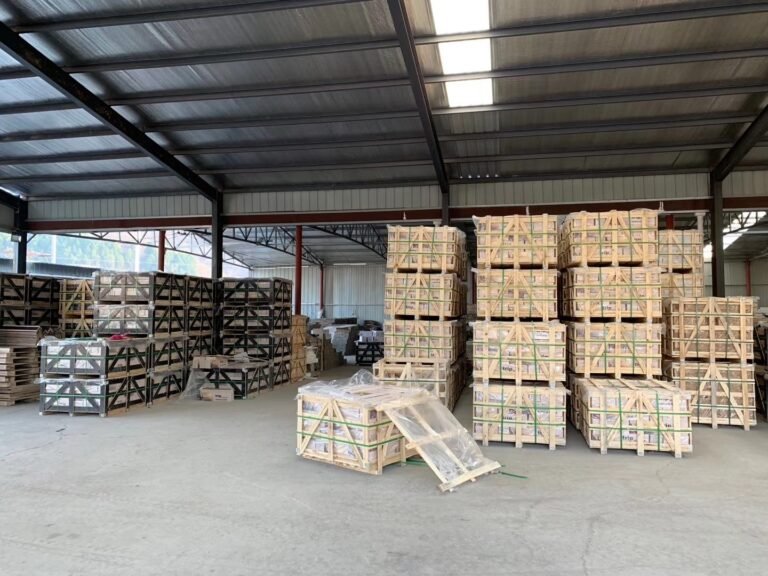
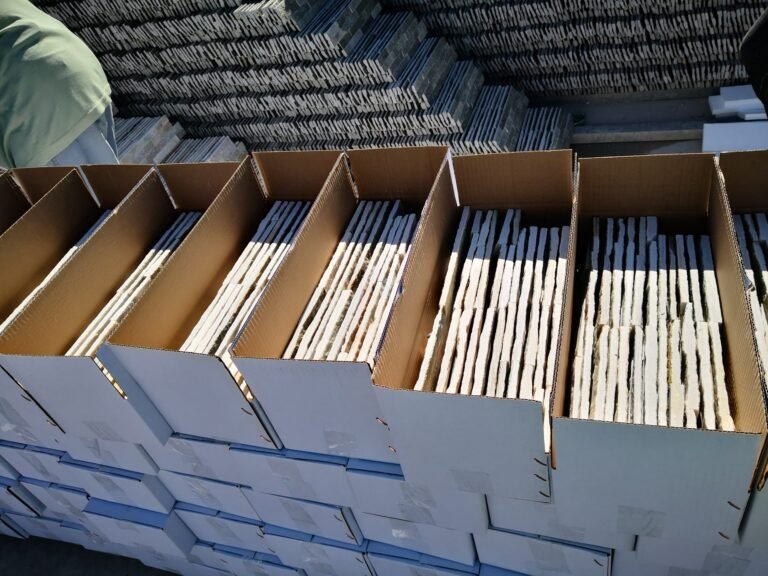
Top Stone Panels ships FOB Xingang as its default Incoterm, with all inland logistics, export documentation, and zero-breakage packaging included in the quoted price. The zero-breakage packaging protocol covers 3-5 layer reinforced cartons, fumigation-free plywood pallets, 4-6 high-tensile steel straps, and industrial-grade airbag fill inside the container.
CIF Destination Explained: What the Seller Bundles
CIF stands for “Cost, Insurance, and Freight” and is paired with a named destination port — for example, CIF Los Angeles or CIF Rotterdam. Under CIF terms, the seller arranges and pays for everything FOB includes, plus ocean freight and marine insurance to the destination port.
CIF includes in the seller’s price:
- Everything in FOB (production, inland transport, export clearance, port handling)
- Ocean freight from Xingang to the named destination port
- Marine cargo insurance (minimum cover per Institute Cargo Clauses C)
The buyer still handles:
- Destination port charges and customs brokerage
- Inland delivery from the port to the final destination
- Import duties, tariffs, and taxes
CIF sounds simpler — and for a first-time buyer, it often is. You receive a single price that covers everything from the factory gate in China to the arrival port in your country. But the simplicity comes with trade-offs that become more significant as your order volume grows.
The Hidden Cost in CIF: Freight Markup
When a stone factory quotes CIF, the ocean freight component is not at cost. The factory (or its freight agent) adds a margin to the freight rate — typically 10-25% above the spot rate they actually pay the shipping line. On a 20GP container from Xingang to Los Angeles, where the spot rate might be $1,800-$2,500, that markup adds $180-$625 per container. Across a 10-container annual program, that is $1,800-$6,250 in freight margin you are paying without seeing the underlying rate.
For high-volume buyers running regular shipments, that margin compounds quickly. It is the primary reason experienced stone distributors shift from CIF to FOB after their first two or three orders.
Side-by-Side Comparison: FOB Xingang vs CIF for Stone Panels
| Factor | FOB Xingang | CIF Destination |
|---|---|---|
| Seller covers | Production + inland + export clearance + port handling | All of FOB + ocean freight + basic insurance |
| Buyer covers | Ocean freight + insurance + destination costs | Destination port charges + inland delivery + duties |
| Risk transfers at | Ship’s rail at Xingang | Ship’s rail at Xingang (despite seller paying freight) |
| Freight rate visibility | Full — buyer negotiates directly | Limited — seller adds margin |
| Insurance control | Buyer selects provider and coverage level | Seller provides minimum cover (ICC-C) |
| Best for | Repeat buyers, 3+ containers/year | First-time importers, single orders |
| Cost per m² (typical, stone panels) | Lower by $2-4/m² at volume | Higher due to freight margin |
| Flexibility on shipping line | High — buyer chooses carrier | Low — seller’s preferred carrier |
One point worth emphasizing: under CIF, risk transfers at the ship’s rail at the origin port — the same point as FOB. The seller pays the freight, but the buyer carries the transit risk. If the container goes overboard between Xingang and Rotterdam, the buyer files the insurance claim. This is a common source of confusion for first-time importers who assume “seller pays freight” means “seller carries the risk.” It does not.
When FOB Xingang Saves Stone Buyers Money
FOB delivers measurable savings in three scenarios that cover most established stone importers:
Volume shipping. Once you are ordering 3+ containers per year, you qualify for contract freight rates with major shipping lines (Maersk, MSC, COSCO, CMA CGM). Those contract rates run 15-30% below spot rates. Under CIF, the factory’s freight agent is quoting you spot-plus-margin — you never benefit from the volume discount your own shipment volume earns.
Consolidation with other suppliers. Many stone buyers source complementary products — grout, sealers, metal lath, installation tools — from other Chinese factories. Under FOB, your freight forwarder can consolidate multiple supplier shipments into a single container (LCL to FCL consolidation), reducing per-unit freight costs. CIF does not allow this because each supplier arranges their own freight independently.
Insurance optimization. Stone panels are dense, heavy, and well-packaged when they come from a factory with a proper zero-breakage protocol. The actual cargo risk is low, which means the insurance premium should also be low. Under FOB, you select coverage that matches the actual risk profile. Under CIF, you get the minimum ICC-C coverage, which may or may not match your requirements, and you cannot easily upgrade without purchasing a separate top-up policy.
For a full breakdown of how freight, duties, and inland delivery combine into a landed cost per square meter, the natural stone cladding cost breakdown walks through every line item from FOB price to warehouse floor.
When CIF Makes Sense for Stone Buyers
CIF is not a bad deal in every scenario. Three situations favor it:
First import. If you have never imported from China before, CIF removes the complexity of finding a freight forwarder, negotiating ocean rates, and managing customs documentation at the destination port. The factory handles everything from their gate to your port. You learn the import process with one less variable to manage.
Small orders. For a single 20GP container — the standard MOQ for stone panel imports — the freight markup under CIF might total $200-$400. Spread across a full container of stone panels (roughly 550-650 m² depending on panel thickness and packaging), that is less than $1 per m². For a trial order, that premium buys simplicity.
No freight forwarder relationship. Building relationships with freight forwarders takes time, and the best rates come from consistent volume. If you are still in the sampling phase and have not committed to regular orders, CIF lets you defer that relationship-building until your import volume justifies it.
For buyers exploring the full range of trade terms beyond FOB and CIF — including EXW and DDP — the Incoterms guide for stone exports covers all four options with stone-specific examples and cost scenarios.
Stone-Specific Shipping Considerations That Affect Your Incoterm Choice
Stone panels are not a typical container cargo. Three characteristics make them logistically distinct from most manufactured goods, and those characteristics should influence your Incoterm decision.
Weight and Container Utilization
A 20GP container holds approximately 22-25 metric tons of payload. Stone panels, at 35-65 kg per m² depending on thickness and backing type, are a weight-limited cargo — you hit the container’s weight limit before filling its volume. This means every container from Xingang carries roughly the same square-meterage regardless of how efficiently the panels are stacked.
Under FOB, you can work with your forwarder to optimize container utilization — mixing panel types, adding corner pieces, or including display samples in the same container. Under CIF, the factory controls the container loading plan and may not prioritize your space optimization. For strategies on maximizing container utilization across multiple stone types, the MOQ and container mix guide covers mixed-container ordering in detail.
Packaging and Damage Risk
The packaging standard matters more for stone than for almost any other building material export. Stone panels are heavy, brittle, and subject to shock loads during container handling at transshipment ports. A factory that ships FOB with a zero-breakage protocol (reinforced cartons, steel-strapped pallets, airbag fill) is transferring undamaged goods to the ship’s rail. Under CIF, the same packaging standard applies, but the buyer has less visibility into how the factory’s freight agent handles the container during the ocean leg.
For detailed packaging specifications and what to verify before container loading, the container loading best practices guide documents every layer of the zero-breakage protocol used at Top Stone Panels.
Production Lead Time and Scheduling
Under both FOB and CIF, the factory controls the production schedule. Standard production lead time for stone panels from Xingang-area factories is 20-25 working days, with first orders running 25-30 days due to custom packaging setup. The difference comes at the shipping stage: under FOB, your forwarder books the vessel and you control the departure date; under CIF, the factory’s agent books based on their schedule, which may not align with your project timeline.
The import lead time planning guide maps the full timeline from purchase order to warehouse delivery, including the shipping-stage variables that differ between FOB and CIF.
How to Negotiate the Best Price Under Either Term
Whether you choose FOB or CIF, three negotiation levers consistently produce better pricing for stone panel imports:
Separate the freight quote. Even if you agree to CIF, ask the factory to show the FOB price and the freight component as separate line items. This gives you visibility into the freight markup and creates an easy path to switch to FOB on your next order when you have a freight forwarder in place.
Lock in freight rates for repeat orders. If you commit to a quarterly or semi-annual shipping schedule, negotiate a fixed freight rate for six months. Shipping line spot rates fluctuate monthly, and a committed volume gives you leverage to lock in a rate that protects both parties from volatility.
Use the 70/30 payment structure as leverage. Standard payment terms for stone imports from China are 30% T/T deposit at order and 70% balance before shipment. A buyer who consistently pays on time and provides loading confirmation quickly builds the trust that earns price concessions on both the stone and the freight. The T/T payment terms guide explains how the 30/70 split works in practice and when LC at sight becomes relevant.
For a broader look at the seven pricing factors that influence your FOB quote, the stone panel pricing negotiation guide covers raw material costs, processing complexity, order volume, packaging, and seasonality.
Frequently Asked Questions
What does FOB Xingang mean for stone panel imports?
FOB Xingang means the seller delivers the stone panels to Tianjin Xingang port in China and handles all export documentation and port charges. The buyer arranges and pays for ocean freight, insurance, and all destination costs from the destination port onward. Risk transfers from seller to buyer when the goods pass the ship’s rail at Xingang.
Is CIF more expensive than FOB for stone imports?
CIF typically costs $2-4 per m² more than FOB at volume, primarily because the factory adds a 10-25% margin to the ocean freight rate. For a single container, the premium is usually $200-$400. For repeat buyers ordering multiple containers per year, the cumulative savings from switching to FOB and negotiating your own freight rates are significant.
Who pays for shipping under CIF terms?
Under CIF, the seller arranges and pays for ocean freight and basic marine insurance to the named destination port. However, the cost is built into the quoted price — the seller does not ship for free. Risk transfers to the buyer at the origin port’s ship’s rail, even though the seller pays the freight.
Can I switch from CIF to FOB after my first order?
Yes. Most stone importers start with CIF for their first one or two containers, then switch to FOB once they establish a relationship with a freight forwarder. Ask your supplier to provide both FOB and CIF quotes from the start so you can compare the freight component and plan the switch when it makes financial sense.
What is the MOQ for stone panels shipped FOB from Xingang?
The standard minimum order quantity for stone panels shipped from Xingang is one 20GP container, which holds approximately 550-650 m² of stone panels depending on panel thickness, backing type, and packaging configuration. This MOQ applies under both FOB and CIF terms.
Bottom Line: Choose Based on Your Import Volume
The choice between FOB Xingang and CIF destination comes down to one question: how many containers do you plan to import per year?
If the answer is one or two — CIF is the pragmatic choice. You get a single price that covers factory-to-port logistics, you avoid the learning curve of managing a freight forwarder, and the premium per square meter is small enough to absorb into your project budget.
If the answer is three or more — FOB Xingang will save you money every single shipment. You control the freight rate, the carrier selection, the insurance coverage, and the consolidation options. Over a 12-month program, the savings compound into a meaningful margin improvement.
Either way, the stone quality, the packaging standard, and the production lead time remain the same. The Incoterm determines who manages the logistics — not how well the panels are made. Top Stone Panels offers both FOB Xingang and CIF (as well as EXW and DDP) on every quote, with transparent line-item pricing so you can see exactly what each component costs. Request a quote under both terms and compare the numbers for your specific destination port.