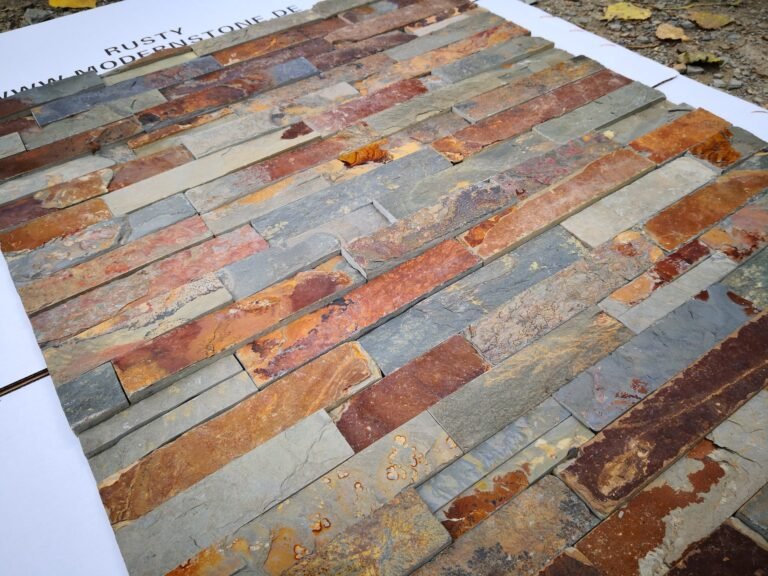
This guide breaks down the mineral science behind why slate and quartzite hold their color indefinitely under ultraviolet radiation, how that performance compares to every manufactured alternative on the market, and what it means for your next exterior cladding specification. Whether your project sits in the Arizona desert, on a Florida waterfront, or along a Mediterranean coastline, the physics of stone fade resistance remains the same.
What Natural Stone UV Stability Actually Means
UV stability refers to a material’s ability to resist chemical or physical degradation when exposed to ultraviolet radiation from sunlight. In the context of building materials, UV degradation manifests as color fading, chalking, surface erosion, and loss of structural integrity at the molecular level.
For natural stone, UV stability is not a coating or an additive—it is a fundamental characteristic of the rock itself. Slate and quartzite are metamorphic rocks forged under millions of years of directed pressure and temperatures exceeding 600°C deep within the Earth’s crust. The minerals that compose them—primarily quartz (SiO2), feldspar, and mica—possess electron bond structures that ultraviolet photons simply cannot break.
A UV photon at the solar spectrum’s peak intensity carries roughly 3.1 to 4.4 electron volts of energy. The silicon-oxygen covalent bond in quartz requires approximately 8 eV to dissociate. The math is straightforward: sunlight does not carry enough energy to alter the mineral lattice of quartzite or slate. That is why stacked stone veneer panels made from natural slate and quartzite maintain their color decade after decade, regardless of solar exposure.
The Mineral Science Behind Stone Fade Resistance
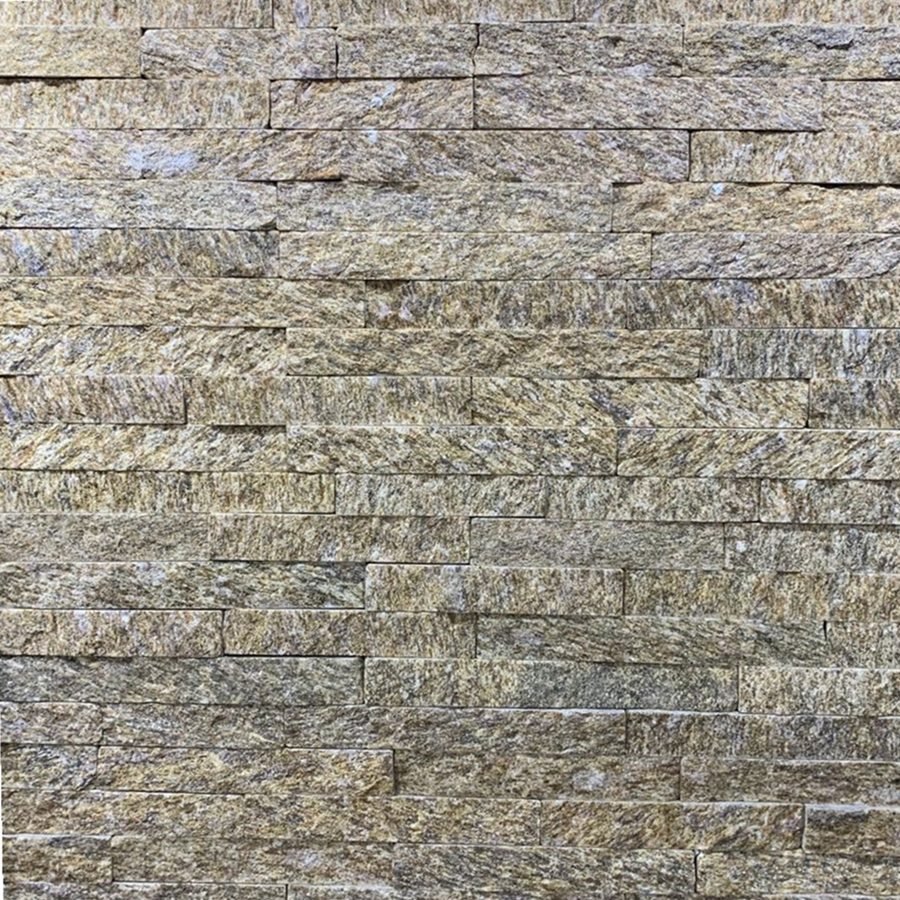
Understanding quartzite UV stability requires looking at how these rocks form. Quartzite begins as sandstone—layers of quartz grains deposited in ancient riverbeds and ocean floors. When tectonic forces drive those sandstone layers deep underground, temperatures and pressures rise until individual quartz grains recrystallize and fuse into a dense, interlocking mosaic. The resulting rock is essentially a solid mass of silicon dioxide crystals.
Quartzite mineral composition
- Quartz (SiO2): 90–99% — the dominant mineral, providing hardness (Mohs 7) and UV-immune color
- Feldspar: 0–5% — contributes subtle warm or cool undertones
- Iron oxide inclusions: trace amounts — these are locked within the crystal matrix, not surface-applied, so UV cannot reach or alter them
Slate mineral composition
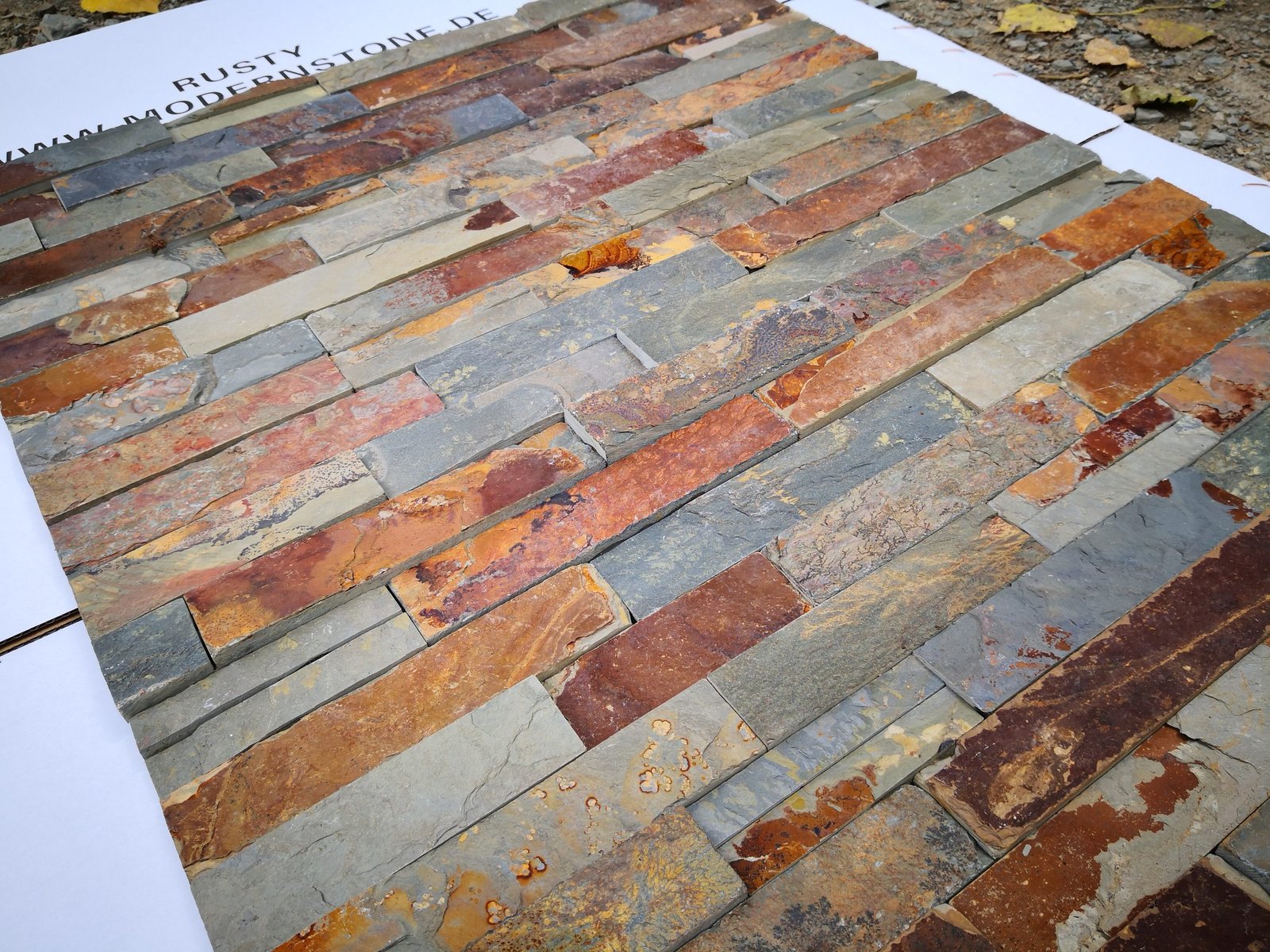
Slate originates from shale—fine-grained sedimentary mud. Under directed pressure, clay minerals recrystallize into aligned sheets of chlorite, muscovite, and biotite mica. The planar alignment creates slate’s signature cleavage planes and its range of grays, greens, blacks, and rusts. Because these colors derive from the mineral species themselves rather than from organic or synthetic pigments, slate color retention is effectively permanent.
The critical distinction: in natural stone, color is the mineral. There is no separate pigment layer that can detach, degrade, or bleach. This is why thin stone veneer products milled from genuine slate and quartzite carry inherent fade resistance as a core material property.
Natural Stone vs. Manufactured Stone: A UV Performance Comparison
Manufactured stone veneer (MSV) has improved considerably since its introduction, but its color technology still relies on a fundamentally different principle. MSV starts with Portland cement, lightweight aggregates, and iron oxide pigments poured into molds. The color is literally paint mixed into concrete.
| Property | Natural Stone (Slate / Quartzite) | Manufactured Stone Veneer |
|---|---|---|
| Color source | Mineral composition (inherent) | Iron oxide pigments in cement |
| UV degradation risk | None — minerals are lightfast | Moderate — pigments fade over 10–20 years |
| Surface chalking | Does not occur | Can occur as cement matrix erodes |
| Color depth | Through-body (full thickness) | Surface to ~5 mm depth |
| Expected color life (exterior) | Permanent (50+ years documented) | 10–25 years before visible shift |
| Fire rating | A1 non-combustible (see fire rating guide) | Varies; some products contain polymer modifiers |
The comparison becomes even more pronounced on south-facing walls and in high-altitude environments where UV intensity increases roughly 10–12% per 1,000 meters of elevation. For projects in Denver, Mexico City, or the Swiss Alps, exterior stone durability demands a material whose color cannot physically respond to UV wavelengths. For a deeper technical comparison, see our analysis of exterior stacked stone veneer vs. manufactured stone.
Why UV Resistant Stone Cladding Matters for Commercial Projects
Commercial facades and large-format residential exteriors represent multi-year investments. When cladding fades unevenly—with south-facing panels bleaching while north-facing panels hold color—the visual result is a building that looks aged and poorly maintained well before its structural life ends.
UV resistant stone cladding eliminates this asymmetry entirely. Because natural slate and quartzite do not respond to UV at all, every panel on every exposure maintains the same color profile throughout the building’s life. This is particularly relevant for:
- Commercial office facades where brand image and property value depend on exterior appearance
- Hotel and resort exteriors in tropical or desert climates
- Pool surrounds and water features where reflected UV doubles exposure intensity
- South- and west-facing residential walls that receive 6–10 hours of direct sun daily
- Highway-visible retail and mixed-use developments where curb appeal drives foot traffic
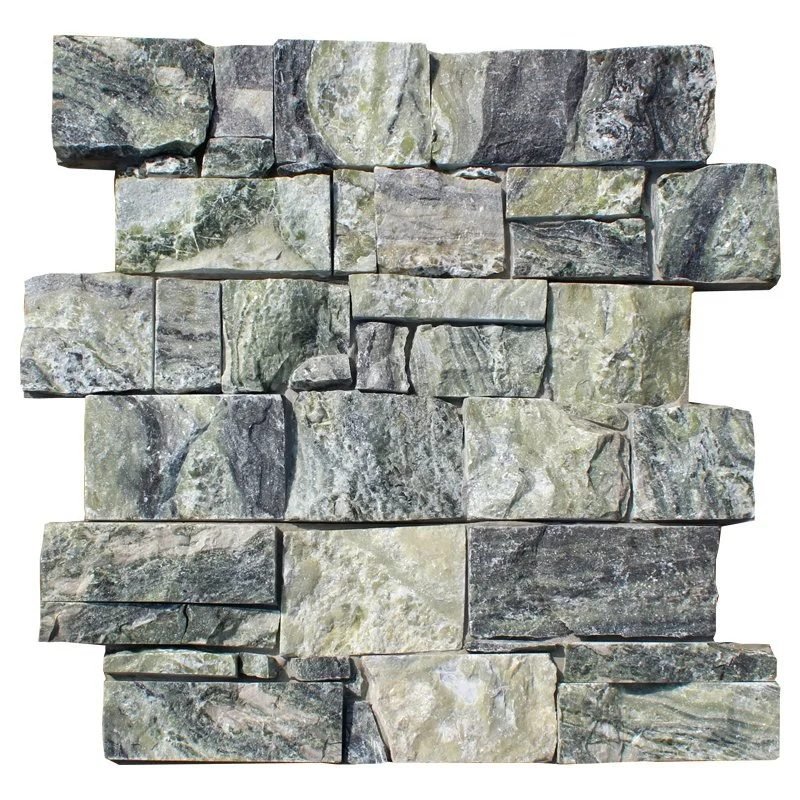
Top Stone Panels manufactures Z-panel stone cladding with interlocking male-female connections specifically designed for large commercial projects. The cement backing provides thermal expansion resistance, while the natural stone face delivers permanent color stability. Learn more about specifying cladding for large facades in our exterior walls specification guide.
UV Stability Across Climate Zones
UV intensity varies dramatically by geography. A cladding material that performs adequately in northern Germany may fail within a decade in Dubai. Here is how natural stone UV stability holds up across the climate zones most relevant to our distributor and builder partners:
Desert and arid zones (Arizona, Nevada, Middle East, Australia)
Annual UV index averages 9–11+. Manufactured stone pigments fade fastest here due to sustained high-energy solar exposure. Natural quartzite and slate show zero measurable color shift. Top Stone Panels products are rated for continuous service in a −30°C to +50°C temperature range, covering the full thermal cycle these environments produce.
Tropical and subtropical zones (Florida, Southeast Asia, Caribbean)
High UV combined with high humidity accelerates degradation of polymer-modified and cement-based claddings. Natural stone, with no organic binders in its color system, is immune to this compounded effect.
Temperate zones with high summer UV (Southern Europe, Southern US, South Africa)
Seasonal UV peaks in June through August subject exterior materials to 4–6 months of intense radiation annually. Manufactured stone may show fading after 8–15 annual cycles. Natural stone remains stable indefinitely.
High-altitude and high-latitude zones (Alpine regions, Scandinavia, Canada)
While overall UV hours are lower, altitude-driven UV intensity and snow-reflected radiation create concentrated exposure. The combination of freeze-thaw resistance and UV stability makes natural slate the default specification for these regions.
How Natural Stone Color Retention Works at the Molecular Level
The permanence of natural stone color comes down to electron bond energy. Every color we perceive in a material corresponds to specific wavelengths of visible light that the material does not absorb—the wavelengths it reflects back to our eyes.
In manufactured stone, iron oxide pigments absorb certain wavelengths and reflect others. Over years of UV bombardment, high-energy photons gradually excite electrons in the pigment molecules, weakening their bonds and altering the wavelengths they reflect. The color shifts. Reds become pink. Browns become tan. Blacks become gray.
In natural quartzite, the quartz crystal lattice absorbs almost no visible light—it is essentially transparent. Color comes from trace minerals and structural inclusions that are locked within crystalline bonds far stronger than anything UV can disrupt. Muscovite mica, responsible for the subtle silver-gray shimmer in many quartzites, has a bond dissociation energy of roughly 6.5 eV—still well above the 4.4 eV maximum carried by solar UV photons.
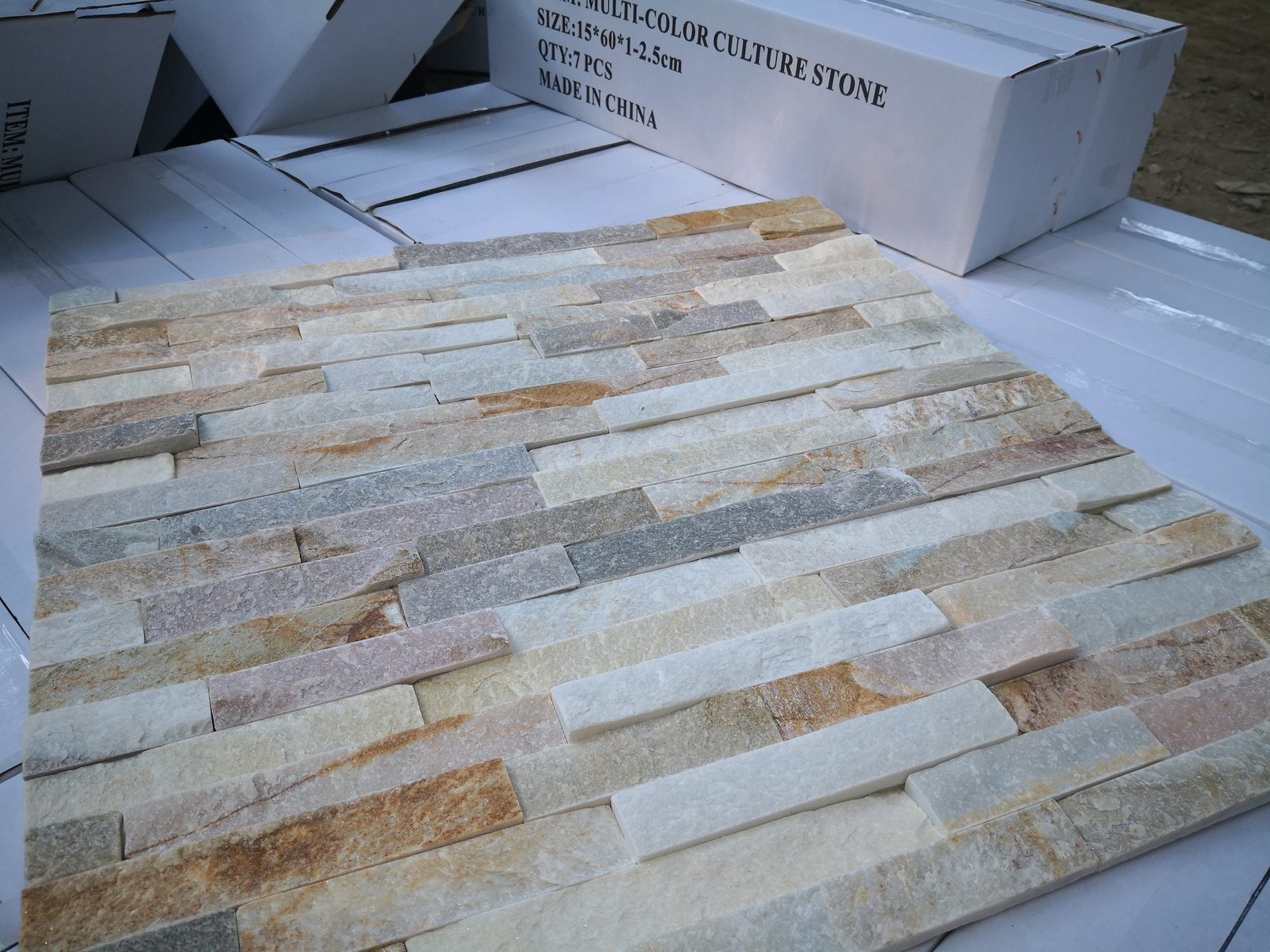
Slate’s color system works similarly. The dark grays and blacks come from carbonaceous matter trapped during metamorphism. The greens come from chlorite. The rusts and reds come from hematite inclusions formed under specific oxidation conditions millions of years ago. These are not coatings—they are the stone. Top Stone Panels applies batch-specific vein selection during processing to ensure consistent color across production runs, but the color itself is a permanent geological artifact. Explore the full range of textures in our thin ledgestone collection.
Exterior Stone Durability: UV Is Only Half the Equation
UV stability alone does not define exterior stone durability. A truly resilient cladding material must also resist thermal cycling, moisture ingress, freeze-thaw damage, salt crystallization, and biological growth. Natural stone’s geological formation gives it advantages across all of these vectors simultaneously.
- Freeze-thaw resistance: Low-porosity quartzite (water absorption typically below 0.5%) resists the hydraulic pressure of freezing trapped water. Read our full freeze-thaw resistance guide.
- Salt spray resistance: Coastal projects expose cladding to sodium chloride aerosols that corrode metals and etch cementitious surfaces. Dense quartzite and slate resist salt penetration.
- Fire rating: Natural stone carries an A1 non-combustible classification, the highest possible fire rating for building materials. See our fire rating and building code guide.
- Thermal stability: Top Stone Panels products are rated for −30°C to +50°C, covering the full operational range for exterior applications in nearly all inhabited climate zones.
This multi-hazard durability profile is why specifying authorities increasingly favor natural stone over composite or manufactured alternatives for long-life building envelopes. The trend is accelerating: our stone cladding market trends report for 2026 documents growing demand for materials that deliver 40+ year service life with minimal maintenance.
Choosing the Right Stone Format for UV-Exposed Applications
Top Stone Panels offers several product formats, each suited to different exterior applications where UV stability is a primary concern:
Stacked Stone (15×60 cm / 15×55 cm)
The split-face texture of stacked stone panels creates dramatic shadow lines that enhance visual depth on sun-drenched walls. The natural surface variation of quartzite and slate means that even as the sun angle shifts throughout the day, the wall presents dynamic visual interest without any color degradation.
Z-Panels (20×55 cm / 15.2×61 cm)
For large commercial facades, Z-panel cladding offers faster installation with interlocking connections. The cement backing adds dimensional stability under thermal cycling, while the natural stone face delivers the same permanent UV stability.
Thin Stone Veneer
Thin stone veneer reduces structural load requirements while maintaining full-thickness natural stone color. For retrofit projects where weight is a constraint, thin veneer delivers identical UV performance to full-thickness stone. See our comparison of thin veneer stone vs. full thickness stone.
Flagstone
For horizontal applications like pool decks, patios, and walkways, flagstone endures direct overhead UV plus reflected radiation from water and surrounding surfaces. Our flagstone patio design guide covers layout patterns that optimize both aesthetics and drainage.
Stone Columns
Stone column covers receive UV exposure on all sides, making them one of the most demanding applications for color retention. Natural stone’s through-body color ensures that columns look identical from every angle, year after year.
Installation and Maintenance: Protecting UV Stability in the Field
While natural stone itself is UV-immune, installation practices can support or undermine long-term exterior performance. A few field-tested recommendations:
Mortar and adhesive selection
Use polymer-modified thinset mortars rated for exterior stone application. The mortar bond must accommodate thermal expansion without cracking, which could allow moisture intrusion behind the veneer. Our mortar application guide covers substrate preparation, mortar mixing ratios, and curing protocols.
Sealer considerations
Natural stone does not require a sealer for UV protection—its color stability is inherent. However, a penetrating silane/siloxane sealer can enhance stain resistance and reduce water absorption in freeze-thaw environments. Choose a UV-stable penetrating sealer rather than a film-forming topical sealer, which can yellow or peel under UV exposure.
Flashing and weep systems
Proper flashing above and below stone-clad areas directs water away from the substrate. Even though the stone face will not degrade, protecting the wall assembly behind it extends the life of the entire system.
For projects comparing real and manufactured options, our guide on real stone vs. manufactured stone panels provides a detailed cost-benefit analysis that factors in long-term replacement and maintenance cycles.
Top Stone Panels: Quality Assurance for UV-Stable Stone Cladding
UV stability starts at the quarry, not the factory floor. Top Stone Panels operates with 18+ years of quarry-to-export experience from Yi County, Hebei—a region with extensive slate and quartzite deposits formed during the Precambrian and Paleozoic eras.
Our quality control process follows three stages:
- Raw material selection: Geologists evaluate each quarry block for mineral consistency, veining pattern, and color uniformity before extraction.
- In-process recheck: Infrared CNC diamond blade cutting ensures dimensional precision. Batch-specific vein selection matches panels within each production run for visual consistency.
- Final pre-shipment inspection: Every shipment is checked for dimensional tolerance, surface quality, color match, and backing integrity before container loading.
Products ship from Xingang/Tianjin port with a lead time of 20–25 working days. Trade terms include FOB, EXW, CIF, and DDP, with a standard payment structure of 30% T/T deposit and 70% before shipment. Our zero-breakage packaging system uses 3–5 layer corrugated cartons, fumigation-free pallets, 4–6 steel bands, and industrial airbags to protect every panel through international transit.
Every Top Stone Panels product carries inherent UV stability as a core natural stone property—no coatings, no additives, no maintenance required to maintain color integrity under solar exposure.
Specify UV-Stable Natural Stone for Your Next Project
Request samples, a product catalog, or a project-specific quotation from Top Stone Panels. Our team provides material submittal data sheets with UV stability documentation for architect and engineer approval.
Frequently Asked Questions
Does natural stone fade in sunlight?
No. Natural stone such as slate and quartzite does not fade in sunlight. These stones are formed over millions of years under extreme geological heat and pressure, producing mineral structures that are inherently lightfast. Unlike manufactured stone or concrete-based products that rely on iron oxide pigments, natural stone’s color comes from its mineral composition, which is immune to UV degradation.
What makes quartzite and slate UV resistant?
Quartzite and slate are UV resistant because their color derives from stable mineral compounds such as quartz, feldspar, and mica rather than from surface pigments or dyes. Quartzite forms when sandstone is subjected to extreme metamorphic heat, fusing silica grains into an interlocking crystalline matrix. Slate forms from compressed shale under directed pressure, producing aligned phyllosilicate minerals. Both processes create structures that cannot be broken down by ultraviolet radiation.
How does natural stone UV stability compare to manufactured stone?
Manufactured or cultured stone uses Portland cement and iron oxide pigments to simulate natural color. These pigments can fade, chalk, or shift in tone after 10 to 20 years of UV exposure. Natural stone contains no pigments whatsoever. Its mineral-based color is permanent, making natural stone UV stability far superior to any manufactured alternative for exterior cladding, pool surrounds, and south-facing walls.
Is natural stone suitable for high-sun climates like Arizona or the Middle East?
Yes. Natural slate and quartzite are ideal for high-sun climates. Their inherent UV stability means they maintain color integrity under continuous solar exposure in regions such as Arizona, Florida, Southern Europe, Australia, and the Middle East. Top Stone Panels rates its natural stone products for UV stable performance across a temperature range of −30°C to +50°C.
Does sealing or finishing affect natural stone UV resistance?
Natural stone’s UV resistance is an inherent property of the stone itself and does not depend on sealers or surface finishes. While penetrating sealers can enhance stain resistance and simplify maintenance, the stone’s color stability under UV exposure remains unchanged. A well-chosen UV-stable penetrating sealer will not yellow or degrade the stone surface over time.