Antidumping Duty on Stone Imports: Which Categories Are Covered, Which Are Exempt, and How to Prove Yours Is
Short answer: US antidumping and countervailing duty orders that touch stone are written around product categories, most prominently quartz surface products, not around a blanket “all stone from China.” Natural dimension stone such as granite, slate and quartzite cladding classified under HTS heading 6802 sits outside those orders, and thin stone veneer panels are the product you are selling, not the engineered quartz slabs the orders describe. But the exemption is only as good as your paperwork: the entry line needs the correct HTS classification, an honest goods description, a mill composition declaration showing natural stone mineralogy, and a chain of batch records that would survive a scope challenge or a CBP verification. The importer who can produce that chain in a phone call does not worry about scope; the one who cannot is carrying the risk on every container.
Every importer of Chinese stone eventually hears the word “antidumping” in a broker call or a competitor quote and cannot tell whether it applies to their stacked panels or quartz slabs, and the uncertainty is expensive in both directions: it stops buyers from quoting confidently, and it makes careless ones overconfident. This guide is the framework for that question: how AD/CVD orders actually define what they cover, where natural stone sits, and the exact document chain that proves your product is on the exempt side of the line.
How an AD/CVD Order Decides What It Covers
An antidumping order is not a tariff on a country; it is a legal description of a product, and everything else is commentary. The order names the merchandise scope, the HTS subheadings commonly associated with it, and the countries it targets, and the scope language controls even where an HTS number appears to fit or not. Dumping, the practice these orders address, means a producer selling in the US below its home-market price or below cost of production; countervailing duty addresses subsidy from a foreign government, and both are defined with their legal thresholds in the Commerce Department’s AD/CVD FAQ. The practical consequence for a stone buyer: the fact that a product is “stone from China” tells you nothing; the question is whether your product matches the scope description of an order, and the current orders list is searchable publicly on the same trade.gov AD/CVD database your broker lives in. The HTS chapter the stone trade lives in, 68 for worked mineral products, is published in the official Harmonized Tariff Schedule, and the classification line for your panels, 6802 versus 6810, is exactly what the HS codes guide for stone cladding walks through.
Where Natural Thin Stone Veneer Sits in That Picture
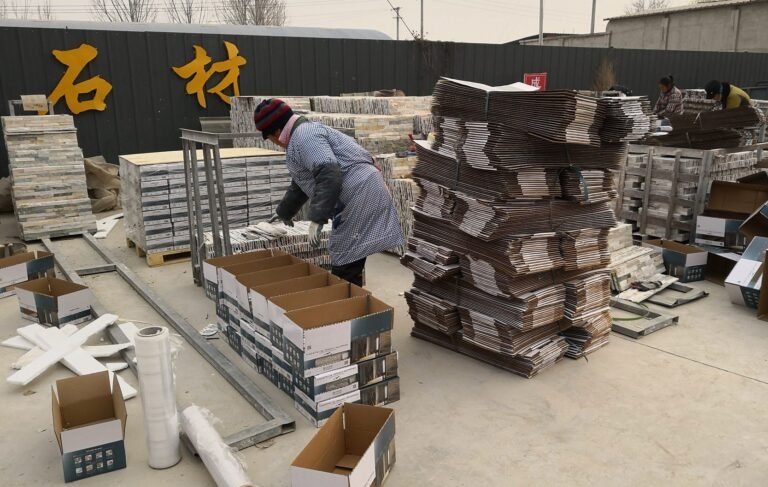
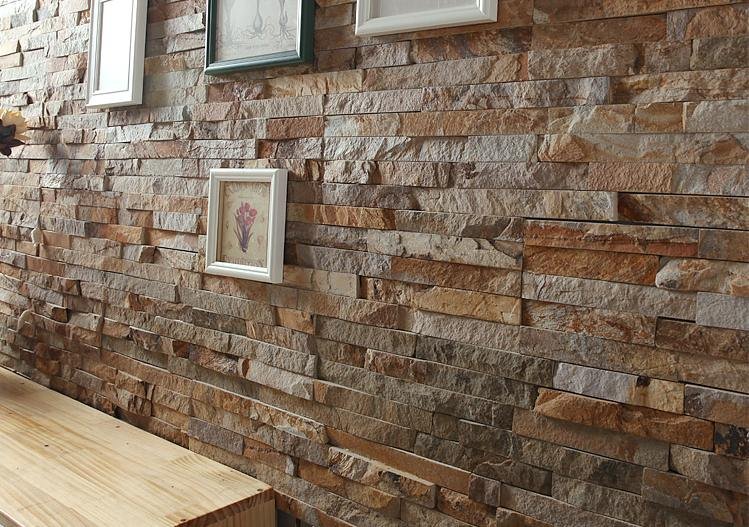
The orders that cast a shadow over the stone trade are aimed at quartz surface products, the engineered category: crushed quartz and resin compounded into slab, which is a manufactured product with its own tariff treatment, and the reason the difference between a quartzite panel and a quartz composite slab is not a marketing nuance but a legal one. Natural stone cut from a quarry, granite, slate, sandstone, quartzite, classified as worked stone under heading 6802, is not the merchandise those orders describe. A stacked stone veneer panel sawn from a natural block, with a mesh backing and a composition declaration naming its mineralogy, is dimension stone; a calcium-silicate or resin-bound panel is not. The same distinction decides building-code product claims, and the manufacturing-side differences are laid out in the real stone versus manufactured panels comparison. For importers of a genuine natural-stone line the honest summary is: outside the major stone-adjacent orders, but the exemption is a documentation outcome, not an assumption.
The Proof Chain That Keeps You Outside an Order
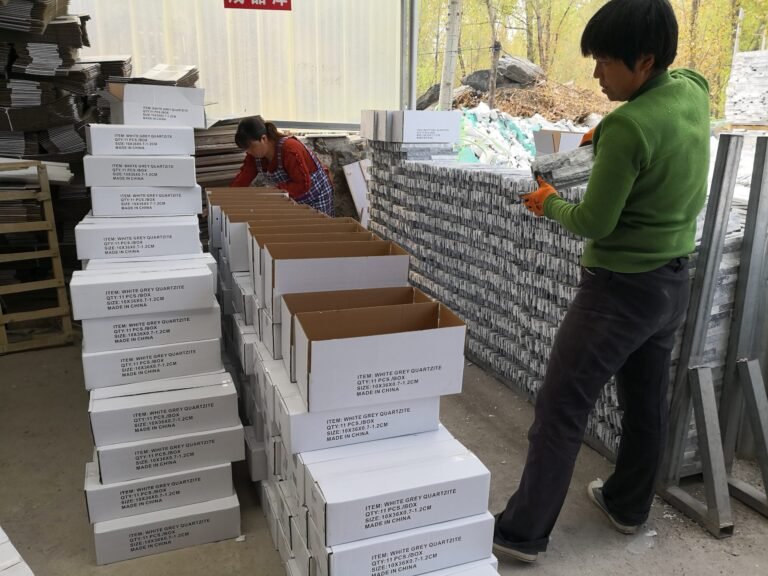
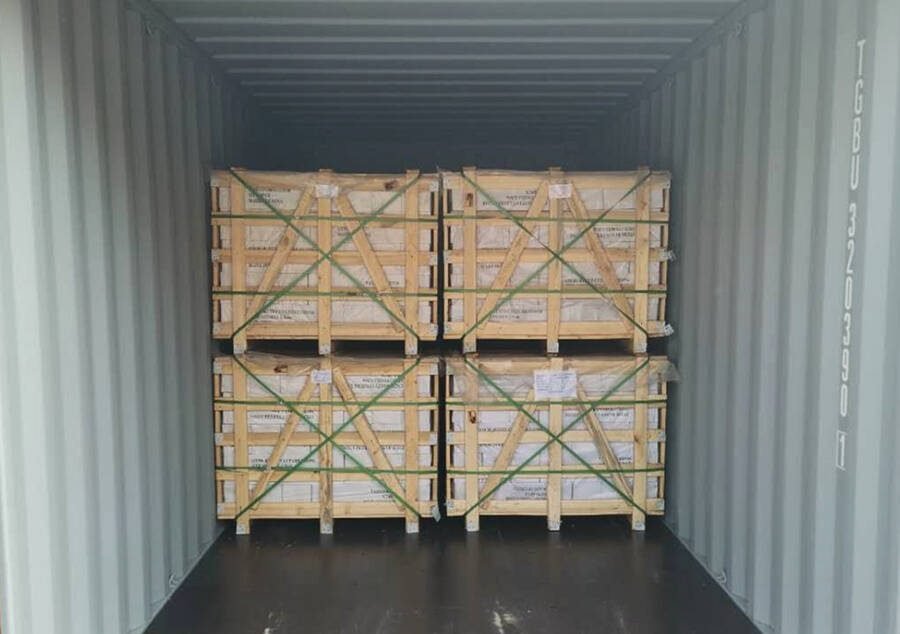
Five layers, in the order a broker or an auditor will ask for them. The commercial invoice and entry line: correct HTS classification, a goods description that says what the product is and what it is not, and a stated country of origin that matches reality. A mill composition declaration: a document from the producing factory naming the material as natural stone with its mineralogical identity, batch-level, signed and dated. Supporting test data where you have it: the same independent lab reports that prove mineral content for other purposes work double duty as scope evidence, and the metrics worth demanding are listed in the test report guide. Batch traceability linking the declaration to the physical goods: the crate labels, pallet cards and production records that tie the invoice line to the panels actually in the container, the discipline the dock inspection article covers from the receiving side. And the factory relationship that makes the whole chain credible: a supplier you have verified actually owns the quarry and line it claims, which is exactly what the factory audit checklist is for. The paperwork chain around normal entry is the same one in the customs clearance guide; the AD/CVD angle adds the composition-and-scope layer on top.
What Goes Wrong Anyway
Three failure modes importers actually hit. Mislabeling drift: a product line described loosely as “stone slab” on purchase orders and “quartz surface” on a factory catalog, two descriptions, one shipment, and an entry line that invites a question; the fix is one controlled vocabulary across quote, PO, invoice and carton. Sourcing from a trader without mill records: a trader can supply the panels but cannot supply a signed composition declaration tied to a batch, and on a verification request the gap shows immediately, so the direct-factory buying logic doubles as compliance logic. And scope creep by product mix: adding an engineered surface or a blended composite SKU to the same container, same vendor, same paperwork habits, and quietly importing a product inside an order while your natural stone line pays for the assumption; mix containers by product class with matching documents. When a scope question is genuinely unclear, the route is not a guess but a broker-submitted request for a CBP ruling or a scope inquiry to Commerce; both are public, documented, and cheap next to what an unresolved entry costs. Keep a dated file of every classification decision you rely on, because consistency across entries over time is itself evidence: an importer whose invoice description, HTS line and composition declaration have matched on every container for three years is a low priority for questions, and one whose paperwork shifts product to product invites exactly the scrutiny it is trying to avoid.
Reading a “DDP, All Duties Included” Quote Against This Risk
A seller offering DDP with duties inside the price is offering to own your entry risk, and the offer should be read with the scope question open. If the goods are covered by an order, either the seller is absorbing a duty line at a rate you cannot audit, or the entry is being made in a way that should worry you; neither possibility improves with volume. An importer of natural stone is better off owning the classification and the paperwork, keeping the FOB-versus-CIF-versus-DAP cost comparison transparent, and pricing the landed cost line by line as the cost breakdown guide teaches, because when a verification letter does arrive it names the importer of record, and that name is either prepared with documents or not. The per-square-foot conversion article covers where a duty surprise lands in your final number; on a low-margin distribution operation that is exactly the arithmetic you cannot afford to guess.
FAQ
Are natural stone panels from China subject to antidumping duty?
Generally no: the US AD/CVD orders in this product neighborhood target engineered quartz surface products, and natural dimension stone classified under heading 6802 is outside their scope. The exemption is real, but it is only enforceable with documentation that proves your goods are what you say they are.
How do I check whether a specific product falls under an order?
Two checks: search the current orders list in the Commerce trade.gov AD/CVD database by product and country, and verify the HTS classification against the official Harmonized Tariff Schedule. For a genuinely unclear case, your broker can request a CBP ruling or file a scope inquiry; the answer becomes a citable document.
What document proves my panels are natural stone?
A mill composition declaration naming the material and its mineralogy, issued at batch level, ideally backed by independent lab reports and tied to the physical goods through crate labels and production traceability records.
Can my supplier handle this paperwork for me?
A real producing factory can, and will, because the declaration is its own product identity; a trader or a workshop that hesitates over signing a composition statement is answering the question for you. Ask for a draft before you order, not during a verification.
Does the same logic apply importing into Europe?
The structure applies, the lists differ: EU trade defense measures have their own coverage and the CE/EN 1469 layer sits alongside, worked through in the EU market entry guide. Keep the composition-and-traceability chain either way; it is the proof object under every regime.