A stone panel can pass every visual check and still fail on the wall. The flexural strength test report is the number that predicts that failure, and most buyers never ask to see it. The pattern repeats on every import inquiry: the buyer compares photos, negotiates the FOB quote, and ships a container of stone whose bending capacity, pore volume, and freeze response were never once looked at. A single sheet of laboratory data changes that.
Top Stone Panels produces natural slate and quartzite panels factory-direct from the quarry in Yixian, Hebei, backed by a 3-step quality control process. Physical samples ship in 1 to 3 days, and test documents can be checked in the buyer’s own lab. Standard production runs 20 to 25 working days and the minimum order is one 20GP container on 30 percent deposit with 70 percent before balance. This guide walks through the three numbers that matter, the standards behind them, and the red flags that hide in the fine print.
- Flexural strength is tested under ASTM C880 or C99 in the US and EN 12372 in Europe, with results in MPa, where 1 MPa equals roughly 145 psi.
- Water absorption under ASTM C97 is measured as a percentage of dry weight, and freeze-thaw climates normally call for roughly 1 percent or less on exterior panels.
- Frozen water expands about 9 percent by volume, and the 100-cycle freeze-thaw mark is the working benchmark behind many cold-climate specifications.
- EN 12371 runs up to 168 freeze-thaw cycles and classifies stone as frost resistant when it keeps above 80 percent of its original flexural strength.
- Slate and quartzite lead on both low absorption and high flexural strength; porous sandstone and limestone need batch-by-batch proof before exterior use.
- A credible report names the standard, the batch, the specimen condition, and the lab, and a factory that sends physical samples in days lets you verify the numbers yourself.
- 1. What a Test Report Actually Proves
- 2. The Three Numbers Specifiers Read First
- 3. Flexural Strength and the Bending Test
- 4. Water Absorption and the Pore Problem
- 5. Freeze-Thaw Data and the 100-Cycle Bar
- 6. Reading the Report Header and Fine Print
- 7. Red Flags That Hide in Test Documents
- 8. Matching Test Data to Your Project Climate
- 9. Backing and Bond as a Second Test Subject
- 10. Verifying a Report Before You Order
- FAQ
- Conclusion
1. What a Test Report Actually Proves
A test report is not a certificate of approval and it is not a guarantee against failure. It is a measurement, taken at a moment and under conditions a laboratory wrote down. The value only means something when the standard is named, the sample represents the batch, and the specimen condition matches how the panel will live on the wall.
Think about what a report can and cannot do. It can tell you whether a panel bends before it breaks. It can tell you how much water the stone drinks. It cannot tell you whether the installer will leave a drainage cavity, whether the flashings are correct, or whether the crew applies adhesive to 100 percent of the backing. The report and the installation rules work as a pair, and reading only one of them is how facades fail.
That framing matters for the buying decision. When a supplier sends a test document, the first question is not whether the number is big enough. It is whether the page describes the buyer’s product, batch, and climate. A flexural figure for a 30mm slab says nothing about a 15mm veneer panel bonded to cement backing from the same quarry.
2. The Three Numbers Specifiers Read First
Three laboratory values carry most of the decision weight for exterior natural stone cladding: flexural strength, water absorption, and freeze-thaw performance. Each one answers a different failure question, and combined they describe how a panel behaves on a wall through a notional first decade of weather.
| Property | Standard | What it measures | Why it matters |
|---|---|---|---|
| Flexural strength | ASTM C880, C99, EN 12372 | Maximum bending stress before fracture | Predicts wind, impact, and thermal load survival |
| Water absorption | ASTM C97 | Weight gained as a percentage of dry weight | Condenses density, porosity, and frost risk per panel |
| Freeze-thaw resistance | ASTM C666, EN 12371 | Survival and strength retention after repeated cycles | Directly forecasts cold-climate spalling and delamination |
Compressive strength under ASTM C170 rounds out the classic battery, though for thin veneer panels it matters less. Veneer panels hang on walls; bending, not crushing, is the load mode that kills them. That is why the flexural figure is the one a specifier should demand first, and why this guide starts there.
3. Flexural Strength and the Bending Test
Flexural strength is the maximum stress a stone specimen tolerates under bending before it fractures. A rectangular sample rests on two supports, a load applies at the center at a controlled rate, and the stress at the breaking point is reported in megapascals. One MPa equals about 145 psi, and keeping the unit straight matters because two suppliers will happily quote you in different units.
ASTM C880 is the standard test for dimension stone flexural strength, ASTM C99 covers modulus of rupture, and EN 12372 is the European equivalent. The terminology follows the dimension stone vocabulary set out in ASTM C119, maintained with the Natural Stone Institute. The standard matters as much as the number. A report that says “flexural strength high” without naming a method is not data, it is decoration. Ask for the standard, the specimen dimensions, and the dry-versus-wet condition, because saturated stone consistently records lower bending strength than dry stone.
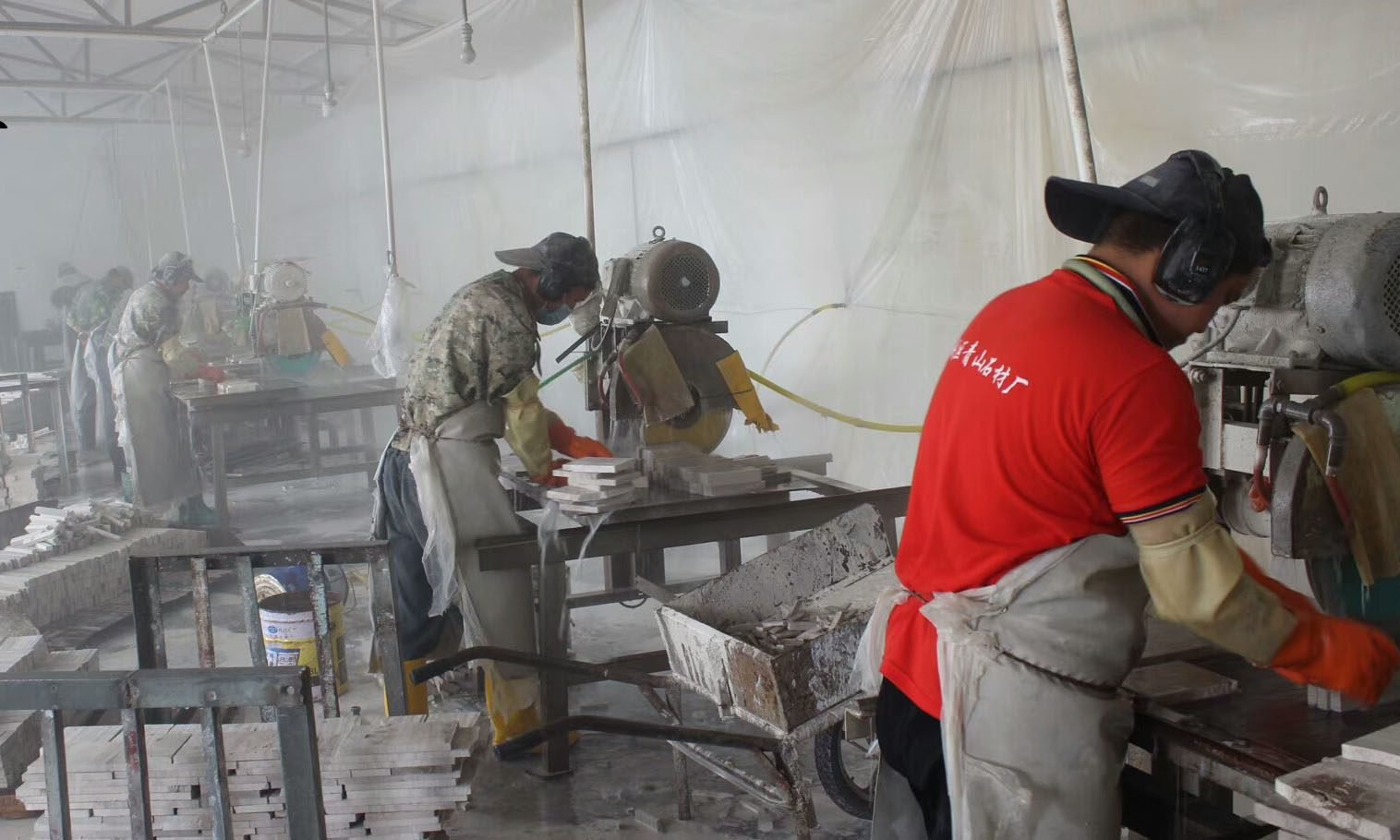
Dense, fine-grained families like slate and quartzite generally record the highest flexural values, all else equal. Open-grained, porous stone bends earlier and fails sooner, which is why the quarries in Yixian favor slate and quartzite for exterior panels in the first place. The factory route to a good flexural number is not clever marketing, it is the mineral itself and a cutting line that does not introduce micro-cracks. Infrared CNC diamond cutting keeps panel edges clean, and the finished-panel test catches a weak bond line that a slab test would miss. A panel with a dry epoxy line or a poorly bedded stone carries a hidden weak point, and the flexural test surfaces it.
4. Water Absorption and the Pore Problem
Water absorption is the percentage of a panel’s dry weight that soaking water can pull into its pores, and it is the fastest filter across competing cut sheets. The method is ASTM C97: dry the specimen, weigh it, soak it, weigh it again, and divide the gained weight by the dry weight. A 1 percent figure means one kilogram of water absorbed per 100 kilograms of stone.
Every natural stone is a sponge with a different appetite. A stone at 2 percent absorption has almost no open pore volume for water to enter; a stone at 6 percent carries a reservoir system inside every panel. That difference compounds in cold weather, because water expands roughly 9 percent by volume when it freezes. Ice forming inside a pore pushes against the mineral structure, and repeated cycles widen micro-cracks into visible spalling.
| Stone family | Typical absorption | Freeze-thaw guidance |
|---|---|---|
| Quartzite | Roughly 0.1 to 0.5 percent | First choice in freezing zones; specify below 3 percent |
| Slate | Roughly 0.1 to 0.5 percent | Excellent; specify below 2 percent for cold-climate walls |
| Sandstone | 2 to 8 percent or higher | Batch-dependent; dense lots work, porous lots fail |
| Limestone | Approximately 3 to 10 percent | Rarely specified in severe freeze-thaw zones |
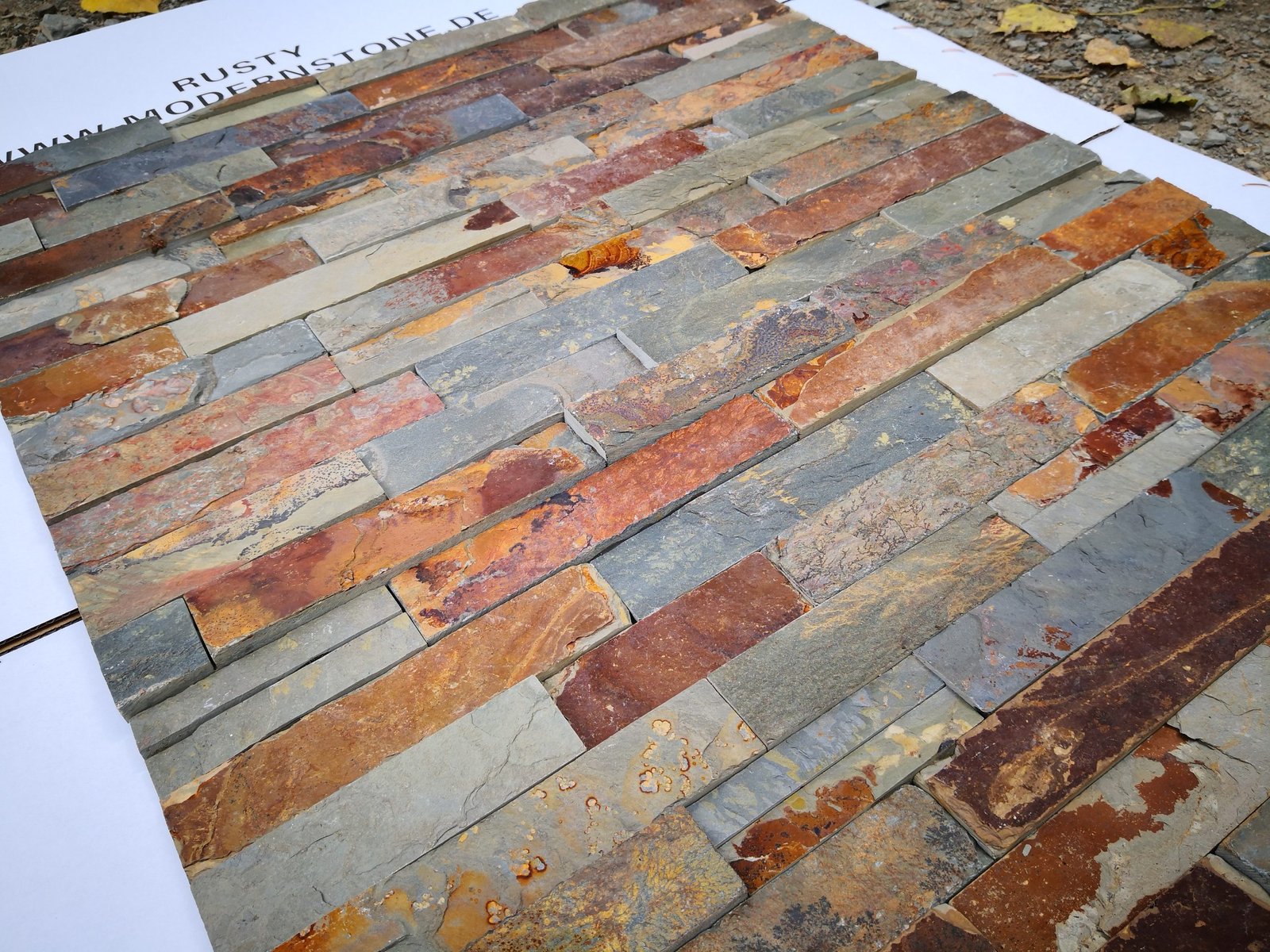
The ranges in that table are market test data, not a certification of any single quarry. They pair with a practical rule: for unsealed exterior cladding in a freeze-thaw climate, most specifiers prefer absorption at or below roughly 1 percent by weight. The layering matters too. A low-absorption stone face bonded to a cement backing adds a second material to the moisture question, which is why the bond system earns its own section later in this guide.
5. Freeze-Thaw Data and the 100-Cycle Bar
Freeze-thaw testing exposes saturated stone to repeated cycles of freezing and thawing, then checks for cracks, weight loss, and lost strength. The loop is simple and the numbers hide a lot: a chamber cycles between deep freeze and thaw around the clock, and a panel that gains weight across cycles is drinking water, usually at the backing. Stable weight across the full cycle count is the outcome a specifier wants filed in the submittal.
North American cold-climate specs commonly set 100 cycles as the working pass line for exterior veneer. Some suppliers quote a 25-cycle screening test as if it meant the same thing. It does not. Ask the cycle count out loud and compare it against the 100-cycle bar before you treat the document as evidence.
The standards split by what they exercise. ASTM C666 exercises the whole assembly, including a cement or mesh backing, which is exactly the load path a veneer panel carries on a real wall. EN 12371 tests the natural stone’s frost resistance directly and runs up to 168 cycles depending on the declared frost resistance class. Stone that retains above 80 percent of its original flexural strength after the full cycle count is classified as frost resistant. Ask for the before-and-after flexural numbers, not just the photographs, because strength loss is the honest measure of internal damage. The freeze-thaw resistance guide maps stone families by climate zone, and the anti-freeze testing guide explains the chamber method behind the 100-cycle bar.
6. Reading the Report Header and Fine Print
A credible report is a short document with five fields worth your attention. The test standard must be named, because a number without a method cannot be compared. The specimen identity must tie to a specific batch and stone type. The specimen condition must state whether the sample was dry, wet, or saturated, and whether it carried a backing. The reported value must include units, and the lab, its accreditation, and the issue date must sit on the page.
Many buyers stop at the value and never look above it. The header is where the report earns or loses its meaning. A report issued by a recognized third-party laboratory, tied to a production batch number, is a different document from a one-page table produced by the sales office, and the difference shows up in the fine print.
The same reading discipline applies across every property on the sheet. The full checklist of metrics for facade specifiers is covered in our guide to reading a stone panel test report, and the property-level deep dives live in the flexural strength and water absorption pieces. Read the header, read the condition, then trust the number.
7. Red Flags That Hide in Test Documents
Test documents show their quality in what they omit. A report without a stated standard is a decoration. A report with a standard but no batch identification cannot be traced to your product. A flexural figure for a 30mm slab presented as proof for a 15mm veneer panel is a category error, and it is common enough to be the first thing inspectors check.
Watch for the 25-cycle shortcut presented as full freeze-thaw testing. Watch for absorption described as “very low” when the standard and the percentage are absent. Watch for a single report reused across unrelated product lines, because the sample has to represent the batch in the container you are paying for.
A supplier who cannot produce the standard, the cycle count, the specimen condition, and a physical sample is asking you to buy the result on faith. That is the same supplier who stalls when you ask for pre-shipment inspection or batch photos. The red flags rarely appear in the data; they appear in the resistance to producing data at all.
8. Matching Test Data to Your Project Climate
Test numbers only make sense against the climate where the panels will hang. The map is not a single freeze line; it is a staircase of cycles. Zones 5 through 7 in North America, covering Minnesota, Wisconsin, Michigan, Colorado, and the Mountain States, run roughly 100 to 150 freeze-thaw cycles per year. Transition-season temperature swings of 30 to 40 degrees Celsius between day and night drive the count. Zones 4 and 5, the Northeast and Mid-Atlantic, run 60 to 100 cycles annually.
Zone-by-zone guidance falls out of that arithmetic. Below 3 percent absorption is the working line for quartzite in freezing regions, and below 2 percent for slate. Between roughly 3 and 5 percent lies a grey zone where performance depends on installation quality, sealing, and how severe the local winter actually is. Above about 5 percent, the risk of spalling and delamination rises sharply for unsealed exterior walls.
Coastal and desert climates flip the question. Freeze-thaw is irrelevant on the Gulf Coast, but the extreme thermal cycling of a desert, 50 degrees Celsius by day and 10 by night, creates the same expansion-contraction stress. Dense stone resists thermal cycling the same way it resists frost: low absorption, high density, small temperature reaction.
9. Backing and Bond as a Second Test Subject
A natural stone panel is never just the stone. Split-face panels bonded to cement or mesh backing carry a second material through every freeze-thaw cycle, and the report should say which assembly was tested. Portland cement-based adhesives absorb moisture and can degrade through their own freeze-thaw cycles, eventually releasing the stone from its backing even when the stone face itself is winter-perfect.
Marine-grade epoxy bonds behave differently. The epoxy layer is essentially waterproof, so the freeze-thaw load stays on the dense natural face where it belongs. A factory that can tell you the bond method on the same page as the test data has thought about the assembly; a factory that treats the stone and the backing as separate worlds has not.
The practical check is simple. Ask whether the freeze-thaw specimens carried the production backing or were bare stone. Ask whether the flexural test was run on the finished panel or on a raw slab. The finished-panel test is the one that predicts the product you will actually install.
10. Verifying a Report Before You Order
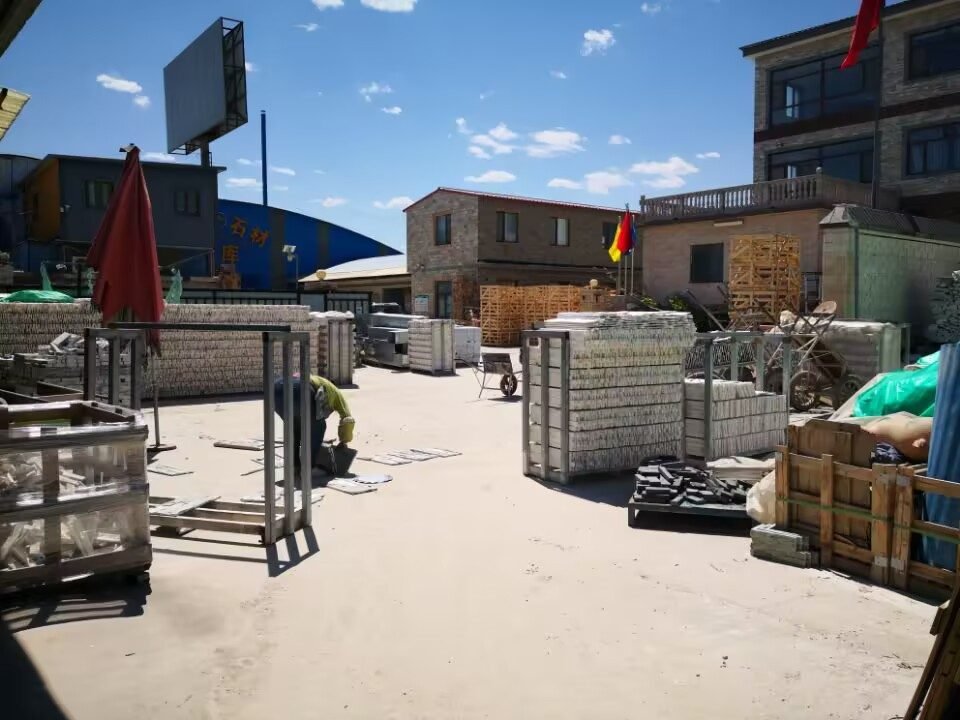
Verification does not require a full container order, and it does not require trusting the exporter. Physical samples close the loop. Top Stone Panels ships samples in 1 to 3 days so a buyer’s laboratory can run ASTM C97 or the 100-cycle freeze-thaw test on the exact stone destined for the container. A factory confident in its data sends samples in days, not weeks.
Run five checks before you wire the deposit. Confirm the standard naming and the specimen condition. Confirm the batch identity matches the production run. Confirm the panel assembly, not raw slabs, carried the test. Run an independent test on a physical sample when the project or the climate is severe enough to justify the cost. And hold the supplier to the pre-shipment inspection you already planned, because the report proves the material family, while the inspection proves this specific container.
Want the data before the container?
Top Stone Panels supplies slate and quartzite panels factory direct, ships physical samples in 1 to 3 days, and provides batch-backed test documentation with every order.
Explore the stacked stone product line · Thin veneer options
FAQ
What is a stone panel test report?
It is the laboratory document that reports a stone product’s measured properties, usually flexural strength, water absorption, and freeze-thaw resistance, with the test standard, sample, and batch identified on the sheet.
What is a good flexural strength for stone panels?
The benchmark depends on the standard and assembly, but dense, fine-grained stone such as slate and quartzite records the highest values, which is why specifiers compare the MPa figure against the standard named on the same report.
How many freeze-thaw cycles should a stone panel report show?
North American cold-climate specs commonly use 100 cycles as the pass line, while EN 12371 runs up to 168 cycles and classifies stone as frost resistant when it retains above 80 percent of original strength.
Can I verify a supplier’s test report myself?
Yes. Ask for physical samples shipped in days rather than weeks, and run the same ASTM or EN test on the exact stone destined for your order.
Why does water absorption matter for stone panel test reports?
Absorbed water expands about 9 percent by volume on freezing, so low absorption is the fastest predictor that the panel will survive repeated freeze-thaw cycles without spalling.
Conclusion
The test report is the cheapest insurance on a stone wall, as long as you read the header before you trust the number. Flexural strength under a named standard, water absorption under ASTM C97, and freeze-thaw data against the 100-cycle bar give you the three numbers that separate a thirty-year facade from a three-winter failure.
Key Takeaways
- Demand reports that name the standard, the batch, the specimen condition, and the lab before you compare any MPa or percentage.
- Use the freeze-thaw arithmetic of your project zone, roughly 1 percent absorption or less in freezing climates, before you specify.
- Verify with physical samples in days and with pre-shipment inspection, so the report describes the batch you actually receive.
Ready to put the numbers to work? Top Stone Panels provides test documentation, physical samples in 1 to 3 days, and factory-direct slate and quartzite panels. Send your project zone and the format you are measuring for a batch-backed material plan.