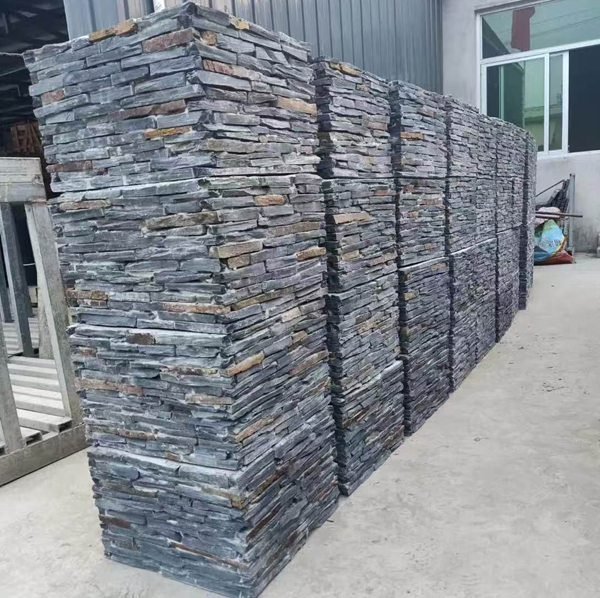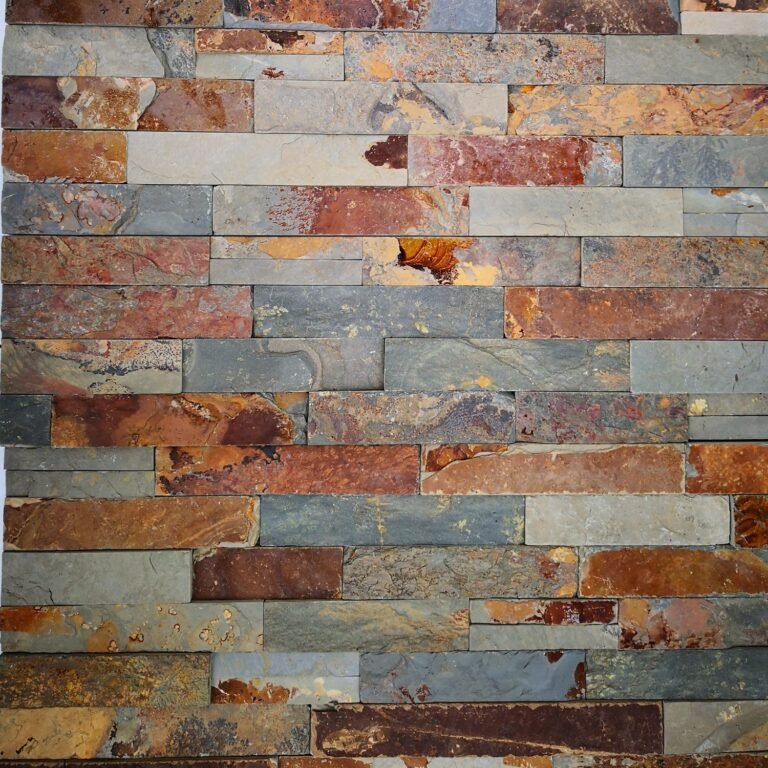
This guide breaks down the actual weight differences, cost components, freeze-thaw performance, and installation requirements for both categories. We draw on 18 years of quarrying and export experience at Top Stone Panels, where we produce over 80,000 m² of stacked stone panels and 60,000 m² of thin ledgestone every month from our facilities in Yixian, Hebei Province. Whether you are evaluating product lines to stock or specifying stone for a commercial build, the numbers below will sharpen your decision.
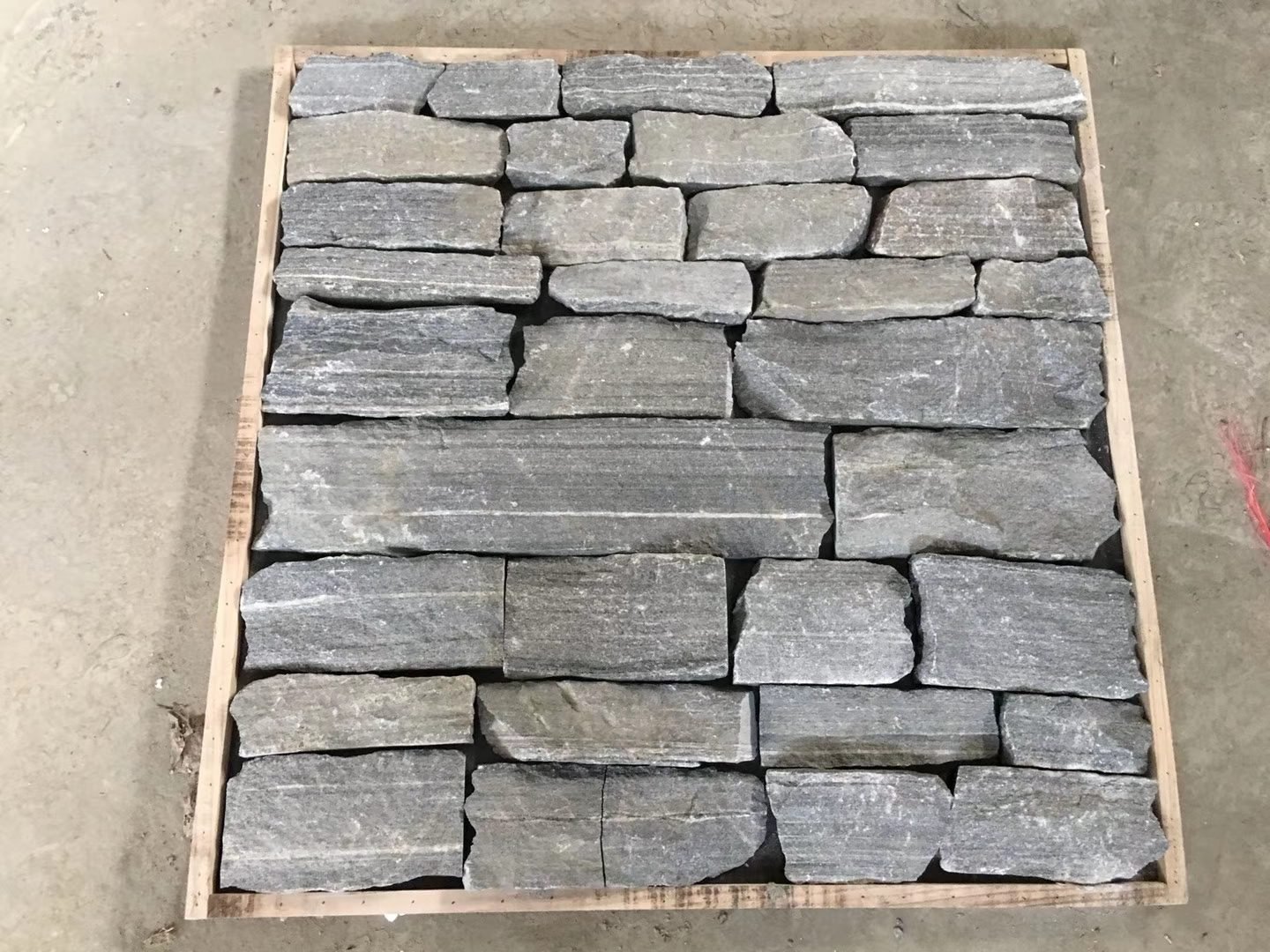
What Is Thin Veneer Stone?
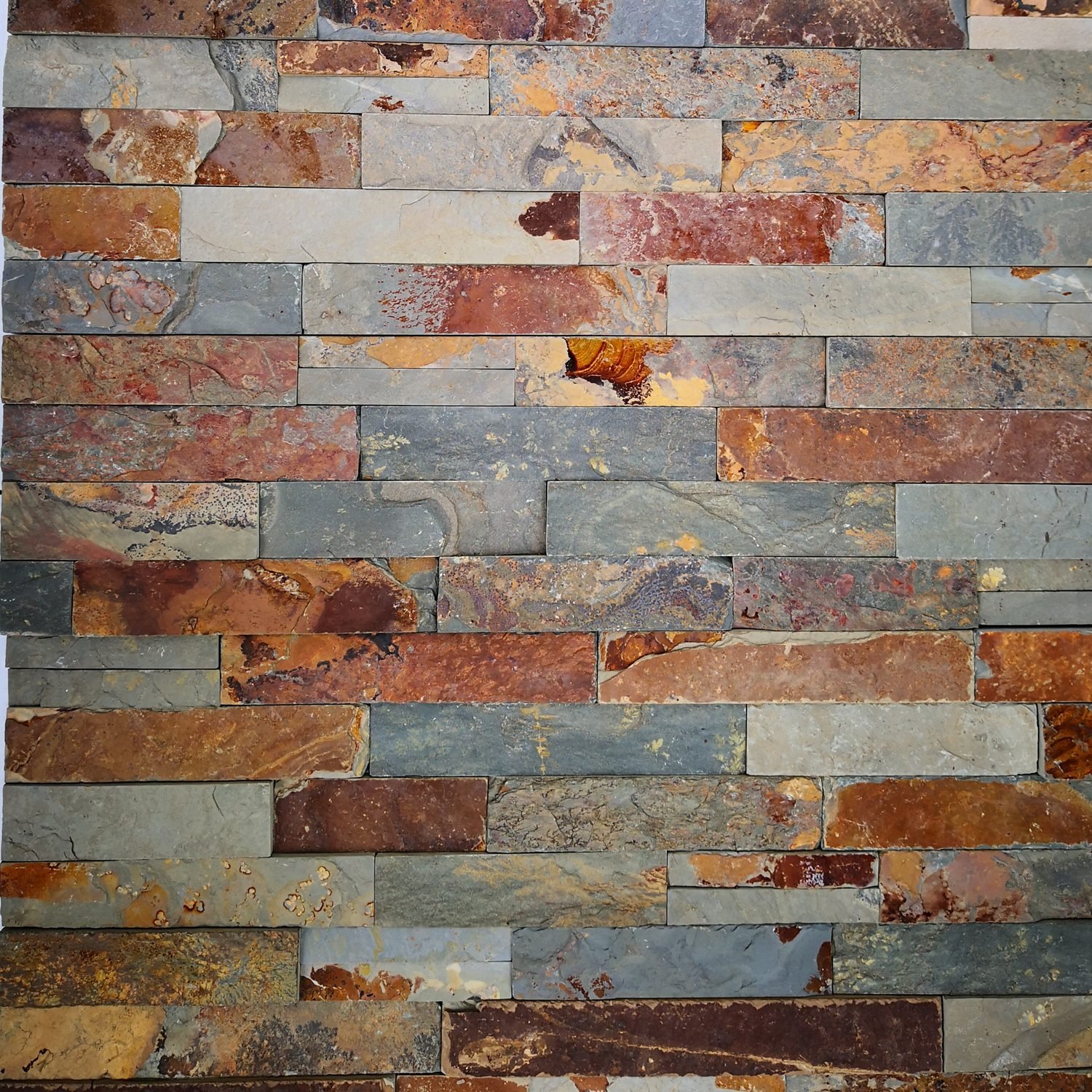
Thin veneer stone is natural stone sliced to a thickness of 8–15 mm (sometimes up to 25 mm for ledgestone profiles) and applied as a non-structural cladding layer. Unlike manufactured stone veneer, which is cast from concrete and pigments, genuine thin veneer stone retains the mineral composition, grain structure, and weathering resistance of the parent rock. At Top Stone Panels, we cut our thin stone veneer from slate, quartzite, sandstone, and marble using infrared CNC diamond blade cutting, which holds tolerances within ±1 mm across an entire production run.
Common formats include:
- Random strip veneer — loose strips in mixed widths, applied in coursing patterns
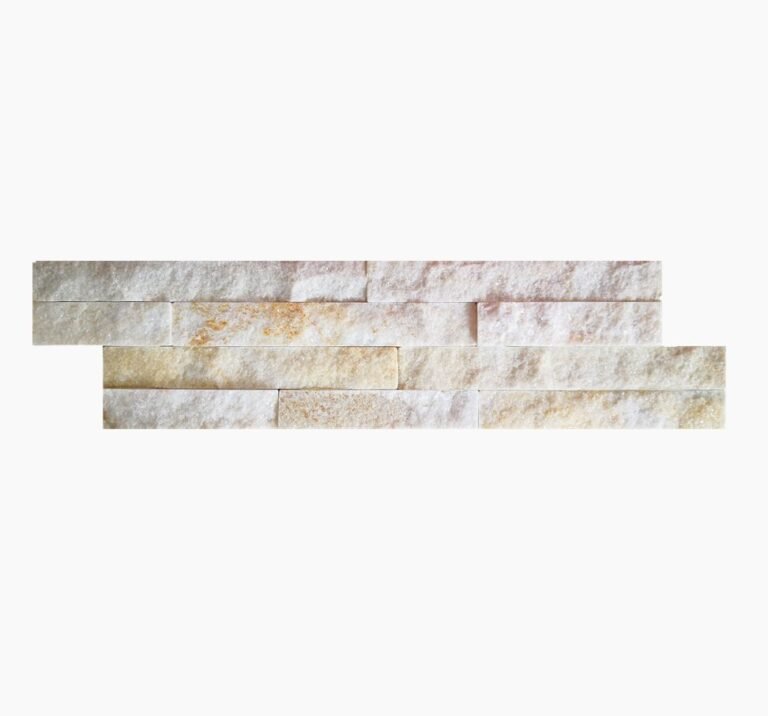
- Stacked stone panels — pre-assembled 15×60 cm or 15×55 cm modules with L-corners for clean returns
- Thin ledgestone — ultra-thin 36×10 cm strips for a low-profile horizontal look
- Z-panels — interlocking 20×55 cm units with cement or mesh backing for rapid installation
The defining advantage is weight. At 25–45 kg/m², thin veneer stone can be adhered directly to wood sheathing, steel studs, concrete block, or existing masonry without shelf angles, masonry ties, or additional structural support. That single fact changes the economics of an entire project.
For a deeper look at product categories, our guide on thin stone veneer explained covers material options, sizing, and specification details.
What Is Full-Thickness Stone?
Full-thickness building stone — also called full-bed stone, dimension stone, or ashlar masonry — refers to quarried stone cut to 50–150 mm or more in depth. It is laid in mortar beds as part of a structural or semi-structural wall assembly. Traditional stone farmhouses, civic buildings, and high-end estate facades often feature full-bed stone because of its mass, thermal inertia, and the depth of shadow lines it creates on a wall.
Full-thickness stone comes in several forms:
- Dressed ashlar — sawn or chiseled to precise rectangular dimensions
- Rubble stone — roughly shaped, laid in irregular courses
- Split-face — mechanically split to expose a rough, natural texture
The material itself is the same rock you find in thin veneer products — the difference is geometry. A 100 mm-thick slab of quartzite weighs roughly 260 kg/m². That mass demands a load-bearing wall, a concrete or reinforced masonry backup, steel shelf angles at every floor line, and corrosion-resistant masonry anchors. In seismic zones, the engineering requirements grow even more stringent.
Full-thickness stone still has its place. Projects that require blast resistance, extreme thermal mass, or a specific heritage aesthetic may justify the cost and structural overhead. But for the majority of commercial facades, residential exteriors, and interior feature walls built today, the performance gap between full-bed and thin veneer has narrowed to the point where full-thickness stone is often specified for tradition rather than technical necessity.
Weight Comparison: How Much Lighter Is Thin Veneer?
Weight is the single most consequential difference between the two systems. It dictates what substrates can carry the cladding, whether structural reinforcement is needed, how many square meters fit in a shipping container, and how fast installers can work.
| Metric | Thin Veneer Stone | Full-Thickness Stone |
|---|---|---|
| Typical thickness | 8–25 mm | 50–150 mm |
| Weight per m² | 25–45 kg | 100–160 kg |
| Weight per m² (stacked stone panels) | ~35 kg | N/A |
| m² per 20GP container | 500–800 m² | 150–300 m² |
| Substrate requirement | Wood, steel, concrete, existing masonry | Reinforced masonry or concrete backup |
| Structural anchors needed | No (adhered system) | Yes (shelf angles, ties at every course) |
The 60–75% weight reduction is not a marginal gain. On a 500 m² commercial facade, switching from full-thickness limestone at 130 kg/m² to thin quartzite veneer at 35 kg/m² eliminates approximately 47,500 kg of dead load. That is roughly 47.5 metric tonnes the structural engineer does not need to account for in the foundation and framing design. For wood-frame construction — which is dominant in North American residential building — thin veneer stone is often the only natural stone option, because full-bed masonry simply exceeds the load capacity of the wall system.
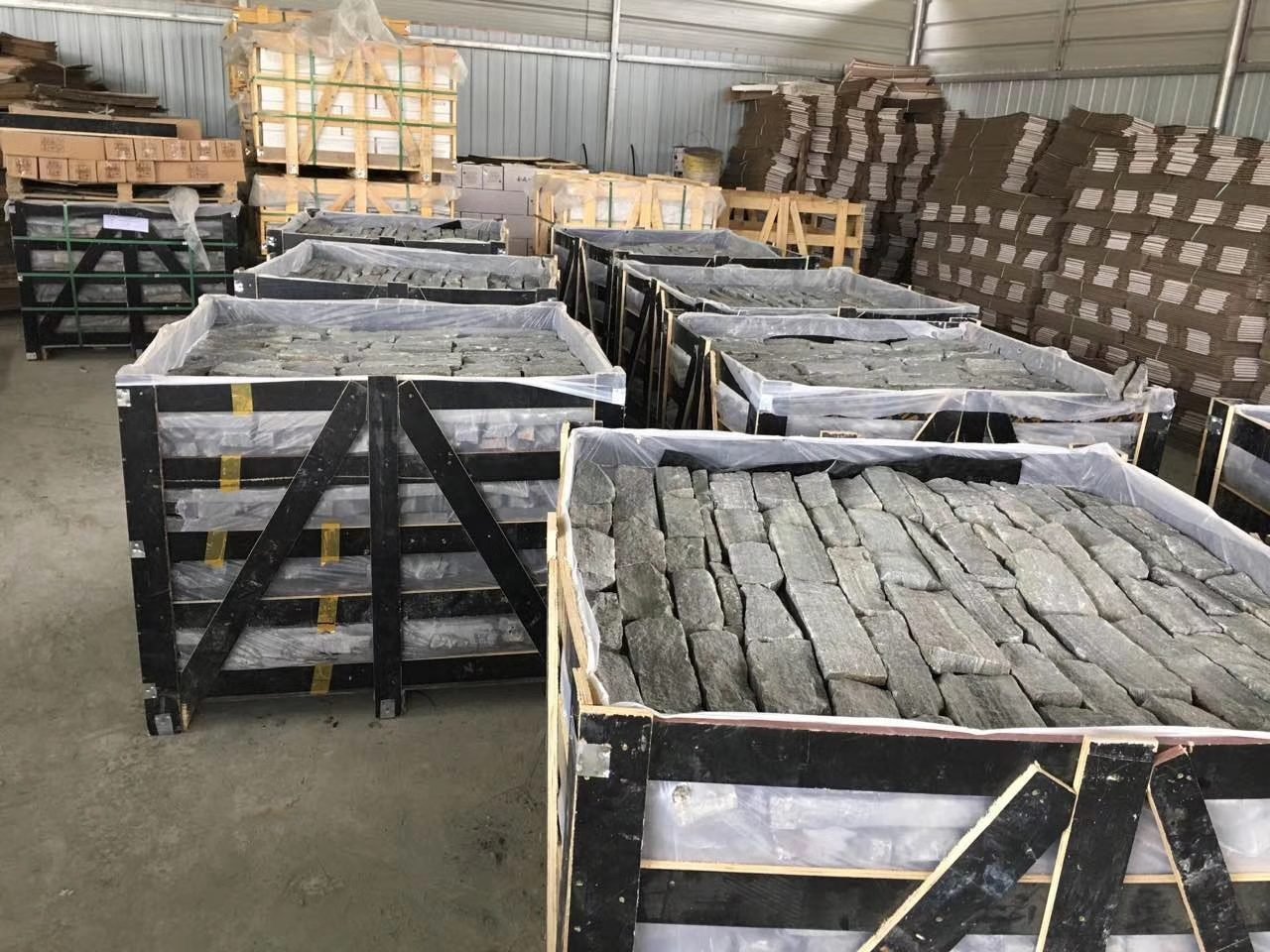
Shipping density matters for international sourcing. A 20-foot general-purpose container maxes out at around 27 tonnes of payload. With thin veneer at 35 kg/m², you can ship 700+ m² in a single container. With full-thickness stone at 130 kg/m², that same container holds roughly 200 m². For distributors managing freight costs on containerized imports from China, the per-m² shipping cost of thin veneer stone is 60–70% lower.
Cost Analysis: Material, Shipping, and Installed Cost
Price comparisons that only look at material cost per square meter miss the bigger picture. A realistic comparison must account for four layers of cost:
- Material cost (FOB port) — thin veneer stone is typically 20–35% cheaper per m² than full-thickness stone of the same lithology, because less raw material is consumed per unit of coverage and CNC sawing yields more m² per tonne of quarried block.
- Freight and logistics — as noted above, thin veneer ships 2.5–3.5× more coverage per container. On a CIF basis from Tianjin Xingang to a North American or European port, freight adds $3–8/m² to thin veneer vs. $10–22/m² to full-thickness stone.
- Structural costs — full-bed stone requires shelf angles ($15–35/m²), masonry ties ($4–8/m²), and sometimes additional concrete or steel in the backup wall. Thin veneer eliminates all of these line items.
- Labor and installation — a skilled mason can set 8–12 m² of full-bed ashlar per day. A thin veneer installer, using modified thin-set mortar, can cover 15–25 m² per day. On a 400 m² project, the labor savings alone can exceed $8,000–$15,000 USD depending on local wage rates.
When all four layers are summed, thin veneer stone typically delivers a 30–50% total installed cost advantage over full-thickness stone. The savings widen on projects above two stories, where the engineering and scaffolding costs for full-bed masonry escalate sharply.
For distributors evaluating which product lines to stock, thin veneer formats like stacked stone panels and thin ledgestone offer higher margin potential because the freight-per-unit is lower and the customer base is broader (any contractor can install thin veneer; only masons install full-bed stone).
Performance: Freeze-Thaw, Fire Rating, and Durability
A common objection from specifiers who have not worked with thin natural stone veneer goes like this: “If it is that thin, it must be fragile.” The objection confuses thickness with durability. Freeze-thaw resistance, fire performance, and UV stability are functions of the rock type and its mineralogy, not the slab thickness.
Freeze-Thaw Resistance
Natural slate and quartzite — the two most common thin veneer stone materials — have water absorption rates below 0.5% (slate) and below 0.2% (quartzite) when tested per ASTM C97. Low absorption means minimal water ingress, which means minimal expansion pressure during freeze cycles. Top Stone Panels thin veneer products are rated for continuous exposure from -30°C to +50°C without cracking, spalling, or bond failure. Full-thickness stone of the same lithology performs identically in freeze-thaw testing. The performance gap between thin and thick is essentially zero when the parent rock is the same.
Manufactured stone veneer, by contrast, typically absorbs 6–12% water by weight. This is one reason why natural stone veneer consistently outperforms manufactured alternatives in cold-climate durability studies.
Fire Rating
Natural stone is non-combustible. Both thin veneer and full-thickness stone achieve an A-grade (Class A) fire rating per ASTM E84 and EN 13501-1 testing standards. There is no fire performance advantage to going thicker. Thin veneer stone provides the same non-combustible surface as a 100 mm ashlar wall.
UV Stability and Salt Spray Resistance
Pigmented concrete products — including manufactured stone veneer — fade under prolonged UV exposure. Natural stone does not. The color in slate, quartzite, and sandstone comes from iron oxides and mineral inclusions locked into the rock matrix. UV radiation cannot alter these minerals. Top Stone Panels thin veneer products are UV stable and salt spray resistant, which makes them suitable for coastal projects where full-thickness stone would traditionally be specified. The Natural Stone Institute publishes additional guidance on stone selection for aggressive environments.
Impact Resistance
This is where full-thickness stone retains a measurable advantage. A 100 mm block of granite can absorb significant impact energy before cracking. A 12 mm quartzite veneer panel, adhered to a rigid substrate, will resist normal weather and incidental contact but is more vulnerable to high-energy impacts such as vehicle collision or falling debris. For most wall cladding applications — residential facades, commercial lobbies, landscape feature walls — impact resistance is not a governing concern. For bollard-level protection or retaining wall faces subject to rock fall, full-thickness stone or a reinforced thin veneer assembly should be specified.
Installation Differences: Labor and Substrate Requirements
The installation gap between thin veneer and full-thickness stone is where project schedules either stay on track or slip.
Substrate Preparation
Thin veneer stone installs on any structurally sound, flat substrate: plywood or OSB sheathing (with a weather-resistive barrier and metal lath), concrete masonry units, poured concrete, cement board, or steel stud walls with a cementitious backer. The key requirement is a flat surface within 6 mm over 3 meters. No shelf angles, no masonry ties, no weep holes in most residential applications.
Full-thickness stone requires a reinforced concrete or masonry backup wall, corrosion-resistant shelf angles anchored to the structure at every floor line, adjustable masonry ties connecting the stone wythe to the backup, a 50 mm air cavity for drainage, and weep holes at the base. The wall assembly is deeper, heavier, and involves more trades (structural steel, masonry, waterproofing).
Installation Speed
Thin veneer stone is set with polymer-modified thin-set mortar, the same adhesive system used for ceramic tile. An experienced installer covers 15–25 m² per day. Pre-assembled formats like interlocking Z-panels push installation speed even higher, because the interlocking edges eliminate coursing layout and the mesh or cement backing provides a consistent bond surface.
Full-bed ashlar masonry moves at 8–12 m² per day for a skilled mason team. Rubble stone is slower still, at 4–8 m² per day, because each piece requires individual shaping and fitting.
Who Can Install
This distinction matters for distributors who sell to a broad contractor base. Thin veneer stone can be installed by tile setters, siding contractors, carpenters, and general contractors — not just masons. In markets where qualified masons are scarce (which is most of North America and Western Europe right now), this dramatically expands the addressable market for thin veneer products. Full-thickness stone installation is restricted to masonry contractors, and the trade labor shortage in many regions has pushed masonry bids 30–50% above thin veneer installation costs.
Best Applications for Each Type
Neither product is universally better. Each has applications where it is the clear winner.
Where Thin Veneer Stone Wins
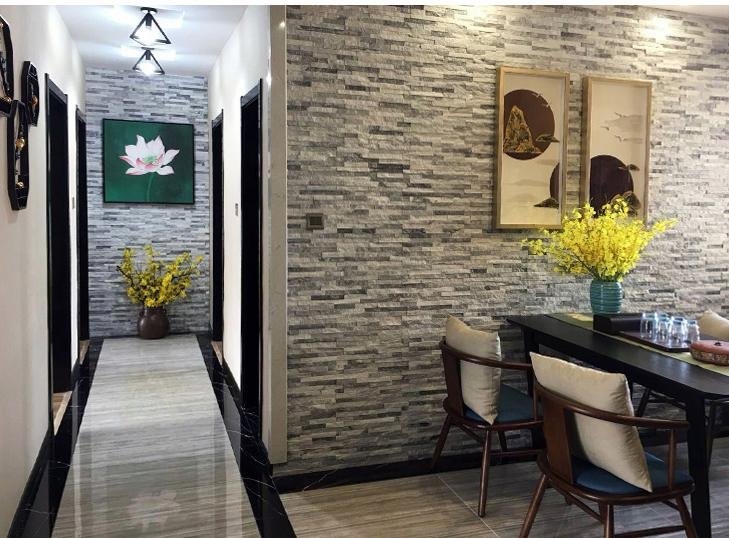
- Wood-frame residential exteriors — the only natural stone option for stick-built homes
- Interior feature walls and fireplaces — low weight means no floor reinforcement needed
- Commercial facade renovations — can be applied over existing cladding without demolition
- Multi-story buildings — weight savings compound with every floor
- Landscape pillars and column wraps — see our stone column products for pre-formed options
- Shipping-sensitive projects — remote sites or island projects where freight per m² is a major budget line
Where Full-Thickness Stone Wins
- Load-bearing masonry walls — where the stone is part of the structural system
- Heritage restoration — matching original construction in listed buildings
- High-impact zones — retaining walls, bridge abutments, bollard-level protection
- Extreme thermal mass designs — passive solar buildings that use stone mass for temperature regulation
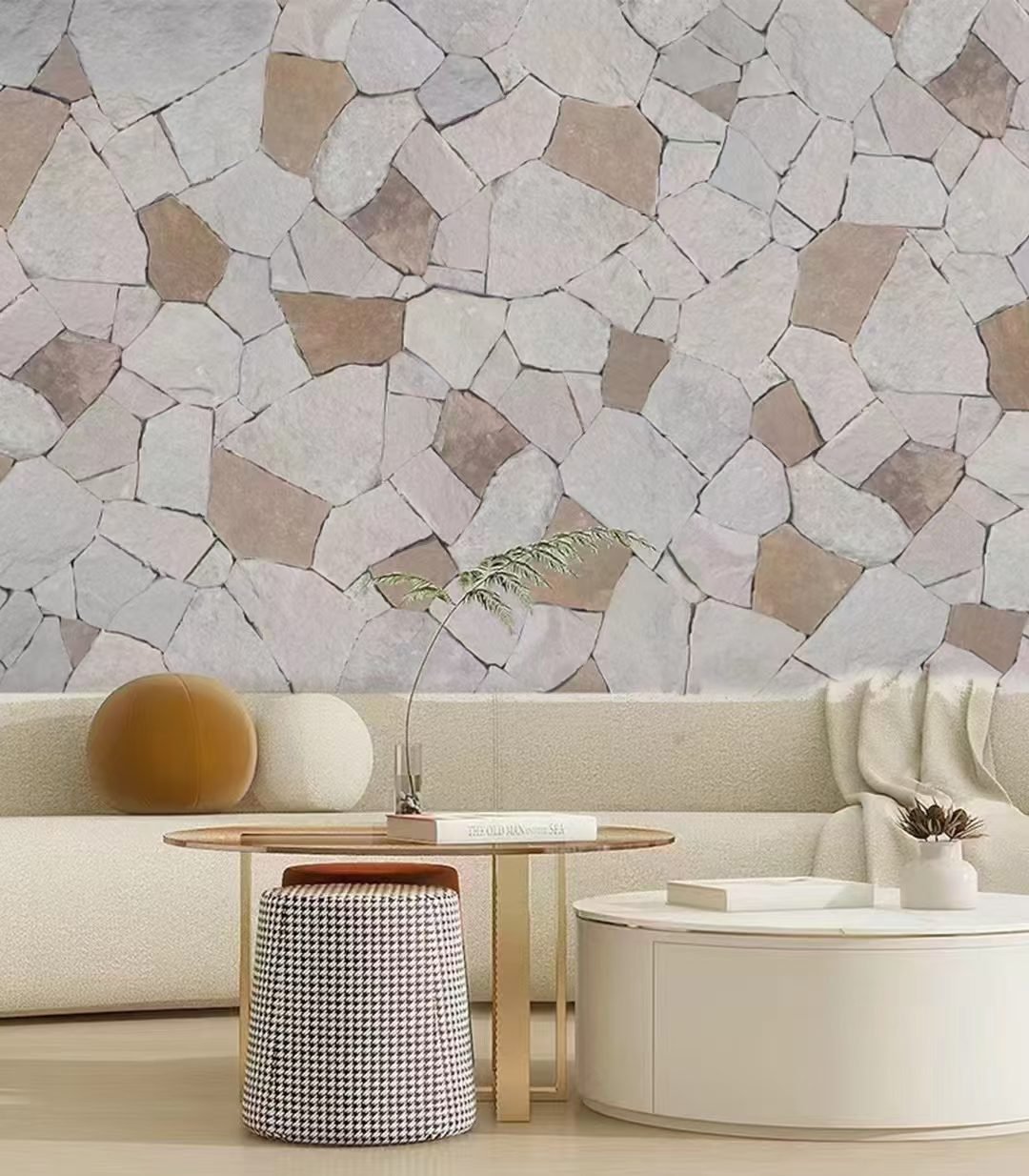
For landscape applications like patios and walkways, neither thin veneer nor full-bed wall stone is the right product. Flagstone and crazy paving are purpose-built for horizontal surfaces subject to foot traffic and weathering. Our flagstone pavers guide covers sizing and layout options for landscape projects.
Quick Comparison Table
| Factor | Thin Veneer Stone | Full-Thickness Stone |
|---|---|---|
| Thickness | 8–25 mm | 50–150 mm |
| Weight | 25–45 kg/m² | 100–160 kg/m² |
| Material cost (relative) | Baseline | +20–35% |
| Total installed cost (relative) | Baseline | +30–50% |
| Freeze-thaw performance | Excellent (same as full-bed) | Excellent |
| Fire rating | Class A (non-combustible) | Class A (non-combustible) |
| UV stability | Excellent | Excellent |
| Impact resistance | Good (suitable for wall cladding) | Superior (suitable for high-impact zones) |
| Substrate | Wood, steel, concrete, CMU, cement board | Reinforced concrete or masonry backup |
| Structural anchors | Not required | Required (shelf angles + ties) |
| Installation speed | 15–25 m²/day | 8–12 m²/day |
| Installer pool | Tile setters, GCs, carpenters, masons | Masons only |
| Shipping (m² per 20GP) | 500–800 m² | 150–300 m² |
| Best fit | Veneer cladding, interiors, renovations, multi-story | Structural masonry, heritage, high-impact |
Frequently Asked Questions
Is thin veneer stone as durable as full-thickness stone?
Yes. Natural thin veneer stone cut from the same quarry material as full-thickness stone shares identical mineral composition, compressive strength, and freeze-thaw resistance. Top Stone Panels thin veneer products withstand temperatures from -30°C to +50°C and carry an A-grade fire rating, matching the performance of full-bed stone at a fraction of the weight.
How much does thin veneer stone weigh per square meter?
Natural thin veneer stone typically weighs 25–45 kg/m² depending on stone type and thickness. Full-thickness building stone weighs 100–160 kg/m² or more. This 60–75% weight reduction allows thin veneer to be installed on wood-frame walls, steel studs, and other substrates that cannot support the dead load of full-bed masonry.
Can thin veneer stone be used on exterior walls in cold climates?
Yes. Natural stone thin veneer performs well in freeze-thaw environments when installed with proper drainage and a weather-resistive barrier. Slate and quartzite veneer from Top Stone Panels has been tested to withstand -30°C conditions without cracking, spalling, or delamination, making it suitable for projects across Canada, Scandinavia, and the northern United States.
What is the cost difference between thin veneer stone and full-thickness stone?
Thin veneer stone costs 30–50% less per square meter than full-thickness stone when you factor in material, shipping, structural reinforcement, and labor. The material itself is often 20–35% cheaper, but the real savings come from lighter shipping loads, no need for masonry ties or shelf angles, and faster installation by a wider pool of contractors.
Making the Right Choice for Your Project
The data points in one direction for most modern cladding projects: thin veneer stone delivers the aesthetics and durability of full-bed natural stone at lower weight, lower installed cost, faster installation speed, and broader substrate compatibility. Full-thickness stone retains advantages in load-bearing applications, heritage restoration, and high-impact environments — but those use cases represent a small share of current stone cladding demand.
For distributors, the inventory implications are straightforward. Thin veneer products ship more square meters per container, appeal to a wider contractor base, and move faster through the supply chain because installation does not depend on a scarce masonry workforce. For builders and architects, thin veneer stone opens up natural stone cladding for projects where full-bed masonry was never an option — wood-frame homes, steel-stud commercial buildings, and renovation-over-existing-facade work.
Top Stone Panels produces thin veneer stone in slate, quartzite, sandstone, and marble from our quarries and factories in Hebei Province. Our product range includes stacked stone panels, thin ledgestone, random strip veneer, and interlocking Z-panels. Every batch goes through a three-step quality process: raw material selection, in-process re-inspection, and pre-shipment final inspection. We ship from Tianjin Xingang with samples available in 1–3 days and bulk orders fulfilled in 20–25 working days.
If you are evaluating thin veneer stone for your next project or looking to add natural stone cladding to your distribution catalog, request a sample and quote from Top Stone Panels. Our team will match your project requirements to the right product format, material, and finish.
For more background on the product categories referenced in this article, see our guides on what stacked stone panels are, the six types of stone veneer panels distributors should stock, and our stone columns and pillar wraps guide.