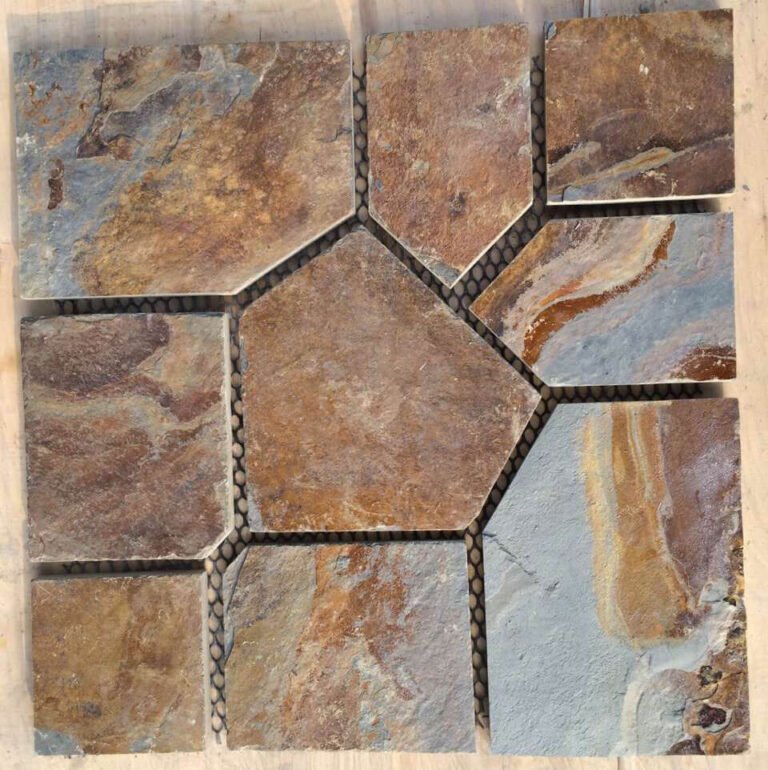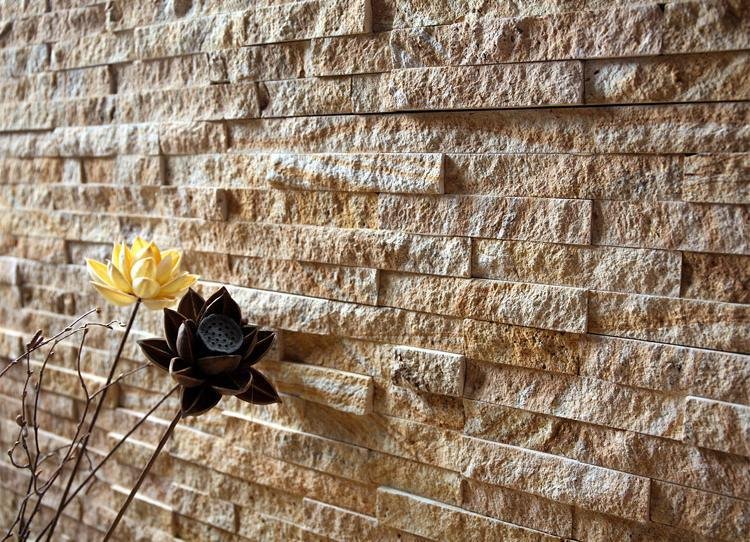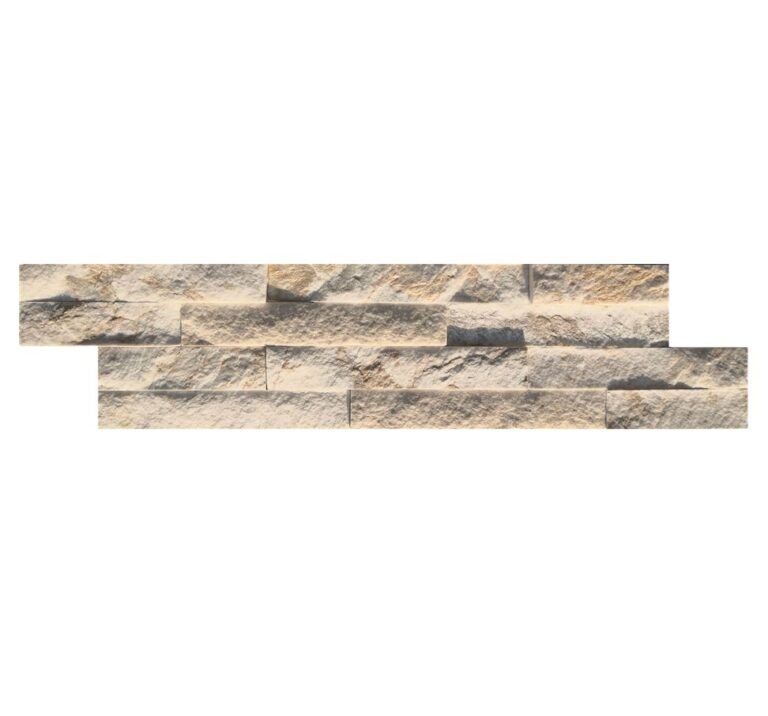
Flagstone colors are not a paint chart. They are a mineral record of where a block was quarried, and that difference decides whether your patio order looks like the photo or like a surprise. Distributors who quote flagstone colors to patio and masonry contractors run into the same question every order: the customer points at one sample, and the shipment arrives with a stone that is close but not identical. The short answer is that natural flagstone should never be identical, and the skill is knowing which variation looks intentional and which looks like a mistake.
This guide explains what flagstone colors actually come from, why slate and quartzite behave differently, and how a factory controls tone so that variation works for you instead of against you. The production figures below trace to Top Stone Panels, a quarry-owning slate and quartzite exporter in Yixian County, Hebei, so they are first-party numbers, not industry approximations.
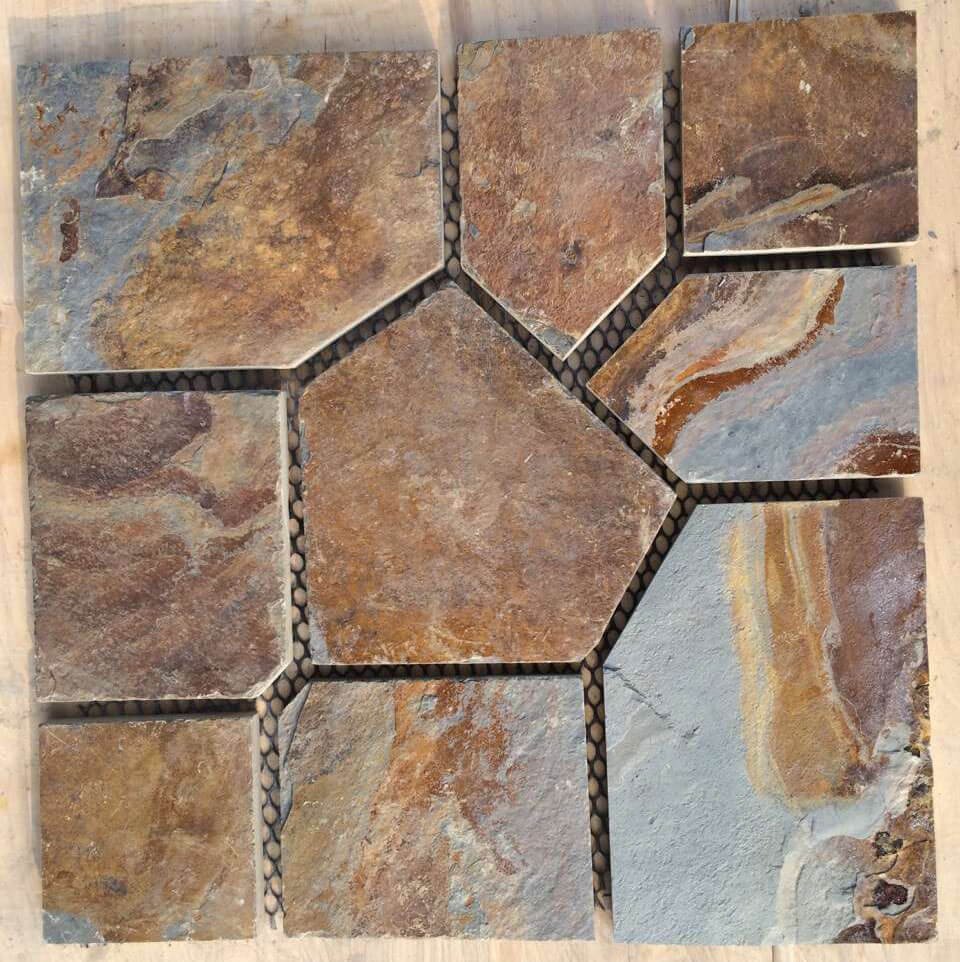
- Flagstone color comes from mineral content and quarry origin; expect natural tone movement across one order, not pixel-perfect uniformity.
- Slate flagstone runs grey, blue-grey, green, and black; quartzite adds white, cream, gold, and bronze families — the two stones occupy different color ranges.
- Wet-versus-dry and sealed-versus-unsealed appearances differ noticeably; factor that into color acceptance before you photograph a sample.
- Batch-specific vein selection is what protects reorders: a factory able to hold the same quarry block source keeps tone drift visible but controlled.
- Sun and weather alter perceived color over years; neither slate nor quartzite fades the way dyed concrete does, which is why a natural stone first wall still looks right a decade later.
What Determines Flagstone Color
Flagstone is a geological category, not a single stone: any flat, split-able rock sold as paving or veneer slabs carries the name. In practice, flagstone colors on the market are dominated by two rocks — slate and quartzite — and each one carries its palette for a different chemical reason.
Slate forms from mud and volcanic ash compressed under heat into a dense, fissile stone. Its color comes from the minerals trapped in that original sediment: grey from silica and quartz grains, blue-grey and purple from chlorite and iron compounds, green from chlorite and sericite, and black from carbon-rich organic matter. Because those minerals arrived in layers, a single slate ledge can show several of these tones across one face. For the geological shorthand behind that palette, the Wikipedia slate overview lists the same mineral-source relationships.
Quartzite starts as sandstone whose quartz grains fused together under heat and pressure. The near-pure quartz base is white to ivory; color enters through trace iron oxides — gold and bronze from hematite, pink from lighter iron staining, green from chlorite inclusions. Quartzite is generally harder and less fissile than slate, which changes both the color depth and the texture you get from a split face.
That geological split is the practical answer to the buyer who asks “what flagstone colors do you stock?” — the honest reply names the rock first and the color second. A distributor quoting flagstone and crazy paving should decide which palette its customers build around, because slate and quartzite do not interchange optically.
Slate Flagstone Color Range
Slate is the most common flagstone import for patios, steps, and fascia because it splits into even, workable slabs and its colors read neutral in outdoor settings. The range below is what a quarry-owning supplier can actually hold by vein.
| Slate color family | Mineral source | Typical use |
|---|---|---|
| Grey (light to charcoal) | Quartz and silica grains | Walkways, patios, facades — the default neutral |
| Blue-grey | Chlorite, iron compounds | Pool coping, water features |
| Green | Chlorite, sericite | Garden edging, woodland-style paths |
| Black | Carbon-rich layers | Modern driveways, contrast borders |
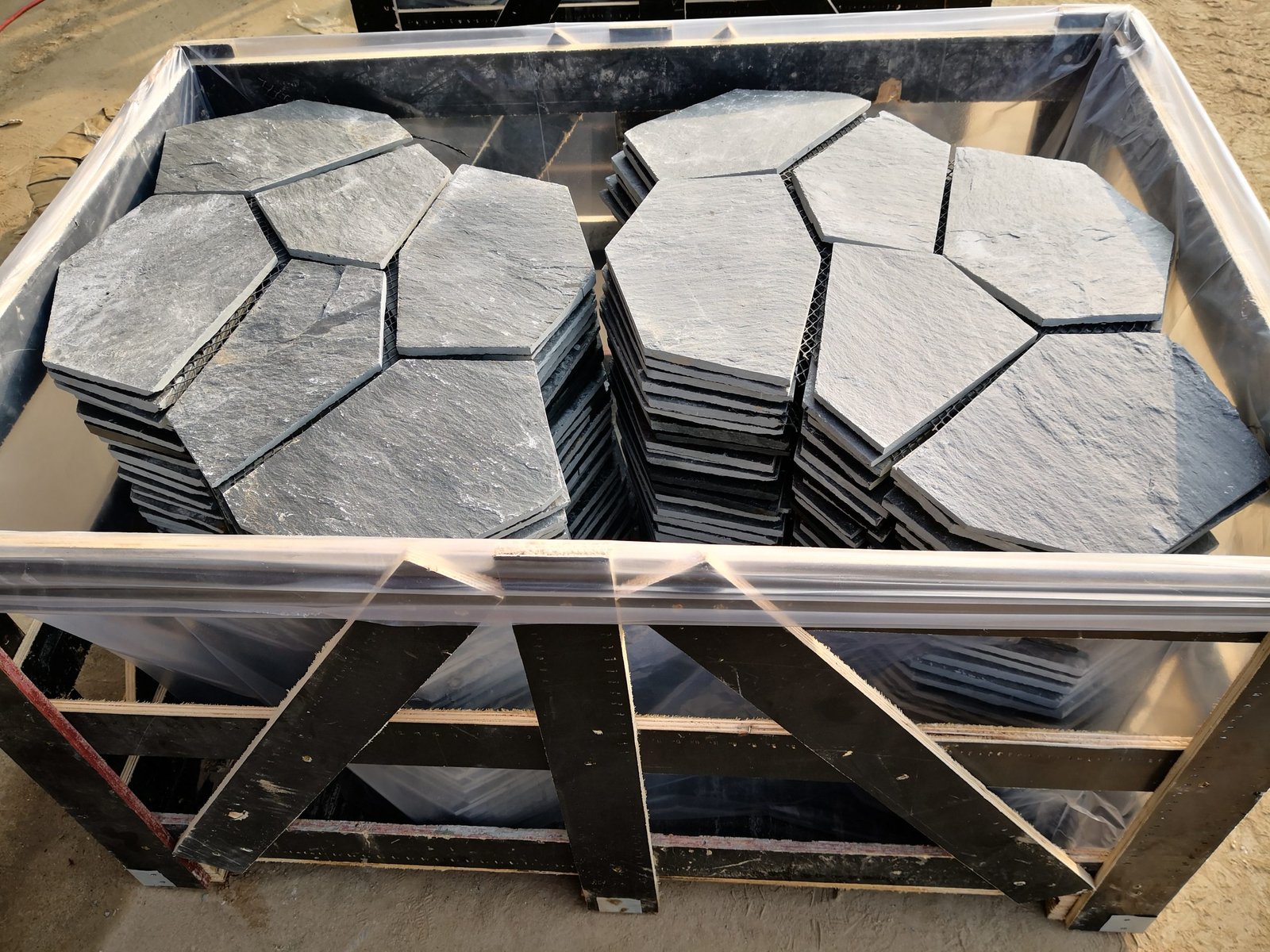
Black is the slate color buyers underestimate. It photographs dark and stays dark, but on a sunny job site it reads as a deep charcoal with visible surface texture rather than a flat void. Contractors use it as the high-contrast border next to grey flagstone, and the result separates on camera — important when the customer chooses from a phone at dusk.
The green family is the one worth a physical sample. Green slate varies from a quiet olive to a blue-green depending on the block, and the difference shows under west-light. Order the sample before you quote the color name.
Quartzite Flagstone Color Range
Quartzite flagstone looks lighter and brighter than slate because the quartz base reflects rather than absorbs. The range is narrower in structure but wider in perceived warmth.
| Quartzite color family | Mineral source | Typical use |
|---|---|---|
| White and cream | Nearly pure quartz | Coastal facades, bright interiors |
| Ice grey | Quartz with light iron | Commercial walls, modern patios |
| Gold and bronze | Hematite iron oxide | Feature walls, warm-toned facades |
| Green | Chlorite inclusions | Garden and patio accent |
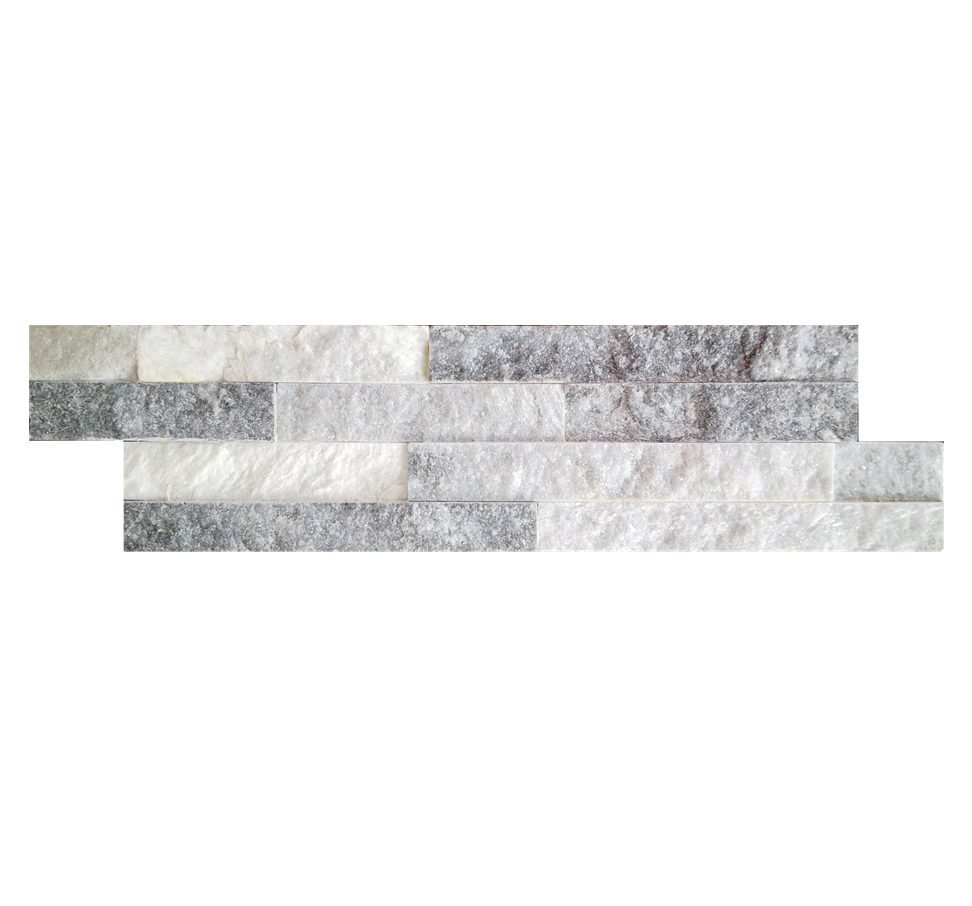
Gold and bronze quartzite deserves attention if your market sells warm-toned architecture. The color sits in the iron staining between the quartz grains, so the face carries depth that plain paint cannot copy. It pairs with bronze metal and wood accents, which makes it a common choice for office and hospitality walls.
White and cream quartzite is the trickiest to quote. It is the brightest flagstone family, but it also shows jointing and dirt earlier than grey slate, and sourcing a shade-matched white block consistently requires a mine that holds a dedicated vein. If a customer wants white, ask the supplier which quarry the white comes from before promising a tone.
Wet Versus Dry and Sealed Versus Unsealed
The biggest color dispute in flagstone projects is not between batches — it is between the wet sample and the dry installation. Stone darkens sharply when wet. A blue-grey slate that looks charcoal after rain can dry to a pale grey the next morning, and the customer who approved the photo taken at dusk feels cheated by noon.
Set the expectation in the quote: the reference color for a natural stone wall or patio is the dry, unsealed appearance, and sealing changes it again. A penetrating sealer darkens typical slate by 10-15% at application and deepens the grain; a film-forming sealer changes it more and needs renewal. The sealing guidance on sealing natural stone veneer applies to flagstone flooring and pathways in the same way.
Photograph samples dry, in daylight, on the same substrate they will sit on. If you present a wet photograph, write “wet look” on it in the proposal, because every installer who has restored a disputed patio wishes someone had.
The same logic controls the product page. A distributor selling flagstone online should publish a dry-look photo plus a one-line disclosure about natural variation; buyers who expect a single tone are the ones who leave one-star reviews, while buyers who expect movement order the repeat family. The photo standard also affects catalog math: a shot taken under filtered light misleads more than a shot taken on an overcast day, because the stone’s true mineral depth only surfaces in neutral light. Keep one reference photo set for each vein you stock and reuse it, so the catalog does not contradict itself across seasons.
Weathering and Sun Exposure
Natural slate and quartzite are ultraviolet-stable: the color holds because it is mineral, not dye. Top Stone Panels rates its material for the -30°C to +50°C temperature range that covers North American winters and coastal summers, and the same permanence applies to color. That is the commercial argument against resin-backed veneers and dyed concrete panels, which fade on a south-facing wall in a few seasons.
Sun does change appearance over years, but through surface reaction, not fading. Iron-bearing quartzite can warm slightly as the exposed face oxidizes; slate can develop a gray bloom in humid shade while darker tones hold in direct sun. These shifts are slow, acceptable to most buyers, and part of why natural stone ages into its setting rather than out of it.
The flagstone buyer’s guide covers freeze-thaw thresholds and material selection in depth; for color, the rule is simpler: pick the mineral palette you can defend for a decade, because the pigment will not fade under 5,000 hours of UV exposure where a dyed product would.
Batch Control at the Factory
Variation is natural; uncontrolled variation is a business problem. The difference lives in how the factory selects and holds stone. Top Stone Panels runs three documented QC steps — raw material selection, in-process recheck, and pre-shipment inspection — with batch-specific vein selection at the start of the line.
Batch-specific vein selection means the factory sorts blocks by quarry vein, works one vein lot through production, and can hold the same block source for reorders. The result is a shipment that moves as one tone family instead of a mix of every vein in the quarry. The batch color consistency guide explains the full selection workflow a serious exporter runs.
Ask any supplier three questions before you commit:
- Does it cut the order from a single quarry vein, or does it pull “stock” from several blocks?
- Can it photograph the actual batch before loading, and will it share that photo set?
- What does it do if a reorder cannot match the previous vein — substitute, split, or wait for the next lot?
Answers in writing convert a color complaint into a controlled property. One quarry-owning exporter with a documented vein-selection process is worth more than three traders quoting the same photo. For pattern guidance that sits next to color, the crazy paving layout guide shows how tone mixing behaves across random shapes.
Need a color-matched flagstone order?
Ask for dry-look physical samples in the slate and quartzite families you sell. Top Stone Panels ships samples in 1-3 days and cut to order from a single vein — no stock-mix surprises.
Ordering Flagstone Colors in Bulk
Color decisions in a container purchase are made twice: once on the sample board, once at the factory batch photo. The sample board settles the family, and the batch photo settles the shipment. A distributor who demands both gets what a trader cannot deliver — a buyer-controlled color decision instead of a quarry-controlled one.
Top Stone Panels quotes a minimum of one 20GP container across its product lines, with a flagstone and crazy paving capacity of 30,000 m² per month. Production runs 20-25 working days — 25-30 with custom cartons on a first order — and physical samples ship in 1-3 days so the sample board arrives before production starts. Payment is 30% T/T deposit with 70% before loading, and the factory issues a loading video and batch photos for final sign-off.
| Order step | What you control | What the factory confirms |
|---|---|---|
| Sample request | Color family, format, dry-look photo | Samples in 1-3 days from the vein lot |
| Color sign-off | Approve board, set blend ratio | Locks the vein and ratio in writing |
| Production | Tolerance and recheck points | 20-25 working days, in-process QC |
| Pre-loading | Batch photos, loading video | Final tone check before 70% payment |
The loading-video step is where color jobs earn their keep. When the customer can see the actual batch photographed in natural light on the day of loading, the “it doesn’t match” phone call happens before shipping, not after arrival. That single step converts a color dispute into a pre-shipment adjustment, and it is why the batch photo is worth more than any written promise about consistency.
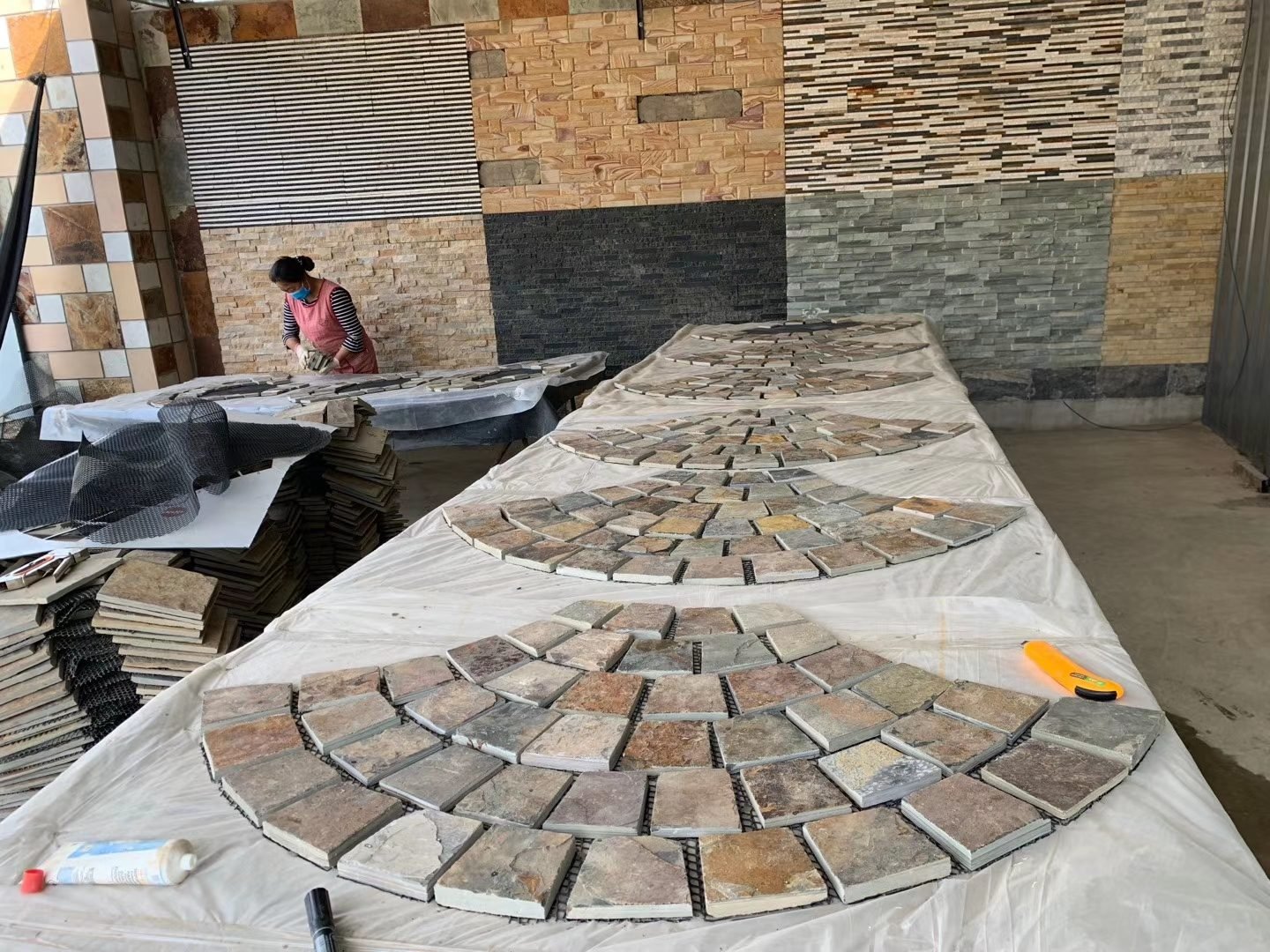
If the project needs more than one container, plan the vein-hold in the order: ask the supplier to reserve block stock from the same vein for the second shipment, so the two containers land looking like one family rather than two accidents. Suppliers that own quarries can hold blocks; traders who buy on the open market cannot promise the same. The MOQ and container mix guide shows how several colors ride one container when the distributor stocks more than a single family.
Buyer Checklist for Color Decisions
Distributors stock flagstone in colors their local market actually orders, and those orders repeat. Use this checklist the next time a contractor asks for a specific tone:
| Decision point | What to do | Why it matters |
|---|---|---|
| Rock type | Confirm slate or quartzite first | Determines the palette and the price |
| Sample state | Photograph dry, in daylight | Wet photos cause acceptance disputes |
| Vein control | Ask for single-vein production | Keeps one order inside a tone family |
| Multi-color blends | Specify the blend ratio in writing | Crazy paving multicolor needs a mix target |
| Sealing | Decide sealer before the quote | Changes visible color by 10-15% |
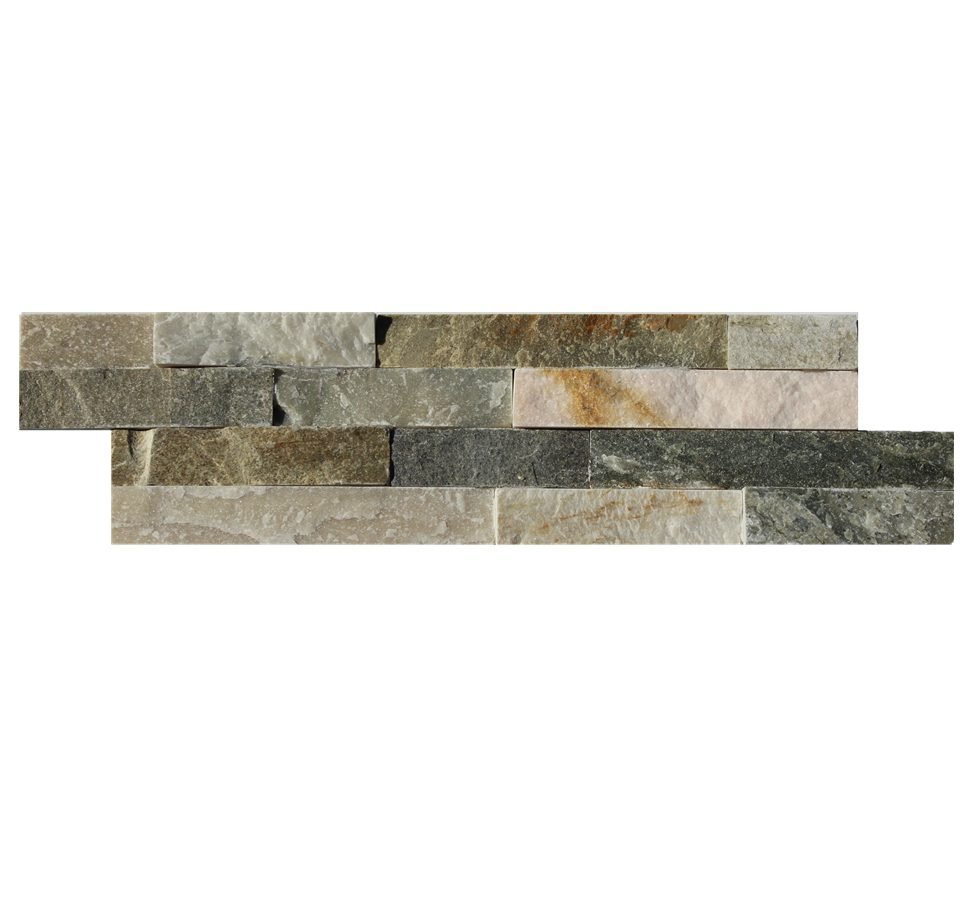
The multicolor question deserves its own line. Custom color mix is the OEM path when a customer wants a designed blend — one part green, two parts grey, one part black per carton, for example — rather than the quarry’s natural ratio. A factory that can control the mix ratio turns a random product into a branded SKU.
FAQ
What flagstone colors are most common?
Grey, blue-grey, green, and black slate plus white, cream, ice grey, and gold quartzite dominate the import market. Grey slate is the default that sells in almost every region.
Why does my flagstone order not match the sample?
Natural stone varies by quarry vein, and wet stone photographs darker than dry stone. Confirm the sample was photographed dry and ask the supplier whether the batch was cut from a single vein.
Does flagstone fade in the sun?
No. The color of slate and quartzite is mineral, not dye, so it is ultraviolet-stable and does not fade the way dyed concrete does. Surface oxidation can warm iron-bearing quartzite slowly over years.
Can I order a specific blend of flagstone colors?
Yes, with a factory that runs custom color mix. Specify the ratio per carton and the supplier blends to your target instead of shipping the quarry’s natural ratio.
How is flagstone color kept consistent across reorders?
Batch-specific vein selection is the mechanism: the factory works one quarry vein per order and holds the block source for reorders. Ask for that commitment in writing.
Does sealing change flagstone color?
Yes, typically by 10-15% darker. A penetrating sealer deepens and enriches the tone; a film-forming sealer changes appearance more and requires renewal. Decide the sealer before you approve a sample.
Conclusion
Flagstone colors come from the quarry, not the paint shop, and that is the selling point: mineral color does not fade, and a single-vein batch reads as intentional design. The buyer who succeeds treats color as a specification item — rock family, dry-look samples, blend ratio, and sealing — instead of a hope.
Key takeaways:
- Match the rock family to the palette: slate for grey, blue-grey, green, and black; quartzite for white, cream, gold, and bronze.
- Approve samples dry and in daylight; announce the sealed look separately to avoid acceptance disputes.
- Require single-vein production and a documented color-mix ratio for multicolor orders.
- Confirm slab pricing and vein availability against a one-20GP container MOQ and 20-25 working-day production.
Start with dry-look physical samples and a batch plan for the flagstone and crazy paving line, then ask Top Stone Panels for a color-matched quotation. If the project needs coordinated tones across walls and walkways, the mix stone colors guide is the next read.