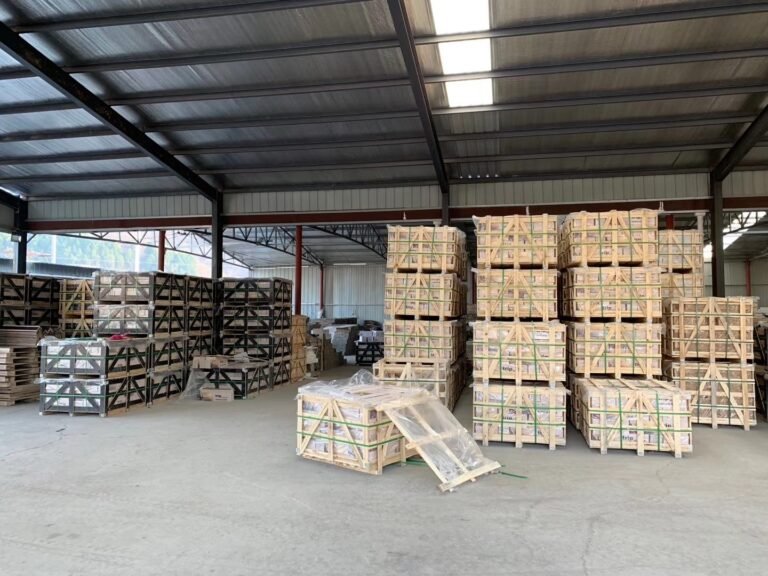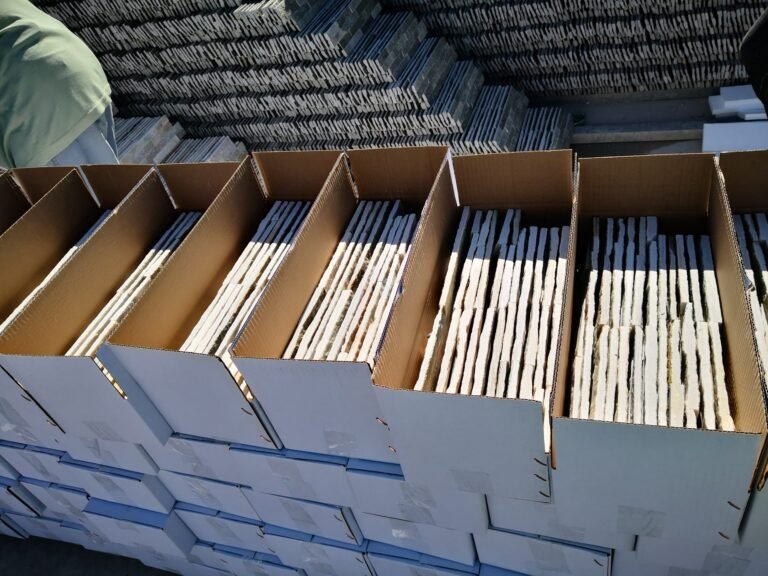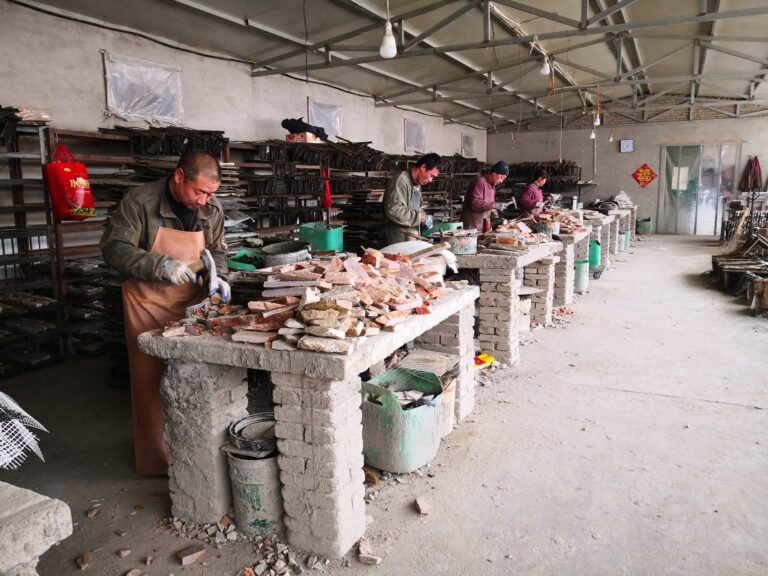
A distributor in Atlanta signs a purchase order for two containers of slate stacked stone on March 4. The supplier quotes 25 days. The project manager has crews booked for April 21. The math works on paper. What the supplier did not mention: the quarry that supplies that specific slate vein is between block allocations, the factory’s cutting line is booked through March 18, the wooden crates need ISPM 15 fumigation that adds four days, and the next available vessel from Xingang to Savannah departs April 2 with a 28-day transit. The stone arrives May 14. The crew sits idle for 23 days. The GC charges back the delay.
This scenario repeats across North American and European importers every quarter because the number suppliers quote as “lead time” is almost never the number that determines when stone reaches a job site. Quoted lead time is the production window, measured from deposit receipt to cargo readiness at the factory gate. Real lead time runs from wire transfer to container devanning at the destination warehouse, and it routinely spans 9 to 13 weeks for a standard 20-foot container of natural stone cladding ordered from China.
This guide breaks down every stage of that timeline with the day counts that actually govern production scheduling, identifies the variables that compress or extend each phase, and gives B2B buyers a framework for planning orders backward from project start dates. The numbers are drawn from 18 years of factory-side scheduling experience and over 220 container exports per year.
Why Quoted Lead Time Misses the Real Delivery Date
When a stone panel supplier quotes a 20 to 30-day lead time, the clock starts on deposit receipt and stops when goods are loaded into a container at the factory. That window excludes every step that happens outside the production floor, and those excluded steps account for the majority of calendar time between order and delivery.
Consider what happens before production starts. The factory needs to confirm raw material availability with the quarry, which takes 2 to 7 days depending on whether the stone is in current block inventory or needs to be cut from a fresh seam. Block cutting for a new quarry seam adds 10 to 14 days. For exotic or low-volume stone types like certain quartzites or fossil-rich limestones, sourcing alone can stretch to 21 days before the factory even schedules the order into its cutting line.
After production finishes, the export preparation phase begins. Cement backing requires 48 to 72 hours of curing before panels can be packed. Quality inspection, packing into inner cartons, and crating add another 3 to 5 days. ISPM 15 fumigation for wooden crates takes 24 hours of exposure plus 1 to 2 days of paperwork and release. Customs inspection at origin, if triggered, adds 3 to 7 days. Booking a vessel slot during peak season (June through October) can delay departure by 5 to 10 days.
On the destination side, ocean transit from Xingang to major ports runs 18 to 45 days depending on destination. Port handling and customs clearance add 3 to 7 days in normal conditions and 14 to 21 days during congestion events or when documentation is incomplete. Inland drayage to a warehouse or job site adds 1 to 5 days.
The total door-to-door timeline for a standard order typically breaks down like this:
- Pre-production sourcing and scheduling queue: 7 to 21 days
- Production (cutting, finishing, backing, curing): 20 to 35 days
- QC, packing, and export documentation: 5 to 8 days
- Ocean transit and port handling: 21 to 52 days
- Destination clearance and inland delivery: 4 to 12 days
Add those ranges together and you get a realistic spread of 57 to 128 days from deposit to job site, which compresses to roughly 9 to 13 weeks on average for common stone types shipped to North American or European ports.
The Real Timeline From Deposit to Job Site
Breaking the order lifecycle into five named phases helps buyers build accurate project schedules and hold suppliers accountable to specific milestones rather than a single vague number.
Phase 1: Raw Material Sourcing and Scheduling Queue (Days 1 to 21)
The deposit wire reaches the supplier’s bank in 1 to 3 business days. Production scheduling does not start until the factory confirms material availability. For stone types the factory keeps in regular rotation — standard slate, quartzite, and sandstone SKUs that move through the cutting line weekly — raw blocks are typically in yard inventory and can be inducted within 2 to 5 days. For lower-volume materials like fossil limestone, certain granites, or specific color-matched ledgestone, the factory must request block allocation from partner quarries. That request-to-delivery window runs 7 to 21 days and is the most common source of early-stage slippage.
The scheduling queue adds another variable. A factory running two shifts across three cutting lines typically processes 8 to 12 active orders simultaneously. A new order placed during the June-to-October peak may sit 7 to 10 days before it reaches the front of the cutting queue. Orders placed in November through February often start production within 3 to 5 days because the queue is shorter.
Phase 2: Production (Days 8 to 35)
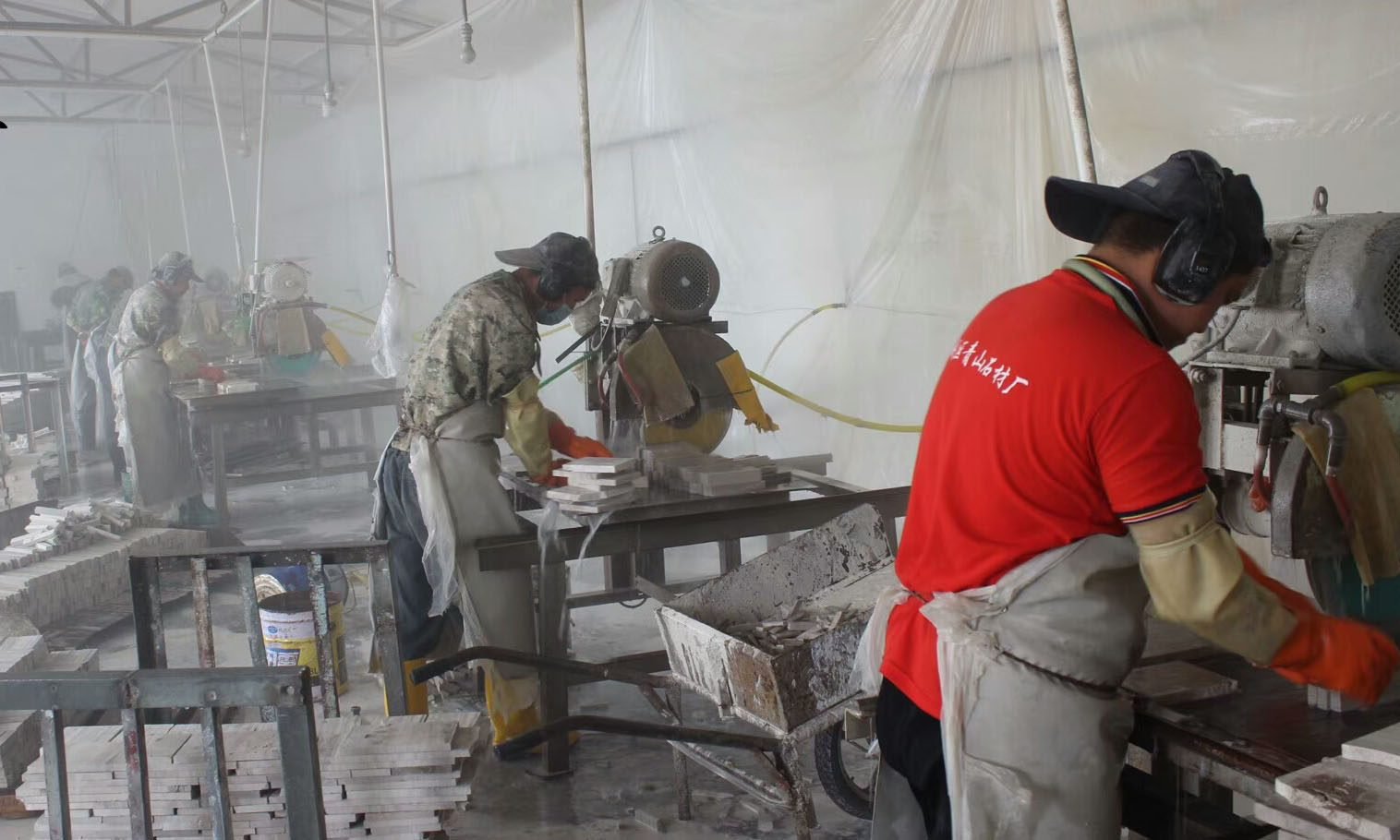
Once blocks reach the cutting line, the production sequence follows a fixed order: gang saw or wire cutting, surface finishing (split-face, honed, tumbled, or natural cleft), trimming to panel dimensions, cement backing application, and curing. Each step has a minimum cycle time that no amount of pressure can compress.
Cutting standard 10x36cm or 15x60cm panels from slate or quartzite blocks runs at approximately 80 to 120 square meters per day per line. A 500 square meter order takes 4 to 6 cutting days. A 1,500 square meter order takes 12 to 19 cutting days. Surface finishing adds 1 to 3 days. Trimming and edge work add 2 to 4 days.
Cement backing is the step that most buyers underestimate. Panels bonded to fiber-reinforced cement board require 48 to 72 hours of controlled curing at 18 to 25 degrees Celsius before they can be packed without risking bond failure. Rushing this step by shipping panels that are still off-gassing moisture causes adhesive delamination in the container, which shows up as hollow-sounding panels on arrival. A factory that quotes a 15-day production window for a 1,000 square meter order is almost certainly cutting the curing time.
Phase 3: Export Preparation (Days 28 to 43)
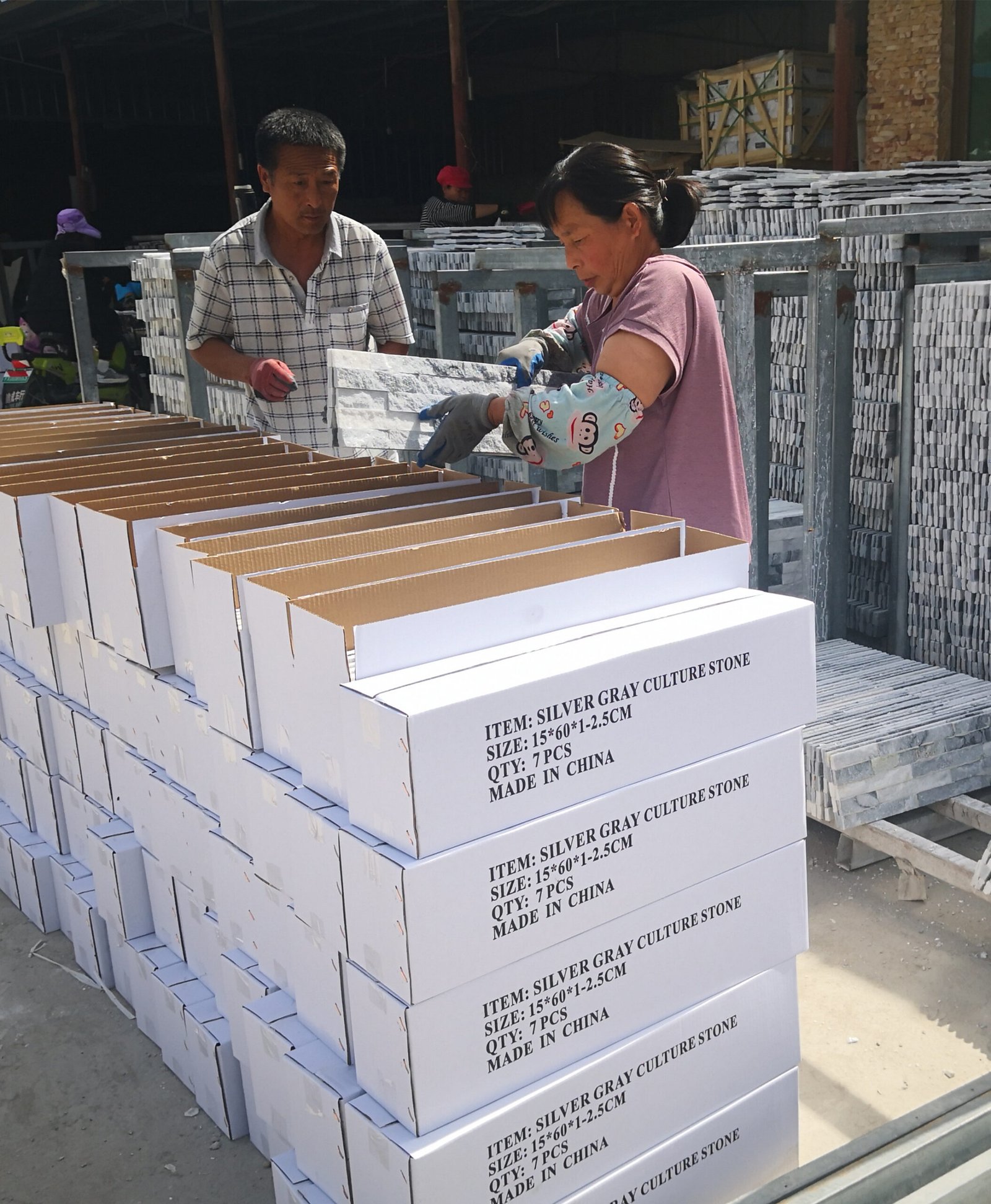
QC inspection, sorting by color batch, inner carton packing, and crating typically take 3 to 5 days for a standard 20GP container. The factory generates the packing list and commercial invoice, which the freight forwarder uses to book a vessel slot.
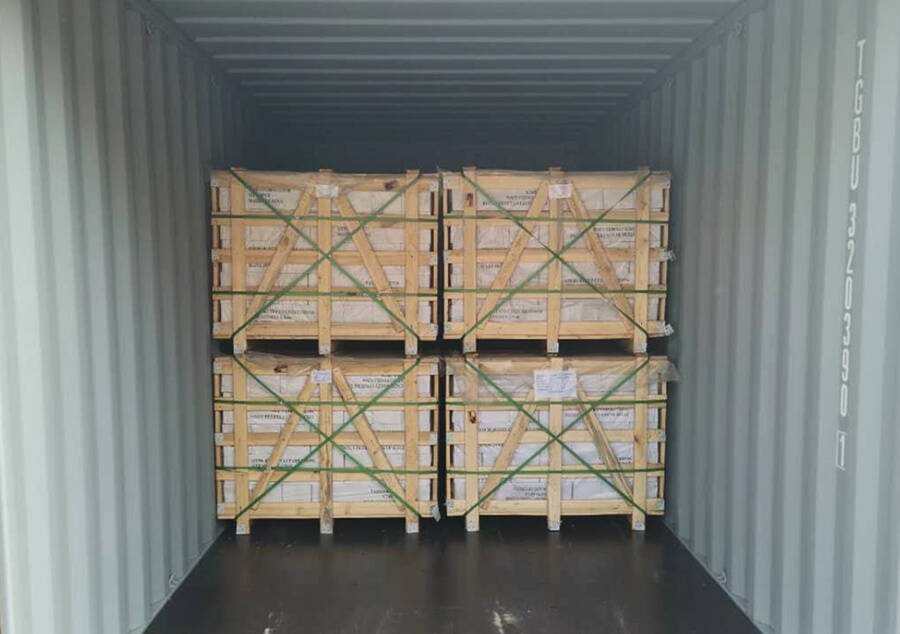
ISPM 15 heat treatment or methyl bromide fumigation for wooden crates takes 24 hours minimum, plus 1 to 2 days for certificate issuance. Skipping this step or using a supplier who does not hold a valid ISPM 15 treatment license means the container will be rejected at destination customs and either re-exported or fumigated on arrival at the buyer’s cost — typically USD 800 to 1,500 plus a 7 to 10 day delay.
Origin customs inspection is triggered on roughly 8 to 12 percent of stone shipments. When selected, it adds 3 to 7 days while officers verify HS code classification, commercial invoice accuracy, and the absence of restricted materials. Orders with complete documentation clear in 1 to 2 days.
Phase 4: Ocean Transit and Port Handling (Days 35 to 95)
Transit times from Tianjin Xingang to major destination ports are relatively stable outside of port congestion events. US West Coast ports receive vessels in 18 to 25 days. US East Coast ports take 25 to 35 days via the Suez or Panama Canal depending on carrier routing. Northern European ports take 30 to 40 days. Australian and New Zealand ports take 22 to 30 days.
At destination, vessel discharge and terminal handling add 2 to 4 days in normal conditions. Customs examination, when selected, adds 3 to 7 days in the US or EU and longer during peak import seasons. Container release and pickup from the terminal typically happen within 24 to 48 hours of customs clearance.
Demurrage and detention charges start accruing the day after the free time expires — typically 4 to 7 free days at US ports and 3 to 5 at EU ports. Daily demurrage runs USD 150 to 350 per container. Buyers who have not lined up a trucking company before the vessel arrives routinely burn 3 to 5 days of free time arranging drayage.
Phase 5: Destination Clearance and Delivery (Days 55 to 107)
Once the container clears customs and leaves the port, inland delivery adds 1 to 5 days depending on distance. A container from Los Angeles to a Phoenix warehouse arrives in 1 to 2 days. A container from Rotterdam to a job site in Prague takes 2 to 3 days by road.
Devanning (unloading) a 20GP container of stone panels takes 3 to 5 hours with two workers and a forklift. Crated stone should be stored flat on a level, dry surface for at least 24 hours before installation to let any transit moisture dissipate and to allow the installer to inspect for breakage before signing the delivery receipt.
Seven Variables That Move the Schedule
Every lead time estimate sits inside a range, and seven specific factors determine whether an order lands at the short or long end of that range. Buyers who understand these variables can make informed trade-offs between speed, cost, and product selection.
- Stone type availability: Common slate and quartzite ship 2 to 3 weeks faster than exotic limestone or color-specific granite because blocks are already in the factory yard.
- Order volume relative to line capacity: Orders over 1,200 square meters require dedicated line allocation and extend production by 7 to 14 days compared to sub-500 square meter orders.
- Custom dimensions or special finishes: Non-standard panel sizes, custom thicknesses, or hand-chiseled finishes add 5 to 10 days because they cannot run on automated lines.
- Seasonal factory load: Orders placed in July through September queue behind peak-season backlog. Orders placed in January and February often start production within days of deposit.
- Quarry block allocation cycles: Quarries cut blocks in batches, and ordering between allocation cycles adds 10 to 14 days of waiting for the next cut.
- Port congestion at origin or destination: Tianjin Xingang experiences congestion in August and September. US and EU ports see peak delays October through December.
- Documentation completeness: Missing Certificate of Origin, incorrect HS code, or absent fumigation certificate triggers examination at destination, adding 5 to 14 days.
Factory Scheduling Realities Most Buyers Miss
Three factory-side scheduling patterns explain most of the unexplained delays importers experience, and none of them are visible from a purchase order.
First, the deposit-to-production-start lag. A factory receives 20 to 40 new orders per week during peak season. Each order must be confirmed, material requisitioned from the yard or quarry, and slotted into the cutting queue. This administrative and logistical work takes 3 to 7 days before the first block is cut. Buyers who assume production starts the day the deposit clears are counting days that have not actually begun.
Second, batch sequencing. A single cutting line processes orders by stone type, not by order date. If three orders for the same quartzite color arrived this week, the factory runs them as a single batch to minimize block changeover time. An order for a different stone placed the same day sits until the line is reconfigured. Buyers ordering low-volume stone types often wait for a batch partner to make their order economical to run.
Third, pre-holiday production compression. In the 4 to 6 weeks before Chinese New Year (late January or early February) and the 3 weeks before National Day (October 1), factories run extended shifts to clear the order book. Quality dips when lines run 24-hour shifts, and any order that misses the pre-holiday cutoff sits untouched for 2 to 3 weeks while the factory is closed. An order placed on September 20 for an October 15 ship date often does not ship until November 5.
| Order Profile | Best Case | Typical | Worst Case |
|---|---|---|---|
| 500 sqm, common slate, US West Coast | 63 | 77 | 98 |
| 1,000 sqm, quartzite, US East Coast | 77 | 91 | 119 |
| 1,500 sqm, custom ledgestone, EU | 91 | 112 | 140 |
| 2,000 sqm, exotic limestone, Australia | 105 | 126 | 154 |
Reverse Planning From the Installation Date
The most reliable way to set an order date is to work backward from the day the installer needs stone on site. Start with the installation date, subtract inland delivery days, subtract ocean transit and port handling, subtract export preparation, subtract production, subtract raw material sourcing, and add a buffer.
For a project with an April 21 installation start date in Atlanta, ordering common slate shipped to Savannah (28-day transit, 5 days port and inland), the calculation looks like this:
- Installation start: April 21
- Subtract inland delivery and devanning: April 17
- Subtract port handling and customs: April 12
- Subtract ocean transit (28 days): March 15 vessel departure
- Subtract vessel booking buffer (5 days): March 10 cargo ready
- Subtract export prep and QC (7 days): March 3 production complete
- Subtract production (28 days): February 3 production start
- Subtract sourcing and queue (10 days): January 24 deposit
- Buffer for delays (14 days): January 10 target deposit date
The buffer matters because at least one phase in every container order runs long. A 10 to 14 day buffer absorbs normal variance without pushing the installation date. For large commercial projects, 21 to 28 days of buffer is prudent. For repeat orders of the same SKU where raw material is already yard-stocked, 7 days may suffice.
Buyers who skip the buffer and ship “just in time” are betting that no quarry delay, no customs exam, no vessel rollover, and no curing shortcut will occur. Over dozens of orders, that bet loses often enough to cost more than the buffer would have.
Five Ordering Mistakes That Blow the Schedule
The same planning errors recur across importers new to Chinese stone sourcing, and each one adds specific, predictable days to the timeline.
Treating the supplier’s quoted lead time as a delivery promise. A quote of 25 days means 25 production days, not 25 days to job site. Buyers who plan around the quoted number without adding transit, clearance, and buffer consistently miss their installation dates by 4 to 8 weeks.
Ignoring Chinese public holidays. Chinese New Year shuts factories for 2 to 3 weeks, and production resumes slowly as workers return. Orders placed after mid-January often do not ship until mid-March. National Day in October causes a 1 to 2 week shutdown. Any order whose production window overlaps either holiday should add 14 to 21 days to its schedule.
Skipping the pre-production sample. A container of stone that arrives off-color or off-spec cannot be returned economically. Re-ordering adds 9 to 13 weeks to the project timeline. A pre-production sample, reviewed and signed off before the production run starts, takes 7 to 10 days and eliminates this risk entirely.
Ordering after peak season has started. A July order for September delivery is almost always unrealistic. By July, factories are booked through September, vessel slots are tight, and destination port congestion begins. Buyers who need Q3 delivery should place orders by mid-April.
Leaving documentation to the last week. Certificate of Origin, ISPM 15 fumigation certificate, commercial invoice, packing list, and bill of lading should be prepared in parallel with production, not after. Missing documents at destination trigger customs exams that add 5 to 14 days and USD 250 to 600 in exam fees.
How to Compress the Timeline Without Breaking Quality
Three legitimate levers shorten the real lead time, and two shortcuts that look tempting should be avoided.
The first legitimate lever is ordering during the off-peak window. Orders deposited between November and February move through the cutting queue 5 to 10 days faster than peak-season orders. Raw material is abundant in yard inventory, and vessel booking is flexible. The trade-off is that winter production in northern China factories can slow when temperatures drop below freezing, particularly for cement-backed panels that require controlled curing temperatures.
The second lever is choosing stone types with established supply chains. Common slate, quartzite, and sandstone panels that the factory runs every week move through production faster because block inventory, tooling, and operator expertise are already in place. Exotic or low-volume materials require fresh quarry allocations and slower line speeds.
The third lever is pre-booking vessel slots. Buyers who work with freight forwarders who hold block space agreements with carriers can lock a departure date 2 to 3 weeks before cargo readiness, eliminating the post-production vessel booking delay. This works best for repeat importers with predictable volumes.
The shortcuts to avoid are cutting the cement curing window and skipping pre-shipment inspection. Panels shipped before full curing delaminate in transit. Skipping inspection lets breakage and color variance reach the container, where they become expensive claims instead of cheap factory rework.
Frequently Asked Questions
What is a realistic total lead time for a container of stone panels from China?
A standard 20-foot container of common stone panels takes 9 to 13 weeks from deposit to destination job site, broken down as 3 to 5 weeks production, 1 week export prep, 3 to 7 weeks ocean transit and clearance, and 1 week inland delivery.
When should I place an order for a spring installation?
For a May installation in North America or Europe, place orders by late January at the latest. This gives 13 weeks of production and transit time plus a 14-day buffer. Orders placed in March for May delivery are realistic only for stock SKUs with yard inventory and fast-transit destinations.
Does Chinese New Year really shut down production for weeks?
Yes. Most stone panel factories close for 2 to 3 weeks around Chinese New Year, typically late January through mid-February. Workers return gradually, so full production capacity resumes 1 to 2 weeks after the official reopening. Any order in production when the holiday hits will stall until mid-March.
What documentation delays should I expect at destination customs?
Complete documentation clears in 1 to 2 days. Missing Certificate of Origin, incorrect HS code classification (stone cladding sits in Chapter 68), or absent ISPM 15 fumigation certificate triggers a customs exam that adds 5 to 14 days and USD 250 to 600 in fees. Prepare all documents in parallel with production.
Can I pay more to speed up production?
Rush fees can move an order forward in the cutting queue by 3 to 5 days during moderate load periods, but they cannot compress the physical steps that have fixed cycle times. Cement backing curing takes 48 to 72 hours regardless of payment. Rushing that step causes delamination in transit.
Conclusion
Lead time for imported stone panels is a chain of physical and administrative steps, each with a minimum duration that no supplier can compress past its engineering limit. The gap between the number a supplier quotes and the date stone reaches a job site is not a failure of honesty. It is the difference between a factory-gate measurement and a door-to-door reality that includes sourcing, curing, booking, sailing, clearing, and delivering.
- Quoted lead time covers production only. Real lead time spans 9 to 13 weeks from deposit to job site for standard orders.
- Cement backing curing (48 to 72 hours) and ISPM 15 fumigation (24 hours plus paperwork) are non-compressible steps. Rushing either one causes problems that cost more than the days saved.
- Chinese New Year and National Day each add 2 to 3 weeks to any order in production during those windows. Plan around them, not through them.
- Reverse planning from the installation date, with a 14-day buffer, produces a realistic deposit date. Planning forward from the quoted lead time produces missed deadlines.
For a production schedule tailored to a specific project date and stone type, share the installation start date and target SKUs with the factory and ask for a milestone-by-milestone calendar rather than a single lead time number. Request a detailed production schedule and quote for your next container.