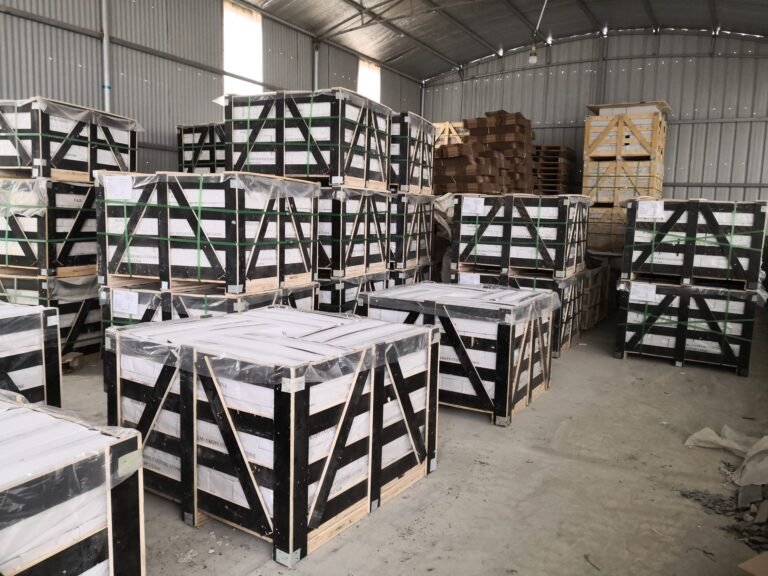
When Ocean Freight Spikes: How Stone Importers Protect the Landed Cost
Short answer: freight on a heavy, low-value-per-cube commodity like stone is a business risk, not a shipping detail, and the importers who survive spikes are the ones who move it before the spot market moves them. The practical toolkit, in order of control you keep: a freight share or price-review clause negotiated into the supply agreement, an annual space contract with a forwarder that fixes volume rather than price, a switch from FOB to CIF or DAP when the mill’s contracting power beats yours, and consolidation with other small buyers on the same port pair. What does not work: absorbing the spike quietly, quoting contractors at pre-spike rates, and assuming the lane comes back next quarter.
Stone has the worst freight economics in building materials: dense, heavy, priced per square meter with thin margins, and usually moving from secondary ports where space is thinner than at the majors. A lane doubling does not just eat a container’s margin; it can flip the whole country-of-origin comparison against you. This guide is the response playbook, from the clause to the calendar.
Why Stone Carries Freight Risk Differently Than Most Imports
Three properties make stone freight-sensitive. Weight caps what a container can carry before volume does, so a rate per container translates into a cost per square meter that is already high before the spike; the weight math is set out in the panel weight calculator. The origin ports in northern China handle bulkier, lumpier cargo mixes than consumer-goods hubs, so weekly sailings and spot space are thinner. And demand is project-driven and price-checked against domestic suppliers, which means a distributor cannot simply pass a freight doubling to a retail shelf the week it happens. UNCTAD’s annual maritime freight reviews document how these lane dynamics swing; the Review of Maritime Transport is the neutral public source to cite when you explain a cost letter to your own customers.
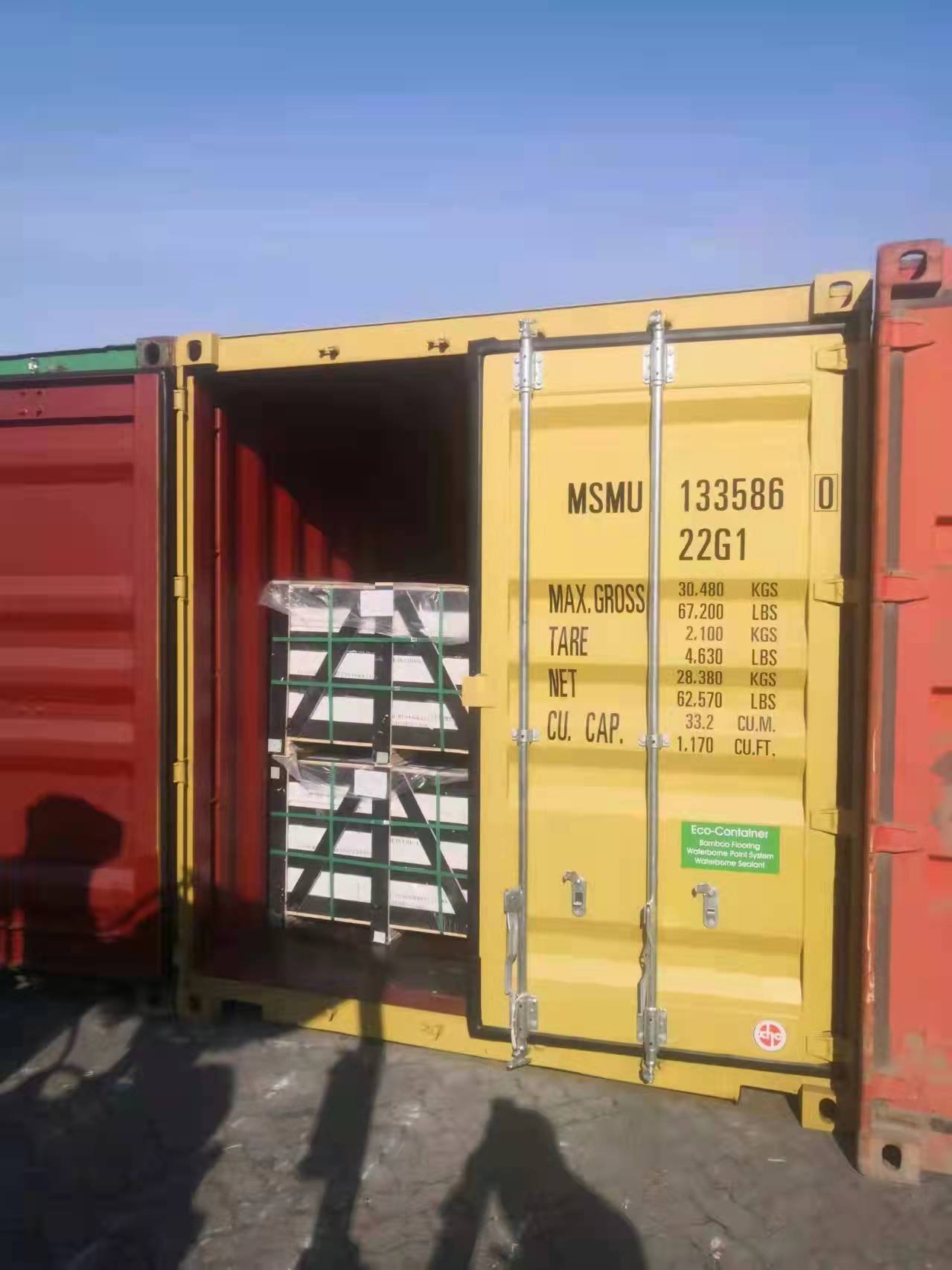
The First Line of Defense: Write Freight Into the Commercial Contract
Importers usually discover they have no freight protection the week they need it. The two clauses that exist for exactly this moment: a freight-share clause, where FOB prices adjust by a defined split of any increase beyond a stated per-container threshold on the named lane, and a price-review clause, where either side can reopen unit pricing when shipping costs move more than a stated percentage between order dates. Both give a factory something it actually values, a sale that survives the spike, so they are more winnable than buyers expect, especially on container-count commitments. The ICC publishes model clauses for international sale contracts covering precisely this kind of cost-change allocation; the ICC model clause library is the reference wording to adapt rather than invent. The same clause architecture that protects against pulp letters in other industries protects a stone quote here, and the seven FOB lines it attaches to are mapped in the FOB structure guide.
A third, less-known protection sits in your Incoterm choice: buying CIF shifts booking to the mill, which often holds annual service contracts through its freight forwarder at rates a solo importer cannot touch. The trade is transparency: the CIF uplift baked into the quote is harder to audit than your own forwarder invoice, so model both routes per destination before deciding, not per habit. The term-by-term comparison, including the lesser-known DAP middle ground, is worked through in the Incoterms guide for stone.
Booking Annual Space Instead of Annual Rates
The realistic small-importer contract is not a locked rate, it is locked space: a volume commitment with a forwarder or NVOCC that guarantees equipment on named sailings in exchange for a spread above whatever the lane is priced at that month. During spikes the guarantee is the value, because spot buyers lose containers, not cents, and a rolled stone container becomes a missed project window and a demurrage letter; the dock-side cost traps around rolled and detained boxes are itemized in the demurrage and detention guide. The booking mechanics, from the vessel schedule to cargo-ready dates, are in the container booking scheduling guide; the annual layer is what stops a spike from turning into a no-space problem.
What Does Not Work
Absorption without a counter: quietly eating the spike tells neither your factory nor your customer that their prices now include a freight subsidy nobody approved, and next quarter’s quote comes back unchanged. Spot-only buying in a volatile year: it feels like control and behaves like gambling; the distributor with three containers a month has neither the rate nor the priority the lane’s large accounts get. And re-quoting contractors on old landed costs: the job that “wins” at yesterday’s margin loses the freight you will actually pay, which is how growth years produce bankruptcies; build the cost sheet from the landed cost breakdown each quarter and keep quote validity windows short during volatility.
Consolidation: The Underused Route for Mid-Size Buyers
Buying groupage rather than a full container changes which rate you are exposed to. LCL pricing behaves differently than FCL during spikes, and small to mid distributors sharing a destination warehouse can split FCL costs across partners ordering the same port pair; the mixed-container playbook for combining product lines, including what each partner must accept on loading sequence, is the same logic as the container mix article pointed at freight instead of MOQ. There are also consolidators and buyer groups active on China-to-North-America building-materials lanes; a freight-sharing agreement with two other importers you actually know is a stronger hedge than any single spot booking.
Rebuilding the Price Grid for a High-Freight World
If spikes are your operating environment, not an episode, the fix is structural. Move low-margin, high-cube products to regional suppliers where the freight share of landed cost is smaller; push your own mix toward higher value density (mesh-backed panels, corner kits, cut-to-size) that carry the same freight over more revenue per container; and put a freight-index line in every customer quote so the pass-through is visible the day rates move instead of six months later in a price letter nobody reads. Distributors who survived past cycles all run the same two numbers: landed cost per installed unit with live freight, and revenue density per container, updated before every sourcing decision, not after.
A Decision Sequence for the Week a Spike Hits
Work the problem in this order and you will spend your stress where it buys something. First, verify the exposure: pull the last three months of your actual lane spend per container, because memory overstates spikes on the headline news and understates them on the lanes you actually use. Second, check your open orders: any booking confirmed at an old rate is money on the table; protect it before you negotiate anything new. Third, call your forwarder for committed-volume options before touching the factory, because the cheapest response is often a slower routing or a transshipment port with softer rates, and neither requires anyone’s permission. Fourth, only after the shipping levers are exhausted, open the commercial conversation with your mill on the share or review clause, and bring the numbers from the first three steps; a factory negotiates better with a buyer who shows lane data than with one who asks for a favor. Fifth, re-quote your pipeline the same week, with the freight line visible. The sequence matters because each step is cheaper and faster than the next, and skipping to step four with steps one through three unworked is how experienced importers end up giving away annual price concessions they did not need.
Two costs spike alongside freight and both belong in the same review: insurance premiums per container, which track war-risk and lane volatility, and the working-capital drag of goods sitting on rolled sailings, which quietly converts a freight story into a cash story. The insurance and liability picture around stone shipments is handled in the contractor insurance guide; run the same check on the cargo side so your freight response is not priced on freight alone.
FAQ
Should I buy CIF instead of FOB when freight spikes?
Model both. Mills often book better rates than solo importers because their forwarders hold annual volume, but CIF hides part of the cost inside the unit price, so you lose the visibility that protects your margin.
Is a freight-share clause fair to ask of my factory?
Yes, if drafted as threshold-and-split rather than full absorption; the factory keeps the base, both sides share the defined abnormal band, and the clause only triggers beyond a stated spike level. The ICC model contract library has adaptable clause language.
What is an annual space contract worth in a calm market?
It costs a modest spread over spot rates in quiet months and pays out in equipment priority and protected sailing windows in volatile ones; the real product is delivery reliability, which is what your contractors actually buy from you.
Does heavy cargo mean my container hits weight limits before cube?
On stacked stone and most full-density panels, usually yes, and that is why a per-container freight rate converts into an outsized per-square-meter cost move. Run the weight calculator before assuming a bigger box halves the rate impact.
How fast should I re-quote contractors when freight jumps?
Same week, in writing, with the freight line visible in the new landed cost. A short quote validity window during volatility is honest arithmetic; a frozen price list is a margin donation with a contract signature.