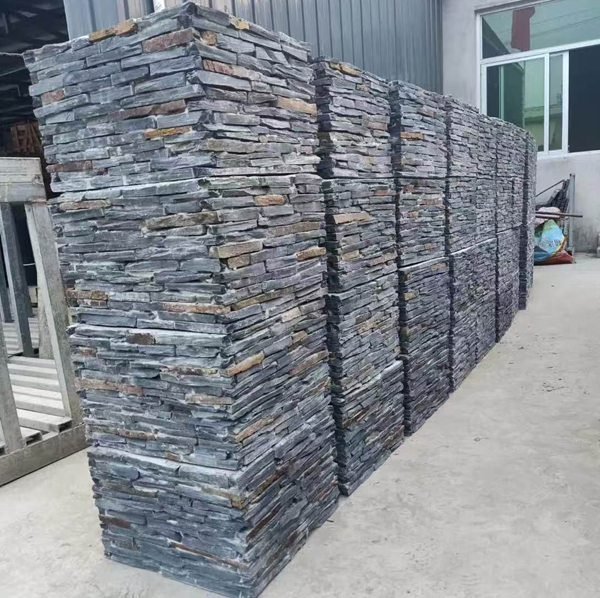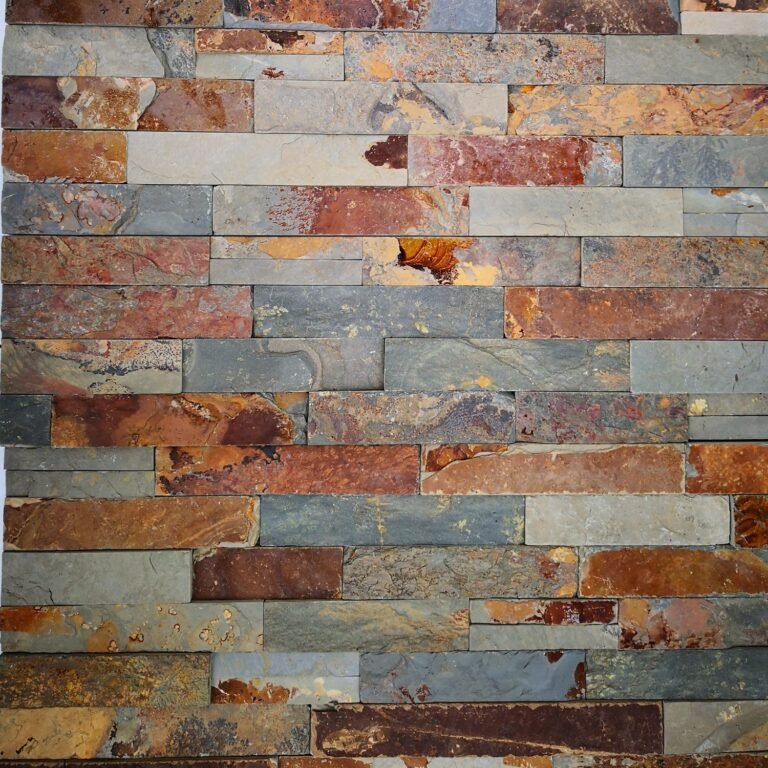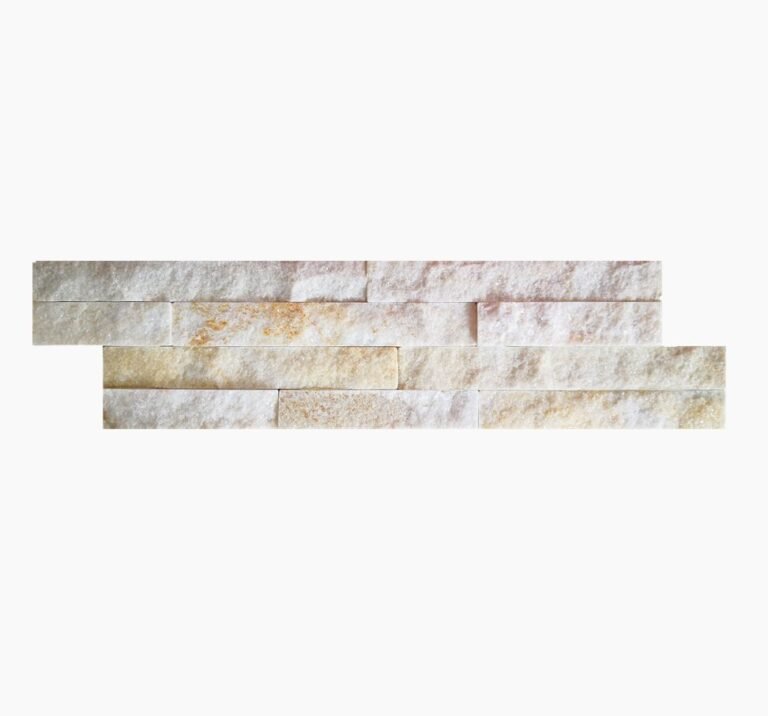
A distributor opens a container of “natural stone veneer” and finds panels where the color stops at the surface: a printed texture over a cementitious core. The material passes a glance test on the showroom wall and fails it on the facade three winters later. This is the quiet risk of the thin veneer category. The phrase real thin stone veneer has no legal definition, and the gap between quarried rock and cast lookalikes is where most sourcing mistakes happen.
The fix is not luck. It is a sourcing process: know which stone type fits the project, verify how the factory controls color and thickness, and put the right numbers into the purchase order. Top Stone Panels has quarried and exported natural slate and quartzite from Yi County, Baoding, since 2005 — 18+ years, 220+ containers per year — and the checklist below reflects what that production volume has taught us about the category.
This guide compares slate, quartzite, and sandstone as veneer materials, walks through the formats and backings a factory can produce, and gives B2B buyers the verification steps, order economics, and documentation standards that separate a reliable supply line from an expensive sample board.
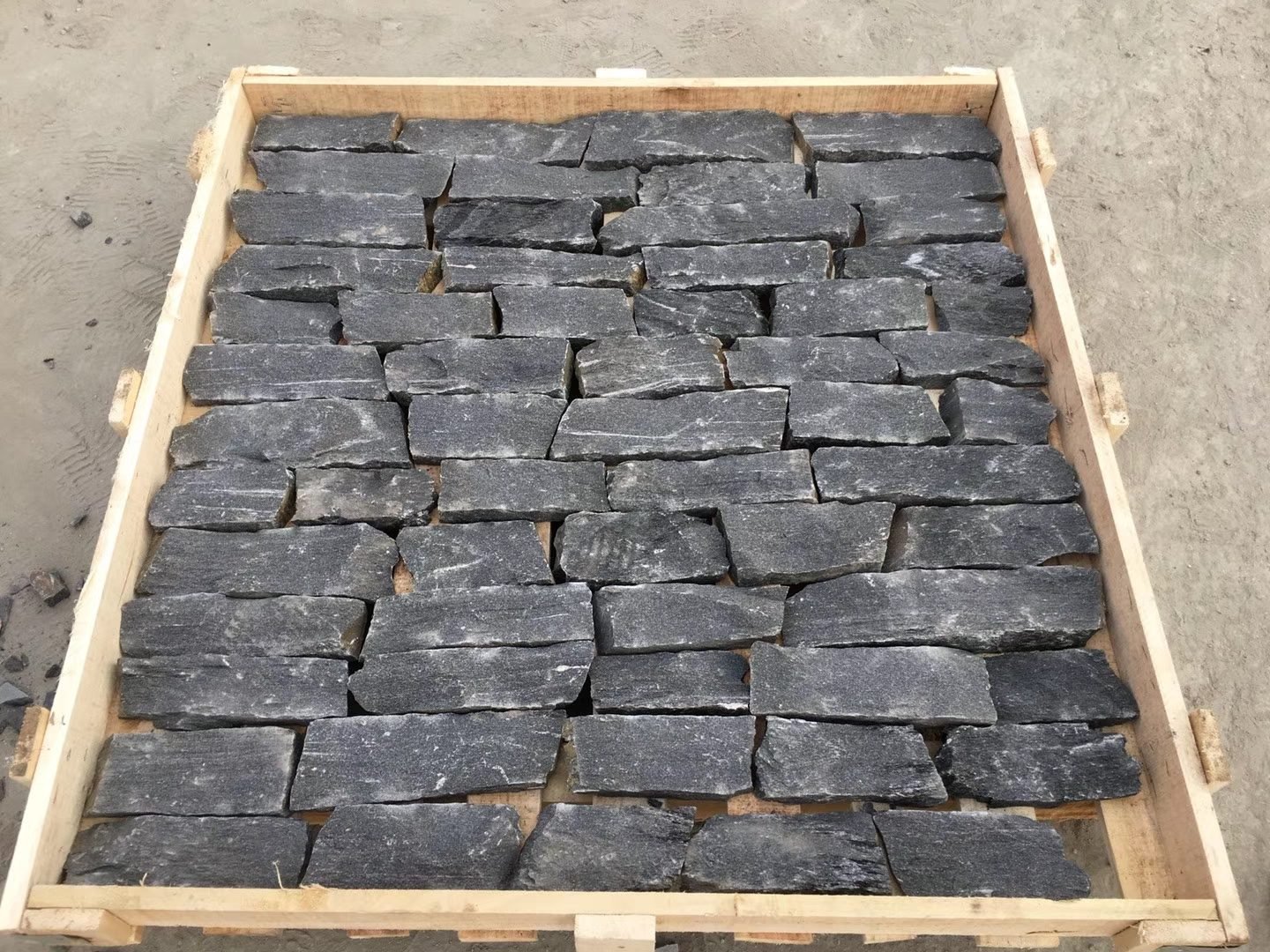
Key Takeaways
- “Real” thin stone veneer is quarried rock sliced to 10–20 mm — geology all the way through, not surface pigment on a cast core.
- Quartzite and slate dominate cold-climate exteriors because low porosity survives repeated freeze-thaw cycling between -30°C and +50°C.
- Batch-specific vein selection is the difference between one consistent facade and a patchwork wall — order the full project quantity in one production run.
- Verify thickness tolerance, backing adhesion, fire performance (Class A), and freeze-thaw data before signing the PO, not after the container lands.
- Standard terms from a factory-direct source: MOQ one 20GP container, samples in 1–3 days, production in 20–25 working days, 30/70 T/T.
What Real Thin Stone Veneer Means
“Thin” describes the profile, not the material. Real thin stone veneer starts as a block of quarried rock — slate, quartzite, marble, or sandstone — and is sliced down to roughly 10–20 mm on diamond-blade saws. The panel that results keeps the mineral composition, cleft texture, and color variation of the geological formation it came from. Cut it open and the structure runs edge to edge.
The impostors fall into three families. Manufactured stone is cast concrete tinted with iron-oxide pigments; the color sits in a surface skin. Flexible stone sheet is a thin composite bonded to a fabric or polymer carrier. And reconstituted stone re-crushes quarry waste into cement and re-molds it. All three have legitimate uses, and none of them is quarried rock. The full breakdown sits in our comparison of natural stone veneer vs cultured stone.
Why does the distinction matter commercially? Performance. Real stone’s color cannot fade because there is no pigment layer to lose. Slate and quartzite carry Class A fire behavior without additives. Density determines freeze-thaw survival, and cast products absorb water differently than the rock they imitate. When an architect specifies “natural stone” on a facade, a cast substitute creates a compliance exposure for everyone in the chain — the distributor who sold it included.
Two field tests settle the question fast. First, the edge test: look at a cut cross-section. Natural stone shows continuous mineral structure; cast products show a homogeneous core, sometimes with a visibly different surface layer. Second, the weight-density sanity check: real quartzite and slate veneer feel substantially heavier than cast units of the same size. Neither test replaces documentation, but both catch the worst fakes in under a minute.
Slate vs Quartzite vs Sandstone: A Sourcing Comparison
The three stones carry different strengths, and matching stone to application is the first real decision in the sourcing process. The table below summarizes how they behave as veneer.
| Property | Slate | Quartzite | Sandstone |
|---|---|---|---|
| Structure | Fine-grained, excellent natural cleavage | Dense, interlocked quartz crystals | Cemented sand grains, visible texture |
| Porosity | Low | Very low | Higher — request absorption data |
| Typical color families | Grey, black, rusty, multi | Beige, rusty, silver, gold | Buff, brown, red, yellow |
| Surface character | Smooth cleft, planar | Split face, crystalline sparkle | Grainy, warm, matte |
| Freeze-thaw suitability | Strong — tested to -30°C to +50°C | Strongest — tested to -30°C to +50°C | Application-dependent |
| Best applications | Facades, roofing accents, interiors | Exterior cladding, high-traffic feature walls | Protected exteriors, warm-climate walls, interiors |
| Fire behavior | Class A | Class A | Class A |
Slate: the precision workhorse
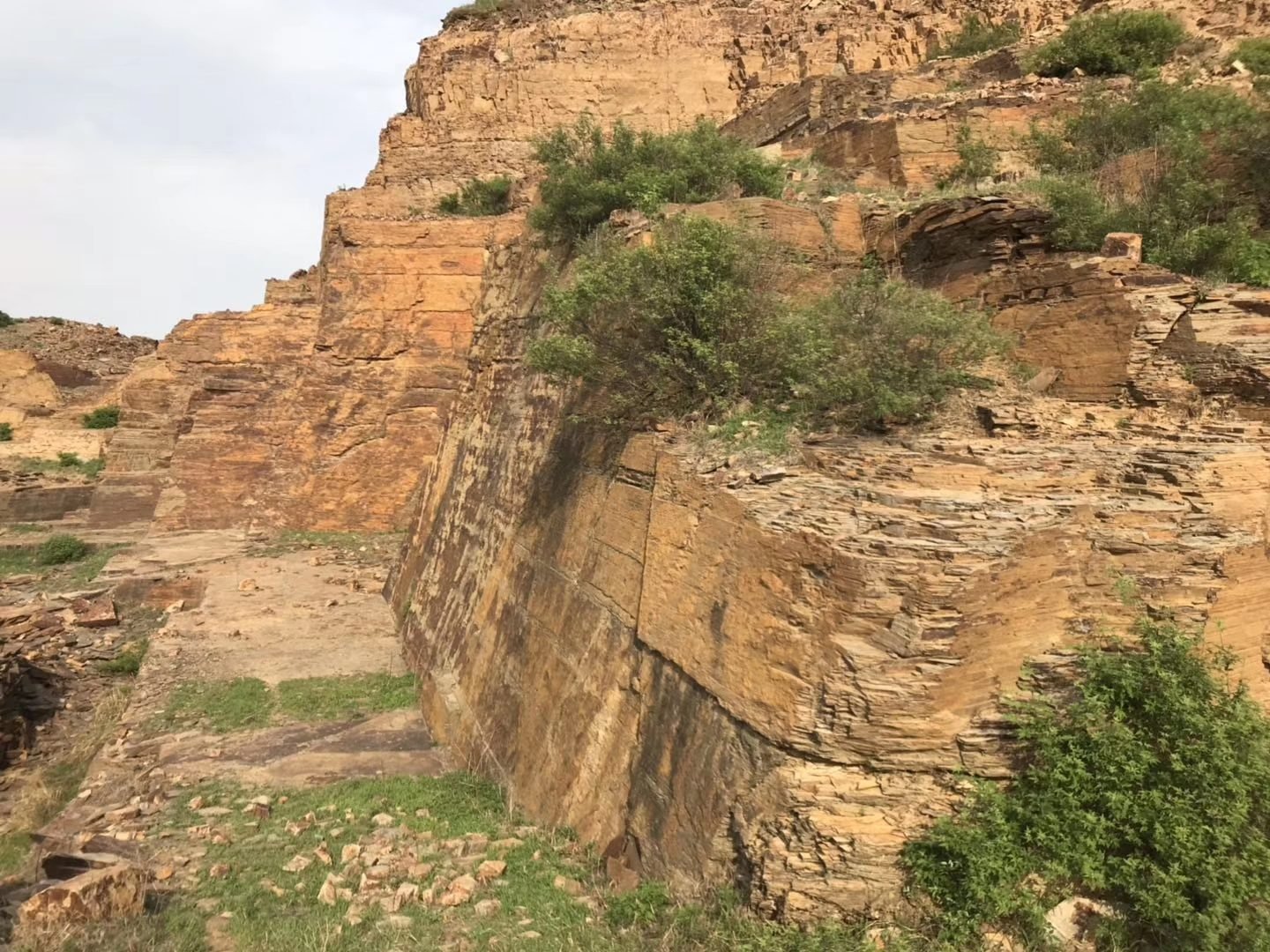
Slate splits along natural cleavage planes into flat, consistent sheets, which makes it the easiest stone to hold to tight thickness tolerances during slicing. Its fine grain reads clean and architectural — a reason slate dominates modern linear facades and interior feature walls. Yi County in Hebei province, where Top Stone Panels’ quarry operates, is one of China’s established slate and cultured-stone regions, and the local formation yields the grey, black, and rusty families in volume.
Quartzite: the durability pick
Quartzite is the densest of the three. Its interlocked quartz structure leaves minimal pore space, so there is little water inside the stone to freeze and expand — the mechanism that spalls weaker cladding after repeated winters. For exposed facades in Canada, the northern United States, and Scandinavia, quartzite is the default recommendation. The trade-off: quartzite’s hardness wears cutting tools faster, so only factories with serious diamond-blade capacity hold consistent quartzite veneer thickness at scale. The split face carries a subtle crystalline sparkle that photographs well and sells well in showroom displays.
Sandstone: the warmth play
Sandstone’s cemented-grain texture and buff-to-red palette deliver a warmth the other two stones cannot. The sourcing caveat is porosity: sandstone absorbs more water than slate or quartzite, so exterior use demands the supplier’s absorption data and, in freeze-thaw regions, a conservative application judgment — protected elevations, warm climates, or sealed systems. Indoors, sandstone veneer performs without reservation and anchors Mediterranean, desert, and rustic design schemes.
Our take for a distributor building inventory: stock slate and quartzite as the exterior-safe core of the range, and carry sandstone as the interior/warm-climate accent line. That allocation matches where end-customer demand concentrates across North America and Europe.
Formats and Backings from the Factory
Once the stone type is fixed, the second decision is format. Factories produce real thin stone veneer in several configurations, each with different installation economics.
Random loose strips
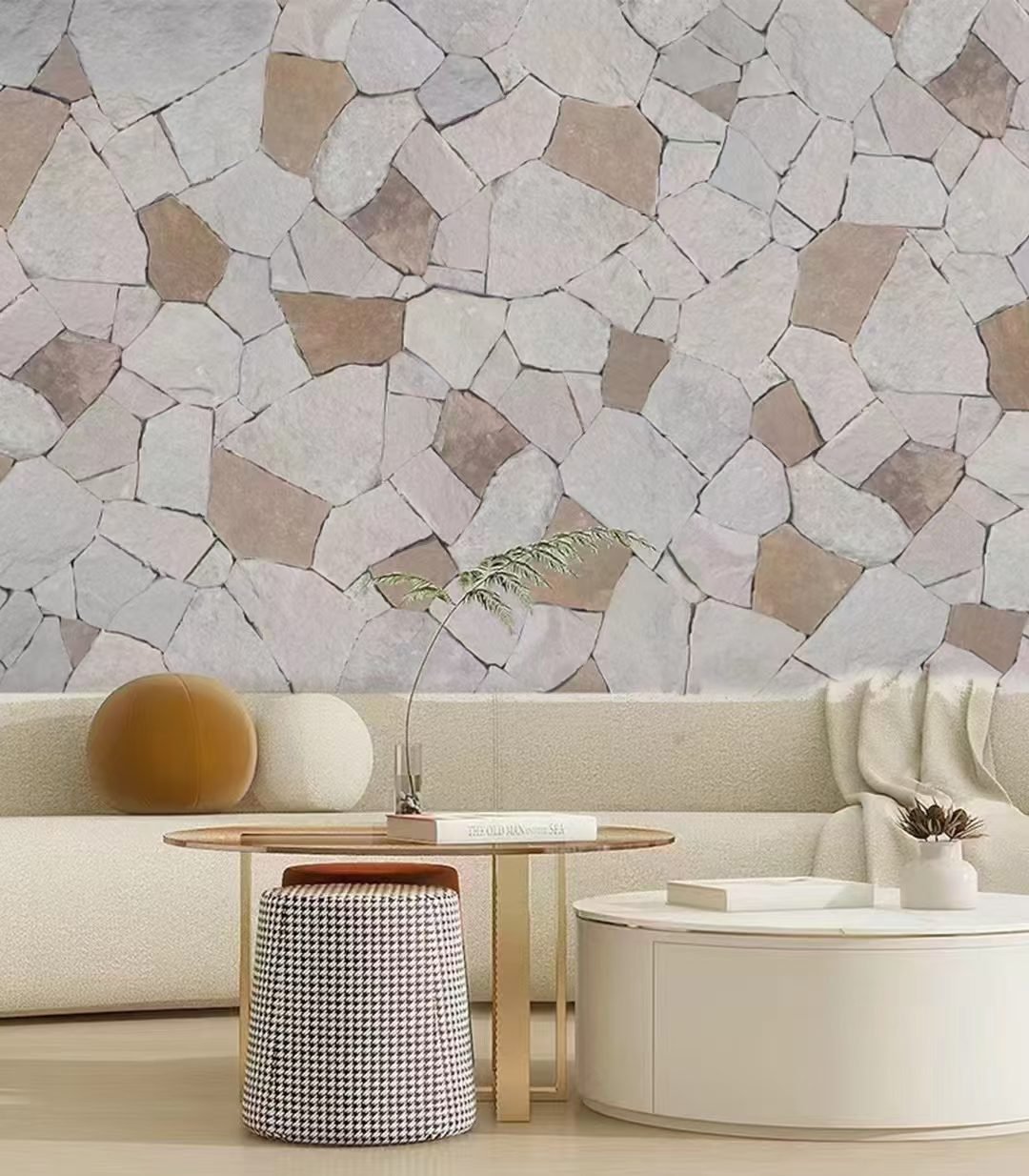
Loose strips are irregular-length pieces cut from the same quarry vein and packed for hand-laid installation. The result on the wall is an organic, dry-stack look that panelized products cannot fully reproduce. This format is the top choice for villa facades and landscape feature walls where the design calls for non-modular character. Top Stone Panels’ thin stone veneer line runs at 40,000 m² per month in this format, with color sorting performed per quarry vein.
Thin ledgestone panels
Ledgestone consolidates thin strips into standardized 36×10 cm panels — an ultra-compact unit that installs quickly on columns, curved walls, and tight details. Panelization cuts laying time sharply versus loose stone, which is why ledgestone dominates contractor-driven work. See the thin ledgestone panel range for formats and colors.
Stacked stone panels with L-corners
Stacked stone panels come in 15×60 cm and 15×55 cm sizes with pre-made L-corner pieces for clean 90° turns. The prefabricated corners eliminate on-site 45° miter cutting — a task that is slow, wasteful, and visible when done badly. On typical projects the corner kits save roughly half the corner labor. Production capacity for this line runs at 80,000 m² per month; browse the stacked stone collection.
Backing: epoxy, cement, or mesh
Backing determines how the panel bonds on site and how it survives transit. Three systems are standard:
- Marine-grade epoxy bond — highest adhesion strength; the choice for demanding exterior and overhead applications.
- Cement backing — compatible with standard cementitious adhesives and thinset; the default for conventional masonry substrates.
- Mesh backing — lightest option; used where weight matters and for flexible placements.
The epoxy-versus-cement question has its own durability data, covered in our piece on epoxy bond vs cement backing. Tell your supplier the substrate and the climate; a capable factory will specify the backing rather than leave it to you.
Sampling Before You Commit
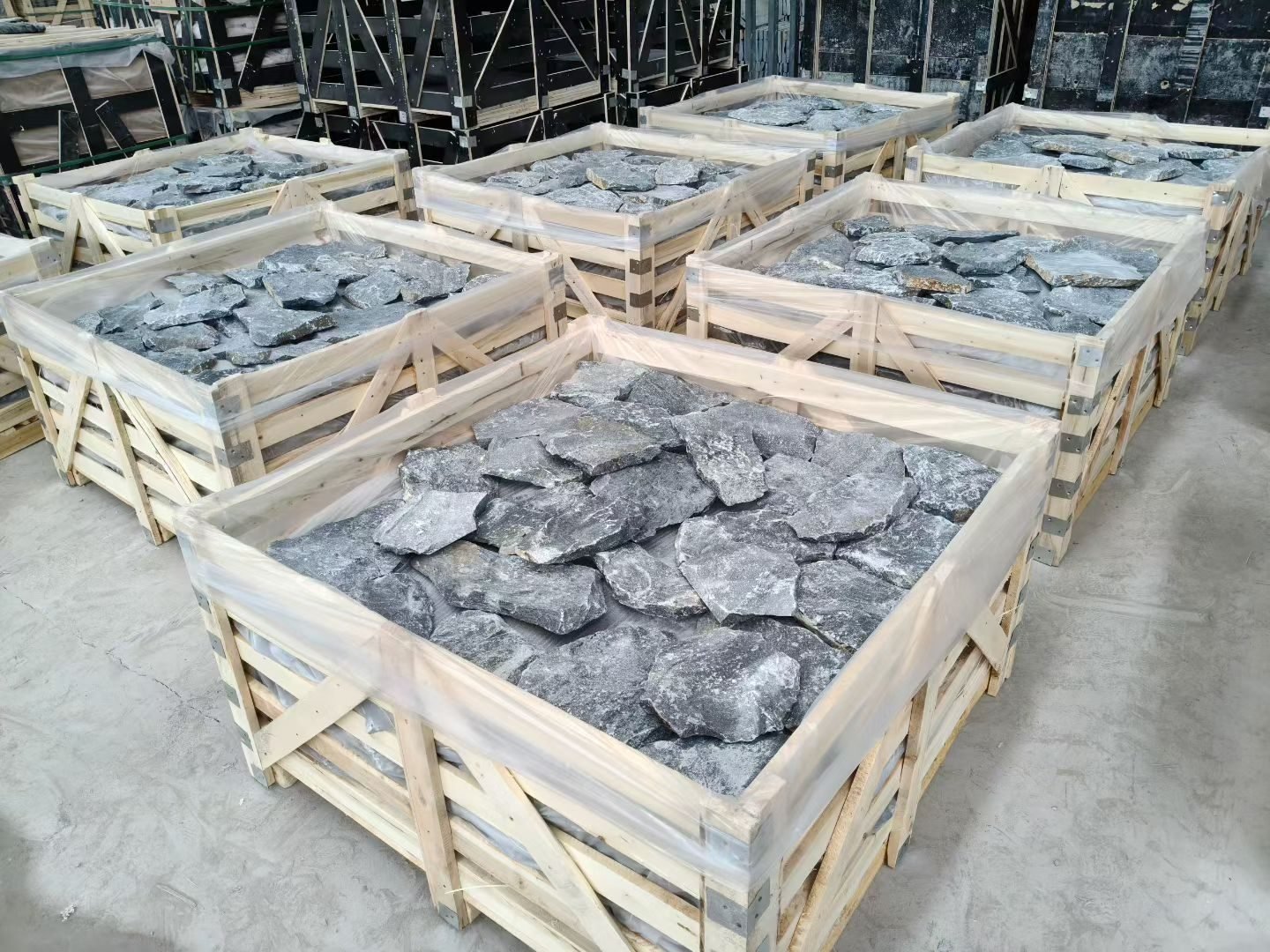
Top Stone Panels ships physical samples within 1–3 days, sized for your own lab or installer to evaluate. Testing a real sample beats studying a brochure — check the edge cross-section, weigh it, wet it, and bond it to your substrate.
Quarry-direct slate · quartzite · sandstone | MOQ 1×20GP | COO + ISPM 15 documents
Batch Vein Selection and Color Consistency
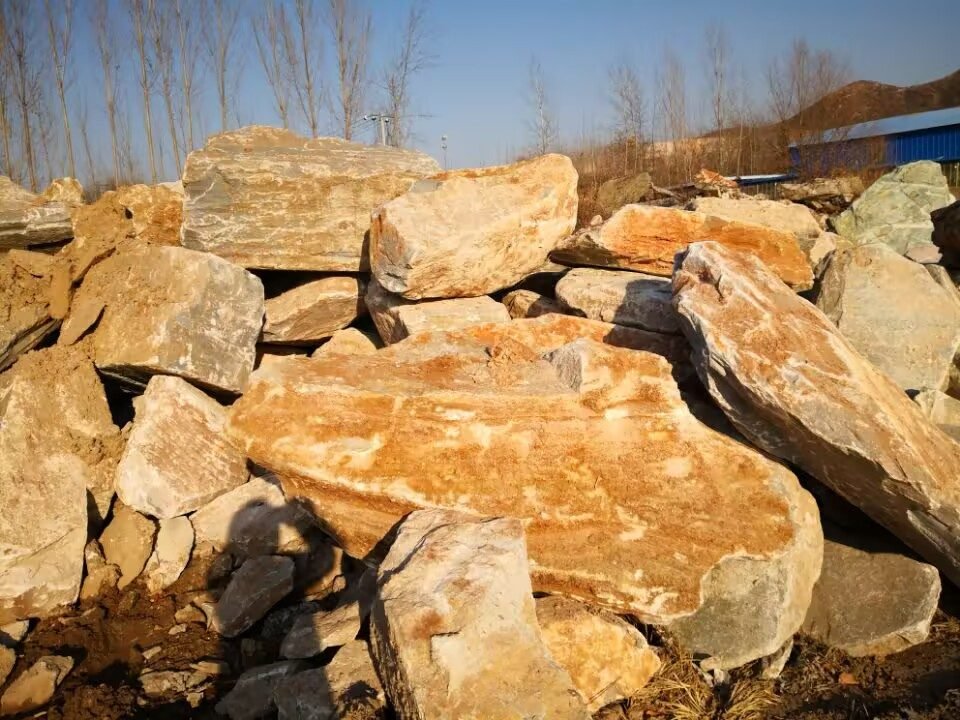
Color inconsistency is the number-one complaint in natural stone orders, and it is not a defect of stone — it is a defect of sourcing discipline. A quarry face contains multiple veins: bands of rock that differ in mineral mix and tone. Panels cut from different veins, or from different blocks pulled months apart, will not match, no matter how identical the samples looked.
The control mechanism is batch-specific vein selection: every panel in a given production run is cut from the same geological stratum, sorted so one container holds one color story. Top Stone Panels applies this selection at the block stage and re-checks it during production — two of the three gates in the factory’s QC sequence.
Three ordering rules follow from this:
- Order the full project quantity in one production run. Splitting an order across months risks pulling from a different vein, and no amount of blending fully disguises a vein shift on a lit facade.
- Include a sensible overage. Cutting losses and future repairs are cheaper to solve with 5–10% extra material from the same batch than with a re-order that may not match.
- Approve a pre-shipment layout. Factories that photograph the laid-out batch before packing give you a chance to see the actual color field, not the sample’s. Top Stone Panels shares container-loading and layout images before the balance payment for exactly this reason.
Thickness control belongs to the same discipline. Infrared-guided CNC diamond blades hold the slicing tolerance tight enough that panels lay flat without lippage — the visible stepping that happens when adjacent pieces differ in depth. The 3-step thickness quality control process article details how raw selection, in-process recheck, and final inspection interact.
Quality Checks Before You Sign the PO
Sample approval is the beginning of verification, not the end. Before committing container money, a B2B buyer should lock five items into the purchase specification.
1. Thickness tolerance
Specify the target thickness and the acceptable tolerance, then confirm how the factory measures it. Infrared CNC cutting holds consistent slicing, but the buyer should still see caliper measurements from the in-process recheck, not just a promise. Uneven thickness shows up on the wall as lippage, and by then the money has shipped.
2. Backing adhesion
The bond between stone and backing is the panel’s structural weak point in transit and in service. Ask for the bond method (marine-grade epoxy, cement, or mesh) and how adhesion is verified before shipment. Panels that delaminate inside a carton are scrap; panels that delaminate on a facade are a claim.
3. Freeze-thaw performance
For any exterior sale into a cold market, request cyclic freeze-thaw data across the full operating range. Top Stone Panels’ slate and quartzite veneer is tested across -30°C to +50°C, the envelope that covers Canadian winters and Gulf summers alike. The science behind it — density, absorption, and why some stones spall — is unpacked in the freeze-thaw resistance guide.
4. Fire behavior
Natural stone is non-combustible and carries Class A fire performance, which matters for code-driven projects: wildfire-interface zones, high-rise cladding, commercial interiors. Verify the rating covers the complete assembled panel — stone plus backing — not the rock alone. Background reading: natural stone fire ratings and building codes.
5. UV and salt-spray durability
Real stone’s color runs through the full thickness, so UV exposure has nothing to fade — unlike surface-pigmented cast products. For coastal projects, salt-spray resistance completes the picture; quartzite and slate show negligible reaction to marine exposure. Both topics have dedicated references: UV stability of slate and quartzite and salt-spray resistance for coastal projects.
Documentation to require
- Certificate of Origin (COO) — needed for customs and, in some markets, preferential duty treatment.
- ISPM 15 fumigation certificate — mandatory for wood packaging entering most markets; a missing certificate can hold a container at port.
- Pre-shipment inspection report or video — your eyes on the goods before the balance is due.
- Physical samples in 1–3 days — for your own lab, drop, or bond testing.
The ASTM standards guide maps which test methods apply to cladding so your spec sheet cites real procedures rather than adjectives.
Container Economics: MOQ, Loading, Lead Times
Thin veneer’s economics favor the buyer more than any other natural stone format, because thinness multiplies coverage per container. Here is how the order mechanics work from a factory-direct source.
Minimum order and mixing
The MOQ is one 20GP container across all product lines — an entry point sized for regional distributors, not just national importers. Because thin veneer weighs far less per square meter than full-thickness stone, a single container carries several hundred square meters of coverage. Buyers routinely combine thin veneer with stacked stone panels, ledgestone, and even flagstone or column kits in one load; the MOQ and container mix guide shows how to structure a multi-product container sensibly.
Lead times worth planning around
| Stage | Duration | Notes |
|---|---|---|
| Samples | 1–3 days | Express courier to your lab or office |
| Standard production | 20–25 working days | After 30% T/T deposit |
| First-order production | 25–30 working days | Includes initial vein selection and color matching |
| Monthly capacity | 40,000 m² thin veneer | Plus 60,000 m² thin ledgestone |
For seasonal markets, place spring-selling inventory in winter: ocean transit plus customs adds weeks on top of production, and container availability tightens before peak shipping periods. Capacity planning against a 40,000 m² monthly line is straightforward for orders up to several containers; larger programs simply schedule additional production slots.
Commercial terms
Payment runs 30% T/T deposit at order confirmation, 70% before shipment — with loading photos and layout confirmation preceding the balance. Incoterms cover FOB Xingang, EXW, CIF, and DDP, so buyers can take responsibility at the factory gate or delegate it to the destination door. The incoterms comparison and the landed cost breakdown walk through the math for each option.
Packaging that survives the ocean
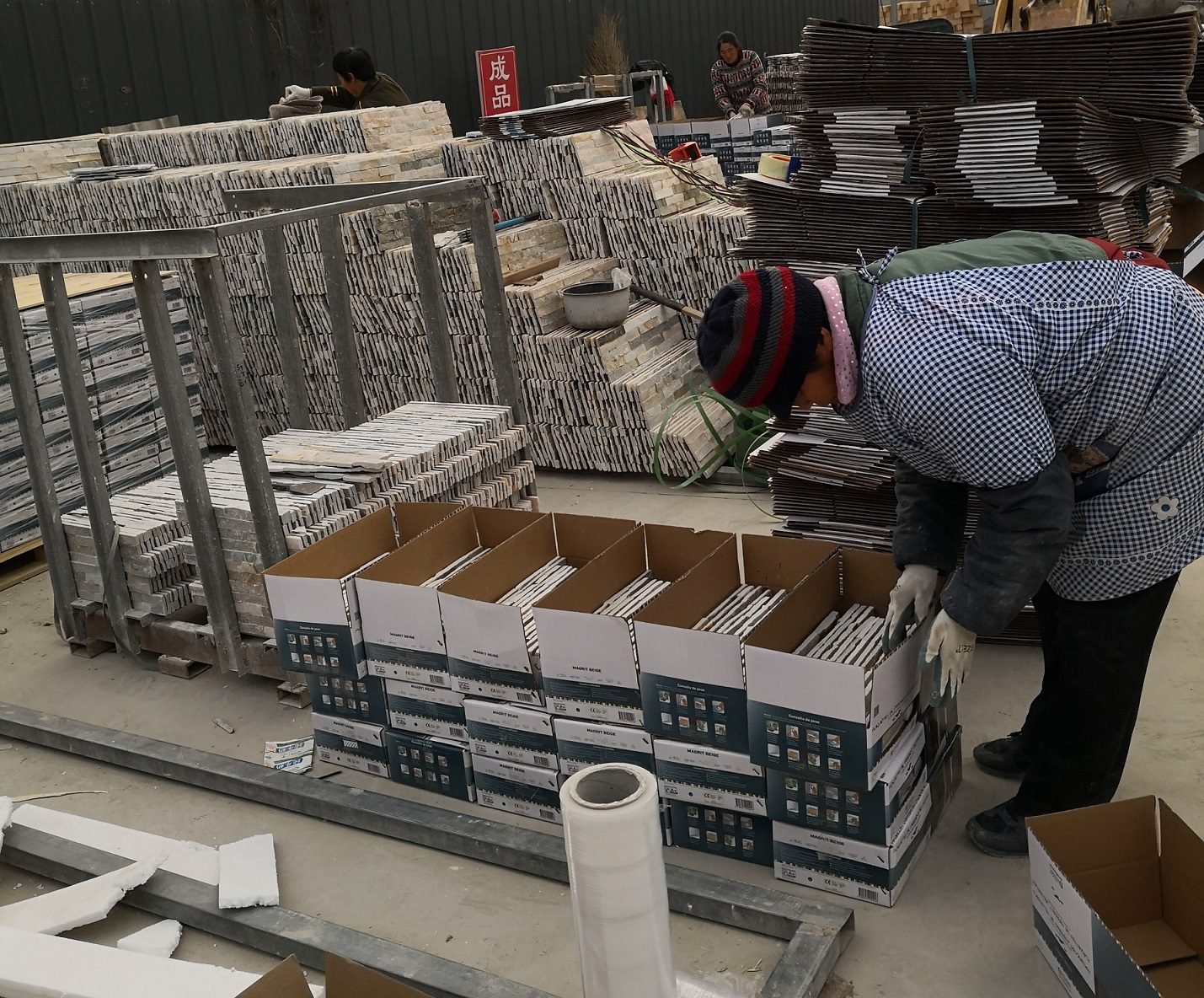
Breakage is a silent margin killer on stone imports. The zero-breakage protocol at Top Stone Panels wraps panels in 3–5 layer reinforced corrugated cartons, stacks them on fumigation-free solid wood or plywood pallets, secures loads with 4–6 high-tensile steel straps, and fills container voids with industrial airbags. The full method is documented in the container loading best practices article.
Verify the Factory, Not Just the Sample
A sample proves what one square foot can be. The factory behind it proves what 800 square meters will be. Before a first container order, work through this checklist.
- Quarry control. Does the supplier own or directly control the quarry? Quarry ownership is the only durable guarantee of vein continuity and price stability. Top Stone Panels sources from its own quarry network in Yi County, Hebei — the slate and cultured-stone heartland of northern China.
- Track record in containers, not years alone. Eighteen-plus years of export experience and 220+ containers per year describe a production system that has survived real audits, real claims, and real winters. Ask any prospect for shipment references, not just factory photos.
- A named QC process. “Quality is our culture” is not a process. Three gates are: raw material selection, in-process recheck, and pre-shipment final inspection. Ask which measurements happen at which gate.
- Transparency at payment time. A factory confident in its goods shares container-loading video and high-resolution layout images before the balance payment. That single habit prevents most disputes.
- Value-added capability. Private label packaging, custom color mixes, display materials for your showroom — these separate a production partner from a price quote. The OEM and private label guide covers what is realistically orderable.
The expanded version of this checklist, including how to structure a factory audit visit, sits in the stone cladding supplier verification guide. And if you are new to importing stone from China altogether, the complete sourcing checklist sequences the whole process from first inquiry to delivery.
Frequently Asked Questions
How can I tell real thin stone veneer apart from manufactured stone?
Real thin stone veneer is quarried rock sliced to 10–20 mm, so its texture, mineral banding, and color run through the full thickness. Manufactured stone is cast concrete with surface pigment. Ask the supplier for the quarry origin and a cross-section photo of the panel edge: natural stone shows continuous geological structure, while cast products show a uniform cementitious core.
Which stone type is best for exterior veneer in freeze-thaw climates?
Dense quartzite and slate perform best because their low porosity leaves little room for water to freeze and expand. Top Stone Panels’ slate and quartzite veneer is tested across -30°C to +50°C and suits cold-climate facades in Canada, the northern US, and Scandinavia. If you specify sandstone outdoors, request the supplier’s absorption data first.
What is the minimum order quantity for real thin stone veneer from China?
The standard minimum order is one 20GP container, loaded at Xingang (Tianjin) port. Depending on format and thickness, a container holds several hundred square meters of thin veneer. Buyers can mix product types such as thin veneer, stacked stone panels, and ledgestone within one container to reach the MOQ faster.
How long does production and shipping preparation take?
Samples ship within 1–3 days. Standard production runs 20–25 working days after the 30% T/T deposit; first orders take 25–30 working days because of initial vein selection and color matching. Monthly capacity is 40,000 m² of thin stone veneer plus 60,000 m² of thin ledgestone panels.
Can I mix slate, quartzite, and sandstone in one container order?
Yes. Mixed containers are a standard practice at Top Stone Panels: buyers combine thin stone veneer, stacked stone panels, ledgestone, and even flagstone or column kits in a single 20GP load. Weight distribution is planned at the loading stage so heavier items sit below lighter panel cartons.
What documents should a real stone veneer supplier provide?
Request a Certificate of Origin (COO), an ISPM 15 fumigation certificate for the wood packaging, a pre-shipment inspection report or video, and physical samples for your own lab testing. Established factories provide all four as routine documentation rather than special favors.
Conclusion
Real thin stone veneer rewards buyers who source it like an industrial product, not a decorative one. The stone type sets the performance ceiling — quartzite and slate for freeze-thaw exteriors, sandstone where warmth beats density. The factory’s discipline decides whether 800 m² arrives matching the sample: vein selection, CNC thickness control, three QC gates, and packaging engineered for the ocean. Everything else is contract mechanics you now hold the numbers for.
- Match stone to climate: slate and quartzite tested across -30°C to +50°C for exposed exteriors; sandstone for protected or warm-climate work.
- Order the full quantity in one production run, with 5–10% overage from the same vein.
- Lock thickness tolerance, backing type, freeze-thaw and fire data into the PO; require COO, ISPM 15, and pre-shipment inspection media.
- Terms to expect from a factory-direct partner: MOQ 1×20GP, samples in 1–3 days, production 20–25 working days, 30/70 T/T, FOB Xingang to DDP.
Request physical samples — they leave the factory within 1–3 days — or send your project spec for a container quotation via topstonepanels.com. The quarry has been cutting since 2005; your batch can be next.