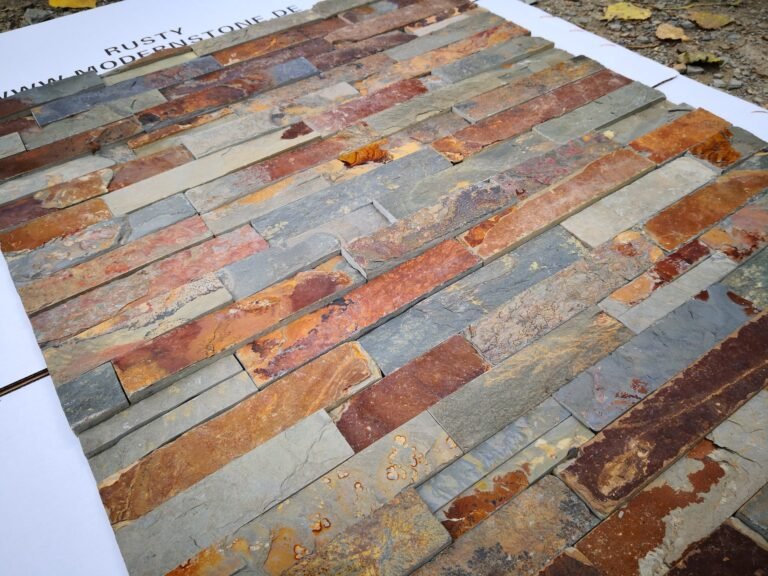
This is the single most common complaint in natural stone B2B trade, and it almost never means the supplier cut corners. Natural stone is a geological material, not an industrial one. Color comes from mineral composition — iron oxide ratios, organic carbon content, metamorphic grade — and those variables shift across every quarry face, sometimes within meters.
The question is not whether variation exists. It is whether your supplier has systems to manage it. This guide explains exactly how responsible quarries and factories control batch color consistency from extraction through shipping, and what you should write into your purchase specification to protect your project.
- Natural stone color varies because geology varies — the variable is mineral composition, not manufacturing quality.
- Reputable factories control consistency through three layers: quarry vein mapping, factory dry sorting, and instrumental QC measurement.
- ΔE ≤ 5 is the accepted tolerance for exterior cladding; ΔE ≤ 3 for interior feature walls.
- Your purchase contract should specify reference samples, ΔE limits, batch traceability, and rejection procedures — not just a product code.
- Sealers shift color by ΔE 1–2; always approve on sealed samples if installation includes sealing.
Why Natural Stone Color Varies Between Batches
Color in natural stone is not applied — it is embedded. The hue you see on a split-face stacked stone panel is the direct expression of minerals deposited hundreds of millions of years ago, modified by heat, pressure, and groundwater chemistry during metamorphism.
Slate gets its grey-to-black range from varying concentrations of graphite and iron sulfide. Quartzite owes its whiteness to recrystallized quartz with minimal impurities, while pink or gold tones signal traces of iron oxide or feldspar. Sandstone color depends almost entirely on the cementing mineral between its sand grains — silica produces white, calcite produces cream, and iron oxide produces everything from yellow to deep red.
Within any single quarry, these mineral ratios are not uniform. A slate deposit in Yixian may contain four distinct color veins across a 200-meter quarry face, each representing a different depositional layer. Blocks extracted from adjacent benches can differ by ΔE 3–6, which is clearly visible when panels from both blocks are installed side by side on the same wall.
This is fundamentally different from manufactured stone, where pigment is mixed into a concrete slurry in controlled proportions. If a supplier promises zero color variation in natural stone, they are either selling manufactured product or they have not inspected their own inventory. The relevant question is whether the variation falls within a managed, specified range.
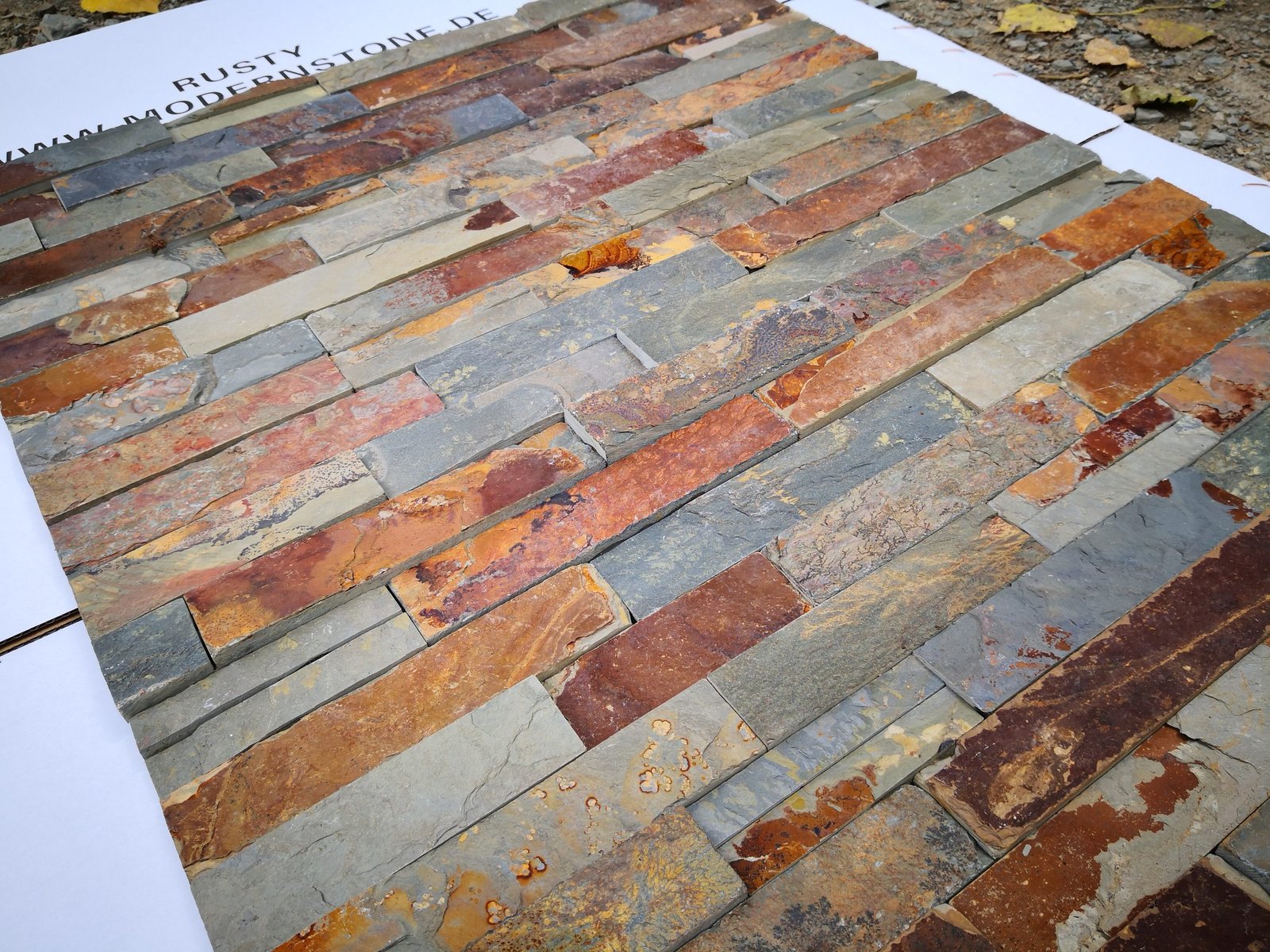
Variation by Stone Type
| Stone Type | Typical ΔE Range (Single Vein) | Primary Color Driver | Consistency Difficulty |
|---|---|---|---|
| Quartzite | 1–3 | Metamorphic recrystallization homogenizes mineral distribution | Low |
| Slate | 2–4 | Graphite and iron sulfide layering varies by depositional bed | Moderate |
| Sandstone | 3–6 | Cementing mineral ratio shifts across formation zones | High |
| Limestone | 2–5 | Fossil content and clay inclusion density | Moderate |
Quartzite is the easiest stone to keep consistent because metamorphic recrystallization physically mixes the original minerals into a more homogeneous mass. Slate sits in the middle — its layered structure preserves distinct beds that must be separated at extraction. Sandstone demands the most active management because its color-forming cement can vary significantly even within a single bench.
How Quarries Map Veins Before Extraction
Color control begins at the quarry face, long before any block reaches the factory. Experienced quarry operators in Yixian maintain geological maps of their deposits that identify distinct color veins — discrete geological layers with consistent mineral composition and therefore consistent color.
These maps are built through core sampling and face observation over years of extraction. When a new bench is opened, operators drill exploratory cores at regular intervals and log the color, grain size, and mineral content at each depth. Over time, this produces a three-dimensional model of where each color vein runs through the deposit.
When a B2B buyer places a repeat order specifying “Yixian grey slate, medium tone,” the quarry operator does not pull blocks randomly. They allocate extraction to the specific vein zone that matches the previous order’s approved samples. This is called vein-zone allocation, and it is the single most important upstream control on batch color consistency.
Quarry-Face Photography as Pre-Selection Tool
Before cutting begins on a newly exposed face, many operations photograph the entire face under consistent natural lighting. These photographs serve as a visual record that the factory’s QC team references when sorting incoming blocks. If a block arrives at the factory floor and its face color deviates from the quarry-face photo of its assigned vein zone, it is flagged for re-evaluation rather than sent directly to production.
This practice catches problems early — before labor and energy are spent cutting panels from material that will fail the final color check. It also creates an audit trail that links finished panels back to their geological origin, which matters when a buyer needs to verify that their third container came from the same vein as their first.
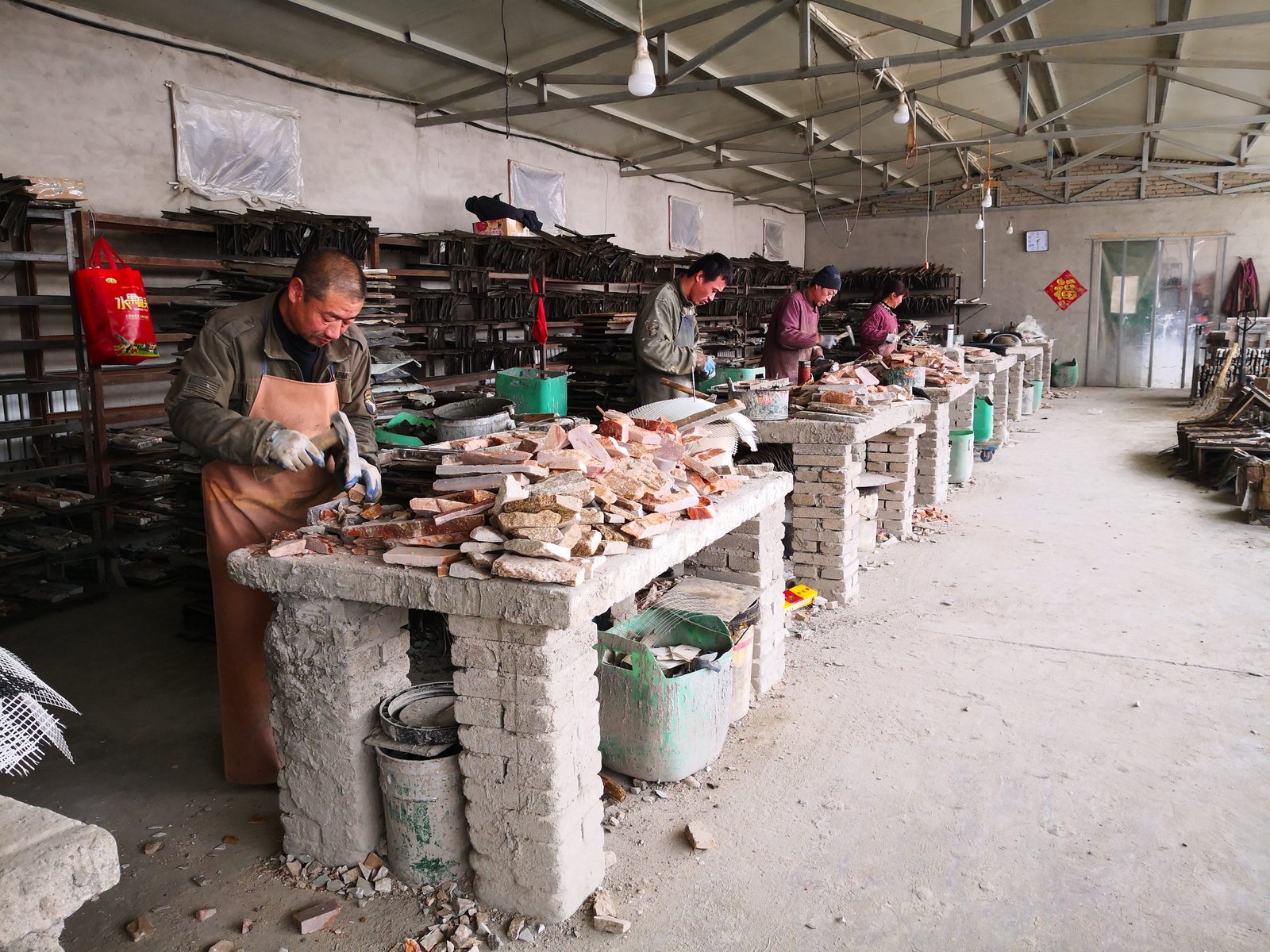
Factory-Level Color Sorting and Grading Protocols
Once blocks arrive at the factory, the second layer of color control begins. This is where geological potential becomes commercial consistency — or fails to.
Incoming Block Inspection
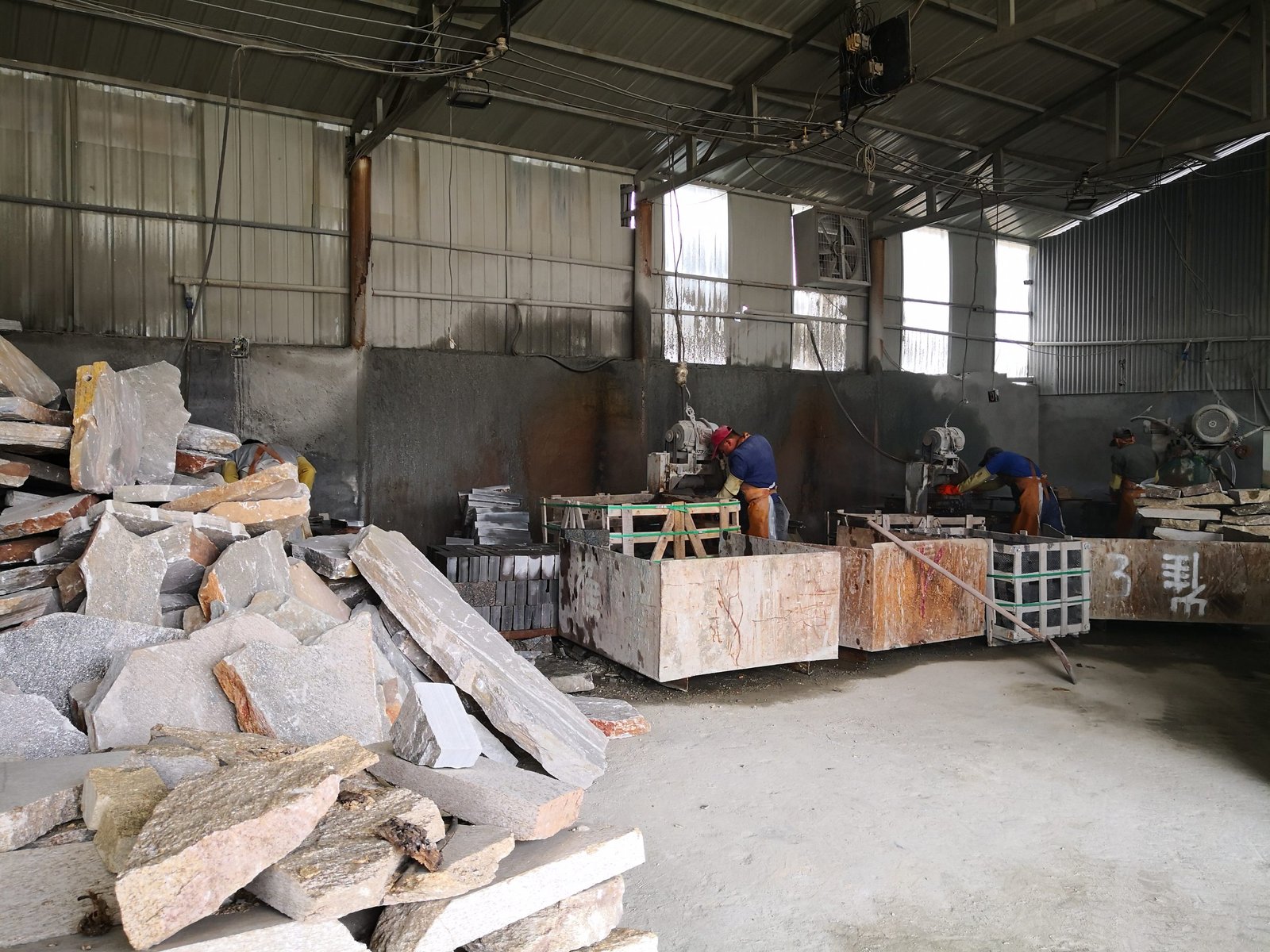
Every incoming block is inspected under standardized D65 lighting (the international standard for daylight-simulated color evaluation). Inspectors compare the block’s freshly split face against the approved reference sample for that order and against the quarry-face photograph. Blocks that fall outside the expected range for their assigned vein zone are separated and either reallocated to a different order with a matching tolerance or held for accent-blend production.
Dry Sorting Before Cutting
After blocks pass incoming inspection and are cut into panels, the panels undergo dry sorting. Workers lay out panels flat without adhesive and visually group them into tone bands — typically three tiers:
- Premium match: Panels within ΔE ≤ 3 of the reference sample. Reserved for orders with tight color specifications, typically interior feature walls or high-visibility commercial facades.
- Standard range: Panels within ΔE ≤ 5 of the reference sample. Suitable for most exterior cladding projects where natural variation is expected and accepted.
- Accent blend: Panels with ΔE 5–8 that still fall within the stone type’s natural palette. Used intentionally for projects requesting visual depth, or offered to buyers at adjusted pricing with full disclosure.
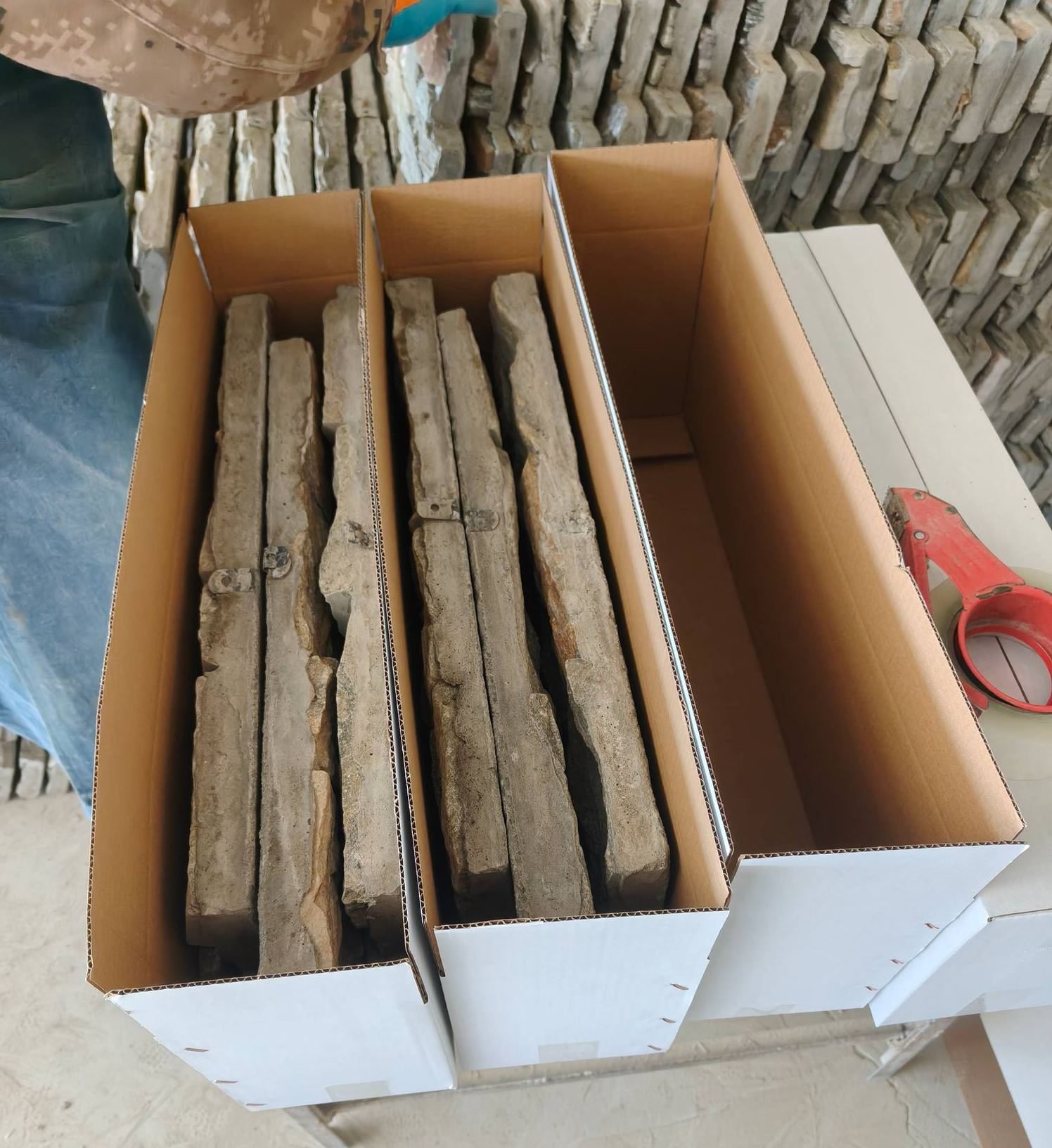
This sorting happens before packing, not after. By the time panels enter crates, each crate contains panels from a single tone band. This is why reputable suppliers can guarantee consistency within a container even when the overall production run spans multiple tone bands.
For thin stone veneer products, dry sorting carries extra weight. Thin slices expose the stone’s internal layering more directly than full-thickness pieces, making color transitions within a single panel more visible. Factories producing thin veneer typically apply tighter sorting tolerances — premium match at ΔE ≤ 2 rather than ΔE ≤ 3.
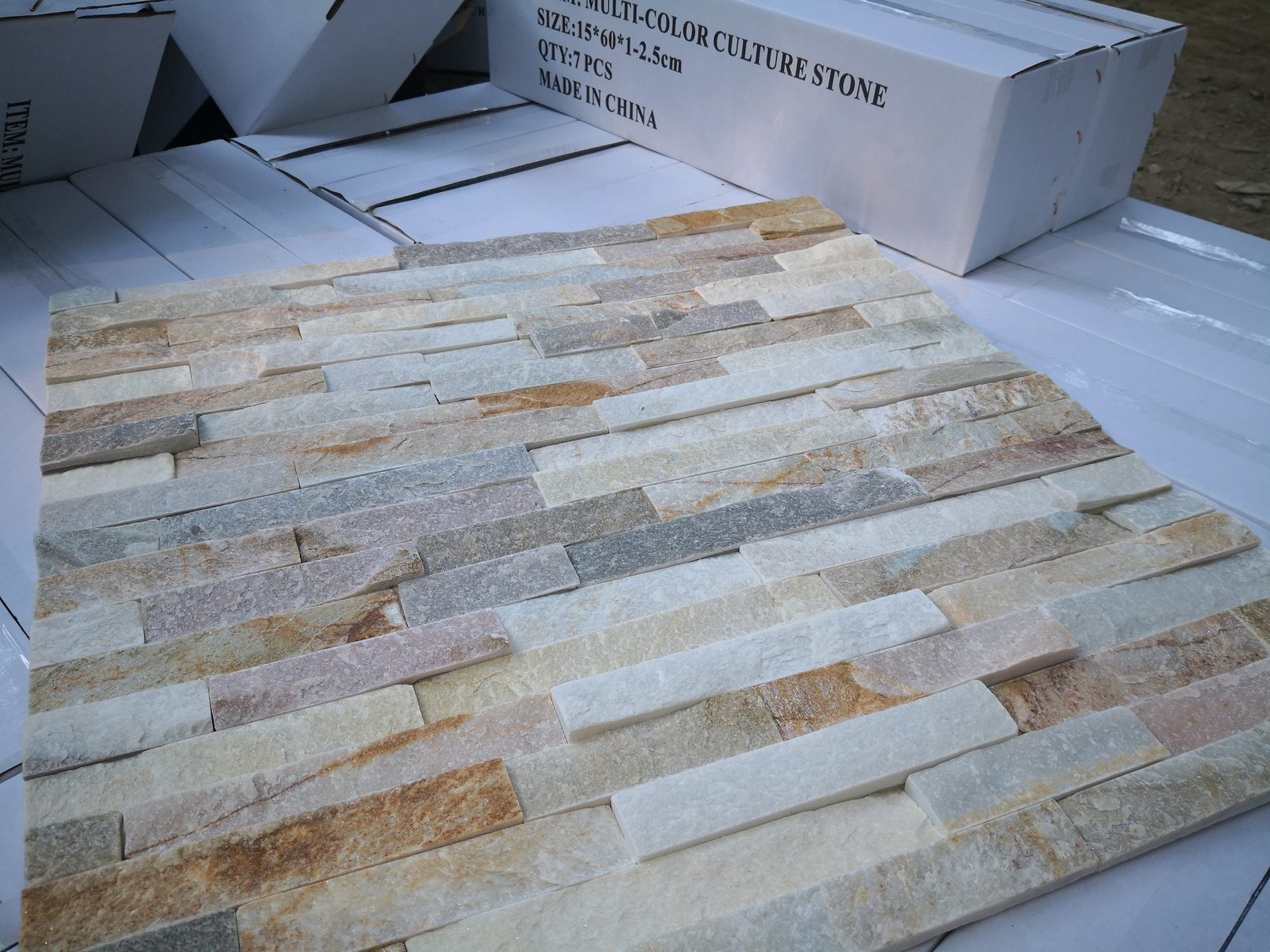
Quality Control Checks During Production
Visual sorting catches gross mismatches, but instrumental measurement catches drift that the human eye misses — especially across large production runs where gradual shifts accumulate imperceptibly.
Spectrophotometer Measurement
At Top Stone Panels, QC staff take spectrophotometer readings at three points per panel (top, middle, bottom) during mid-production checks. The instrument reports CIELAB L*a*b* values, which quantify lightness (L*), green-red position (a*), and blue-yellow position (b*). The ΔE value — the Euclidean distance between the measured point and the reference sample in L*a*b* space — provides an objective, reproducible number that replaces subjective arguments about whether a panel “looks different.”
Sampling frequency scales with order sensitivity. Standard orders receive spot checks every 50 panels. Orders with contractual ΔE specifications receive checks every 20 panels, with results logged against the batch code. Any reading exceeding the specified tolerance triggers a hold on that production line until the cause is identified — usually a block from an unexpected vein zone that slipped through incoming inspection.
Reference Panel Retention
Both the factory and the buyer should retain signed, dated reference panels from the initial approval. These physical samples are the legal baseline for all subsequent color disputes. Photographs are useful for quick communication but cannot substitute for physical panels in arbitration, because camera white balance, monitor calibration, and ambient lighting all introduce variables that make photographic comparison unreliable.
We recommend retaining at least three reference panels per approved color — one at the factory, one shipped to the buyer, and one held by the third-party inspector if one is engaged. All three should be stored away from direct sunlight to prevent UV-induced color change in the reference itself.
What B2B Buyers Should Specify in Purchase Contracts
Most color disputes in natural stone trade stem from vague specifications. Writing “grey slate” on a purchase order leaves the factory guessing about which grey, how much variation is acceptable, and what happens if the delivered material falls outside expectations. Here is what a professional specification should include.
| Specification Element | What to Write | Why It Matters |
|---|---|---|
| Reference samples | “Color shall match approved reference samples ref# ABC-2026-001, signed and dated 2026-03-15” | Establishes the objective baseline for all QC checks |
| ΔE tolerance | “Maximum ΔE ≤ 5.0 measured under D65 illuminant against reference sample” | Replaces subjective visual judgment with measurable threshold |
| Inspection lighting | “Visual inspection conducted under D65 standard illuminant at 500 lux minimum” | Prevents disputes caused by warehouse fluorescent vs. natural daylight comparisons |
| Batch traceability | “Each container shall include batch code linking panels to quarry block number and production date” | Enables root-cause investigation if a future shipment diverges |
| Vein-zone allocation | “All panels sourced from [named vein zone] as documented in supplier’s geological map” | Ensures repeat orders draw from the same geological layer |
| Rejection procedure | “Panels exceeding ΔE tolerance subject to replacement at supplier cost; buyer to notify within 14 days of receipt with spectrophotometer report” | Defines consequences before the dispute arises |
If you are building a comprehensive purchase specification, our stone cladding purchase specification template includes ready-to-use clause language for all of these elements plus dimensional tolerances, packaging requirements, and documentation checklists.
Pre-Shipment Verification: Protecting Your Order
The last opportunity to catch a color problem is before the container doors close. Once panels are loaded and sealed, the cost of correction multiplies by an order of magnitude — you are now dealing with international freight, customs clearance, and return logistics instead of a factory-floor re-sort.
Photo and Video Documentation Standards
Request pre-shipment documentation that includes:
- Photographs of dry-laid panels from each crate, taken under consistent lighting with a color reference card (X-Rite ColorChecker or equivalent) visible in frame
- Spectrophotometer readings from a statistically valid sample (minimum 10 panels per container, or 5% of quantity, whichever is greater)
- Video walkthrough of the packed crates showing batch codes on crate labels
- A signed QC certificate referencing the batch code, reference sample ID, and measured ΔE range
This documentation serves double duty: it gives you confidence before payment, and it provides evidence if a dispute arises after delivery. Suppliers who resist providing this level of documentation are signaling that their QC process may not support the claims in their marketing.
Third-Party Inspection Options
For orders above USD 15,000 or for buyers establishing a new supplier relationship, third-party pre-shipment inspection is cost-effective insurance. SGS and Bureau Veritas both offer stone-specific inspection services that include color verification against reference samples, dimensional checks, and packing integrity assessment. The typical cost is USD 300–500 per inspection day, which represents less than 3% of a standard container order value.
Our quality control thickness guide covers the complementary dimension of dimensional QC — thickness tolerance, flatness, and warpage checks that pair with color verification for complete pre-shipment coverage.
Real Project Example: Matching Across Three Shipments
A European hospitality client required 500 m² of grey quartzite Z-panels for a hotel facade renovation, delivered in three phased shipments over four months to match construction progress. Color consistency across all three deliveries was non-negotiable — the facade wraps continuously around the building with no visual break between phases.
Phase 1 preparation: The quarry allocated blocks exclusively from a single mapped vein zone designated QX-Grey-B. Reference panels were cut from the first production run, signed by both parties, and retained in triplicate. The ΔE specification was set at ≤ 3.5 — tighter than the standard exterior tolerance because the continuous facade made transitions more visible.
Phase 2 execution: Four months later, the second order drew from the same vein zone. Quarry-face photography confirmed the exposed face still matched Phase 1 records. Dry sorting produced 94% premium-match panels; the remaining 6% were diverted to a separate accent-blend order. Spectrophotometer logs showed ΔE range of 1.8–3.2 against the Phase 1 reference — within spec.
Phase 3 completion: The third shipment required supplementary blocks from an adjacent section of the same vein zone because the original bench had been fully extracted. The adjacent section showed a slight warm shift (ΔE 2.8 average vs. Phase 1 reference). Rather than ship without disclosure, the factory flagged the shift, sent advance samples to the client, and received written approval before production. Final ΔE range was 2.1–3.4 — still within the 3.5 specification, but the proactive communication prevented a site-level surprise.
The lesson: perfect geological continuity across months of extraction is unrealistic. What matters is transparent communication when conditions change, backed by measurement data that lets the buyer make informed decisions rather than discovering differences on the scaffold.
Frequently Asked Questions
Is some color variation normal in natural stone cladding?
Yes. Natural stone is a geological product with inherent mineral variation. Within a single quarry vein, expect ΔE values of 2–4 for slate and 1–3 for quartzite. Perfect uniformity indicates manufactured stone, not natural. The goal is managed variation within a specified range, not elimination of variation.
What is an acceptable ΔE tolerance for natural stone panels?
For exterior cladding, ΔE ≤ 5 is the industry norm and accommodates natural variation while maintaining visual coherence across a facade. For interior feature walls where lighting is controlled and viewing distance is close, specify ΔE ≤ 3. Always define your tolerance in the purchase contract with physical reference samples — verbal agreements about “acceptable range” do not survive disputes.
Can I request all panels from a single quarry block?
For small orders under 100 m², factories can often allocate a single block, which virtually guarantees color consistency. For larger projects spanning multiple containers, single-block sourcing is usually impractical because individual blocks rarely yield enough material. The practical alternative is vein-zone allocation combined with pre-shipment color verification against approved reference samples.
How do I document color expectations in my purchase order?
Include five elements: (1) approved reference samples with signatures and dates, (2) maximum ΔE tolerance measured under D65 illuminant, (3) batch traceability requirement linking each container to quarry block number, (4) vein-zone allocation specifying the geological source, and (5) a rejection procedure defining timelines and remedies for out-of-tolerance material. Our purchase specification template provides ready-to-use clause language for each element.
Does sealing affect the apparent color of natural stone?
Yes. Penetrating sealers typically darken stone by ΔE 1–2. Enhancing sealers increase color saturation more noticeably, sometimes shifting ΔE by 3–4 points depending on the stone’s porosity and mineral content. Always approve color on sealed reference samples if the installed stone will be sealed — the final in-situ appearance will differ from the raw factory sample, and approving on raw stone then complaining about sealed color is a specification error, not a supplier defect.