Six hundred million tons. That is how much construction and demolition debris the US Environmental Protection Agency says was generated in the United States in 2018 — with demolition responsible for more than 90 percent of it, and about 145 million tons ending up in landfills. Natural stone sits inside that number whether the industry likes it or not, and the buyers who will be rewarded in the next decade are the ones who sell stone panels as part of a circular story rather than a disposal problem.
Stone panel recycling is a practical supply-chain question, not an environmental slogan. Every quarried block, every CNC cut, and every demolition of a veneer wall produces pieces that can be reused, remanufactured, or crushed — and each of those paths has a market. This guide walks through the data, the three recycling routes that matter most for stone, the material differences between slate, quartzite, and sandstone, and the specific products distributors can actually stock today.
- The US generated 600 million tons of C&D debris in 2018; over 455 million tons went to next use and about 145 million tons to landfill, with aggregate the main next use.
- Stone has three circular routes: reuse whole panels, remanufacture offcuts into crazy paving or mosaic, and crush leftovers into aggregate and backfill.
- CNC precision cutting cuts on-site installation waste by roughly 20% compared with field-cut stone, and factory offcuts are the cheapest recycling input there is.
- EPDs, recycled content, and reused materials contribute to LEED v4.1 Materials and Resources credits and BREEAM materials scoring.
- Distributors can sell circularity today: offcut packs, crazy paving mesh, sample boards, stepping stones, and crushed aggregate.
- What Circular Construction Means for Stone
- The Waste Reality Behind Stone Facades
- Where Stone Panel Waste Actually Comes From
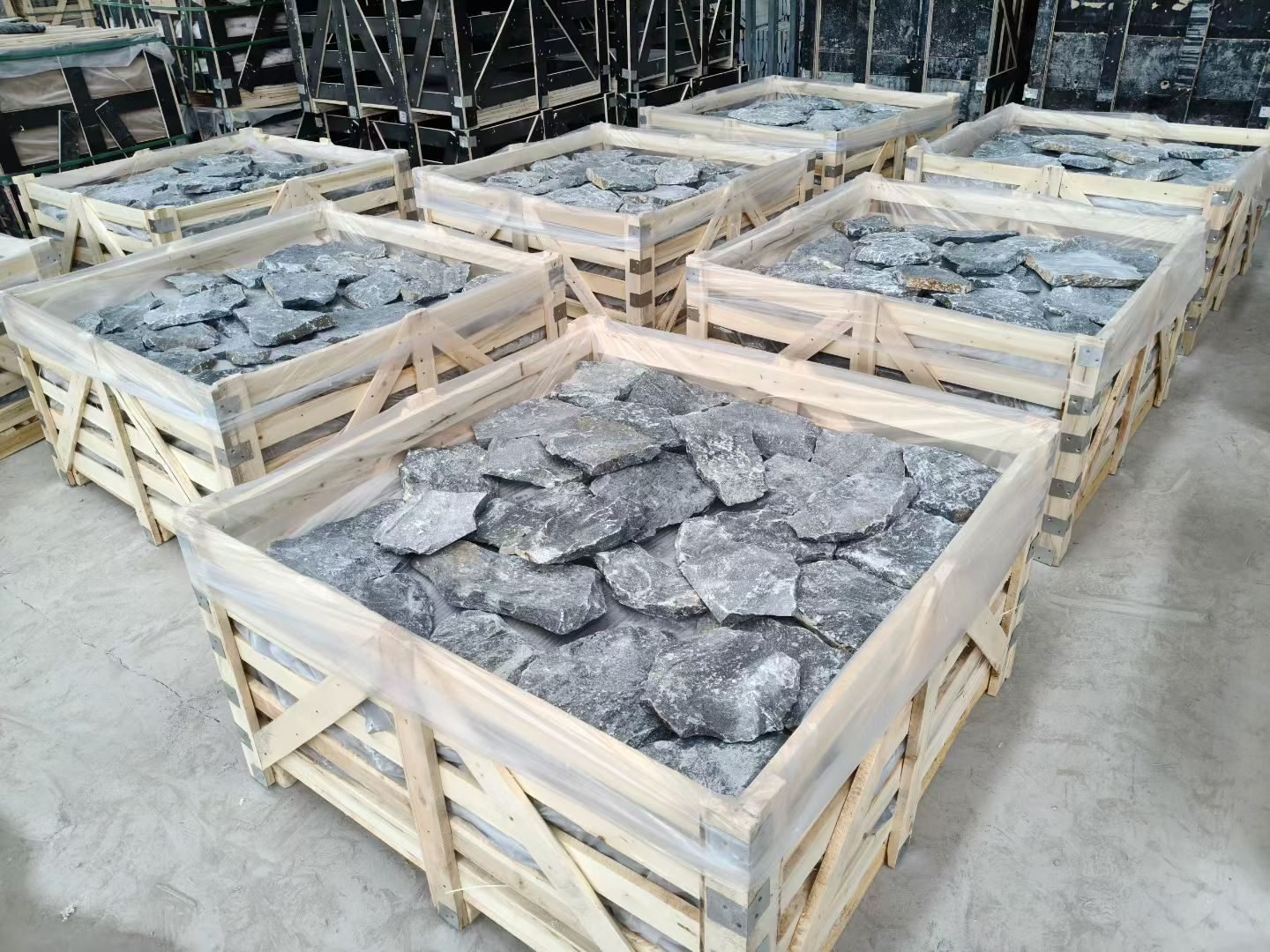
- Three Routes: Reuse, Remanufacture, Crush
- Slate, Quartzite, and Sandstone: What Recycles Best
- Circular Opportunity for Distributors
- Green Building Credits and Documentation
- How to Verify a Supplier’s Circularity Claims
- FAQ
- Conclusion
What Circular Construction Means for Stone
Circular construction is the practice of keeping materials in use at their highest value instead of moving them once and throwing them away. A linear facade project quarries the block, cuts the panel, installs it, and demolishes it into landfill forty years later. A circular project quarries the block, cuts the panel with CNC precision, installs it, and at end of life either hands the panel to the next owner or crushes it into aggregate for the next road base.
Stone has an advantage most building materials cannot copy. It is inert, mineral, and chemically stable for centuries. Manufactured cladding has to be re-smelted or re-formulated to be recycled; natural stone is already the final form, and every downstream use — panel, mosaic, stepping stone, aggregate — is the same material at a different scale. That property makes stone one of the most genuinely circular materials in the facade market.
Recycling is not the same as downcycling. Crushing a veneer panel to gravel is still a valid circular path — the EPD and sustainability guide covers the full lifecycle data — but the industry earns more when panels are reused or remanufactured first. The order matters: reuse wins, remanufacture comes second, and crushing is the floor, not the prize.
The Waste Reality Behind Stone Facades
The numbers that frame this market come from the US EPA’s sustainable management accounting: 600 million tons of construction and demolition debris generated in the United States in 2018, demolition contributing more than 90 percent of that total, just over 455 million tons directed to next use, and just under 145 million tons sent to landfill. The single biggest next use for that debris was aggregate.
Across the Atlantic, the story is regulatory. The European Union’s Waste Framework Directive pushes member states toward recovering at least 70 percent by weight of non-hazardous construction and demolition waste. Buyers selling into EU projects increasingly carry that target into their material choices, because the recovery obligation cascades from the state to the contractor to the supply chain.
Two patterns hide inside those high-level numbers. First, the construction phase — the phase where cladding panels arrive on site — is a small share of the volume; demolition dominates. Second, most of what is “recovered” is heavy mineral material like concrete and asphalt being crushed into aggregate, not elegant panel reuse. That is the opening: the panel-grade circular market is young and uncluttered, and it is growing as global trade data shows stone demand concentrating in North America and Europe, which are exactly the markets with the strictest waste rules.
Where Stone Panel Waste Actually Comes From
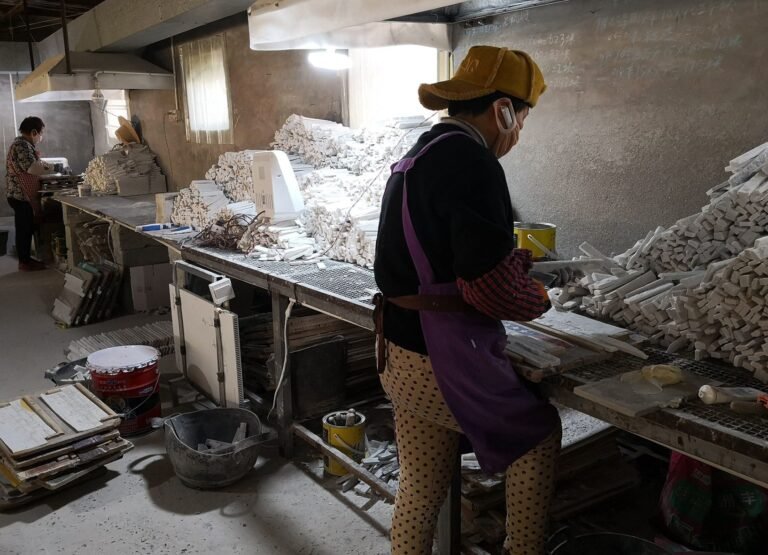
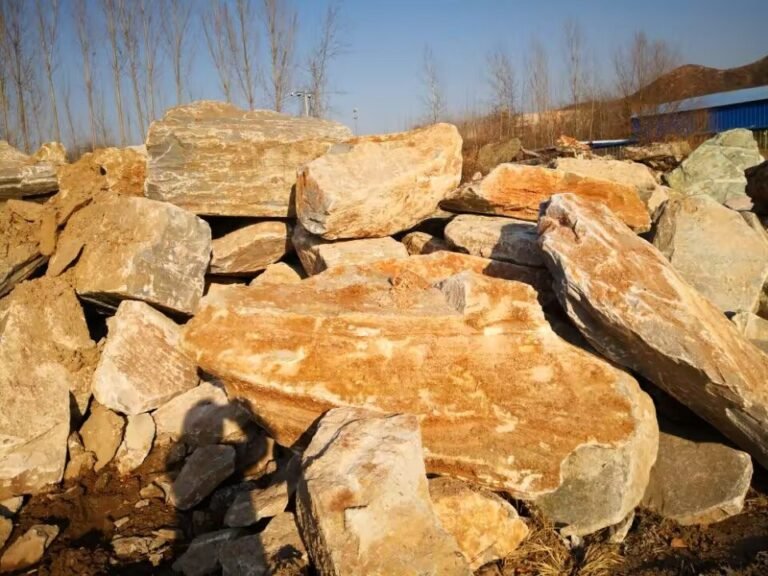
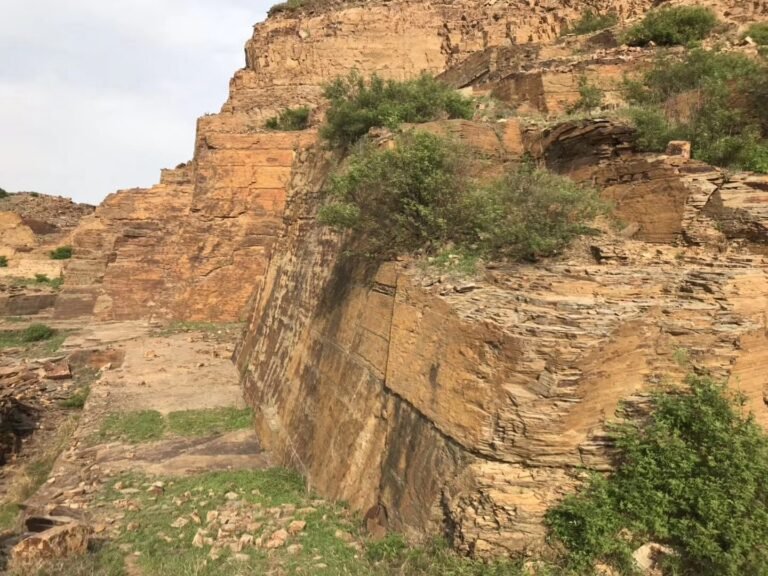
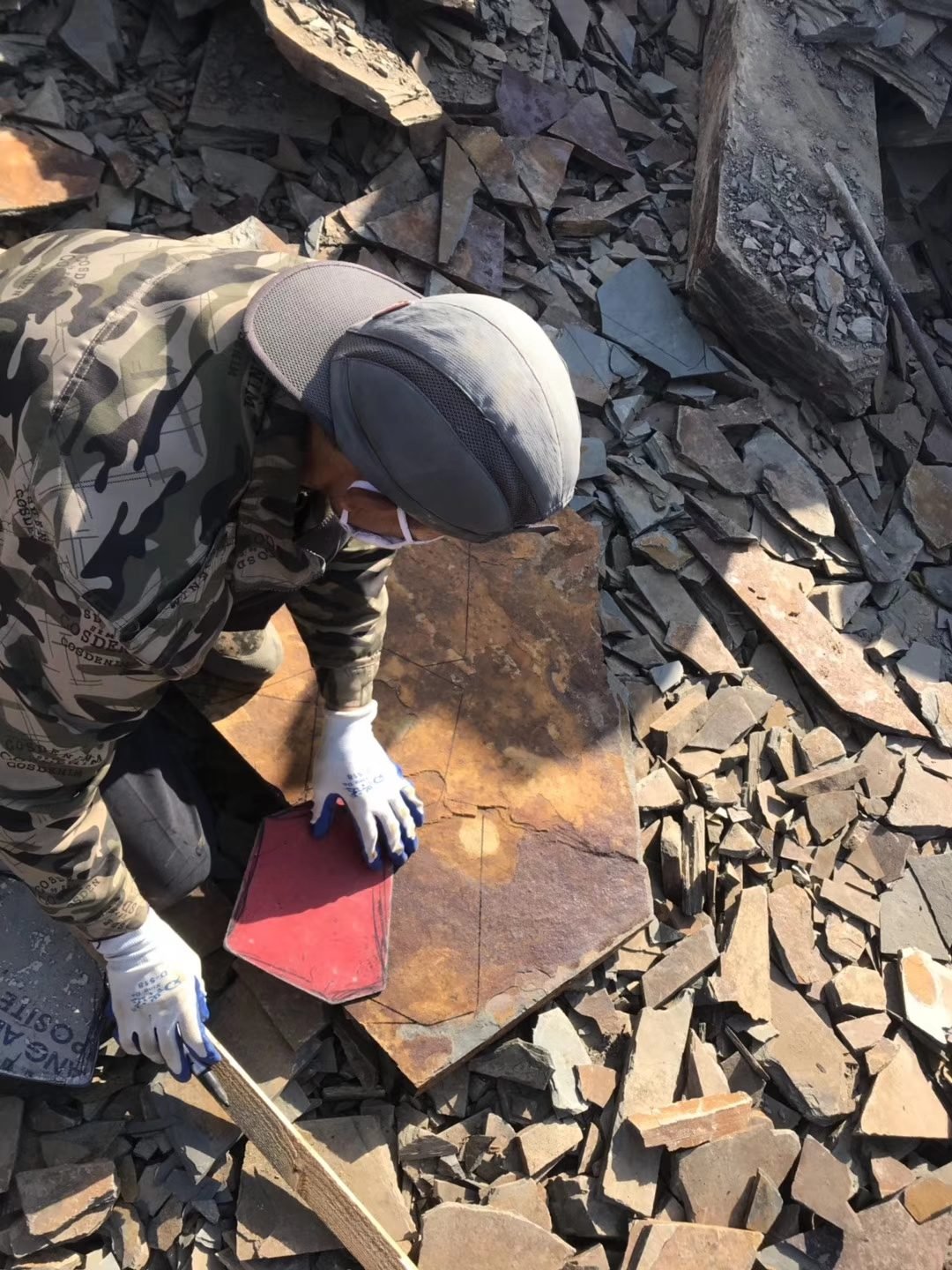
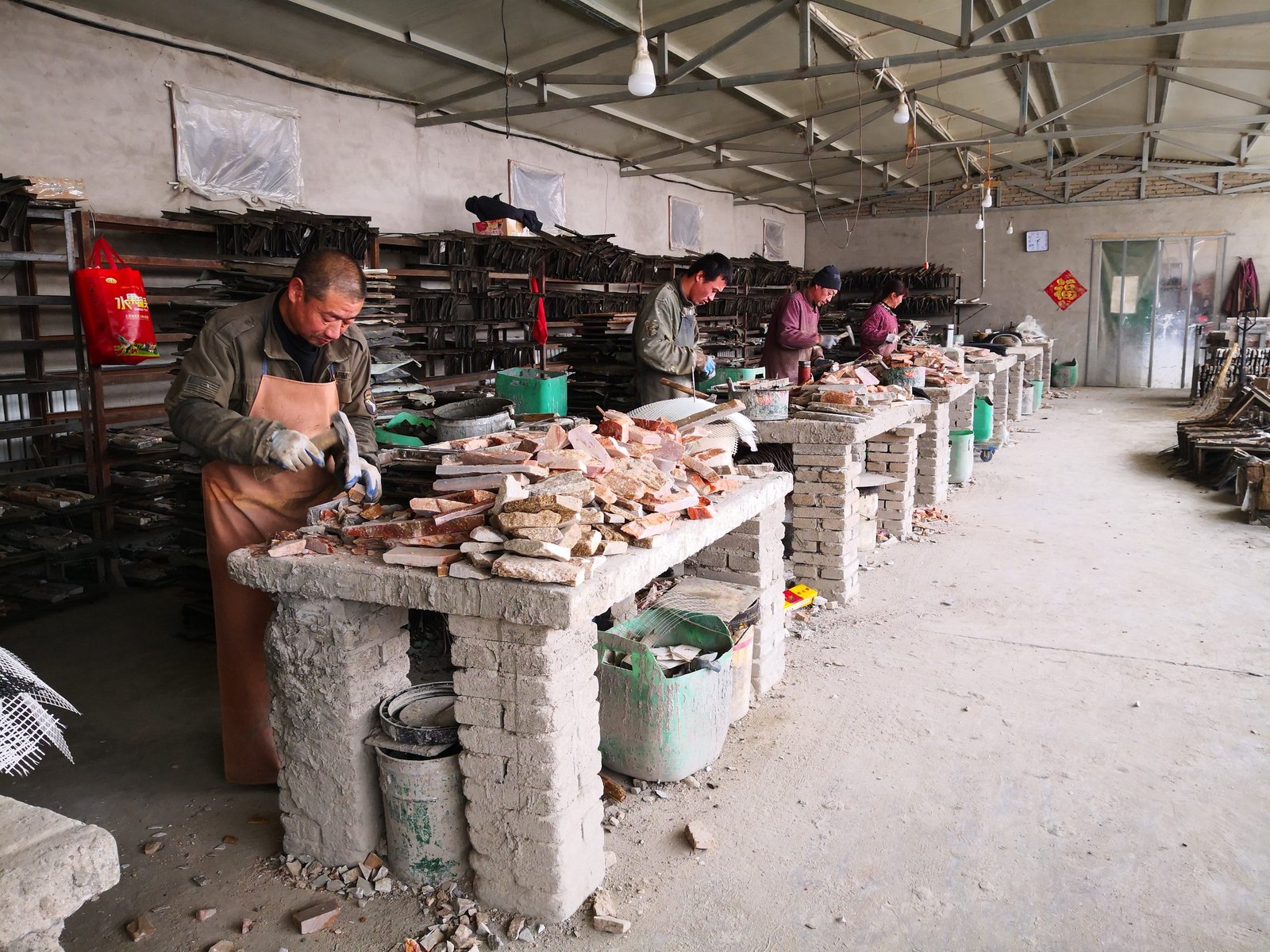
Stone waste has four distinct birthplaces, and each needs a different recycling route. At the quarry, natural fractures and irregular blocks create reject stone that becomes aggregate almost nobody has to organize. In the factory, CNC cutting and splitting produce clean, unglued offcuts — the most valuable recycling feedstock because it is already stone with no mortar or adhesive contamination. On the install site, field cutting produces odd pieces that most contractors discard. At demolition, whole veneer walls come down covered in mortar and lath.
Factory offcuts deserve special attention because they are the largest controllable stream. A cladding line that cuts panels to size generates a constant flow of odd pieces with nothing wrong with them but dimensions. At Top Stone Panels, those pieces feed a different logic: the crazy paving and thin veneer lines are built from random-geometry, split-face stone by design, so pieces that do not make a cut-to-size panel are a feature of the next product rather than a disposal problem.
On-site waste is where CNC precision pays off twice. Precision infrared CNC diamond-blade cutting reduces on-site installation waste by roughly 20 percent versus field-cut stone — as documented in our CNC cutting and waste-reduction article — which means fewer odd pieces on the floor and a smaller project footprint before recycling even starts.
Three Routes: Reuse, Remanufacture, Crush
Route one is whole-panel reuse. Deconstruction specialists remove veneer intact, grind off the mortar, and resell the panels for accent walls, interior features, and smaller facades. The economics favor it whenever labor rates are lower than new material cost, which is why the UK and Netherlands already have active reused-stone yards.
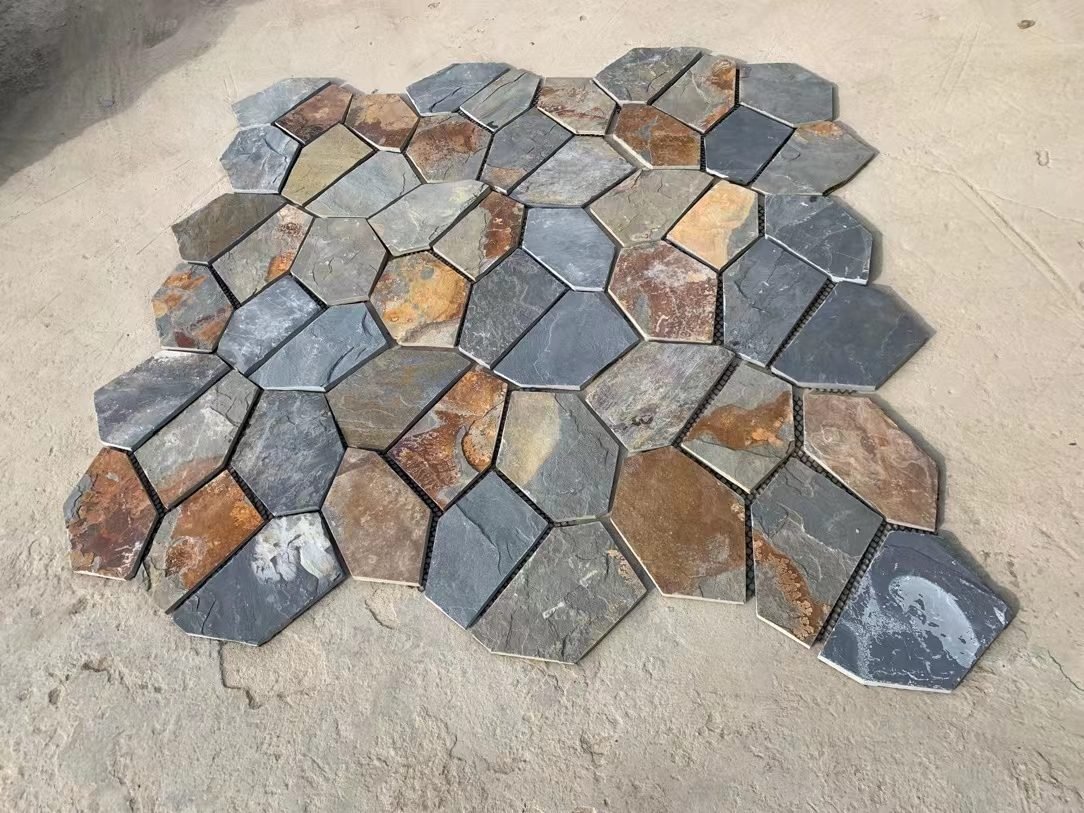
Route two is remanufacture. Random and odd pieces become crazy paving mesh sheets, mosaics, stepping stones, and crazy paving panels. This is the highest-value recycling path because it turns waste into a premium-priced decorative product instead of cheap aggregate. It is also the only path where a factory’s product design determines the outcome — a line built on random geometry absorbs offcuts as routine raw material.
Route three is crushing. Panels past reclamation, mortar-blended scrap, and quarry rejects become crushed aggregate for road base, drainage layers, and concrete mix. The US EPA’s data confirms this is already the dominant next use for C&D mineral debris at scale. Low-value, but never landfill — and landfill is the only true failure in circular terms.
| Route | Input | Output | Value |
|---|---|---|---|
| Reuse | Deconstructed whole panels | Accent walls, interiors, small facades | Highest |
| Remanufacture | Factory and site offcuts | Crazy paving mesh, mosaic, steppers | High |
| Crush | Rejects, blended scrap, quarry waste | Aggregate, drainage, backfill | Lower, still circular |
Slate, Quartzite, and Sandstone: What Recycles Best
Material type decides which route is realistic. Slate splits along natural bedding planes, which makes it the easiest stone to remanufacture into thin random pieces and crazy paving — a broken slate offcut is just a future mosaic piece. Quartzite is the hardest, densest stone in the typical cladding mix; it does not split as cooperatively, so its circular strength is crushing into premium aggregate and its long façade life, which simply delays the recycling question.
Sandstone sits in the middle. It saws and splits acceptably, weathers pleasantly, and crushes into a soft, well-draining aggregate. Its weakness is variability: sandstone batches differ in porosity, so remanufactured pieces need sorting by tone before they can go into a mesh panel. That sorting labor is exactly why a factory with batch-specific vein selection, like the process described in our flagstone color guide, holds the advantage for recycled product lines.
The practical rule for buyers: specify slate or mixed-quartzite if you want panel-grade circularity with the cleanest economics; use quartzite when you want maximum durability and accept that its recycling value is mainly crushed aggregate at end of life.
Our crazy paving, mosaic mesh, and split-face thin veneer lines are built from random-geometry pieces — the recycled-grade products distributors can stock today. Get the product range and container math in one quote.
Circular Opportunity for Distributors
Distributors are the hinge of stone panel recycling because they are the ones who can turn waste streams into inventory. The most practical lines to build today all use material the factory would otherwise discount or discard: offcut packs for garden and interior accents, crazy paving mesh panels as a stocked SKU, sample boards cut from reject pieces, stepping stones, and crushed decorative aggregate for garden paths and step and tread projects.
The commercial logic is simple. A factory like Top Stone Panels, with capacity of 220+ containers per year and a zero-breakage packaging protocol, treats offcuts as ordinary production flow — and a distributor who stocks the recycled lines buys the same material discipline at a better margin. Circularity is not a markup story; it is a utilization story. Products built from pieces that used to be scrap carry lower raw-material cost, and that margin is real.
There is also a differentiation angle. In a market where every distributor sells “exterior stone veneer,” the one who can say “40 percent of our crazy paving line comes from recycled offcuts” owns a claim competitors cannot copy without changing their factory. Green procurement clauses in commercial tenders increasingly ask for exactly that evidence.
Green Building Credits and Documentation
Certification systems convert circularity into a scored asset. Under LEED v4.1’s Materials and Resources credits — including Building Product Disclosure and Optimization for materials with EPDs and responsible sourcing, and Building Life-Cycle Impact Reduction for reused or salvaged components — a project that specifies panels with verified environmental documentation earns points that a bare product cannot. BREEAM materials credits reward the same family of evidence.
Documentation is the currency. An Environmental Product Declaration (EPD) is the fastest single proof of lifecycle performance, and natural stone mills are increasingly publishing them — the EPD deep-dive explains what the numbers mean. Distributors should ask suppliers for three documents: an EPD or lifecycle summary, a statement of recycled-content and offcut reuse, and proof of responsible quarry sourcing.
Be honest about the size of the prize. Recycled content in natural stone is not a huge scoring item by itself; its value is that it stacks with EPDs and sourcing evidence to move a project’s overall materials score. The buyer who asks for the full documentation set on a $200,000 stone order is asking for maybe an hour of the supplier’s time and getting a claim that is checkable and contractually sticky.
How to Verify a Supplier’s Circularity Claims
“We recycle our waste” is marketing. Get the evidence into writing, with the same discipline you would use for a test report. Ask what share of production offcuts becomes crazy paving or mosaic rather than aggregate or landfill, ask for photos of the sorting line, and ask for a written line on what happens to rejected panels before you sign the container order.
Factories with real circular processes can show you three things. First, a defined split between cut-to-size, random-geometry, and crushed grades — product design, not wishful talk. Second, QC records that keep recycled pieces batch-matched by vein, because recycled stone only sells if the color stays consistent order after order. Third, shipping documentation that proves the packaging survives — a panel that arrives broken is a recycling problem you paid to create, which is why zero-breakage packaging is a circular question, not a logistics afterthought.
The red flags are the absence of documentation. No sorting-line photos, no written offcut policy, “we outsource scrap” with no destination — each one tells you the supplier treats waste as an expense to hide rather than a product to sell. In that case, buy panels for the panels, and buy recycled products from someone whose process you can see.
| Circularity claim | What to ask for | Red flag |
|---|---|---|
| “We recycle our offcuts” | Share routed to crazy paving vs aggregate, in writing | No numbers, no process description |
| “Consistent color on recycled lines” | Batch-specific vein selection records, photos of sorted lots | “It’s natural stone, color varies” as an excuse |
| “We have environmental documentation” | EPD or lifecycle summary, recycled-content statement | Vague claims with no third-party document |
| “Zero-breakage shipping” | Packaging protocol, loading video, breakage history | Refusal to share the packaging spec |
FAQ
Can natural stone panels be recycled?
Yes. Stone is inert and mineral: whole panels can be reused, offcuts can be remanufactured into mosaic or crazy paving, and crushed pieces become aggregate or drainage backfill.
What happens to stone offcuts from a cladding factory?
Factories route odd and split-face pieces into crazy paving, mosaic mesh sheets, stepping stones, and aggregate rather than cutting them back to small format or discarding them.
Does recycling stone help green building certifications?
Yes. EPDs, recycled content, and reused or salvaged materials contribute to LEED v4.1 Materials and Resources credits and BREEAM materials scoring.
Is stone more circular than manufactured cladding?
Processed and cultured panels can be recycled too, but natural stone needs no reformulation — it stays the same material from quarry block to crushed aggregate.
How do distributors sell recycled stone products?
The practical lines are offcut packs, crazy paving mesh panels, sample boards, stepping stones, and crushed stone aggregate for paths and drainage.
How much construction waste comes from demolition?
The US EPA reports demolition represents more than 90 percent of total construction and demolition debris generation in the United States.
Conclusion
Stone panel recycling is a supply-chain decision with real numbers behind it — 600 million tons of US C&D debris a year, a 70 percent EU recovery target, and a factory feedstock of offcuts that already flows. The buyers and distributors who treat those numbers as inventory will earn the green-procurement clauses; the ones who treat recycling as a slogan will watch the margin go elsewhere.
- Route stone waste in order of value: reuse whole panels, remanufacture offcuts into crazy paving and mosaic, then crush the rest into aggregate.
- Specify slate and mixed quartzite for panel-grade circularity; use quartzite when durability outweighs its end-of-life aggregate value.
- Ask suppliers for oversized documentation — an EPD, an offcut-reuse policy, and batch-matched color records — before you claim circularity to a client.
Start with one product line: ask your cladding supplier how their offcuts become panels. If the answer is a policy, not a shrug, you have found a partner for the circular market; if not, contact Top Stone Panels and ask to see the crazy paving and mosaic lines built from split-face random pieces.