A freight quote can tell you the price and still hide the part that actually breaks a project schedule: the stone shipping transit time. Port-to-port and door-to-door look like two ways to buy the same container, but the calendar difference between them is not a few hours at a port gate — it is who owns the schedule decisions, and what happens when a vessel slips two weeks. For a stone buyer, the real question is not which term is faster. The vessel sails the same route either way. The question is which term lets you predict the arrival date and protects you when the prediction fails.
Top Stone Panels ships natural stone cladding from Tianjin Xingang (Xingang port in Tianjin, China) to buyers across North America and Europe, and we quote FOB, EXW, CIF, and DDP on the same order. That gives us a clean view of how the same container moves under different terms. This guide lays out the actual transit blocks, the timetables we see on the main lanes, the days nobody quotes, and a short decision rule for which option fits which buyer.
- Transit time is four blocks — production, inland trucking, ocean sailing, destination customs — and only one of them is the sailing itself.
- Direct sailing runs 15-20 days Shanghai-to-Los Angeles and 25-30 days Shanghai-to-New York; Europe lanes run about 30-36 days to Rotterdam or Hamburg.
- Door-to-door is not faster than port-to-port; it trades control for one supplier-managed schedule.
- Port congestion adds roughly 3-7 days, transshipment 5-10 days, and Chinese New Year closures can add 1-3 weeks.
- Ask for the vessel name and sailing schedule, then add buffer — a transit time without a sailing date is a guess.
- Stone is weight cargo: a 20GP reaches payload before it cubes out, so freight follows per container, not per cubic meter.
What Transit Time Really Means on Stone
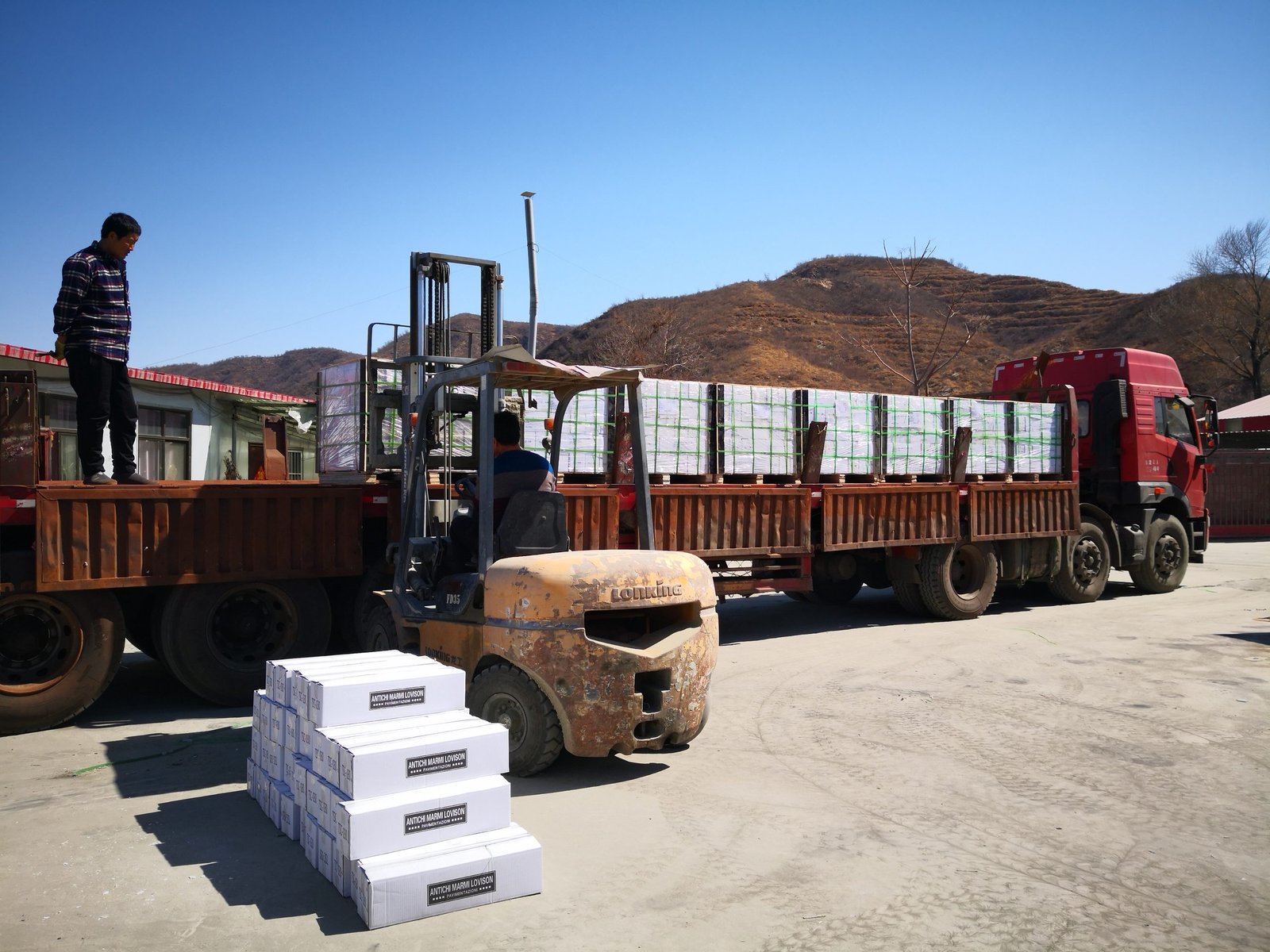
Every stone import runs through the same four blocks. Production eats 20-25 working days at the factory for standard panels, and first orders with custom carton printing run about 25-30 days. Inland trucking from a Hebei factory to Tianjin Xingang is one to two days. Ocean sailing is the block most buyers track, and it is the most stable of the four. Destination customs and final-mile trucking add days that live entirely outside the ocean schedule.
Port-to-port and door-to-door quoted the same way line up differently against these blocks. FOB Xingang transfers responsibility the moment the goods pass the ship’s rail, so the buyer owns the sailing, the import entry, and every day the container sits at the destination terminal. DDP (Delivered Duty Paid, an Incoterms 2020 rule) bundles all four blocks into one price and one schedule, and the seller manages the sailing booking, the destination clearance, and the delivery truck.
A clean way to think about it: port-to-port buys the middle of the journey, door-to-door buys the whole journey. The FOB, CIF, and DDP comparison guide explains the official rules behind each term, and the stone export documents list the paperwork that travels with the container at each hand-off.
Port-to-Port vs Door-to-Door at a Glance
The comparison table below is the spine of this decision. Read it as a division of labor, not a race — because the two options mostly differ in who acts, not how fast the ship moves.
| Element | Port-to-Port (FOB/CIF) | Door-to-Door (DDP) |
|---|---|---|
| Production and export packing | Factory | Factory |
| Origin trucking to port | Factory | Factory |
| Ocean booking | Buyer’s forwarder | Seller’s forwarder |
| Destination customs entry | Buyer | Seller |
| Duty and taxes | Buyer | Seller (built into quote) |
| Final-mile delivery | Buyer arranges | Seller arranges |
| Single accountable party | No — split between buyer and seller | Yes — the seller |
| Free-time and demurrage risk | Buyer’s terminal bill | Usually buyer after free days |
Notice what stays identical: the vessel, the route, and the sailing speed. FOB and CIF deliver at the destination port; DDP delivers at a named address. The FOB Xingang vs CIF choice covers the middle options in detail, and the DDP deep-dive walks through the exact exclusions on a door-to-door quote.
China to the USA on the Water
US-bound stone from northern China usually sails out of Tianjin Xingang or Qingdao, with Shanghai as the transshipment hub for some services. Direct sailings to the US West Coast are the fast end of the industry: Shanghai-to-Los Angeles typically runs 15-20 days on an FCL container, and the published China-US West Coast schedules sit around 16-19 days. East Coast destinations are a different trip — Shanghai-to-New York runs about 25-30 days direct, before port dwell.
Add the non-sailing blocks and a realistic door-to-door picture emerges. Production takes 20-25 working days. Ocean transit runs roughly 3-4 weeks to the US West Coast and 4-5 weeks to East and Gulf ports. Destination customs, container pickup, and the final truck add another 3-10 days. That math puts a typical DDP delivery to a US West Coast warehouse at roughly 8-11 weeks from order date, and an East Coast delivery closer to 9-12 weeks.
| Lane | Typical direct sailing | Reality with buffer | DDP total from order |
|---|---|---|---|
| Tianjin/Shanghai → Los Angeles | 15-20 days | 3-4 weeks | 8-11 weeks |
| Tianjin/Shanghai → New York | 25-30 days | 5-6 weeks | 9-12 weeks |
| Tianjin/Shanghai → Savannah / Gulf | 28-35 days | 5-7 weeks | 9-13 weeks |
Duty, importer of record, and ISF filing are part of the US side of the trip. DDP into the USA generally needs a registered importer of record with a US presence, so confirm who appears on the entry before booking. The US import guide covers duties and the entry checklist, and the customs clearance walkthrough explains what happens after the ship arrives.
China to Europe on the Water
Europe lanes are longer because the boat has farther to go. Direct sailings from Shanghai to Rotterdam typically take 30-35 days, and to Hamburg about 32-36 days. Maersk’s direct Asia-North Europe services sit around 30-32 days. Services that transship — commonly via Singapore — land at about 35-40 days, so the transshipment choice quietly costs you almost a week.
Door-to-door FCL from a Chinese factory to a European buyer runs about 40-50 days total, with LCL consolidation stretching that to 45-55 days. Add production and the full calendar from order to a German or Dutch warehouse lands near 11-15 weeks. Europe’s regulatory context matters too: the CE and EN standards guide explains the EU-side requirements that can add paperwork, though rarely ocean days, before the box clears.
| Lane | Direct sailing | Via transshipment | Door-to-door FCL total |
|---|---|---|---|
| Shanghai → Rotterdam | 30-35 days | 35-40 days | 40-50 days |
| Shanghai → Hamburg | 32-36 days | 37-41 days | 42-52 days |
| China → UK (Felixstowe) | 30-38 days | 36-42 days | 42-55 days |
The old Suez Canal routing still dominates Asia-Europe container service. If a carrier detours around the Cape of Good Hope, add one to two weeks to every lane above — ask your forwarder which routing the scheduled vessel actually takes before you bake a date into a contract.
What Adds Days That Nobody Quotes
Quoted transit times assume a clean run. Real containers do not get one. Port congestion adds roughly 3-7 days at either end, and history shows the same terminals can stretch to weeks in a peak season. Transshipment adds 5-10 days wherever a container changes vessel. LCL (less-than-container-load) consolidation adds about 3-7 days because your cargo waits at the origin warehouse for the box to fill.
Chinese holiday closures are the stone buyer’s classic trap. The Chinese New Year factory shutdown, usually late January to mid-February, plus the weeks of pre-holiday backlog, can add 1-3 weeks to production. Production scheduling matters as much as sailing: the import lead-time planning guide shows how to run the calendar backwards from your completion date.
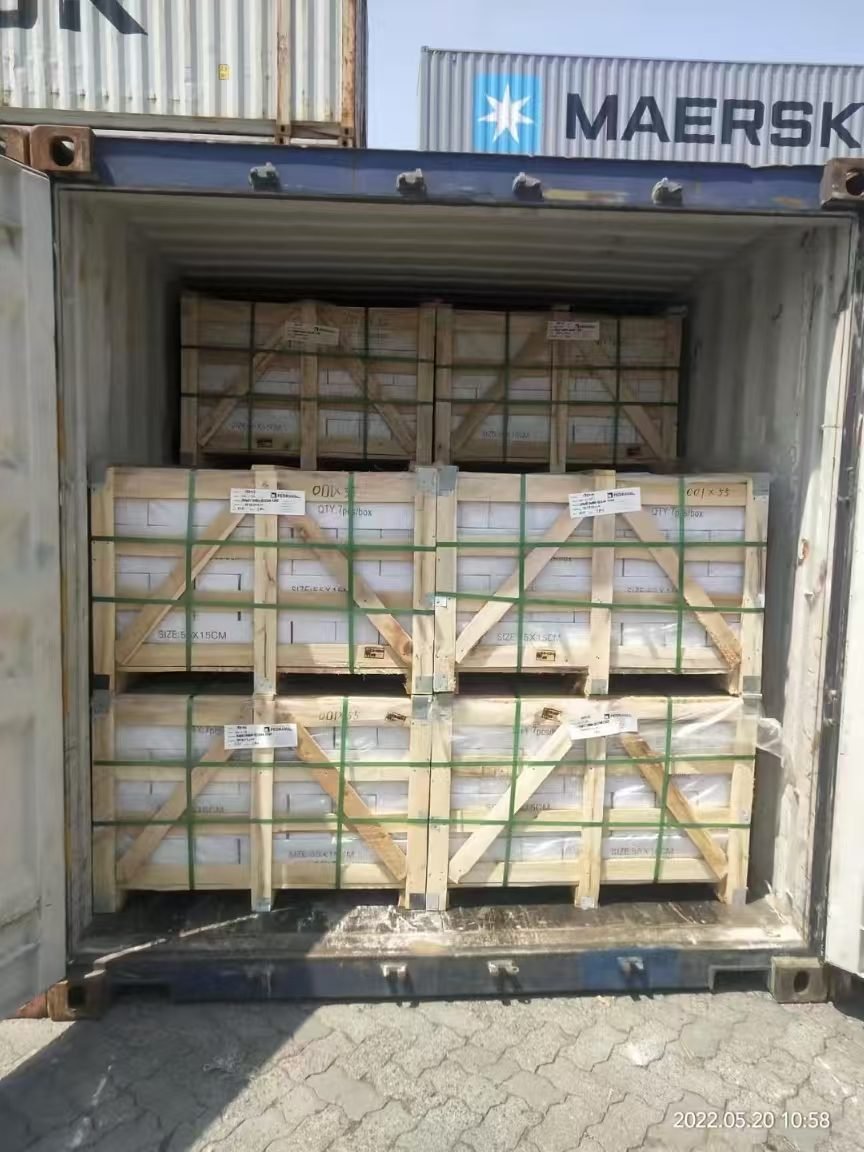
Customs is the last uncounted block. Most containers clear on documents, but an exam pulls the box aside for days, and demurrage and detention clock start eating after the terminal’s free days. The pre-shipment inspection checklist and the container loading guide are the two documents that prevent the worst failure mode — a container that sits at the origin because paperwork was wrong before it ever sailed.
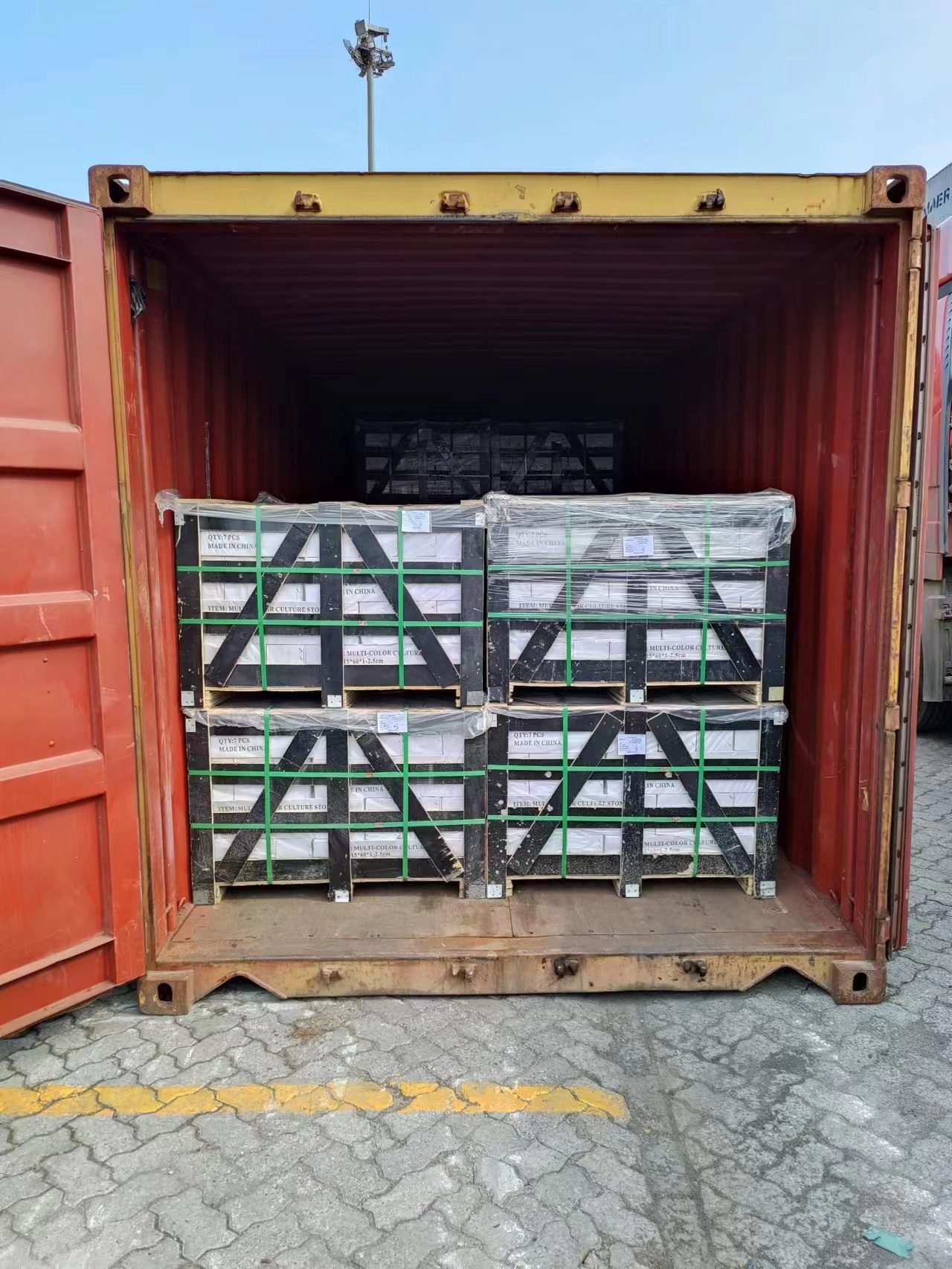
Tell us the vessel’s scheduled sailing when you book, and we ship FOB Xingang, CIF, or DDP with zero-breakage packaging and a loading video for every container. Get a per-square-meter delivered price with the transit block spelled out.
Door-to-Door Does Not Mean Faster
Here is the counterintuitive part buyers often miss: DDP is not a fast lane. Under the Incoterms 2020 rules published by the International Chamber of Commerce, DDP changes who bears cost and risk — it does not change vessel speed. The same vessel, same route, same port congestion apply. What door-to-door actually buys is a single accountable party. When a port backs up, the buyer on FOB phones their forwarder and waits; the buyer on DDP phones the supplier, and the supplier’s forwarder works the terminal. Accountability shortens the resolution time even when it cannot shorten the sailing time.
DDP also relocates risk. The seller carries the goods to the named place, so the seller’s freight cost is exposed if dwell days grow. Sellers price that risk into the quote. That is why DDP on stone usually lands a few percent above the freight line a buyer could book themselves — and why the premium is often worth it on the first container, when the buyer has no forwarding relationships yet.
FOB and CIF, by contrast, let an experienced importer use their own freight contracts, their own customs broker, and their own incentive to push the box. Buyers who run repeat volume programs almost always migrate back to FOB after the first DDP order. The 20GP vs 40HQ container math and the global stone trade data review give the volume view that makes that decision easier.
Which Option Fits Whom
The decision rule below is deliberately blunt. If you can answer “who books the vessel?” without hesitation, you are ready for port-to-port. If the answer is “I have no idea,” start with DDP.
| Buyer profile | Choose | Why |
|---|---|---|
| First-time importer, one container | Door-to-door (DDP) | One price, one schedule, one party to call when the box stalls. |
| Repeat buyer with freight contracts | Port-to-port (FOB) | You capture the freight margin and control the terminal work. |
| Project with a fixed completion date | Door-to-door + buffer | Liquidated-damage clauses punish missed dates; buy the accountability. |
| Cost-sensitive distributor | Port-to-port (FOB/CIF) | Volume freight booking drops the per-square-meter cost you resell. |
| Buyer with no US/EU presence | Door-to-door (DDP) | The seller arranges the importer of record; you avoid the entity problem. |
How to Forecast a Realistic Arrival Date
Stop accepting a single number. A useful forecast is a range built from named, checkable pieces: the scheduled sailing date, the cut-off date at the origin terminal, the expected sailing duration, the free-time at the destination, and the expected customs dwell. Ask the forwarder or supplier for all five in writing.
Then add buffer by contract type. For port-to-port, add 1-2 weeks beyond the quoted sailing for congestion and dwell. Industry trackers such as the Flexport Ocean Timeliness Indicator publish live lane-level data if you want to sanity-check a lane before you commit. For door-to-door, add the same buffer but hold the supplier to the range they quoted — a DDP quote should state the assumed free-time and what happens if the terminal is the one that slips. A supplier who gives ranges without a sailing date is giving you poetry, not a schedule.
Stone’s weight profile makes the freight math worth understanding while you plan. Dense panels make a 20GP weight-limited before it cubes out, so the same container holds far fewer square meters of heavies than of light ledgestone panels — the container capacity article runs the loading math, and it directly changes which lane cost per square meter makes sense for your order.
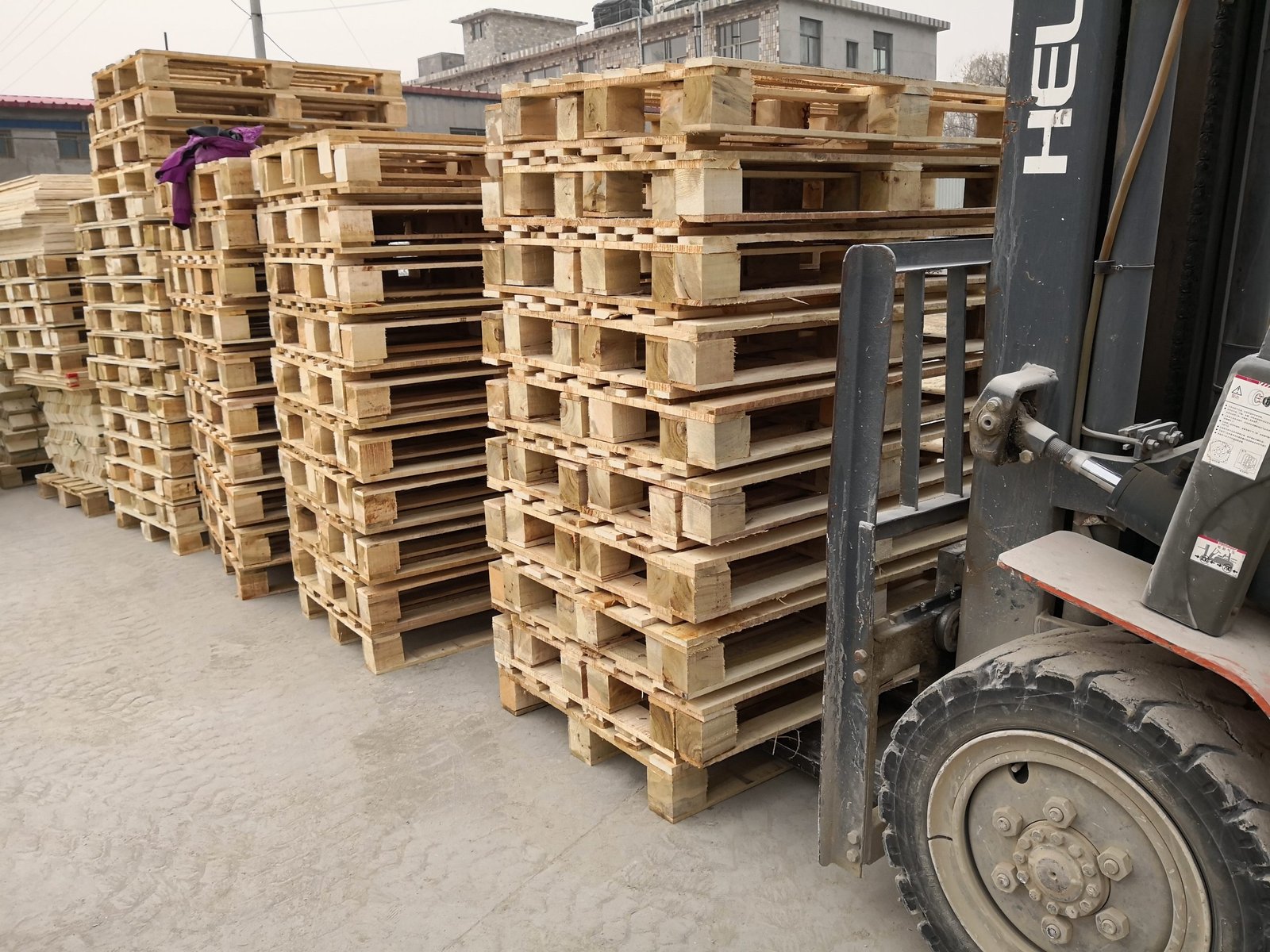
Two habits keep forecasts honest. Book production around known closures — the lead-time article has the calendar trick — and verify the wood packaging has an ISPM 15 mark before it loads, or the destination port will treat the crate like contraband. The ISPM 15 guide is the five-minute check that prevents a three-week port hold.
FAQ
How long does stone shipping from China to the USA take?
Ocean sailing runs about 15-20 days to the US West Coast and 25-30 days to the East Coast, after production of 20-25 working days, plus 3-10 days for customs and final delivery.
Is door-to-door shipping faster than port-to-port?
No. The vessel sails the same route at the same speed. Door-to-door just bundles inland trucking, customs, and final delivery into one supplier-managed schedule.
What adds days to a stone container shipment?
Port congestion adds roughly 3-7 days, transshipment adds 5-10 days, LCL consolidation adds 3-7 days, and Chinese New Year closures can add 1-3 weeks to production.
How do I get a realistic arrival date from a stone supplier?
Ask for the vessel name, sailing schedule, origin cut-off date, destination free-time, and expected customs dwell — then add 1-2 weeks of buffer for congestion.
Which is cheaper, FOB or DDP for stone?
FOB is usually cheaper per square meter for repeat buyers who book their own freight. DDP gives one predictable delivered price and is easier for first containers.
How long does stone shipping from China to Europe take?
Direct sailing takes about 30-35 days to Rotterdam and 32-36 days to Hamburg, with door-to-door FCL totaling about 40-50 days plus production.
Conclusion
Stone shipping transit time is a four-block problem, and only the sailing block sits inside the ocean quote. Port-to-port and door-to-door move the same vessel at the same speed; what changes is who books, who clears, who owns the delay, and who eats the demurrage bill.
- Port-to-port suits buyers with freight relationships and repeat volume; door-to-door suits first containers, fixed-date projects, and buyers without a destination presence.
- US West Coast sailing runs 15-20 days, East Coast 25-30 days; Europe lanes run about 30-36 days to Rotterdam or Hamburg.
- Buffer every quote: congestion adds 3-7 days, transshipment 5-10, LCL 3-7, and CNY closures 1-3 weeks.
Next step is a simple one: ask your supplier for the vessel name and the free-time at destination before you accept any transit number. If you want a door-to-door quote with the transit blocks spelled out, contact Top Stone Panels with the destination city and target arrival week — we will show the sailing schedule behind the number.