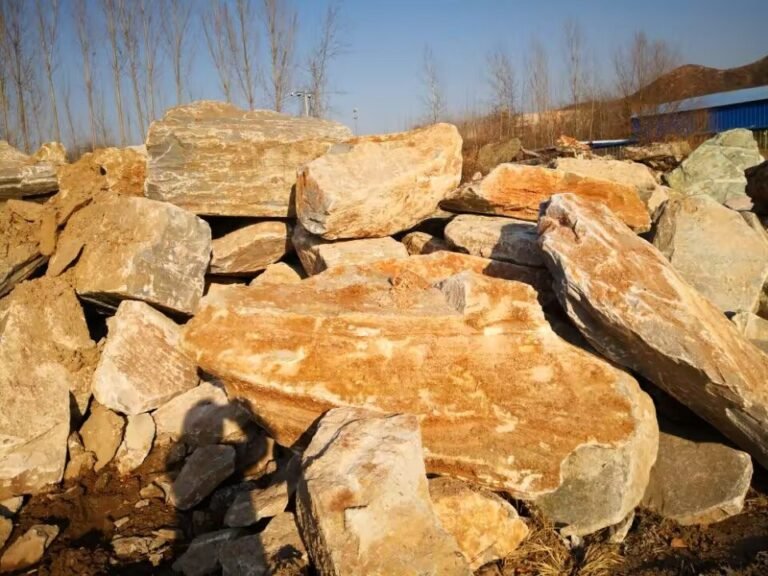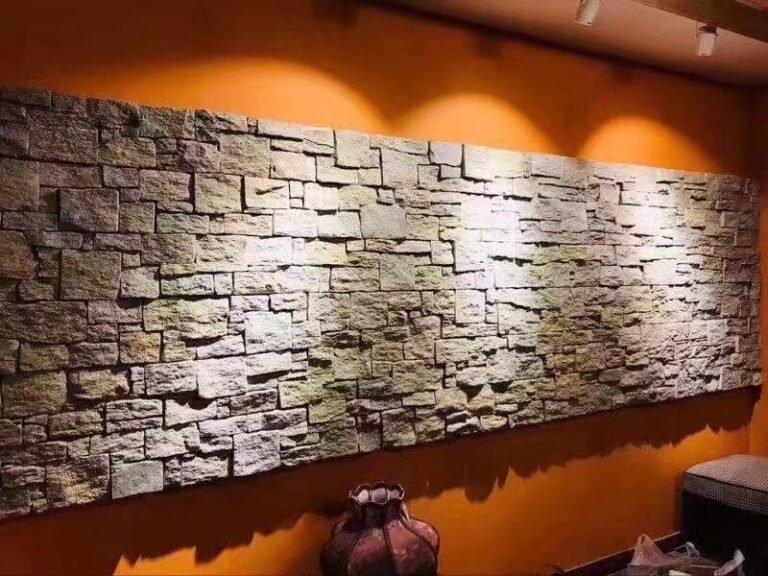
Hand-made versus machine-cut sounds like a craft argument. In the stone panel industry it is a production and estimating argument. Almost every so-called handmade stone wall is machine-assisted, and almost every machine-cut panel still carries a hand-split face. The real question is not which one is more authentic. The real question is which one makes your project schedule, your labor budget, and your client’s expectations line up.
Top Stone Panels runs both product families from the same quarry in Hebei. Hand-assembled split-face veneer and flagstone sit on one side; infrared-cut stacked panels, ledgestone, and Z panels sit on the other. The cost difference between them comes from consistency, corners, and field time, not from a romantic judgment about rustic stone. This comparison lays out where each format wins, where it costs you, and how to pick without guessing.
- Hand-made concrete in this industry means naturally cleft faces and hand-assembled patterns; machine-cut means diamond-sawn dimensions and panelized formats.
- Both formats are 100% natural stone from the same slate and quartzite families; the material is not the differentiator, the specification is.
- Machine-cut stacked and ledgestone panels ship in 15x60cm and 36x10cm formats, and prefabricated L-corners cut outside-corner labor roughly 50%.
- Infrared precision cutting reduces on-site material loss about 20% versus field trimming of random pieces, which shifts the installed-cost math on large facades.
- Hand-made cleft stone wins on character and rusticity; machine-cut panels win on schedule, predictability, and corner-heavy walls.
1. Hand-Made vs Machine-Cut at a Glance
Use this table as the two-minute answer. Every row is a specification decision your estimator or architect will fight over, so the comparison is framed the way an RFQ is written.
| Dimension | Hand-made (natural cleft) | Machine-cut (sawn panels) |
|---|---|---|
| Face | Split along natural bedding planes, irregular texture | Split face retained, sawn edge only on panel outline |
| Format | Random strips, crazy paving, mesh-backed pieces | Fixed panels 15x60cm, 15x55cm, 36x10cm, Z panels |
| Consistency | More stone-to-stone variation by design | Controlled dimensions, batch-matched color |
| Corner handling | Field miter or wrap, slower | Prefabricated L-corners, labor roughly -50% |
| Site waste | Higher from trimming random pieces | About 20% lower with infrared-cut panels |
| Best use | Rustic facades, patios, accent features | Large exteriors, commercial, schedule-driven builds |
2. What Hand-Made and Machine-Cut Veneers Actually Are
Hand-made stone veneer is cleft stone. A splitter works a block along its natural bedding plane, and each piece gets its face from the fracture itself. The worker sorts the split pieces by color, thickness, and length, then lays them into patterns or mesh sheets. The finished wall shows stone-to-stone variation, which is the whole point: no two rows repeat exactly.

Machine-cut veneer is the same natural stone, sawn to controlled dimensions. A diamond blade dressed the panel edges, so each box carries the same coverage, the same joint pattern, and a predictable piece count. What changes is not the rock or the texture of the face. It is the tolerance of the format. The panels are still split-face stone, as the manufacturer keeps the sawn edge on the outline and leaves the exposed face cleft.
One term traps buyers: “manufactured veneer.” In the code world, manufactured stone means a concrete casting designed to imitate rock. That is a different product, with different weight, absorption, and fire performance. This comparison covers natural stone only, in both cleft and sawn execution. The veneer vs cladding vs rainscreen guide expands the installation system options once the material decision is made.
3. Face and Character
Character is the reason buyers choose hand-made cleft stone, and it is a measurable difference, not marketing. A cleft face has micro-topography from the fracture: small ridges, stepped planes, and shadow lines that change through the day. Machine-cut panels keep that split face but organize it into a disciplined grid, so the texture reads at a distance as a linear pattern rather than a scatter.
Color behaves similarly. Both formats rely on batch-specific vein selection, where the factory sorts material from the same quarry bench before cutting. On hand-made random formats the mix is the design. On panelized machine-cut formats the mix is controlled to the lot so reorders track. That is why the panelized lines deliver the color consistency distributors promise to architects, while the random lines deliver the “quarried one hillside” look for rustic projects. The sawn vs cleaved veneer guide walks through the face-finish distinction in more depth.
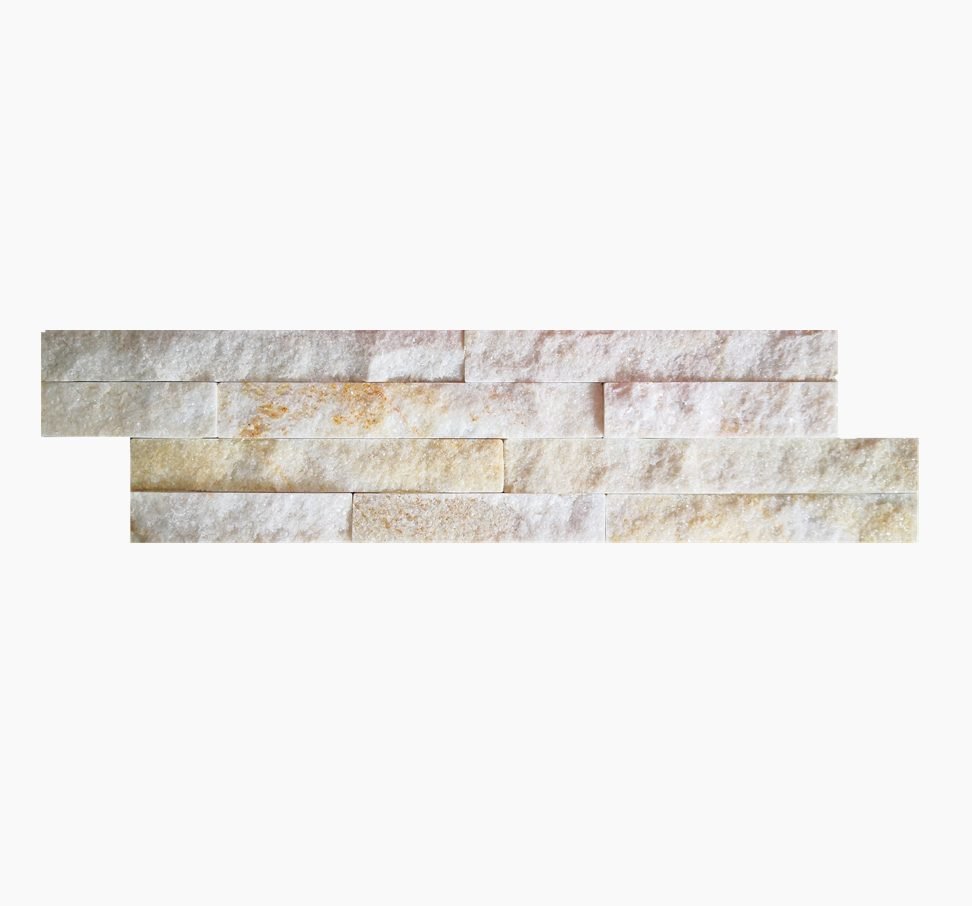
The honest trade-off: a wall of random cleft stone is harder to estimate and harder to reorder. Every facade runs a little different, and the installer carries judgment on the job. Machine-cut panels convert stone into an engineered product: the box coverage, the corner units, and the color range are agreed before the container leaves the factory. On a showroom wall for a demanding client, that predictability is usually the sale.
4. Cost Comparison
Unit prices for natural stone shift with the vein, the exchange rate, and the season, so quoting a per-square-foot figure in an article guarantees a stale number. The honest framework is which cost layer each format moves, and it moves exactly two: fabrication and installation.
| Cost layer | Hand-made cleft | Machine-cut panels |
|---|---|---|
| Material | Driven by vein and stone family | Driven by vein and stone family |
| Fabrication | Manual sorting and assembly dominate | Machine saw time and panel backing |
| Installation | More field trimming and layout judgment | Faster; corners roughly 50% less labor |
| Waste | Higher offcuts from random pieces | About 20% lower site loss |
Read the table from the estimator’s chair. On a small accent wall with a weekend installer, the material and the novelty of hand-laid stone carry the value, and minor waste does not matter. On a 400-square-meter exterior with corners every few meters, installation labor and waste dominate the bid. That is the project where machine-cut panels with prefabricated corners cut total installed cost even when the product price per square meter sits in the same band. For the framing-level cost view that feeds into that math, the natural stone vs concrete cladding comparison covers the concrete alternative.
For distributors the cost conversation has a second layer: margin stability. A panelized line lets you quote box coverage on day one and hold that quote through the season, because dimensions and piece counts do not drift between lots. A random cleft line carries variance in coverage per container, which means your per-box landed cost can shift. Distributors who price weekly against current containers prefer panels for SKUs that repeat, and reserve the random formats for special-order projects where the buyer accepts the range. That split is how a distributor offers both characters without giving either margin away.
5. Panel Formats and Installation Speed
Format is where machine-cut stone earns its keep. A stacked stone panel in 15x60cm format covers a predictable area per box; a ledgestone panel in 36x10cm does the same with a narrower profile. The installer spreads mortar, scores, and lays a full grid without cutting individual stones to fit. Fewer cuts, fewer joints to judge, and a cleaner vertical face on the first pass.
Outside corners tell the bigger story. Field-cutting a stone miter on a random cleft wall is slow, and every miter is a breakage risk at the saw. Machines produce the L-corners in the factory, so the corner arrives as a finished unit sized to the panel range. Installers on corner-heavy projects cut site labor roughly in half on those locations, which is the single biggest installation variable between the two formats. The stacked stone product range and the thin ledgestone panels range ship with matching factory corners when you plan for them.
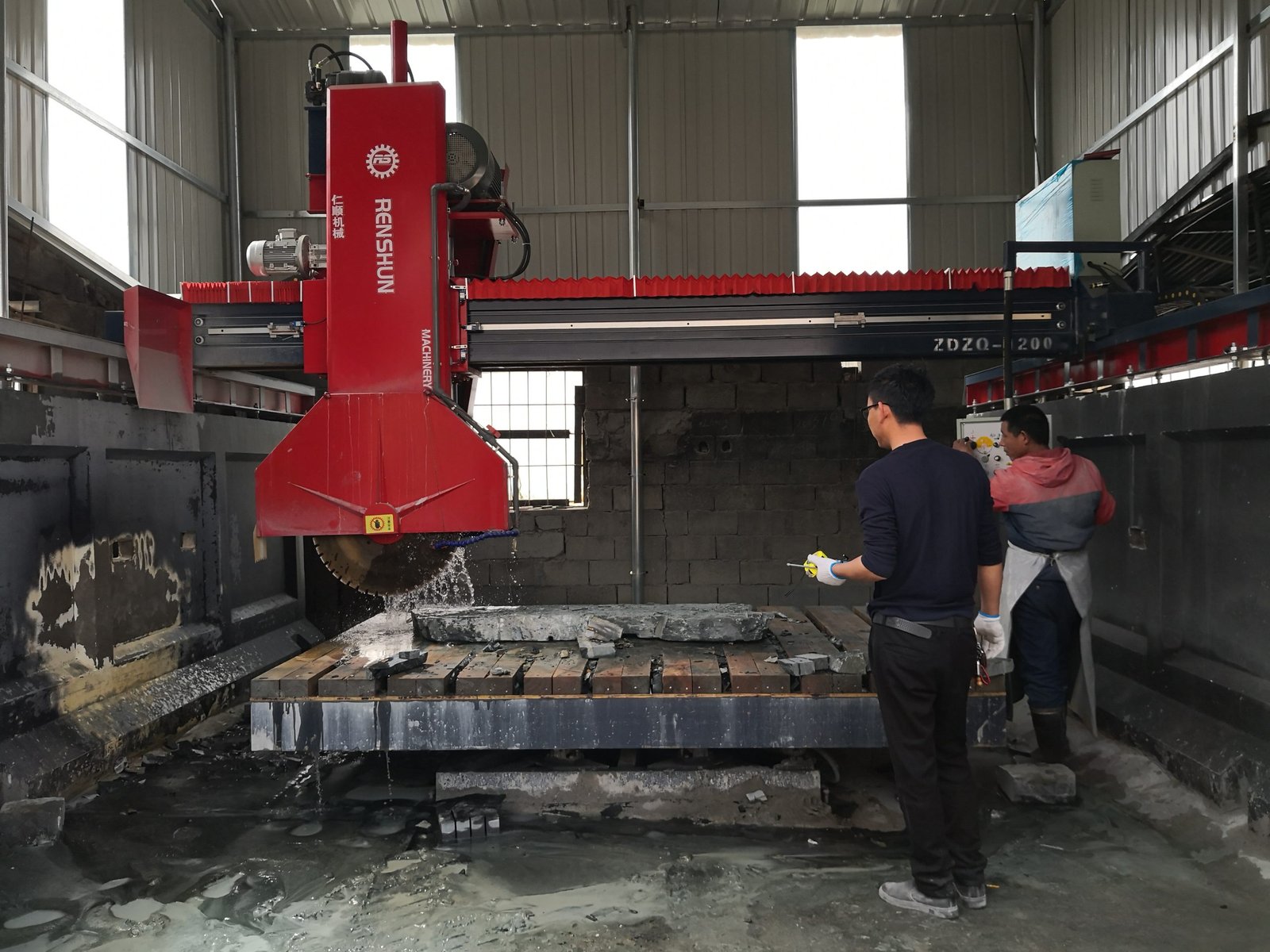
The speed gap is not about the installer’s skill. It is about tolerance. A panelized product turns every box into the same layout problem, so a two-man crew can complete a facade with repeatable rhythm. Random cleft stone rewards experienced masons who read a wall as they build it. Hourly installation teams make panels with corner units the safer estimate. Masons billing by the wall make random stone a design feature, not a delay.
6. Durability and Performance
Both formats draw from the same natural stone families, so durability answers are shared. Slate and quartzite veneer from Top Stone Panels is rated for -30 C to +50 C thermal cycling, is UV stable, and carries natural Class A fire performance because it is rock, not a coated composite. The flagstone and crazy paving range shows the same material family in random paving formats, and the thin stone veneer range carries it in hand-assembled strips.
Installation determines the difference in real performance more than the cut method. Both formats need a stable substrate, proper flashing, and drainage behind the wall. The Natural Stone Institute publishes installation guidance for natural stone veneer, and the relevant terminology for cleft and sawn finishes is defined in ASTM C119 Standard Terminology Relating to Dimension Stone. For field quality expectations, ASTM C1780 covers methods for evaluating the properties of dimension stone used for exterior cladding.
One difference deserves a note: dimensional consistency actually helps anchored, panelized installations. Because panel tolerances are controlled, the weight distribution and joint spacing are uniform across the wall. Random cleft pieces can vary in thickness, so the installer spends more time leveling across the surface. In freeze-thaw climates, that uniformity of joint and surface matters for long-term water shedding.
7. Which One Fits Your Project
Decision time, stated plainly. Choose machine-cut panels when the project needs schedule predictability, repeating corners, or a finish that reads as deliberate linear stonework. Choose hand-made cleft stone when the value sits in rustic character, irregular joints, or a one-of-a-kind feature wall that will never be extended in a matching run.
| Project profile | Better choice | Why |
|---|---|---|
| Large exterior facade, tight schedule | Machine-cut panels | Predictable coverage, L-corners, less waste |
| Corner-heavy commercial wall | Machine-cut panels | Factory corners cut site labor about 50% |
| Rustic or country exterior | Hand-made cleft stone | Random joints and warm variation |
| Pool deck or garden patio | Random flagstone | Salt-resistant cleavage planes, non-slip face |
| Small accent or feature wall | Either | Waste is minor; pick the look the client wants |
If you remain torn, order samples of both. A physical piece of the intended color family in each format, held at arm’s length against the actual substrate, settles more debates than any table. Top Stone Panels dispatches samples in 1-3 days, and the factory can quote both a panelized line and a cleft line from the same quarry so your price comparison stays apples to apples. For the driveway and patio angle, the crazy paving vs flagstone steppers guide covers the hand-laid paving family in detail.
FAQ
Is machine-cut stone veneer real stone?
Yes. Both handmade cleft veneer and machine-cut panels are cut from 100% natural slate or quartzite. The difference is face finish and format control, not the material.
Which is cheaper, hand-split or machine-cut veneer?
Material cost is similar because the stone is the same. Machine-cut panels save installation labor and cut site waste about 20%, so the cheaper installed wall on a large facade is usually machine-cut.
Does machine-cut stone veneer look fake?
No. Sawn edges only align the panel outline. The exposed face on ledgestone and stacked panels is still a natural split face, so the texture stays irregular and the stone reads as stone.
What does cleft mean in stone?
Cleft means split along a natural bedding plane, which creates the rough split face typical of handmade stone veneer. ASTM C119 defines the terminology for dimension stone.
Is handmade stone veneer more expensive than machine-cut?
Per square meter the stone families price in a similar band. The installed cost usually runs higher for random cleft formats because trimming and layout take more site time than laying engineered panels with corners.
How long does natural stone veneer last?
Natural slate and quartzite are UV stable and rated for freeze-thaw cycling, so with correct installation and flashing the finish lasts decades in exterior use.
Conclusion
Hand-made and machine-cut stone veneer share the same rock and part ways on format. Hand-made cleft stone carries the character and the variability. Machine-cut panels carry the discipline, the corners, and the schedule.
Key Takeaways
- Both formats are 100% natural stone; the difference is cleft faces versus sawn tolerances.
- Machine-cut panels with factory L-corners cut outside-corner labor roughly 50% and site waste about 20%.
- Random cleft stone wins on rustic character and one-off features; panels win on predictable large walls.
- Verify both against physical samples from the same quarry so the price comparison is apples to apples.
When the wall is big, the corners are many, and the schedule is fixed, specify machine-cut panels. When the client wants the quarry’s hand in the finish, specify cleft stone. Top Stone Panels supplies both from one factory, with samples in 1-3 days and minimum orders of one 20GP container. Send the project details and the preferred color family for a matched quote on both formats.