The tempting mistake is to pick the biggest market. A distributor standing up a first import lane ranks destinations by headline volume, then finds the largest number is also the most crowded, the most heavily specified, and the slowest to pay. A first export market is not a prize won on size; it is the market you can serve reliably, get certified for, and collect from sooner than the rest.
This is a sequencing decision that rewards a repeatable method over intuition: choose the market that absorbs your first steady container lane, prove the operation, then expand from that base. Top Stone Panels already ships to North America, Europe, Oceania, Middle East Gulf markets, and Southeast Asia, so the factory side — quarry supply, batch color control, ISPM-15 export packing, container loading — does not have to be re-solved for each new country. What changes market to market is the difficulty of the commercial and regulatory path, and that difficulty is what a scorecard measures.
- Rank candidate markets on how reliably you can serve and get paid, not on headline import volume — the biggest market is rarely the best first market.
- Score five criteria from 1 to 5 — demand fit, standards barrier, freight-lane maturity, landed-cost exposure, payment risk — then weight them and sum to produce an entry order.
- Size demand with real data: query your HS codes (slate 6803.00.90, quartzite 6802.93.11) in Trade Map or UN Comtrade before you assign a demand-fit score.
- Treat standards as a documentation barrier, not a market size: lean on the EU CE/EN, Australia NCC/AS-NZS, and US IBC/ASTM deep-dives instead of re-deriving them per market.
- Weight payment risk early — a market that forces open-account terms into your first lane scores lower as a starting point than one you can run on a 30/70 telegraphic transfer basis.
- Re-run the scorecard every quarter; a market you correctly passed over last year can move up when freight lanes or your own certificate coverage change.
- Frame the Decision: First Market, Not Biggest
- The Five Scoring Criteria
- Size a Candidate Market Without Guessing
- Build the Weighted Scorecard
- Read the Standards Barrier, Do Not Rebuild It
- Freight Lanes and Landed-Cost Exposure
- Payment and Credit Risk Controls
- Run the Framework From Shortlist to First Order
- Frequently Asked Questions
- Conclusion
Frame the Decision: First Market, Not Biggest
Before scoring anything, define what “first” means. A first export market is where the gap between your capability and the market’s requirements is smallest and quickest to close — not the market with the most demand, but the one where you can win a container, clear it, sell it, and be paid faster than anywhere else. That framing removes the costliest error in cross-border stone: chasing a headline number you cannot operationally support.
The practical test is delivery and collection. Ask two blunt questions of every candidate. Can you physically serve the market to its standard, from a quarry you control, packed to survive the crossing? Will the money come back on terms you can hold without financing someone else’s inventory for months? A large market that fails either is a later expansion target; a smaller market that clears both is where the first lane and your reference should land.
What follows turns those two questions into a repeatable method: the criteria that decide whether a market is winnable, a data step to size demand instead of imagining it, and a weighted scorecard that produces an entry order you can defend to a partner.
The Five Scoring Criteria
Five criteria carry most of the weight in a first-market decision. Each is scored 1 to 5, and the convention matters: a 5 always means “favorable for entering first,” never “biggest problem.” A market with a light regulatory load scores 5 on standards; a market that pays on delivery scores 5 on payment risk. Keeping the direction consistent is what lets the weighted totals rank cleanly.
Demand fit asks whether buyers in the market actually purchase the lines you make and whether your sourcing base matches their spec. A market that buys heavily is useless if it buys a format or stone family you do not produce; the region your material comes from shapes which buyers you can credibly serve, covered in our comparison of the Hebei and Fujian stone sourcing regions.
Standards and regulatory barrier measures the documentation, testing, and product-marking burden between you and a legal sale — how much certified evidence you hold versus must build. Freight-lane maturity measures how reliably and affordably a full container reaches the destination port on a scheduled service. Landed-cost and tariff exposure measures how far the delivered price drifts above factory price once freight, insurance, duty, and inland haul load in. Payment and credit risk measures the terms buyers insist on and how long your cash sits exposed.
| Criterion | What it tests | A score of 5 means | A score of 1 means |
|---|---|---|---|
| Demand fit | Does the market buy the lines you actually make? | Buyers want your formats and stone families | Demand exists for products you do not supply |
| Standards barrier | Testing, marking, and paperwork to sell legally | Evidence you already hold covers it | A new certification program is required |
| Freight-lane maturity | Reliability and cost of a container service | Frequent, predictable, competitive sailings | Rare, expensive, or congested routing |
| Landed-cost / tariff exposure | How far delivered price drifts above factory price | Predictable, contained add-ons | Freight and duty swing the margin hard |
| Payment / credit risk | Terms buyers insist on and cash exposure | Pre-shipment settlement is normal | Open-account or long-dated terms expected |
Size a Candidate Market Without Guessing
The demand-fit score should rest on data, not memory. Two public tools let a buyer confirm that a real category flow into a country exists before spending on samples or certification. ITC Trade Map publishes country-level product flows you can filter to a specific code, and UN Comtrade publishes official customs-compiled bilateral flows for the same codes — the cross-check when a Trade Map read looks too good.
Query the exact codes you ship, not a vague category. Top Stone Panels moves slate under HS 6803.00.90 and quartzite under HS 6802.93.11, so a candidate market is real for your business only if those codes show a flow you could plausibly supply. This tells you whether the market buys the category and roughly from whom; it does not decide the ranking on its own. The macro stone trade totals and supplier shares that frame this picture are owned and updated in our global stone trade data briefing — read them there rather than repeating the figures here, because those numbers move and this guide stays useful precisely because it does not hard-code them.
Keep sizing directional. The tools answer “is there demand for what I make,” and the scorecard answers the harder question “can I win and get paid here first.” A market with an obvious flow but a brutal standards barrier and open-account terms still loses to a smaller, cleaner one.

Build the Weighted Scorecard
Once each candidate carries a 1-to-5 score on all five criteria, assign weights that reflect your own risk appetite rather than a universal truth, then multiply and sum so the weights total 100. A sensible default for a first lane loads weight toward the two criteria that decide whether the operation survives — demand fit and standards barrier. A starting allocation: demand fit 30, standards barrier 20, landed-cost exposure 20, freight-lane maturity 15, payment risk 15.
Convert each score to a weighted contribution by multiplying it by the criterion’s weight as a decimal, then add the five contributions. The result is one number per market, and the highest total is where the first container should land. The worked example below uses illustrative inputs — replace the 1-to-5 cells with your own scores for your real candidates; the arithmetic, not the placeholder figures, is the method.
| Criterion (weight) | Market A | Market B | Market C |
|---|---|---|---|
| Demand fit (x0.30) | 4 → 1.20 | 5 → 1.50 | 3 → 0.90 |
| Standards barrier (x0.20) | 3 → 0.60 | 2 → 0.40 | 4 → 0.80 |
| Freight-lane maturity (x0.15) | 5 → 0.75 | 3 → 0.45 | 4 → 0.60 |
| Landed-cost / tariff exposure (x0.20) | 4 → 0.80 | 3 → 0.60 | 5 → 1.00 |
| Payment / credit risk (x0.15) | 4 → 0.60 | 3 → 0.45 | 2 → 0.30 |
| Weighted total | 3.95 — enter first | 3.40 | 3.60 |
Read the example closely. Market B has the strongest demand signal yet scores worst overall, dragged down by a heavy standards barrier and soft payment posture; Market A wins on a mature freight lane, contained landed cost, and reliable payment despite a lower demand score. That is the point of weighting — the loudest market is rarely the winnable one, and the scorecard makes the quiet winner visible.
Read the Standards Barrier, Do Not Rebuild It
The standards criterion is the one sellers mis-score most often, because they treat it as a question of market size when it is a question of documentation. Every region governs stone cladding through its own regime, and none of them are explained again here. For the European Union, conformity and CE marking under the relevant EN standards are the gate, set out in our guide to importing stone into the EU. For Australia, the National Construction Code and its referenced standards decide acceptance, covered in Australian standards for stone cladding. For the United States, the model codes and ASTM test methods drive specification, detailed in our US stone import guide.
Score the barrier from the position you are actually in, not in the abstract. If a market’s demands are already met by certificates and test reports you hold from a similar climate, that is a low barrier and a high score. If entering means funding a fresh testing and marking program before the first sale, that is a high barrier and a low score, however attractive the demand. When a barrier scores 1 or 2, defer the market to a later expansion, once a first lane has generated the cash and reference that make the certification spend recoverable.
Freight Lanes and Landed-Cost Exposure
Freight-lane maturity is a service-reliability question: how often and how predictably a full container reaches the destination port, and how competitive the ocean rate is on that routing. A market on a dense, regular lane is easier to re-order into than one served by infrequent sailings you must slot production around. Because Top Stone Panels ships from the Tianjin Xingang area, the maturity of the lane from there to a candidate port is part of what you score — the term structure is FOB, EXW, CIF, or DDP, and the choice sets how much freight volatility you absorb. The term-by-term logic sits in our guide to Incoterms for stone exports.
Landed-cost exposure is the drift between factory price and delivered price once ocean freight, insurance, duty, and inland haul stack on. Do not guess the duty line or invent a rate for any country here; build the landed-cost picture per shipment against the destination’s own clearance requirements, which our customs clearance guide for natural stone imports walks through document by document. A market where freight and duty swing the delivered price wildly is one where your margin is not yours to control, and it scores low on this criterion.
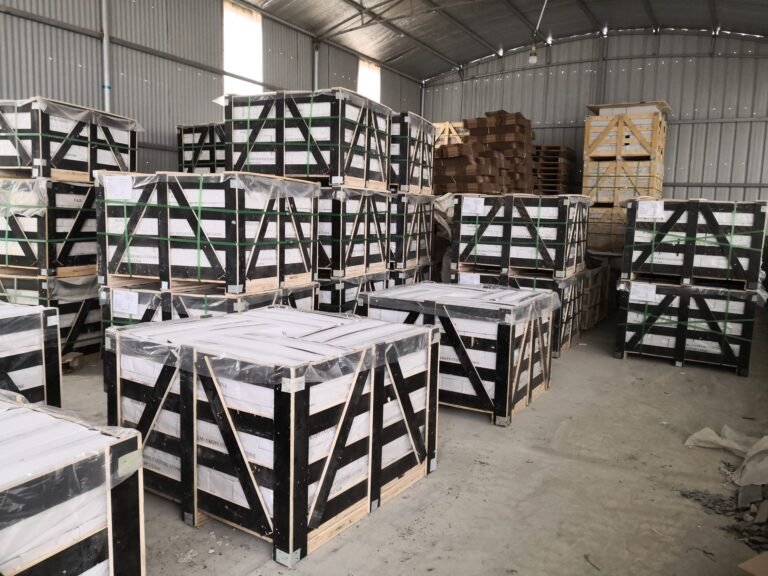
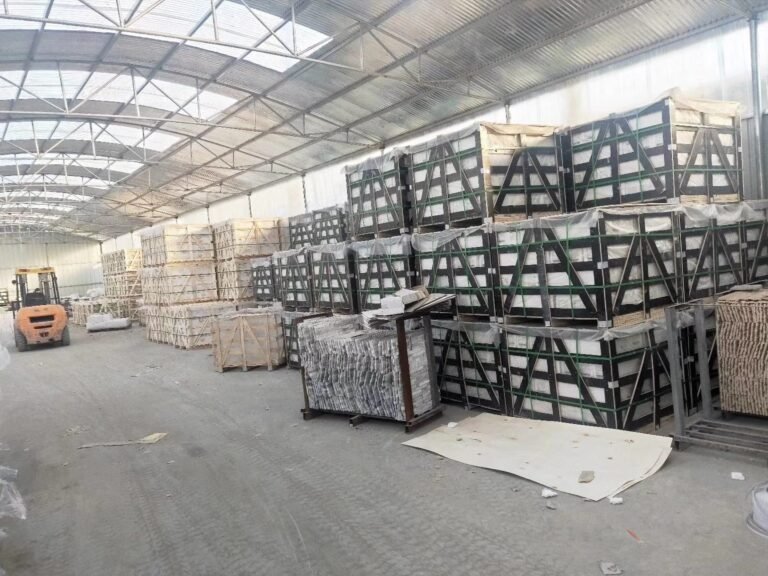
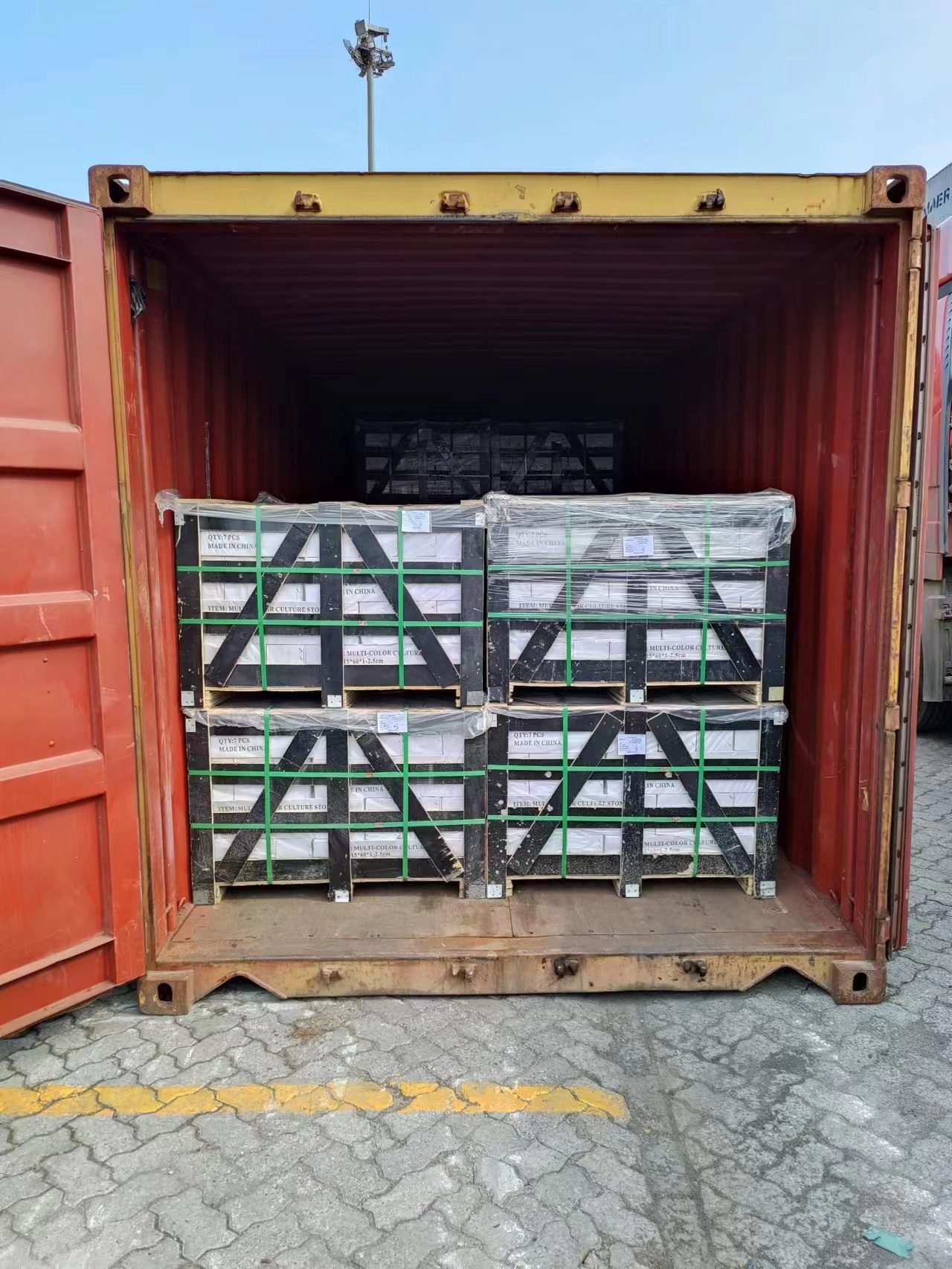
The packing reality under both criteria is a fixed strength on the supply side. Shipments leave in fumigated wooden crates built to the ISPM-15 standard, with reinforced crating and steel strapping sized for heavy stone, from a factory with a stated annual export capacity of more than 220 containers. So the freight and landed-cost scores measure the destination’s routing and rules, not whether the goods survive the crossing — that is a solved variable across the full product range a distributor can mix into one container.
Payment and Credit Risk Controls
A first lane into an unfamiliar market should never become unsecured credit. Payment and credit risk most directly decides whether a good-looking market is safe to start in, and it is scored on the terms that market’s buyers normally demand. Where pre-shipment settlement is accepted, exposure is contained; where open-account or long-dated terms are the entry ticket, your cash sits behind someone else’s inventory where collection is slow and uncertain, and the score falls.
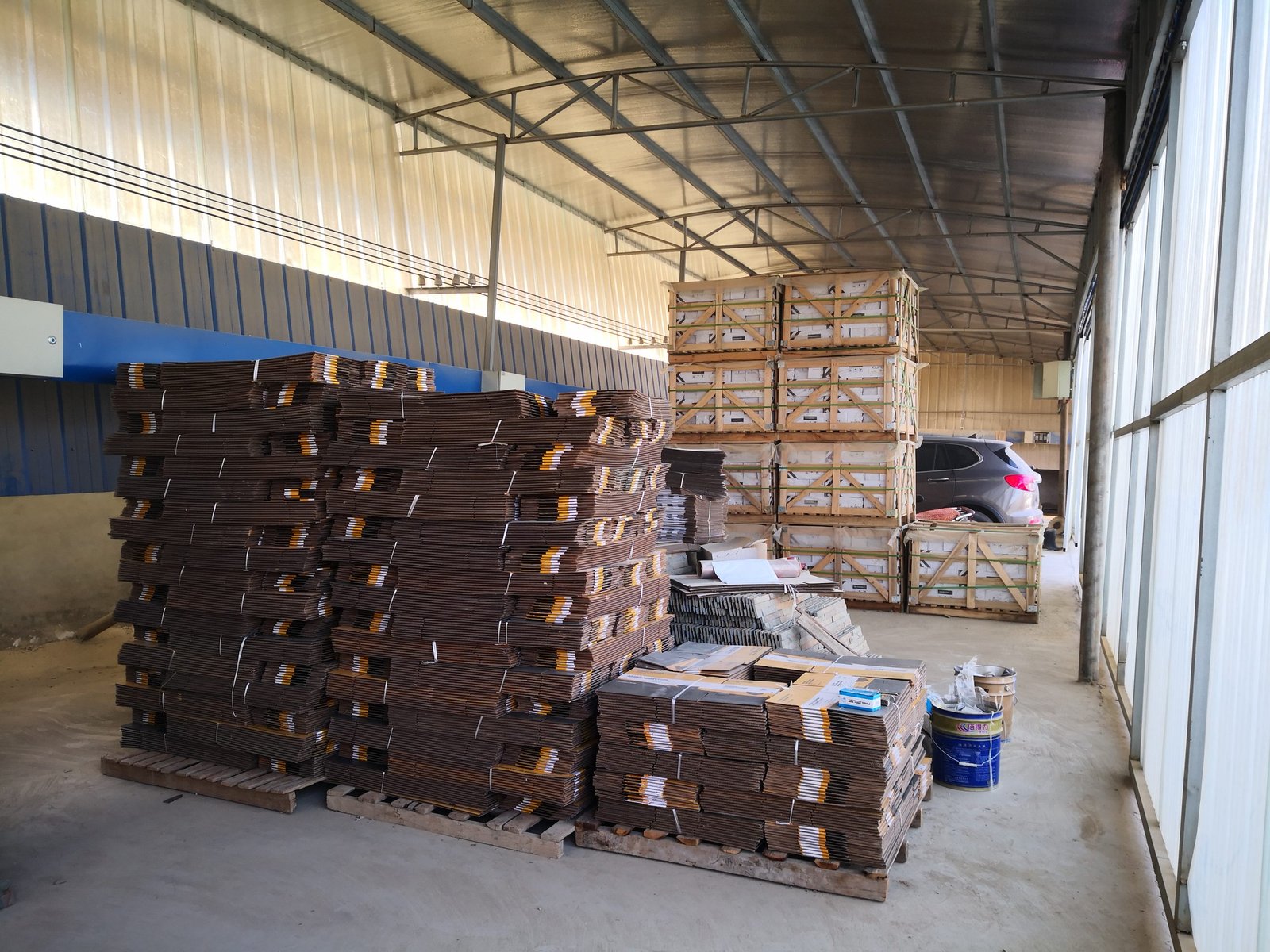
The default structure is deliberately protective. Terms run on a 30 percent telegraphic transfer deposit with the 70 percent balance cleared before shipment, released only after the buyer reviews the pre-shipment layout and loading video. That sequence stops you owning a finished container you cannot sell while protecting the buyer from paying blind. On timing, stock and fast lanes run about 20 working days and a first order with custom printed cartons runs 25 to 30 working days, so a market demanding open terms and long lead tolerance compounds the risk on both axes at once — a clear signal to defer it.
Run the Framework From Shortlist to First Order
The method only earns its place if it collapses into a short, repeatable sequence. Run it as a loop, not a one-time verdict.
- Shortlist four to six candidate markets you could plausibly supply, drawn from the regions you already touch.
- Size each one with Trade Map and UN Comtrade on your real HS codes, so demand-fit scores rest on flows, not assumptions.
- Score all five criteria 1 to 5, remembering that 5 always means favorable to entering first, including on the two barrier criteria.
- Apply your weights, sum the weighted contributions, and rank; the top total is your proposed first market.
- Open the standards deep-dive for the winner to confirm the barrier score is real, and the customs guide to confirm the landed-cost score holds.
- Pilot one container on 30/70 terms before committing a lane, then re-run the full scorecard the following quarter.
Re-running matters because the inputs move. A thin freight lane gains a second weekly service; a certificate you funded for one market quietly lowers the barrier score for its regulatory neighbors; a color program proved in one region strengthens the demand-fit case in the next. The scorecard is not a forecast of any market’s future — it is a disciplined, refreshable read of which market you are ready for now.

Frequently Asked Questions
How do I choose which stone export market to enter first?
Score every candidate from 1 to 5 on five criteria — demand fit, standards barrier, freight-lane maturity, landed-cost and tariff exposure, and payment risk — weight them so the total is 100, then multiply and sum. Enter the market with the highest weighted total first, because it is the one you can serve and collect from most reliably, not the largest.
Should I target the biggest stone import market first?
No. The biggest market is usually the most crowded, the most heavily specified, and the slowest to pay. A first market should clear the delivery-and-collection test — can you serve it to its standard, and will the money come back on holdable terms — so a smaller, cleaner market often beats a headline volume as a starting point.
How much weight should regulatory barriers get in the scorecard?
Weight the standards barrier heavily, alongside demand fit, because it decides whether you can sell legally at all. A market you cannot yet certify for should score low on the barrier and rank behind markets your existing test evidence already covers, even when its demand looks larger.
Which tool sizes a candidate stone market by HS code?
Query the specific codes you ship rather than a broad category: slate moves under HS 6803.00.90 and quartzite under HS 6802.93.11. Confirm the flow exists in both Trade Map and UN Comtrade, then cross-check the macro totals in a maintained trade-data briefing before you assign a demand-fit score.
What payment terms lower credit risk in a new market?
A 30 percent telegraphic transfer deposit with the 70 percent balance settled before shipment, released only after pre-shipment layout and loading video, keeps your cash off the table. A market whose buyers insist on open-account or long-dated terms is a weaker first entry, so score its payment risk low and defer it.
Conclusion
Choosing a first export market is the discipline of ranking where you can win soonest, not where demand is loudest. A weighted scorecard on five criteria — demand fit, standards barrier, freight-lane maturity, landed-cost exposure, and payment risk — turns an intimidating list of countries into a defensible entry order, each input drawn from your own HS-code data or what you already hold. The trade figures stay in one place, the standards deep-dives stay the authority, and this method stays about sequencing.
Key takeaways:
- Pick the market you can serve and collect from first, not the one with the biggest headline volume.
- Score five criteria 1 to 5, weight to 100, multiply and sum; the top total is the first lane.
- Size demand on your real HS codes (slate 6803.00.90, quartzite 6802.93.11) with Trade Map and UN Comtrade before you score.
- Treat standards as a documentation barrier and lean on the region deep-dives instead of re-deriving them.
- Protect the first lane on 30/70 telegraphic transfer terms and re-run the scorecard every quarter.
When the ranking points somewhere clear, test it on a single container. Tell Top Stone Panels your shortlist, your target formats, and your project climate, and the factory will size the demand check, confirm which certificates you already cover, mix the product lines into one lane, and quote the 30/70 terms and lead time — open the conversation through the contact team and put the first market to the delivery-and-collection test.