The Australian standard for stone cladding has almost nothing to do with the stone itself — and that is the first thing importers miss. A container of slate panels can be perfect and still stall on a project because the paperwork did not connect the product to the Australian building system.
Australia regulates buildings through the National Construction Code (NCC), published by the Australian Building Codes Board, and every state and territory adopts it. The NCC is performance-based: it says what must be achieved, then points to Australian Standards as the accepted way to prove it. For stone cladding, the standards that matter are AS 3700 for masonry structures, the AS/NZS 4455 series for masonry units, pavers, and flags, plus fire, slip, and moisture provisions that apply to external wall materials.
This guide maps that system for a buyer in Australia, New Zealand, or a distributor supplying those markets. It covers which standards regulate cladding, what material evidence projects actually demand, and what changes at the border under biosecurity rules. The factory-side numbers come from what Top Stone Panels ships to coastal and cold-climate markets from its Hebei quarry operation.
- Australian building regulation runs through the NCC; AS 3700 and the AS/NZS 4455 series are the referenced masonry standards that govern veneer and pavers.
- Natural stone is non-combustible, so slate and quartzite panels sit outside the combustible-cladding restrictions — but fire evidence still goes into the approval file.
- Moisture control drives Australian external wall rules: weather-resistive barrier, flashings at penetrations, and correct substrate determine whether the veneer passes inspection.
- Slip resistance on wet exterior surfaces follows AS/NZS 4586 classification, which matters for pool surrounds, steps, and decks.
- Biosecurity at the border applies to wood packaging, not the stone: ISPM 15 rules and processed-wood exemptions decide whether a pallet needs treatment.
- Request COO, ISPM 15 documentation, test reports, and dimension tolerance data from the factory before the container ships.

- How Australian Building Regulation Works for Cladding
- AS 3700: The Masonry Standard Behind Veneer Walls
- AS/NZS 4455: Masonry Units, Pavers, and Flags
- Fire, Slip, and Moisture: The Performance Gateways
- Durability Data Australian Projects Verify First
- Import Compliance: ISPM 15, COO, and Biosecurity
- Green Star and EPDs for Australian Projects
- Supplier Checklist for the Australian Market
- FAQ
- Conclusion
How Australian Building Regulation Works for Cladding
Understand the hierarchy once and the rest of the compliance picture falls into place. The NCC is the law that sets building requirements. Australian Standards are the technical documents the NCC references to prove those requirements are met. A product does not need to be “AS 3700 certified” — no one certifies a cladding panel to AS 3700 — but the design and installation must follow the standard’s methods, and the material data must support what the design assumes.
Two NCC tracks exist for every provision: deemed-to-satisfy (DtS) and performance. The DtS track says, “follow these referenced standards and you are deemed to comply.” The performance track allows an alternative solution, but the burden of proof sits on the designer. For a stone cladding facade, the pragmatic route is DtS: design the masonry veneer to AS 3700, install it to the referenced methods, and document the material properties. Buyers who source the materials for such projects need the standards the designers will cite — absorption, strength, fire, slip — available before tender, not after.
The NCC is published by the Australian Building Codes Board, and the technical library sits with Standards Australia, whose catalog lists current editions. Importers do not need to buy every standard, but they should know which ones their customer’s certifier will name. That list is short, and the next sections cover it.
AS 3700: The Masonry Standard Behind Veneer Walls
AS 3700, Masonry structures, is the backbone standard for walls built from masonry units, including adhered and anchored stone veneer. Australian engineers and certifiers treat it as the reference for how a veneer wall behaves: the load path from the veneer into the structure, the cavity and ties where veneer is supported, and the detailing that keeps water out of the assembly.
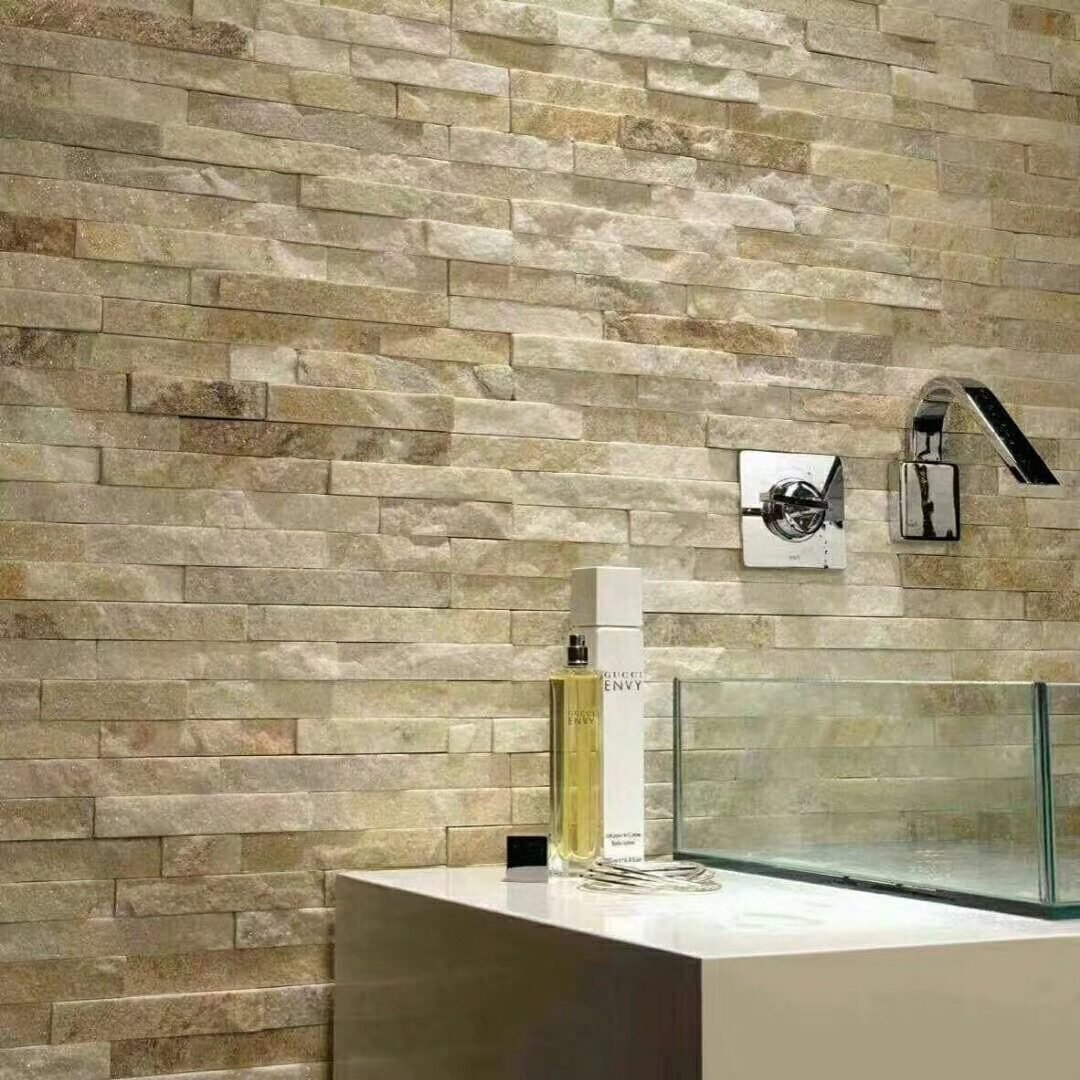
For a thin stone veneer panel mounted with mortar or adhesive, the practical takeaways from AS 3700 come in three forms. First, the substrate and backing must be sound and dimensionally stable, because a veneer is only as reliable as what it adheres to. Second, the wall assembly needs movement accommodation — control joints and flashings — so thermal movement does not crack the face. Third, the design accepts the veneer’s weight; a 15x60cm stacked stone panel is designed like a masonry unit with known coverage and adhesion requirements.
The material data that feeds an AS 3700 design comes from unit testing. In that sense, the standards document pair is AS 3700 for the structure and the AS/NZS 4455 series for the product, and a supplier’s test report is the bridge between them. The site’s how to read a test report guide and the thickness tolerance guide show what those reports should contain and how to check them against the project spec.
AS/NZS 4455: Masonry Units, Pavers, and Flags
The AS/NZS 4455 series is the product side of the pair. Its full title — Masonry units, pavers, flags and segmental retaining wall units — tells you exactly what it covers, and each part addresses a different product sitting in a stone supplier’s range.
| Series part | Coverage | Relevance for stone importers |
|---|---|---|
| AS/NZS 4455.1 | Masonry units | Natural and manufactured units used in walls, including veneer panels and stacked stone |
| AS/NZS 4455.2 | Pavers | Flagstone and crazy paving for patios, pathways, and pool surrounds |
| AS/NZS 4455.3 | Segmental retaining wall units | Garden walls, retaining walls, and edging projects |
The series sets dimensions, tolerances, and test methods: how units are measured, how absorption or strength is tested, and how the results are reported. An Australian specifier who asks for “AS/NZS 4455 testing” is asking for product evidence in that method shape, not for a product to carry the standard as a label. That distinction matters when comparing suppliers: the question is not “are you certified to AS/NZS 4455” but “can your test report be mapped to those methods.”
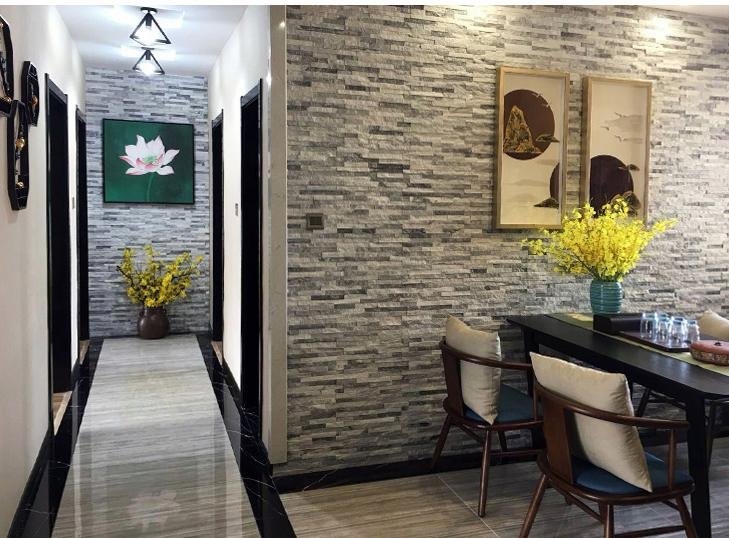
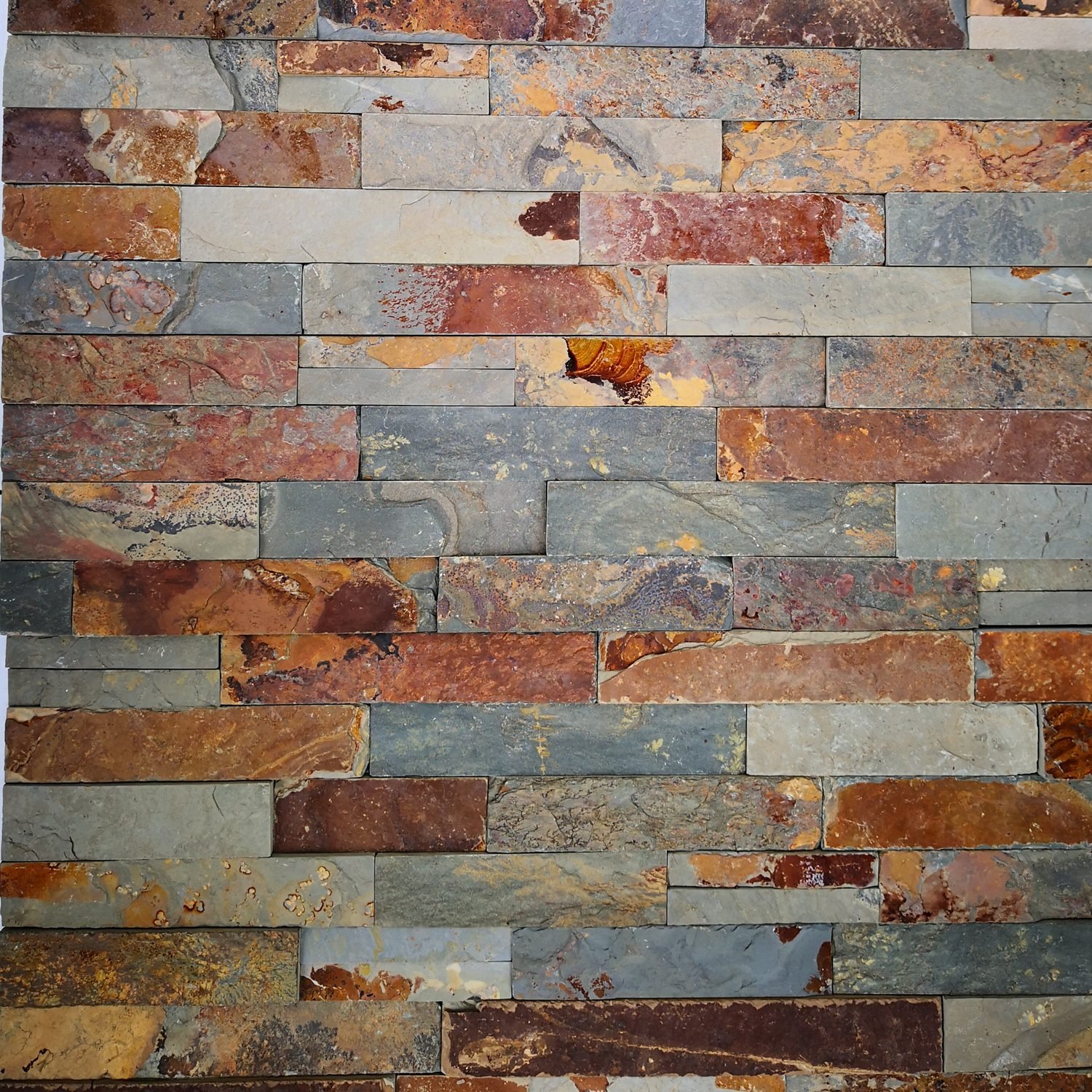
For wall cladding, virtually every line a panel factory exports lands in this framework. Stacked stone panels and thin ledgestone behave as masonry units for the wall portion. Flagstone and crazy paving behave as pavers under Part 2. Columns and pillar wraps follow the masonry logic again through AS 3700. The product pages linked here carry the sizes and backing configurations that belong in the technical submission.
Fire, Slip, and Moisture: The Performance Gateways
The NCC treats external wall cladding as a fire-safety and moisture-management system, and that framing decides which material properties an Australian project checks first.
On fire, the position is favorable to natural stone. After the combustible-cladding reforms, Australian regulators tightened controls on external wall systems — specifically on combustible materials. Natural stone is non-combustible by its composition, so slate and quartzite panels sit outside the combustible-cladding restrictions. The natural stone fire rating guide explains the classification logic. Even so, the approval file usually records the material’s fire behavior, typically through non-combustibility evidence or group classification of the exterior lining. Ask the factory to state the material basis — “100% natural slate, non-combustible” — and provide any fire test documentation available.
On slip, outdoor stone gets tested where people walk when wet. Australian projects reference AS/NZS 4586 for slip resistance classification of pedestrian surfaces, and it is exactly the standard that governs pool surrounds, decks, steps, and ramps. Natural cleft slate and quartzite have an inherently textured surface, which is why flagstone has a long track record around Australian pools. For a facade-only delivery, slip matters little; for flagstone, stepping stone, and stair tread programs, specify the surface classification early. The flagstone program comes with cleft textures that suit that use.
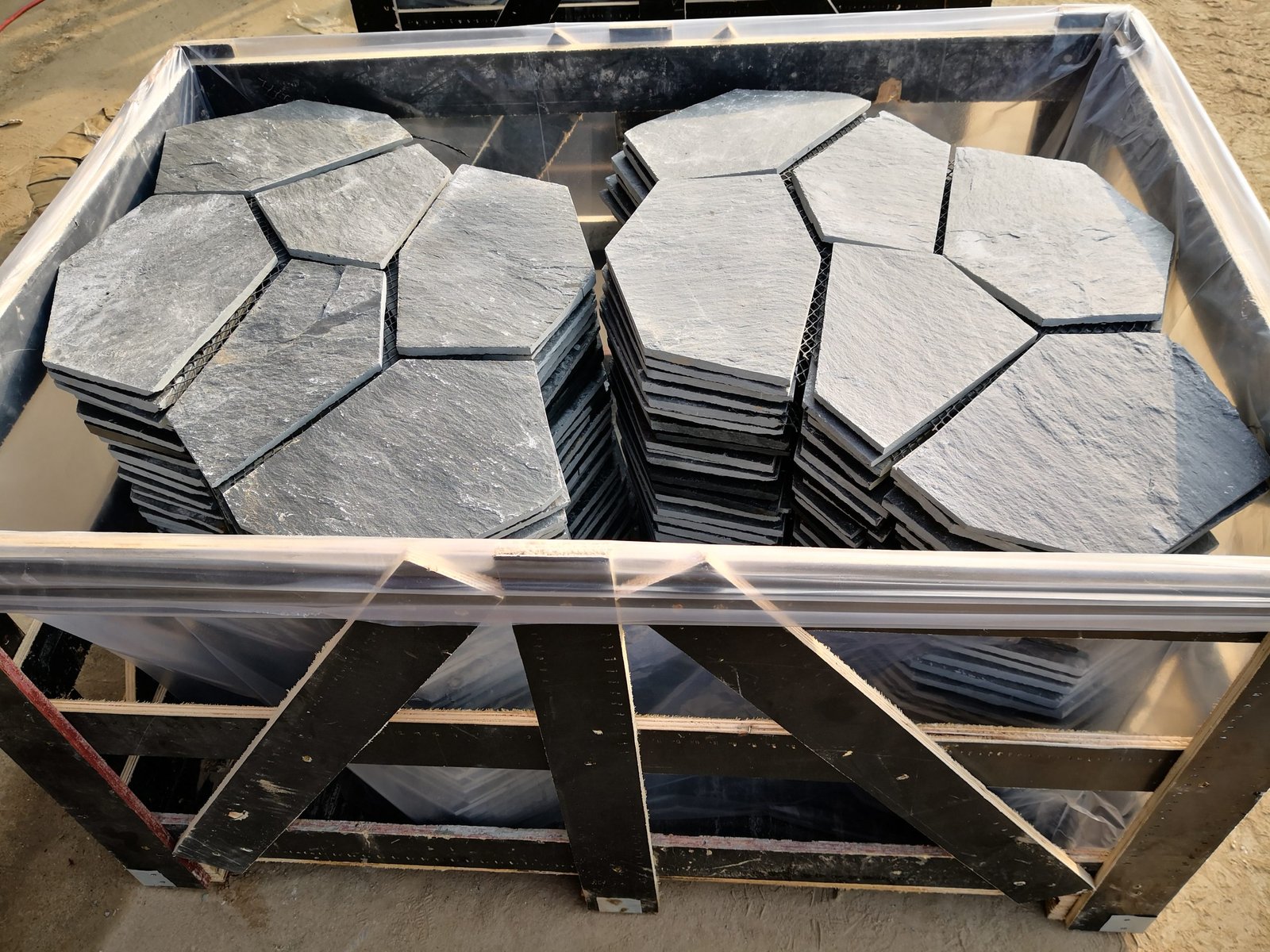
On moisture, the NCC’s external wall rules turn on weatherproofing: a weather-resistive barrier behind the veneer, a drained cavity where the design calls for one, flashing at every penetration, and a substrate that accepts the bond. The stone does not manage moisture alone; the assembly does. Australian facade failure data points the same direction as the site’s own install guidance in the waterproofing guide: the wall fails at details — window heads, sills, parapets — not on the flat field. Importers should send the assembly details, not just the material spec.
Durability Data Australian Projects Verify First
Australia spans alpine freeze-thaw zones, subtropical coast, and desert heat, so one container program often has to present data for several climates. Four data points cover almost every Australian facade conversation.
| Property | Why Australian projects ask | Evidence to request |
|---|---|---|
| Water absorption | Low absorption resists moisture, staining, and freeze-thaw in cold and wet regions | Absorption test report; see the water absorption guide |
| Freeze-thaw resistance | Alpine projects in NSW and Victoria need panels that survive cyclic freeze | Freeze-thaw data; dense slate is rated -30°C to +50°C at Top Stone Panels |
| Salt-spray resistance | Coastal construction needs panels that ignore salt-laden air | Coastal durability data; see the salt-spray guide |
| Flexural and compressive strength | Structural design assumes load capacity for veneer and pavers | Strength test reports; see the flexural strength and compressive strength guides |
The common thread is density. High-density slate and quartzite absorb less water, survive freeze-thaw, and shrug off salt spray, which is why the same panels serve Cairns coast and Thredbo alpine elevations. The freeze-thaw resistance and UV stability guides cover the underlying mechanisms. A supplier that cannot produce absorption and strength reports is a supplier that will leave the certifier asking questions.
Import Compliance: ISPM 15, COO, and Biosecurity
The border is where a stone shipment meets Australian law. The good news for stone buyers: the rock itself is not the biosecurity problem. The wood around it is.
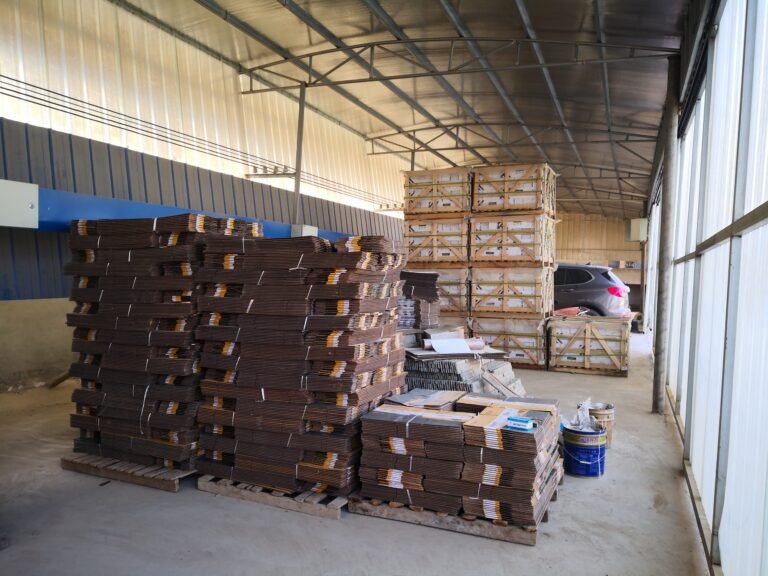
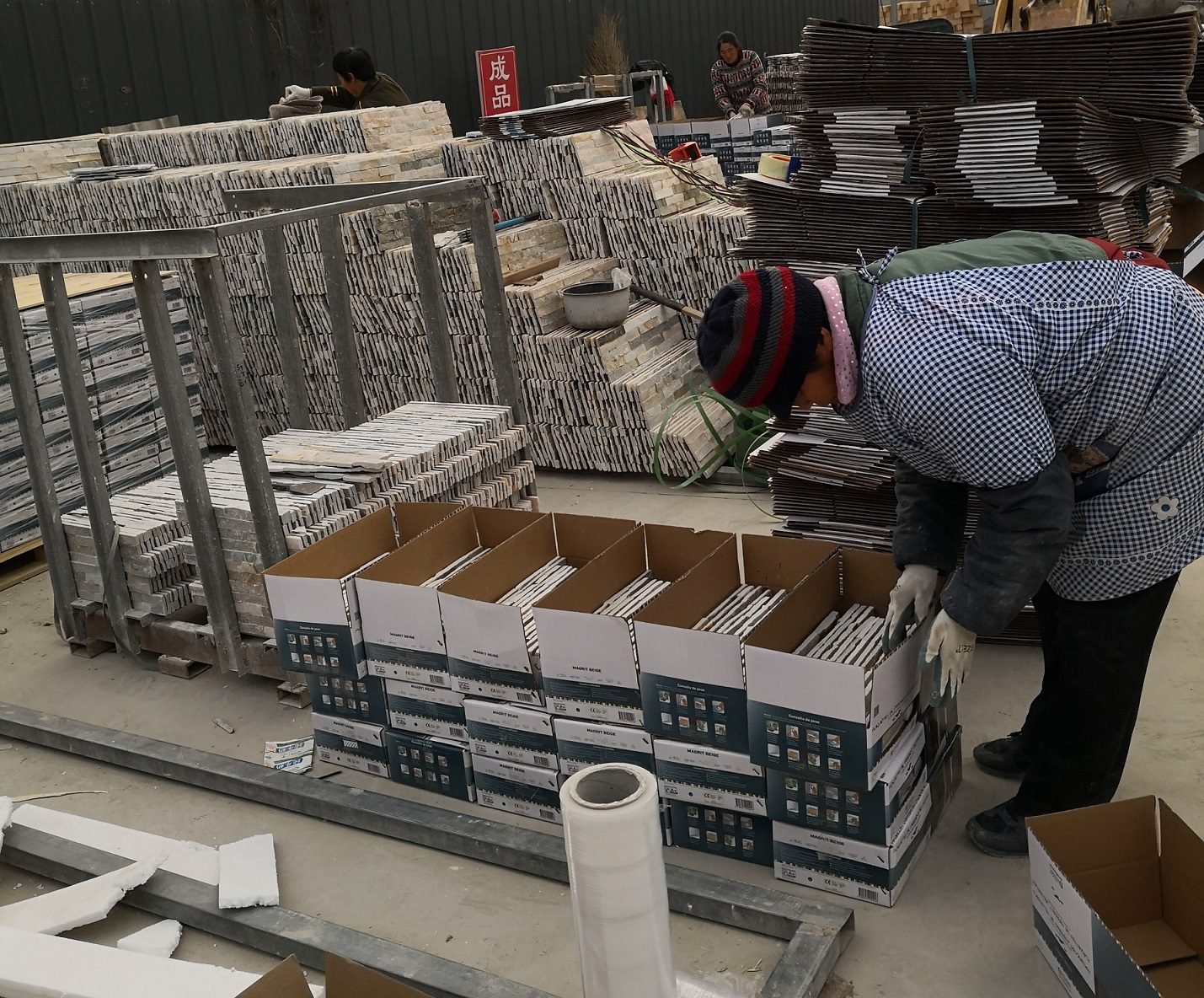
Australia’s Department of Agriculture, Fisheries and Forestry applies ISPM 15 to solid wood packaging entering the country. Crates and pallets made from raw timber must be treated and marked with the ISPM 15 stamp. The official ISPM 15 page is the reference importers should confirm against for their shipment. Processed wood products — plywood, oriented strand board, and the like — are treated differently from solid timber, which is why “fumigation-free” pallets made from plywood simplify the whole process. Top Stone Panels ships on fumigation-free plywood pallets and provides ISPM 15 documentation when a destination route requires it; the detail is covered in the ISPM 15 guide.
The certificate of origin fills the remaining import slot. Australian customs uses it for duty assessment and any preferential trade claims, and it is a low-cost document to secure at the factory. The COO guide explains when it is required. Pair it with the customs clearance guide for the full entry workflow, and the pre-shipment inspection checklist for what to verify before the container leaves China.
Green Star and EPDs for Australian Projects
Australian commercial projects increasingly measure environmental performance through the Green Building Council of Australia’s Green Star rating, and product evidence plays into it. A verified environmental product declaration (EPD) is one of the strongest documents a natural stone supplier can offer a Green Star project, because it turns a material with a quarry history into quantified lifecycle data. Natural stone compares well in EPD terms — it is a quarried, minimally processed product — but only when the paperwork proves it. The sustainability and EPD guide on this site covers the numbers behind natural stone’s lifecycle story.
For the importer the practical step is simple: ask the supplier what environmental documentation exists for the product line before the tender, not when the Green Star credit is being audited. The factories that run proper quality control and quarry-source their material are the ones that can produce the trail. The supplier verification checklist includes documentation capability as a scoring line.
Send the project state, climate zone, and whether the order includes paver programs, and get a technical pack: sizes, absorption and strength data, COO, and ISPM 15 documentation.
Supplier Checklist for the Australian Market
Use this checklist when shortlisting a factory for Australian delivery. It is written for the documents and data a certifier, builder, or distributor will actually ask for.
| Check | Why it matters | Typical source |
|---|---|---|
| Product sizes and backing configurations | Designers need dimensions to spec the assembly under AS 3700 | Supplier product page and technical sheet |
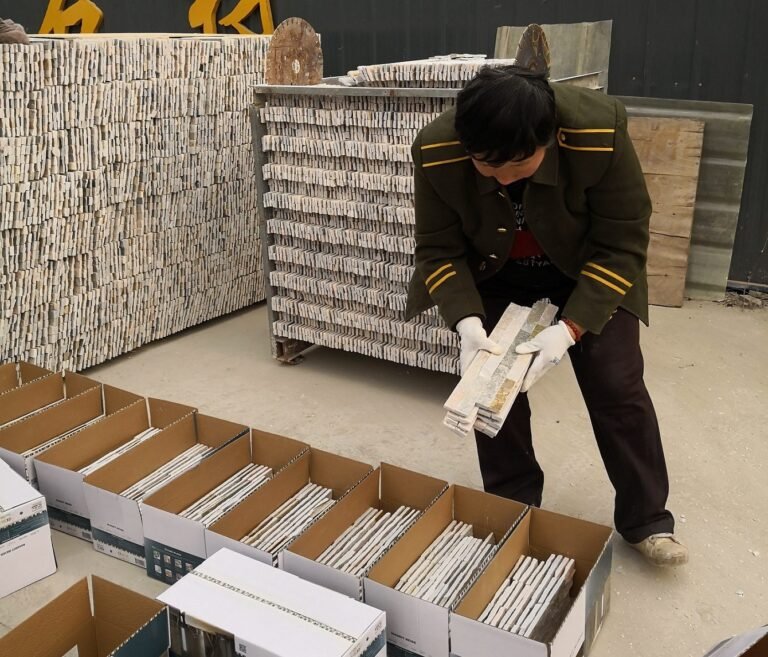
| Water absorption and strength test reports | Feeds durability and structural assumptions | Factory test certificate |
| Fire performance statement | Non-combustible material confirmation for the approval file | Factory or brand documentation |
| Slip classification for pavers | AS/NZS 4586 classification for wet outdoor surfaces | Factory data or third-party test |
| Certificate of origin | Customs duty assessment on arrival | Factory on request |
| ISPM 15 and packaging statement | Biosecurity clearance for wood packaging | Packing list + DAFF rule confirmation |
Buyers tend to chase the certificate and forget the assembly. Australian projects approve materials and details together, so also send the substrate preparation guidance and caps and coping trim to your specifier in the same submission. The panel is one line in the system; the system is what gets signed off.
FAQ
Is natural stone cladding compliant in Australia?
Yes. Natural stone is non-combustible and installs under NCC provisions with AS 3700 masonry design and NCC moisture and fire requirements. Certification happens on the project, not the product.
What is AS 3700 for stone veneer?
AS 3700 is the Australian standard for masonry structures. It governs how veneer walls are designed and detailed — substrate, ties, movement joints, and flashings — and is referenced by the NCC.
Do I need an ISPM 15 certificate to import stone to Australia?
Not for the stone itself. ISPM 15 applies to solid timber packaging. Processed wood pallets are exempt, and Top Stone Panels ships on fumigation-free plywood pallets with ISPM 15 documentation on request.
What tests do Australian projects ask for on natural stone?
Water absorption, flexural and compressive strength, freeze-thaw where the site is cold, slip classification for walking surfaces, and non-combustibility evidence for fire compliance.
Can slate panels handle Australian coastal weather?
High-density slate is salt-spray resistant, UV-stable, and rated -30°C to +50°C, which suits both coastal and inland Australian climates when installed with the correct barrier and flashings.
Conclusion
Australian standards for stone cladding run on a simple map: the NCC sets the requirements, AS 3700 and the AS/NZS 4455 series supply the accepted methods, and material evidence — fire, slip, moisture, and durability data — completes the submission. None of it is a product certificate; all of it is a project file.
- Confirm the assembly first: substrate, barrier, flashings, and movement joints decide whether an Australian wall passes.
- Request absorption, strength, and fire evidence, and match it to the standards a certifier will cite.
- Settle ISPM 15 and the certificate of origin at the factory before the container loads.
- For paver programs, get the slip classification in the same technical pack as the wall data.
The factory-side facts hold wherever the container lands: samples in 1-3 days, MOQ of one 20GP container, production in 20-25 working days, and technical documentation from Top Stone Panels on request. Contact the factory with the Australian state, climate zone, and project type to receive the technical pack sized for that submission.