Ask which cladding is greener, natural stone or concrete, and you will get confident answers from both camps. The confident answers are usually wrong, because the comparison is a life-cycle question, not a single score. Embodied carbon, transport distance, service life, maintenance, and end of life each tell a different part of the story, and the winner changes with the project.
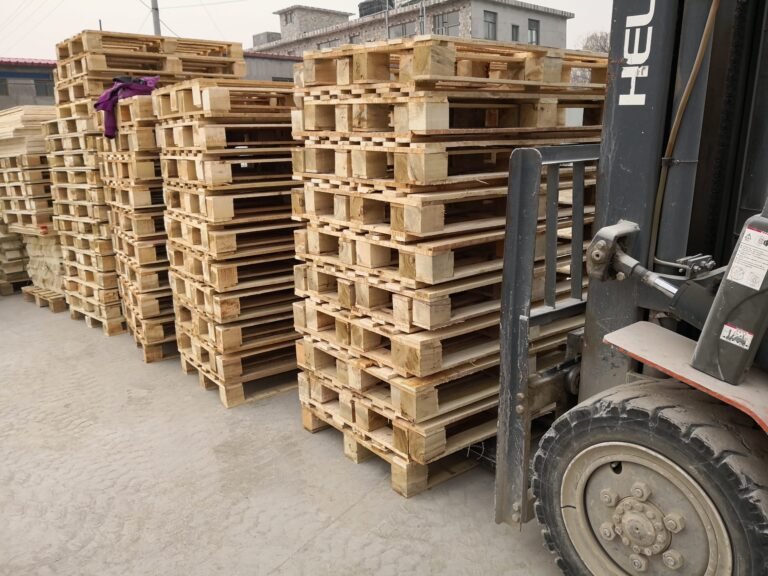
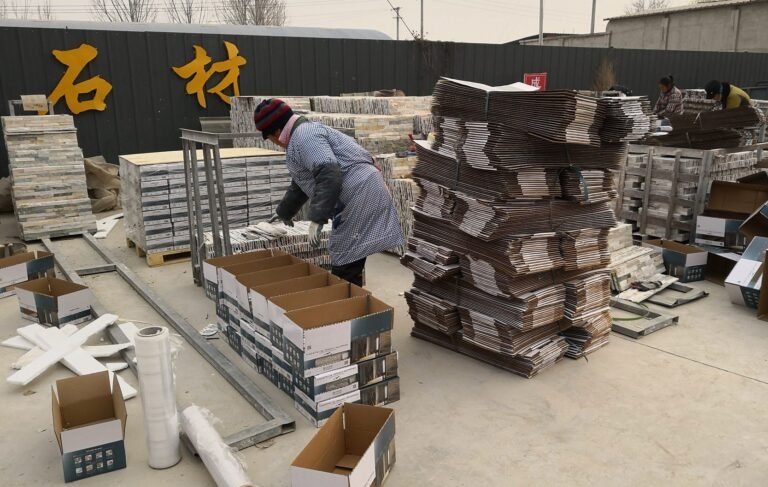
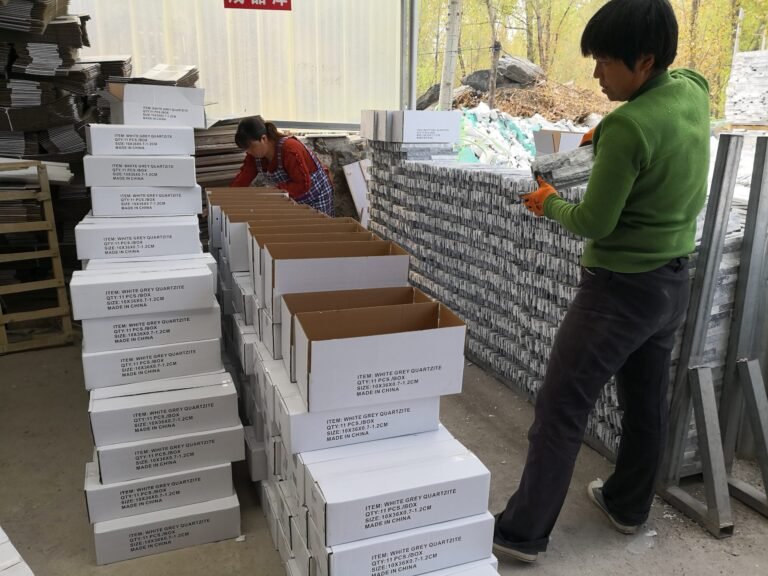
This comparison runs the evidence for both materials and names the trade-offs honestly. Top Stone Panels sells natural stone, so the concrete side of the table gets the same scrutiny as our own. A buyer who needs the truth will spot a slanted comparison from one paragraph away. The sourcing numbers here come from our own Top Stone Panels operations in Yixian County, Hebei, shipping 220+ containers a year.
- Natural stone skips the kiln; cement production is attributed to roughly 8% of global CO2 by the IEA.
- Durability rewrites the footprint: slate and quartzite tolerate -30°C to +50°C and resist UV and salt spray, so the maintenance and replacement curve is shorter than concrete.
- Transport is the honest variable: near-source concrete often beats far-shipped stone, and near-shipment stone beats distant concrete.
- Both materials can be crushed into aggregate at end of life; natural stone can also be reused as a building material.
- Some engineered natural stone panels carry a cement or mesh backing, so read the product system, not the category label.
1. How to Compare Facade Footprints
A facade footprint is the sum of six stages: material extraction, manufacturing, transport to site, installation, maintenance over service life, and end of life. Skip any stage and the comparison becomes a marketing claim. The stage most often skipped is maintenance, even though a facade that needs replacement twice as often doubles its manufacturing impact in the same calendar decade.
The second habit that distorts the comparison is comparing a material against a product system. Natural stone cladding ships as loose veneer, mesh-backed mats, or engineered panels; concrete cladding ships as cast panels, precast units, or cement-based boards. Two products in the same category can carry very different footprints depending on their backing and manufacture.
So the fair comparison answers one question at a time. What is the embodied carbon? What happens on delivery? How long does it serve? What does it cost to maintain? What can be recovered at the end? The sections below follow that order, and the spine table gives the compressed answer first.
2. The Head-to-Head Table
| Dimension | Natural stone cladding | Concrete cladding |
|---|---|---|
| Manufacturing energy | Quarry, split, cut; no kiln | Cement kiln firing; energy heavy |
| CO2 source | Quarry equipment, processing, transport | Cement process and fuel; ~8% of global CO2 |
| Service life | Decades to centuries with detailing | Decades, but spalling risk in freeze-thaw |
| Freeze-thaw tolerance | -30°C to +50°C | Varies; moisture and rebar risk |
| End of life | Reusable or crushable as aggregate | Crushable as recycled aggregate |
| Product consistency | Natural variation; batch control matters | Highly consistent, factory controlled |
The table compresses the evidence, but the rows need texture. Embodied carbon is not a single number, so the next section unpacks it. Durability is the row that most changes the arithmetic. End of life is where both materials look better than their reputation. Then come the caveats that keep the comparison honest.
3. Embodied Carbon: Kiln vs Quarry
Cement is the heavy step in the concrete chain. The IEA’s cement sector analysis attributes roughly 8% of global CO2 emissions to cement production, split between the chemical reaction that releases CO2 from limestone and the fossil energy that fires the kilns. Concrete cladding carries that embodied footprint into every panel.
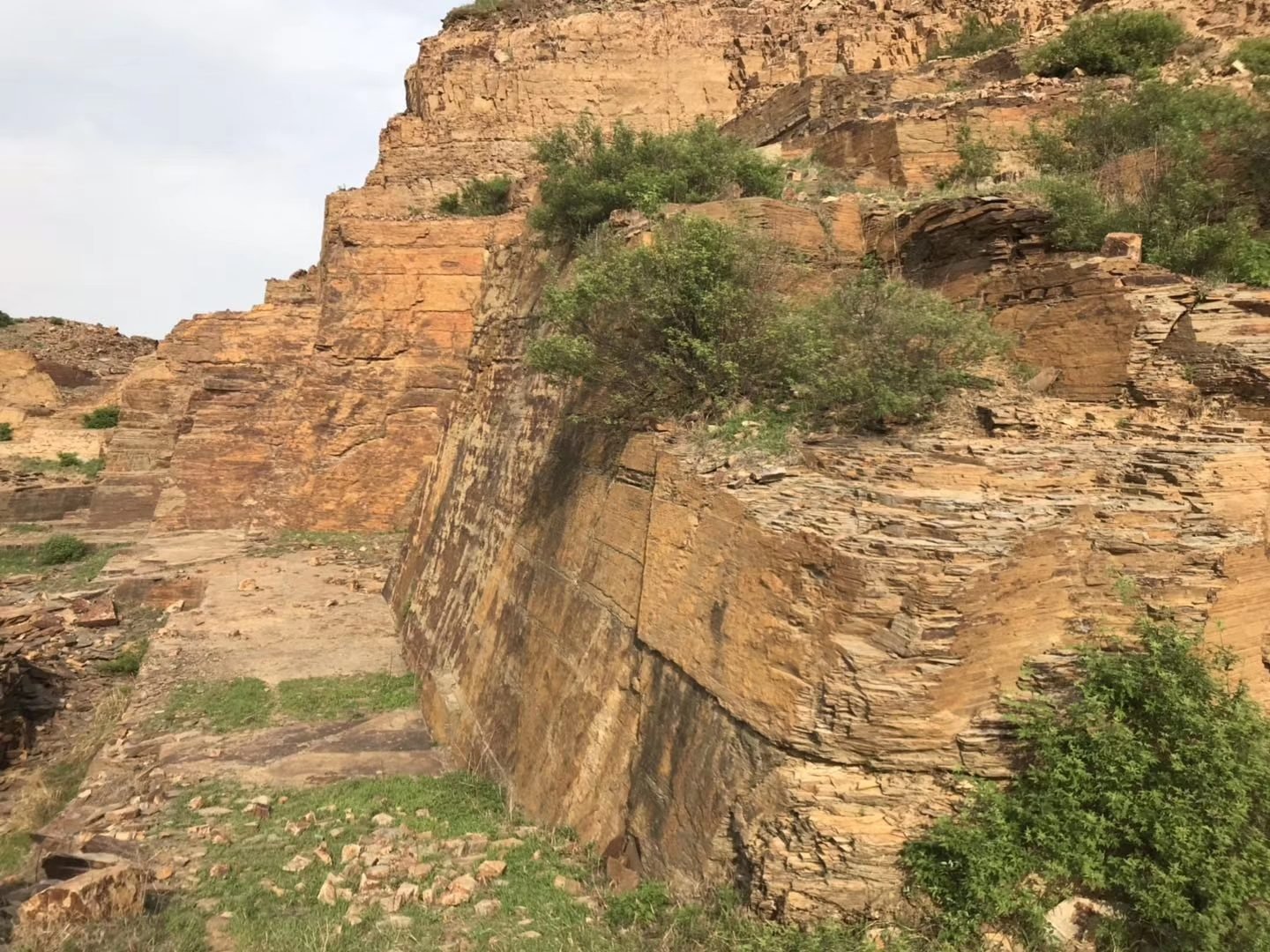
Natural stone skips the kiln entirely. Slate and quartzite are quarried, split, and cut; the energy input is extraction equipment and processing machinery, not a high-temperature chemical transformation. That difference is why life-cycle thinking about the two materials usually lands on the same line: before anything ships, the stone has a lower manufacturing carbon burden than the cement-based product.
Quarrying is not free of impact. Land disturbance, overburden removal, and waste rock are real costs at the extraction site. Responsible producers manage them under programs such as the Natural Stone Institute’s sustainability framework, which includes the ANSI/NSC 373 standard for sustainable production. A buyer asking for the extraction plan is asking the right question, and the same scrutiny belongs on cement plants and aggregate pits.
The transport line can flip the result. A stone slab shipped across an ocean may log more transport emissions than locally cast concrete panels, while a stone product shipped from a nearby source beats concrete hauled from a distant plant. Distance, not material, usually decides this stage.
4. Durability and the Maintenance Cycle
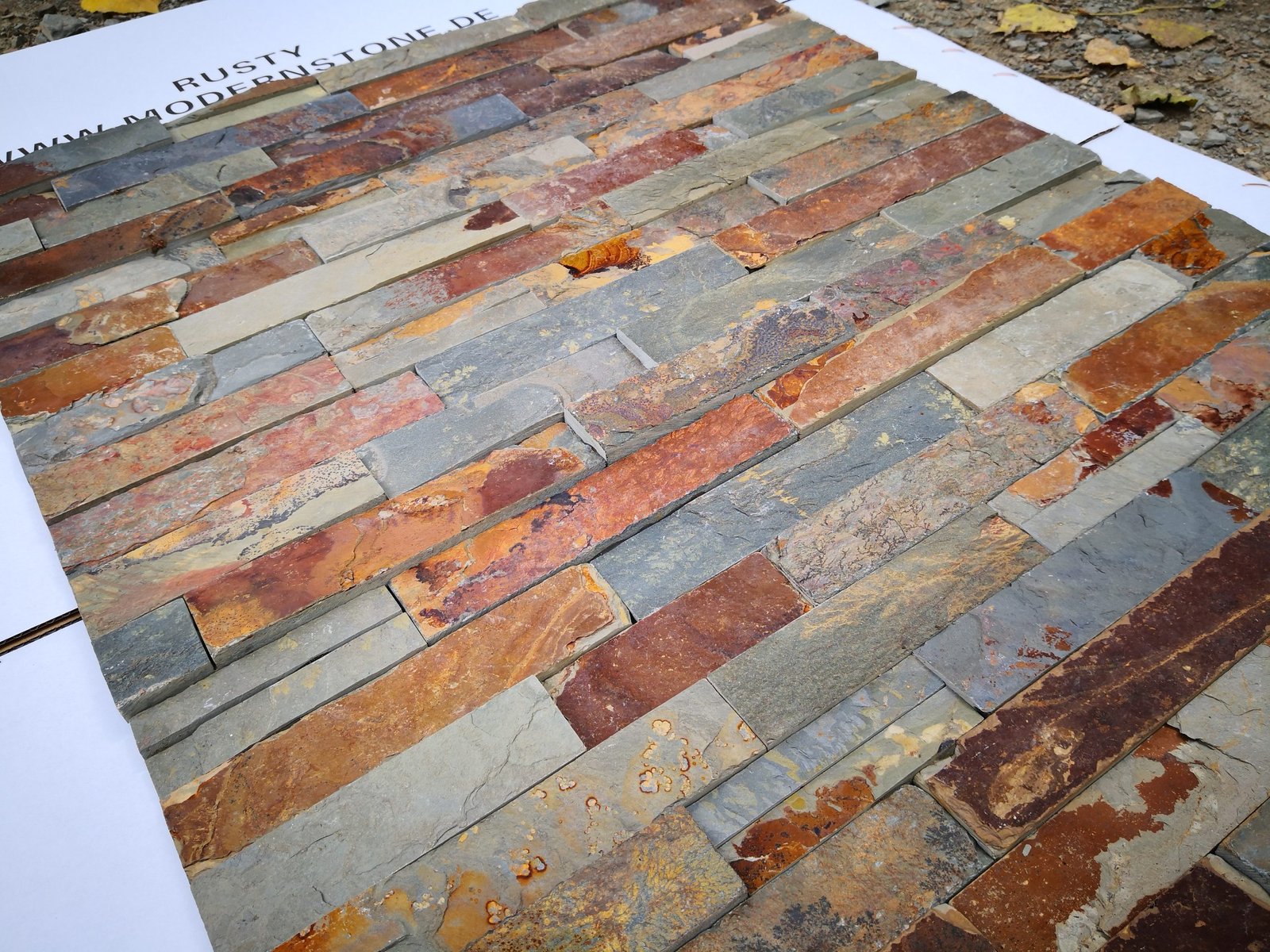
Durability is the environmental wildcard. A cladding that lasts twice as long halves its embodied carbon per year of service, even if its nameplate footprint looks worse at the factory gate. Natural slate and quartzite tolerate -30°C to +50°C swings, resist UV fading, and hold up to salt spray, which removes the three main reasons facades fail early in cold and coastal climates.
Concrete cladding performs well in many climates, but its failure modes cluster around moisture: freeze-thaw spalling, efflorescence, and reinforcement corrosion where steel is embedded. The maintenance cycle for a concrete facade is training for the repair crew, joint and sealant replacement, and patch color matching, cost items the stone facade mostly avoids.
The honest framing is not that stone never fails; a poorly detailed stone wall can develop the same moisture problems as a poorly detailed concrete wall. Flashing, drainage, and the air and water barrier behind the cladding decide service life in both materials. The material difference is that stone’s natural durability gives a correctly detailed wall a longer runway before maintenance starts compounding.
For buyers who want the mechanics spelled out, our installation guide for stone cladding over concrete block walls shows how the two materials work when paired on the same project rather than competing.
5. End of Life: Reuse, Recycle, or Landfill
End of life is the stage where both materials score better than most facades. Concrete is crushed into recycled aggregate as standard practice, feeding road base and drainage layers instead of a landfill. Natural stone can be crushed the same way, and it holds an extra option: panels and veneer pieces can be reused directly as building material, which is the highest-value end of life available.
| Recovery path | Natural stone | Concrete |
|---|---|---|
| Direct reuse as building material | Yes; salvaged stone re-set in new walls | Rare; panels usually not economically reused |
| Crushed aggregate | Yes | Yes; standard recycling route |
| Cleaning effort before recovery | Low; surface cleaning | Higher if embedded rebar or coatings |
| Typical outcome in demolition practice | Sorted and reused or crushed | Crushed as aggregate |
That reuse option is not hypothetical; stone has been salvaged and re-set in buildings for centuries. A cladding panel that becomes a wall in a second building skips most of its embodied carbon twice over. Concrete cladding, by contrast, is almost always downcycled to aggregate, a real recovery but a lower one.
The recovery rate depends on the building industry around the project. Where recycling networks are strong, concrete aggregate is an easy win. Where demolition sorting is weak, both materials can end up mixed in rubble. The cladding system itself can improve the odds: panels that come off cleanly, unclad and untied into the structure, are easier to salvage than assemblies that are bonded permanently.
Our stone panel recycling guide goes deeper into the recovery options for natural stone panels specifically.
6. The Honest Caveats
Now the parts neither side quotes in its brochure. Natural stone arrives with quarry impacts, transport weight, and batch variation; concrete arrives with cement’s carbon, but also with abundant supply, tight manufacturing tolerance, and a predictable price. A buyer choosing on environment alone should weight local transport and expected service life more heavily than the factory-gate numbers.
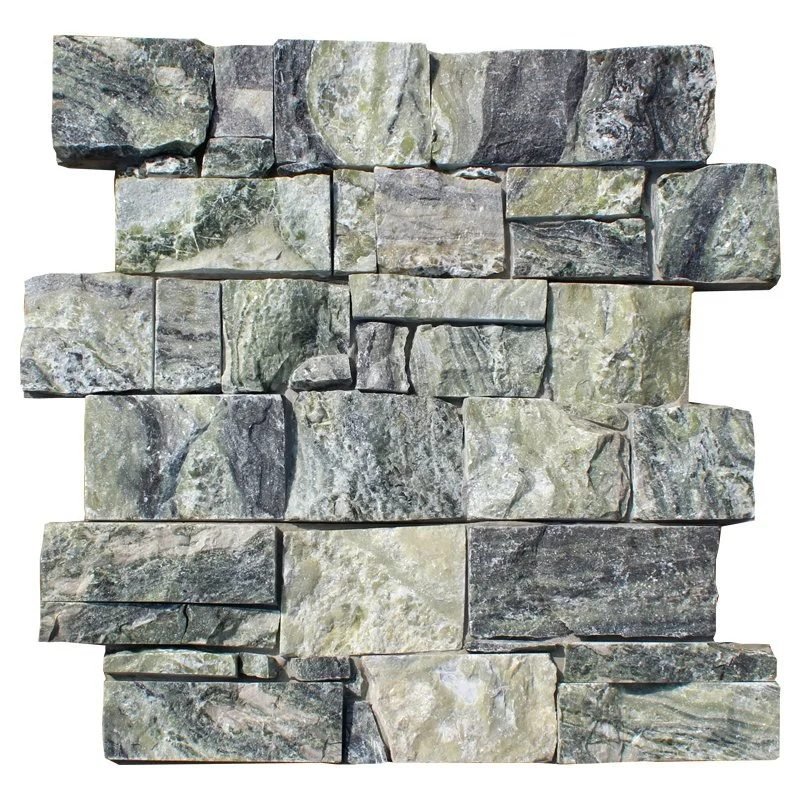
One product-system detail matters more than the category debate. Some engineered natural stone panels combine the stone facing with a cement or mesh backing. That is exactly how interlocking z-panel cladding is built: natural slate or quartzite bonded to a cementitious backer for a flat, uniform panel. These systems deliver natural stone visuals with panel speed, but they include a manufactured component, so they do not carry the same embodied-carbon profile as loose veneer. Buyers who claim “100% natural” should specify which of the two they mean.
Concrete also owns the practical category today: it is everywhere, it is cheaper per panel in most markets, and its performance database is deep. On a project where cost certainty and availability rule, concrete wins before the sustainability spreadsheet opens. The environment comparison only becomes decisive when a project already has budget room and a long-hold horizon.
For a broader look at how natural stone behaves against another main competitor, the natural stone vs porcelain tile comparison covers the same life-cycle logic with a different rival.
7. Which Cladding Fits Whom
Put the rows back together with the project in view. The decision table below maps the typical buyer to the material the evidence favors.
| Project profile | Better fit | Why |
|---|---|---|
| Long-hold commercial, cold or coastal climate | Natural stone | Durability flattens lifecycle maintenance |
| Fast-track budget-driven build | Concrete / cast panels | Availability and price certainty dominate |
| LEED or green-certification target | Depends on distance and product system | Local sourcing and durable materials both score; verify against the credit language |
| Premium branding, hospitality, retail | Natural stone | Natural expression and permanence support positioning |
Green-certification buyers should pull the actual requirements before choosing. The LEED rating system at USGBC and EPA green building guidance both reward building performance, materials, and sourcing decisions; neither hands any material a blanket win. The certification credit language, not the category label, decides which cladding helps a given project.
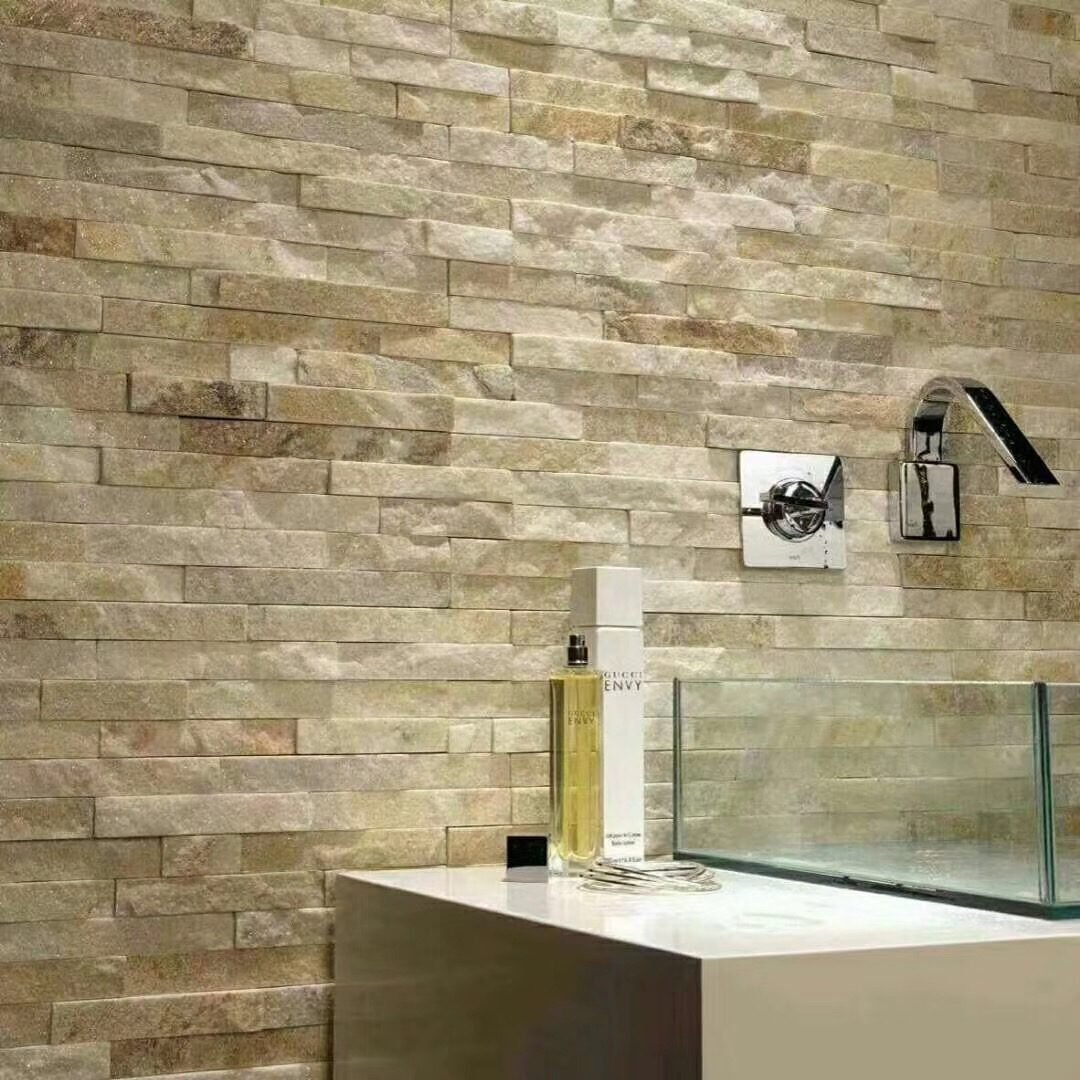
For buyers already leaning natural stone, the sustainability and EPD guide for natural stone cladding explains how environmental product declarations and embodied carbon data are used on real projects.
FAQ
Is natural stone more sustainable than concrete?
On embodied carbon and durability, natural stone usually wins; on transport distance and manufacturing predictability, concrete can win. The specific project and product system decide the comparison.
What is the carbon footprint of natural stone vs concrete?
Cement production is attributed to roughly 8% of global CO2 by the IEA, and natural stone skips the kiln step entirely. Quarry operations and transport still add emissions to both materials.
Which cladding lasts longer, stone or concrete?
Natural slate and quartzite cladding is documented to last decades to centuries with correct detailing. Concrete panels typically have shorter service lives and face spalling risk in freeze-thaw climates.
Can concrete cladding be recycled?
Yes. Concrete can be crushed into recycled aggregate at end of life, and natural stone can be crushed the same way or reused directly as a building material.
Does natural stone cladding ever contain concrete?
Some engineered natural stone panels use a cement or mesh backing to stabilize the stone layers, so the panel system includes a manufactured component even though the facing is natural.
Does transport change which cladding is greener?
Yes. Locally sourced material usually wins over a material shipped across an ocean or a distant continent, regardless of category. Distance, not material, often decides this stage.
Conclusion
Natural stone and concrete cladding both have real environmental stories, and neither is a universal winner. Stone brings lower manufacturing carbon, a long service life in freeze-thaw and coastal climates, and reuse at end of life; concrete brings availability, consistency, and a functioning recycling route. Transport distance and the product system, not the material label, decide where the balance lands for a given building.
Key Takeaways
- Read the life cycle, not the label: extraction, manufacture, transport, maintenance, and end of life all matter.
- IEA attributes roughly 8% of global CO2 to cement; natural stone skips the kiln.
- Durability rewrites the footprint; slate and quartzite tolerate -30°C to +50°C.
- Ask about the product system: engineered stone panels can carry a cement backing.
Ready to compare product systems? Top Stone Panels supplies loose veneer, stacked stone, thin ledgestone, and interlocking z-panels from quarry-owned slate and quartzite sources. Ask us for a per-unit embodied carbon overview and the backing detail of each format so your lifecycle comparison stays honest. MOQ is one 20GP container and samples ship in 1-3 days.