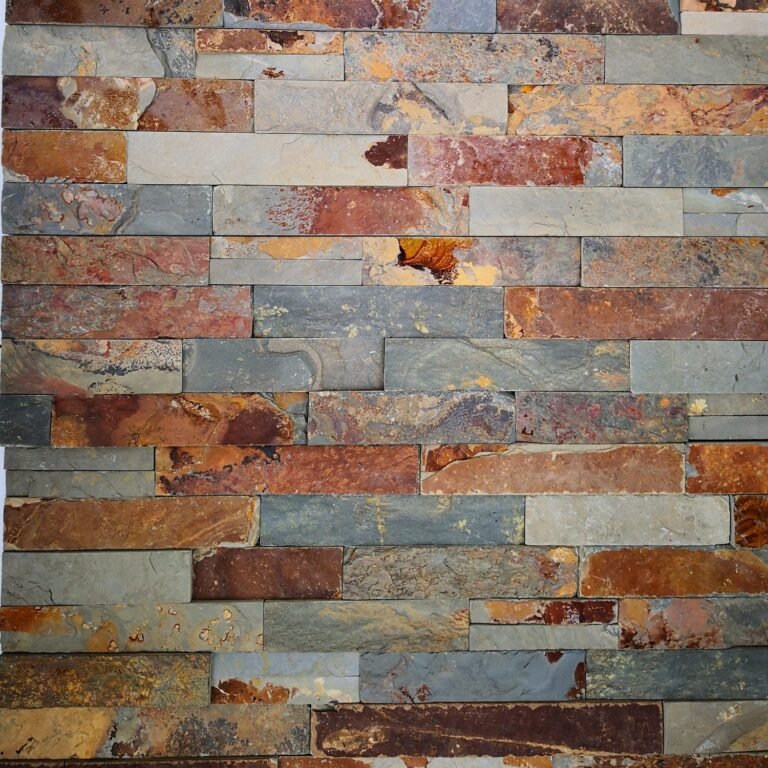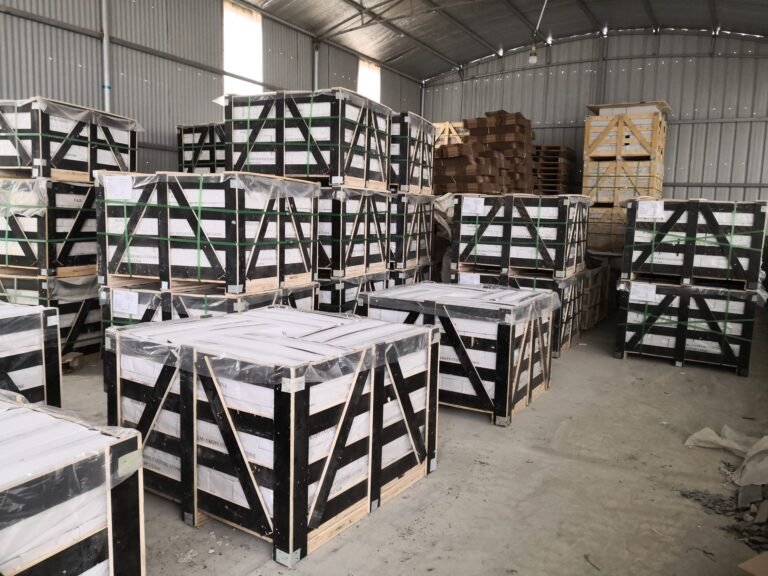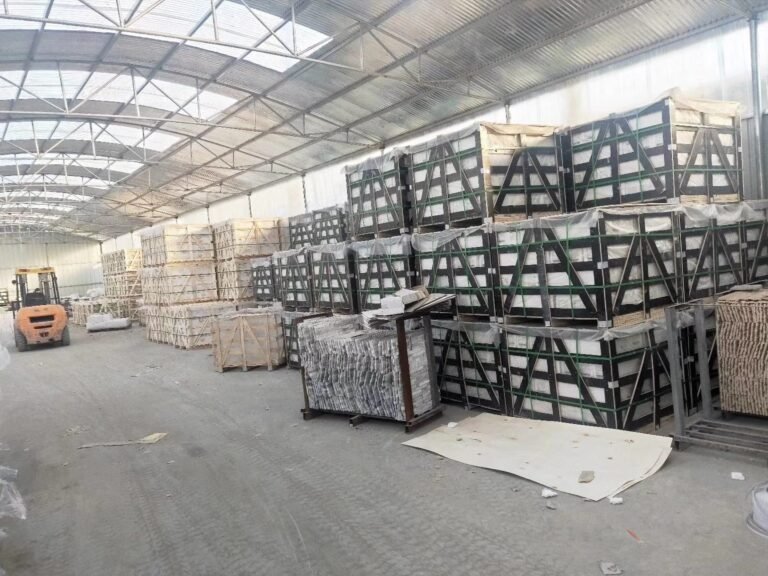
A distributor’s inventory decision sounds simple: buy stock, sell stock. In stone panels, the first purchase is a container, the factory clock runs 20-25 working days, and the payment terms commit 30 percent of your cash before production starts. Stone inventory management is really container math plus a lead time problem, and the distributors who treat it that way keep their cash moving while the ones who treat it as a stocking exercise watch slow-moving pallets turn into parked money.
This guide is written for a stone or hardscape distributor, a building material wholesaler, or a garden center that has graduated from samples to container orders. You will get the four metrics that matter, a worked container example you can copy into your own spreadsheet, the storage rules that protect the product, and a seasonal buying plan. The factory-side numbers come from Top Stone Panels, the slate and quartzite quarry exporter in Yixian County, Hebei, which ships 220+ containers a year with an MOQ of one 20GP container.
- Stone inventory is planned in containers, not SKUs. One 20GP is roughly 26.5 tonnes and 500-530 m² of wall coverage, and the MOQ per product line is one container.
- The four metrics to run the business are stock turns, days sales of inventory, reorder point, and cash conversion cycle.
- Production lead time is 20-25 working days, so safety stock must cover factory time, ocean transit, and port clearance, not just store-to-shelf.
- Payment terms of 30% deposit and 70% before shipment mean cash is committed early; the cash conversion cycle starts at the factory, not the warehouse.
- Batch and vein control is the inventory risk that does not show in a valuation; reorders must target the same quarry vein to color-match existing stock.
- Quarterly stock counts, a slow-mover list, and a pre-Chinese-New-Year order plan will stop the two biggest inventory leaks: dead color lots and season timing.
- 1. Why Stock Turns Decide Whether Stone Inventory Pays
- 2. The Four Metrics That Run a Stone Stock
- 3. Container Math: What One 20GP Actually Buys
- 4. Safety Stock for a 20-25 Day Factory Clock
- 5. Store Stone Like It Costs Money
- 6. Color and Batch: The Inventory Risk Nobody Prices In
- 7. Cash Flow in a 30/70 World
- 8. Slow Movers: Move Them Before They Bury You
- 9. Buy to the Seasonal Clock
- 10. The Minimum Records That Save You
- FAQ
- Conclusion
1. Why Stock Turns Decide Whether Stone Inventory Pays
Inventory turn is the number of times a year you sell your full average stock level. Turn a container four times a year and the money invested in that stock works all year; turn it once and it sits as a storage bill with a color-matching risk attached. Everything else in this guide exists to protect or improve that number.
Stone looks like the worst possible product for turns. It is heavy, so freight and handling cost more per unit than nearly any wall covering. It is a quarried natural product, so you cannot ask the factory to make more of an exact shade the way a tile mill reprints a glaze. And a container is a minimum order, so you cannot test a market with a truckload. Yet the products still sell because stone carries margins that justify the wait, and the buyers who order container after container are the ones who planned the turns instead of hoping for them.
Start with twelve months of sales history. If you have less, run a deliberate test: one product line, one container, and a target of selling through it in 90 to 120 days. That test tells you your real velocity before you commit to a wall of stock.
2. The Four Metrics That Run a Stone Stock
Four numbers cover almost every inventory decision a stone distributor will make. None of them require software you do not already have in a spreadsheet.
- Stock turns: yearly cost of goods sold divided by average inventory. It converts your activity into a rate you can compare month over month.
- Days sales of inventory (DSI): average inventory divided by daily cost of goods sold. This says how many days of sales are sitting on your floor right now.
- Reorder point: the stock level at which you place the next container order. It equals average daily demand times total lead time, plus a safety stock.
- Cash conversion cycle (CCC): DSI plus days sales outstanding minus days payable outstanding. It tells you how long your cash is tied before it comes back.
| Metric | Formula | What it tells you | Planning range |
|---|---|---|---|
| Stock turns | COGS ÷ average inventory | How fast stock sells through | 2-6 turns; set from your own history |
| DSI | Avg inventory ÷ daily COGS | Days of stock on the floor | 60-180 days for planning |
| Reorder point | Daily demand × lead time + safety stock | When to place the next container | Above your lowest acceptable stock |
| CCC | DSI + DSO − DPO | Days cash is tied in the cycle | Shorten every component you control |
The ranges above are planning guidance, not industry gospel. Your local velocity wins; the point of the table is to force a decision in every row instead of drifting to “we buy when stock looks low.” For a deeper model of which turns make sense for a growing operation, our guide on scaling a stone distribution business walks through the stages where inventory policy changes. If you want the analyst-grade construction of the ratio, Corporate Finance Institute’s inventory turnover explainer covers how analysts decompose it.
3. Container Math: What One 20GP Actually Buys
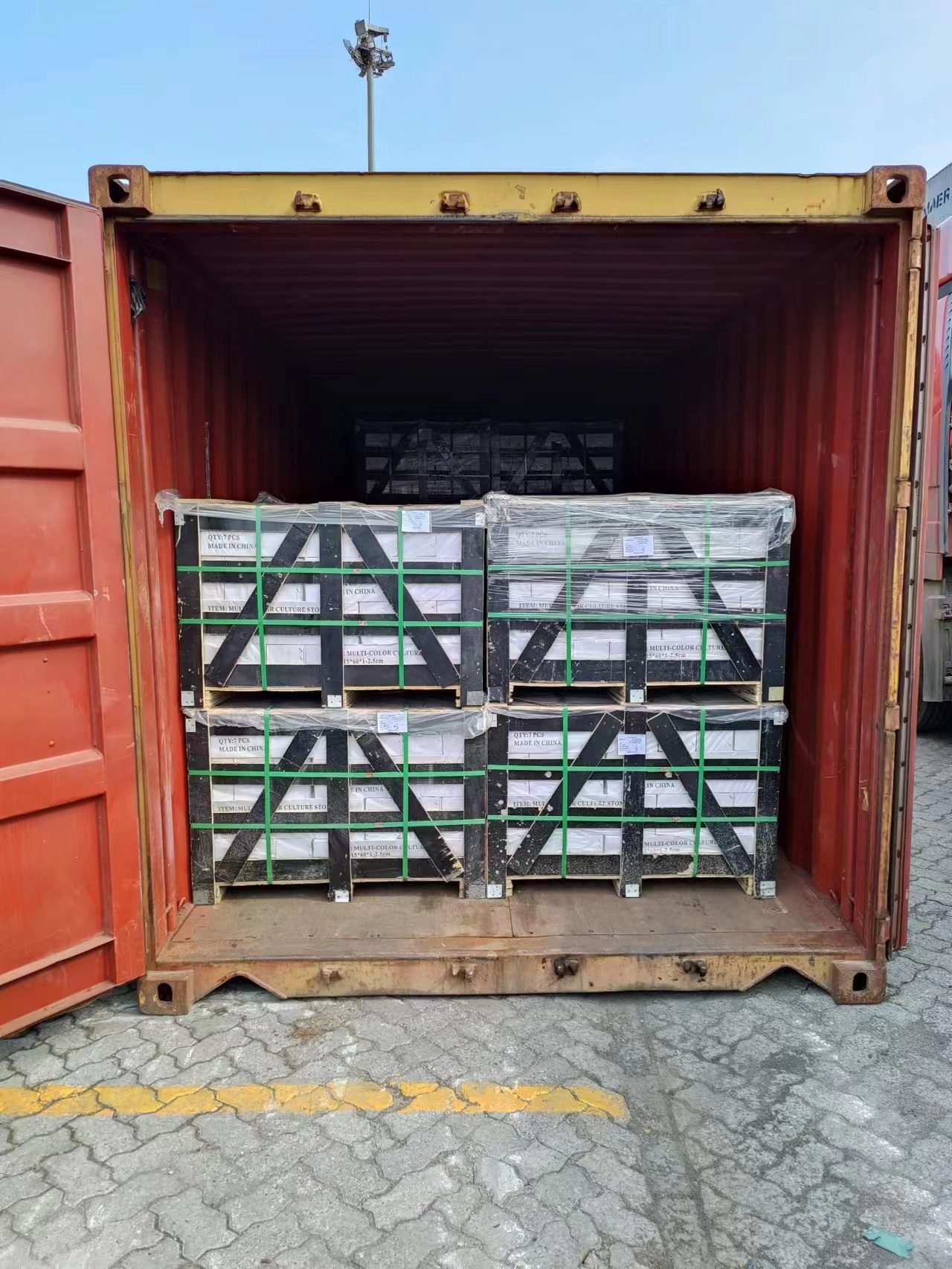
Ordering natural stone means reasoning in container units. The factory minimum order at Top Stone Panels is one 20GP container per product line, and a standard load carries about 26.5 tonnes of stone. At the average panel weight of roughly 50 kg per square meter, that works out to about 500-530 square meters of wall coverage per container, depending on the product mix.
That single number organizes the whole inventory: floor space, freight cost, working capital, and how many jobs one container can supply. A 60-square-meter facade needs about 12 percent of a container. A retail display wall plus a couple of patio jobs consumes most of it. Knowing the coverage per container turns every sales conversation into an inventory forecast, which is the discipline that keeps reorder timing honest.
| Planning line | 20GP container figure | How to use it |
|---|---|---|
| Cargo weight | ~26.5 tonnes | Freight quote baseline and floor loading |
| Wall coverage | ~500-530 m² | Estimate jobs sold per container |
| Average panel weight | ~50 kg/m² | Check weight against your rack capacity |
| MOQ per line | 1×20GP | Plan at least one full line per order |
| Production clock | 20-25 working days | Work backward from the sell-through date |
If you are deciding between a 20GP and a 40HQ for your next order, read our 20GP vs 40HQ container comparison. The short version: the bigger box lowers freight per square meter but raises the cash commitment and the storage requirement, and it is only cheaper when your sell-through actually absorbs it.
Build the inventory around the container, not the other way around.
Top Stone Panels supplies stacked stone, thin ledgestone, thin veneer, flagstone, column kits, and interlocking z-panels, all quarry-direct from Yixian County with an MOQ of one 20GP container. Samples ship in 1-3 days, production runs 20-25 working days, and every load goes out under the zero-breakage steel-strapped crate protocol.
4. Safety Stock for a 20-25 Day Factory Clock
Safety stock is the buffer that keeps you selling while the next container is still on the water. In stone, the total lead time is the factory clock plus the ocean crossing plus port clearance, so the buffer is measured in weeks, not days.
The reorder point formula is simple: average daily demand, multiplied by total lead time in days, plus the safety stock you want on top. If you sell 4 m² a day of a stacked stone line and the full lead time is 70 days, the pipeline needs 280 m² before you even start holding safety stock. Order the replacement container when floor stock passes that line, not when it looks low on a busy Saturday.
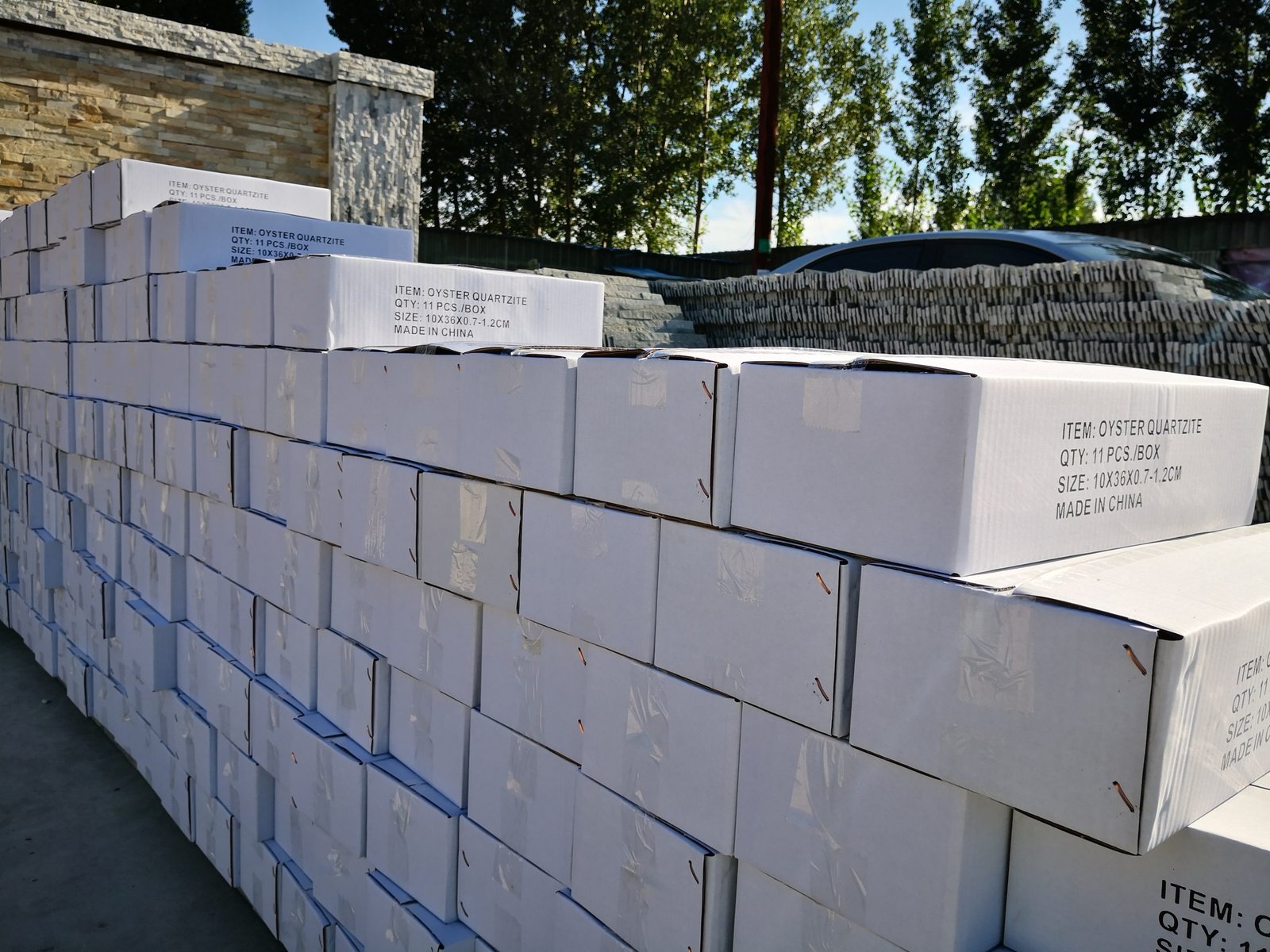
Build your first safety stock recommendation from the planning range you set in the stock-turns table. A distributor targeting four turns holds about 90 days of stock on average; half of that can ride as a safety buffer over pipeline stock while the other half is the working sell-through. Adjust after two container cycles, because the first cycle always teaches you something about your own demand mix.
Two warnings. First, do not count an unpaid deposit as available stock; a 30% deposit commits cash but the goods are not yours until the balance clears before shipment. Second, the timing of your container freight booking belongs in the lead time equation, because a delayed booking adds days at sea, not days in the factory.
5. Store Stone Like It Costs Money
Stone is durable, but the panels are sold as finished products with square edges, riven faces, and corners that have to line up on a wall. A heavy product handled loosely becomes a claim file. Storage is where that value is protected or written off.
Follow the same discipline you would for a delicate laminated finish. Keep cartons flat on pallets off the concrete, because moisture wicks through a floor and stains the first layer of boxes. Keep the load level, never lean panels against a wall in a way that bends the corner profile. Stack to the carton rating, not to the comfortable height, and keep corner and return pieces with their matching faces rather than scattered in a bin.
Our step-by-step stone panel storage guide covers stacking, protection, and the handling rules for jobsite storage. In the warehouse, the same rules apply with one addition: label every pallet with the product line, color, and arrival date. That label is what makes the batch controls in the next section possible.
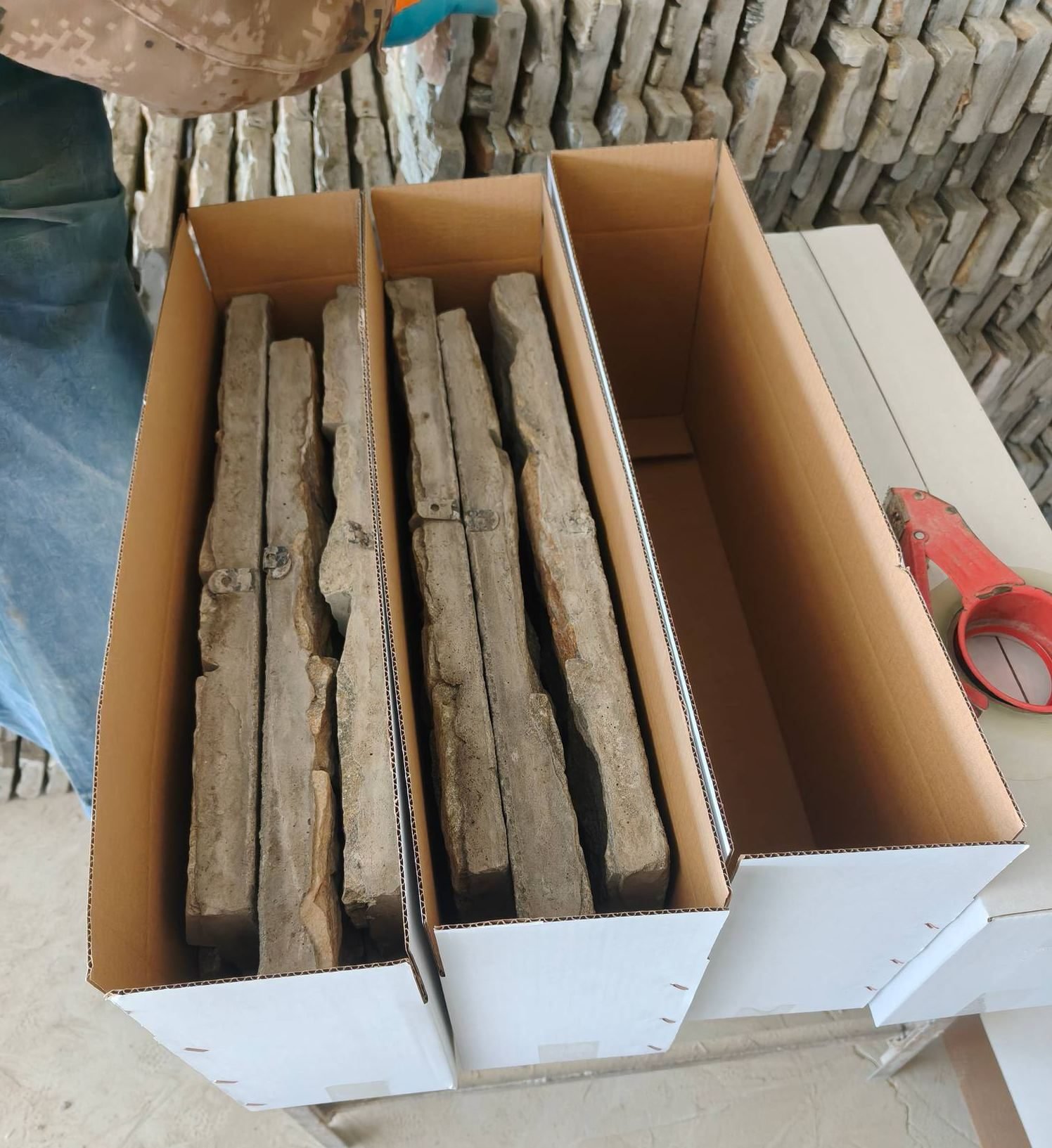
Receiving deserves its own checklist. When the container arrives, photograph the crates before opening, count the pallets against the packing list, and open a sample carton to check for transit damage. The factory’s zero-breakage protocol means damage claims should be rare when the load was packed with the 3-5 layer cartons, fumigation-free plywood pallets, 4-6 steel straps, and airbag fill used on every Top Stone Panels export.
6. Color and Batch: The Inventory Risk Nobody Prices In
Natural stone is not a formulated product, and that is the inventory risk that surprises distributors who came from tile or manufactured stone. Every batch is cut and matched against a specific quarry vein, and a reorder that lands on a different vein can visibly shift the tone of a whole display wall.
The cheapest way to price out that batch risk is to buy one vein for the whole project with a buffer, the core argument in stone reorder color match, where surplus from the correct lot becomes the only guaranteed match once a vein closes.
The factory-side control is batch-specific vein selection: production is matched to the same vein family the approved sample came from, and color consistency is checked at selection, during processing, and before the container is sealed. That is how stone factories keep color consistent across batches. Your job in the warehouse is to respect it: sell through one vein lot before breaking into the next, or when you must blend, blend deliberately across a full wall line rather than patching a corner.
This is why dead stock in stone is expensive beyond the purchase price. A slow-moving color lot eventually faces a problem that has no solution except a discount, because a third or fourth replenishment will only make the mismatch worse. The fix lives in the buying plan: order the fast colors in volume, test the experimental colors with physical samples first, and use the factory’s custom color mix process only when you have a committed project pipeline.
7. Cash Flow in a 30/70 World
In the container import trade, the payment clock starts at the factory, not at your loading dock. Standard terms at Top Stone Panels are 30% T/T as a deposit and 70% before shipment, which means a distributor’s cash is fully committed while the container is still in production and in transit.
Run that through the cash conversion cycle and the picture is blunt: your money leaves the account at order time, sits for production weeks plus ocean transit, and only returns when the customer pays. The three levers you control are DSI (how long stock sits), DSO (how fast customers pay), and DPO (how long your suppliers and freight forwarders let you hold their money). Stone import terms pin your DPO near zero, so the offset has to come from selling faster or collecting faster.
| Cycle component | Definition | Where the stone trade pins it |
|---|---|---|
| DSI | Days of stock on hand | Set by your turns target |
| DSO | Days before customers pay | Deposit on jobs, net terms for regulars |
| DPO | Days you hold supplier money | Near zero: 30% deposit, 70% before shipment |
| CCC | DSI + DSO − DPO | Your true working capital need |
A distributor who sells most of a container to contractor accounts on 30-day terms funds the whole import cycle with their own line. A distributor who collects projects with deposits and sells retail-scale material over the counter shortens the same cycle by weeks. The product is identical; the cash outcome is not. For the sourcing side of the same equation, our MOQ and mixed-container guide shows how several small lines in one container can serve a faster mix of customers without multiplying the working capital.
8. Slow Movers: Move Them Before They Bury You
Every distributor has the pallet they step around. In stone, the cost of that pallet compounds, because price trends drift, freight rates change, and the display version gets weathered by handling. Run a slow-mover review at the monthly stock count, not at year end.
| Condition | Move | Timing |
|---|---|---|
| Color lot that will not repeat | Bundle into project packages, discount deliberately | Before the next reorder of adjacent colors |
| Seasonal line past its peak | Hold if the season repeats annually; sell off if demand proves one-off | End of the season, not the start of next year |
| Damaged cartons and open boxes | Inventory as a shop-grade lot; use as fillers or samples | At receiving, before they get mixed into full-grade stock |
| Long-dwell full pallet | Price to move before the cost of holding exceeds the loss | After 180 days in a 4-turn target |
Price hedging logic matters here. The stone panel price trend data track raw material and freight moves, and a slow lot held “until the price goes up” often loses to the storage cost and the net after discounting sooner than expected. A clean decision rule beats hope: set the dwell limit at your review, and when a pallet crosses it, move it that month.
9. Buy to the Seasonal Clock
North American install season runs spring into fall, which means the buying window sits months earlier. A distributor who orders in spring for spring demand is selling from the last container that did not arrive in time. Order for the season you are installing, not the season you are in.
The international calendar adds a second clock. Chinese New Year closes factories and ports for a stretch every winter, and the ideal pre-holiday order is placed early enough that production completes and the container sails before the break. Planning that order is a dated step, not a judgment call, and our seasonal demand and price guide gives the calendar and the timing logic in detail.
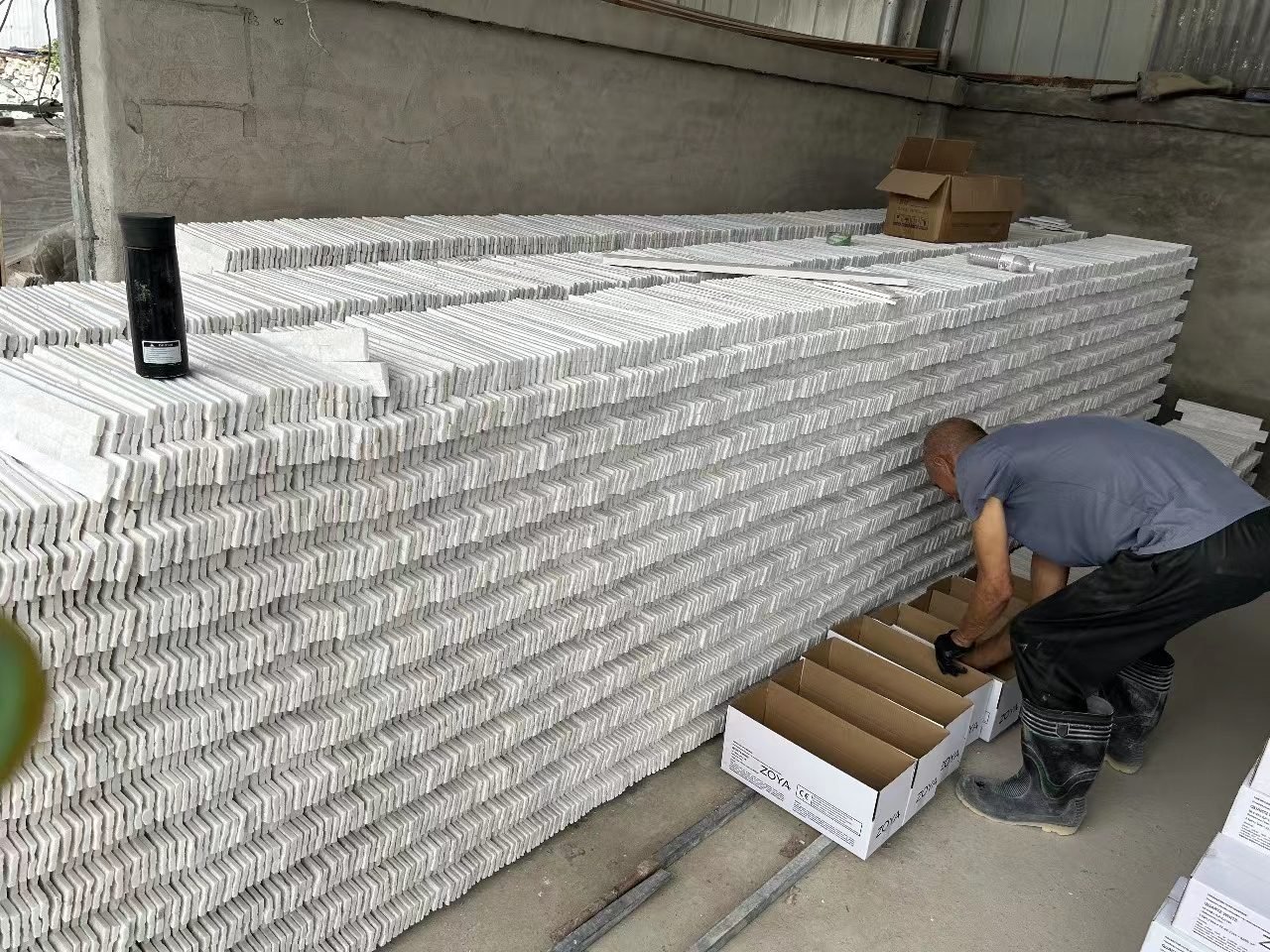
Set the reorder calendar now: one order slot for the pre-holiday container, one for the spring sell-in, and one for the mid-season top-up. Each slot has its own safety stock line, because demand is not flat and neither should the buffer be. This is the difference between a buying plan and a series of emergencies.
10. The Minimum Records That Save You
A spreadsheet with discipline beats a software project with no discipline. Before you evaluate inventory systems, keep these records current, because every tool inherits them.
- Arrival log: product, container, arrival date, vein or batch code, pallet count, condition notes.
- Movement log: each sell-through by line, with the date and the area sold. This feeds the turns math.
- Slow-mover list: any SKU over its dwell limit, reviewed monthly.
- Reorder calendar: planned order dates tied to the seasonal plan and the 20-25 working day factory clock.
- Sample bank: the approved physical samples each stock color was matched against, so reorders have a reference.
The arrival log plus a quarterly physical count is enough to start. Use the count to correct the log, and use the corrected log to set the next reorder point. When the volume grows past what a spreadsheet can hold comfortably, the migration to a real inventory system is straightforward because the data is already structured. Our supplier-fulfilled e-commerce model shows how a distributor can keep the sales line active without extending the warehouse footprint at the same pace, which is another way to keep inventory in the cash cycle rather than in the corner.
FAQ
How much stone inventory should a distributor carry?
Carry what your turns target allows. If you want four turns a year, average stock should run near 90 days of sales at cost. Set the exact figure from your own twelve-month history, not from a generic benchmark.
How many square meters come in a 20GP container of stone panels?
A standard 20GP of natural stone panels weighs about 26.5 tonnes and covers roughly 500-530 square meters of wall at an average panel weight near 50 kg per square meter. The exact figure changes with product mix and thickness.
What is a good inventory turnover for building materials?
Plan with a range of 2-6 turns and calibrate to your own velocity. What matters is consistency: measure the same way every month and improve against your own baseline rather than a published average.
How do I avoid dead stock in natural stone?
Buy fast colors in volume, test experimental colors with physical samples first, stock corners and returns with their matching faces, and set a dwell limit that triggers a discount. Batch vein control protects reorders from color drift.
Can I order less than a full container to reduce inventory risk?
Factory MOQ is one 20GP per product line, but the mixed-container route lets several lines share the same box when the order plan supports it. The cash commitment is similar, so the real lever is matching the mix to committed demand.
How long can stone panels sit in storage?
Natural stone does not expire, but packaging condition and batch continuity do. Store flat, off the floor, under cover, and track the vein or batch code so the lot can be matched when it moves.
Conclusion
Stone inventory management is container math, a lead time problem, and a batch discipline wearing a warehouse coat. Plan in 20GP units against your real sell-through, protect the buffer that keeps you selling during the 20-25 working day factory clock plus ocean transit, and respect the vein controls that make reorders color-true. The metrics are simple enough for a spreadsheet; the discipline is what separates the distributor who grows from the distributor who accumulates.
Key Takeaways
- One container is the planning unit: ~26.5 tonnes and 500-530 m² of coverage, with MOQ of one 20GP per line.
- Reorder = daily demand × full lead time + safety stock, and full lead time includes the factory clock and the transit weeks.
- The 30/70 payment terms and batch vein control are the two stone-specific costs no generic inventory system will warn you about.
- Set a dwell limit, review at a monthly count, and buy to the seasonal and pre-holiday calendar instead of reacting to it.
Ready to plan the first container? Top Stone Panels offers stacked stone, thin ledgestone, thin veneer, flagstone, column kits, and interlocking z-panels at an MOQ of one 20GP container, with samples in 1-3 days and production in 20-25 working days. Send us your wall coverage targets and we will map the mix and the production slot against your buying calendar.