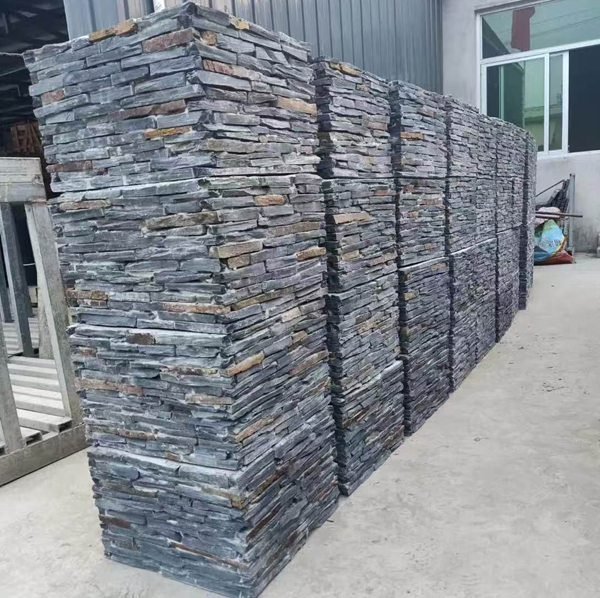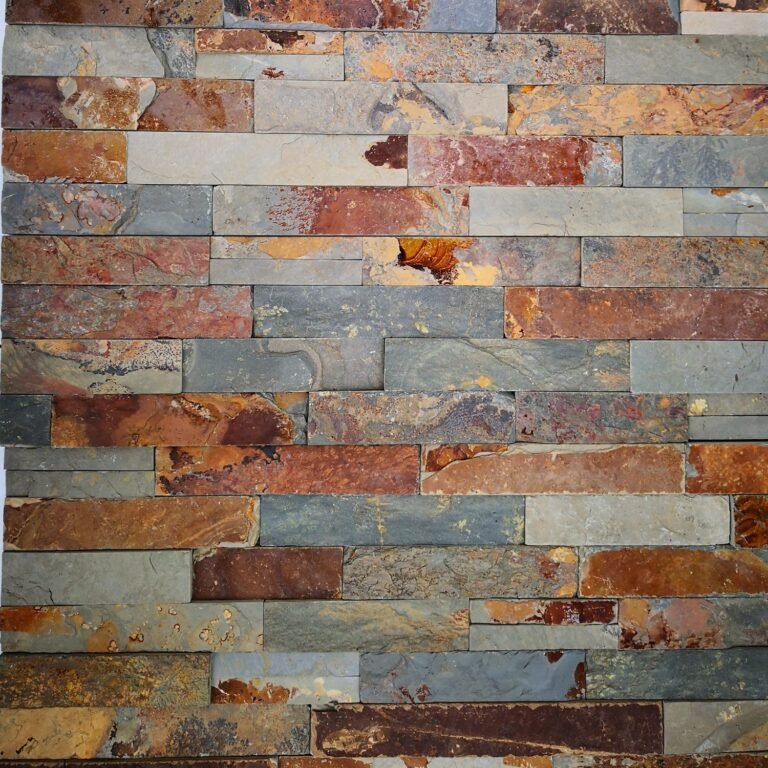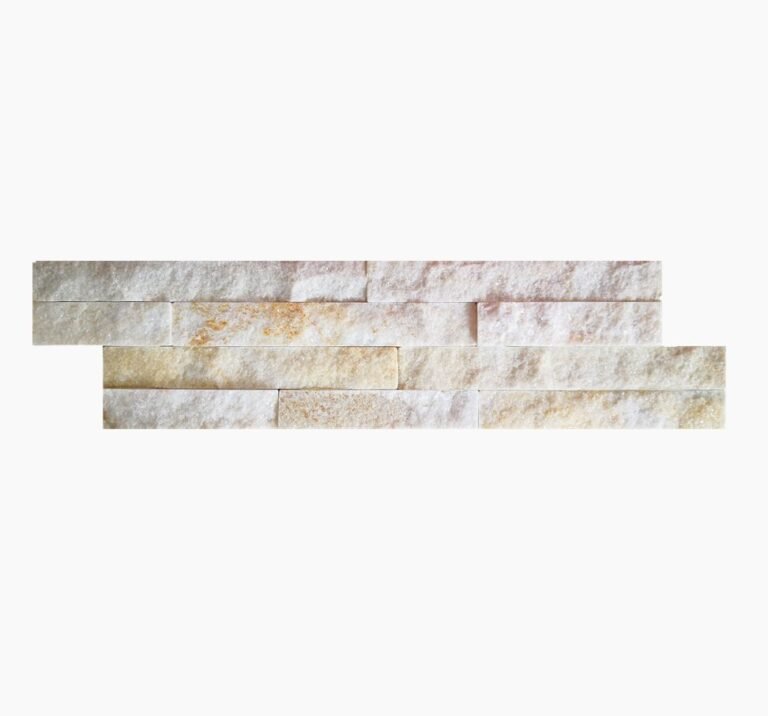
Picture a villa wall that catches the late sun and glows honey, oatmeal, and sand — not painted, not rendered, but cut from the ground. Sandstone veneer panels deliver exactly that: real slices of sedimentary stone bonded to a backer, hung on a wall at a fraction of full-thickness stone’s weight. Coastal and desert architecture keeps circling back to sandstone because the material does something manufactured wall products cannot: its warm, striated face is light-fast, so the color you spec is the color that stays for decades. This guide covers what these panels are, why warm stone tones work on the coast and in the desert, how sandstone compares with quartzite and slate, the formats and backings factories actually produce, and what a B2B buyer should know before ordering a container.
It is written for distributors, facade contractors, and specifiers who need product knowledge before they quote. Every number in it is either public stone-industry knowledge or first-party factory data from Top Stone Panels, a direct-from-quarry producer in Yixian, Hebei that has shipped 220+ containers a year for 18+ years. The Natural Stone Institute publishes independent guidance on veneer specification, and the trade and technical details below align with that practice.
Key Takeaways
- A sandstone veneer panel is a thin natural stone slice on a mesh or cement backer, installed like tile on properly prepared walls.
- Warm sandstone tones hold color in direct sun because the stone is UV-stable; no dye coat to fade or topcoat to peel.
- Sandstone is more porous than slate or quartzite, so coastal and wet-area installations should include a penetrating sealer.
- Natural stone faces pass freeze-thaw cycling from -30C to +50C and resist salt spray, which covers both coastal and cold climates.
- Factory MOQ is one 20GP container; samples ship in 1-3 days and standard production runs 20-25 working days.
- What Are Sandstone Veneer Panels?
- Warm Tones for Coastal and Desert Architecture
- Sandstone vs Quartzite vs Slate
- Panel Formats and Backings
- How Sandstone Panels Are Made
- Performance in Salt Air, Heat, and Freeze-Thaw
- Where to Use Sandstone Veneer Panels
- Sealing and Maintenance Notes
- Sourcing from the Factory
- FAQ
What Are Sandstone Veneer Panels?
A sandstone veneer panel is a thin slice of natural sandstone — typically 1.5 to 4 centimeters thick — bonded to a mesh or cement backer so it can be installed like a tile on a prepared wall. The stone face keeps its split or cut texture; the backer adds rigidity, moisture management, and a surface that mortar or thin-set can grip. The visible product is real stone, not a printed imitation.
The category includes several visual formats. Ledgestone and stacked stone panels read as tight horizontal ledgers. Loose or linear strips give a more random, cleft finish. Larger panels carry a full stone face with machined edges. All of them exist for the same reason: full-thickness stone cladding is heavy, expensive, and hard to install, while a 2-centimeter veneer gives the identical wall appearance on a standard wall assembly. On a facade, the weight difference changes the framing, the anchors, and the crew — and that is where the value lands for a specifier.
Sandstone itself is a sedimentary rock made of sand-sized grains cemented together over geological time. That origin drives its two defining traits: it is warm-toned (honey, beige, amber, rust) and it is more absorbent than denser stones. Both traits are manageable in a wall system — one is a design asset, the other is addressed by sealing — but a buyer should know them before choosing sandstone over quartzite or slate.
Warm Tones for Coastal and Desert Architecture
Coastal and desert climates punish color in opposite ways, and sand-toned stone handles both. At the beach, materials face salt spray, humidity, and bleach-hard sunlight. In the desert, the enemy is UV intensity, thermal swing, and the way a facade bakes all afternoon. Manufactured finishes fight those conditions with coatings; stone does not need them. The color of natural sandstone is a property of the mineral grains themselves, not a dye applied to the surface, so there is no coating to fade, peel, or delaminate over 10 years.
That is why architects reach for warm stone tones in these settings. A honey-toned feature wall against a white coastal villa reads as sunlit even on overcast days. A beige sandstone facade on a desert home echoes the surrounding terrain instead of competing with it. The palette does the same job as limewash or render but with a material honesty those finishes cannot match. Every regional vernacular — Mediterranean villas, Santa Fe desert homes, Australian beach houses — already proves the principle with traditional full-stone construction; veneer panels now deliver the same look with a fraction of the structural load.
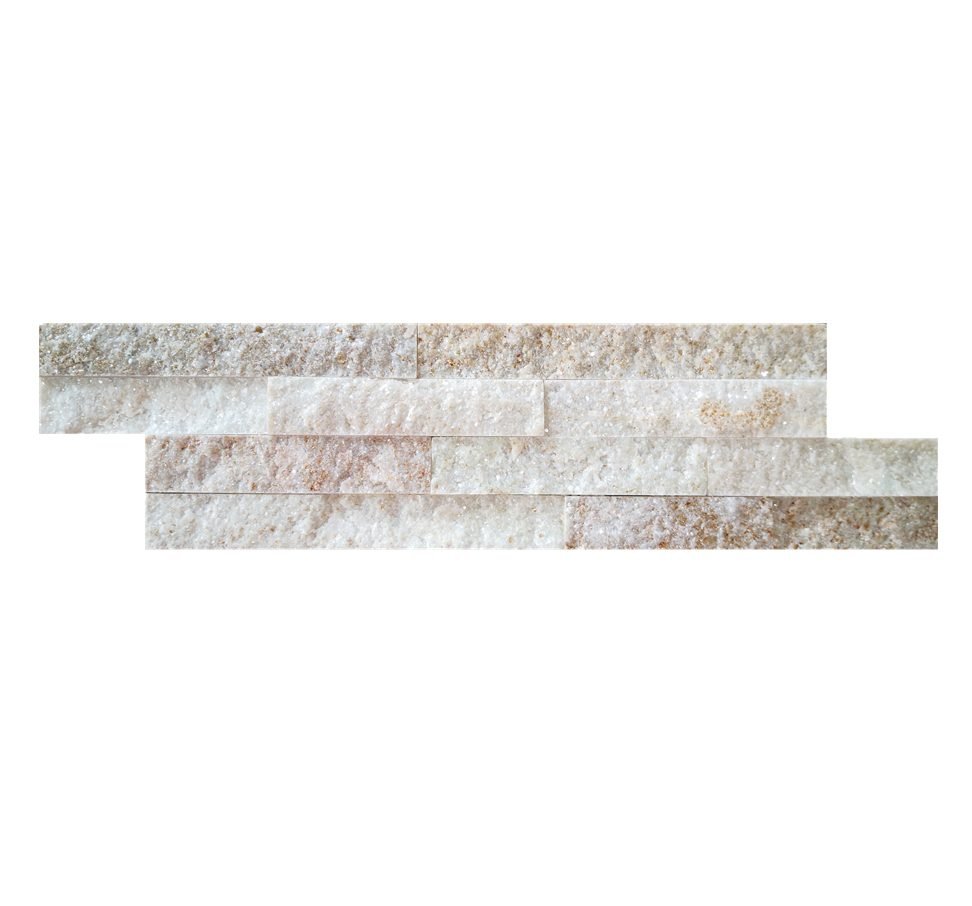
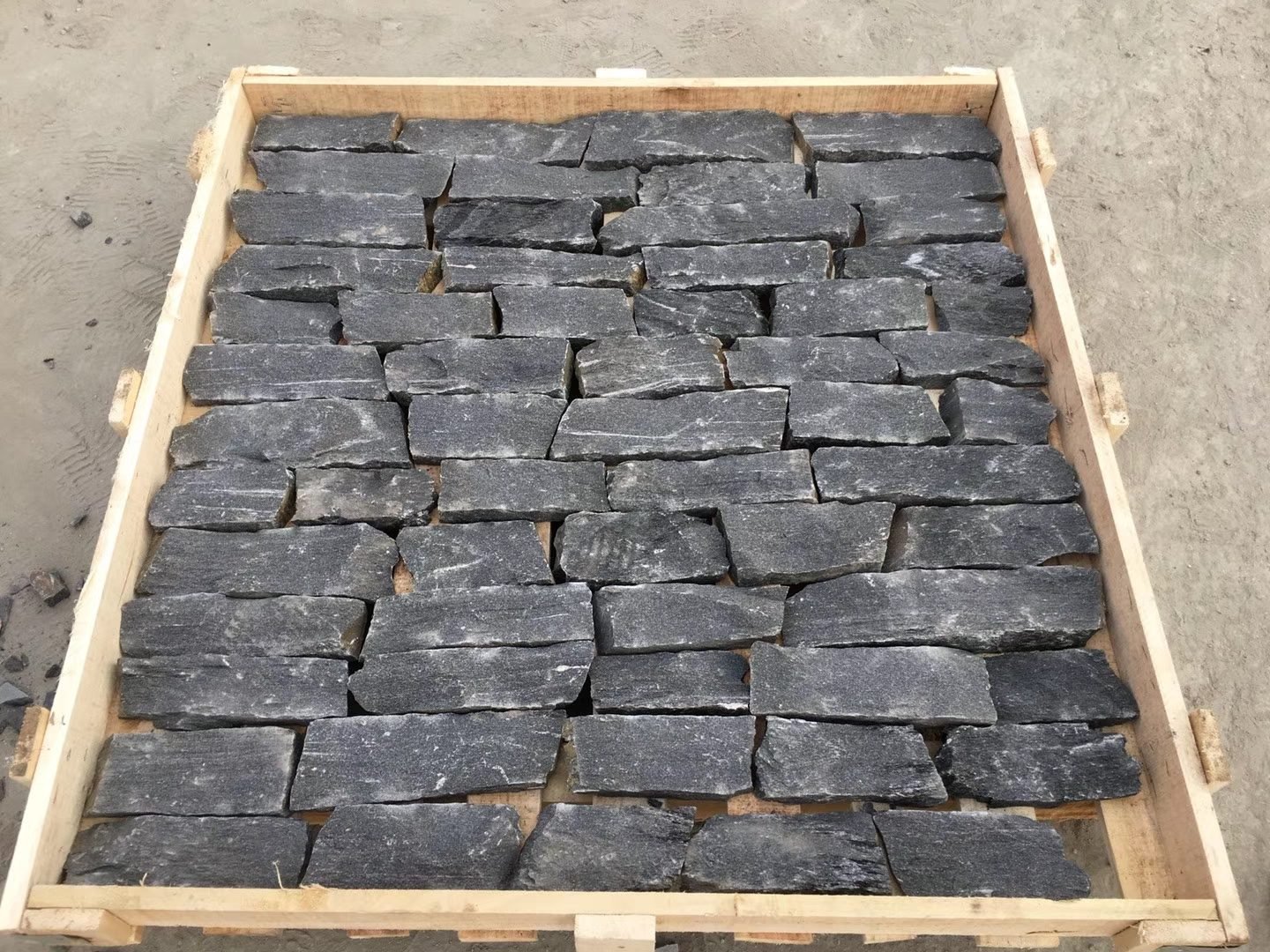
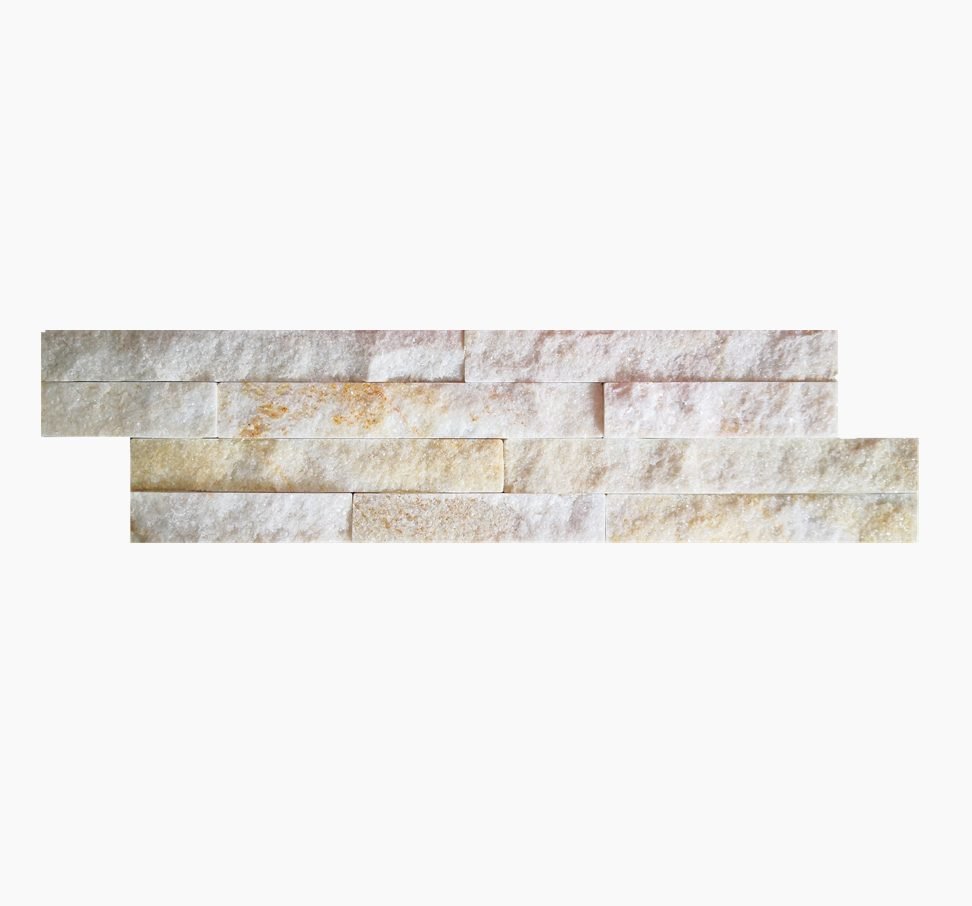
Two practical notes keep the design honest. First, order color by vein: a quarry selects stone from the same source so a whole shipment stays in one color family, avoiding a wall that patches between warm and cold batches. Second, expect natural variation within the material — that is the point. If a project needs every panel identical, a manufactured product fits better: see the honest comparison of natural stone versus manufactured wall products. For panels that carry the same warm tones in a mini-format, the Top Stone Panels catalog includes 36x10cm thin ledgestone mosaics in warm quartzite, as shown in the image below.
Sandstone vs Quartzite vs Slate
Specifiers who like the warm color of sandstone often ask why they would not just pick quartzite or slate. The answer is a trade-off between absorbency and texture. Quartzite is the densest and most weather-resistant of the three, slate is fine-grained and splits into flat ledgers, and sandstone sits between them with the widest warm palette. The table below keeps the three straight for veneer panels.
| Property | Sandstone | Quartzite | Slate |
|---|---|---|---|
| Color range | Honey, beige, amber, rust | Warm grey to bronze, white | Grey, black, green, purple |
| Texture | Split or sawn, striated layers | Dense, granular, sparkle | Flat, fine cleft ledgers |
| Absorption | Moderate to high; seal recommended | Low; best exterior durability | Low to moderate |
| Typical use | Warm facades, interiors, feature walls | Exterior cladding, coastal, commercial | Feature walls, fireplaces, roofs |
The engineering rule of thumb: seal sandstone, celebrate quartzite. On a coastal exterior where the spec can tolerate a tighter palette, quartzite or dense sandstone both pass the same freeze-thaw and salt-spray logic. For interior feature walls and covered exteriors, sandstone gives the warmest result with the least compromise. Our thin stone veneer line covers all three materials, with quartzite and slate carry the outdoor workhorse roles and sandstone delivering the warm tones. The performance comparison between quartzite and slate in exterior use is covered separately, and the same question at thinner depth is handled in the thin stone veneer explained guide.
Panel Formats and Backings
Sandstone veneer ships in the same panel families as other natural stone veneer, and the format choice usually follows the design: stacked stone panels for tight ledgers, loose strips for random cleft texture, mini ledgestone for small faces, columns for wrapped pillars, and flagstone nets for patios. The backer is what turns a thin stone slice into an installable panel.
| Format | Size | Backing | Typical Application |
|---|---|---|---|
| Stacked stone panels | 15x60cm / 15x55cm + L-corners | Mesh or cement | Feature walls, facades |
| Thin ledgestone mini panels | 36x10cm | None (thin veneer) | Fireplaces, accents, columns |
| Loose / linear stone strips | Random lengths | None (thin veneer) | Warm cleft texture walls |
| Stone column kits | Custom sections, e.g. 40x40cm | Mesh / cement | Pillars, gate posts, porches |
Capacity differs by line: stacked stone runs 80,000 m² per month, thin ledgestone 60,000 m², interlocking Z-panels 50,000 m², thin veneer strips 40,000 m², flagstone 30,000 m², and column kits 10,000 sets. Every line holds a one-20GP MOQ, which means a distributor can mix several warm-toned formats in one container instead of committing a full container to a single SKU. That mixing flexibility is a practical buying advantage when a project needs wall panels plus matching columns.
How Sandstone Panels Are Made
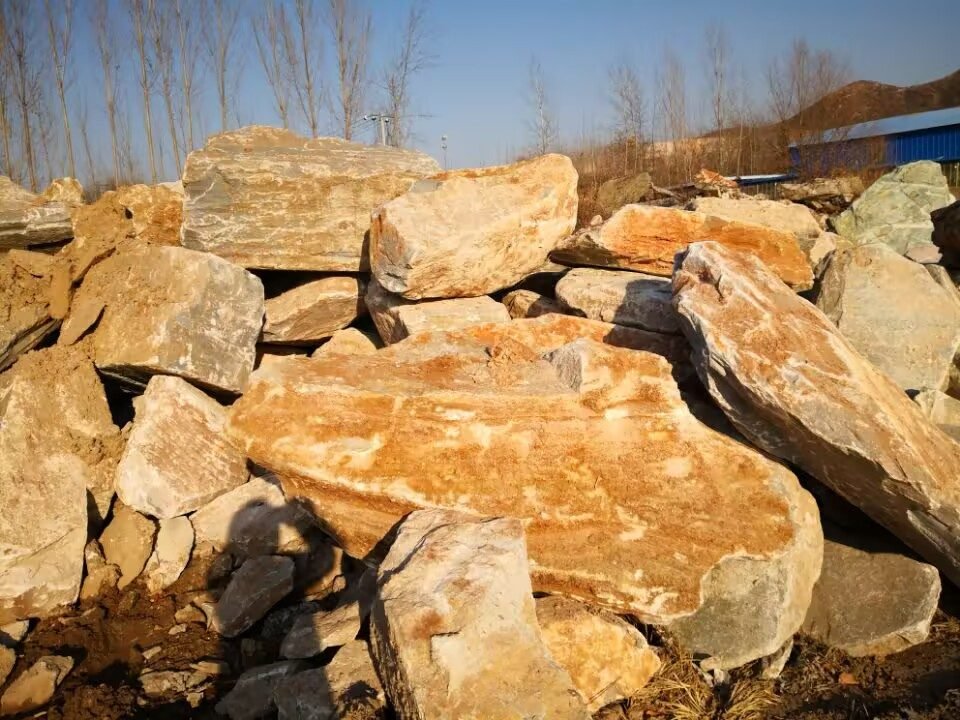
Veneer panel production starts at the quarry, not the factory. Blocks are selected by vein so the batch stays in one color family; that selection step is the difference between a wall that harmonizes and a wall that patches. The blocks are then split or sawn into 1.5-4cm slices, dried, and bonded to a mesh or cement backer. In the higher-end lines, a marine-grade epoxy bond joins stone to backer — the same class of adhesive used in boat building, chosen because stone and cement expand at different rates and the epoxy absorbs the differential movement without delaminating.
Squareness comes from infrared CNC diamond-blade cutting, which lands each panel within tight dimensional tolerance. This is not a cosmetic step: on a large facade, a few millimeters of drift on the first course compounds into visibly crooked joint lines by the top of the wall. Every panel then passes a three-step factory QC — raw material selection, in-process check, pre-ship inspection — before it is packed for the container.
The packaging earns its own mention because broken panels are the number one complaint in imported stone. Top Stone Panels ships under a zero-breakage protocol: 3-5 layers of hardened cardboard cartons, fumigation-free plywood or solid wood pallets, 4-6 high-tensile steel straps per crate, and industrial air bags inflated inside the container to stop load shift. If a distributor has ever lost panels to transit damage, that discipline matters more than the color of the stone.
Performance in Salt Air, Heat, and Freeze-Thaw
Coastal and desert projects demand three specific performances: resistance to salt and humidity, tolerance of extreme heat and UV, and the ability to survive thermal swings. Natural stone handles all three by being what it is — a dense, mineral, inorganic material with no coating to fail. First-party factory data from Top Stone Panels documents natural slate and quartzite faces passing freeze-thaw cycling across -30C to +50C, and the range carries an A-class fire rating and UV stability plus salt-spray resistance for coastal use.
Sandstone’s role in that lineup deserves precision. The densest sandstones handle exterior cold and salt well, and all natural stone resists UV fade permanently. The caveat is absorption: open-texture sandstone will drink water faster than quartzite, so exterior and wet-area sandstone veneer should be sealed. That is a specification decision, not a product failure. Installers must also follow the same flashing rules as any stone wall — a 2-3cm gap between stone and grade, weep points, and a proper weather barrier behind the wall — because no cladding material fixes bad water management.
One reassurance buyers rarely hear: thermal movement is handled by the system, not the stone. Veneer scales are small and the panels are bonded to a substrate that moves with them, so the extreme-temperature performance of a veneer wall is largely a substrate and flashing question. If the substrate is right, the stone simply does its job. The detailed test logic for extreme temperatures is in our guide to how natural stone panels perform from -30°C to +50°C.
Where to Use Sandstone Veneer Panels
Warm sandstone tones make their strongest case in four places: exterior facades, resort and hospitality projects, fireplace surrounds, and column wraps.
Exterior Facades
A honey or beige sandstone facade turns a plain stucco box into a textural statement without the weight of full stone. Save the heavier stacked panel format for feature areas and entryways, and use thin veneer strips for the larger fields to keep the wall assembly light.
Hotel, Resort, and Hospitality Walls
Hospitality specifiers use warm stone precisely because it photographs well and ages gracefully. A resort corridor, spa wall, or restaurant feature in sandstone reads as natural and expensive, and the UV-stable face means it still looks right after years of sun through glazing. The specification discipline for hotels and resorts is covered in our FF&E-era guide.
Fireplace Surrounds
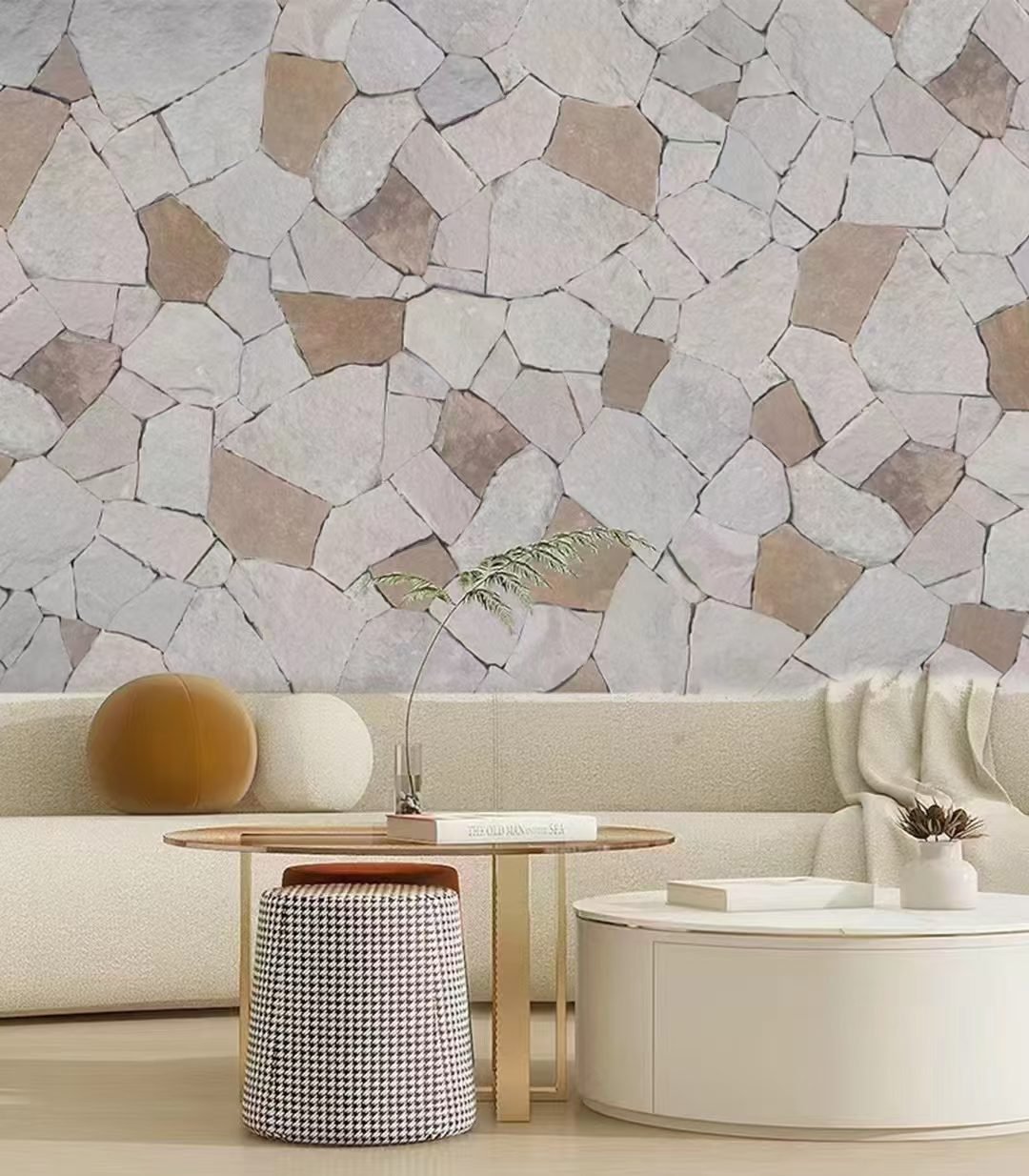
The tight mini-format ledgestone panels are a natural fireplace material: easy to cut around a hearth, light enough for a crew to set by hand, and warm enough to make the room feel finished. A sandstone split-face surround brings the same color logic indoors, where absorption is a non-issue.
Column Wraps
Pre-assembled stone column kits wrap entrance pillars, gate posts, and porch columns in matching warm tones. The same quarry batch supplies wall panels and columns, so the whole elevation reads as one material. See the stone column wraps and pillar kits range for the details.
Sealing and Maintenance Notes
Sealing is the one maintenance decision that changes a sandstone project’s outcome. Interior dry walls can skip it; kitchens, bathrooms, wet exterior facades, and pool areas should not. A penetrating, breathable sealer (one that soaks in rather than coating the surface) reduces staining in kitchens and slows moisture absorption outdoors without changing the stone’s matte, natural look. Reapply by manufacturer schedule, typically every few years on exterior stone, sooner in heavy-use interiors.
Routine care is simple: rinse with water, clean with pH-neutral stone cleaner, and never use acid-based or abrasive products, which etch and scratch the face. Repair strategy matters for distributors too — panels that delaminate at the stone-to-backer bond are a material defect, whereas face chips are normal handling damage and repairable on site with color-matched stone epoxy. The step-by-step routine for cleaning, sealing, and repair is in our how to seal natural stone veneer guide, and the broader maintenance workflow is covered in the maintain natural stone veneer companion article.
Spec Warm Stone Tones on Your Next Coastal Project
Top Stone Panels supplies sandstone, quartzite, and slate veneer in stacked panels, thin ledgestone, loose strips, flagstone, and column kits from own-quarry stone in Yixian, Hebei. Samples ship in 1-3 days; MOQ is one 20GP container; production runs 20-25 working days.
UV-stable warm tones | Freeze-thaw -30°C to +50°C | Marine-grade epoxy bond | Zero-breakage packing
Sourcing Sandstone Veneer Panels from the Factory
A B2B buyer ordering sandstone veneer from a Chinese factory should know the terms before the first email. Standard production takes 20-25 working days after sample confirmation — first orders with custom outer carton design run closer to 25-30 days. T&T terms are 30% deposit and 70% before dispatch, against loading video and layout photos. Shipping is FOB Xingang, with EXW, CIF, and DDP available depending on the buyer’s freight preference. Documentation runs the standard export set: commercial invoice, packing list, and bill of lading, plus certificate of origin and ISPM 15 fumigation certificates on request.
| Term | Value |
|---|---|
| MOQ | 1 x 20GP container (mixed formats allowed) |
| Sampling | 1-3 days, physical panels for lab testing |
| Production | 20-25 working days (first order 25-30) |
| Port | Xingang / Tianjin (FOB), EXW, CIF, DDP |
| Payment | 30% T/T deposit, 70% before dispatch |
Buyers who have sourced before will notice the sample lead time and the loading-video payment gate. Both are first-party practices designed to remove the two biggest fears in cross-border stone: wrong color and hidden damage. A physical sample sent in 1-3 days lets the specifier or lab test absorption and color before committing; the 70% balance releases only after loading video and layout photos confirm the actual goods. For the full sourcing checklist, including factory audit questions and document checks, read the stone cladding sourcing checklist for B2B buyers. The sourcing guide for real thin stone veneer also walks through material grades and sample evaluation.
FAQ
Are sandstone veneer panels waterproof?
No natural stone is waterproof; veneer walls manage water with a weather barrier, flashing, and in porous stones a penetrating sealer. Sandstone is more absorbent than quartzite, so exterior and wet-area installs should seal the face and keep the base gap and weep details correct.
Can sandstone veneer be used outdoors in cold climates?
Yes, when the stone is dense and the wall follows proper flashing rules. Natural slate and quartzite faces from Top Stone Panels pass freeze-thaw cycling from -30C to +50C; dense sandstones work in milder cold when sealed.
What colors does sandstone veneer come in?
Warm honey, beige, oatmeal, amber, and rust are the classic sandstone tones, with custom color-mix panels available on OEM orders. Color is selected by vein at the quarry so each shipment stays in one family.
How much does sandstone veneer cost?
Veneer panels cost a fraction of full-thickness stone because thin slices use less material and ship more panels per container. Exact FOB pricing depends on format, backer, and quantity; Get a quote with your area and format for current pricing.
Is sandstone veneer easy to install?
Yes. Panels set with mortar or thin-set on a prepared substrate, like large-format tile. Pre-made corners cut the most time-consuming task, and infrared-CNC-cut panels reduce on-site cutting waste by up to 20%.