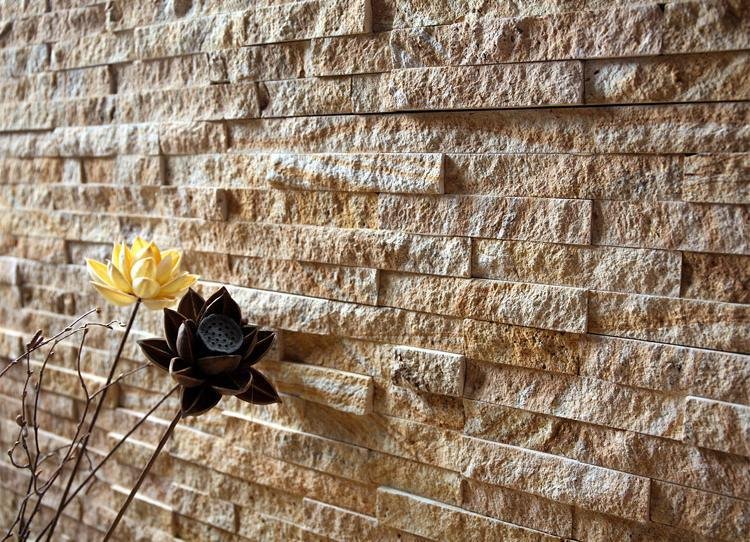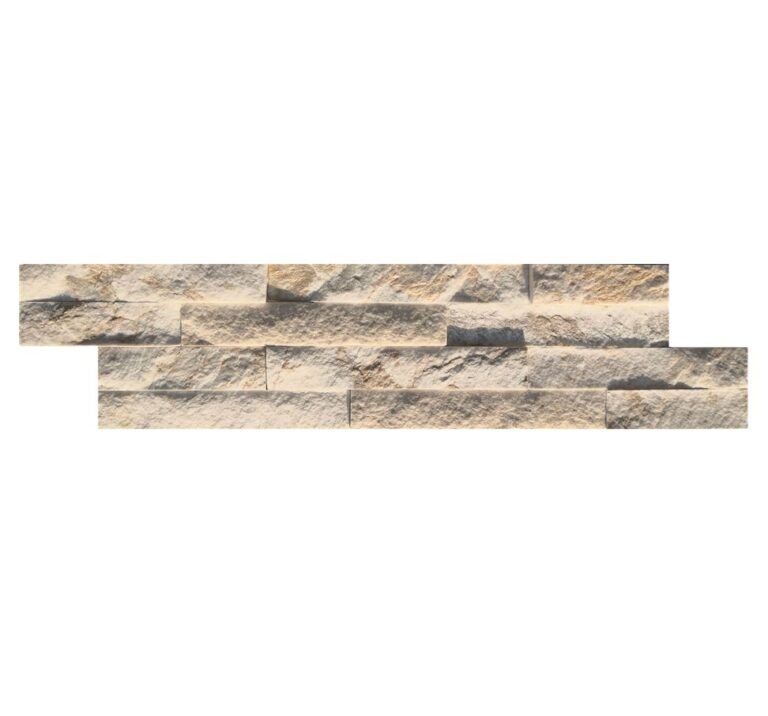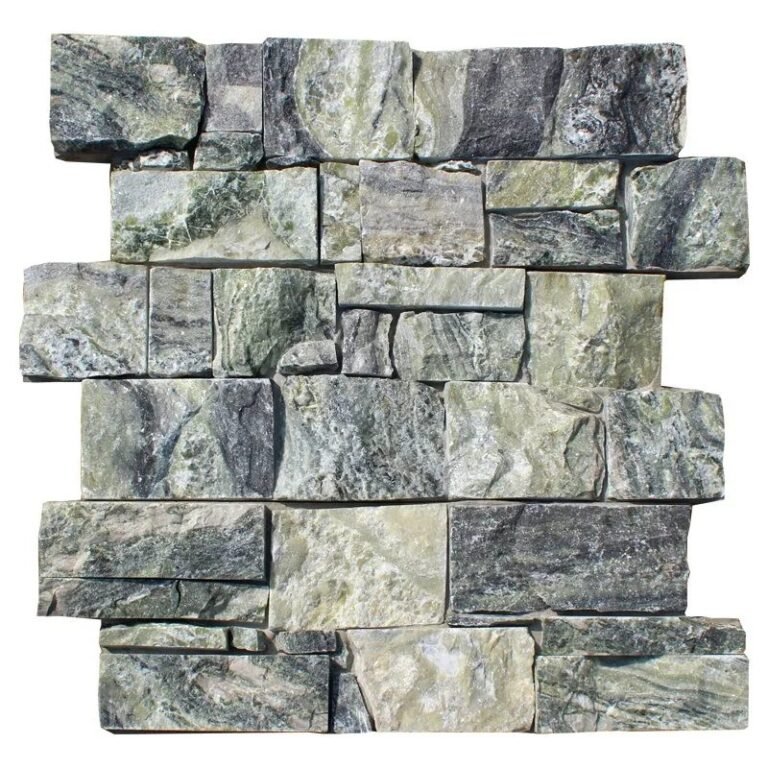
A distributor called about a pool surround job. The client wanted “a natural stone patio.” The sample board showed three options: uniform pavers, cut-to-size flagstone squares, and a sheet of broken-edge stone that looked like a quarry floor had been lifted and laid flat. The client picked the broken-edge sheet in seconds. That is crazy paving flagstone: the pattern that reads as raw, natural, and handmade, and the reason patios and pathways never quite look the same twice.
Crazy paving flagstone is broken-edge natural stone set in an irregular, interlocking layout. The “crazy” part is not chaos. The pattern is engineered: pieces are positioned one by one on a mesh template, the joint spacing is locked, and the rhythm is checked before the whole sheet is rolled for export. This guide explains how random layouts work for patios and pathways, what to specify, and how the math runs from one square meter to a container order.
- Crazy paving flagstone is broken-edge natural slate and sandstone, supplied as mesh-backed sheets that install far faster than loose individual pieces.
- A random layout is controlled irregularity: joint width and stone variance are set at the factory, not left to the installer.
- Wide, uneven joints suit patios and pool surrounds; tighter graded joints suit pathways, borders, and driveways.
- The riven face carries an R11 slip rating, and the stone survives ASTM C666 freeze-thaw from -30°C to +50°C.
- Capacity runs 30,000 m²/month with a one-20GP MOQ; samples ship in 1-3 working days and production in 20-25 working days.
- 1. What Crazy Paving Flagstone Is
- 2. The Random Layout System: Joints and Variance
- 3. Random Layout at Patio Scale
- 4. Pathway Layout: Narrow Bands and Straight Edges
- 5. Curves, Pools, and Obstacles
- 6. Color, Veins, and Batch Discipline
- 7. Coverage Math for Ordering
- 8. Specifying Random Crazy Paving
- 9. Factory-Direct Sourcing
- FAQ
- Conclusion
1. What Crazy Paving Flagstone Is
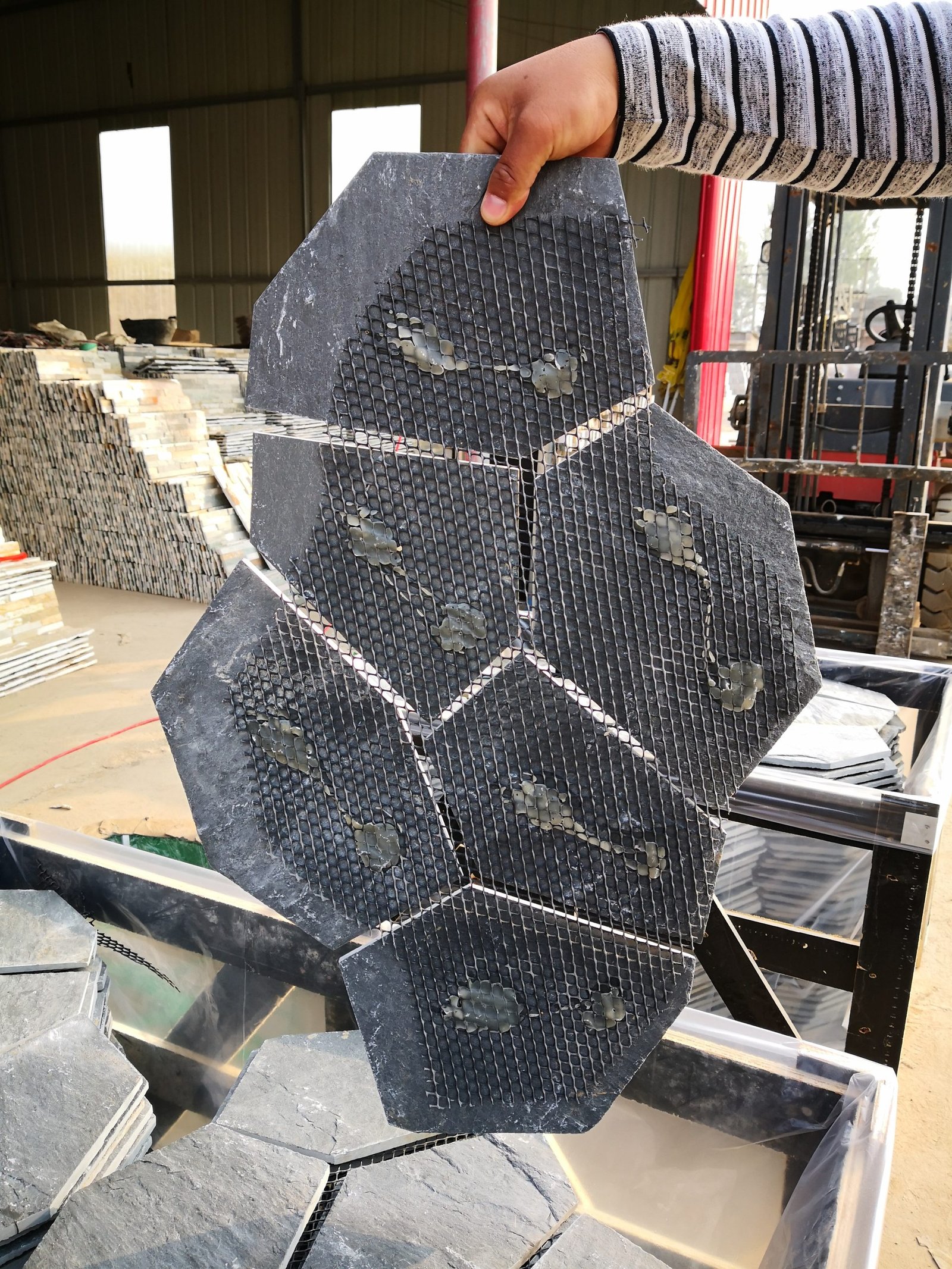
Crazy paving flagstone starts as high-density natural slate or sandstone from the same quarry veins that supply most of China’s exported paving stone. The factory in Yixian, Baoding splits the stone into irregular polygons, cuts each piece to a consistent thickness on infrared-guided CNC diamond saws, and arranges the pieces face-down on a mesh template. A craftsman adjusts every stone so the joints run at the specified width and the sizes vary across the sheet. Then the whole layout is bonded to fiberglass mesh and rolled for export.
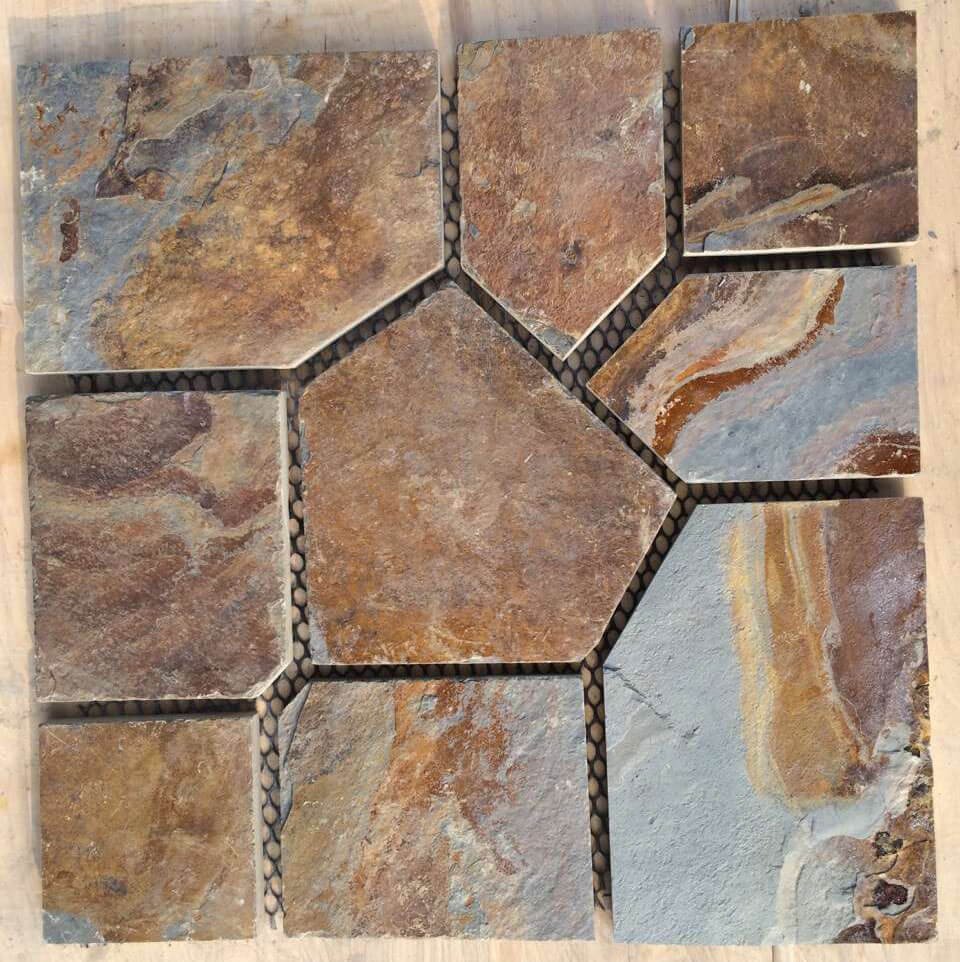
Two formats reach the ground. Loose crazy paving arrives as individual irregular pieces in crates, and a skilled setter fits them one by one on site. Mesh-backed crazy paving arrives as whole pre-arranged sheets, unrolled into a fresh mortar bed. Wholesale buyers order the mesh format by the container; building crews specify it because the pattern is fixed once at the factory. The random versus patterned crazy paving guide covers the full comparison, while this page stays on how the random layout behaves on patios and paths.
The performance envelope comes from the material. Dense slate and sandstone survive the ASTM C666 freeze-thaw cycle from -30°C to +50°C without spalling or pulling off the mesh, so a patio that sits through a Canadian winter or a Texas summer keeps its surface. The split face sheds salt spray and pool chlorine, which is why the same sheets do duty around pool surrounds. UV light does not fade the color because the color runs through the stone. The Natural Stone Institute keeps the industry guidance on selecting stone for exterior paving, and ASTM C119 defines the terminology behind these tests.
2. The Random Layout System: Joints and Variance
A random crazy paving layout is a system with two dials: joint width and stone variance. Wide joints with varied stone sizes read as rustic, hand-quarried, and deep-shadowed. Tighter joints with graded piece sizes read as a calmer, more contemporary stone field. Both are “random”; the dial decides the mood.
| Attribute | Rustic random | Graded random |
|---|---|---|
| Joint width | Wide and uneven | Tighter and even |
| Stone sizes | Deliberately varied | Graded, more consistent |
| Visual read | Natural, quarried, shadows | Calm, designed, contemporary |
| Best zones | Patios, pool surrounds | Paths, borders, driveways |
| Maintenance read | Hides marks and stains | Shows less shadow depth |
The factory confirms the joint pattern for each project at quotation, working from your drawings. That matters for buyers because the pattern you approve on a sample is the pattern that lands on the pallet, sheet after sheet. When adjacent sheets are laid, the edges are designed so randomness continues across the seam instead of restarting, and a visible repeat line does not show up every few square meters.
Specify the dial early, not late. A patio decked out in rustic random joints is harder to re-set later because the wide joints demand more pointing mortar and more fill time. A pathway with a graded pattern sits closer and uses less mortar, but it reads more “designed.” The zone decides.
3. Random Layout at Patio Scale
A patio is the zone where rustic random crazy paving earns its keep. People sit there, drop furniture, drag chairs, roll planters, cook, and spill. A wide-jointed irregular surface absorbs that abuse: the shadows and color variation already hide the marks, so a stain or a scratch disappears into the pattern instead of shouting from a smooth face.
The riven face adds two practical traits at patio scale. The split texture gives an R11 slip rating as a property of the stone, so the surface stays grippy when wet, which is why it works beside pools and in outdoor dining areas. And the texture runs cool underfoot, a relief on a full-sun afternoon patio.
One patio contractor told Top Stone Panels that mesh-backed sheets cut a pool surround install by 60 percent. Crews bed whole sheets onto a fresh mortar bed instead of placing individual pieces, then point the joints. On a 40 m² patio, that difference is measured in days, not hours. The flagstone pool decking guide looks at the same material around the water.
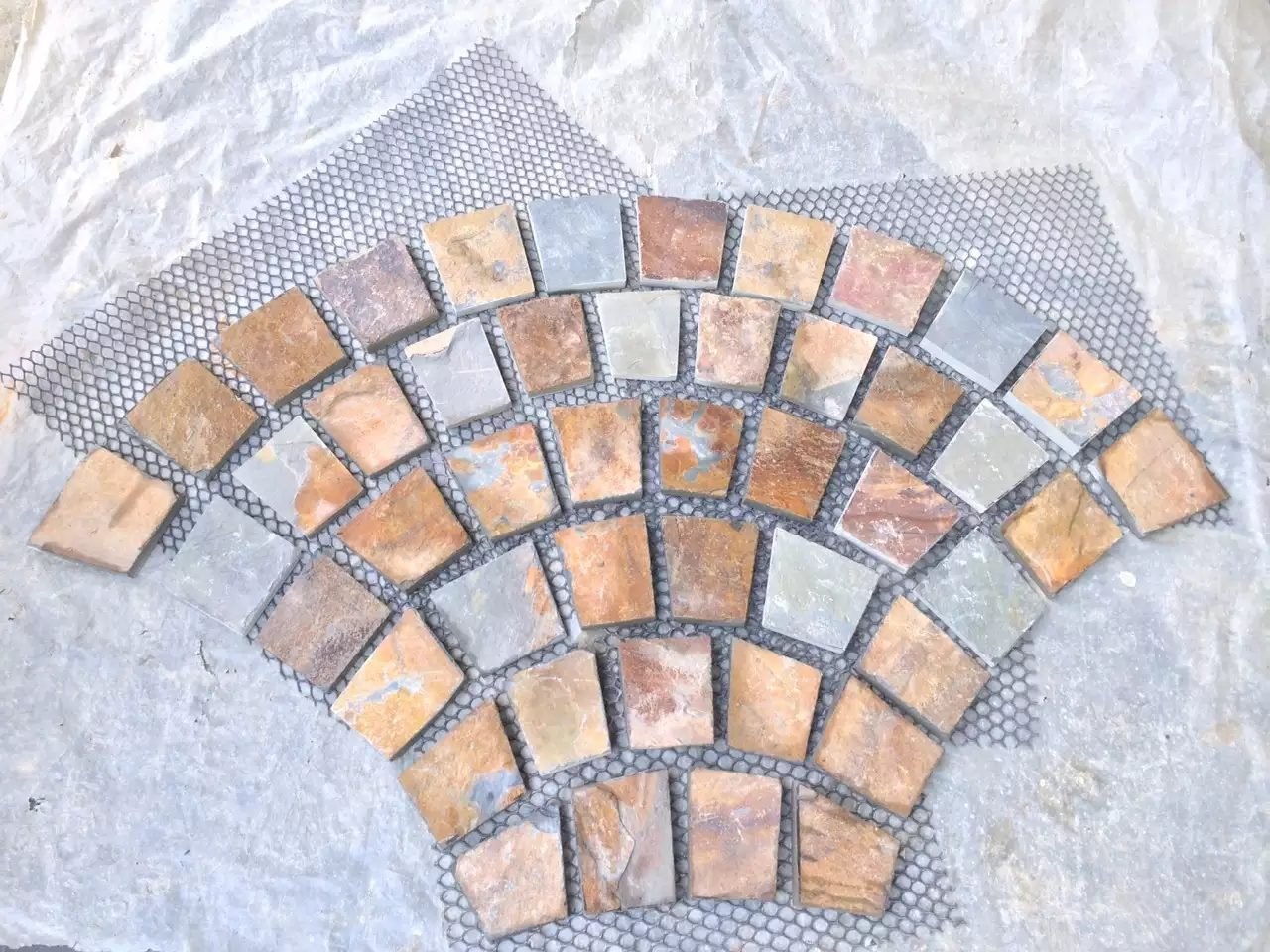
Patio scale also exposes the seam problem. A small sample looks good; a 40 by 60 sheet job looks wrong if a repeat line appears every few sheets. Factory edge design prevents that: sheet edges are cut so the randomness continues across the boundary. Buyers should ask for adjacent-sheet photos before the container ships; the seam pattern should not be a surprise on site.
4. Pathway Layout: Narrow Bands and Straight Edges
Pathways change the math. A path is a narrow band with two hard edges, so the random layout has to stay inside a corridor. Graded random with tighter joints reads better there: the surface stays visually calm, adjacent sheets lock into a straight edge line, and the stone field does not fight the path’s direction.
For a walkway that gets wetted, salted, or used daily, the load class matters more than the pattern. Top Stone Panels builds driveway-grade crazy paving in a thickened high-density build with reinforced mesh to carry vehicular point loads. A path is lighter duty, but a parking court or a drive path that takes occasional car wheels should still specify the reinforced build, and the factory confirms the matching base construction at quotation.
Path joints run with the traffic, not across it. Setters bed the sheets and point the joints so long mortar lines stay parallel to the walking line, which stops the eye from catching cross-joints and keeps the surface easier to sweep. A random pattern still needs an edge restraint: a concrete haunch or metal edging at both sides holds the outer stones and keeps the mortar from sliding out over winter cycles. The step-by-step crazy paving installation guide covers the base build and jointing sequence for both patio and path zones.
5. Curves, Pools, and Obstacles
Random crazy paving behaves better around curves than any grid system. A freeform pool or a curved patio edge fights rigid rectangular pavers, but broken-edge sheets cut into the curve and the joints hide the transition. That is why crazy paving appears around freeform pools so often: the organic edge matches the organic perimeter.
The install sequence for curves stays simple. Bed straight sheets in the field first, then cut edge pieces to the radius at the border, and point everything in the same mortar pass. Right angles need more attention. Inside corners and 90-degree turns collect extra cuts; budget another 5 to 8 percent of material for cutting on a curvy, obstructed job, and confirm the allowance with the installer before quoting.
Obstacles follow the same rule as curves. Tree trunks, garden beds, drains, and post bases all accept a few fitted pieces. The mesh format makes this cheaper than loose stone because whole sheets carry most of the field, and only the awkward boundary gets hand-cut. Keep a box of offcuts on site; a random layout hides them perfectly, which is a luxury a uniform paver grid does not give you.
6. Color, Veins, and Batch Discipline
Crazy paving is sold by color, and color consistency is a factory discipline, not a marketing claim. Top Stone Panels color-sorts stone by batch from the same quarry vein, so one tonal band runs through the whole order. A patio laid from one batch stays in shade; a second batch from a different vein can shift the whole surface beige, grey, or brown.
Buyers should request a sample of the exact vein, not a stock photo. The 1 to 3 day sample service exists for this reason: approve the color against the project’s actual exterior light, then hold the order to that batch. If a job needs two containers, ask the factory to reserve both loads from the same vein before the second container is cut.
Color mixing is a feature when you want it. Custom color mixes blend two veins on purpose, which suits retail display walls and commercial courtyards. For a single patio, a matched batch almost always reads better: the eye reads texture before color, and a consistent tone lets the geometry do the work. The flagstone color guide shows the natural bands buyers can expect from slate and quartzite veins.
7. Coverage Math for Ordering
Ordering random crazy paving runs on square meters, not piece counts. The mesh sheets cover a defined area before being cut, so a buyer specifies the installed area, adds a cutting allowance for curves and edges, and the factory packs the matching sheet area. The same rule that applies to sold paving holds here: request the cutting-waste percentage the project needs rather than guessing.
Container math gives the order scale. As a reference point, the stacked ledger format ships roughly 500 to 530 m² in a 20GP container at a payload near 26.5 metric tons. The factory’s crazy paving line runs at 30,000 m² per month with a one-container MOQ. A single 20GP of crazy paving runs a medium patio-plus-paths job; a courtyard project that needs two containers gets better freight math per square meter, and the batch must be locked to one vein.
| Order step | What the buyer confirms |
|---|---|
| Total m² | Installed area plus cutting allowance |
| Pattern | Rustic or graded, from design drawings |
| Load class | Footpath, patio, or driveway build |
| Batch | One vein for the whole order |
| Samples | Physical sheet approved in 1-3 days |
| Terms | FOB Xingang, EXW, CIF, or DDP |
8. Specifying Random Crazy Paving
A specification for random crazy paving should name five things: format, pattern, load class, color, and joint treatment. “Natural slate random crazy paving, mesh-backed format, rustic joints, one vein, patio load class” resolves most of the project decisions before a single sheet is priced.
The joint treatment deserves its own line. Crazy paving joints are typically pointed with a sand-and-cement mortar or a flexible pointing compound, and the width range is set in the pattern, not decided in the field. Name the joint width in the spec, confirm the mortar type for the climate, and require the installer to match the sample. Wet-laid joints suit patios that stay outdoors all year; dry-swept joints belong to interior or sheltered areas.
Drainage is part of the spec, not an afterthought. Slate is dense, so water runs off the face fast, but the joints still take surface water. Grade the patio at roughly 1 to 2 percent away from the house, keep drains inside the joint pattern, and check that the base under the mesh sheets is compacted and stable before bedding. The pattern can look right and still fail if the base settles.
9. Factory-Direct Sourcing
Crazy paving flagstone from Top Stone Panels arrives with the same export discipline as its stacked and ledger lines. The factory has 18+ years of mining and export experience and moves 220+ containers per year. Packing follows a Zero-Breakage Protocol: 3 to 5 layer reinforced cartons, fumigation-free solid wood or plywood pallets, 4 to 6 steel straps, and air bags braced inside the container. A patio order should land intact, not as a pile of rubble.
The buying sequence is short. Request physical samples, which ship in 1 to 3 working days. Approve the vein and the joint pattern. Lock the production slot, which runs 20 to 25 working days standard. Pay 30 percent T/T to open the order and 70 percent before shipment, with loading photos and the container layout confirmed first. Trade terms cover FOB Xingang, EXW, CIF, and DDP, so a buyer can quote landed cost to their own customer without guessing freight.
The seasoned buyer confirms three things before signing: the batch is locked to one vein, the joint pattern matches the sample board, and the packing list matches the ordered square meters. Those three checks catch most of the expensive surprises.
Ready to quote a crazy paving patio or pathway order?
Request a physical mesh-backed sample in 1-3 working days, lock the joint pattern and batch, and get a container-quoted price from Tianjin Xingang.
FAQ
What is crazy paving flagstone?
Crazy paving flagstone is broken-edge natural slate or sandstone laid in an irregular, interlocking pattern instead of uniform rows. Top Stone Panels supplies it as mesh-backed sheets, so installers bed whole pre-arranged sections rather than placing loose pieces.
Does a random crazy paving layout actually work for paths?
Yes, with a graded pattern. Tighter joints and graded stone sizes keep the surface calm inside a narrow path band, while the same random geometry continues across sheet seams.
How much does mesh-backed crazy paving cost to install?
Install cost drops because crews bed whole sheets instead of fitting individual pieces; one contractor reported a 60 percent faster pool surround install. Material cost follows format, load class, and container terms.
Is crazy paving flagstone safe around a pool?
Yes. The riven face carries an R11 slip rating, and the dense slate handles salt spray and pool chlorine. The stone also survives freeze-thaw from -30°C to +50°C.
What is the MOQ for crazy paving flagstone?
The minimum order is one 20GP container from Tianjin Xingang. Physical samples ship in 1-3 working days, and standard production takes 20-25 working days.
Conclusion
Random crazy paving works when the randomness is controlled. The joint width and stone variance are factory settings, the batch is locked to one vein, and the coverage math runs from the approved sample to the container packing list. The 60 percent labor saving from mesh sheets is the reason distributors keep ordering the format; the R11 face and the freeze-thaw range are the reason the patios survive the customers.
Key Takeaways
- Specify format, pattern, load class, color, and joint treatment in writing; the five lines prevent most project surprises.
- Rustic random for patios and pool surrounds, graded random for paths, drives, and borders.
- Mesh-backed sheets install about 60 percent faster than loose pieces and control the seam pattern from the factory.
- Lock one quarry vein for the whole job; two veins can shift the whole surface tone.
- Request physical samples, confirm the joint pattern, and hold the batch before production starts.