An airport concourse is the hardest regular environment in commercial construction. Tens of thousands of passengers walk it daily, luggage wheels grind the same lanes, cleaning crews hit it with chemicals, and fire and maintenance codes judge every material in it. The material that survives airports is the one that fails gracefully for thirty years: heavy granite on the floor where the traffic is worst, and thin natural stone veneer on the walls, columns, and feature zones where texture and A-class fire performance matter more than slab thickness.
This guide collects four durable stone cladding directions for airports and transit hubs, from tactile column wraps to impact-ready wainscoats. Each design is a card you can adapt to a terminal, station, or interchange project, with the specification logic that keeps it honest in a high-abuse environment. The factory-side numbers come from Top Stone Panels, the slate and quartzite quarry exporter in Yixian County, Hebei, which ships 220+ containers a year of veneer panels, column kits, and interlocking z-panels.
- Transit floors with 30,000-100,000 passengers a day need flamed granite, not marble: Mohs hardness 6-7 and a wet coefficient of friction of 0.6-0.8 against the 0.5 code floor.
- Natural stone is a non-combustible A-class material, so thin veneer panels can be specified for fire-rated terminal walls and columns.
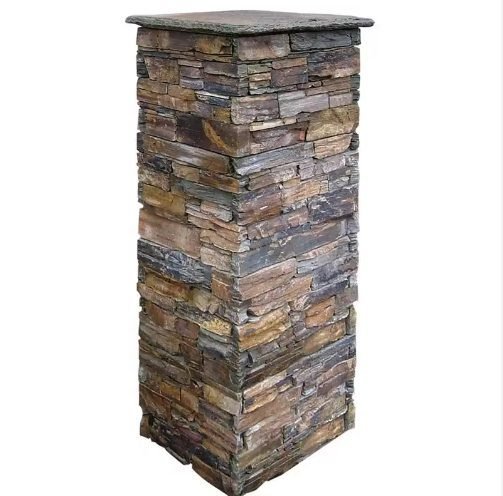
- Column wraps are the highest-value veneer use in terminals: custom kit sections such as 40x40cm and 50x50cm cover structural columns without field-laid stone labor.
- Cleft and rockface textures hide the scuffs and handprints that kill flat polished walls in high-traffic zones.
- Interlocking z-panels shorten night-window retrofits, and same-vein batch selection keeps replacement panels color-matched for years of repairs.
- Top Stone Panels supplies stacked stone, ledgestone, flagstone, column kits, and z-panels at MOQ one 20GP container, samples in 1-3 days.
1. What Airport Transit Duty Demands
Before a single elevation is drawn, the spec bar for transit work is decided by three questions: can it burn, can it be worn down, and can it be cleaned. Natural stone answers all three, but the answers differ by product class, and that honesty keeps the design defensible.
Fire. Natural stone is a non-combustible A-class material; it contributes no flame, smoke, or toxic fume. That is why stone veneer panels belong in fire-rated terminal interiors where a resin panel or wood veneer would need engineering approvals.
Wear. High-traffic floors are the granite zone. Transit design references commonly cite granite at Mohs hardness 6-7 for concourse floors serving 30,000-100,000 people a day, with marble at Mohs 3-5 wearing visibly in a few years under the same load. The Natural Stone Institute’s stone type guide explains how hardness and density map to use zones.
Slip. China’s national building code for ground works, GB 50209-2010, sets a coefficient of friction of 0.5 as the floor safety line, and flamed granite lands at 0.6-0.8 while polished marble sits at 0.4-0.5 below it. For a transit floor, that single number selects the finish.
| Zone | Best-fit product | Why it wins |
|---|---|---|
| Concourse floor | Flamed granite slab | Mohs 6-7, slip COF 0.6-0.8, survives daily wheel traffic |
| Walls and feature zones | Thin stone veneer panels | A-class fire, lighter weight, faster install |
| Structural columns | Veneer column kits | Pre-cut sections wrap without field stone labor |
| Low-zone skirting and wainscot | Cleft or rockface veneer | Texture hides cart and luggage contact marks |
The same logic that puts granite on the floor leads to veneer on the wall. Veneer, cladding, and rainscreen systems are defined by how they attach and ventilate, and for interior transit walls the adhered veneer class is the workhorse: lighter than slab, installable on steel and masonry, and replaceable panel by panel.
Lifecycle cost is the reason transit owners accept the up-front material price. A stone wall that still looks right at year ten costs less than a painted or resin finish replaced three times in the same period, and the A-class and slip data make approvals predictable. The maintenance line is where the design sets its own budget: texture that hides contact marks, spares that swap in hours, and a coating cycle scheduled like an elevator inspection.
2. Design 1: Tactile Wayfinding Column Wraps
A row of structural columns is the first thing a traveler sees in a check-in hall, and the fastest way to make them read as architecture is a full stone wrap. Column kits from Top Stone Panels come as pre-cut veneer sections in custom sizes such as 40x40cm and 50x50cm, produced at 10,000 sets per month, which means the factory cuts the corner pieces and the course rhythm, not the installer.
Two details make the design survive transit duty. First, wrap only the lower 3-4 meters of the column with texture and leave the upper shaft clean, which protects the expensive feature band from cleaning ladders and puts the tactile interest at eye level. Second, order six to eight spares per column color up front. Columns in terminals get hit by carts, and a panel-scale replacement beats a whole-wrap repair. Kit sections are the difference between a one-day swap and a masonry project; the stacked stone column kit guide covers sizing and section options in detail.

3. Design 2: Check-in and Retail Feature Walls
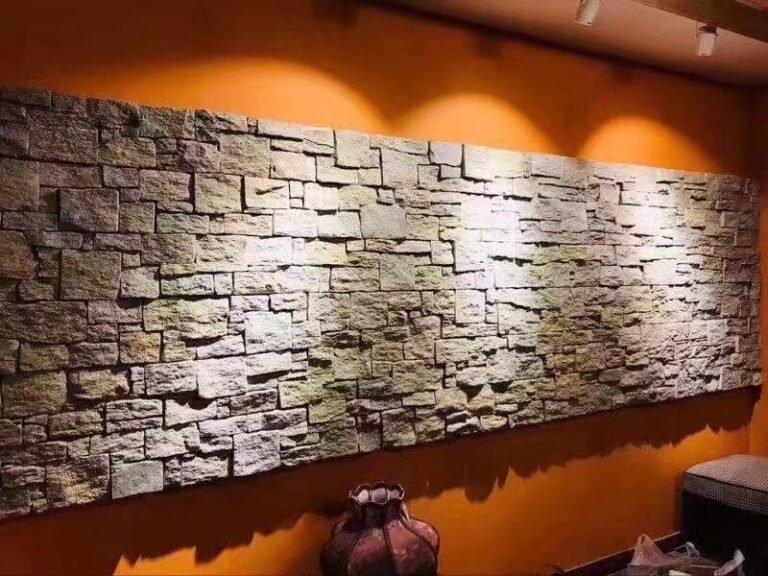
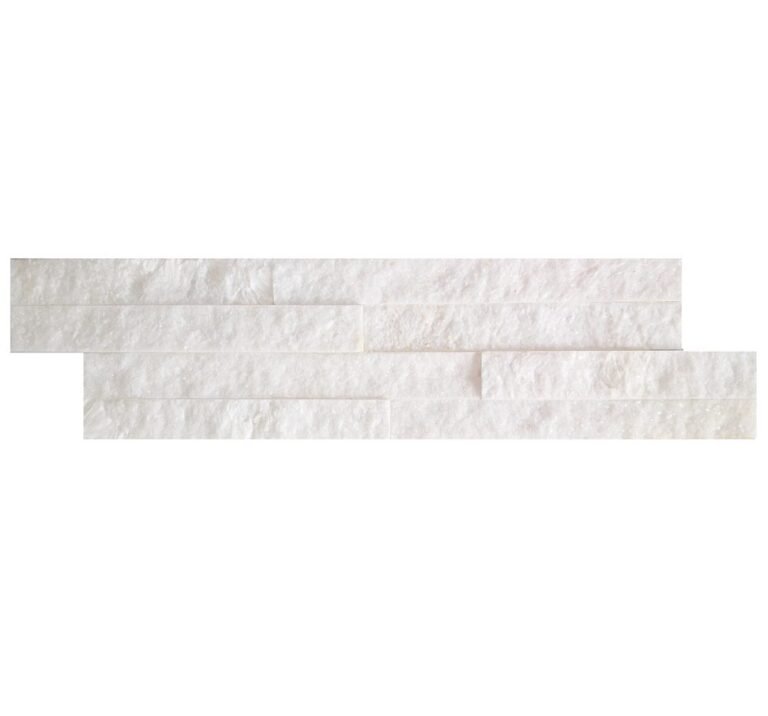
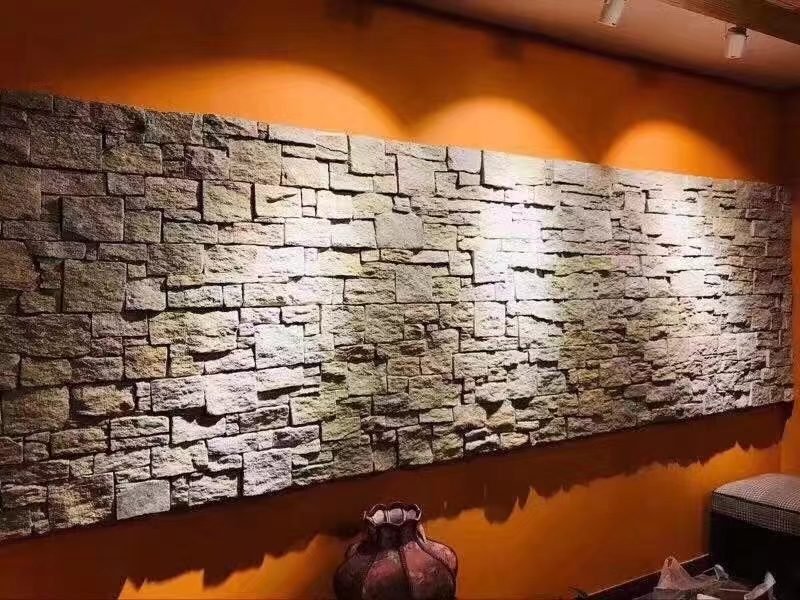
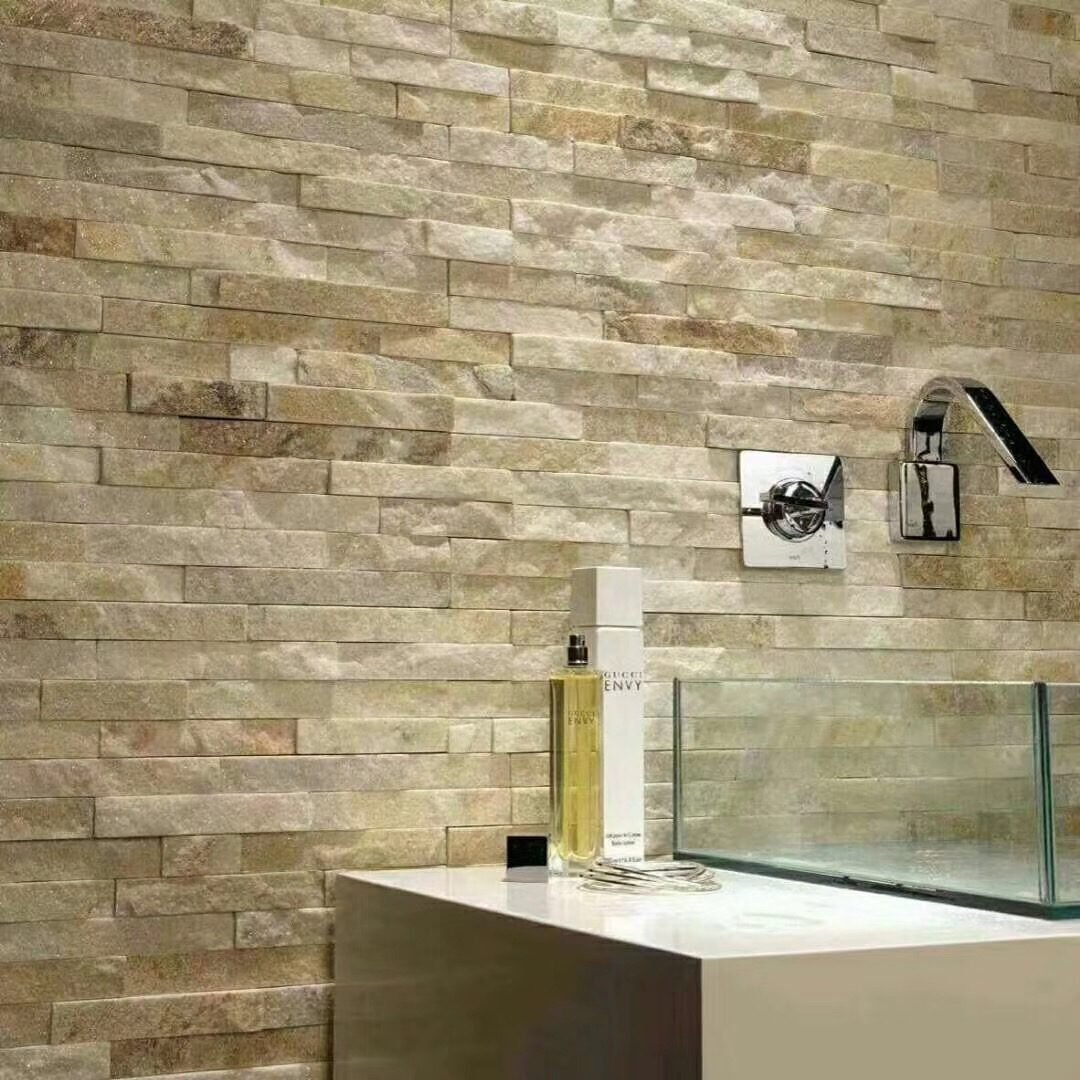
Passengers queue in check-in halls and linger in retail zones, which makes those walls the place where the terminal’s material language is set. A stacked stone or ledgestone feature wall turned into an accent plane gives the space warmth without the maintenance cost of a full concourse of textured stone. The stacked stone panel range in 15x60cm and 15x55cm formats gives the modern linear look, while the z-panel line in 20x55cm and 15.2x61cm formats adds interlocking speed for larger planes.
Specify the feature wall as a defined rectangle behind the check-in counters or around the retail frontage, and cap the texture with a clean horizontal line so maintenance crews know exactly where the stone begins and ends. Because natural slate and quartzite resist salt, humidity, and -30°C to +50°C cycling, the wall can carry outside or inside a terminal with the same specification, which simplifies approvals for coastal airports. For guidance on backing systems and installation, the z-panel backing comparison explains when cement-backed, mesh-backed, and epoxy-bonded units make sense.
4. Design 3: Impact-Ready Wainscots and Skirting
Everything below one meter in a transit building takes contact: luggage carts, wheelchairs, cleaning machines, and the occasional tired traveler leaning on the wall. A cleft or rockface texture is the maintenance-smart finish in that zone because it absorbs scuffs and handprints that a flat polished surface would show as a permanent record of the day’s traffic.
Set the wainscot band at 1.2 meters, the height that protects the wall from most cart and chair contact, and detail a transition strip at the top so the stone band ends in a straight, clean line. The same panels can run in the restrooms and back-of-house zones where the maintenance crew works, which means one product, one color lot, and one cleaning procedure across the terminal. The texture also pairs with the resort and hospitality cladding patterns used in terminal lounges, so the transit interior and the premium lounge read as the same design family.
5. Design 4: Maintenance-Smart Detailing
The fourth design is not a wall; it is a discipline. Transit stone work lives or dies on the details that let crews clean, inspect, and replace it without closing the concourse.
- Horizontal ledges and slopes. Every ledge sheds water; detail positive slope and flashing so cleaning spray and condensation run off instead of pooling behind the veneer.
- Protective finish cycles. High-traffic commercial stone in terminals typically needs a protective coating re-applied on a multi-year cycle; budget the reseal as an operating line, not a one-time cost.
- Panel-scale replaceability. Stock spare panels with the original approved sample, and require same-vein batch selection on reorders so a replacement read as the same color family in daylight.
- Night-window installs. Interlocking panels and pre-made column kits let a crew work a closed concourse overnight instead of blocking a gate for days.
This is where the factory relationship shows up in the lifecycle budget: a supplier that keeps batch records and turns samples around in 1-3 days makes the tenth-year repair a purchase order instead of a project. It is also the argument for staying with one source across the terminal, so every replacement lot tracks back to the same quarry and the same vein-selection process.
6. What We Supply and What a Quote Needs
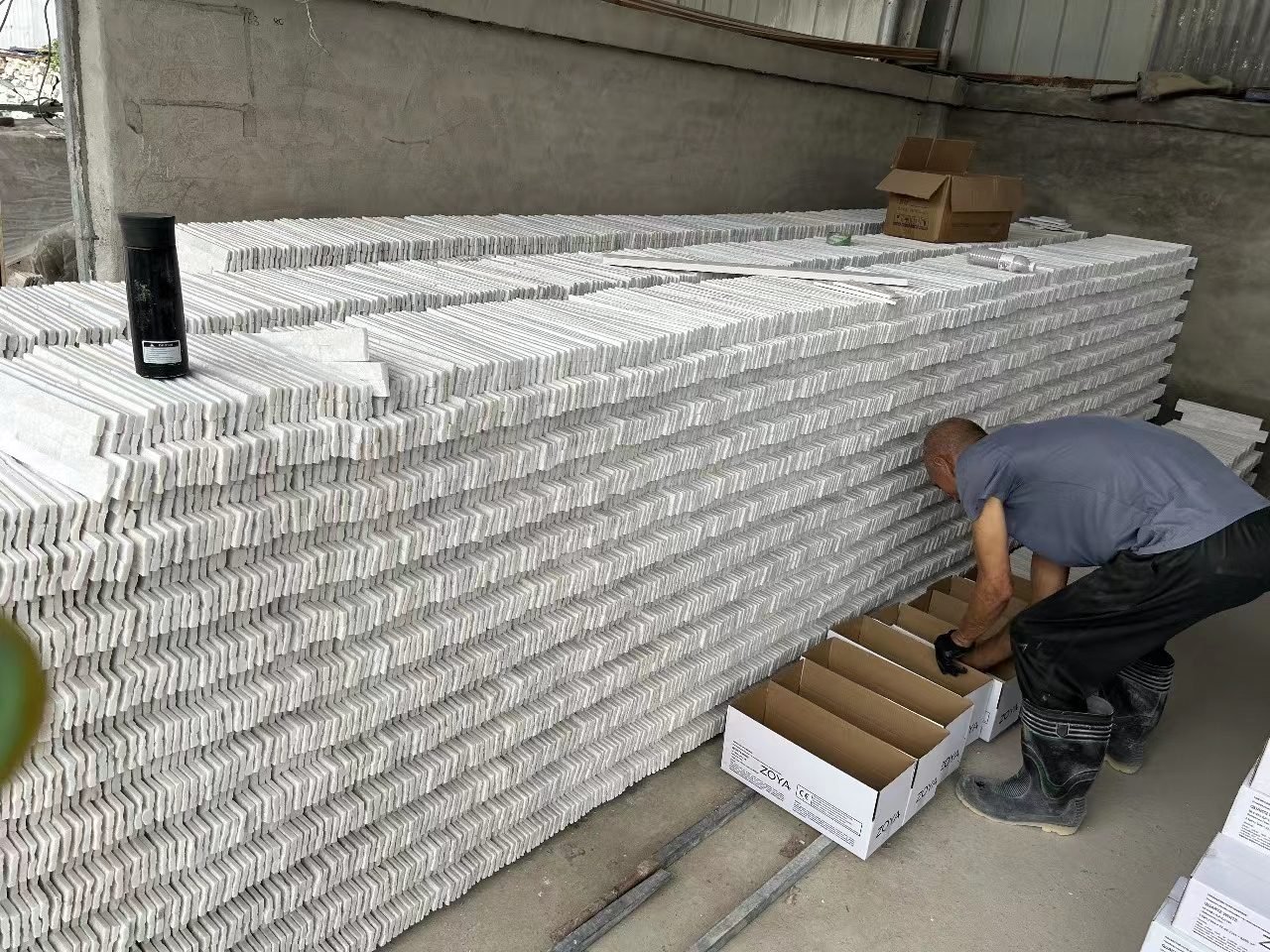
Top Stone Panels supplies the product lines a transit project’s walls and columns need: stacked stone and ledgestone panels, thin natural veneer, flagstone and crazy paving, interlocking z-panels, and stone column kits, all quarry-direct from Yixian County with an MOQ of one 20GP container. Standard production runs 20-25 working days, first orders with custom packaging run 25-30, and samples ship in 1-3 days.
To quote a terminal or station accurately, the factory needs the drawing in zones rather than a single square-meter number. List the column count with section sizes, the feature wall dimensions with the finish (cleft, sawn, or ledgestone texture), the wainscot band height, and the spare quantity you want in the same container. Add the approved color mix and the batch reference if this is a follow-on order, and the logistics plan runs from Tianjin Xingang under the zero-breakage steel-strapped crate protocol. For the wider commercial palette, the retail and storefront cladding guide shows the same products doing the same work at a smaller scale.
FAQ
What stone is used in airports?
Granite dominates high-traffic floors for hardness and slip; thin natural stone veneer serves walls, columns, feature walls, and wainscots.
Why not use marble in airport terminals?
Marble at Mohs 3-5 wears visibly under heavy traffic; granite at Mohs 6-7 with a flamed finish handles the load longer.
Is stone veneer fire-rated for terminals?
Natural stone is a non-combustible A-class material, so thin veneer panels suit fire-rated terminal interiors.
Can columns be wrapped in stone veneer?
Yes. Pre-cut kits such as the 40x40cm and 50x50cm sections wrap columns without field-laid labor.
How do I order stone for a transit project?
Send zone-by-zone dimensions: columns, feature walls, wainscots, finishes, and spares; the factory quotes panels, color mix, MOQ, and lead time from the drawing.
Conclusion
Stone cladding for airports and transit hubs works when the product matches the zone: granite for the wearing floor, thin veneer for the fire-rated wall, pre-cut column kits for the structure, and cleft texture for the zones that take the hits. Plan replacement panels, same-vein batch records, and a maintenance cycle before the concourse opens, and the stone pays for itself in decades of service instead of a decade of touch-ups.
Key Takeaways
- Match the stone to the duty: granite floors at Mohs 6-7, veneer walls and columns with A-class fire performance.
- Column wraps, feature walls, wainscots, and maintenance detail are the four design moves that survive transit abuse.
- Budget spare panels, protective finish cycles, and replacement color matching at design stage, not after damage appears.
- One supplier with quarry-direct veneer, column kits, and z-panels keeps every zone’s batch records in one place.
Building a terminal, station, or interchange and need the wall and column package? Top Stone Panels quotes thin veneer, stacked stone, ledgestone, column kits, and z-panels at MOQ one 20GP container, samples in 1-3 days. Send the zone drawings and we will price the mix with the spares.