A z-panel is judged by the face you see, but it is bought by the back you do not. The backing carries the stone, absorbs the movement, and decides how much weight one installer can lift. Choose it wrong and a facade that looked right in photos starts showing lippage at the joints, or panels refuse to sit flat on a slightly wavy wall.
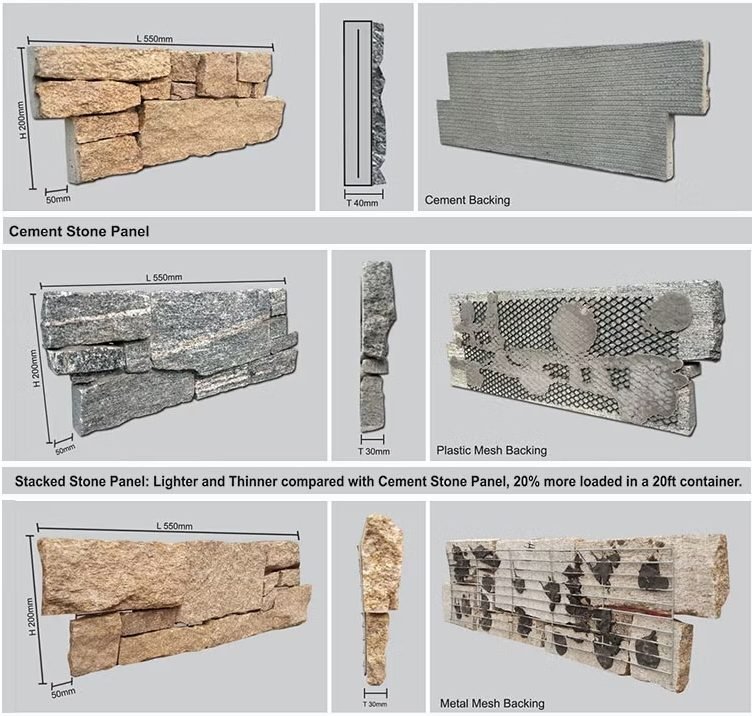
This article compares the three backing systems used on factory-made interlocking Z-panels — cement board, mesh, and marine-grade epoxy — against the jobs they actually fit. You will get one comparison table, an honest read on each system with the trade-offs named, and a sourcing checklist that pins down what to ask before you commit a container.
- Cement board backing gives the most rigid panel and the best control of thermal expansion on large, flat commercial walls.
- Mesh backing is the flexible option — it follows curves and irregular surfaces, but joints need more attention on big runs.
- Marine-grade epoxy bonding creates a strong, moisture-resistant assembly and is standard on premium panelized lines.
- Backing choice does not replace substrate preparation: lath, mortar, and a flat plane still decide how the wall performs.
- Order samples and a backing sample to confirm weight, thickness tolerances, and panel behavior before the full order.
- What a Z-Panel Backing Actually Does
- The Three Backing Systems at a Glance
- Cement Board Backing: The Rigid Option
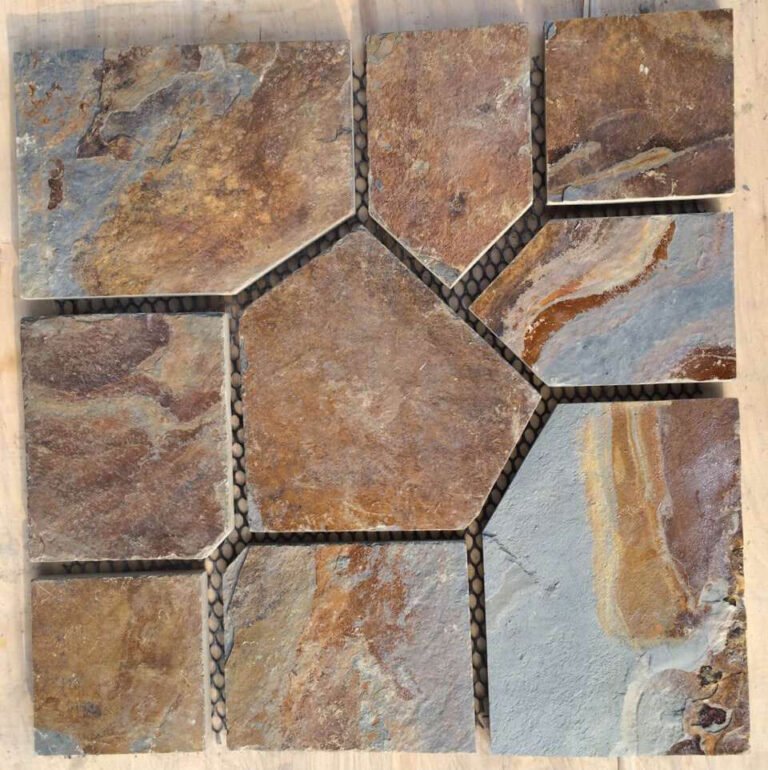
- Mesh Backing: The Flexible Option
- Marine-Grade Epoxy Bond: The Assembly Option
- Backing vs Substrate: Don’t Mix the Two
- Which Backing Fits Which Project
- What to Ask the Factory
- FAQ
- Conclusion

What a Z-Panel Backing Actually Does
The backing of a stone panel performs four jobs at once. It holds the stone pieces in their factory-set arrangement so the pattern does not drift during shipping or installation. It gives the panel enough rigidity to be handled, carried, and set without falling apart. It manages the mechanical stress between the stone face and the wall as temperatures change. And it changes how the panel behaves on site — a rigid panel demands a flat substrate, while a flexible panel tolerates gentle curves.
That last point is the one most spec sheets ignore. A 15.2x61cm interlocking z-panel has male-female edges that lock against the next panel; those edges only align cleanly when the panel sits on a controlled plane. A backing that flexes too much can let those edges work loose over time. A backing that is too stiff for the substrate can telegraph every bump in the wall. The backing has to match the wall condition, not just the price point.
For an understanding of how these panels are put together and why the interlocking geometry exists, the interlocking z-panel explainer covers the system in more depth. This article stays on the backing itself.
The Three Backing Systems at a Glance
Three backing systems cover the Z-panel family sold by Top Stone Panels: cement board, flexible mesh, and marine-grade epoxy. Here is the field-level comparison before the deep dives.
| Backing | Structure | Rigidity | Weight | Best-fit wall |
|---|---|---|---|---|
| Cement board | Rigid fiber-cement sheet bonded to stone face | High | Medium to heavy | Large flat facades, clean planes |
| Flexible mesh | Fiberglass mesh holding random or linear stone | Low | Light | Curved surfaces, feature panels, retrofit covers |
| Marine epoxy bond | Individual stones locked to backing with marine-grade epoxy | Medium | Medium | Panelized walls needing moisture resistance |
The table is the quick answer. The rest of the article explains why those rows say what they say, and where each system loses.
Cement Board Backing: The Rigid Option
Cement board backing fixes the stone to a rigid sheet, so the panel arrives on site as a flat, solid unit. The interlocking edges of a z-panel need that flatness — they lock against the neighbor panel, and a panel that has warped in transit will not give you joints that close cleanly. Cement board is the reason the z-panel line can be described as thermal-expansion resistant: the rigid board spreads localized movement across the panel face instead of concentrating it at the joint. The fiber-cement family these boards come from behaves consistently under temperature swing, which is the material property the panels lean on. (Fiber cement background)
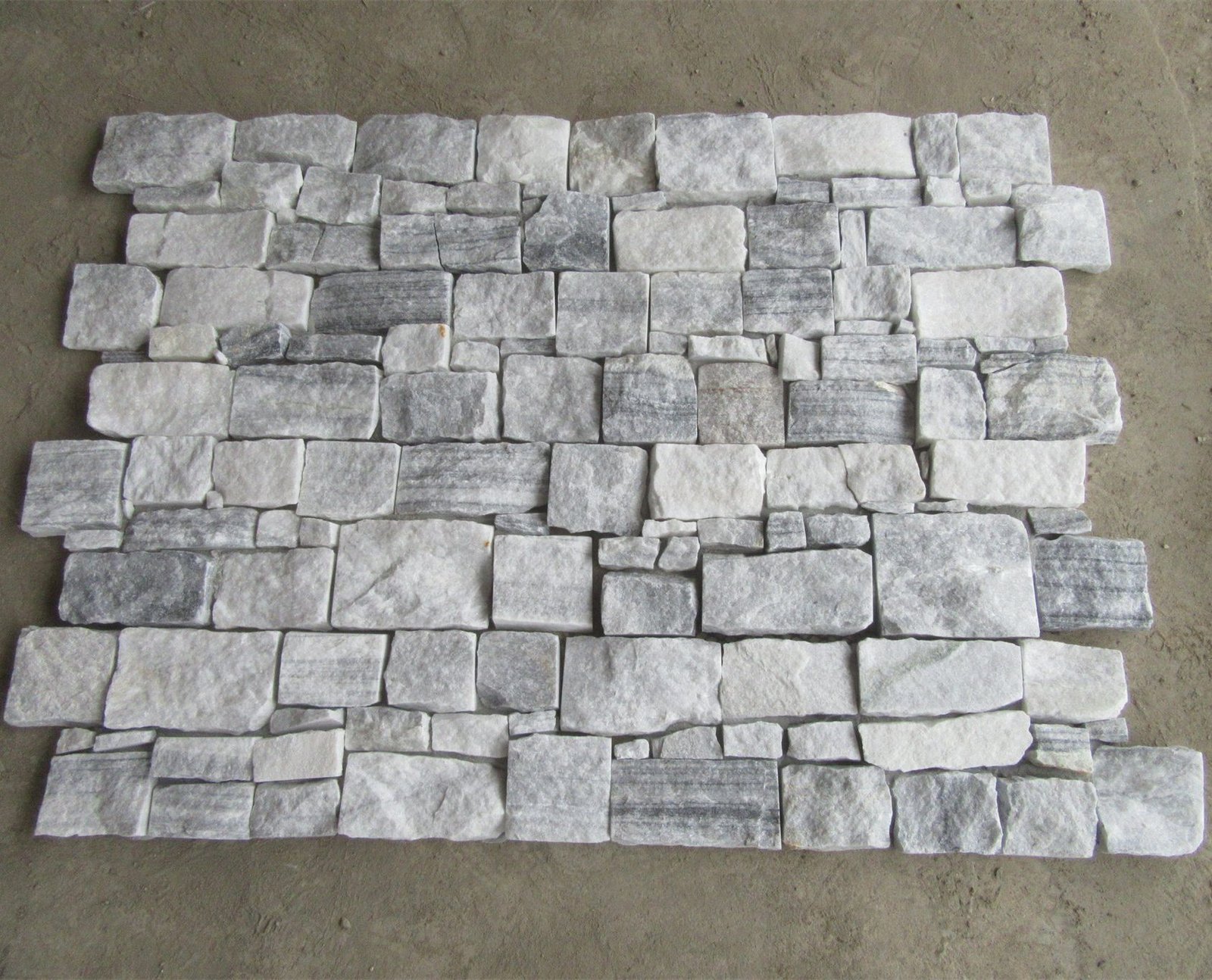
Where it wins: large, continuous facade planes. When you cover a long commercial facade with hundreds of panels, the wall has to read as one plane. Cement board keeps panel-to-panel alignment predictable, and the interlocking z geometry then manages the natural movement of the stone face through freeze-thaw cycles down to -30°C. That combination is why cement-backed z-panels are the default call for cold-climate commercial projects.
Where it loses: curves, weight, and cut time. The panel is rigid, so it will not follow a curved wall or a bowed retrofit surface — you either accept a flat plane or switch to a different backing. The extra board adds handling weight per square meter, which matters on upper-floor work without a crane. And every cut is a two-material cut: stone face plus cement board, which slows the cutting table and wears blades faster.
The verdict: cement board is the workhorse for flat, code-heavy facade work where stability beats every other consideration. If your project is a flat commercial facade and the specification calls for interlocking panels, this is the system to compare against. The interlocking z-panel install guide walks the substrate and mortar steps these rigid panels need.
Mesh Backing: The Flexible Option
Mesh backing does the opposite: it holds the stone pieces in a pre-arranged pattern on a flexible fiberglass web. Because the mesh moves, the stone follows the substrate instead of fighting it. On thin stone veneer and random-shape flagstone lines, mesh is what lets installers wrap corners, ease into arched openings, and dress a curved feature wall without individually gluing every stone.
Where it wins: curves, irregular surfaces, and speed of handling. A mesh-backed sheet weighs less than a cement-backed panel of the same area, which keeps labor cost down and lets one installer manage larger pieces. For retrofit covers over existing façades that are not perfectly flat, mesh is frequently the difference between a quick clad and a full re-lath job.
Where it loses: joint discipline. The flexibility that makes mesh forgiving also means the pattern can creep if the installer does hot-dog joints, and the sheet can sag on its own weight if the mortar bed is overworked. Mixing mesh-backed stone with the interlocking z edges is not a straight swap — the locking system needs the backing to hold a rigid edge, which mesh alone does not guarantee.
The verdict: choose mesh when the wall shape is the client’s boss — curves, corners, and distressed surfaces. Choose something stiffer when the project is a long flat run where joint alignment has to stay perfect for 50 meters. The arched opening installation guide shows how mesh-backed stone behaves when the geometry leaves the rectangle.
Marine-Grade Epoxy Bond: The Assembly Option
The third backing method skips a sheet entirely. Individual stones are bonded directly to a backing panel with marine-grade epoxy, creating an assembly where the adhesive is the structural layer. Marine-grade epoxy matters here because it stays stable against moisture, temperature cycling, and the shear stress a wall panel carries — the same reason boat builders use it below the waterline.

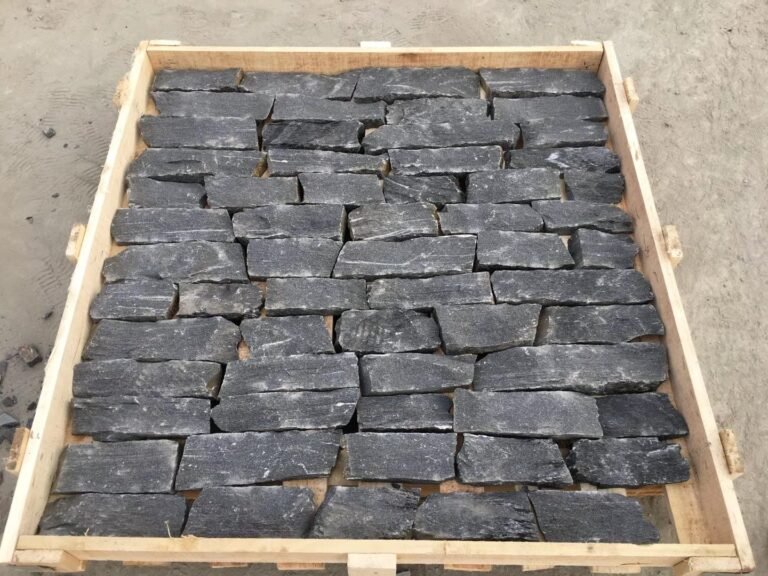
Where it wins: panelized premium lines and moisture-exposed installs. When the factory assembles stones with epoxy on a controlled table, the result is a panel with high bond integrity — no mesh to rot under damp conditions, no board to bow. That is why the epoxy-bonded assembly method is the standard on the stacked-stone panel line, where each stone has to stay exactly where the pattern designer put it.
Where it loses: price and rigidity expectations. Epoxy bonding is a premium process: it costs more per square meter than a mesh sheet, and buyers sometimes expect the same curing guarantees as cement board. The factory answers that with a 3-step quality-control pass — raw material selection, mid-production reinspection, and a final check before loading — so the delivered panel matches the sample.
The verdict: specify marine-epoxy bonding when the job values bond integrity and moisture stability over cost per square meter, and when the pattern must hold exactly. The epoxy vs cement backing breakdown goes deeper into the durability trade-offs of these two systems.
Backing vs Substrate: Don’t Mix the Two
A common sourcing mistake is treating the backing as the answer to substrate problems. It is not. The backing holds the stone; the substrate supports the wall. No backing system fixes a poorly prepared surface.
- Flatness: cement-backed panels demand a flat plane — grind or shim the substrate before lath, not after panels go up.
- Moisture: in cold climates with a condensation risk, install waterproofing and a vapor plan behind the wall; the panel backing is not a moisture barrier.
- Lath and mortar: metal lath and the correct mortar bond still carry the load; the backing adds panel integrity, not structural hang. The mortar application guide covers the trowel and keying details.
- Weight planning: heavier cement-backed panels change lath gauge, fastener spacing, and how many panels one lift can carry. Confirm weight per square meter with the factory before quoting labor.
For the full list of wall conditions and what works over each, the substrate preparation guide maps masonry, plywood, cement board, and metal lath surfaces against the right preparation.
Which Backing Fits Which Project
Partway through a comparison readers want the shortcut. Here it is.
| Project condition | Backing to spec | Watch-out |
|---|---|---|
| Flat commercial facade, 200+ m² | Cement board | Confirm max lift weight with labor crews |
| Curved feature wall or arch | Flexible mesh | Keep joint discipline; mesh creeps when overworked |
| Wet or coastal exposure | Marine epoxy assembly | Seal adjacent joints per spec |
| Retrofit over uneven existing facade | Mesh-backed thin veneer | Check lath bonding on old paint or stucco |
| High-rise curtain-wall enclosure | Cement board + engineered anchors | Engineer anchorage separately; do not over-simplify |
No row here is a universal rule — every facade drops its own constraints. But this table will get you to the right conversation, and the conversation is with the contractor and the factory, not with a marketing page.
What to Ask the Factory
Backing systems are where under-specified orders cause the pain. When you source interlocking z-panels, put these questions in the requirement list.
- Backing type and thickness: name cement board, mesh, or epoxy explicitly, and confirm the backing thickness tolerance with the QC sheet. The factory’s 3-step inspection — raw material selection, mid-production check, final loading check — is what backs that number.
- Weight per square meter: ask for it in writing. It decides lath gauge, fastener spacing, and installation labor.
- Expansion behavior: confirm the panel’s design range against your climate; the slate and quartzite faced panels are rated for -30°C to +50°C operation when correctly installed.
- Sample first: physical samples ship in 1-3 days. Cut one apart, weigh it, and leave it in water to see the backing’s response before you sign the container order. The sample evaluation checklist gives the full test list.
- Corner and trim pieces: confirm L-corner and trim availability in the same backing so returns match; color must be batch-controlled by vein selection across the whole order.
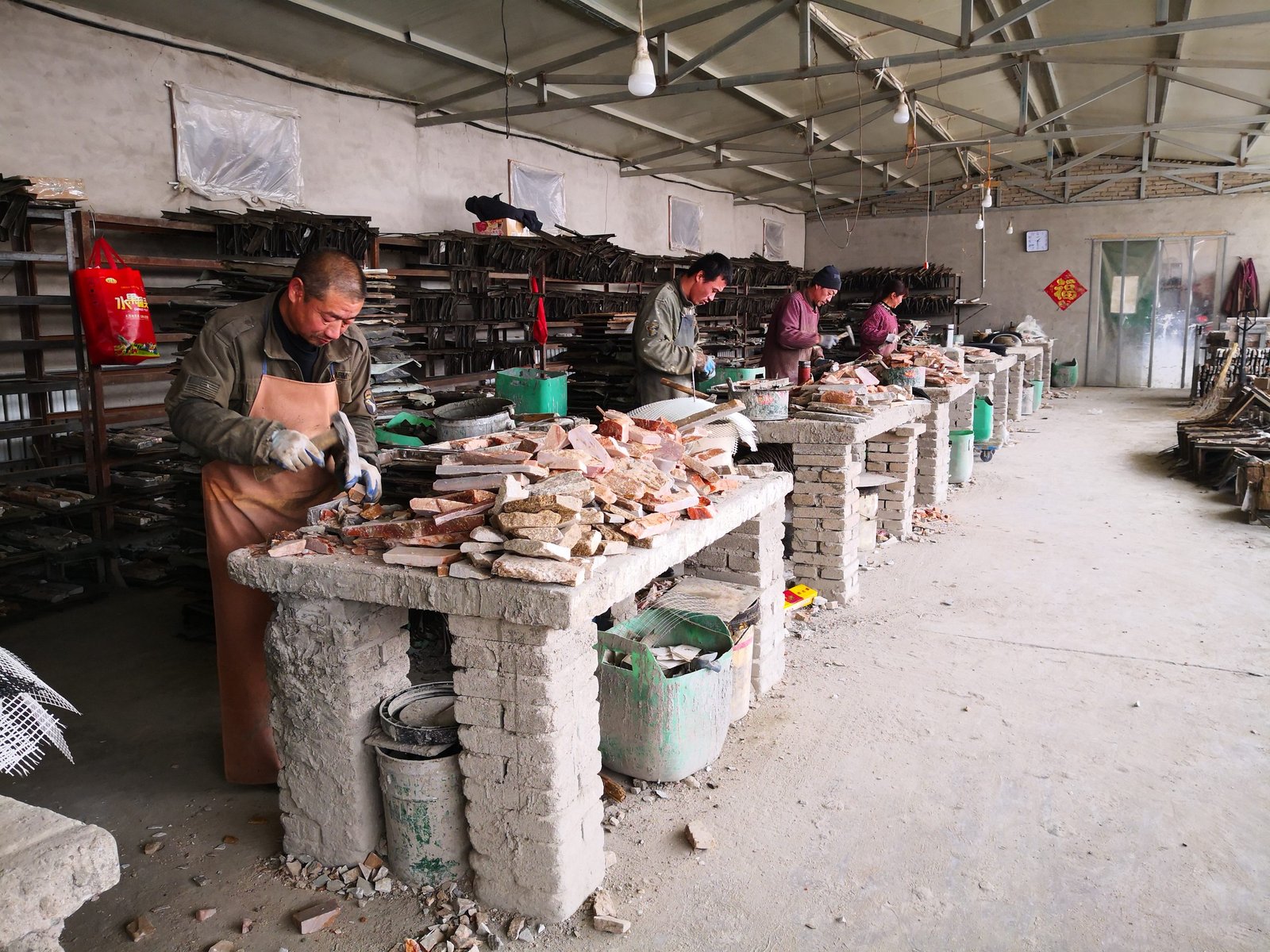
The interlocking z-panel line from Top Stone Panels runs at 50,000 m² per month with MOQs starting at one 20GP container, and standard production lead time is 20-25 working days after sample approval. Those numbers make the factory usable as a volume source; the backing questions above make the product predictable.
FAQ
What is the best backing for a stone z-panel?
For large flat facades, cement board backing is the best choice because it stays rigid and controls thermal expansion. For curved or irregular surfaces, flexible mesh backing fits the wall shape. Marine-grade epoxy suits premium panelized lines where pattern precision and moisture resistance take priority.
Can z-panels go on a curved wall?
Only mesh-backed panels can follow gentle curves. Cement board backing is rigid — the interlocking edges need a flat plane to lock correctly, so curved work should stay with mesh-backed flexible stone.
Do stone z-panels need a vapor barrier?
In cold climates with condensation risk, yes — install the correct waterproofing and vapor plan behind the wall. The panel backing is not a moisture barrier and never replaces proper wall assembly.
Which is heavier: cement board or mesh backing?
Cement board backing is heavier per square meter because of the rigid sheet. Mesh-backed panels weigh less and are easier for a single installer to handle; confirm exact numbers with the factory before quoting labor.
How long does a stone z-panel order take from China?
Physical samples ship in 1-3 days. Standard production runs take 20-25 working days after sample approval, with MOQs starting at one 20GP container under 30% T/T deposit terms.
Conclusion
Backing systems are the part of a z-panel order where specifications go to die unless they are written down. Cement board gives you the rigid, expansion-controlled panel for large flat facades. Mesh gives you flexibility for curves and retrofit covers. Marine epoxy gives you bond integrity and moisture stability for premium panelized walls. And behind all three, substrate preparation decides whether the wall performs — no backing is a substitute for lath, mortar, and a real moisture plan.
Key takeaways:
- Match the backing to the wall shape: rigid cement board for flat runs, mesh for curves, epoxy for premium panelized lines.
- Put backing type, backing thickness tolerance, and weight per square meter in writing before the PO.
- Sample first — cut, weigh, and soak the sample to see how the backing behaves.
- Never let the backing choice replace substrate, moisture, and lath preparation.
Request a z-panel sample and the backing spec sheet from Top Stone Panels — samples ship in 1-3 days, and the interlocking z-panel product line carries the cement-backed and mesh-backed options you need to quote. For the full comparison conversation, contact the factory team with your wall drawings and climate data.