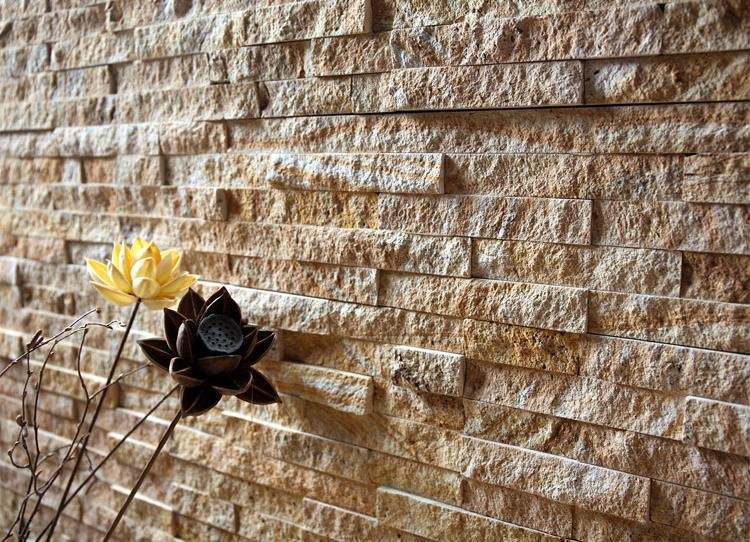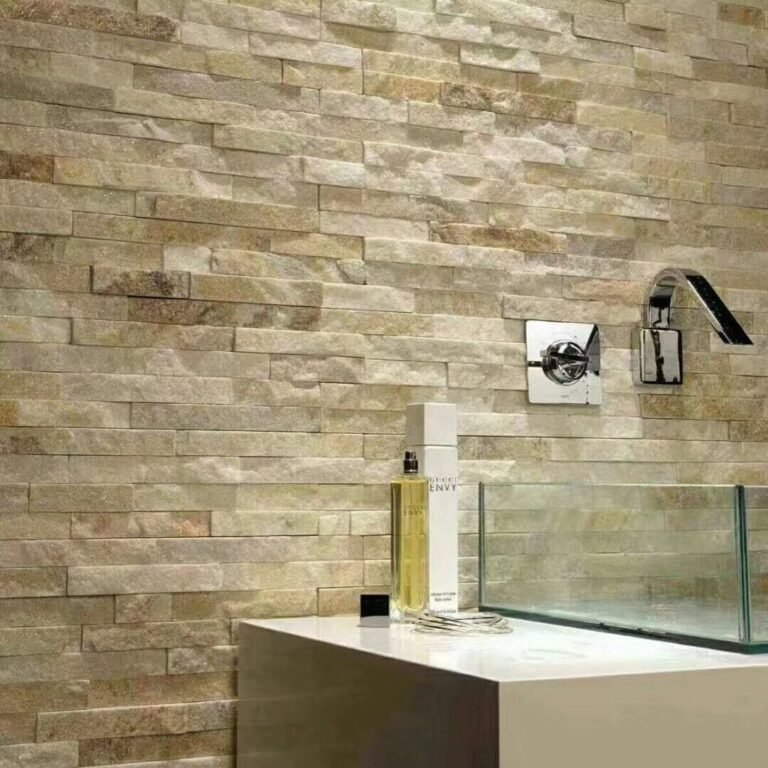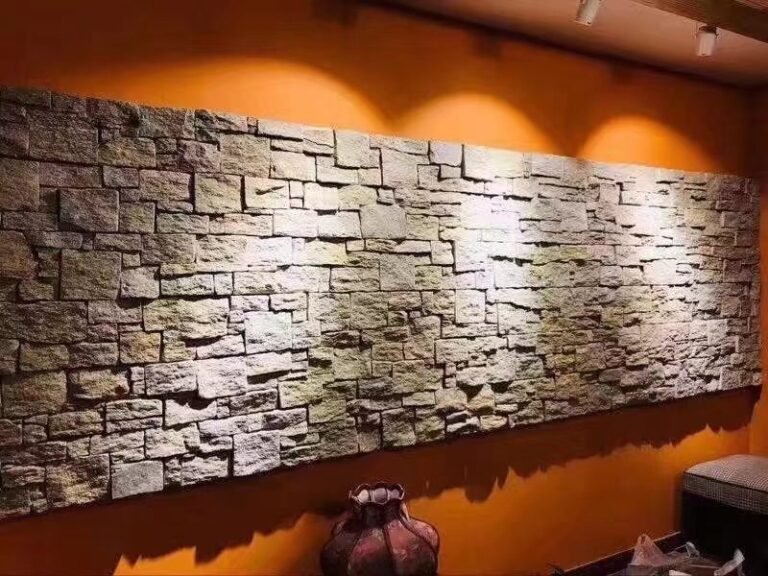
A porch reads more expensive the moment its columns stop looking like posts. Stone pillar wraps do that trick on driveways, porches, and entryways without the weight or the pour of full-thickness columns. The structure stays as it was; the outside gets a natural stone skin with real texture and mineral color that never needs paint.
Top Stone Panels builds stacked stone column kits in custom cross sections such as 40x40cm and 50x50cm, with pillar caps and factory L-corner kits that wrap each edge. This guide covers four ways to use them, from classic dry-stack slate to dark modern wraps. It also walks the sizing and ordering details that keep a covered column looking like a single carved block.
- Pillar wraps are natural stone panels plus corner kits plus caps; the structural post works as the core.
- Common custom sections run 40x40cm and 50x50cm, with dimension custom options from the factory.
- Slate suits classic driveways; quartzite ledgestone suits modern gates; dark wraps anchor contemporary entries.
- Cap-topped columns deliver the biggest perceived-value jump on porches and entryways.
- Column kits order at one 20GP container minimum, with samples in 1-3 days and production in 20-25 working days.
Why Stone Pillar Wraps Work at the Entrance
Entrances sell the building. A driveway gate, porch column, or entry pier carries visual weight out of proportion to its surface area, which makes it the smartest place to spend on natural stone. The wrap delivers the look of a carved stone pillar at a fraction of the weight, because the structural post stays inside and thin natural panels do the facing.
The system is three pieces: flat panels for the column faces, factory L-corner kits for the edges, and a pillar cap on top to shed water and finish the plane. Because the corners arrive pre-formed, the column reads as one continuous wrap rather than four separate tiles fighting at the corners.
Durability is the same mineral-stone story used across the product line. Natural slate and quartzite carry an A-class fire rating, resist UV and salt spray, and tolerate -30°C to +50°C cycling. A wrapped entrance column installed this year looks the same in a decade. The full outdoor stone column design guide covers more entrance and porch applications.
Design 1: Classic Dry-Stack Slate Wraps
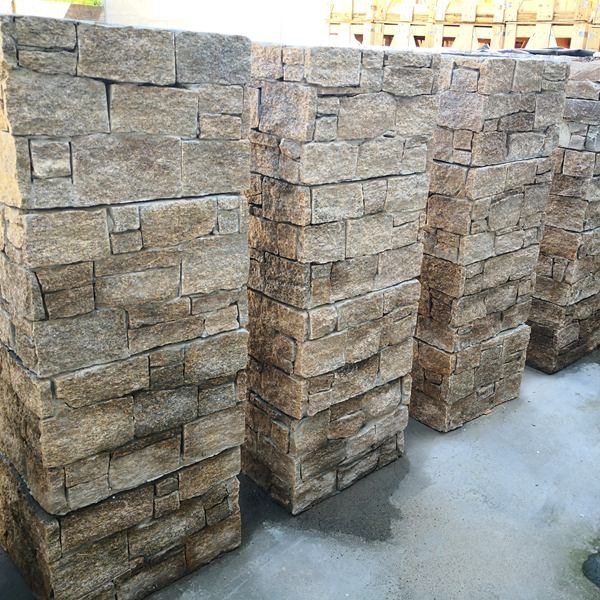
The dry-stack slate wrap is the traditional pick: layered, matte, and subtly varied, with joints tooled tight so the column looks stacked by hand rather than tiled. It suits brick colonial homes, stone ranch entries, and any elevation where the material already appears on the facade.
Run the same slate tone as the house foundation for a quiet match, or step one shade darker for the columns to read as deliberate architecture. Wrap the full post from grade to cap, and keep the cap profile simple — a flat or eased-edge cap strengthens the classic line.
Watch out: slate faces vary by batch, so order tone-matched panels in the same vein run.
- Advantage: the most timeless look, easy to match with stone base courses.
- Advantage: flat caps and simple profiles keep the build cost down.
- Consideration: dark slate can show dust near gravel driveways; plan a wash line.
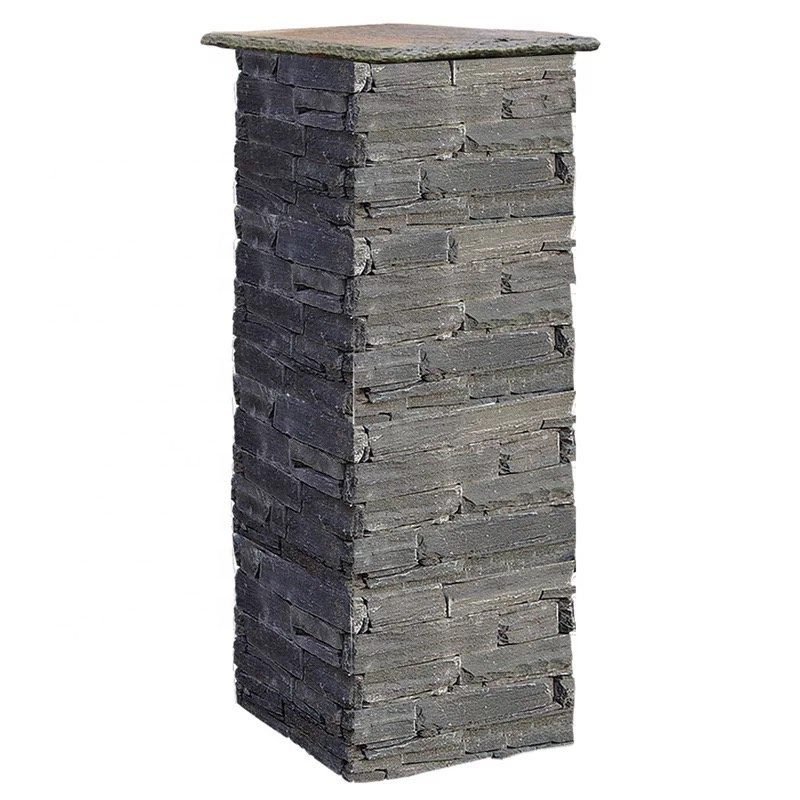
Design 2: Quartzite Ledgestone for Driveway Gates
Quartzite ledgestone wraps the gate piers in a lighter, linear rhythm that modern and Mediterranean driveways love. The thin ledgestone strips read as clean horizontal courses, and the quartzite’s subtle sparkle catches headlights at evening entry, which is exactly when a gate pier should announce itself.
This is the design that pairs well with stone cladding on the gate wall, so the piers and the wall share one material language. Match the pier wrap to the wall panels, and use the column caps as the visual finish line between the two.
Watch out: align the ledgestone courses to the same grout line on all four faces for a clean wrap.
- Advantage: light linear courses feel cleaner and more contemporary than blocky stacked.
- Advantage: quartzite density handles weather and splash zones better than porous stone.
- Consideration: course alignment across corners takes a careful dry-layout pass.
Design 3: Cap-Topped Columns for Porch Entryways
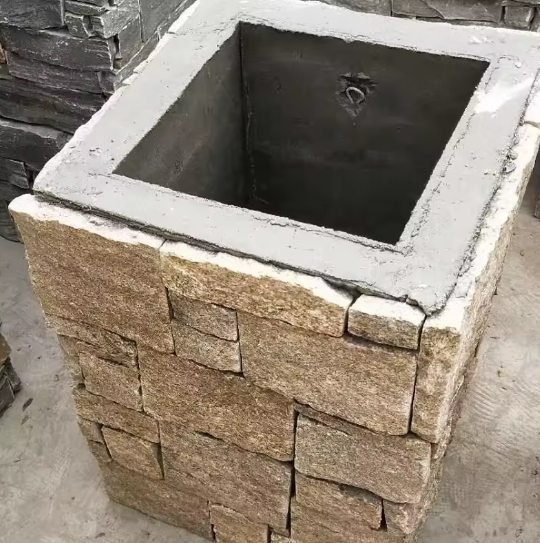
The cap-topped porch column is the highest perceived-value upgrade in the list. Wrap the full column height in stacked panels, then finish with a properly sized stone cap. The cap creates a visual crown, sheds water off the face, and signals craftsmanship before anyone touches the front door.
Choose the cap proportion to the column section — generous on 50x50cm columns, tighter on slimmer posts. Set the cap with the same mortar and caulk the joint to keep water out, because a leaking cap joint is how a wrapped column learns to wick moisture.
Porch columns are load-bearing or decorative, and the wrap changes nothing. Check the post itself carries the structure; the stone skin only faces it. For the full installation sequence, the stone column install guide covers substrate, corner fit, and capping order.
Watch out: cap joints and flashings earn real attention; water finds the top joint first.
- Advantage: the cap converts a wrapped post into a finished architectural column.
- Advantage: works over existing structural posts with minimal demolition.
- Consideration: added cap height changes the column proportion; measure before ordering.
Design 4: Dark Contrast Wraps for Contemporary Facades
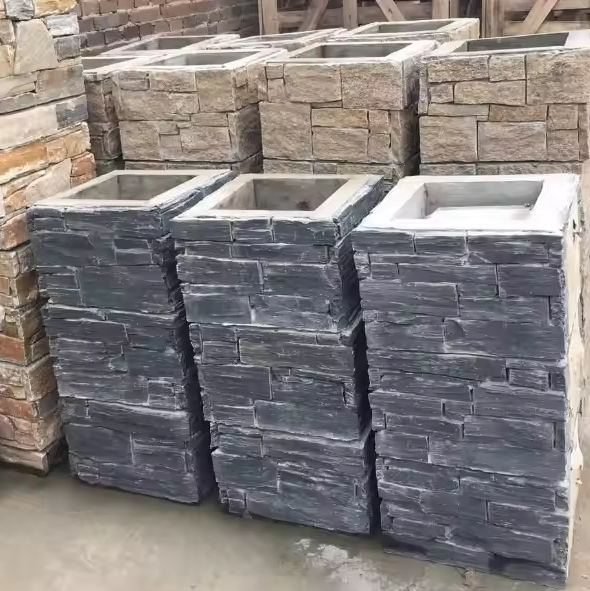
A dark stone wrap turns the entrance into a deliberate contrast element on a light facade. Black or charcoal slate and sparkle black quartzite finishes wrap the gate posts and porch columns in a mineral dark. The tone holds in UV instead of graying like painted posts.
Run the dark wrap on the entry piers and pair it with a light stone or stucco facade. Dark columns against a pale wall frame the entrance the way a dark frame finishes a canvas. For a stronger move, match the dark columns to black-clad mullions or a dark front door.
Watch out: dark finishes show dust and water spotting in dry climates; plan washdown access.
- Advantage: the strongest contrast statement per square meter of stone.
- Advantage: mineral color means no repaint cycle on the pillars.
- Consideration: dark stone absorbs more solar heat; verify the substrate and cap drain well.
Slate or Quartzite for Pillar Wraps
The stone choice for a pillar wrap is a design decision more than an engineering one. Slate splits into a matte, layered face with natural variation, which reads classic and warm next to brick and wood. Quartzite is harder and denser with a subtle sparkle, which reads clean and modern and shrugs off coastal salt and splash zones.
Both carry the same outdoor durability story: A-class fire rating, UV-stable mineral color, and -30°C to +50°C tolerance. The practical rule is short. Traditional facades take slate; modern or coastal builds take quartzite. When a project mixes both on the same elevation, keep the pier wraps in the same stone as the adjacent wall panels so the entrance matches the house.
Sizing and Kit Options for Pillar Wraps
Column kits are built around the structural section, so size is the first order detail. The factory cuts to custom cross sections such as 40x40cm and 50x50cm, and matches the panel layout to the column height. Give the drawing dimension, not the nominal post size; the wrap fits the measured column.
| Kit Element | Typical Options | Role |
|---|---|---|
| Column section | 40x40cm, 50x50cm, custom | Fits the structural post |
| Face panels | Stacked 15×60/15x55cm | Covers the column faces |
| Corner kits | Factory L-corner pieces | Wraps edges cleanly |
| Pillar caps | Flat, eased, or stepped | Finishes top, sheds water |
The wrapped column takes the same natural stone as the wall you are already sourcing, so a driveway gate and a house facade can match from the same container. The stacked stone columns product page carries the current kit line and custom dimensions.
How a Wrap Goes On
Column wrapping follows the same adhered-veneer logic as a flat wall, with more corners per square meter. The site sequence is short, and each step protects the ones after it.
Prepare the post first. Clean the surface, check the post for plumb, and keep a drainage gap or weather barrier at the base so ground splash does not sit behind the stone. Rough surfaces improve mortar bite; smooth concrete gets a scratch coat.
Dry-fit the first course around all four faces before mixing mortar. Mark the course heights and joint lines so the corners match, then butter and set each face panel. Keep the faces plumb with a level, and fit the factory L-corner kits at each edge, aligning the joints from face to face.
Set the cap last, with a full mortar bed and a tooled seal joint underneath. Caulk the cap seam and the top joints so water sheds over the face rather than wicking into the column. Finally, spot-seal the transition gap at the base if the design calls for it. The Natural Stone Institute publishes adhered-veneer installation guidance that applies directly to column wraps.
How to Spec and Order a Pillar Wrap
Writing a pillar wrap spec is a short checklist, and each line prevents a surprise.
- Measured sections. Give the actual column dimensions and height; wraps are cut to the column, not the reverse.
- Stone and finish. Name slate or quartzite, the face treatment, and the color family, and accept the natural variation across the batch.
- Corner and cap counts. Declare how many columns need L-corner kits and caps so the factory matches quantities to the layout.
- Quantities. Orders run on a one 20GP container minimum; grouping wall and column panels in the same container spreads freight.
- Timeline. Samples ship in 1-3 days; production runs 20-25 working days, or 25-30 days for first orders with custom cartons.
- Documents. Confirm certificate of origin, ISPM 15 fumigation certificate, and a pre-shipment inspection report video.
For the design-engineering frame, the stone columns sizing and styles guide covers proportions and structural checks that apply before ordering the kit.
Planning stone pillar wraps?
Send your column sections and height for a kit quote. Physical samples ship in 1-3 days; production runs 20-25 working days at a one 20GP container minimum.
40×40 / 50x50cm kits | L-corner kits | Pillar caps | FOB Xingang terms
Frequently Asked Questions
What are stone pillar wraps made of?
Natural slate or quartzite panels in stacked or ledgestone formats, plus factory L-corner kits and a pillar cap. The kit covers an existing structural post without full-thickness stone.
Can pillar wraps cover existing driveway posts?
Yes. The structural post stays in place, and the wrap bonds over it. Measure the actual column section and height before ordering so the kit fits.
How much do stone column kits weigh?
Thin natural panels keep the weight far below full stone. Applied depth runs roughly 1.5-3cm, so a wrapped column adds facing weight without a foundation redesign in most cases.
Do stone pillar wraps need a cap?
A cap is strongly recommended. It protects the top joint from water and finishes the column visually. Caps come flat, eased, or stepped to match the column style.
What is the minimum order for column kits?
One 20GP container, with physical samples in 1-3 days and standard production in 20-25 working days. Group column and wall panels in the same order to optimize the container.
Conclusion
Pillar wraps concentrate the value of natural stone where people look first: the driveway gate, the porch column, the entry pier. Four designs cover the classic to the contemporary, and the kit structure — panels, corners, caps — keeps the build simple over an existing post.
- Classic dry-stack slate suits traditional facades; quartzite ledgestone suits modern gates.
- Cap-topped porch columns deliver the biggest perceived-value jump per dollar of stone.
- Dark contrast wraps turn entrance piers into deliberate architecture on light facades.
- Order by measured section, one 20GP container minimum, with samples in 1-3 days.
Send the column sections and heights for the layout before you commit, and keep a sample cap and corner side by side at the gate. The choice between slate and quartzite gets obvious in real daylight.