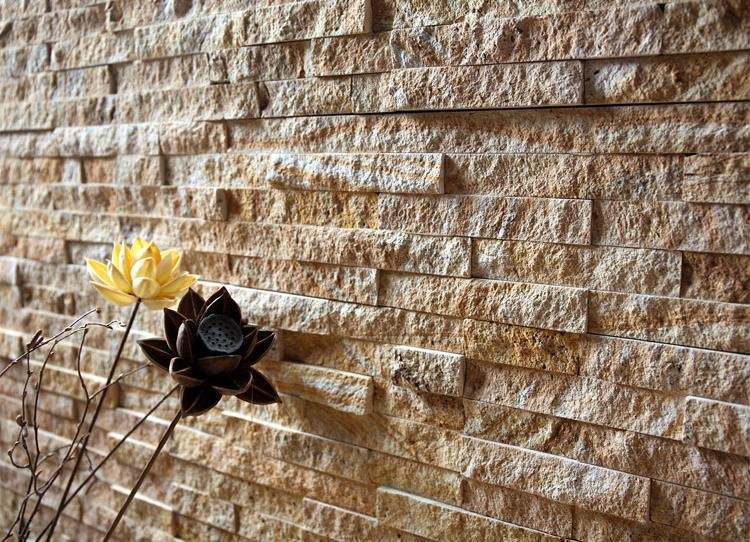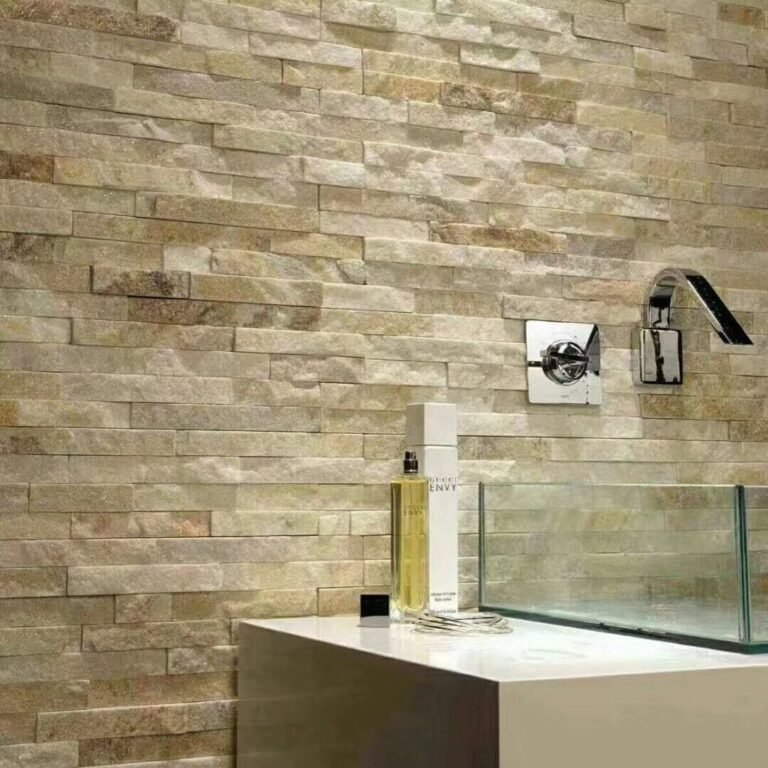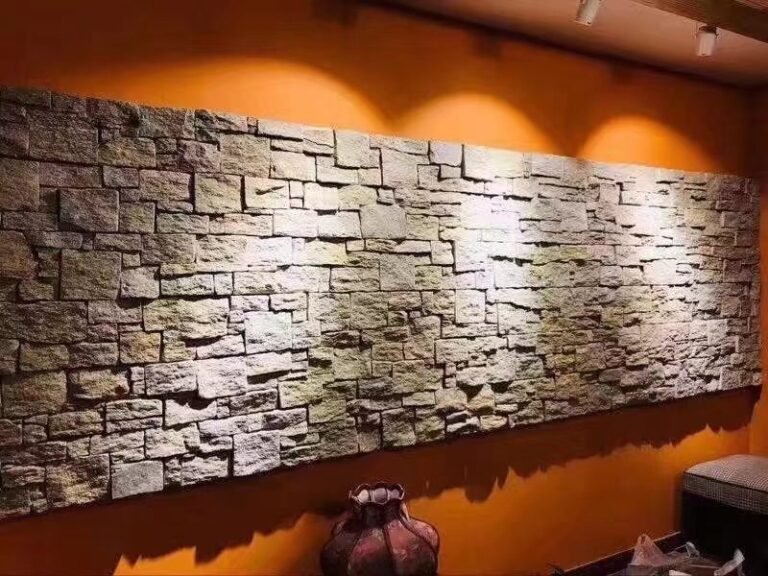
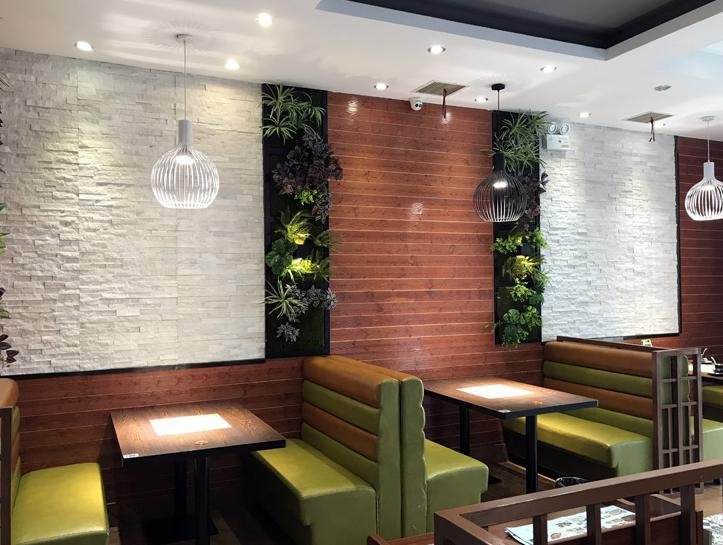
Stone accent walls have become a defining element in contemporary architecture and interior design. In 2026, the demand shows no sign of slowing. Homeowners crave the tactile warmth that only real stone delivers. Architects specify natural cladding to anchor open-plan spaces with visual weight. Builders and distributors across North America and Europe report that stone accent walls rank among the top three renovation upgrades buyers request by name.
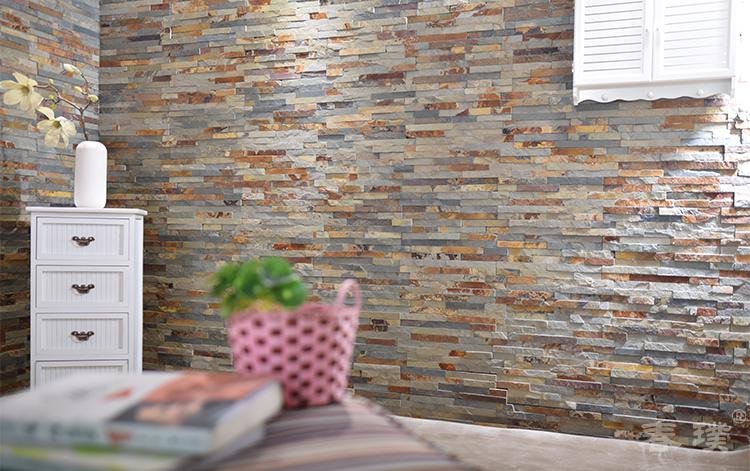
The appeal is straightforward. A single wall clad in stacked slate or quartzite transforms a room from ordinary to memorable. Unlike paint or wallpaper, natural stone adds depth, shadow play, and a material honesty that synthetic alternatives simply cannot replicate. And with modern panel-based systems — precision-cut, pre-assembled, and engineered for fast installation — creating a stone feature wall is faster and more cost-effective than ever before.
This guide walks you through 10 proven stone accent wall ideas, covering both interior and exterior applications. Each concept pairs with a specific natural stone product line so you can visualize the result and source the right material with confidence.
Why Natural Stone for Accent Walls?
Before exploring specific ideas, it helps to understand what sets natural stone apart from manufactured veneers and printed panels.
Authentic texture and color. Every piece of slate, quartzite, marble, or sandstone carries unique mineral veining, grain patterns, and surface relief. No two walls look identical. That one-of-a-kind character is exactly what high-end residential buyers and commercial tenants pay a premium for.
Durability across climates. Quality natural stone panels bonded with marine-grade epoxy tolerate temperature swings from -30°C to +50°C. They resist UV degradation, salt spray, and freeze-thaw cycling. A stone accent wall installed today will look virtually unchanged twenty years from now, inside or out.
Class A fire rating. Natural stone is non-combustible. For code-sensitive projects — commercial lobbies, multi-family residential, hospitality — this eliminates an entire category of compliance headaches. Stacked stone and thin stone veneer from Top Stone Panels carry a Class A fire rating as standard.
10 Stone Accent Wall Ideas for Interior and Exterior Spaces
1. Fireplace Feature Wall
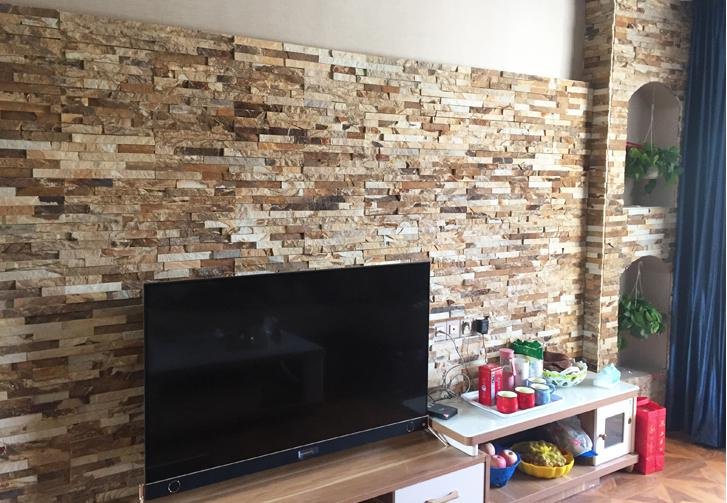
A fireplace wrapped in stacked stone immediately becomes the gravitational center of any room. The rugged, layered texture draws the eye and invites touch. Whether the hearth is a traditional wood-burning insert or a clean-line gas unit, the stone surround amplifies its presence and ties the fireplace to the architectural bones of the space.
Best product: Stacked Stone panels (15×60 cm or 15×55 cm) with matching L-Corner pieces for seamless outside-edge transitions. Available in slate, quartzite, and sandstone with split-face or natural-cleft finishes.
Application: Interior. Works in living rooms, great rooms, and open-plan kitchens where the fireplace anchors one end of the space.
Design tip: Extend the stone cladding from floor to ceiling rather than stopping at the mantel. A full-height fireplace wall reads as an intentional architectural statement, while a partial surround can feel like an afterthought. For distributors stocking this category, earth-toned quartzite blends move fastest — they complement warm wood floors and neutral upholstery without competing for attention. Learn more about stacked stone fireplace design in our detailed guide.
2. Modern Entryway Statement
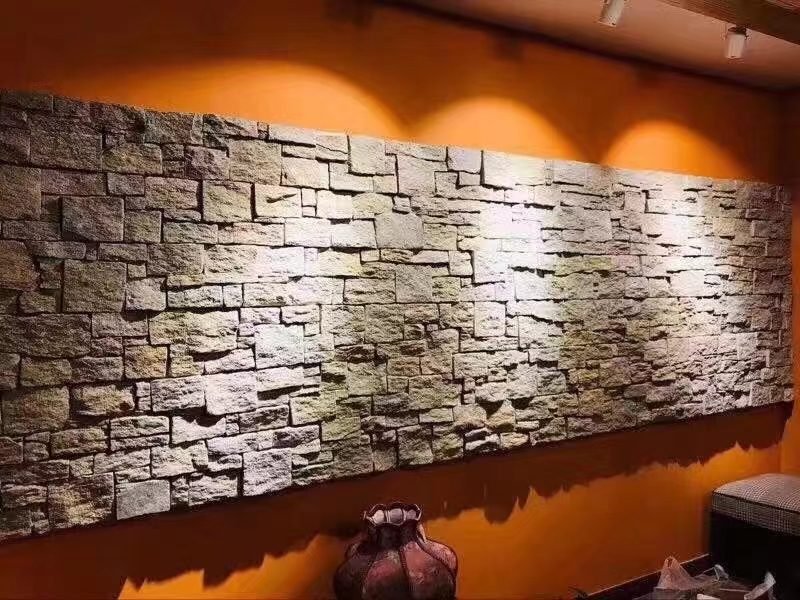
First impressions matter. A stone accent wall in the entryway sets the tone for the entire home or building. Thin ledgestone, with its low-profile horizontal lines, creates a sleek, contemporary welcome that pairs beautifully with modern millwork, recessed lighting, and large-format tile flooring.
Best product: Thin Ledgestone panels (36×10 cm, ultra-thin profile). The slim format preserves floor space and installs cleanly against standard drywall substrates.
Application: Interior. Ideal for residential foyers, boutique hotel lobbies, and corporate reception areas where first impressions carry weight.
Design tip: Pair a single entryway wall with integrated LED strip lighting mounted at the top or bottom edge. The horizontal striations of thin ledgestone catch directional light beautifully, creating shadow lines that shift throughout the day. Specify a monochromatic color range — charcoal slate or silver-grey quartzite — to maintain a clean, gallery-like aesthetic. Distributors should note that ledgestone’s thin profile also makes it viable for elevator cab interiors and narrow corridor walls where standard stacked stone would be too heavy.
3. Kitchen Backsplash Accent
The kitchen backsplash is one of the most visible surfaces in a home, yet most builders default to ceramic tile. A natural stone accent wall behind the cooktop or sink breaks the pattern. Thin stone veneer offers the organic texture and color variation of real stone in a profile thin enough to fit between countertop and upper cabinets without modification.
Best product: Thin Stone Veneer — random strip loose stone that can be arranged in organic, non-repeating patterns. The thin profile (typically under 15 mm) keeps the backsplash flush and practical.
Application: Interior. Residential kitchens, restaurant kitchens, bar backsplashes, and outdoor kitchen shelters.
Design tip: Seal the stone with a food-safe, matte-finish impregnating sealer to protect against grease splatter and acidic spills while preserving the natural surface texture. A honed sandstone or slate veneer in warm tones complements butcher-block countertops and brass hardware. For the B2B buyer, kitchen backsplash stone is an excellent add-on SKU to bundle with stacked stone orders — it increases container fill rate and gives the end customer a coordinated material palette. Read more about how thin stone veneer works in our product explainer.
4. Exterior Facade Highlight
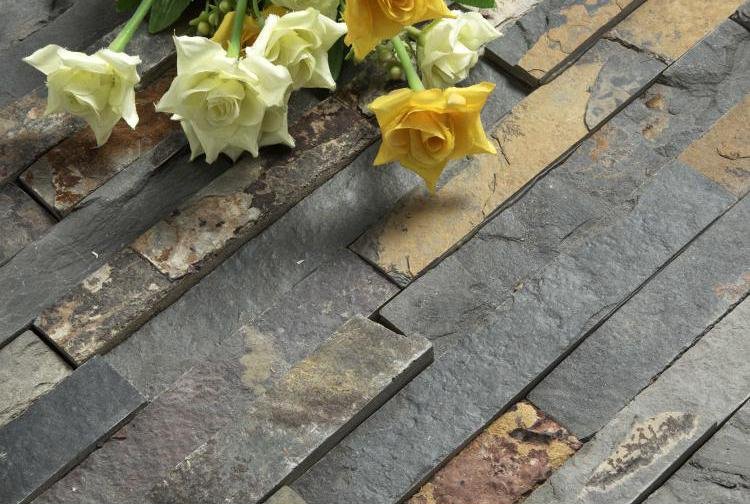
Exterior stone accent walls signal quality before anyone steps inside. A partial facade clad in stacked stone — perhaps a two-story column framing the front door or a horizontal band across the lower third of the building — gives the structure visual grounding and a premium street presence that lifts the perceived value of the entire property.
Best product: Stacked Stone panels (15×60 cm with L-Corners). The panel format accelerates installation on large exterior surfaces, and the L-Corner system wraps building corners cleanly without exposed substrate.
Application: Exterior. Residential facades, commercial building bases, retaining walls, and property entry monuments.
Design tip: Combine stacked stone with smooth-rendered stucco or fiber cement panels for a high-contrast material palette. The juxtaposition of rough stone against flat, painted surfaces is a hallmark of contemporary residential architecture. For builders working in four-season climates, Top Stone Panels’ marine-grade epoxy bond and freeze-thaw tested construction ensure the cladding holds up through decades of weather cycles. Explore more exterior wall design ideas using stacked stone panels in our project gallery.
5. Bathroom Spa Wall
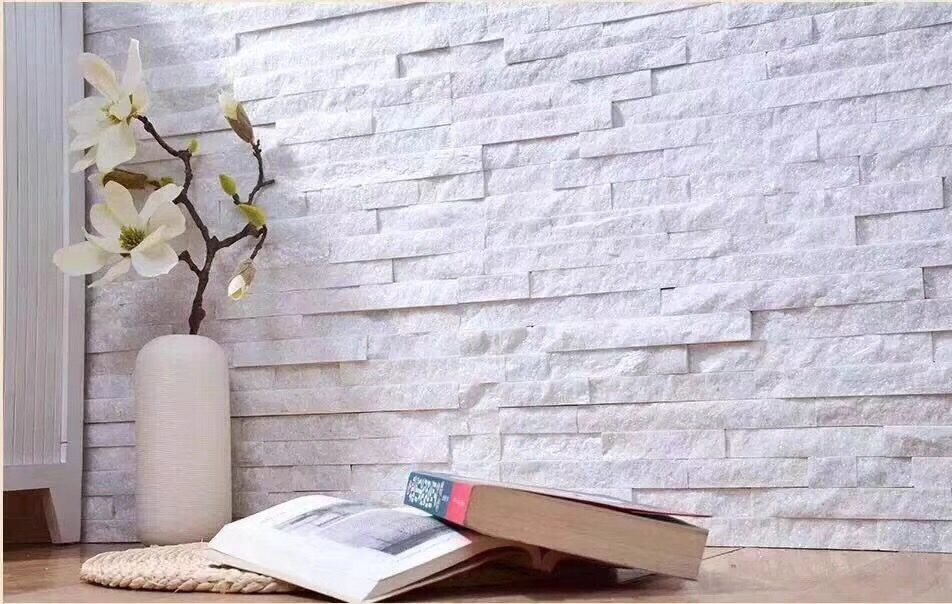
Walk into any five-star hotel spa and you will likely find natural stone on the walls. That same sensory experience translates directly to residential bathrooms. A single accent wall behind the vanity or enclosing the shower niche in split-face stone transforms a utilitarian room into a retreat. The texture catches steam and soft lighting in ways that glazed tile never can.
Best product: Stacked Stone panels in a split-face finish, or Stacked Stone in slate or quartzite. The split-face texture offers maximum tactile depth.
Application: Interior. Master bathrooms, powder rooms, hotel guest bathrooms, and wellness center interiors.
Design tip: Use stone on one wall only and keep surrounding surfaces minimal — large-format porcelain, matte black fixtures, and frameless glass. This restraint lets the stone do all the visual heavy lifting. Ensure the stone is properly sealed with a penetrating sealer rated for wet environments. For distributors, bathroom stone is a strong impulse category: the material quantity per project is small (typically 3–6 m²), making it an ideal sample-driven sale.
6. Commercial Lobby Feature
Corporate lobbies, co-working spaces, and boutique hotel receptions need to communicate quality and permanence in under three seconds. A large-format stone accent wall behind the reception desk or in the elevator lobby does exactly that. Z-Panels, with their interlocking design and larger format, install quickly over expansive wall areas while maintaining a seamless, monolithic appearance.
Best product: Z-Panels (20×55 cm or 15.2×61 cm). The interlocking profile and cement/mesh backing make them ideal for high-traffic commercial environments where flat adhesion and impact resistance matter.
Application: Interior and exterior. Office towers, hotel lobbies, restaurant feature walls, retail flagship stores, and airport lounges.
Design tip: Integrate the stone wall with concealed LED cove lighting at the ceiling line. The uplight grazes the stone surface, amplifying texture and creating a dramatic backdrop that photographs well for social media — free marketing for the building owner. For commercial specifiers, Z-Panels offer a practical advantage: the interlocking system minimizes visible joints on walls exceeding 20 m², reducing the risk of installation errors on large-scale projects. The cement/mesh backing also provides an extra layer of bond security in high-vibration environments like transit hubs.
7. Outdoor Kitchen and BBQ Island
Outdoor living has moved well beyond a patio table and umbrella. Homeowners now invest in fully equipped outdoor kitchens with built-in grills, refrigeration, and pizza ovens. Cladding the base and surrounding walls of these structures in natural stone elevates them from DIY projects to architectural installations that match the quality of the main house.
Best product: Flagstone and Crazy Paving for countertop surfaces and Stacked Stone panels for vertical island faces and surrounding walls.
Application: Exterior. Residential outdoor kitchens, pool pavilions, covered patios, and restaurant terrace dining areas.
Design tip: Use stacked stone on the island base for a vertical texture, then cap with flagstone for a durable, heat-resistant work surface. The two stone types share a geological origin, so the combination looks intentional rather than mismatched. Specify quartzite or sandstone for the countertop — both resist thermal shock from hot grill grates. For the builder or landscape architect, this two-product approach simplifies procurement: you source both SKUs from the same manufacturer in a single container, reducing freight costs and ensuring color coordination.
8. Staircase Accent Wall
The wall alongside a staircase is one of the most underutilized surfaces in residential design. It is tall, narrow, and impossible to furnish — which makes it an ideal candidate for a stone accent wall. Thin ledgestone applied along the stairwell wall creates a vertical ribbon of texture that guides the eye upward and adds a sense of height and drama to an otherwise transitional space.
Best product: Thin Ledgestone panels (36×10 cm). The ultra-thin profile is critical here: stairwell walls are often close to the handrail and balustrade, so minimizing the stone’s projection from the wall preserves safe passage width.
Application: Interior. Residential staircases, multi-story entry halls, and commercial atrium stair cores.
Design tip: Install step lighting or recessed wall washers every three to four risers. The light rakes across the ledgestone surface, creating rhythmic shadow patterns that change as you ascend. For open-riser staircases with glass balustrades, the stone wall becomes even more prominent — visible from multiple angles and floors. Distributors should position thin ledgestone as a stairwell-specific solution in their marketing materials; it solves a real design problem that homeowners and interior designers frequently face.
9. Bedroom Headboard Wall
Headboard walls clad in natural stone have become a signature element in boutique hotel suites and are now crossing over into high-end residential bedrooms. The stone replaces the traditional upholstered headboard with something far more permanent and visually striking. A wall of stacked slate or quartzite behind the bed frame creates a grounding, cave-like intimacy that encourages rest and disconnection.
Best product: Stacked Stone panels in a natural-cleft or honed finish. Choose quieter, muted color palettes — soft greys, warm taupes, or desaturated earth tones — to maintain the bedroom’s restful atmosphere.
Application: Interior. Master bedrooms, guest suites, boutique hotel rooms, and luxury vacation rentals.
Design tip: Keep the stone wall as the room’s sole feature surface. Pair it with linen bedding, warm wood nightstands, and indirect lighting. Avoid hanging artwork on the stone — the texture itself is the art. For installers, note that the wall behind a bed typically spans 3–4 meters wide and 2.4–2.7 meters high, making this a manageable single-day installation with panel-format stone. The B2B angle: vacation rental operators are increasingly specifying stone headboard walls as a differentiator in listing photos. It is a high-impact, moderate-cost upgrade that photographs exceptionally well.
10. Office Boardroom Feature
Boardrooms and executive meeting rooms benefit from materials that communicate authority and permanence. A stone accent wall behind the head of the table or along the presentation wall establishes a backdrop that video calls, in-person pitches, and client meetings all benefit from. Thin stone veneer, with its refined surface and minimal projection from the wall, integrates cleanly with acoustic panels, integrated displays, and hidden cable management.
Best product: Thin Stone Veneer — random strip format arranged in a controlled, linear layout for a professional aesthetic. Alternatively, Z-Panels for a more structured, interlocking pattern.
Application: Interior. Corporate boardrooms, law firm conference rooms, co-working premium meeting pods, and government offices.
Design tip: Specify a dark slate or charcoal quartzite for maximum contrast with white projection screens and polished conference tables. The dark stone absorbs ambient light, reducing glare on screens during presentations. For the commercial distributor, boardroom projects are typically 8–15 m² per room but repeat across multiple floors or buildings in the same development. Position thin stone veneer as a bulk-SKU for fit-out contractors managing multi-unit commercial renovations. Understanding the differences between stone panel types helps specifiers make better choices — our stone veneer panels guide breaks down six types that distributors should consider stocking.
Choosing the Right Stone Type for Your Stone Accent Wall
Not every stone product suits every application. The table below maps the six Top Stone Panels product lines to their ideal accent wall use cases, helping you — whether you are a distributor planning inventory, a builder sourcing for a project, or an architect writing specifications — select the right material quickly.
| Product Line | Panel Sizes | Best Applications | Interior / Exterior | Key Advantage |
|---|---|---|---|---|
| Stacked Stone | 15×60 cm / 15×55 cm | Fireplaces, facades, headboard walls, outdoor kitchens | Both | Highest texture depth; L-Corner system for clean edges |
| Thin Ledgestone | 36×10 cm (ultra-thin) | Entryways, staircases, narrow walls | Interior | Minimal wall projection; sleek horizontal lines |
| Z-Panels | 20×55 cm / 15.2×61 cm | Commercial lobbies, large feature walls | Both | Interlocking design; cement/mesh backing for heavy-duty use |
| Thin Stone Veneer | Random strip (loose stone) | Kitchen backsplashes, boardrooms, accent panels | Interior | Thinnest profile; flexible arrangement patterns |
| Flagstone & Crazy Paving | Mesh-backed random geometric | Outdoor kitchen tops, patio surfaces, garden walls | Exterior | Heat resistant; natural non-slip texture |
| Stacked Stone Columns | Custom pillar sections | Entry pillars, porch columns, pergola posts | Exterior | Pre-formed cylindrical sections; fast installation |
All six product lines are manufactured from 100% natural stone — slate, quartzite, marble, or sandstone — using infrared CNC cutting for dimensional accuracy. Every panel undergoes a three-step quality control process and is bonded with marine-grade epoxy for long-term adhesion. Top Stone Panels also offers stone columns and pillars for projects that extend beyond flat wall applications. For a deeper look at how stacked stone panels are manufactured and specified, see our explainer article.
Frequently Asked Questions About Stone Accent Walls
What is the best natural stone for accent walls?
Stacked stone panels made from slate, quartzite, or sandstone are the most popular choice for accent walls. They offer rich texture, natural color variation, and easy panel-based installation. For sleek modern interiors, thin ledgestone or thin stone veneer provides a refined look with minimal thickness. The best stone depends on whether the application is interior or exterior, the desired texture, and the overall design style.
How much does a natural stone accent wall cost?
Natural stone accent wall costs vary by stone type, panel format, and project scale. Stacked stone panels typically range from $15 to $45 per square foot installed. Thin ledgestone and Z-panels fall in a similar range. Sourcing quarry-direct from manufacturers like Top Stone Panels can reduce material costs significantly, especially for container-volume orders. Installation labor adds $8 to $20 per square foot depending on wall preparation and complexity.
Can natural stone accent walls be used outdoors?
Yes. Natural stone accent walls perform exceptionally well in exterior applications. High-quality stacked stone panels bonded with marine-grade epoxy withstand temperatures from -30°C to +50°C, resist UV fading, and pass salt spray testing. Exterior stone cladding is ideal for facade highlights, outdoor kitchens, garden walls, and entryway features. Proper substrate preparation and waterproofing ensure decades of durability.
How do you install a stone accent wall?
Stone accent wall installation depends on the panel type. Stacked stone panels and Z-panels use a thin-set mortar adhesive applied to a clean, flat substrate. Thin ledgestone and thin stone veneer can be applied directly to properly prepared walls. Most panel systems interlock or align edge-to-edge, minimizing visible seams. Professional installers typically complete a standard feature wall in one to two days. Always follow the manufacturer’s installation guidelines for best results.
Start Your Next Stone Accent Wall Project
Whether you are specifying stone for a single fireplace or sourcing container volumes for a distribution warehouse, the right starting point is a conversation with a manufacturer who understands your market. Top Stone Panels brings 18+ years of quarry-direct production experience, six product lines covering every accent wall application, and the manufacturing capacity to scale with your project pipeline. All products ship from Yixian, Hebei province, with a minimum order of one 20GP container per product line. Custom color blending is available to match any design specification.
Request a sample kit or volume quote to see how natural stone accent walls from Top Stone Panels can elevate your next residential or commercial project.