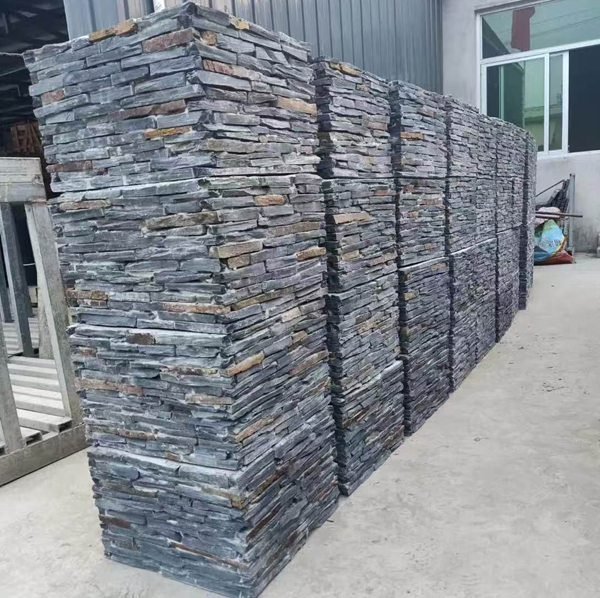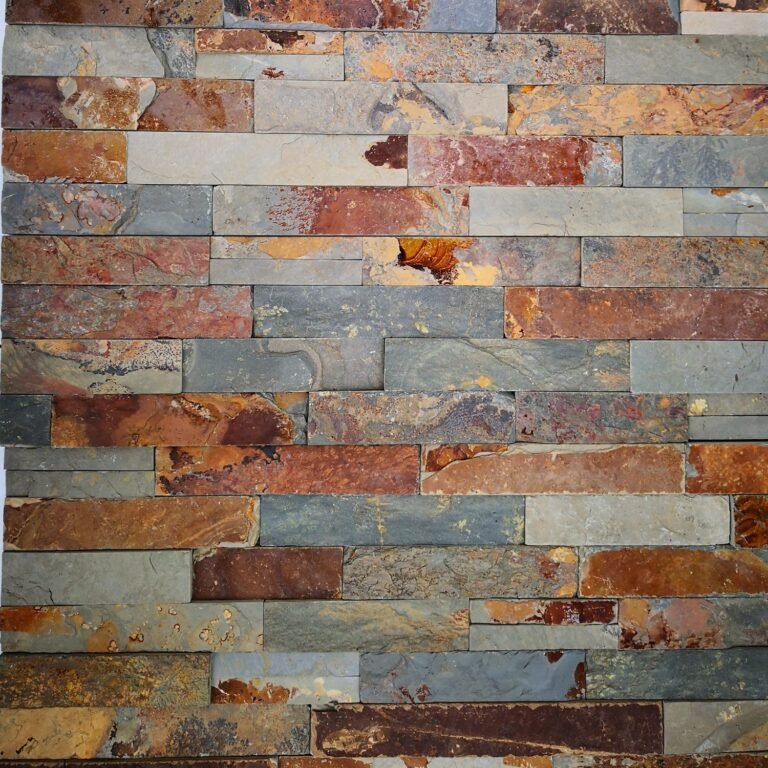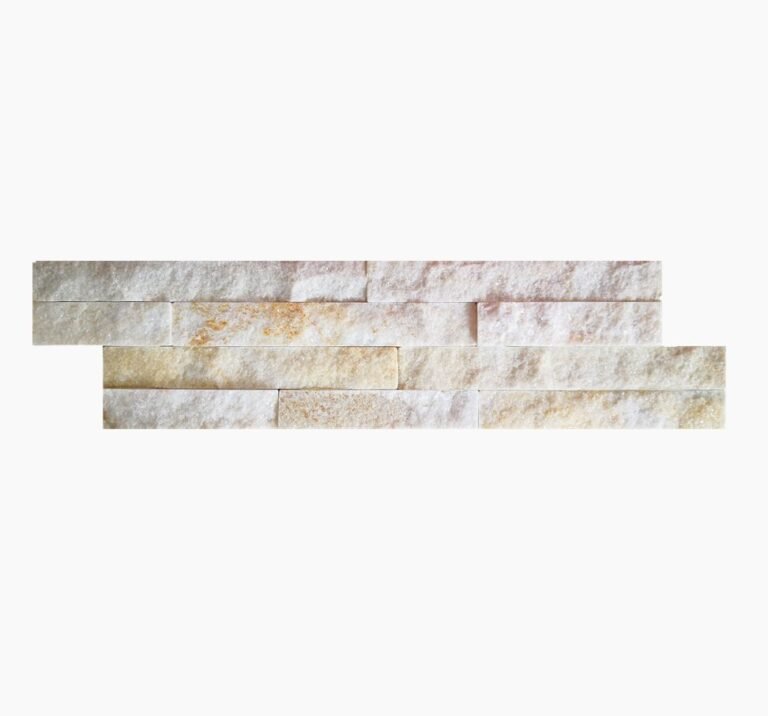
A 10mm-thick slab of natural quartzite, bonded to a marine-grade epoxy backing, can cover a commercial lobby wall at one-third the weight of traditional full-thickness masonry — and ship in a standard 20-foot container from quarry to job site. Thin stone veneer has quietly displaced heavier cladding options across North American and European construction markets over the past decade, driven by tighter building codes, rising labor costs, and a growing preference for authentic natural materials over manufactured alternatives.
This guide breaks down the technical specifications, material options, and application criteria that distributors, architects, and builders need when evaluating thin stone veneer for project specifications or inventory planning. All performance data and production specifications referenced here come from Top Stone Panels, a natural stone cladding manufacturer operating out of Yixian County, Hebei Province, with 18+ years of quarrying and export experience since 2005.
What Is Thin Stone Veneer?
Thin stone veneer is a cladding product made from real, quarried natural stone — slate, quartzite, sandstone, or marble — cut to a reduced thickness between 8mm and 15mm. Unlike full-thickness stone, which typically measures 30mm to 50mm, thin veneer achieves the same visual texture and geological character at a fraction of the weight. A single square meter of thin veneer weighs approximately 25–35 kg, compared to 60–80 kg for traditional dimensional stone.
The reduced weight is not cosmetic. It translates directly into structural savings: walls clad in thin stone veneer require less reinforcement, smaller footings, and lighter steel or wood framing behind the substrate. For multi-story commercial projects, the cumulative load reduction can shift engineering decisions — and budgets — in meaningful ways.
The term “thin stone veneer” covers a range of product formats. Split-face random strips, thin ledgestone panels, and mosaic tiles all fall under this category, distinguished primarily by their cutting pattern, face texture, and modular dimensions. What they share is the core principle: real stone, thin profile, adhesive-bonded installation rather than mechanical anchoring.
Types of Thin Stone Veneer Products
Manufacturers organize thin stone veneer into distinct product families based on how the stone is cut, assembled, and presented. Understanding these categories matters for specification accuracy and installation planning.
Split-Face Random Strips
The most common format in commercial projects. Natural stone is split along its bedding plane to expose a rough, textured face, then cut into random-length strips. Installers lay the strips in a staggered, ashlar-style pattern. The irregular lengths and split texture produce a wall surface with significant depth and shadow play. Thin stone veneer strips are available in widths from 50mm to 150mm and random lengths up to 600mm.
Thin Ledgestone Panels
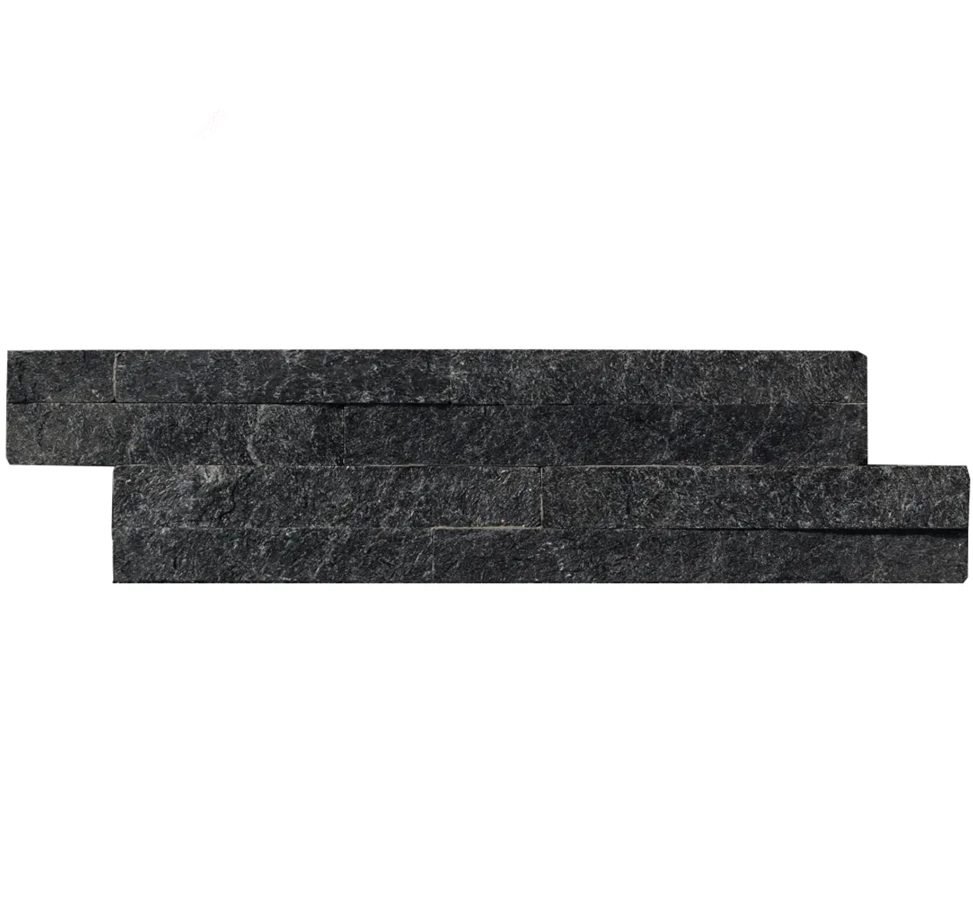
These are pre-assembled panels where thin stone strips are bonded to a backing sheet in a uniform horizontal course. The 36x10cm ultra-thin mini ledgestone format from Top Stone Panels is a representative example — each panel presents a consistent coursing pattern that installs faster than loose strips and reduces on-site labor. Production capacity for thin ledgestone at this facility reaches 60,000 m²/month, which supports large-volume commercial orders without extended lead times.
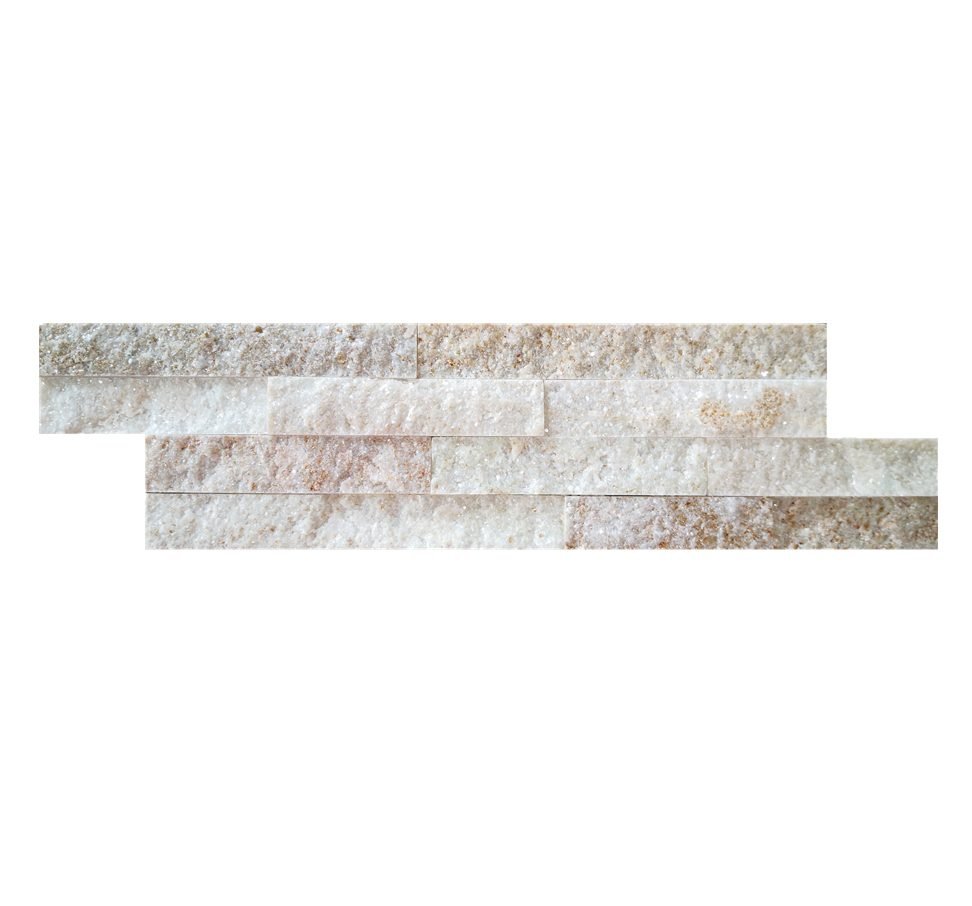
Stacked Stone Panels
A dry-stacked visual where stone pieces are bonded edge-to-edge with no visible grout lines. The result is a clean, contemporary surface with tight horizontal joints. Stacked stone panels are popular in modern commercial interiors and residential feature walls. For a detailed look at how these panels are constructed and specified, see our guide to stacked stone panels.
Z-Panels
Z-Panels feature an interlocking profile that hides joint lines between panels. The Z-shaped edge allows one panel to overlap the next, creating a continuous stone surface with no exposed seams. This format is preferred for large-area exterior applications where visible panel joints would compromise the aesthetic.
Thickness and Dimensional Specifications
Thickness is the defining variable in thin stone veneer, and it varies by product type, material, and intended application. Here is how the main formats compare:
| Product Type | Stone Thickness | Panel/Strip Dimensions | Weight (approx.) | Primary Application |
|---|---|---|---|---|
| Ultra-Thin Ledgestone | 8–10mm | 36 × 10 cm | 25–28 kg/m² | Interior walls, feature walls, columns |
| Thin Stone Veneer Strips | 10–15mm | Random lengths, 5–15 cm wide | 30–35 kg/m² | Exterior cladding, commercial facades |
| Stacked Stone Panels | 10–20mm | 60 × 15 cm (typical) | 35–45 kg/m² | Interior and exterior accent walls |
| Z-Panels | 12–20mm | 60 × 15 cm (interlocking) | 38–48 kg/m² | Large-area exterior walls |
| Full-Thickness Stone (reference) | 30–50mm | Variable | 60–80 kg/m² | Traditional masonry, load-bearing |
The 36×10cm ultra-thin format deserves particular attention. At 8–10mm stone thickness with backing, this product ships efficiently — a 20-foot container holds approximately 900–1,100 m² — and installs on standard wall substrates without additional structural support. For distributors managing shipping costs per square meter, the container yield difference between ultra-thin and standard formats represents a significant unit economics advantage.
Thickness tolerance matters as much as nominal thickness. Top Stone Panels runs a controlled tolerance process where each batch is measured at multiple points during production. Variation beyond ±1.5mm triggers rejection at the in-process QC checkpoint, which prevents uneven surfaces and installation alignment issues on the job site.
Natural Stone Materials Used in Thin Veneer
Thin stone veneer is produced from four primary stone types, each with distinct geological properties that affect color range, durability, and suitable applications.
Slate
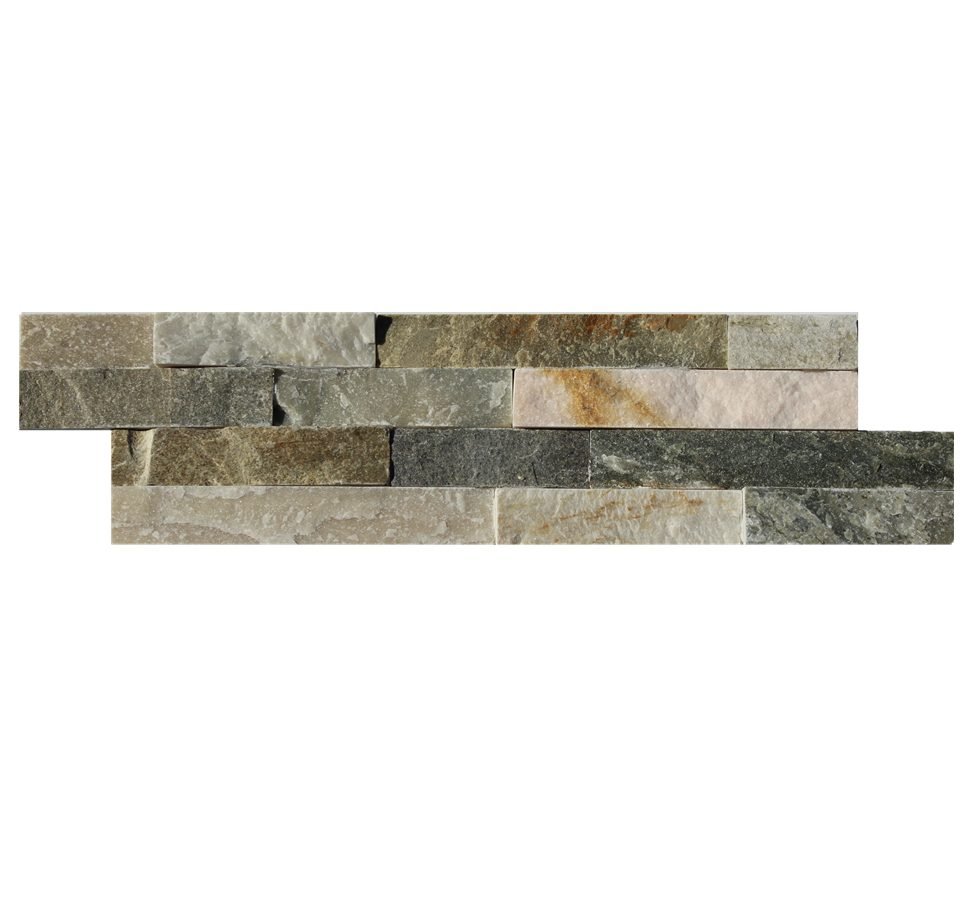
Metamorphic rock with excellent cleavage planes, making it naturally suited to thin splitting. Slate thin veneer delivers muted earth tones — charcoals, greens, rusts, and grays — with a slightly undulating split face. Its low water absorption rate (typically under 0.4%) makes slate a reliable choice for exterior applications in freeze-thaw climates.
Quartzite
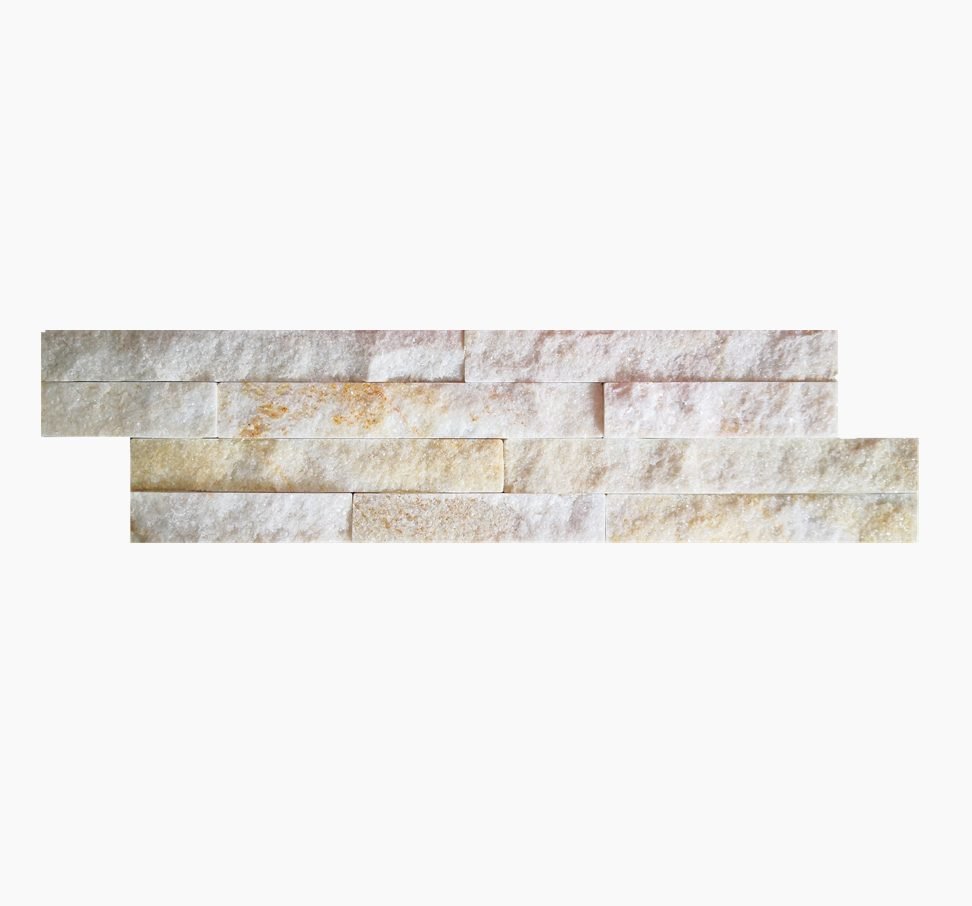
A harder metamorphic stone formed from sandstone under extreme heat and pressure. Quartzite thin veneer offers brighter color options — whites, creams, golds, and sparkling bronze tones — with superior abrasion resistance. The crystalline structure produces a subtle reflectivity that changes under different lighting conditions, which architects leverage for interior feature walls and lobby cladding.
Sandstone
Sedimentary rock with warm, natural color variation in buffs, tans, and ochres. Sandstone thin veneer has a softer visual texture compared to quartzite or slate, and its relatively uniform grain structure allows for consistent splitting at thin gauges. It is commonly specified for projects targeting a warm, organic aesthetic in hospitality and residential applications.
Marble
Metamorphic limestone with distinctive veining patterns. Marble thin veneer is specified for high-end interior projects where the visual signature of natural veining is required. The stone is cut thinner than traditional marble slabs, reducing both weight and material cost while preserving the aesthetic impact of the veined surface.
All four materials are processed at the Top Stone Panels facility using infrared CNC diamond blade cutting, with batch-specific vein selection to maintain color consistency across an entire project order. The sourcing process from China involves direct quarry-to-factory control, which is how color matching remains achievable at scale.
Backing Systems and Performance Standards
The stone layer in thin veneer is only half the product. The backing system determines installation method, substrate compatibility, and long-term performance under environmental stress.
Marine-Grade Epoxy Bond
Stone pieces are bonded to a fiberglass mesh or composite backing using marine-grade epoxy adhesive. This is the highest-performance option, rated for exterior exposure, moisture contact, and temperature cycling from -30°C to +50°C. Epoxy-bonded panels are suitable for wet areas, pool surrounds, and exterior walls in climates with significant seasonal temperature swings.
Cement Backing
Stone strips are embedded in a thin cementitious carrier layer. Cement backing provides a rigid panel format that installs with standard thinset mortar, making it familiar to tile contractors. This option is cost-effective for large interior wall areas and exterior applications in moderate climates.
Mesh Backing
Fiberglass or polyester mesh is adhered to the back of pre-arranged stone strips. Mesh-backed sheets are flexible, lightweight, and can conform to curved surfaces — columns, arches, and radius walls. The column cladding application is where mesh backing earns its specification, as rigid panels cannot wrap cylindrical surfaces.
Performance Benchmarks
Regardless of backing type, thin stone veneer from this production line is tested to the following standards:
- Fire rating: Natural A-grade (non-combustible stone, epoxy rated for flame spread Class A)
- UV stability: Natural stone is inherently UV-resistant; no fading under prolonged sun exposure
- Salt-spray resistance: Tested for coastal applications; no degradation after extended salt exposure
- Freeze-thaw cycling: Withstands repeated cycles at -30°C to +50°C without delamination or cracking
These performance parameters align with ASTM C97 (Standard Test Methods for Absorption and Bulk Specific Gravity of Dimension Stone) and related dimensional stone testing standards referenced by architects and specifiers in North American and European markets.
Where to Use Thin Stone Veneer: Application Guide
Thin stone veneer serves both interior and exterior applications, but the product format and backing choice should match the specific use case. Here is how specifiers typically assign thin veneer across project types:
Commercial Exterior Facades
Retail storefronts, office building lobbies, and mixed-use developments use thin stone veneer to deliver a natural stone facade without the structural cost of full-thickness masonry. The weight reduction allows installation over metal stud framing with cement board substrate, eliminating the need for shelf angles and mechanical anchors required by heavier stone. For exterior design concepts, our guide on stacked stone panels for exterior walls covers layout strategies in detail.
Interior Feature Walls and Accent Surfaces
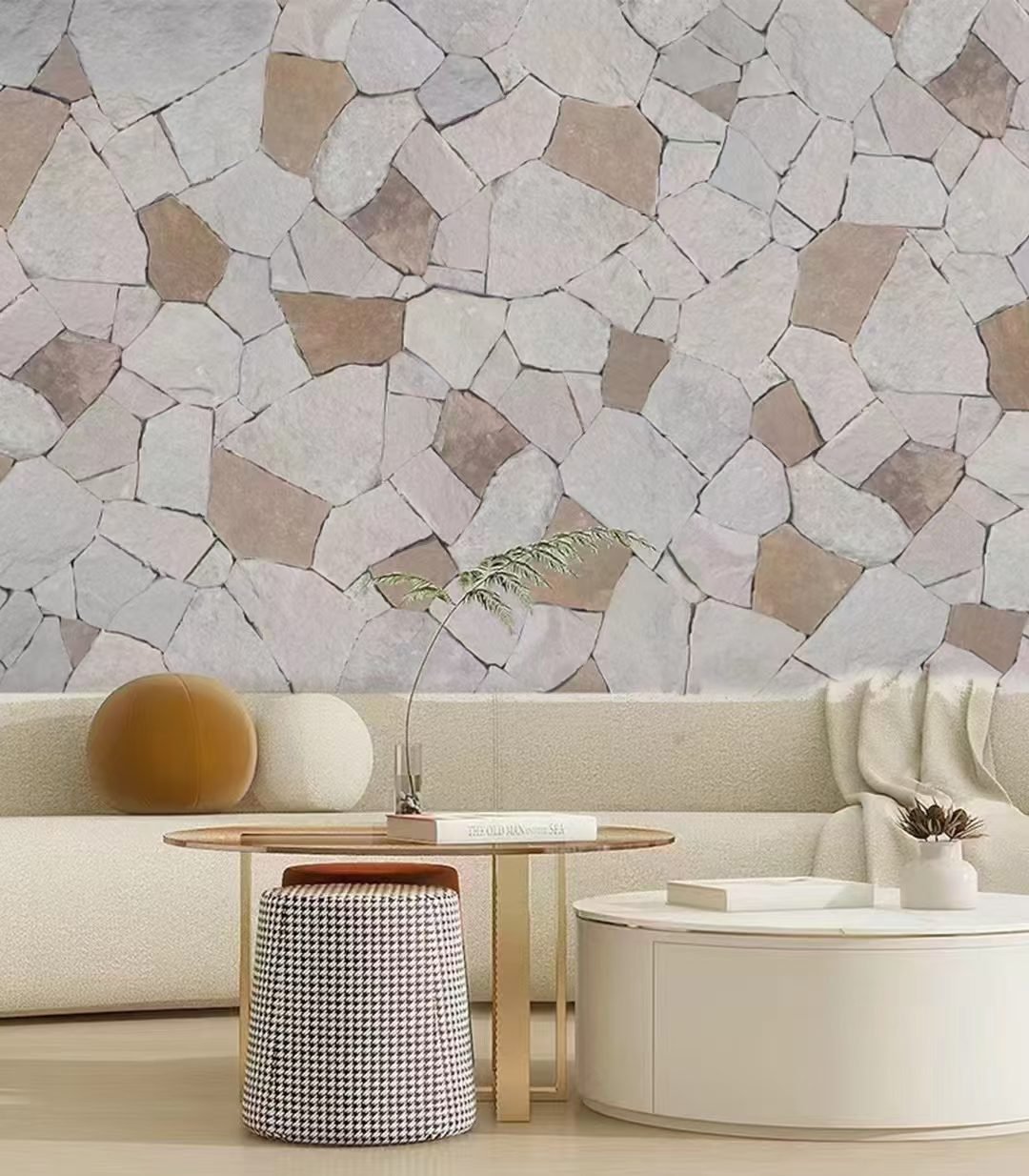
Hotel lobbies, restaurant dining areas, corporate reception walls, and retail feature displays. The ultra-thin 36×10cm ledgestone format installs quickly on drywall or plywood substrates using construction adhesive, making it practical for renovation projects where demolition of existing wall finishes is not desired.
Column and Pillar Cladding
Structural columns in parking structures, building lobbies, and covered walkways. Mesh-backed thin veneer wraps cylindrical or rectangular columns with minimal added bulk. The thin profile preserves the column’s original dimensions while delivering a finished natural stone appearance. See our stone column products for specification details.
Residential Applications
Fireplace surrounds, kitchen backsplashes, foundation skirting, and garden retaining wall caps. For residential builders and remodelers, thin stone veneer offers a natural material upgrade at a price point and installation timeline comparable to high-end manufactured stone, but with the geological authenticity that manufactured products cannot replicate. The distinction between real and manufactured stone is covered in depth in our natural stone veneer vs. cultured stone comparison.
Wet Areas and Pool Surrounds
Epoxy-bonded thin veneer is specified for shower walls, spa surrounds, and pool house interiors. The natural stone face is impervious to water, and the marine-grade epoxy backing prevents moisture intrusion at the bond line. Slate and quartzite are the preferred materials here due to their low absorption rates.
Thin Stone Veneer vs. Full-Thickness Stone: A Comparison
For buyers evaluating whether to specify thin veneer or traditional full-thickness stone, the decision typically comes down to five variables: weight, cost, installation, structural requirements, and application scope.
| Factor | Thin Stone Veneer | Full-Thickness Stone |
|---|---|---|
| Thickness | 8–20mm | 30–50mm |
| Weight per m² | 25–48 kg | 60–80 kg |
| Installation method | Adhesive bond to substrate | Mortar bed + mechanical anchors |
| Structural support required | Standard framing (wood/metal stud) | Reinforced footing, shelf angles |
| Labor skill level | Tile-setter or general contractor | Specialized mason |
| Installation speed | 8–15 m² per day per crew | 3–6 m² per day per crew |
| Material cost per m² | Moderate | Higher (more raw stone per unit) |
| Shipping cost per m² | Lower (higher container yield) | Higher (lower container yield) |
| Load-bearing capability | Cladding only (non-structural) | Can be structural |
| Suitable for retrofit/renovation | Yes — installs over existing walls | Limited — requires structural assessment |
The data favors thin stone veneer for the majority of commercial and residential cladding projects where stone is specified for its visual and textural qualities rather than its structural capacity. Full-thickness stone retains its position in heritage restoration, load-bearing masonry walls, and certain landscape applications where mass is functional.
Quality Control and Testing Standards
Thin stone veneer quality depends on process control at three stages: raw material selection, in-process production, and pre-shipment inspection. Cutting corners at any stage produces visible defects on the finished wall — color inconsistency, thickness variation, or bond failure.
Raw Material Selection
Quarried stone blocks are graded by color, veining pattern, and structural integrity before entering production. Blocks with internal fractures, excessive iron staining, or inconsistent veining are sorted out at this stage. Same-vein color sorting ensures that stone from a single geological vein is processed together, which is how batch-to-batch color matching is achieved.
In-Process Quality Checks
During cutting and assembly, each batch undergoes thickness measurement, dimensional verification, and bond strength spot-checks. The infrared CNC diamond blade cutting system maintains dimensional accuracy to within ±0.5mm on strip width and length. Thickness tolerance is held to ±1.5mm across the production run.
Pre-Shipment Final Inspection
Completed orders are inspected for surface defects, edge chipping, color consistency against approved samples, and packaging integrity. The three-step QC process — raw selection, in-process re-check, and final inspection — is standard across all product lines, including flagstone and thin stone veneer.
For specifiers and buyers who require independent testing, thin stone veneer products can be submitted to third-party labs for compliance with ASTM C97, ASTM C170 (compressive strength), and EN 1469 (European standard for natural stone cladding) testing protocols.
How to Source Thin Stone Veneer: A Buyer’s Checklist
Distributors and project buyers evaluating thin stone veneer suppliers should verify the following parameters before placing an order:
- Quarry ownership or control: Manufacturers with direct quarry access control the raw material pipeline and can guarantee color consistency across repeat orders.
- Production capacity: A facility producing 40,000+ m²/month for thin veneer (and 60,000+ m²/month for thin ledgestone) can fulfill container-volume orders without multi-month delays.
- Minimum order quantity: One 20-foot container (approximately 900–1,100 m² for ultra-thin formats) is the standard MOQ for export orders.
- Packaging protocol: Stone is fragile in transit. A zero-breakage packaging system — 3–5 layer corrugated cartons, fumigation-free pallets, 4–6 steel bands, and airbag dunnage — is non-negotiable for international shipments.
- Lead times: Samples should be available within 1–3 days. Bulk production runs 20–25 working days, with first orders taking 25–30 days when custom packaging is required.
- Trade terms: FOB Xingang/Tianjin is standard, with EXW, CIF, and DDP options available depending on buyer logistics capability.
- Payment structure: 30% T/T deposit with 70% balance before shipment is the standard export payment arrangement.
For a more detailed walkthrough of the procurement process — including how to evaluate factory capabilities, request samples, and manage logistics from a Chinese stone cladding supplier — see our guide on sourcing stone cladding from China.
Installation Considerations for Thin Stone Veneer
Thin stone veneer installs differently from full-thickness stone, and specifying the correct installation method at the design stage prevents costly field corrections. The key variables are substrate preparation, adhesive selection, and joint treatment.
Substrate requirements depend on the application. Interior drywall, cement board, and plywood are all acceptable substrates for interior installations, provided the surface is flat (within 3mm over 3 meters), clean, and structurally sound. Exterior applications require a cementitious substrate — cement board, scratch-coated concrete masonry, or poured concrete — with a weather-resistant barrier behind the substrate.
Adhesive selection follows the backing type. Epoxy-bonded panels install with polymer-modified thinset mortar (ANSI A118.4 or equivalent). Mesh-backed sheets use the same mortar with a notched trowel, typically 6mm notch for interior and 10mm for exterior. The critical requirement is full adhesive coverage behind the stone — voids in the bond line create failure points under thermal cycling.
Joint treatment varies by product type. Split-face random strips are installed with tight, dry-fit joints where the irregular stone edges meet naturally. Ledgestone panels and stacked stone panels are designed for zero-grout installation where the horizontal coursing conceals joints between panels. For a step-by-step installation walkthrough, the guide on how to install stacked stone veneer panels covers the process applicable to most thin veneer formats.
Thin Stone Veneer: Frequently Asked Questions
What is the minimum thickness for natural thin stone veneer?
The practical minimum for natural stone thin veneer is 8mm, achieved in the ultra-thin ledgestone format (36×10cm). At this thickness, the stone retains structural integrity when bonded to a backing sheet. Going thinner risks breakage during handling and installation, and reduces the natural surface texture that gives stone its visual character.
Can thin stone veneer be installed on exterior walls in cold climates?
Yes, provided the correct backing system and stone material are specified. Epoxy-bonded thin veneer with slate or quartzite faces withstands freeze-thaw cycling between -30°C and +50°C. The stone’s natural low water absorption (below 0.5% for quartzite and slate) prevents the internal ice expansion that causes spalling in higher-absorption materials.
How does the shipping cost of thin stone veneer compare to full-thickness stone?
Thin stone veneer ships at roughly one-third to one-half the weight of full-thickness stone per square meter. A standard 20-foot container holds approximately 900–1,100 m² of ultra-thin (8–10mm) ledgestone, compared to roughly 350–500 m² of 30mm full-thickness veneer. The per-square-meter shipping cost is therefore significantly lower for thin formats.
Is thin stone veneer suitable for curved walls and columns?
Mesh-backed thin stone veneer is designed for curved applications. The flexible backing allows the stone sheet to conform to radius walls, cylindrical columns, and arched openings with a minimum bend radius of approximately 300mm. Rigid backing formats (epoxy board, cement board) are not suitable for curved surfaces.
What is the typical lead time for a container order of thin stone veneer?
Sample production takes 1–3 business days. Bulk production runs 20–25 working days for standard orders, or 25–30 working days for first-time orders that require custom packaging design and approval. Shipping from Xingang/Tianjin port adds transit time depending on destination — approximately 25–35 days to North American West Coast ports, 35–45 days to European ports.
Summary: Specifying Thin Stone Veneer with Confidence
Thin stone veneer occupies a specific position in the cladding market: it delivers genuine natural stone — with all the geological texture, color variation, and material authenticity that quarried stone provides — at a weight, cost, and installation complexity that aligns with contemporary construction methods. The 8–20mm thickness range covers applications from ultra-light interior feature walls to exterior facades in demanding climates.
The specification decision comes down to matching the right product format (ledgestone, split-face strips, stacked stone, or Z-panels), the right material (slate, quartzite, sandstone, or marble), and the right backing system (epoxy, cement, or mesh) to the project’s performance requirements and installation conditions. When sourced from a manufacturer with quarry control, CNC precision cutting, and documented QC protocols, thin stone veneer is a predictable, high-performance cladding material that ships efficiently and installs without specialized masonry labor.
For product specifications, sample requests, or container-order pricing, review the thin stone veneer product line and thin ledgestone panels available from Top Stone Panels.