Walk into any building materials showroom in North America or Europe and you will see stone veneer panels branded with the distributor’s name — not the factory’s. That distributor did not build a factory, hire workers, or invest in CNC cutting equipment. They partnered with an OEM or private label manufacturer, and the panels on display were produced to their specifications, packed in their branded boxes, and shipped in containers addressed to their warehouse.
This arrangement is the backbone of the global stone cladding trade. The majority of natural stone panels sold under Western brand names are manufactured in China’s stone processing regions — Hebei, Fujian, and Shandong — by factories that specialize in contract production. The question for B2B buyers is not whether OEM and private label sourcing works; it clearly does. The question is how to structure the partnership so that your brand reputation is protected and your margins stay healthy.
At Top Stone Panels, OEM and private label production has been a core part of our business for over 18 years. We manufacture under our buyers’ brands for distribution across North America, Europe, and Australia. This guide draws on that experience to explain what OEM and private label actually involve, where the pitfalls hide, and how to build a partnership that scales.
OEM vs Private Label: What Is the Difference?
The two terms are sometimes used interchangeably, but they describe different levels of customization.
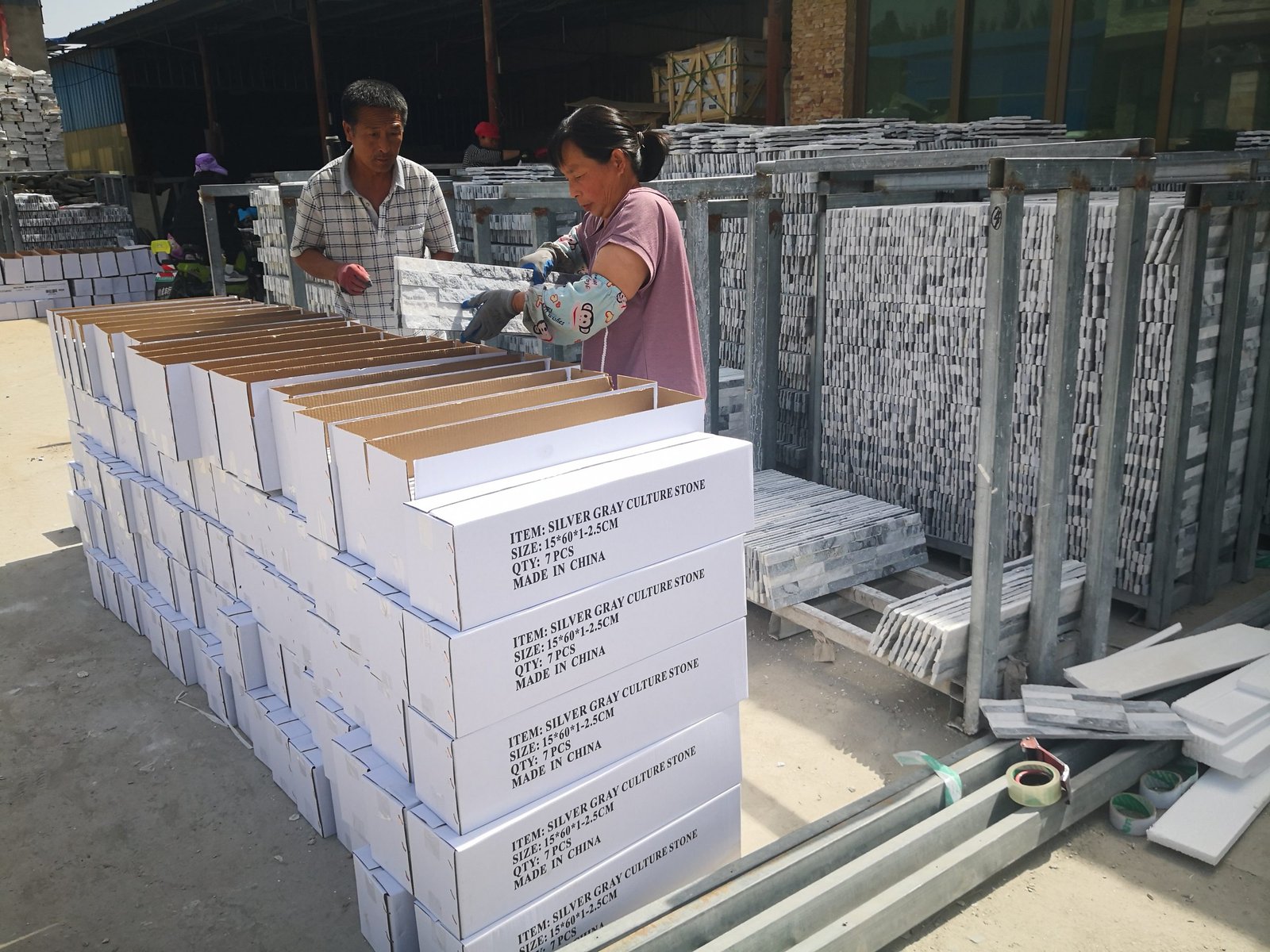
Private label means the factory produces its standard product line — standard stone types, standard panel dimensions, standard backing methods — but the finished panels carry your brand name. Your logo appears on the packaging, your product codes are printed on the box labels, and the marketing collateral in the box (installation guides, care cards, warranty information) bears your brand identity. The stone itself is the factory’s existing design. This is the faster, lower-risk route because the factory already has production tooling, quality benchmarks, and container loading patterns optimized for these products.
OEM (Original Equipment Manufacturing) goes deeper. You specify the stone type, the color range, the panel dimensions, the backing method (epoxy bond or cement), the edge profile, and potentially even a proprietary interlocking system. The factory engineers the product to your drawings and samples. OEM is appropriate when your market demands a differentiated product — a specific color blend that no competitor carries, a panel format optimized for your installers’ workflow, or a stone thickness that meets a particular specification.
Most new distributor partnerships begin with private label and graduate to OEM as the relationship matures and order volumes grow.
What Can Be Customized in a Private Label or OEM Order?
The customization scope is wider than most first-time buyers realize. Here is the full menu of options available from a factory with own-quarry sourcing and in-house processing:
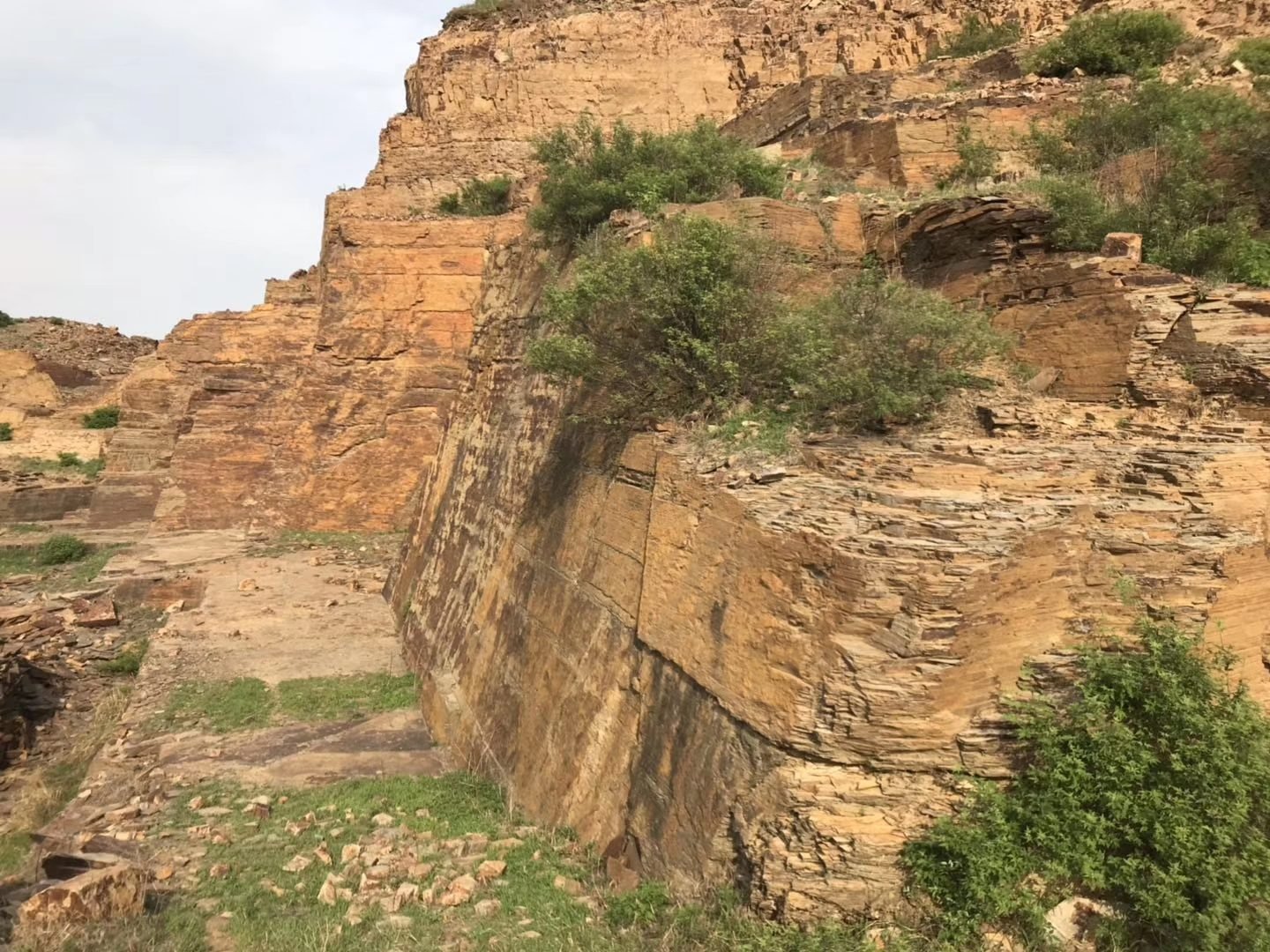
Stone selection and color. A factory that controls its own quarry can select specific vein zones to produce a consistent color palette. At Top Stone Panels, we practice batch-specific vein selection — each production run draws from a single quarry vein to ensure color consistency across the entire order. For OEM clients, this means we can develop exclusive color blends: a warm slate-grey with bronze undertones, a cool quartzite white with subtle green veining, or any combination that the quarry geology can produce. The key constraint is geological reality — not every color exists in every quarry, and a factory that promises unrealistic colors is either blending from multiple sources (introducing consistency risk) or being dishonest.
Panel dimensions and formats. Standard sizes like 15×60 cm (stacked stone), 36×10 cm (thin ledgestone), and 20×55 cm (Z-panels) are the baseline. OEM clients can request non-standard lengths, widths, or thickness combinations. The constraint here is container loading efficiency — custom dimensions that waste container space increase your per-square-meter shipping cost, which erodes your retail margin. A good factory will flag inefficient dimensions before you commit to them.
Backing method. Choose between marine-grade epoxy bond and polymer-modified cement backing based on your market’s climate and installation preferences. Our technical comparison of epoxy bond vs cement backing covers the performance trade-offs in detail.
Corner pieces and accessories. Pre-made L-corner pieces can be customized to match your panel dimensions and color palette. This is an often-overlooked customization point — having branded corner pieces in your inventory allows your installers to deliver a complete, professional finish without on-site mitering, and it positions your brand as a full-system supplier rather than a commodity panel vendor.
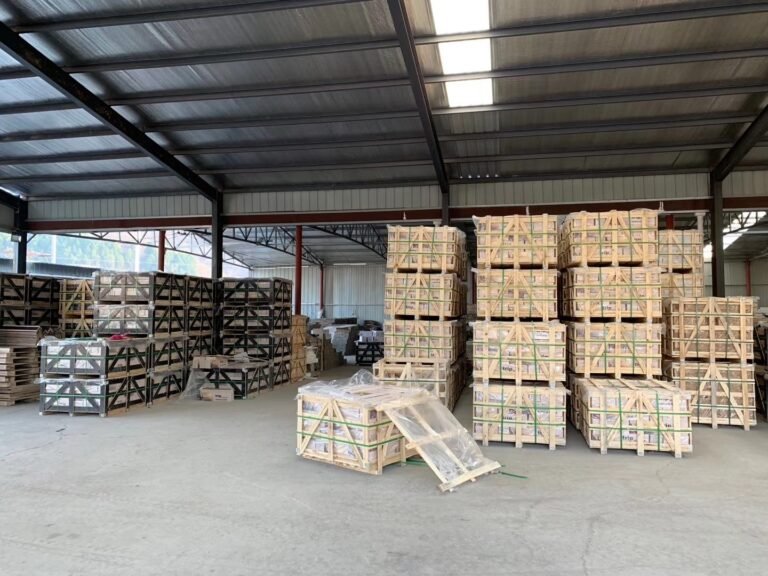
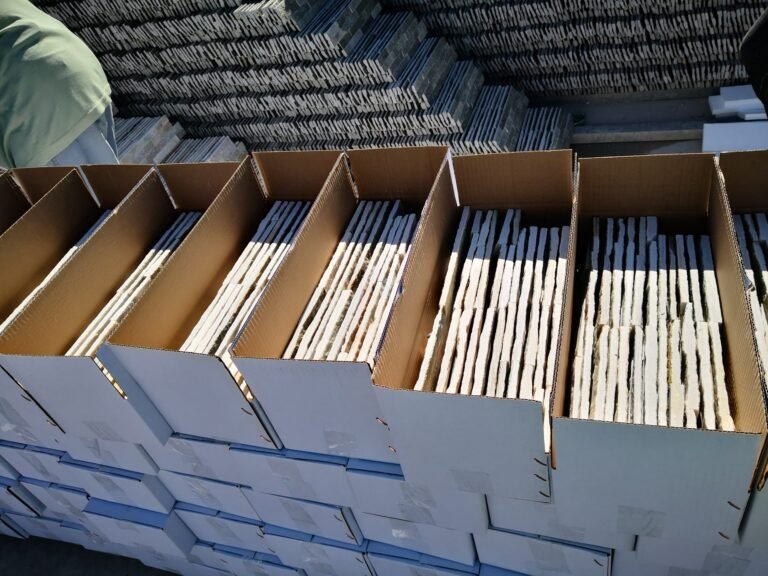
Packaging and branding. This is where private label creates the most visible differentiation. Custom options include printed carton boxes with your logo and product photography, branded installation instruction cards, warranty certificates, bar-coded box labels with your SKU system, and display-ready retail packaging for big-box distribution channels.
The OEM Production Process: From Inquiry to Container
Understanding the production workflow helps you plan your ordering timeline and set realistic expectations with your sales team. Here is how a typical OEM order unfolds at our facility.
Phase 1 — Sampling and approval (5–10 days). You send your specifications — stone type, color range, panel dimensions, backing preference, and any custom requirements. We produce physical samples (typically 2–3 panels in the requested specification) and ship them by express courier within 1–3 days of production. You evaluate the samples in your own market context — show them to your sales team, test them with your installers, and confirm the specification or request adjustments.
Phase 2 — Packaging design and proofing (7–10 days, runs parallel with production preparation). Your graphic designer provides the packaging artwork, or our in-house team creates a layout based on your brand guidelines. We produce a printed proof for your approval before mass printing begins. This step is critical — once the boxes are printed, changes are expensive.
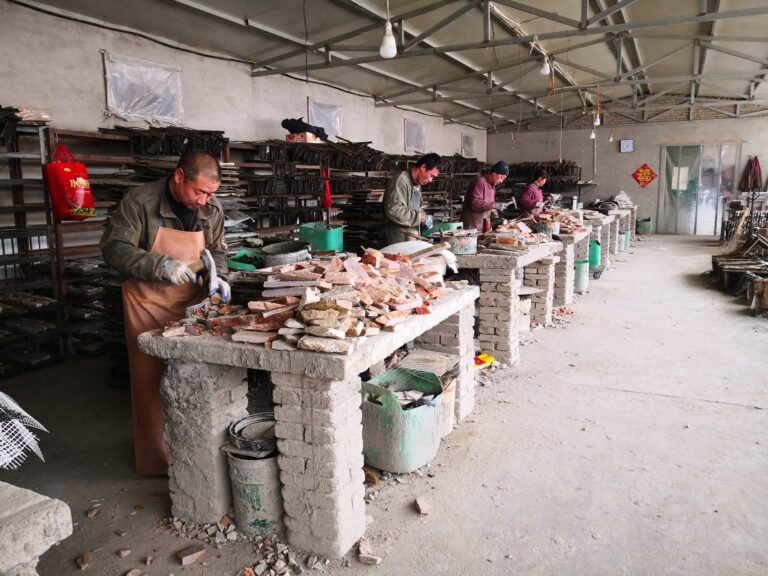
Phase 3 — Production (20–25 working days). The factory schedules your order into the production line. Raw stone is selected from the quarry based on your approved color specification. Panels are assembled, cured, inspected, and packed according to your packaging design. Our three-step quality control process runs throughout production: raw material inspection, in-process monitoring, and pre-shipment audit.
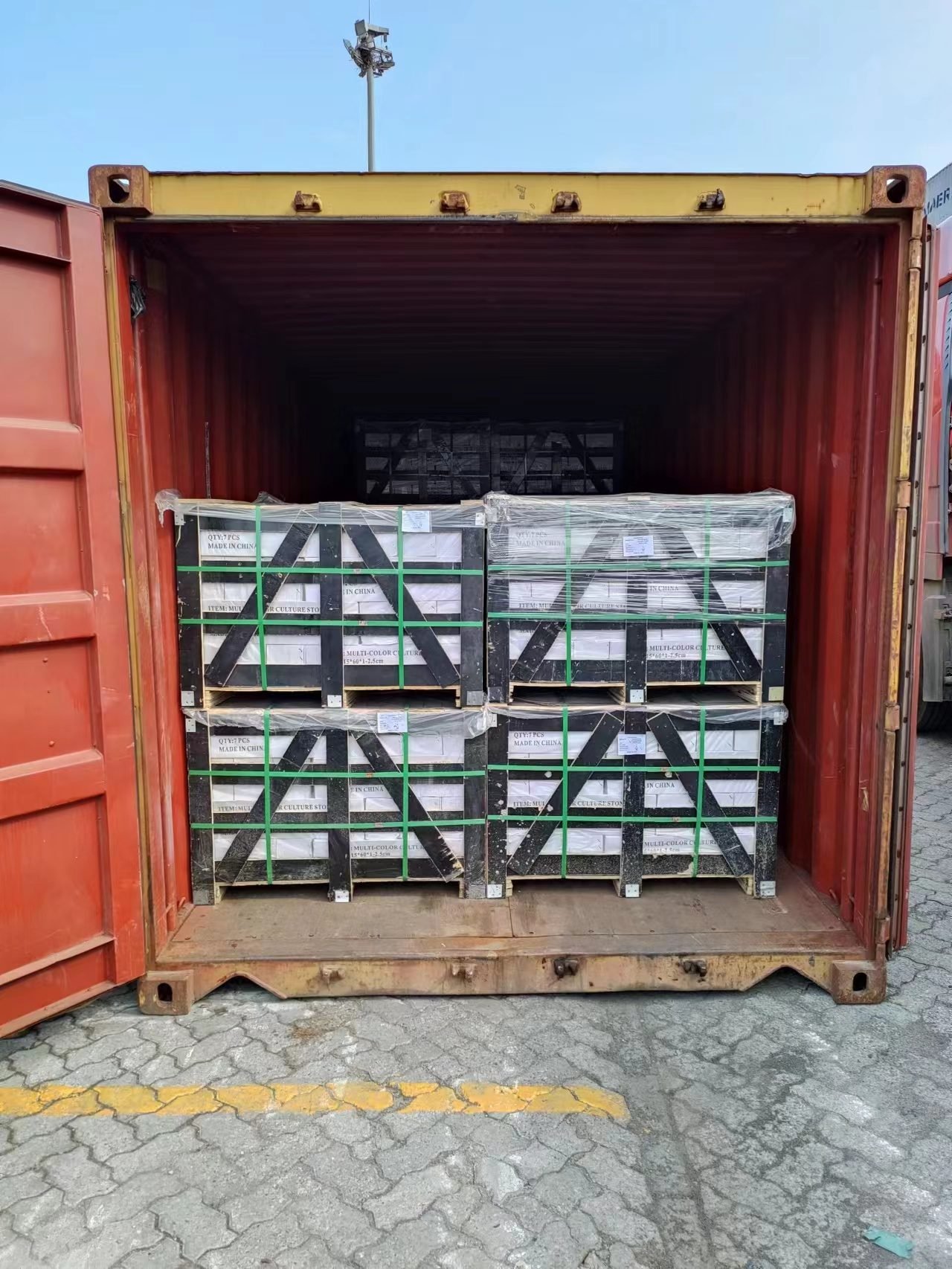
Phase 4 — Pre-shipment inspection and payment (2–3 days). Before the container is sealed, we conduct a final inspection and share photos and video with you. This includes panel close-ups for color and dimensional verification, packing pattern documentation, and container loading sequence images. The balance payment (typically 70% of the order value, with 30% paid as deposit) is settled after you approve the inspection report.
Phase 5 — Shipping (25–45 days depending on destination). The container departs from Tianjin Xingang port. Transit times vary: approximately 25–30 days to US West Coast, 35–40 days to US East Coast, and 30–35 days to major European ports. We provide the container tracking number and all shipping documents — Bill of Lading, Certificate of Origin, ISPM 15 fumigation certificate, and packing list.
MOQ, Pricing, and the Economics of Private Label
The minimum order quantity for private label and OEM orders at most Chinese stone panel factories is one 20-foot general purpose container. Depending on the panel type, this translates to roughly 800–1,200 m² of coverage for stacked stone panels, or up to 2,000 m² for ultra-thin ledgestone. The mixed container option — combining multiple stone types or colors in a single shipment — is available from most factories, though some impose a minimum per-SKU quantity to keep production runs efficient.
Pricing for private label orders follows a straightforward structure. The base product price is the same as the factory’s standard wholesale rate. Custom packaging adds a per-unit cost — typically $0.30–$0.80 per carton for custom printed boxes, depending on print complexity and order volume. For OEM orders with non-standard specifications, the price reflects the production complexity: custom dimensions may add 5–10%, exclusive color blends may add 8–12%, and proprietary backing systems require separate quotation.
The economics become more favorable as order volume grows. A distributor ordering 5–10 containers per year can negotiate tiered pricing that reduces the per-square-meter cost by 8–15% compared to single-container orders. Annual volume commitments also give the factory confidence to invest in dedicated tooling and reserve specific quarry blocks for your orders, which improves color consistency and lead time reliability.
Intellectual Property and Exclusivity: Protecting Your Brand
This is the concern that every first-time OEM buyer raises, and it deserves a direct answer. When you invest in developing a unique color blend, a proprietary panel format, or custom packaging, you want assurance that the factory will not sell the same product to your competitor in the same market.
Reputable factories handle this through written agreements. A standard OEM contract includes clauses covering design ownership (your custom specifications belong to you), market exclusivity (the factory agrees not to sell your exact product configuration to other buyers in your defined territory), and confidentiality (your pricing, volumes, and customer information are protected). These agreements are standard practice in the Chinese stone export industry, and any factory that hesitates to sign one is a factory you should not work with.
At Top Stone Panels, we have maintained OEM exclusivity agreements with distributors across North America and Europe for over a decade. Several of our partners have built their entire product catalogs around custom specifications developed jointly with our engineering team, and those configurations remain exclusive to their brands in their respective markets.
How to Evaluate a Factory for OEM and Private Label Partnership
Not every stone factory is equipped for reliable OEM production. The capabilities required go beyond basic manufacturing — they include design support, quality systems, logistics management, and the communication discipline to keep a distant buyer informed throughout the process. Here is a practical evaluation checklist based on our experience working with distributors who have switched from unreliable suppliers:
Own-quarry sourcing. A factory that buys raw stone from third-party quarries cannot guarantee color consistency across orders. Own-quarry sourcing is the foundation of reliable private label production because the factory controls the material from extraction to finished panel. Verify quarry ownership by requesting the quarrying license and visiting the site if possible — or ask for a video tour.
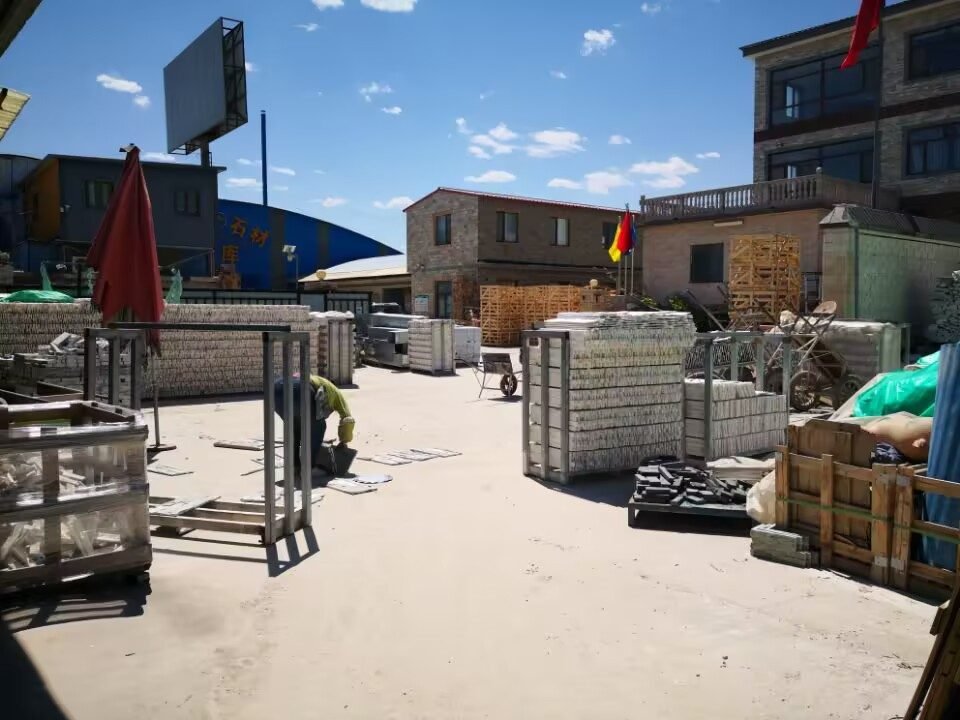
Production capacity. Your factory partner needs enough capacity to handle your growth. A factory producing 50,000 m² per month can comfortably handle a distributor scaling from 2 to 10 containers per year. Our facility produces 80,000 m² per month of stacked stone panels alone, with additional capacity for thin stone veneer, ledgestone, and Z-panel products.
Quality documentation. A serious OEM partner provides test reports for every relevant physical property: water absorption rate, compressive strength, flexural strength, freeze-thaw resistance, and fire rating. These reports should come from a recognized testing laboratory, not just the factory’s internal notes. We can also arrange third-party inspection by SGS, TÜV, or Bureau Veritas before shipment.
Sample turnaround. Speed of sampling reveals a factory’s organizational discipline. If a factory takes two weeks to produce a sample, imagine how they handle a 10-container order during peak season. Our standard sample turnaround is 1–3 days, with express shipping available.
Communication responsiveness. OEM production requires frequent communication — specification clarifications, packaging proofs, production updates, shipping coordination. A factory that takes 48 hours to reply to an email will slow your entire supply chain. Test responsiveness during the inquiry phase; it rarely improves after you sign the contract.
Frequently Asked Questions
What is the difference between OEM and private label stone panels?
OEM stone panels are manufactured to the buyer’s exact specifications — stone type, color, dimensions, backing method, and packaging are all customized to the buyer’s requirements. Private label panels use the factory’s existing product line but carry the buyer’s brand name, logo, and packaging design. OEM involves deeper product customization; private label is a faster, lower-MOQ route to branded inventory.
What is the minimum order quantity for OEM stone panels?
Most Chinese stone panel factories require a minimum of one 20-foot container (approximately 800–1,200 m² depending on panel type) for OEM orders. Custom color blends or non-standard dimensions may require 2 containers to justify production line setup. Private label orders using standard products can start at 1 container.
How long does it take to produce a private label order?
Standard private label orders take 20–25 working days. The first order typically takes 25–30 days because custom packaging needs to be produced. Repeat orders with packaging in stock can ship within 15–20 working days. Add 25–45 days for ocean freight depending on destination.
Can I get custom color blends for my private label stone panels?
Yes, if the factory controls its quarry sourcing. Top Stone Panels uses batch-specific vein selection from our own quarries in Hebei to develop exclusive color palettes for OEM partners. The limitation is geological — not every color exists in every quarry, and honest factories will tell you what is achievable rather than promise impossible colors.
What documentation does a private label supplier provide?
A reliable supplier provides Certificate of Origin (COO), ISPM 15 fumigation certificates for wooden packaging, physical test reports (water absorption, compressive strength, flexural strength), pre-shipment inspection reports with photos and video, and full shipping documents (Bill of Lading, packing list, commercial invoice). Top Stone Panels also offers 1–3 day sample turnaround for independent laboratory testing.
Making the Decision
OEM and private label stone panels represent a strategic investment in your brand’s market position. The right factory partnership gives you exclusive products, consistent quality, and competitive pricing that no trading company can match. The wrong partnership costs you time, money, and reputation.
The single most important step is the sample stage. Before you commit to a container, invest the time to evaluate physical samples, visit the factory if possible, and test the communication quality during the inquiry process. A factory that is thorough, transparent, and responsive during sampling will be the same during production. One that is vague about specifications, slow to respond, or reluctant to provide documentation during the sales phase will not improve after you wire the deposit.
Top Stone Panels offers OEM and private label manufacturing for natural stone panels at our facility in Hebei, China. With 18+ years of export experience, own-quarry sourcing, and 220+ containers shipped annually, we support distributors from first sample to repeat orders. Request a quote or sample to start the conversation.