Here is a problem every building-material distributor has faced: you want to test a new stone cladding supplier, but you are not ready to commit a full container to any single product. You would rather sample the market response to stacked stone, ledgestone, and Z-panels simultaneously — except most factories demand a full container load per SKU.
That barrier is lower than many buyers assume. At Top Stone Panels, the stone panels MOQ mixed container policy lets distributors combine multiple product types in a single 20GP shipment. Instead of ordering three separate containers, you allocate pallet slots across two to six products and ship them together. The factory has been running this workflow for over 18 years, shipping 220+ containers per year from Xingang / Tianjin port to North American and European importers.
This guide walks through every detail of a mixed container order — from MOQ thresholds and weight math to packaging protocols and production scheduling. If you are evaluating a new sourcing relationship or expanding your catalog, the numbers below will help you plan an efficient first load.
Understanding MOQ for Natural Stone Panels
Top Stone Panels sets its MOQ at one 20GP container per product line. That means if you order only thin ledgestone, the minimum is one full container of that product. The same applies to each of the other five product lines — stacked stone, Z-panels, thin stone veneer, flagstone, and columns.
Why does this threshold exist? Two reasons, both rooted in how natural stone production actually works.
First, quarry vein allocation. When the factory schedules a production run, raw blocks are pulled from specific quarry veins sorted by color consistency and grain pattern. A single block yields enough material for roughly one container load of a given product. Processing less than a full block means either wasting partially cut stone or holding mismatched inventory in the yard. Neither outcome serves the buyer or the factory.
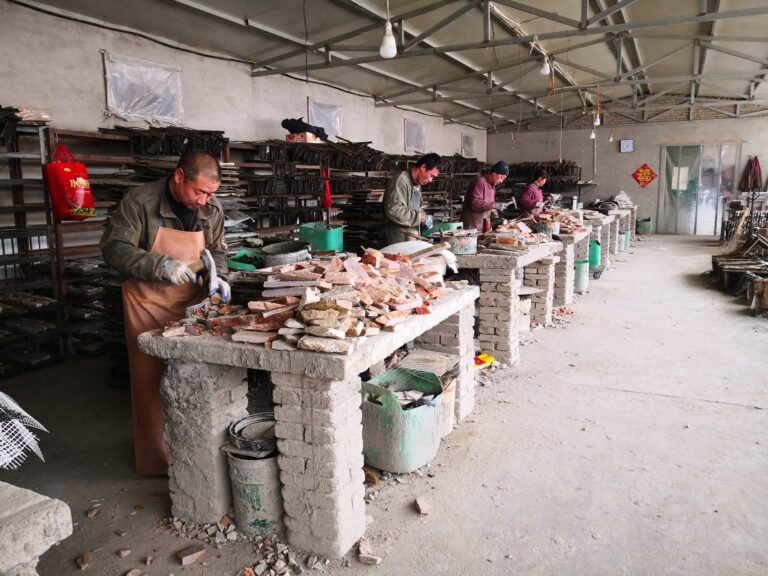
Second, production batch efficiency. Cutting, splitting, and finishing stone panels involves machine setup time. Switching from a run of 15×60 cm stacked stone to 36×10 cm thin ledgestone strips requires recalibrating saw blades, changing mesh-backing templates, and adjusting quality-control jigs. Grouping orders by product line keeps changeover costs down and maintains tighter color-matching tolerances across the batch.
How does this compare to the rest of the industry? Many stone cladding suppliers — especially trading companies that consolidate from several small workshops — set MOQs at two to three containers. Some will accept smaller orders but add a surcharge of 15–25% on the unit price. Direct-factory relationships typically offer more favorable thresholds, and a one-container MOQ per product line sits on the accessible end of the spectrum for B2B stone sourcing.
It is worth noting that Top Stone Panels ships over 220 containers annually, and mixed loads account for a significant share of that volume. This is not a special concession requiring manager approval — it is a standard workflow the production and warehouse teams handle every week.
How Mixed Container Orders Work
The mechanics of a mixed container are straightforward, but getting the details right separates a clean shipment from a logistics headache.
Step one: the buyer selects two to six product types from the catalog. You might want stacked stone for an exterior feature wall line, Z-panels for a commercial cladding project, and flagstone for landscape paving. Each product is quoted individually based on the square meters or sets you need.
Step two: the sales team builds a container loading plan. This document maps out pallet positions, weight per product, and total volume utilization. The goal is to fill the 20GP as close to capacity as possible without exceeding the weight limit or leaving dead space that lets cargo shift during ocean transit.
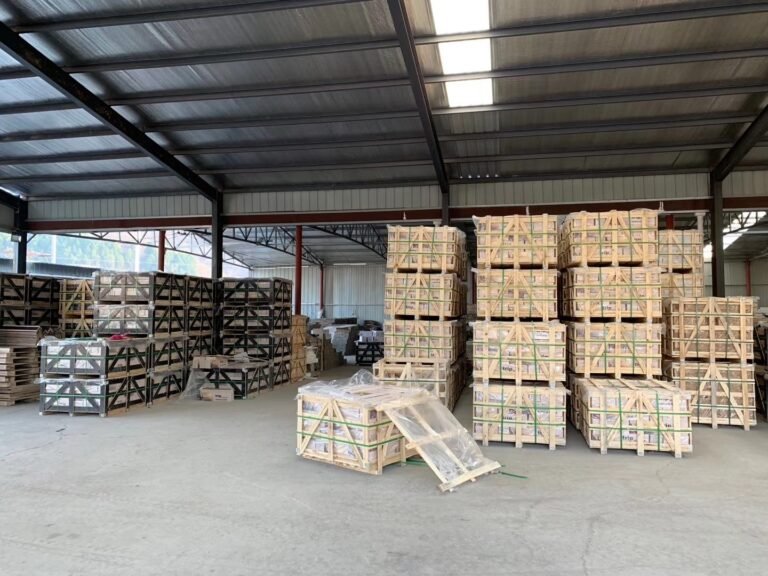
Step three: each product is packed on its own pallets, wrapped and steel-banded independently, then labeled with product code, color name, and quantity. When the container arrives at your warehouse, your team can sort inventory quickly without digging through unlabeled boxes.
Step four: loading follows a weight-distribution sequence. Heavier items — flagstone, columns, thick stacked stone — are loaded first, positioned low and toward the container’s center of gravity. Medium-weight products fill the middle zones. Lighter panels, such as thin ledgestone and thin stone veneer, go on top or toward the rear. Industrial air bags fill every gap between pallets to prevent lateral movement.
Here is a concrete example. A distributor based in the Greater Toronto Area wanted to test three product lines on their first order:
- Stacked Stone (Rusty Slate): 300 m² — roughly 10.5 tons
- Thin Ledgestone (Sandy Beige): 350 m² — roughly 7.7 tons
- Z-Panels (Charcoal, cement-backed): 200 m² — roughly 5.0 tons
Total payload: approximately 23.2 tons. Total volume: roughly 22 m³. The container was well utilized on both axes, and the remaining capacity — about 1.8 tons and 6 m³ — left room for a few sample cartons of thin stone veneer to test with local contractors.
Before production begins, the buyer receives a loading diagram showing each pallet position, its dimensions, and its weight. This plan gets approved or adjusted — nothing goes into a container without a confirmed layout. For buyers who want extra assurance, Top Stone Panels provides a container loading video and HD photos of the final arrangement before the doors close.
Weight and Volume Calculations for Container Loading
Every container plan starts with two hard constraints: weight and volume. A standard 20GP (twenty-foot general-purpose) container has a maximum payload of approximately 25–27 metric tons and a usable internal volume of roughly 28 cubic meters. In practice, stone panels tend to hit the weight limit before filling all available space, because natural stone is dense relative to its thickness.
Here are approximate weight-per-square-meter figures for each Top Stone Panels product line. These vary by stone type and thickness, so treat them as planning baselines rather than exact specifications:
| Product Line | Approx. Weight (kg/m²) | Est. m² per 20GP (weight-limited) |
|---|---|---|
| Stacked Stone (15×60 cm / 15×55 cm) | 35 | ~715 |
| Thin Ledgestone (36×10 cm) | 22 | ~900* |
| Z-Panels (20×55 cm / 15.2×61 cm) | 25 | ~850* |
| Thin Stone Veneer (random strips) | 25 | ~800* |
| Flagstone & Crazy Paving (mesh-backed) | 38 | ~600 |
| Columns (40×40 cm / 50×50 cm) | ~45 kg/set | ~500 sets |
* Volume-limited — these lighter products fill the container’s cubic space before reaching the weight ceiling.
The calculation for a mixed load is a balancing act. You want to maximize square meters without exceeding 25 tons or 28 m³. Here is a sample loading plan for a distributor stocking four product lines:
| Product | Quantity (m²) | Est. Weight (tons) | Est. Volume (m³) |
|---|---|---|---|
| Stacked Stone | 250 | 8.8 | 6.3 |
| Thin Ledgestone | 200 | 4.4 | 5.0 |
| Z-Panels | 180 | 4.5 | 4.5 |
| Flagstone | 120 | 4.6 | 5.4 |
| TOTAL | 750 | 22.3 | 21.2 |
Remaining capacity: ~2.7 tons and ~6.8 m³. That headroom leaves space for a small batch of a fifth product — perhaps 60–80 m² of thin stone veneer — or extra cartons of the best-selling items to cover cutting waste on the job site. The sales team will flag these opportunities when they build your loading plan.
A practical tip: if you are unsure about exact quantities, start with the products that have the highest weight per square meter. Flagstone and stacked stone consume your weight budget fastest, so lock those in first, then fill the remaining capacity with lighter products. This approach avoids the common mistake of ordering too much heavy material and leaving the container underfilled on volume.
The Six Product Lines You Can Mix
Top Stone Panels manufactures six distinct product lines, each serving different applications in the building and landscaping market. All six can share a single container.
Stacked Stone — Available in 15×60 cm and 15×55 cm panels with matching L-corner units for clean external corners. Stacked stone is the highest-volume product line, with a factory capacity of 80,000 m² per month. Typical applications include exterior feature walls, fireplace surrounds, and pool surrounds. Weight: approximately 35 kg/m².
Thin Ledgestone — Ultra-thin 36×10 cm strips that deliver a horizontal linear texture. At 60,000 m² monthly capacity, this is the second-largest product line. Thin ledgestone works well for interior accent walls, commercial lobbies, and elevator shaft cladding. Its slim profile makes it one of the lighter products per square meter, so it is an excellent “fill” product in a mixed container. Learn more about ledgestone here.
Z-Panels — Interlocking panels in 20×55 cm or 15.2×61 cm, backed with cement or fiberglass mesh for rigidity. Monthly capacity: 50,000 m². The Z-profile creates a staggered, three-dimensional effect that hides joint lines. Popular for large-format commercial facades and multi-story residential projects. The backing adds roughly 2–3 kg per panel compared to unbacked stone.
Thin Stone Veneer — Random-strip panels sorted from the same quarry vein to ensure color consistency across the batch. Capacity: 40,000 m² per month. Thin stone veneer offers the most natural, non-modular appearance of the product range. Ideal for exterior walls where an organic stone look is specified. Use this formula to calculate quantities for your project.
Flagstone & Crazy Paving — Mesh-backed flagstone for patios, walkways, and pool decks. Capacity: 30,000 m² per month. This is one of the heavier products in the range at roughly 38 kg/m² due to the thickness required for floor-rated stone. Plan your container weight budget accordingly.
Columns — Custom cross-section pillars in 40×40 cm or 50×50 cm configurations. Capacity: 10,000 sets per month. Columns are sold by the set rather than by the square meter, and their weight (roughly 45 kg per set) means they consume container payload quickly. If columns are part of your mix, keep the quantity modest and fill the remaining space with lighter wall-cladding products.
For a complete overview of product formats, see the guide on six types of stone veneer panels distributors should stock.
Packaging Strategy for Mixed Loads
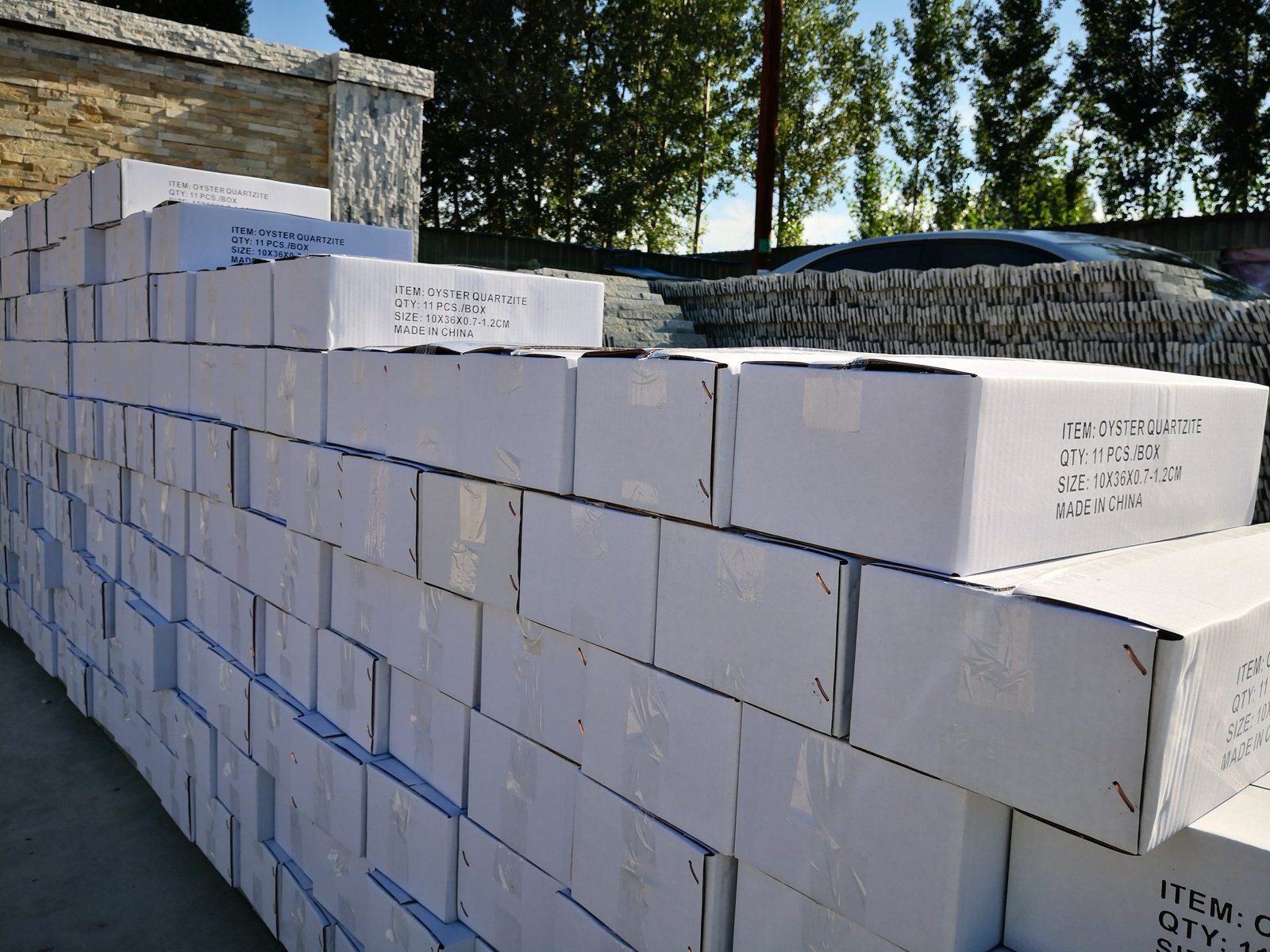
Mixed containers introduce a packaging challenge that single-product shipments do not: different products, different box sizes, different weights, all riding in the same steel box across an ocean. If the packing strategy is sloppy, lighter products get crushed and heavier pallets shift during transit.
Top Stone Panels applies a Zero-Breakage Protocol to every shipment, and mixed containers receive extra attention at each stage.
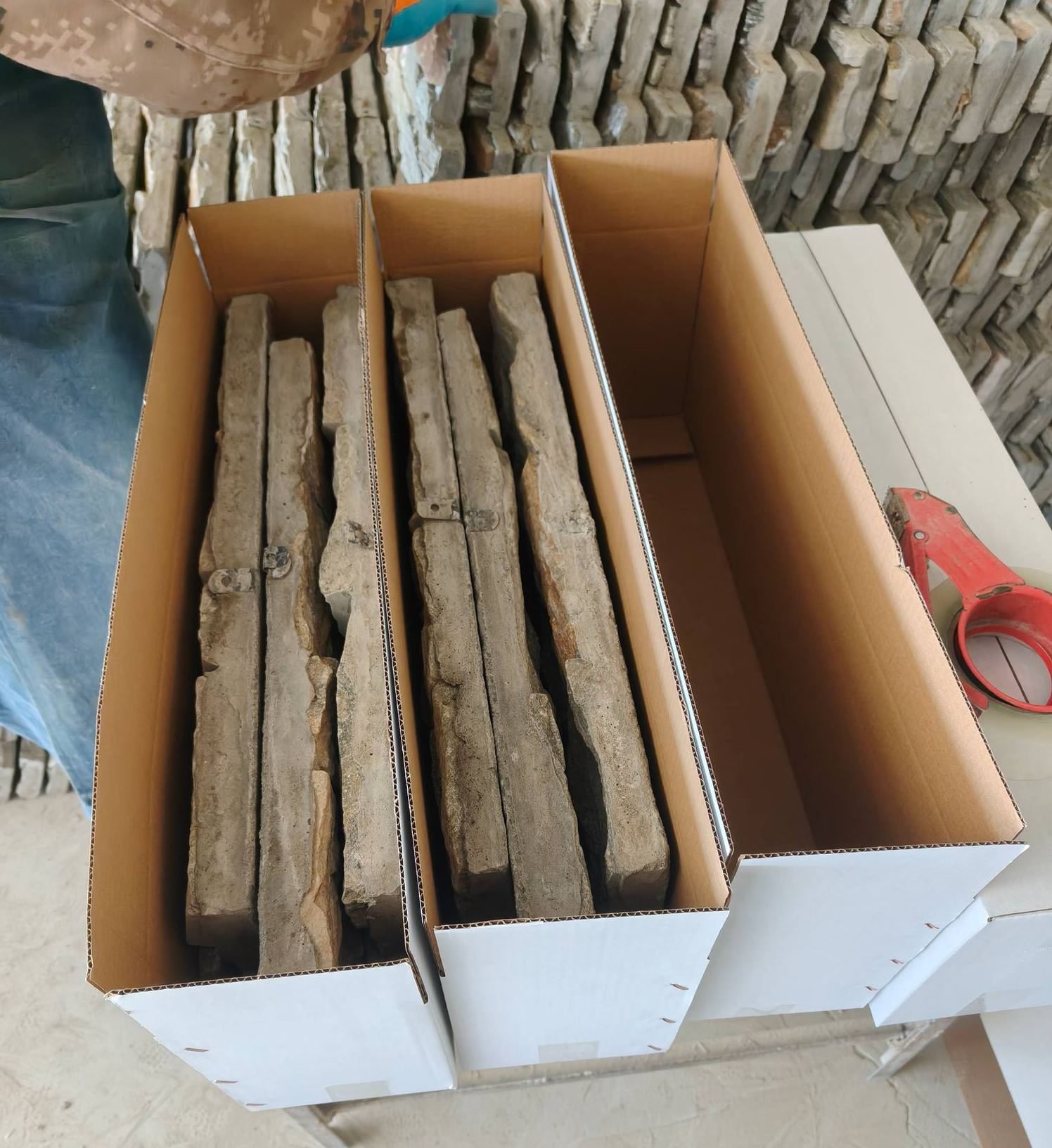
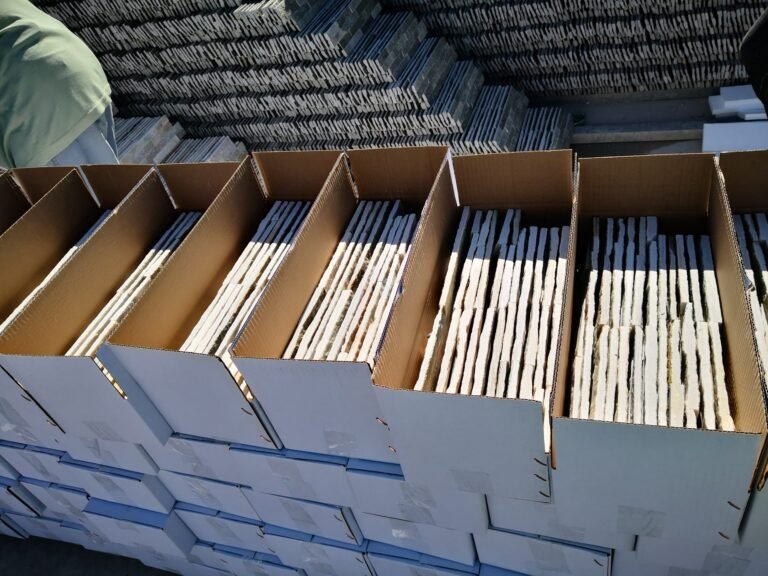
Carton protection. Each product is packed in 3–5 layer corrugated cartons sized to the specific panel dimensions. The inner carton holds the stone snugly with foam or paper interleaving to prevent face-to-face scratching. Outer cartons are rated for stacking loads well above what they will experience in the container.
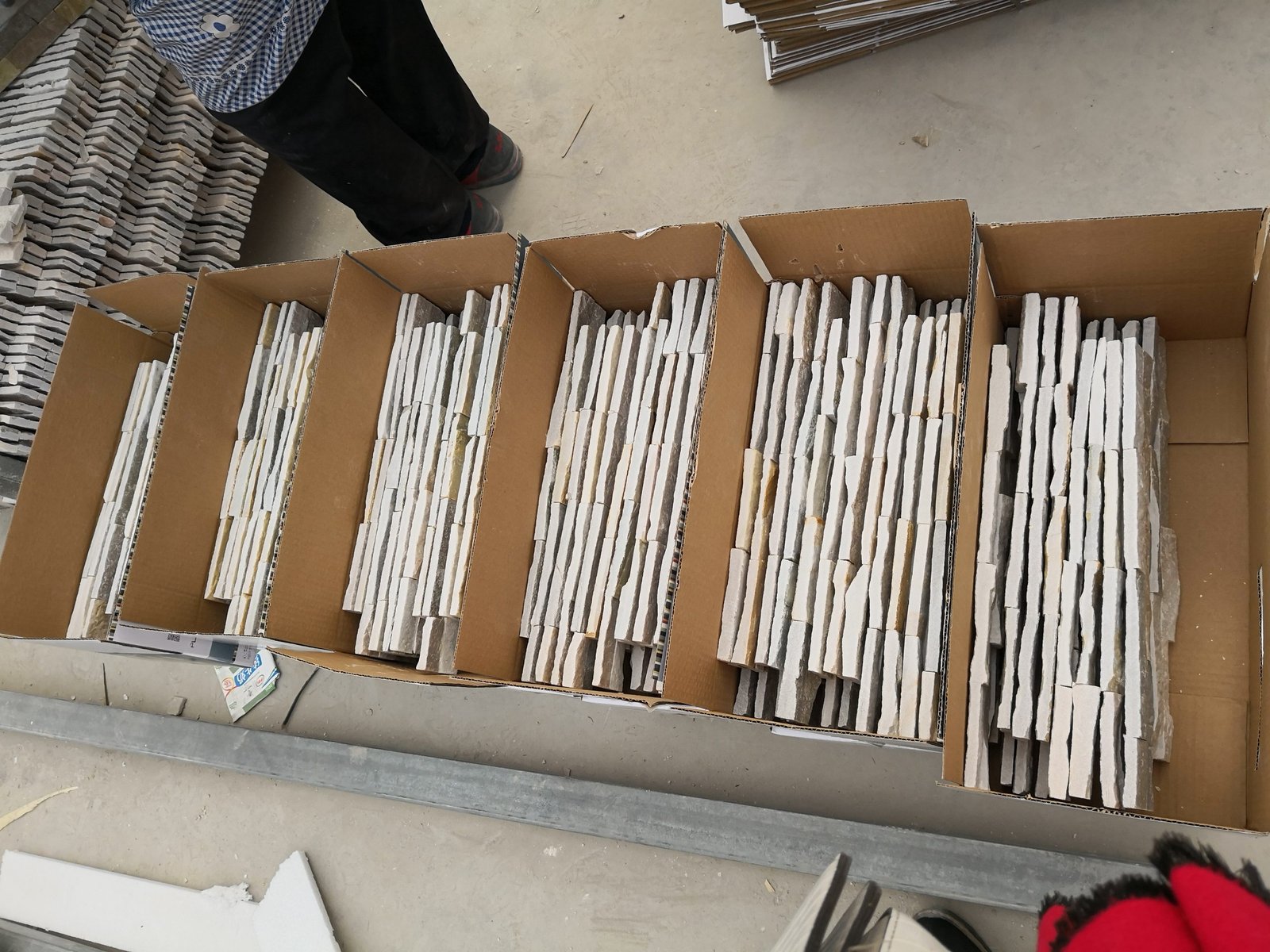
Pallet segregation. In a mixed container, each product line occupies its own pallet zone. Cartons are stacked on fumigation-free plywood pallets — no solid timber, which avoids customs delays in countries with strict ISPM 15 requirements. Each pallet is wrapped in stretch film and secured with 4–6 steel bands.
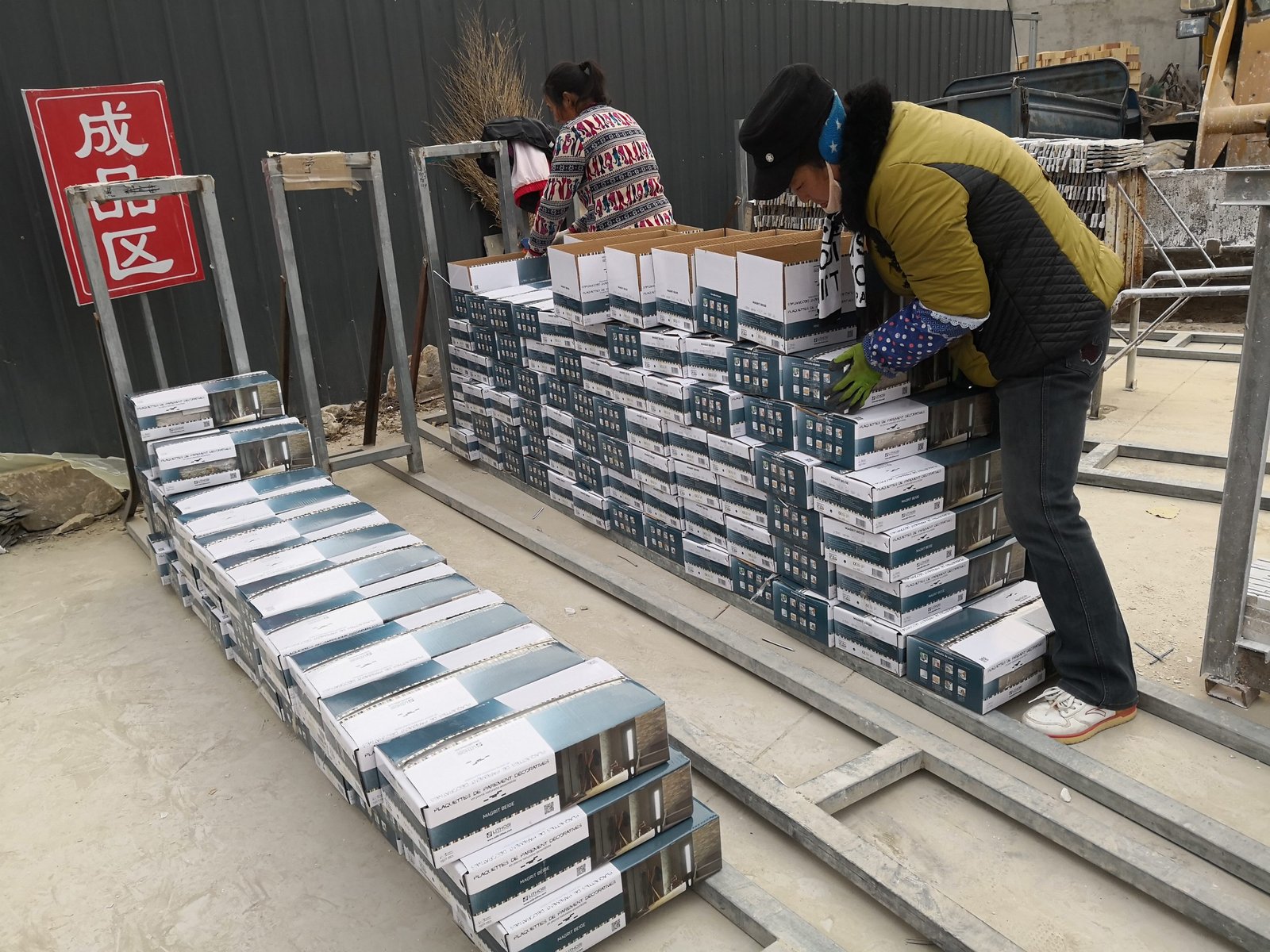
Weight distribution inside the container. The loading sequence follows a simple rule: heavy products on the floor and toward the center, lighter products stacked above or placed toward the doors. Flagstone and column pallets go in first. Stacked stone and Z-panels fill the middle. Thin ledgestone and thin stone veneer go on top.
Gap elimination. Industrial air bags are inflated between every pallet stack. These bags fill voids that would otherwise allow lateral movement during rough seas or sudden braking on the road leg. The result is a container interior where nothing can shift — each pallet is locked in position by its neighbors and the air bags between them.
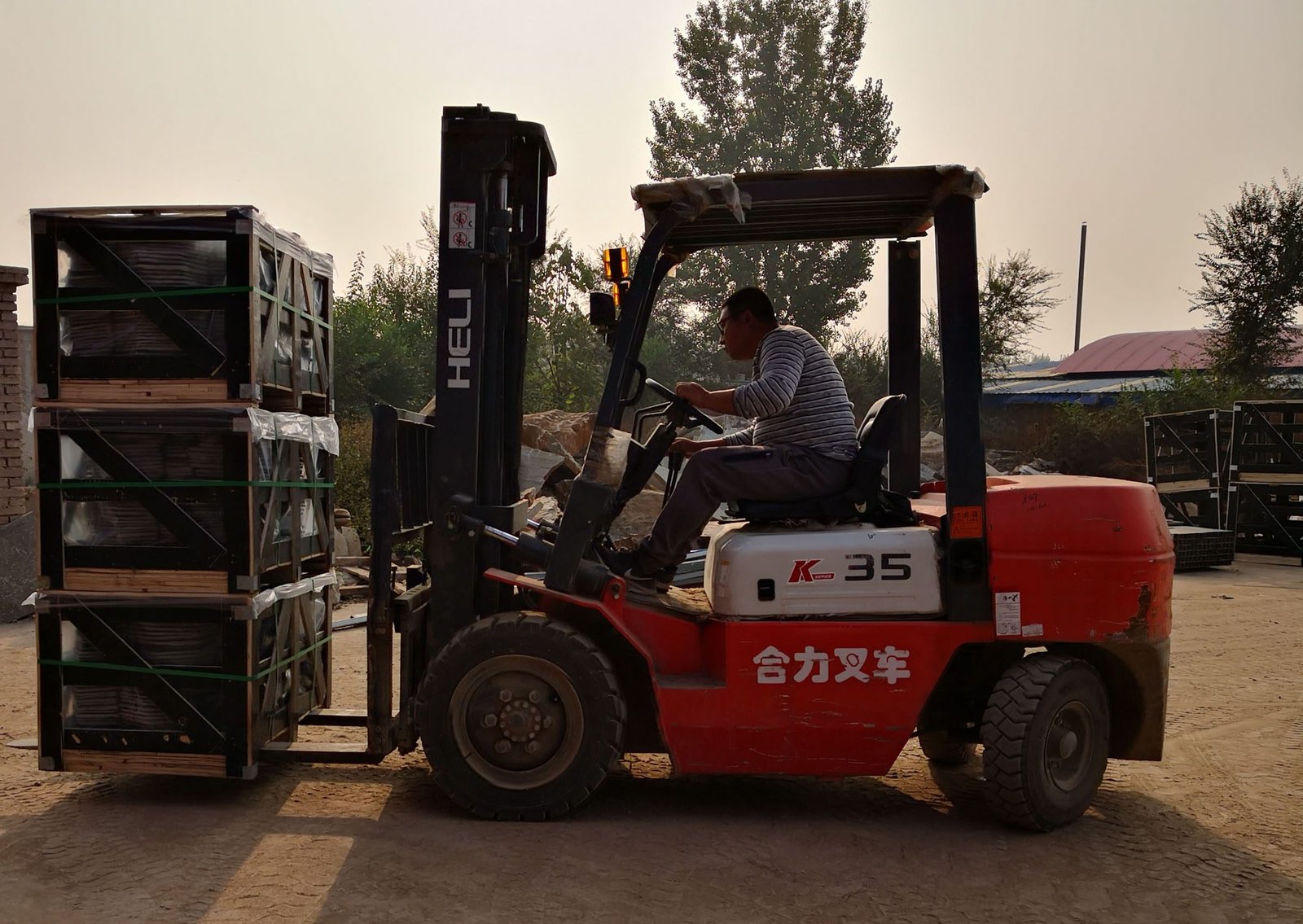
For buyers concerned about customs documentation, Top Stone Panels provides a Certificate of Origin (COO), ISPM 15 fumigation certificate for the plywood pallets, and a pre-shipment inspection report with video evidence. These documents travel with the bill of lading and clear the way for smooth import processing at your destination port.
Timing and Production Scheduling
When you order a single product, lead time is straightforward. Mixed containers add a scheduling wrinkle: the ship date is determined by the product with the longest production cycle.
Here is how the timeline breaks down:
- Samples: 1–3 days from request to dispatch. Most buyers order samples of two to four products before committing to a container.
- Standard production: 20–25 working days after deposit confirmation. This applies to repeat orders using standard colors and packaging.
- First order with custom packaging: 25–30 working days. The extra time covers color-box printing and OEM/private-label setup — branded cartons, custom inserts, logo placement on pallets.
If your mixed container includes three products with standard packaging and one product requiring custom color boxes, the entire container ships on the longer timeline. The warehouse will not load a partial shipment; everything goes into the container on the same day.
For distributors managing project deadlines, a useful rule of thumb is to place the order at least eight weeks before you need the stone on-site. That accounts for production (4–6 weeks), inland transport to Xingang port (2–3 days), ocean transit (25–35 days to North America, 28–40 days to Europe), and customs clearance at your end (3–7 days).
Top Stone Panels can also work with FOB, CIF, or DDP Incoterms. FOB Tianjin is the most common for experienced importers who manage their own freight forwarding. CIF and DDP options are available for buyers who prefer the factory to handle ocean freight and, in the case of DDP, final delivery to the warehouse door.
Payment Terms and Cost Optimization
The payment structure at Top Stone Panels is 30% T/T deposit upon order confirmation, with the 70% balance due before the container leaves the factory. Before releasing the final payment, buyers receive:
- A full container loading video showing each product being loaded and secured
- HD layout photographs of the final container arrangement
- A packing list with SKU-level quantities, weights, and carton counts
This verification step eliminates surprises at the destination. You see exactly what went into the container before money changes hands.
How does a mixed container affect your landed cost? In most cases, it improves it. Here is why:
Freight efficiency. Ocean freight is charged per container, not per kilogram. A fully loaded 20GP costs the same to ship whether it carries one product or four. By mixing products, you spread the fixed freight cost across a broader inventory base, reducing the per-unit landed cost of each SKU.
Reduced dead stock risk. Ordering 750 m² across four products is far less risky than ordering 750 m² of a single product you have never sold. Mixed containers let you test market demand with minimal capital exposure. If stacked stone outsells Z-panels in your region, your next container skews heavier toward stacked stone.
Customs and duty optimization. Depending on your country’s tariff schedule, different stone products may carry different HS codes and duty rates. A knowledgeable customs broker can advise on the most favorable classification for each product in your mixed container. This guide on sourcing stone cladding from China covers some of the import considerations.
For a full breakdown of cost factors, the article on natural stone cladding cost breakdown covers quarry pricing, processing, freight, and margin structure in detail.
Frequently Asked Questions
What is the MOQ for each product line at Top Stone Panels?
The MOQ is one 20GP container per product line. However, the stone panels MOQ mixed container policy allows you to combine two to six product types in a single shipment. As long as the total order fills one 20GP, you can split the space across stacked stone, ledgestone, Z-panels, thin stone veneer, flagstone, and columns in any proportion.
How many square meters fit in a 20GP container of stone panels?
It depends on the product. Heavier items like stacked stone (≈35 kg/m²) yield roughly 600–715 m² per container before hitting the 25-ton weight ceiling. Lighter products such as thin ledgestone (≈22 kg/m²) can reach 800–900 m² because they fill the container’s volume before maxing out on weight. A mixed container with several product types typically falls in the 600–800 m² range.
Can I mix different stone colors in one container?
Yes. You can select multiple colors and finishes within the same product line — for example, ordering both Rusty Slate and Grey Quartzite stacked stone — and combine them with other product types. Each color variant is packed on separate pallets with clear labeling so your warehouse team can sort inventory on arrival without confusion.
Does a mixed container order take longer to produce?
The production timeline is set by the product with the longest lead time in your order. Standard production runs take 20–25 working days. First orders that include custom color-box packaging or OEM branding require 25–30 working days. The factory does not ship partial loads — all products in your mixed container are loaded together on the same day.
What payment terms apply to mixed container orders?
Top Stone Panels uses a 30% T/T deposit with the 70% balance due before shipment. Before the final payment is released, the buyer receives a container loading video, HD photos of the packed container, and a detailed packing list. This verification process applies equally to single-product and mixed container orders.
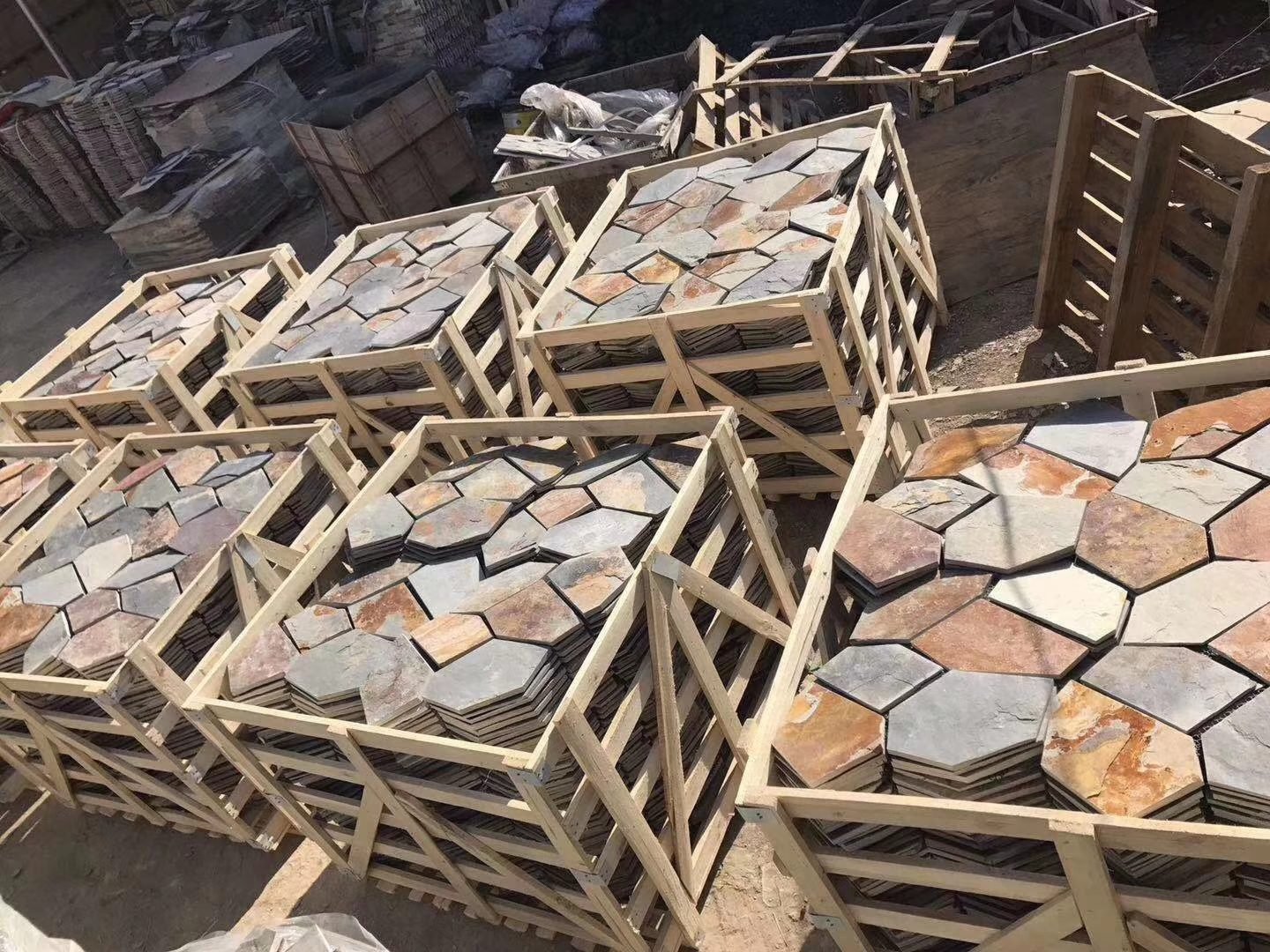
Ready to plan your mixed container? Top Stone Panels offers free container loading plans with weight and volume calculations tailored to your product mix. Send your target quantities and preferred stone colors to the sales team and receive a detailed loading diagram within 48 hours. Whether you are testing new products for your distribution network or restocking across multiple categories, the factory’s 18+ years of export experience ensures every square meter arrives in sellable condition. Request a quote today.