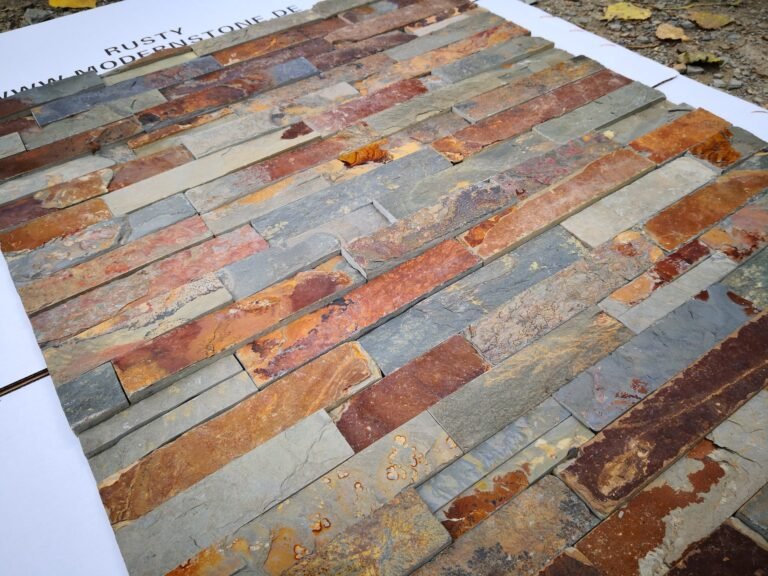
A distributor in New Jersey once told us the story: 1,200 square feet of slate veneer arrived at a commercial jobsite, and within the first hour of installation, the crew had pulled 40 panels off the wall. The reason? Thickness variance across the batch was pushing 3mm. The mortar bed couldn’t compensate, the wall line went out of plumb, and the project manager called for a full reorder — at the distributor’s expense.
Inconsistent stone panel thickness is one of the most expensive defects in the cladding supply chain. It doesn’t show up in a brochure photo. It doesn’t trigger a claim until the container is opened and the installer starts laying courses. By then, you’ve already burned freight, labor, and schedule. For B2B buyers sourcing natural stone cladding from overseas, stone panel quality control thickness isn’t a line item on a spec sheet — it’s the difference between a repeat customer and a warranty nightmare.
At Top Stone Panels, we built our production system around a 3-step internal QC process: raw material selection, in-process re-inspection, and pre-shipment final inspection. Each step targets a specific failure mode. This guide walks through what happens at every gate — and why it matters for your bottom line.
Why Thickness Consistency Matters for Stone Cladding
Let’s talk about what actually happens on a wall when stone panels arrive with uneven thickness.
Natural stone cladding — whether stacked stone, thin ledgestone, or thin stone veneer — installs on a mortar bed or adhesive substrate. The installer sets each course by eye and by hand, relying on a consistent panel depth to keep the wall plane flat. When one panel is 12mm thick and the next is 15mm, the installer has to either shim behind the thinner piece or apply extra mortar to the thicker one. Neither option is fast. Neither option is free.
Here’s the math that installers do in their heads: a 2mm variance across a single panel might cost 30 seconds of adjustment. Across 500 panels on a commercial facade, that’s roughly 4 hours of additional labor. At North American commercial rates, you’re looking at $300–$600 in wasted labor on a single wall. And that’s before you factor in the mortar overage — a thicker-than-expected panel pushes the bed joint wider, which means more material consumption per square meter.
Then there’s the callback. When a wall reads uneven under raking light — when the courses don’t line up and shadow lines wander — the building owner notices. The general contractor notices. And the phone rings. Distributors who have dealt with thickness complaints know that the cost of a callback dwarfs the cost of the material itself: demolition, reinstallation, schedule delay, and the relationship damage that doesn’t appear on an invoice.
This is exactly why serious buyers evaluate how to verify a stone cladding supplier before placing an order. Thickness consistency isn’t a cosmetic preference. It’s a structural and financial requirement.
Step 1 — Raw Material Selection: Same-Quarry Vein Matching
The first step in stone panel quality control thickness happens before a single blade touches stone. It happens at the quarry face.
Natural stone is not a uniform industrial material. Even within a single quarry, different geological veins produce stone with different densities, grain structures, and mineral compositions. A slate layer three meters below a quartzite seam will cut differently, break differently, and wear differently under the same CNC program. If you mix stone from two veins in one production batch, you’ll get two different thickness profiles — even if the machine settings are identical.
Top Stone Panels operates its own quarry in Yixian, Hebei Province — one of China’s most established natural stone regions. This quarry-direct model gives us something that trading companies and multi-source aggregators cannot: complete control over which vein every batch comes from.
When a production order is confirmed, our quarry team selects raw blocks from a single, identified vein. This batch-specific vein selection ensures two things simultaneously: color consistency and density consistency. The color match matters for aesthetics (more on that in Step 3). The density match matters for thickness control, because uniform density means the diamond blade cuts at a predictable rate and depth. When the material is consistent going into the machine, the panels coming out of the machine stay within tolerance.
For products like our stacked stone panels (15×60cm and 15×55cm formats), where multiple strips are bonded to a single backing panel, vein matching is even more critical. Each strip must cut to the same depth so the assembled panel sits flat against the wall. One strip that’s 1mm proud of its neighbor creates a visible shadow line and an uneven installation surface.
We apply the same discipline across all product lines — from thin stone veneer sheets to Z-panels with cement backing. The raw material gate is the foundation. Everything downstream depends on it.
Step 2 — In-Process Inspection: Infrared CNC Cutting and Thickness Gauging
Once raw blocks pass the vein selection gate, they move to the cutting floor. This is where stone panel quality control thickness becomes a precision engineering operation.
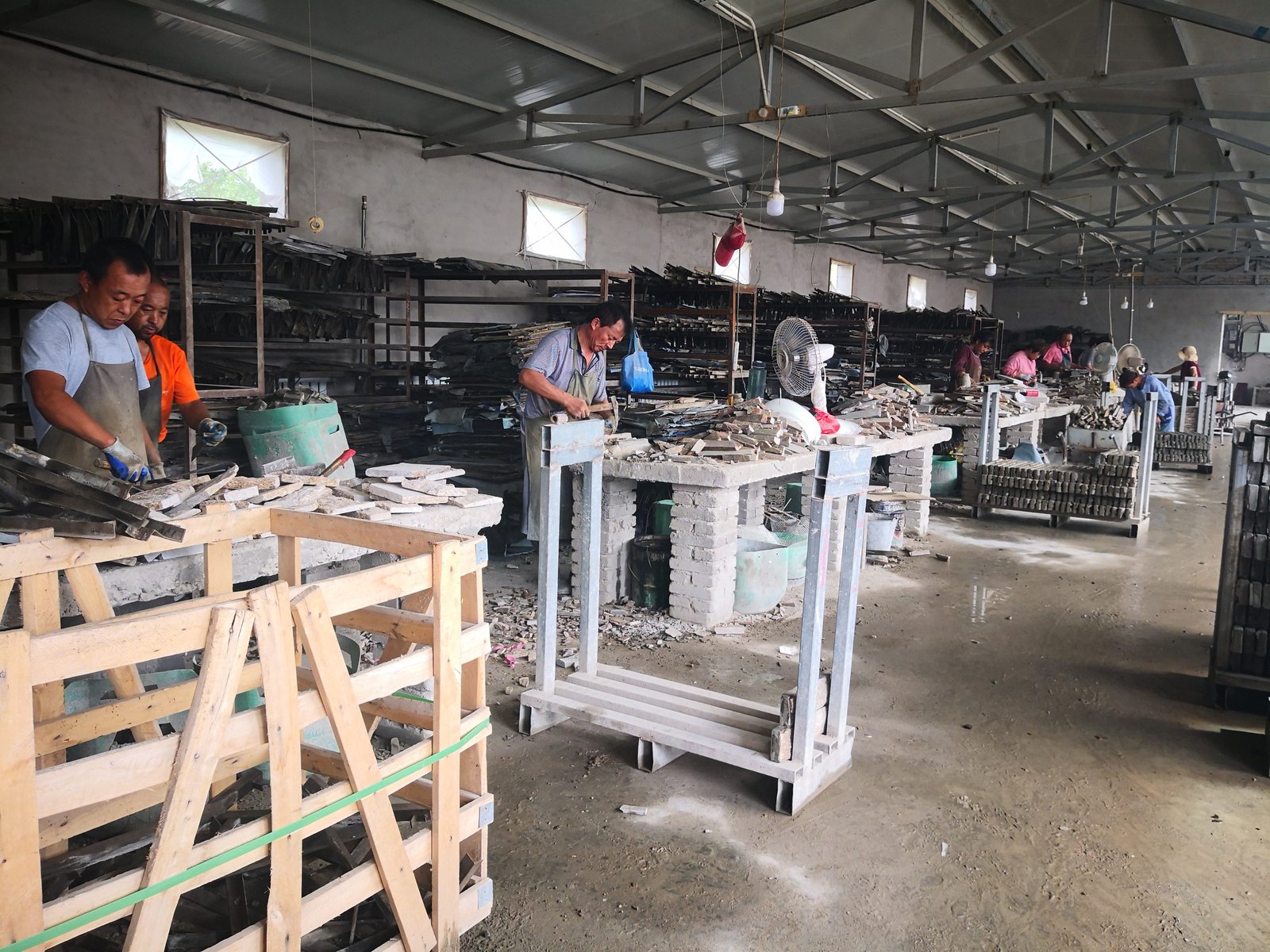
Top Stone Panels uses infrared CNC diamond blade cutting systems to dimension every panel. The infrared guide projects a laser line onto the stone surface, and the CNC controller drives the diamond blade along a programmed path with sub-millimeter accuracy. This is fundamentally different from manual bridge saws or hand-splitting methods still used by smaller workshops. The CNC system doesn’t drift. It doesn’t get tired at 4 PM. It cuts the ten-thousandth panel to the same dimension as the first.
But machines alone don’t guarantee quality. The in-process inspection layer is what catches problems before they become batch defects.
Here’s how it works on our production floor: after each cutting cycle, operators pull panels from the line and check thickness against a go/no-go gauge. This is a physical template machined to the specified panel thickness plus the allowable tolerance — typically ±1mm. If the panel passes through the “go” side and is stopped by the “no-go” side, it’s within spec. If it doesn’t pass the “go” side, it’s too thick. If it passes both, it’s too thin. Both failures get pulled from the line.
When an out-of-tolerance panel is detected, the operator stops the line and checks the blade alignment, feed rate, and stone feed orientation. Diamond blades wear over time — a worn blade can drift 0.5mm or more off the programmed cut depth. Blade replacement intervals are logged per production run, and we track reject rates as a percentage of total output. In a typical production day running thin ledgestone (36×10cm), reject rates stay below 2% — and those rejects never make it into a shipping carton.
For cement-backed products like our Z-panels (20×55cm and 15.2×61cm), there’s an additional in-process check after the marine-grade epoxy bond assembly stage. The stone strips are bonded to a cement fiber backing board, and the assembled panel thickness — stone plus backing — is measured at multiple points to confirm flatness and uniformity. A panel that bows or has uneven epoxy coverage gets rejected before it reaches the packaging line.
Our production capacity — 80,000 m²/month for stacked stone and 60,000 m²/month for thin ledgestone — means we run high-volume, repeatable processes. The in-process QC system is designed for that scale. It’s not artisan craftsmanship; it’s industrial precision applied to natural material.
Step 3 — Pre-Shipment Final Inspection: The Last Gate Before Loading
The third and final step in our stone panel quality control thickness process happens after production is complete and before the container is sealed. This is the gate that protects the buyer.
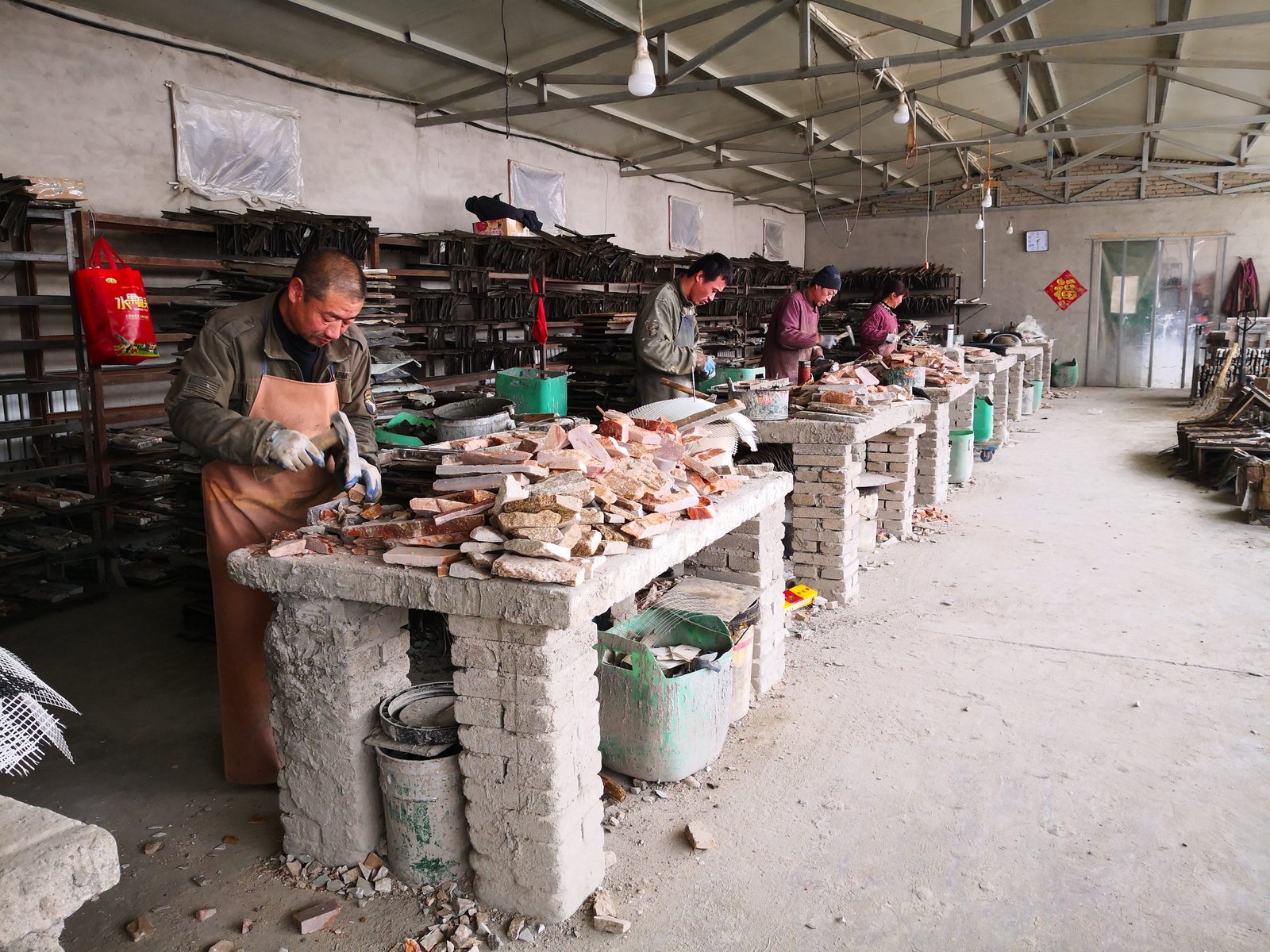
Pre-shipment inspection at Top Stone Panels follows a random sampling protocol based on AQL (Acceptable Quality Level) standards — the same sampling methodology used in international trade for industrial goods. From each production batch, a statistically significant sample is pulled at random. Not cherry-picked. Not the top five panels off the stack. Random.
The inspection covers four parameters:
- Thickness measurement: Each sampled panel is measured with a calibrated digital caliper at four points (corners and center). Results are recorded and compared against the order specification and tolerance band.
- Dimensional accuracy: Length and width are verified against the spec — 15×60cm, 36×10cm, or whatever format was ordered. Edge straightness and squareness are checked with a machinist’s square.
- Visual defect check: Chipped edges, surface cracks, color banding, and bonding defects are flagged. Any panel with a visible defect that would affect installation or finished appearance is counted as a failure.
- Color consistency verification: Sampled panels from across the batch are laid out side by side under neutral lighting. If color variation exceeds the approved sample range, the batch is flagged for review.
When the batch passes, we document everything. Photo sets showing thickness readings, dimensional measurements, and color comparison are compiled and sent to the buyer before the container is loaded. For buyers who want it, we provide a pre-shipment inspection video showing the sampling process and results in real time.
This documentation serves two purposes. First, it gives the buyer confidence that what’s in the container matches what was ordered. Second, it creates a traceable record. If a question arises three months later on a jobsite, both parties have the inspection data to reference.
Our packaging system — 3-5 layer corrugated cartons, fumigation-free plywood pallets, 4-6 steel bands, and industrial air bags inside the container — is the final layer of protection. Consistent thickness means nothing if panels arrive chipped or broken. We’ve written about our container loading and zero-breakage packaging approach in detail elsewhere, but the short version is: every panel that passes QC is loaded to survive ocean freight.
What B2B Buyers Should Verify in a Supplier’s Stone Panel Quality Control Thickness Process
If you’re evaluating a new stone cladding supplier — whether in China, India, Brazil, or Turkey — here’s a practical checklist for assessing their stone panel quality control thickness capabilities:
- Ask for quarry ownership documentation. Suppliers who own or control their quarry source can guarantee vein-matched batches. Traders who buy raw blocks on the open market cannot.
- Request a pre-shipment inspection report. Not a generic QC certificate. A specific report with photos showing thickness measurements, sampling methodology, and pass/fail results for your exact order.
- Order samples first and test them. Top Stone Panels ships express samples in 1-3 days specifically so buyers can send them to an independent lab for dimensional testing, absorption testing, or flexural strength testing before committing to a bulk order.
- Verify batch traceability. Ask the supplier: can you tell me which quarry vein my order came from? If they can’t answer that question, they’re aggregating from multiple sources.
- Check certifications. Natural stone carries an A1 fire rating inherently, but verify the supplier can document this. Also ask about freeze-thaw resistance data — our products are tested from -30°C to +50°C — and UV stability. These certifications signal that the supplier invests in testing, not just production. Read more about freeze-thaw resistance in natural stone and natural stone fire ratings for building code compliance.
- Ask about their reject rate. A supplier who tracks and shares their in-process reject rate is running a real QC system. A supplier who says “we never have defects” is either lying or not measuring.
For a deeper look at supplier verification, our guide on how to verify a stone cladding supplier through factory audits covers the full due diligence process.
Common Quality Red Flags When Sourcing Stone Panels
Even experienced buyers miss warning signs when evaluating a stone panel shipment. Here are the red flags that indicate a supplier’s stone panel quality control thickness process is weak or nonexistent:
- Inconsistent color across cartons. If panels from box #3 look noticeably different from box #17, the supplier mixed material from different quarry veins or different sources entirely. This is a thickness problem waiting to happen, because different stone densities cut to different depths.
- Chipped edges on arrival. Edge damage suggests poor cutting technique (dull blades, excessive feed speed) or inadequate packaging. Both point to a production floor that prioritizes speed over precision.
- Thickness variance exceeding 2mm within a single carton. Pull five panels from any box and measure them. If the spread is more than 2mm, the supplier’s in-process gauging is either absent or ignored.
- No documentation offered proactively. A supplier with a real QC process shares results without being asked. If you have to push for test reports, inspection photos, or certificates of origin, the documentation probably doesn’t exist.
- Unusually low pricing. QC costs money. Vein-matched quarry selection costs money. CNC equipment costs money. When a supplier’s price is 30% below market, something in that chain is being cut — and it’s usually quality control.
Buyers evaluating natural stone cladding cost should understand that the cheapest FOB price often becomes the most expensive landed cost once you factor in defects, rework, and callbacks.
Frequently Asked Questions
What thickness tolerance should I expect from a quality stone panel supplier?
A reputable stone panel manufacturer should hold thickness tolerance within ±1mm for calibrated products. Top Stone Panels achieves this through infrared CNC diamond blade cutting and batch-specific vein selection from the same quarry vein, ensuring every panel in your order meets consistent dimensional specifications. For different stone veneer panel types, tolerance requirements may vary slightly — always confirm with your supplier before production.
How can I verify stone panel thickness before shipment arrives?
Request a pre-shipment inspection report with photos and video documentation. Top Stone Panels provides random sampling based on AQL standards, thickness measurement records, visual defect checks, and color consistency verification — all documented and sent to the buyer before container loading. You can also order express samples (1-3 day delivery) for independent lab testing before committing to bulk production. Our bulk lead time is 20-25 working days, which gives ample time for sample verification.
Why does quarry source matter for stone panel thickness consistency?
Stone from different quarry veins varies in density, grain structure, and hardness — all of which affect how the material responds to cutting. Sourcing from a single quarry vein ensures uniform material properties, which allows CNC equipment to maintain tighter tolerances across the entire production batch. This is why Top Stone Panels sources all material from our own quarry in Yixian, Hebei — controlling the input is the most effective way to control the output.
What documentation should a stone cladding supplier provide for quality assurance?
At minimum, request a Certificate of Origin (COO), pre-shipment inspection report with photos or video, and material test data. Top Stone Panels also provides ISPM 15 fumigation certificates for all wood packaging components. Our minimum order is 1 × 20GP container per product line, and every shipment includes full documentation regardless of order size. For projects requiring UV stability certification or waterproofing guidance behind stone veneer, we provide technical support alongside the standard documentation package.
Ready to evaluate your next stone cladding order? Top Stone Panels offers quarry-direct pricing on stacked stone, thin ledgestone, thin stone veneer, flagstone, columns, and Z-panels — all produced under our 3-step QC process with full pre-shipment documentation. Request your express sample today and see the difference that 18 years of export experience makes. Shipments go from Xingang/Tianjin port with lead times of 20-25 working days for bulk production.