Color selection determines whether a stone-clad wall disappears into the background or becomes the architectural statement of a building. Stacked stone wall panels carry natural color variation that no manufacturing process can replicate exactly. That variation is both the advantage and the challenge: each quarry yields a distinct mineral palette, and every batch of panels tells a geological story millions of years in the making.
For architects, distributors, and project specifiers working with stacked stone panels, understanding the available color range is the first step toward a specification that performs on-site. The wrong color choice increases returns, delays timelines, and forces costly re-cladding. The right choice eliminates change orders and produces a facade that photographs well in marketing material and holds its appearance across decades of weather exposure.
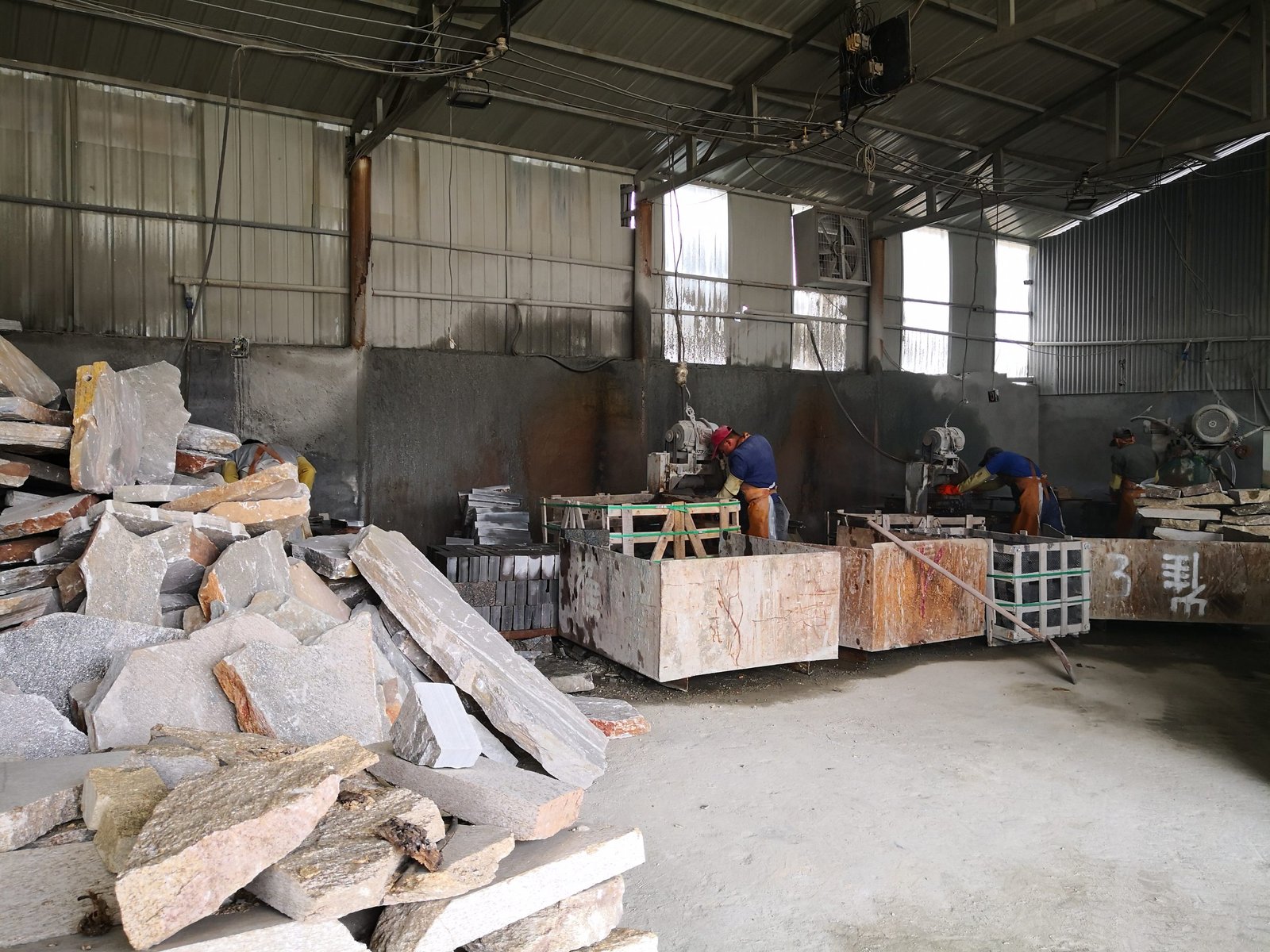
This guide covers five color families available in natural stacked stone wall panels. Each section breaks down the visual characteristics, material composition, best applications, and practical specification advice drawn from 18 years of factory production at Top Stone Panels in Yixian, Hebei Province.
1. Charcoal and Black Stacked Stone Panels
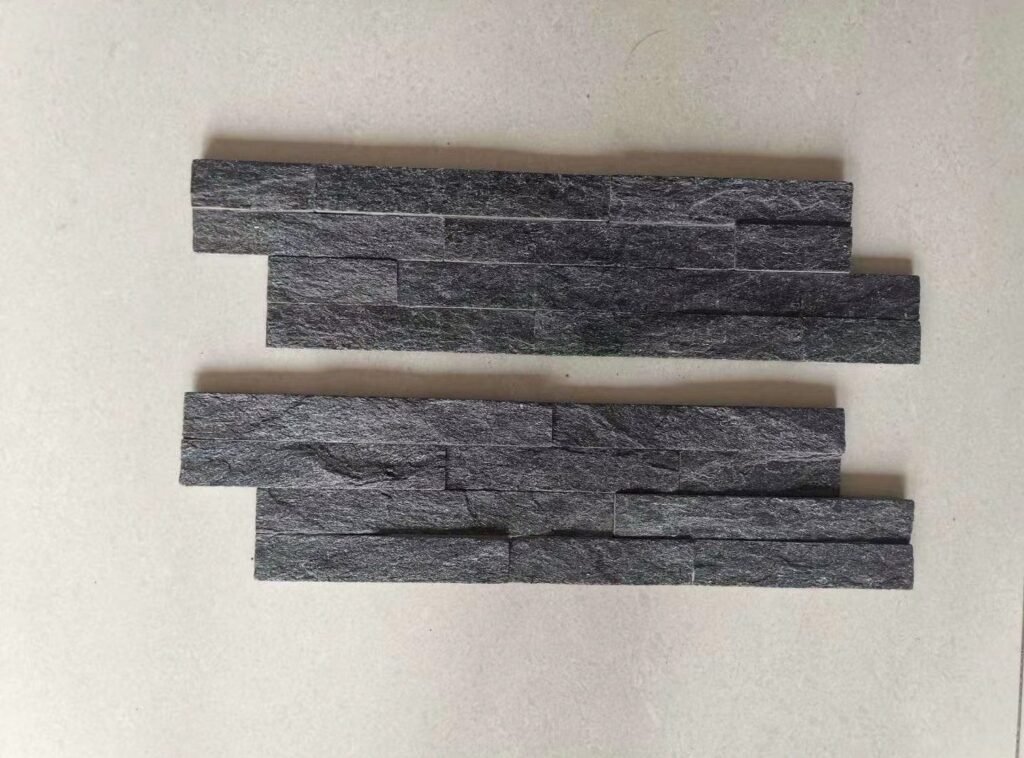
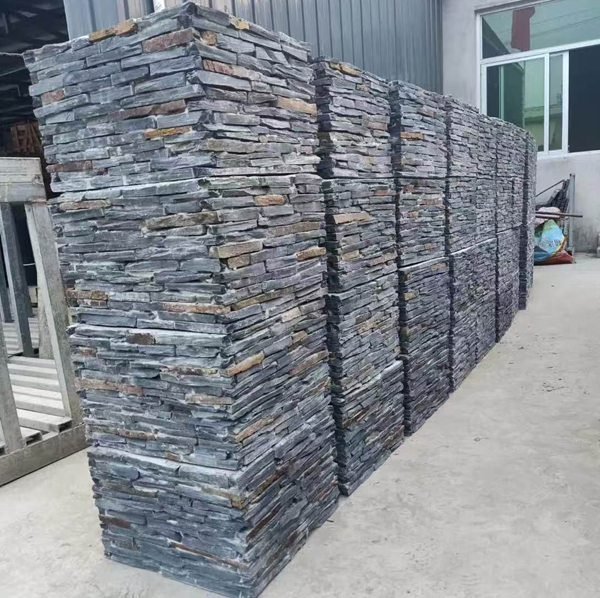
Charcoal and black represent the most-specified color family in commercial stacked stone orders. The dark palette comes from slate with high carbon content and iron-rich quartzite deposits. These minerals produce surfaces that range from deep graphite to jet black, with occasional silver-grey veining that catches light at oblique angles.
Visual Characteristics
Charcoal stacked stone panels are not flat black. Natural slate splits along bedding planes that expose layers of varying density. The result is a surface with tonal depth: some strips read as near-black, others as medium charcoal, and thin layers flash silver when the split crosses a mineral inclusion. This variation gives a large wall area visual movement without requiring pattern repetition.
Under direct sunlight, charcoal panels appear lighter and show more texture detail. In shade or overcast conditions, the same wall reads as a solid dark mass. This dual character makes charcoal panels versatile across climate zones, from sun-heavy Middle Eastern installations to the grey-sky environments common in Northern Europe.
Material Composition and Performance
Top Stone Panels produces charcoal and black stacked stone in both premium slate and quartzite. Slate panels deliver the deepest blacks. Quartzite panels in this color family tend toward charcoal with visible crystalline structure. Both materials carry an A-grade fire rating and withstand temperature ranges from -30°C to +50°C.
Dark stone panels absorb more solar heat than lighter alternatives. In hot climates, this thermal mass can transfer heat to the wall substrate. Installers should maintain a ventilated air gap behind the cladding system, particularly on south-facing walls in regions where summer temperatures exceed 35°C. Our marine-grade epoxy bond and cement backing system handles this thermal cycling without adhesive degradation.
Best Applications
Charcoal stacked stone performs well on commercial building facades, hotel entrance features, retail storefront surrounds, and modern residential exteriors. The dark color hides rain splash-back staining better than lighter alternatives, reducing maintenance requirements on street-level installations. For exterior wall design projects, charcoal panels pair effectively with glass curtain walls, corten steel accents, and light-colored concrete.
Distributors stocking for general resale report that charcoal consistently accounts for 30-40% of stacked stone panel sales volume. Keeping this color family in stock reduces lead-time complaints from contractors working on tight schedules.
2. Grey and Silver Stacked Stone Panels
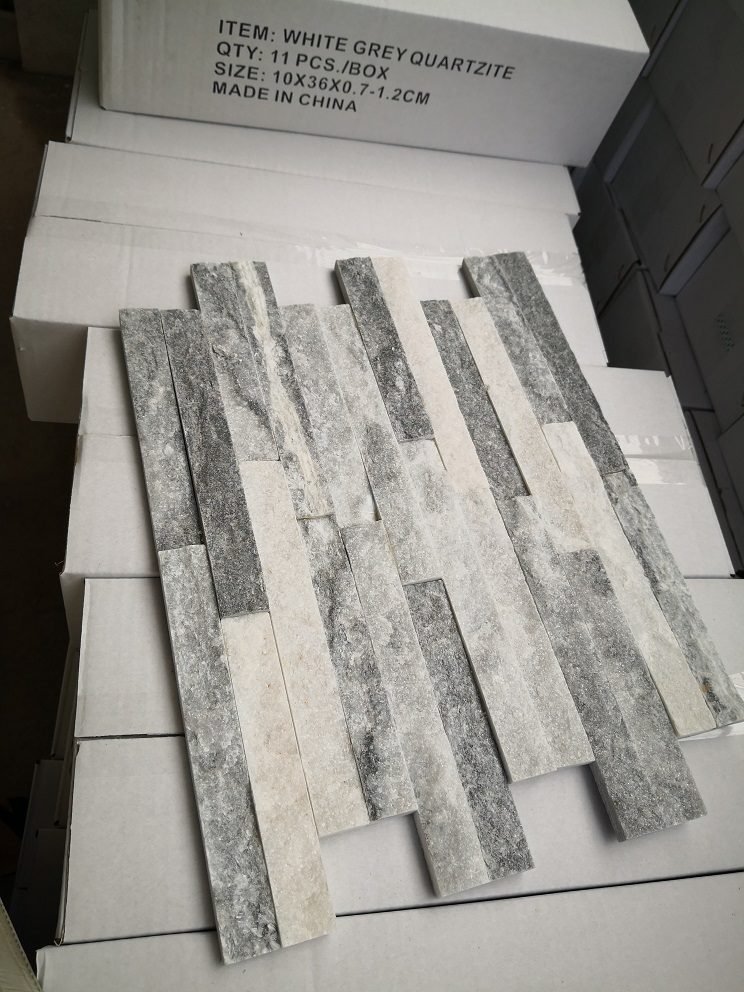
Grey and silver stacked stone panels occupy the middle ground between dark dramatic facades and warm natural tones. This color family draws primarily from blue-grey slate formations and silver-veined quartzite. The result is a cooler, lighter palette that adds texture to a wall without the visual weight of darker stone.
If grey is your market, the dedicated grey stone veneer guide covers slate versus quartzite, the grey families, and the panel formats that ship from this factory.
Visual Characteristics
Grey stone panels show more pronounced color variation within each strip than charcoal alternatives. Individual stone pieces in a 15x60cm panel may range from pale silver to medium blue-grey, with occasional rust-colored iron oxide spots that add warmth. The split-face texture scatters light in multiple directions, so the wall surface changes appearance throughout the day as sunlight angle shifts.
Photographers favor grey stacked stone for portfolio shots because it renders well across different white balance settings. Where charcoal panels can appear as a featureless dark block in overexposed shots, grey panels maintain visible texture and shadow detail. This characteristic matters for architects who photograph completed projects for award submissions and marketing.
Material Composition and Performance
Grey stacked stone panels use natural slate and quartzite sourced from Hebei Province quarries. The blue-grey color comes from specific iron oxidation states in the stone matrix. Unlike dyed or pigmented manufactured stone, this color runs through the full thickness of each strip. If a panel chips during transport or installation, the exposed surface matches the face color.
All Top Stone Panels stacked stone products undergo a 3-step quality control process: raw material selection at the quarry, in-process inspection during cutting and bonding, and pre-shipment final inspection with video documentation. Grey panels ship with the same marine-grade epoxy bond and cement backing used across our full product range.
Best Applications
Grey panels work particularly well on interior feature walls, fireplace surrounds, and covered exterior areas where the full texture detail is visible at close range. They also suit contemporary residential projects where the homeowner wants natural stone character without the bold statement of black cladding. For commercial projects, grey stacked stone pairs effectively with warm wood tones and brushed metal finishes.
Project specifiers selecting stone cladding for exterior walls should note that grey panels show water staining more visibly than charcoal during wet weather. This is temporary: the stone dries to its original color. In high-rainfall environments, applying a penetrating sealer after installation reduces water absorption and accelerates drying.
3. Rustic Multi-Color Stacked Stone Panels
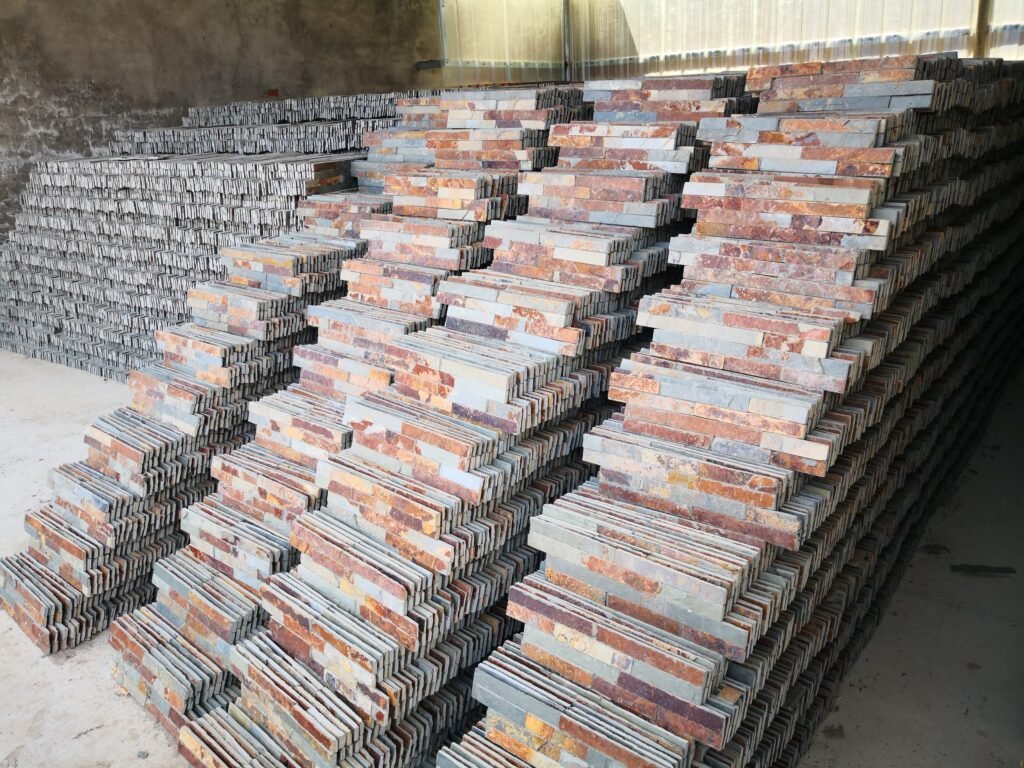
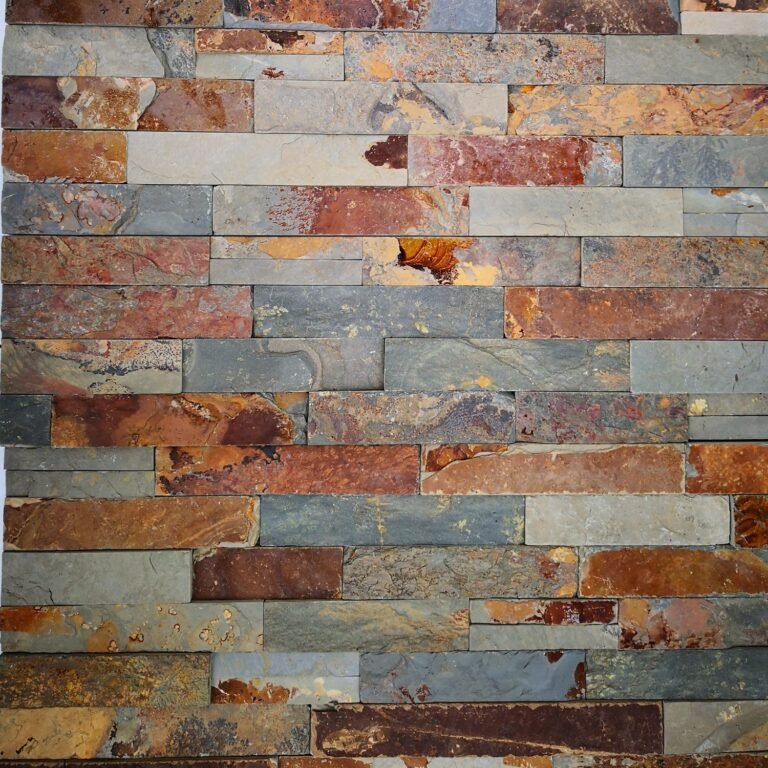
Multi-color stacked stone panels bring together strips of stone from different quarry layers and sometimes different material types within a single panel. The visual result is a wall surface with high color variation: rust, ochre, cream, grey, and brown strips sit side by side, creating a rich tapestry of natural tones. This is the color family that most closely resembles traditional dry-stack stone walls built by hand across rural landscapes.
Visual Characteristics
A multi-color stacked stone panel contains between 6 and 12 individual stone strips, each potentially from a different quarry layer. Some strips show heavy iron oxide veining in deep rust and amber. Others carry pale cream or light grey from calcite-rich layers. The combination produces a wall that reads differently from every viewing angle and changes character with seasonal light shifts.
Multi-color panels carry the highest visual complexity of any color family in this guide. On large wall areas, this complexity prevents monotony. On small accent walls, it creates a focal point that draws the eye. The trade-off is that multi-color panels require more careful surrounding material selection: they compete with patterned textiles, busy wallpaper, and complex furniture arrangements.
Material Composition and Performance
Multi-color panels blend sandstone and quartzite strips. Sandstone contributes the warmer tones (rust, ochre, honey), while quartzite adds the cooler grey and silver elements. Both materials are 100% natural stone, cut using infrared CNC diamond blades to ensure consistent panel dimensions across the production run.
The mixed-material composition means different strips within the same panel have slightly different absorption rates. This is a characteristic of natural stone, not a defect. For exterior installations in freeze-thaw environments, all panels receive the same marine-grade epoxy bond and cement backing. The mesh backing option provides additional security for installations on tall walls where panel weight requires mechanical fastener support.
Best Applications
Multi-color stacked stone excels in hospitality environments (hotel lobbies, restaurant feature walls, wine bar interiors), residential accent walls, and landscape garden walls. It also works on stone accent wall projects where the goal is to create a warm, inviting atmosphere. The visual complexity of multi-color panels adds perceived value to commercial spaces where clients or guests spend time.
Architects specifying multi-color panels should request batch photos before production. Top Stone Panels uses batch-specific vein selection to control color range within each order. This means the quarry layers selected for your production run are matched to your reference sample or approved range, preventing surprises when the container arrives on-site.
4. Warm Earth Tone Stacked Stone Panels
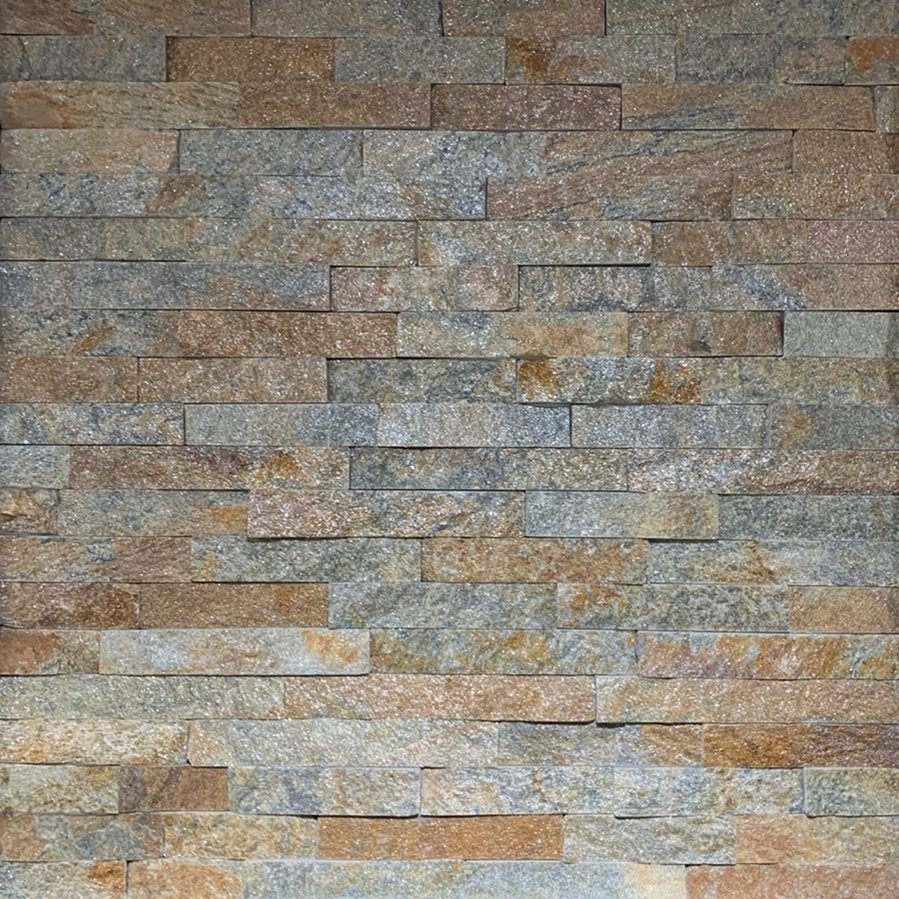
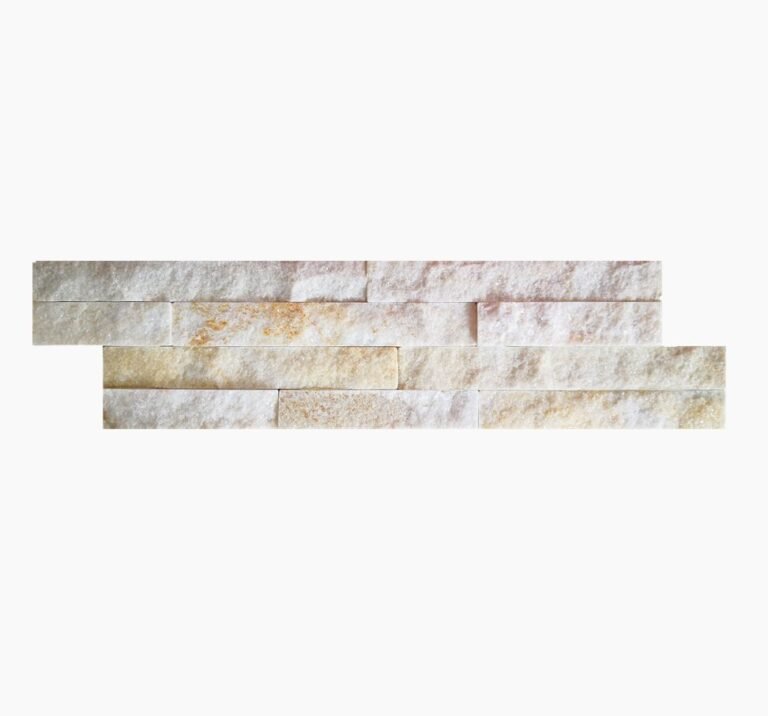
Warm earth tones cover the honey, tan, ochre, and golden-brown spectrum in stacked stone panels. This color family draws primarily from sandstone deposits where iron oxide content creates warm coloring throughout the stone body. Earth tone panels produce a sun-warmed, Mediterranean character that works across architectural styles from traditional to contemporary desert modern.
Visual Characteristics
Earth tone stacked stone panels range from pale honey through warm tan to deep ochre. Individual strips show grain patterns similar to sedimentary layering, with subtle banding that reveals the geological deposition process. Unlike the sharp, angular texture of split-face slate, earth tone sandstone panels often display a gentler surface relief with rounded grain boundaries.
The warm color spectrum reflects more light than charcoal or grey alternatives. In interior spaces, this reflection adds ambient warmth to rooms without increasing lighting costs. For exterior walls in sunny climates, earth tone panels reduce solar heat gain compared to dark stone, lowering cooling loads on the building envelope.
Material Composition and Performance
Sandstone is the primary material for earth tone stacked stone panels. Sandstone is a sedimentary rock composed of sand-sized mineral grains, predominantly quartz, cemented by silica, calcite, or iron oxide. The iron oxide cement is what produces the warm color range. Higher iron content yields deeper ochre and rust. Lower iron content produces pale honey and cream tones.
Sandstone is slightly more porous than slate and quartzite. For exterior applications, Top Stone Panels recommends specifying panels with cement backing to reduce moisture transmission to the wall substrate. In environments with salt-spray exposure (coastal installations), our products carry salt-spray resistance testing. However, earth tone sandstone benefits from a breathable penetrating sealer applied after installation to reduce salt crystallization within the pore structure.
Best Applications
Earth tone stacked stone panels suit residential exterior cladding in Mediterranean, Spanish, and Southwestern architectural styles. They work on garden retaining walls, pool house surrounds, and outdoor kitchen installations where the warm palette complements landscaping. For commercial projects, earth tone panels appear frequently in resort lobbies, spa reception areas, and boutique hotel exteriors where the design intent is relaxation and warmth.
Distributors serving the North American and Southern European markets report strong demand for earth tone stacked stone. The color aligns with regional architectural traditions and planning authority preferences in areas with warm-climate building codes. Check our stacked stone column and pillar guide for coordinating earth tone options on column wraps and pillar installations.
5. Custom Color Mix Stacked Stone Panels
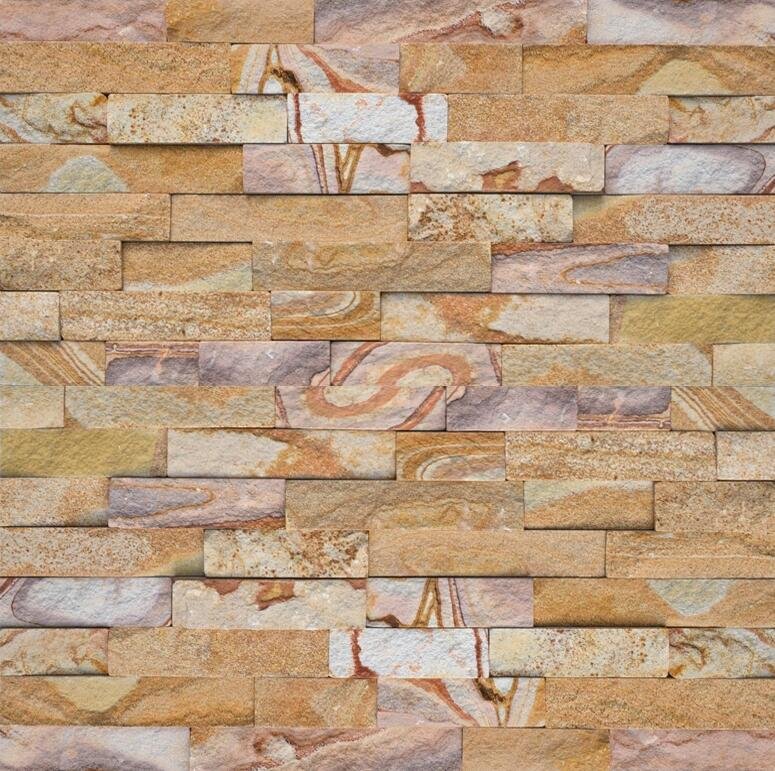
Custom color mix panels represent the highest specification tier in stacked stone wall panels. Rather than relying on a single quarry layer or a standard blend, custom orders involve the factory selecting specific stone strips from multiple sources and combining them in controlled ratios to match a project color brief. This option serves architects and designers who need precise color alignment with a broader design scheme.
Visual Characteristics
Custom color mix panels can achieve almost any natural stone color combination that exists within accessible quarry deposits. A designer might specify 40% charcoal slate, 30% grey quartzite, and 30% rust sandstone to create a tri-tone panel that bridges dark and warm elements in a building facade. The factory assembles these strips into panels during the bonding stage, controlling the distribution so that each panel reflects the target ratio.
The visual result depends entirely on the specification. Some custom mixes are subtle: a charcoal base with 15% grey strips for slightly more variation than a solid charcoal panel. Others are bold: equal parts black, grey, rust, and cream creating a high-contrast mosaic effect. The limitation is geological, not technical. If the stone exists in a quarry that the factory sources from, it can be included in a custom mix.
Material Composition and Performance
Custom mix panels can combine slate, quartzite, sandstone, and marble strips within a single panel. Each material has different density, absorption, and thermal expansion characteristics. Top Stone Panels manages this variation through the bonding process: marine-grade epoxy adhesive bonds each strip to the cement backing, accommodating minor differential movement between materials.
The infrared CNC diamond blade cutting system handles all material types in the same production line. Panel dimensions remain consistent at 15x60cm or 15x55cm regardless of the material combination. L-Corner kits are available for custom mix orders, produced from the same material blend to maintain visual continuity at wall corners.
Best Applications
Custom color mixes serve projects where standard color families do not meet the design brief. Common scenarios include brand-matched corporate facades, renovations where new stone must blend with existing cladding, and high-profile architectural projects where the designer specifies a unique material palette. Custom orders also suit distributors who want to offer exclusive color options not available from competing suppliers.
Production lead time for custom color orders is 25-30 working days for first orders with custom packaging, compared to 20-25 days for standard production runs. The additional time covers quarry sourcing, sample approval, and batch-specific vein selection. The minimum order quantity remains one 20-foot container, shipped FOB Xingang or under EXW, CIF, or DDP trade terms as required.
How Color Affects Project Value and Buyer Perception
Stone cladding color influences property valuation in measurable ways. Real estate data consistently shows that exterior finishes perceived as premium natural materials command higher asking prices than painted or manufactured alternatives. Within natural stone, color selection further refines this premium.
Dark charcoal and black stacked stone panels align with contemporary luxury positioning. Architects specifying high-end residential and commercial projects favor these colors because they photograph well and pair with premium materials like glass, steel, and polished concrete. A charcoal-clad facade signals investment-grade construction to prospective buyers and tenants.
Grey and earth tone panels appeal to a broader buyer pool. These colors work across more architectural styles and require less design expertise to integrate successfully. For developers building speculative residential units or commercial spaces, grey and earth tone stone cladding reduces the risk of alienating potential buyers with a color that is too bold or style-specific.
Multi-color and custom mix panels carry the highest perceived value in hospitality and retail environments. A well-executed multi-color feature wall in a hotel lobby or restaurant becomes a photographable moment that generates social media content and word-of-mouth marketing. The stone investment pays for itself through increased foot traffic and booking inquiries.
How to Choose the Right Stacked Stone Color for Your Project
Color selection for stacked stone panels follows a systematic process. Skipping steps leads to orders that look wrong on-site and cost money to replace. Here is the sequence that experienced specifiers follow:
Step 1: Define the architectural intent. Is the building modern, traditional, rustic, or transitional? Modern architecture suits charcoal and grey. Traditional and rustic styles align with earth tones and multi-color. Transitional designs can carry any color family depending on the surrounding materials.
Step 2: Assess the site lighting. Visit the installation location at different times of day. Note which walls receive direct morning sun versus afternoon sun. North-facing walls in the Northern Hemisphere receive diffused light all day, which flattens color and emphasizes texture over hue. South-facing walls show maximum color saturation under direct sunlight.
Step 3: Consider the surrounding materials. Stone does not exist in isolation. The roof color, window frames, landscaping, and adjacent buildings all affect how stone color reads. Dark stone against dark surroundings disappears. The same stone against a light background becomes a strong feature. Collect material samples from other trades and view them together before finalizing the stone color.
Step 4: Order physical samples. Top Stone Panels ships samples within 1-3 days. Place them on-site and observe them under the actual lighting conditions of the project. Monitor them over at least one full day to see how color shifts from dawn to dusk.
Step 5: Verify batch consistency. For orders exceeding one container, confirm that your supplier uses batch-specific vein selection. Color drift across production batches is the most common cause of dissatisfaction in large stone cladding projects. Our factory processes 80,000 m² per month with dedicated vein selection for each order to prevent this problem.
Color Consistency and Quality Control at the Factory
Natural stone color variation is inherent and desirable. Uncontrolled variation is not. The difference between the two comes down to factory processes.
Top Stone Panels operates a 3-step quality control system that directly affects color consistency in delivered panels:
Raw material selection: Before production begins, quarry blocks are inspected and sorted by color range. Blocks that fall outside the target color specification for a given order are diverted to other production runs. This step eliminates the most significant source of color drift.
In-process inspection: During cutting and bonding, operators check panel faces against the approved reference sample. Strips that deviate from the target range are removed before bonding. The infrared CNC diamond blade cutting system ensures that panel dimensions remain consistent regardless of the stone type being processed.
Pre-shipment final inspection: Completed panels are inspected under standardized lighting before packing. The factory provides a pre-shipment inspection video for each order, allowing the buyer to verify color and quality before the container leaves the facility. Packaging follows the Zero-Breakage Protocol: 3-5 layer corrugated cartons, fumigation-free pallets, 4-6 steel bands, and industrial airbags to protect panels during ocean freight.
For buyers comparing suppliers, the question to ask is not whether the factory has a QC process, but whether they document it with video evidence before shipment. Certification documents (COO, ISPM 15 fumigation certificate) accompany every shipment from Xingang/Tianjin port.
Comparison Table: 5 Stacked Stone Panel Color Options
| Feature | Charcoal / Black | Grey / Silver | Rustic Multi-Color | Warm Earth Tones | Custom Color Mix |
|---|---|---|---|---|---|
| Primary Material | Slate, Quartzite | Slate, Quartzite | Sandstone, Quartzite | Sandstone | Slate, Quartzite, Sandstone, Marble |
| Color Range | Deep graphite to jet black | Pale silver to blue-grey | Rust, ochre, cream, grey blend | Honey, tan, ochre, golden-brown | Any natural stone combination |
| Visual Complexity | Low to Medium | Medium | High | Medium | Variable (designer-controlled) |
| Best Application | Commercial facades, modern residential | Feature walls, contemporary residential | Hospitality, accent walls, gardens | Mediterranean, residential, resorts | Brand-matched projects, renovations |
| Solar Heat Absorption | High | Medium | Medium | Low to Medium | Variable |
| UV Stability | Excellent | Excellent | Excellent | Excellent | Excellent |
| Distributor Stock Priority | Highest (30-40% of sales) | High | Medium | High (regional markets) | Made to order |
| Lead Time | 20-25 working days | 20-25 working days | 20-25 working days | 20-25 working days | 25-30 working days |
Natural vs. Dyed Stone Color: What Buyers Need to Know
The stacked stone market includes both naturally colored panels and panels treated with surface dyes or pigments. Understanding the difference protects buyers from specification errors that become visible after installation.
Natural stone color comes from mineral composition. Slate is dark because of carbon and iron content deposited during geological formation. Sandstone is warm because iron oxide acts as the natural cement binding quartz grains. These colors run through the full thickness of the stone. A chip or fracture exposes the same color beneath the surface.
Dyed stone relies on surface-applied pigments that penetrate only a few millimeters. The color may appear uniform in the showroom, but UV exposure degrades surface pigments over time. Chips and scratches reveal the natural stone color underneath, creating visible defects. Dyed products also lack the subtle tonal variation that gives natural stone its visual depth.
Top Stone Panels produces exclusively natural stone products. Every color in our stacked stone range comes from the geological properties of the raw material. No surface dyes, no color washes, no artificial treatments. This is why our products carry UV stability guarantees: the color is the stone, not a coating on the stone. For a detailed comparison, see our guide on exterior stacked stone veneer versus manufactured stone.
Frequently Asked Questions
What colors do stacked stone wall panels come in?
Natural stacked stone wall panels come in five primary color families: charcoal and black, grey and silver, rustic multi-color, warm earth tones, and custom color mixes. Each family draws from specific quarry deposits: slate for dark tones, sandstone for warm tones, and blended materials for multi-color and custom options. Top Stone Panels offers all five families in 15x60cm and 15x55cm panel formats with matching L-Corner kits.
Which stacked stone panel color is best for exterior cladding?
Charcoal and grey stacked stone panels are the most specified colors for exterior cladding. Dark tones resist visible staining from rain splash-back and UV exposure. Natural slate and quartzite in these colors carry an A-grade fire rating and withstand temperatures from -30°C to +50°C. All exterior panels use marine-grade epoxy bonding and cement backing for long-term durability.
How do I choose the right stacked stone color for my project?
Start with the architectural style, assess the site lighting at different times of day, and consider surrounding materials. Then order physical samples and evaluate them on-site under real lighting conditions. For large orders, confirm that your supplier uses batch-specific vein selection to maintain color consistency across the production run.
Are natural stacked stone colors UV stable?
Yes. Natural stone colors are UV stable because the color comes from mineral composition, not surface treatments. Slate derives its dark tones from carbon and iron content formed over millions of years. Quartzite colors come from silica and trace minerals. These geological formations do not fade under UV exposure.
Can I get custom color-matched stacked stone panels?
Yes. Top Stone Panels produces custom color-matched stacked stone panels using batch-specific vein selection and infrared CNC diamond blade cutting. Provide a reference sample or color specification. Production lead time is 25-30 working days for first orders with custom packaging. Minimum order is one 20-foot container, shipped from Xingang/Tianjin port under FOB, EXW, CIF, or DDP terms.
Next Steps: Request Samples and Start Your Specification
Color selection for stacked stone wall panels is not a decision you make from a screen. Photographs compress tonal range. Monitor calibration shifts hues. The only reliable way to evaluate stone color is with physical samples under the lighting conditions of your specific project.
Top Stone Panels ships color samples within 1-3 days from our facility in Yixian, Hebei Province. Each sample represents the actual quarry layer that will supply your production order, so the color you approve is the color you receive. Our capacity of 220+ containers per year and 80,000 m² monthly output means your order slots into production without extended wait times.
Whether you need a single container of charcoal slate or a custom color mix spanning multiple quarry sources, the process starts with a sample request. View the full stacked stone product range and contact the factory team to discuss your project requirements. For a broader understanding of stone panel options beyond stacked stone, explore our guides on thin stone veneer and the six types of stone veneer panels available for distributors.
Payment terms are straightforward: 30% T/T deposit with 70% balance before shipment. Every container ships with a Certificate of Origin, ISPM 15 fumigation certificate, and pre-shipment inspection video. The Zero-Breakage Protocol packaging (3-5 layer corrugated cartons, fumigation-free pallets, 4-6 steel bands, industrial airbags) ensures panels arrive in the same condition they left the factory.