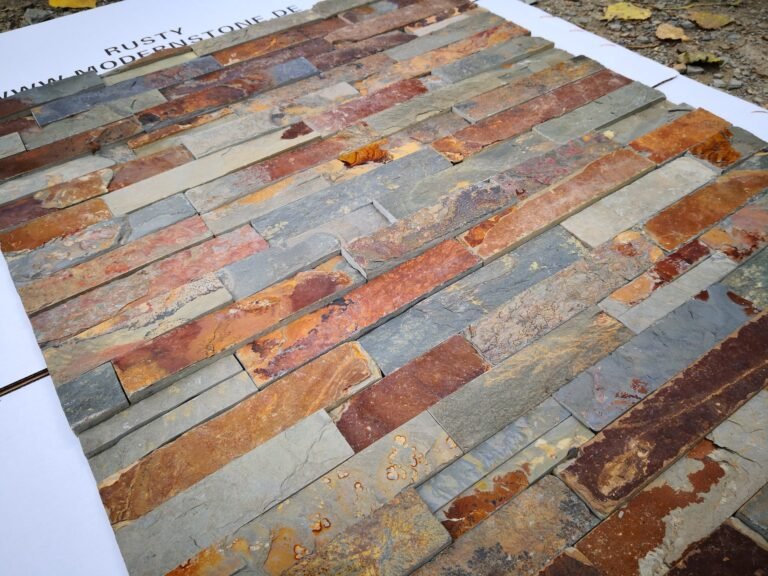
Over 70% of building envelope failures involving stone cladding can be traced to inadequate material specification or missing test documentation. When a facade panel delaminates at 30 stories, the first question regulators ask is not about the installer — it is about the ASTM test reports. Understanding which ASTM stone cladding standards apply to your project is not optional paperwork. It is the technical backbone that separates a 50-year facade from a 5-year liability.
This guide breaks down every ASTM test method and material specification that architects, specifiers, and procurement teams need when sourcing natural stone cladding. Each section covers what the standard measures, why it matters for exterior or interior applications, and the typical performance ranges for slate and quartzite — the two most common dimension stones in commercial cladding.
Key Takeaways
- ASTM C97 water absorption is the single most critical test — values below 0.4% (slate) and 0.1% (quartzite) indicate excellent durability.
- ASTM C170 compressive strength and C880 flexural strength together determine whether a stone panel can survive wind loads and handling stress.
- ASTM E84 fire testing confirms natural stone achieves Class A flame spread rating — the highest possible classification for building materials.
- ASTM C217 weather-resistance cycling separates exterior-grade S1 slate from interior-only material.
- Material specifications C568 (limestone), C616 (quartz-based stone), and C629 (slate) define minimum acceptance thresholds for each stone type.
- Test reports should be issued by an accredited independent laboratory. Samples from Top Stone Panels ship within 1–3 days for third-party verification.
Table of Contents
- Why ASTM Standards Matter for Stone Cladding
- ASTM C97: Absorption and Bulk Specific Gravity
- ASTM C170: Compressive Strength of Dimension Stone
- ASTM C880: Flexural Strength Break Point
- ASTM C99: Modulus of Rupture
- ASTM E84: Fire Rating and Surface Burning
- ASTM C217: Weather Resistance of Slate
- Material Specifications: C568, C616, C629
- Test Documentation and Sample Shipping
- Specifier’s Decision Checklist
Why ASTM Standards Matter for Stone Cladding
ASTM International maintains over 12,000 technical standards used across 140 countries (astm.org). For natural stone cladding, fewer than a dozen of those standards carry real weight in project specifications. Knowing which ones to request — and which ones to skip — saves time during the submittal review process and prevents costly change orders mid-construction.
Building codes in North America, the Middle East, and Australia frequently reference ASTM test methods for exterior wall assemblies. The International Building Code (IBC) requires cladding materials to demonstrate compliance through recognized test standards. A supplier who cannot produce current ASTM reports for absorption, compressive strength, and flexural strength is a supplier who has not done the homework.
The standards fall into two categories: test methods (how to measure a property) and specifications (what minimum values are acceptable). A complete submittal package includes both. Test methods generate the numbers; specifications define whether those numbers pass. The full catalog of ASTM building construction standards is available for reference on their website.
ASTM C97: Absorption and Bulk Specific Gravity
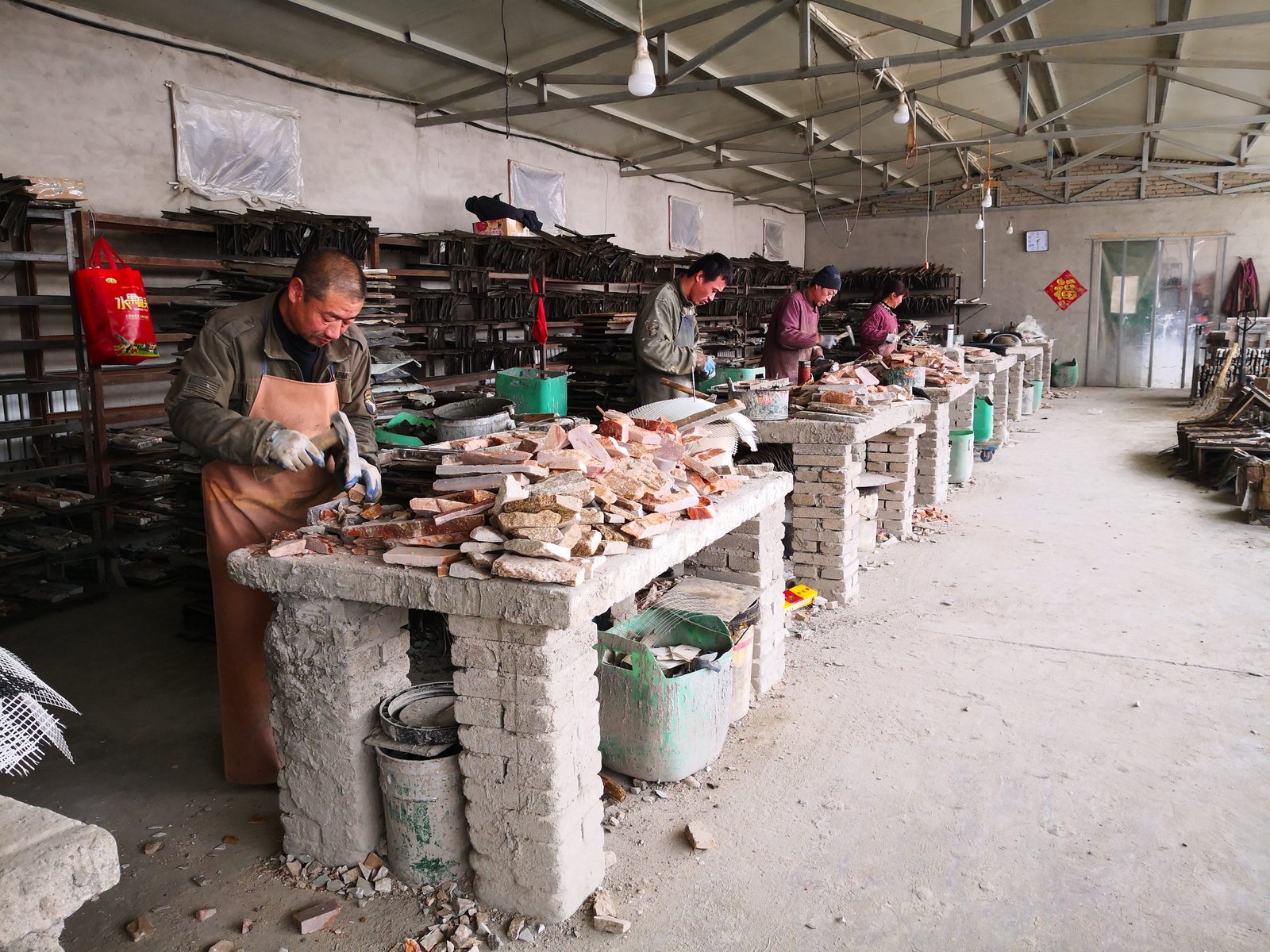
ASTM C97 is the foundation test. Every other property — freeze-thaw resistance, stain susceptibility, bond strength — correlates with how much water the stone absorbs. The test procedure is straightforward: a dry stone sample is weighed, then submerged under vacuum to force water into every open pore. The weight gain is expressed as a percentage of the dry weight.
Lower absorption means fewer open pores. Fewer pores mean less water ingress during rain, less expansion during freeze-thaw cycles, and less risk of efflorescence migrating through the panel. For exterior cladding, this single number predicts long-term performance better than almost any other metric.
| Stone Type | Typical Absorption (ASTM C97) | Exterior Suitability |
|---|---|---|
| Natural Slate | < 0.4% | Excellent |
| High-Density Quartzite | < 0.1% | Excellent |
| Sandstone | 1.0 – 6.0% | Conditional |
| Limestone | 0.5 – 3.0% | Conditional |
Bulk specific gravity — the ratio of stone density to water density — is reported alongside absorption. Dense quartzite typically registers above 2.65, while slate ranges from 2.70 to 2.85. Higher density generally correlates with better mechanical performance. Freeze-thaw resistance in cold climates depends directly on this absorption-density relationship.
Top Stone Panels sources slate and quartzite from own quarries in Hebei Province with consistently low absorption values. Test reports for specific product batches are available upon request, and thin stone veneer samples can be shipped within 1–3 days for independent lab verification.
ASTM C170: Compressive Strength of Dimension Stone
ASTM C170 measures the maximum load a stone cube or cylinder can withstand before crushing. The test applies force perpendicular to the bed plane — the same direction that gravity and dead load impose on a cladding panel once installed.
For stone cladding, compressive strength rarely governs the design. Cladding panels carry their own weight and transfer it to anchors, not to the stone below. However, the test reveals the internal soundness of the material. A stone that crushes at 80 MPa has micro-fractures, voids, or mineral weaknesses that will also compromise its flexural and anchorage performance.
| Stone Type | Typical Compressive Strength (ASTM C170) | Specification Minimum (C629 / C616) |
|---|---|---|
| Natural Slate | 100 – 200 MPa | ≥ 100 MPa (C629, Grade S1) |
| Quartzite | 150 – 300 MPa | ≥ 138 MPa (C616, Class II) |
Compressive strength values also influence anchor design. Higher compressive stone tolerates tighter anchor spacing and greater point loads from mechanical fixings. For stacked stone panels with cement or epoxy backing, the compressive strength of the stone face determines whether additional mechanical ties are required at upper-story elevations. The range of available stacked stone color options across slate and quartzite does not affect compressive performance — color variation is cosmetic, not structural.
Specifiers requesting ASTM C170 reports should confirm that testing was performed on specimens cut perpendicular to the rift plane. Testing parallel to the rift inflates results and does not represent real-world loading conditions.
ASTM C880: Flexural Strength Break Point
Flexural strength — often called bending strength — is the property that most directly determines whether a stone panel can span between anchors without cracking. ASTM C880 uses a four-point bending setup: a stone strip is supported at two points and loaded at two other points until fracture.
This test matters because cladding panels experience bending moments from wind pressure, thermal expansion, and their own self-weight. A panel with insufficient flexural strength will develop hairline cracks at mid-span — cracks that grow with each wind cycle until the panel fails.

| Stone Type | Typical Flexural Strength (ASTM C880) | Minimum for Exterior Cladding |
|---|---|---|
| Natural Slate | 40 – 70 MPa | ≥ 34 MPa (per C629) |
| Quartzite | 50 – 90 MPa | ≥ 34 MPa (per C616) |
The gap between typical values and minimum thresholds is the safety margin. High-density quartzite from established quarries routinely tests 2–3 times above the specification floor. Slate from metamorphic deposits with strong foliation planes can show directional variation — flexural strength measured across the grain may differ from values measured along the grain. Responsible manufacturers test both orientations.
For large-format panels such as Z-panels (20x55cm or 15.2x61cm), flexural strength directly affects the maximum unsupported span. Engineering calculations should reference the lower-bound test value — never the average — to account for natural variability between stone blocks.
ASTM C99: Modulus of Rupture
ASTM C99 is the older counterpart to C880, using a three-point bending method instead of four-point. The result — modulus of rupture — is conceptually similar but tends to produce slightly higher values because the stress is concentrated at a single point rather than distributed across a span.
Many specifications still reference C99, particularly for slate and limestone. The two tests are not interchangeable, but both indicate bending capacity. When a project calls for C99 results, suppliers should provide exactly that — not a C880 report relabeled.
The practical difference: C880 produces a more conservative (lower) value because the bending moment is uniform between the two loading points. C99 concentrates stress at the midpoint, so failure occurs at a higher apparent load. For design purposes, the lower C880 value provides a safer basis for engineering calculations.
Both tests require specimens with specific dimensions — typically 50mm wide, 25mm thick, and 200mm long. For thin stone products like thin ledgestone panels (36x10cm), the test specimens may need to be prepared from the same quarry block rather than cut from the finished panel.
Need ASTM Test Reports for Your Project?
Top Stone Panels provides batch-specific test documentation and ships samples within 1–3 days for independent laboratory testing at any accredited facility.
ASTM E84: Fire Rating and Surface Burning
ASTM E84 — also known as the Steiner Tunnel Test — measures two values: flame spread index and smoke-developed index. The test exposes a 7.6-meter sample to a controlled fire inside a tunnel furnace and records how far and how fast flames travel along the surface.
The rating system has three classes:
| Class | Flame Spread Index | Smoke Developed Index |
|---|---|---|
| Class A | 0 – 25 | ≤ 450 |
| Class B | 26 – 75 | ≤ 450 |
| Class C | 76 – 200 | ≤ 450 |
Natural stone — slate, quartzite, sandstone, marble — is mineral material. It does not burn. Flame spread index for natural stone consistently registers at 0 to 5, placing it firmly in Class A. This is an inherent property of the material, not a coating or treatment that can degrade over time.
Building codes in most jurisdictions require Class A or Class B cladding for exterior walls on buildings above a certain height — typically 12 meters or 4 stories. Natural stone cladding satisfies this requirement without additional fire-retardant treatments, which simplifies both specification and long-term maintenance. The natural fire rating of slate and quartzite is one of the strongest arguments for specifying stone over combustible alternatives.
One nuance worth noting: when stone panels include adhesives, backing materials, or polymer-modified mortars, those components may have different fire ratings than the stone itself. The complete assembly — stone, backing, adhesive — should be evaluated together for code compliance.
ASTM C217: Weather Resistance of Slate
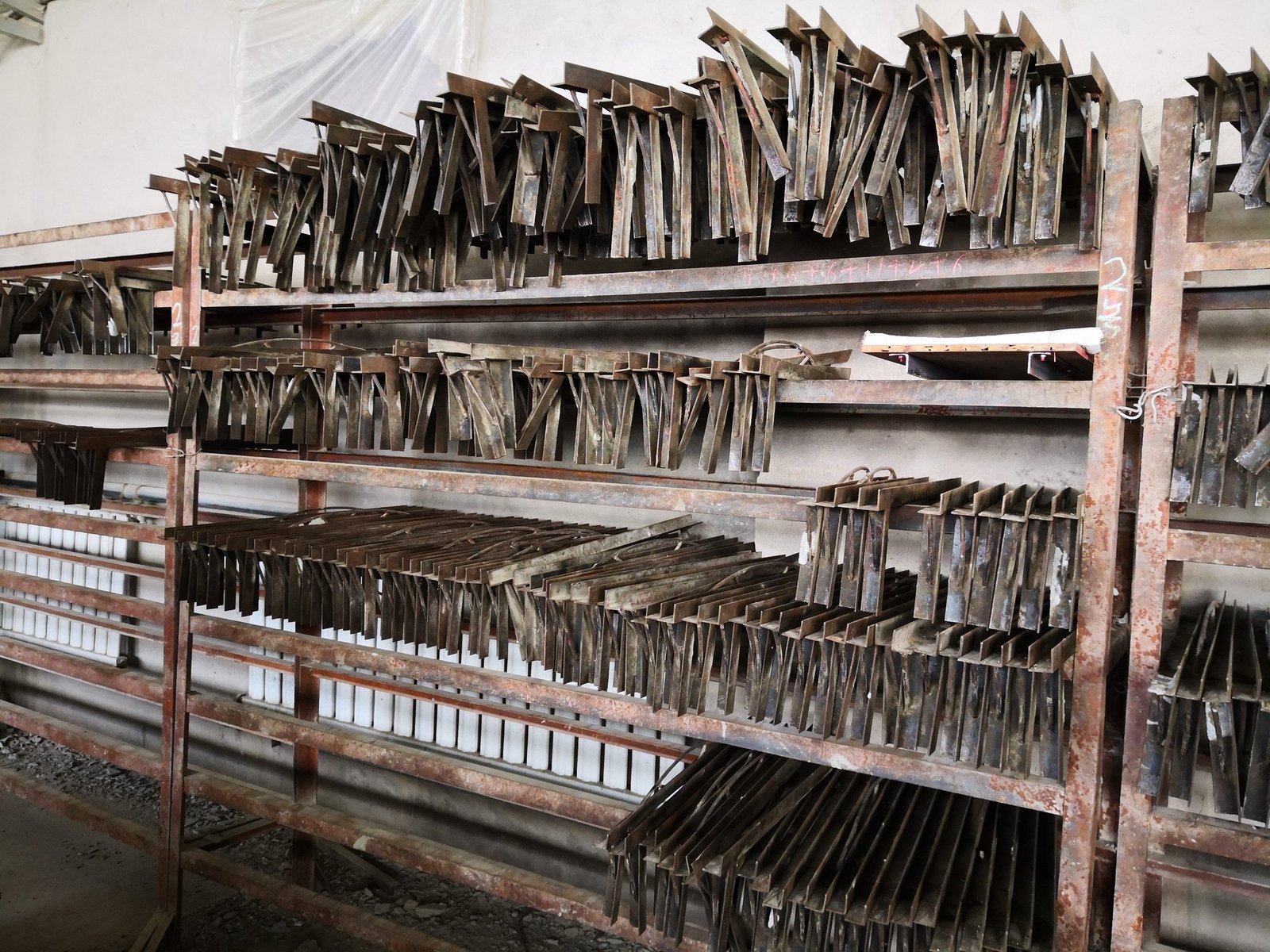
ASTM C217 is specific to slate and addresses the failure mode most unique to this material: delamination. Slate is a metamorphic rock formed in layers. If those layers are weakly bonded, repeated wetting and drying can cause the stone to split along its foliation planes — a failure that compressive and flexural tests alone cannot predict.
The test subjects slate specimens to repeated wet-dry cycles in a controlled environment. After each cycle, inspectors check for edge delamination, surface exfoliation, or structural separation. The results classify slate into three grades:
| Grade | Cycles Without Delamination | Application |
|---|---|---|
| S1 | 20 cycles | Exterior cladding, roofing, paving |
| S2 | 10 cycles | Interior wall cladding, flooring |
| S3 | 5 cycles | Interior decorative use only |
Only S1-grade slate should be specified for exterior cladding. The difference between S1 and S2 often traces back to the quarry source. Metamorphic slate from deposits with strong, well-cemented foliation planes passes S1 consistently. Slate from deposits with clay-rich interlayers may delaminate after fewer cycles.
Top Stone Panels quarries slate from deposits in Hebei Province that produce S1-grade material. Batch-specific vein selection using infrared inspection ensures consistency across production runs. For projects requiring weather-resistance documentation, the factory’s 3-step quality control process tracks material from quarry face through final inspection.
Material Specifications: C568, C616, C629
While test methods describe how to measure properties, material specifications define the minimum acceptable values for each stone type. Three ASTM specifications cover the stones most commonly used in cladding:
ASTM C629 — Slate Dimension Stone. Covers slate used for building construction. Defines three grades (S1, S2, S3) based on absorption, modulus of rupture, and weather resistance. Exterior cladding slate must meet S1 requirements: absorption ≤ 0.25%, modulus of rupture ≥ 6,900 kPa (≈ 47.6 MPa minimum across grain).
ASTM C616 — Quartz-Based Dimension Stone. Applies to quartzite, quartzitic sandstone, and other quartz-dominant stones. Defines two classes: Class I (interior) and Class II (exterior). Class II exterior stone requires absorption ≤ 3.0%, compressive strength ≥ 138 MPa, and flexural strength ≥ 34 MPa. High-density quartzite from quality quarries far exceeds these minimums.
ASTM C568 — Limestone Dimension Stone. Classifies limestone into three density categories (low, medium, high) with corresponding strength and absorption thresholds. Limestone is less common in thin-veneer cladding but appears in heavy dimensional stone facades.
A complete specification package references both the test method (how values were obtained) and the material standard (what values are acceptable). For example: “Slate cladding shall conform to ASTM C629, Grade S1. Test results per ASTM C97, C170, C880, and C217 shall be submitted with product data.”
When sourcing stone from manufacturers such as flagstone and cladding suppliers with 18+ years of export experience, requesting compliance statements against these specifications is standard practice. Top Stone Panels provides Certificate of Origin (COO), pre-shipment inspection reports with video documentation, and material data sheets that reference ASTM test methods.
Test Documentation and Sample Shipping
Test reports are only valuable if they are current, verifiable, and specific to the material being supplied. A five-year-old report from a different quarry block may not represent the stone in the next container. Here is what procurement teams should verify when reviewing documentation:
- Report date. Test results older than three years may not reflect current quarry output. Request updated reports for each major project phase.
- Laboratory accreditation. Reports should come from an ISO 17025-accredited testing laboratory. A2LA, UKAS, and CNAS are widely recognized accreditation bodies.
- Sample identification. The report should identify the quarry source, stone type, and block or lot number — not just “natural slate” as a generic description.
- Test conditions. Specimen dimensions, conditioning method, and test orientation (parallel vs. perpendicular to rift) should be clearly stated.
- Number of specimens. ASTM standards typically require a minimum of 5 specimens per test. Reports based on single specimens are statistically unreliable.
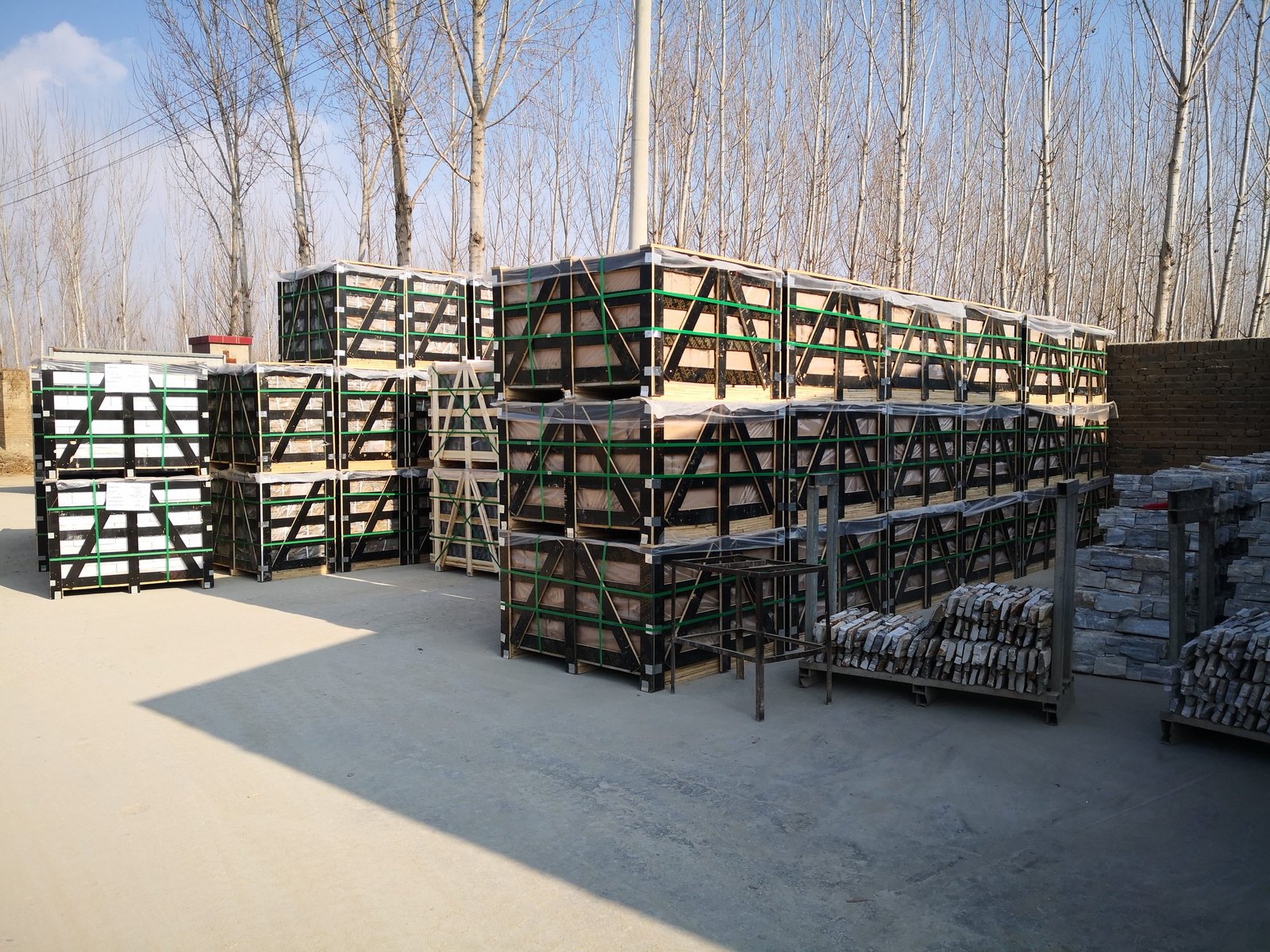
For specifiers who want independent verification, requesting sample material for third-party testing is the gold standard. Top Stone Panels ships product samples within 1–3 days from the Xingang/Tianjin port. Samples are suitable for submission to any accredited testing laboratory for ASTM C97, C170, C880, E84, or C217 testing.
The factory’s marine-grade epoxy bond and cement backing systems can also be included in assembly-level testing when the complete wall system requires evaluation. For projects requiring exterior wall specification guidance, the technical team provides material data sheets that cross-reference applicable ASTM standards.
Specifier’s Decision Checklist
Not every project requires every ASTM test. The scope of testing depends on the application, building height, climate zone, and local code requirements. The following checklist helps determine which standards are mandatory versus optional for a given specification:
Exterior Cladding (All Climates)
- ASTM C97 — Absorption and Bulk Specific Gravity (mandatory)
- ASTM C170 — Compressive Strength (mandatory for buildings > 4 stories)
- ASTM C880 — Flexural Strength (mandatory for anchor engineering)
- ASTM E84 — Surface Burning Characteristics (mandatory for IBC compliance)
- ASTM C217 — Weather Resistance (mandatory for slate; quartzite exempt)
- ASTM C629 or C616 — Material specification compliance (mandatory)
Interior Cladding
- ASTM C97 — Absorption (recommended, not always required)
- ASTM C880 — Flexural Strength (recommended for large-format panels)
- ASTM E84 — Surface Burning (required in commercial interiors with egress codes)
- ASTM C217 — Weather Resistance (not required for interior applications)
Cold-Climate / Freeze-Thaw Zones
- ASTM C97 — Absorption must be < 0.4% for freeze-thaw durability
- ASTM C666 — Freeze-Thaw Resistance (complementary test, not ASTM dimension stone series but widely specified)
- ASTM C170 — Compressive Strength before and after freeze-thaw cycling
- Verify freeze-thaw performance data for the specific stone type and quarry source
For projects specifying stone columns or heavy dimensional elements, add ASTM C99 (modulus of rupture) and consult with the structural engineer regarding load-bearing requirements beyond standard cladding scope.
Frequently Asked Questions
Which ASTM standard tests water absorption in natural stone cladding?
ASTM C97 is the standard test method for Absorption and Bulk Specific Gravity of Dimension Stone. It measures the percentage of water a stone sample absorbs under vacuum conditions. Natural slate typically shows absorption below 0.4%, while high-density quartzite often tests below 0.1%.
What ASTM test measures flexural strength of stone panels?
ASTM C880 is the Standard Test Method for Flexural Strength of Dimension Stone. It determines the breaking load of stone under bending stress. Typical flexural strength ranges are 40–70 MPa for slate and 50–90 MPa for quartzite.
What is the ASTM fire rating test for stone cladding?
ASTM E84 (Standard Test Method for Surface Burning Characteristics of Building Materials) measures flame spread and smoke development. Natural stone products such as slate and quartzite typically achieve Class A fire performance — the highest rating — because stone is non-combustible.
How does ASTM C217 test weather resistance of slate?
ASTM C217 evaluates weather resistance of slate by subjecting samples to accelerated wet-dry cycling that simulates long-term exposure. The test classifies slate into grades: S1 (no delamination after 20 cycles), S2 (no delamination after 10 cycles), and S3 (no delamination after 5 cycles). S1-grade slate is suitable for exterior cladding.
Do ASTM standards apply to stone veneer panels with cement backing?
Yes. ASTM test methods for dimension stone apply to the natural stone face of veneer panels regardless of backing type. The stone layer itself is tested for absorption (C97), compressive strength (C170), flexural strength (C880), and other properties. Backing materials (cement, epoxy, mesh) are evaluated under separate standards.
Can I request ASTM test reports for stone cladding from suppliers?
Reputable stone cladding manufacturers provide ASTM test reports upon request. Top Stone Panels can supply test documentation and ship samples within 1–3 days for independent laboratory testing at any accredited facility.
Conclusion: Build Your Specification with Data
ASTM standards exist to replace guesswork with numbers. A cladding specification backed by C97, C170, C880, E84, and the relevant material standard (C629 for slate, C616 for quartzite) communicates exactly what the project requires and gives the procurement team an objective basis for evaluating suppliers.
The five-point summary from this guide:
- Absorption (C97) is the gatekeeper. If the stone fails absorption, it will likely fail freeze-thaw, stain resistance, and long-term durability. Demand values below 0.4% for slate and below 0.1% for quartzite.
- Flexural strength (C880) governs panel span. Use the lower-bound test value for anchor design calculations, not the average.
- Fire rating (E84) is a formality for natural stone. Slate and quartzite achieve Class A inherently — no treatment required.
- Weather resistance (C217) is non-negotiable for slate. Specify Grade S1 for any exterior application.
- Documentation must be current and traceable. Reports should identify quarry source, test date, laboratory accreditation, and specimen count.
Top Stone Panels has supplied natural stone cladding to projects across 30+ countries since 2005. With 220+ containers shipped annually, own quarries producing slate and quartzite, and a 3-step QC process from raw material selection through pre-shipment inspection, the factory provides test documentation that meets the standards described in this guide. Beyond mechanical performance, natural stone maintains its appearance for decades — as discussed in the guide on UV stability of slate and quartzite. Request samples or test reports for your next project — samples ship within 1–3 days via Xingang/Tianjin port.