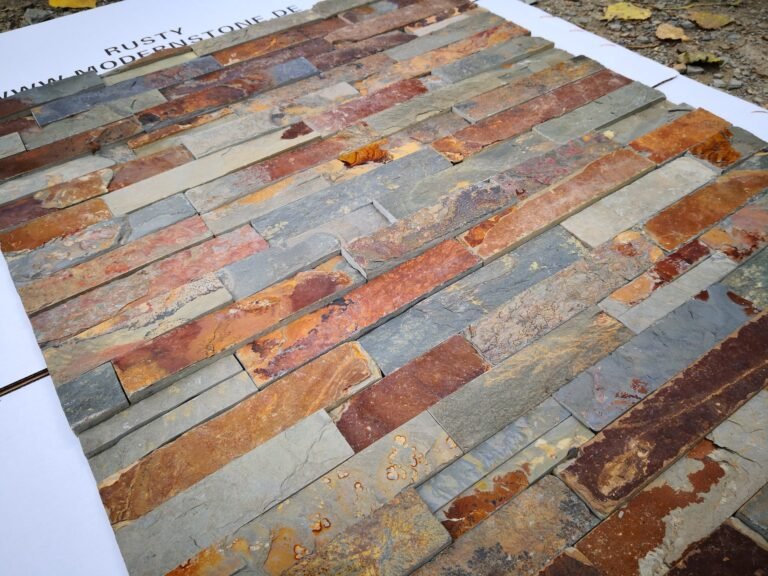
Every stone panel that arrives on a job site out of square or off-dimension creates a cascade of problems. The installer pulls out an angle grinder, makes a field cut, chips an edge, discards the piece, and reaches for another panel. Multiply that across 2,000 square feet of cladding and the waste adds up fast — typically 8-12% of total material on a standard commercial project.
Infrared CNC cutting changes that equation. By pairing an infrared surface sensor with a computer-controlled diamond cutting head, stone panel factories can deliver boards cut to ±0.5mm tolerance. For B2B buyers — distributors supplying contractors, architects specifying on large commercial builds, and project managers watching material budgets — that precision translates directly into less waste, fewer delays, and lower labor costs.
This guide breaks down how infrared CNC cutting works in natural stone panel production, where the waste savings come from, and what to look for when evaluating a supplier’s cutting capability.
What Is Infrared CNC Cutting in Stone Panel Production?
CNC stands for Computer Numerical Control — a system where a computer directs the movement of cutting tools rather than a human operator guiding a saw by hand. In stone panel manufacturing, CNC systems pair with diamond-tipped cutting heads that slice through slate, quartzite, sandstone, and other natural stone at controlled speeds and depths.
The “infrared” part adds a layer of intelligence. An infrared sensor scans the stone slab before cutting begins, mapping surface irregularities, natural veins, and thickness variations. The CNC system adjusts the cutting path in real time based on this data, compensating for the natural inconsistencies that make stone different from machined metals or plastics.
At Top Stone Panels, the infrared CNC line handles the full production run: standard 15×60cm stacked stone panels, custom-dimension pieces for window surrounds, and pre-cut L-corner pieces that need to hit exact 90-degree angles. The system processes roughly 200 square meters per shift, with dimensional accuracy that manual cutting cannot match.
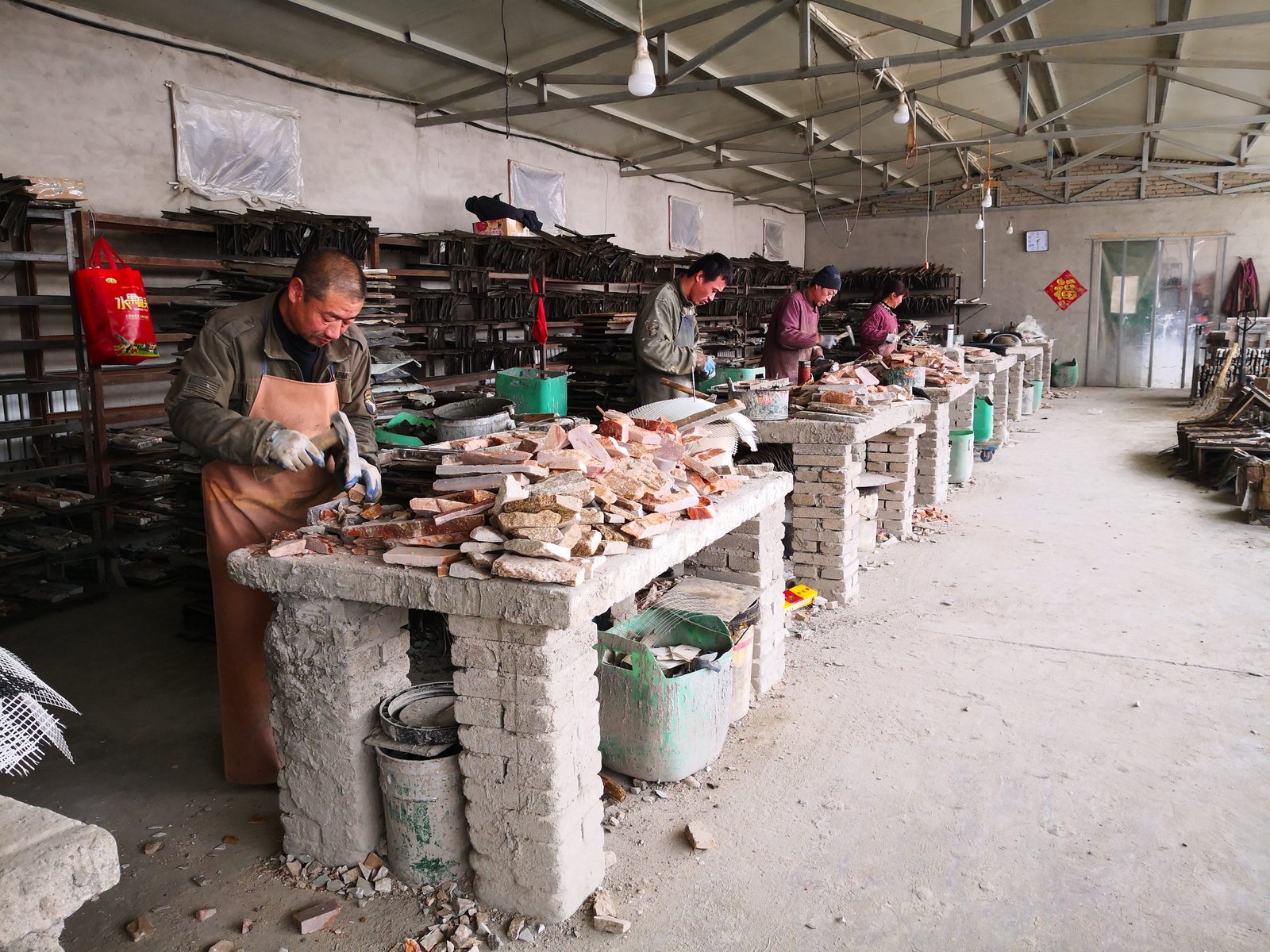
CNC Cutting vs Manual Cutting: A Tolerance Comparison
Understanding the precision gap between CNC and manual cutting helps explain why on-site waste differs so dramatically between factories.
| Metric | Infrared CNC Cutting | Manual Bridge Saw | Handheld Angle Grinder |
|---|---|---|---|
| Dimensional tolerance | ±0.5mm | ±2-3mm | ±3-5mm |
| Edge straightness | Within 0.3mm over 600mm | 1-2mm deviation | Visible waviness |
| Square accuracy (corners) | 90° ± 0.1° | 90° ± 0.5-1° | 90° ± 1-2° |
| Surface chipping | Minimal (diamond blade, controlled feed) | Moderate on brittle stone | Frequent on edges |
| Batch consistency (100 panels) | All within spec | 5-10% out of tolerance | 15-25% rework needed |
| Custom shapes (arches, cutouts) | Programmed path, repeatable | Template-dependent | Freehand, high variation |
The numbers tell the story. When a manual saw produces panels with ±2-3mm tolerance, an installer working a 10-meter wall run faces cumulative error that compounds — by the end of the run, panels are stacking out of alignment. The fix? More field cuts, more adhesive, more time, and inevitably, more broken pieces in the waste bin.
CNC-cut panels arrive dimensionally consistent. Every 15×60cm board is actually 15×60cm. Every corner piece holds a true 90. That consistency is what allows installers to work faster and throw away less material.
Where On-Site Stone Waste Actually Comes From
Before looking at how CNC precision helps, it is worth mapping where waste originates on a typical stone cladding project. The sources are more varied than most project managers realize.
Dimensional drift across a batch
When panels from the same production run vary by even 2-3mm in length, the installer must compensate at every course. On a running bond pattern, small errors compound horizontally and vertically. By the twentieth course, alignment is off enough that panels must be cut to fit — generating waste that a tighter factory tolerance would have prevented.
Opening cuts around windows and doors
Every window opening requires four cuts (top, bottom, and two sides). If the factory ships oversized panels that the installer must trim on site, each opening generates four off-cuts — most too small to use elsewhere. CNC-cut panels can be pre-sized to the exact opening dimensions from the architectural drawings, eliminating those field cuts entirely.
Corner fitting
External corners are where imprecise panels create the most visible problems. A panel that is not square will not meet cleanly at a 90-degree return. The installer either forces it (risking breakage), shims it (visible from certain angles), or cuts a new piece (waste). Pre-manufactured L-corner pieces cut on CNC equipment solve this at the factory.
Breakage during field cutting
Thin stone veneer — particularly slate in the 15-20mm range — is brittle enough that handheld angle grinder cuts produce chipping and micro-fractures along the cut line. Industry estimates put field-cut breakage at 5-8% of pieces attempted. Every broken panel goes straight to the dumpster.
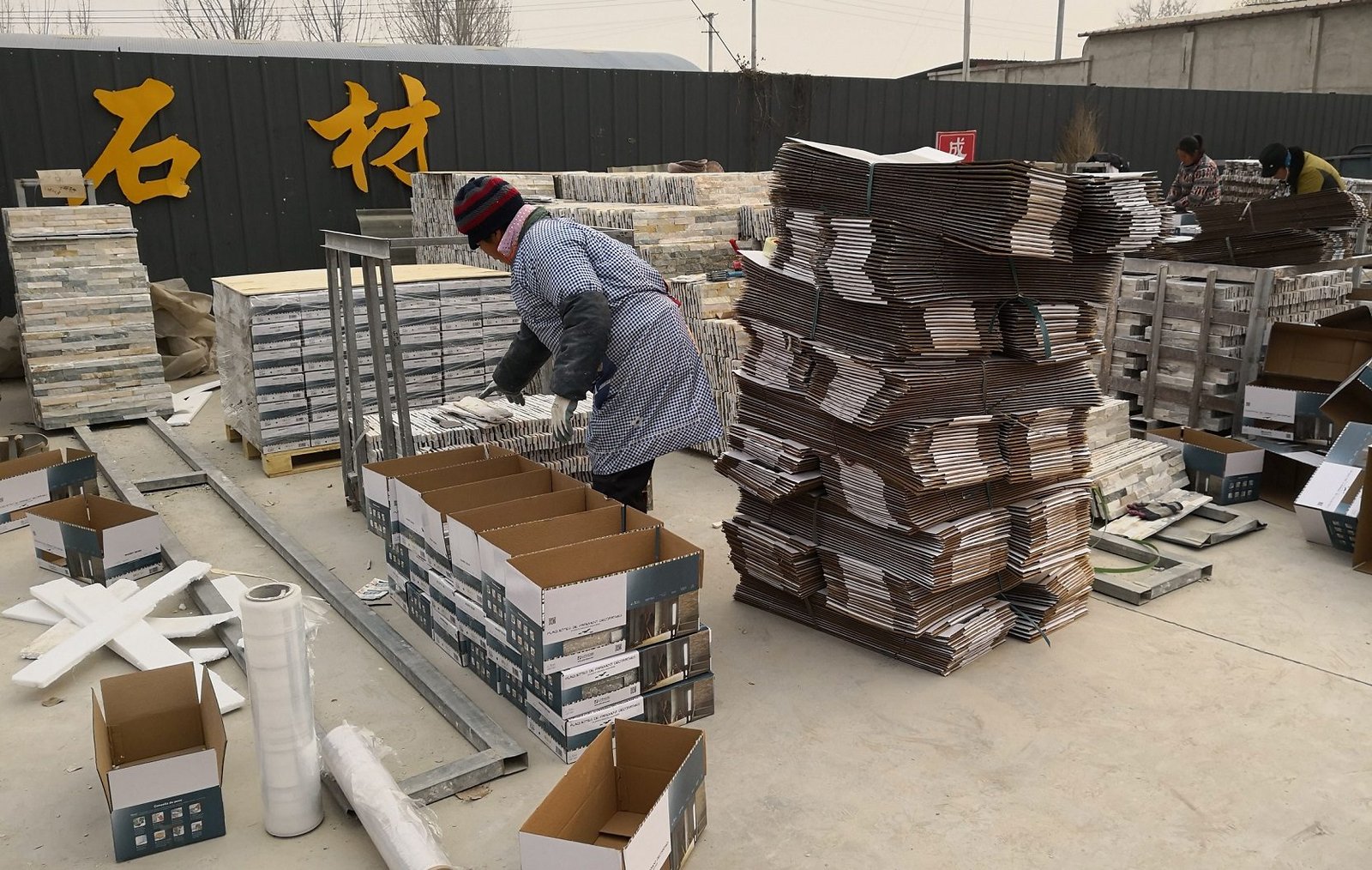
How Infrared CNC Precision Reduces Waste by 20%
The 20% waste reduction figure comes from comparing material loss across three waste categories — factory precision, field cutting, and breakage — between CNC-cut and manually-cut stone panel shipments.
Category 1: Factory dimensional waste (reduced from 5% to 1%)
In manual production, roughly 5% of panels fail dimensional QC and are discarded before shipping. CNC production with infrared guidance drops that to approximately 1%, because the system compensates for stone irregularities rather than producing out-of-spec pieces that must be rejected.
Category 2: On-site cutting waste (reduced from 8% to 3%)
When panels arrive at true dimensions, installers make fewer field cuts. Pre-cut opening surrounds and corner pieces eliminate the highest-waste cuts entirely. The remaining field cuts (electrical outlets, pipe penetrations) are small and produce minimal waste. Net reduction: roughly 5 percentage points.
Category 3: Breakage from poor fit (reduced from 3% to 1%)
Panels that do not fit cleanly get forced, shimmed, or re-cut — all of which generate breakage. CNC-precision panels slot into place without force. Breakage drops from 3% of installed area to roughly 1%.
Combined: 5% → 1% (factory) + 8% → 3% (field) + 3% → 1% (breakage) = total waste drops from 16% to 5%. For most commercial projects, that rounds to a 20% improvement in usable material yield.
The Financial Impact: What 20% Less Waste Means for B2B Buyers
Waste reduction is not just an environmental talking point — it hits the project budget in three ways.
Material cost savings
On a 500 m² commercial cladding project ordering at $45/m² FOB, the total material cost is $22,500. At 16% waste, the buyer effectively pays $3,600 for stone that ends up in a skip. At 5% waste, that figure drops to $1,125. Savings: $2,475 on a single project.
For distributors reselling to contractors, that saving is a competitive advantage. A distributor who can demonstrate lower waste rates on their panels versus a competitor’s wins the spec on cost-per-installed-square-meter, even if the FOB price per panel is marginally higher.
Labor cost savings
Field cutting is slow. An experienced stone installer cuts and fits roughly 2-3 linear meters of opening surround per hour when working with panels that need trimming. Pre-cut panels eliminate that work entirely. On a project with 40 window openings, that is 2-3 days of skilled labor redirected to productive installation rather than cutting and fitting.
Schedule savings
Construction schedules are unforgiving. A stone cladding crew that spends 15% of its time on field cuts and rework is a crew that finishes 15% later. On a commercial project with liquidated damages clauses, finishing two days early can be worth more than the material savings.
Which Stone Panel Types Benefit Most from CNC Cutting?
Not all stone products see equal benefit from CNC precision. The products where tight tolerances matter most are the ones with interlocking systems, complex geometries, or high visibility joints.
Z-Panels (interlocking stone cladding)
Interlocking Z-panels rely on a mechanical tongue-and-groove connection between boards. If the panel dimensions drift by even 1mm, the interlock fails — panels will not seat properly, leaving visible gaps or requiring the installer to force pieces together (and risk cracking). CNC cutting is not optional for Z-panels; it is a manufacturing requirement.
L-Corner pieces
External corners are the most visible lines on any cladding installation. A corner piece that is not a true 90 degrees creates a shadow line that the eye catches immediately. CNC-cut corners from Top Stone Panels hold 90° ± 0.1°, which means clean miters every time.
Thin stone veneer (15-20mm)
Thin stone veneer is more brittle than full-thickness stone, making it more prone to chipping and breakage during field cutting. Factory CNC cutting with diamond blades produces clean edges that handheld tools cannot replicate on thin material.
Custom opening surrounds
When an architect specifies stone cladding around arched windows, circular openings, or non-standard geometries, CNC programming handles the shape in software before any cutting begins. The alternative — a template and a hand-held saw — produces inconsistent results and high waste.
How to Verify a Supplier’s CNC Cutting Capability
Not every stone panel factory that claims “CNC cutting” actually runs infrared-guided systems. Some use basic CNC routers designed for wood that have been adapted for stone — these lack the infrared surface mapping and diamond tooling needed for consistent results on natural stone.
Here is how to evaluate what a factory actually has.
Request a dimensional sample test
Order 10 panels of the same specification. Measure length, width, and square with a digital caliper. Genuine infrared CNC production shows variation of ±0.5mm across all 10 panels. If you see 2-3mm variation, the factory is using manual or basic CNC equipment.
Ask for cutting line photos or video
A factory running infrared CNC equipment will typically show it off — it is a capital investment they are proud of. Look for the infrared sensor head (usually a small red-dot emitter mounted ahead of the cutting blade), the enclosed cutting chamber (CNC stone cutting generates significant dust that must be contained), and the digital control panel.
Check edge quality under magnification
CNC diamond cutting produces edges that are smooth to the touch with minimal micro-chipping. Manual saw cuts leave visible chipping along the cut line, especially on slate and layered quartzite. Run a fingernail along the edge — CNC cuts feel smooth; manual cuts feel rough.
Test custom dimension capability
Ask the factory to produce a non-standard panel size (for example, 18×53cm instead of the standard 15×60cm). A CNC-equipped factory programs the new dimension in minutes and runs it without tooling changes. A manual factory either refuses the request, adds significant lead time, or produces inconsistent results.
For a complete evaluation framework, see our guide on evaluating stone panel samples before placing an order.

Infrared CNC Cutting and the Broader Quality Chain
Cutting precision is one link in a quality chain that starts at the quarry and ends at the job site. Infrared CNC delivers its full waste-reduction benefit only when the rest of the chain holds up.
Raw material consistency
CNC cutting cannot compensate for inconsistent raw stone. If the quarry delivers slabs with varying thickness (say, 18mm on one end and 22mm on the other), even infrared-guided CNC will produce panels with thickness variation. Top Stone Panels sources from controlled quarry veins where thickness is managed at the block-cutting stage, ensuring the CNC line works with uniform input material. For more on quarry sourcing, see our guide on batch color consistency and vein selection.
Backing system integrity
Whether the panel uses epoxy bond or cement backing, the backing must be flat and consistent. A warped backing creates a panel that will not sit flush on the wall, negating the precision of the face cut. See our comparison of epoxy bond vs cement backing for details.
Packing and shipping
A precisely cut panel that arrives chipped or cracked is still waste. Reinforced wooden crating, foam interleaving, and proper container loading ensure the CNC precision survives the journey from factory to job site. Our guide on container loading and zero-breakage packaging covers the shipping side of the quality chain.
Frequently Asked Questions
What is infrared CNC cutting in stone panel manufacturing?
Infrared CNC cutting uses an infrared-guided computer numerical control system paired with a diamond cutting head to slice natural stone panels to exact dimensions. The infrared sensor maps the stone surface while the CNC system controls the cutting path, achieving tolerances of ±0.5mm compared to ±2-3mm with manual methods.
How much on-site waste does CNC precision cutting save?
Factory-precision CNC cutting typically reduces on-site material waste by 15-20%. Because panels arrive at the job site already cut to exact dimensions, installers need fewer field cuts, generate less breakage, and spend less time fitting panels around openings and corners.
Which stone panel types benefit most from CNC cutting?
Stacked stone panels, thin ledgestone, Z-panels, and stone column wraps all benefit from CNC precision. Interlocking systems like Z-panels especially require tight tolerances to maintain their mechanical connection. L-corner pieces and custom-cut panels for window surrounds see the largest waste reduction.
How do I verify a stone factory has real CNC cutting capability?
Request a sample order and measure dimensional consistency across 10 panels. Genuine CNC-cut panels show ±0.5mm variation in length and width. Ask for photos or video of the cutting line, check for consistent edge quality, and verify the factory can produce custom dimensions without minimum order surcharges.
Conclusion: Precision Is a Cost Line, Not a Feature
For B2B stone panel buyers, cutting precision should be evaluated as a cost variable, not a marketing bullet point. A factory that invests in infrared CNC cutting delivers panels that install faster, waste less, and produce cleaner finished walls. The 20% waste reduction is not theoretical — it is the measurable result of eliminating dimensional drift, reducing field cuts, and minimizing breakage across every square meter installed.
When comparing quotes from different suppliers, look past the per-panel price. Ask what cutting technology they use, request a dimensional sample test, and calculate the true installed cost per square meter including waste and labor. The factory with CNC precision will often win on total project cost — even if their FOB price is a few dollars higher per panel.
Top Stone Panels runs infrared CNC cutting across its full production line, from standard stacked stone panels to custom architectural pieces. Request a sample order to see the precision difference firsthand.