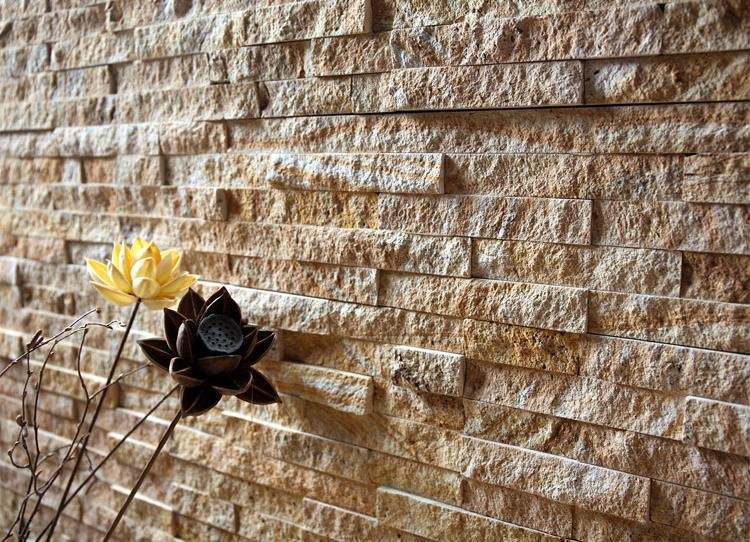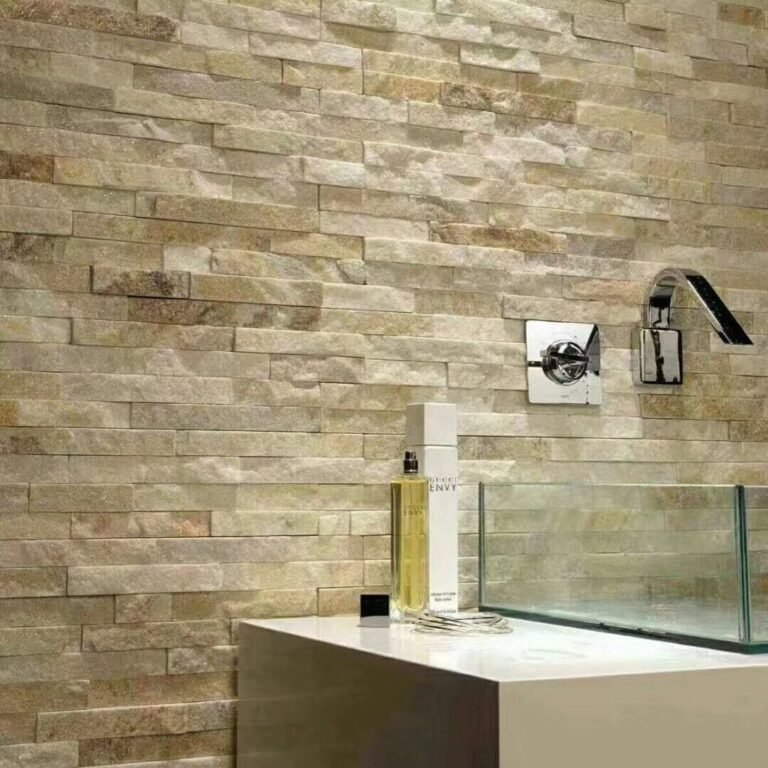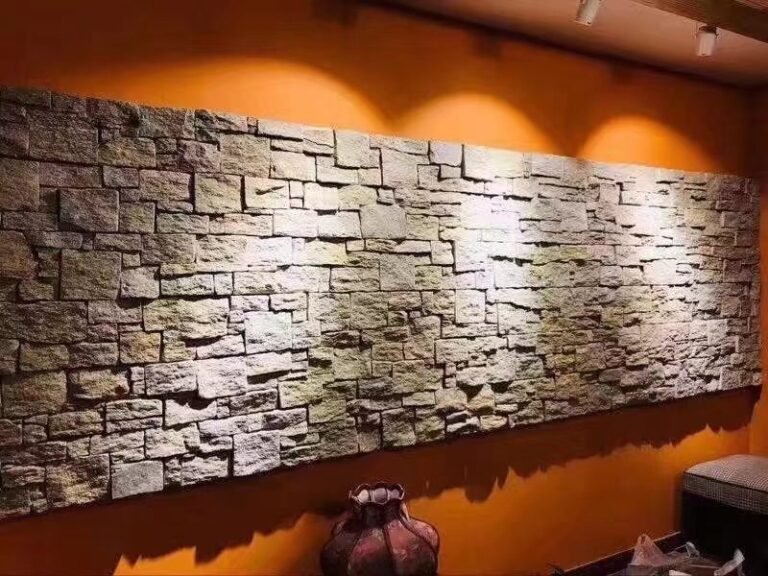
Stand on a street in Santa Barbara, a hillside in Tuscany, or a coastal suburb of Sydney and the same two materials keep showing up together: warm plaster walls and bands of natural stone. Stucco and stone are the Mediterranean exterior’s default pairing, and not for nostalgia. They are both mineral, cementitious materials that expand, contract, and weather on similar terms, so a wall that mixes them ages as one surface instead of fighting itself at the seam.
Getting the combination right is a proportion and palette problem, not a materials problem. Too much stone and the wall reads heavy and cold; too little and the stucco looks bare. The five designs below show where to put the stone, which stucco tone to pair with it, and which Top Stone Panels product carries the look — from a lower-third sandstone wainscot to a full-height stacked stone tower. Stucco is a cement-based plaster, a composition the Portland Cement Association documents in detail, and its compatibility with real stone is the reason this pairing has outlasted every imitation. The stone specifications cited are first-party; if you are weighing real stone against manufactured alternatives first, our veneer versus manufactured stone comparison sets up that decision.
Key Takeaways
- Stone and stucco pair well because both are mineral, cementitious materials that weather together rather than separating at the joint.
- Pull the stucco tone from the stone’s own palette — sand, cream, adobe, terra, whitewash — so the two read as one material family.
- Use stone as the accent, not the field: a wainscot, the columns, the entry, or one full-height element is usually enough.
- Thin stone veneer loads a stucco wall far less than full-thickness masonry, which makes it the default for renovations.
- Natural slate, quartzite, marble, and sandstone hold UV-stable mineral color in full sun and carry inherent Class A fire resistance.
- Why Stone and Stucco Work Together
- Design 1 — Sand Stucco with a Sandstone Wainscot
- Design 2 — Whitewash Stucco with Stacked Stone Columns
- Design 3 — Adobe Stucco with a Z-Panel Entry Feature
- Design 4 — Warm Stucco with a Thin Veneer Chimney Accent
- Design 5 — Two-Tone Stucco with a Full-Height Stone Tower
- How to Choose the Right Combination
- FAQ
Why Stone and Stucco Work Together
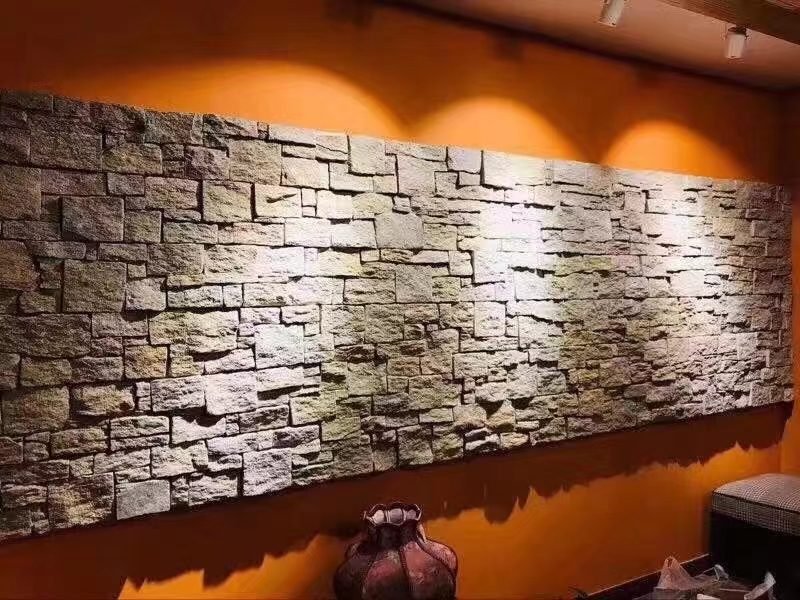
Stucco is a cement-based plaster — Portland cement, lime, sand, and water, applied in coats over a lath and cured into a hard, breathable shell. The PCA’s stucco reference documentation covers that composition and its weathering behavior. Natural stone cladding is the same family of material: mineral, dense, and dimensionally stable. When you bond stone to a stucco wall, you are joining two surfaces that move with temperature and moisture in compatible ways, so the joint between them does not become the first crack on the facade.
The visual logic is just as practical. Mediterranean architecture is about warmth and shade — low-saturation plaster that reflects harsh sun, punctuated by the texture and shadow of stone at the points people touch and look at: the base of the wall, the columns, the entry. Stone grounds the building; stucco lightens it. Used in the right proportion, each does the job the other cannot. Used badly — stone everywhere, or a cold grey stucco against warm sandstone — the pairing collapses into something heavy or mismatched.
The three rules that keep it Mediterranean
- Match the palette to the stone. Pull the stucco tone from a color already in the stone so the two read as one family. Warm sandstone wants sand, cream, or adobe stucco; cooler slate can carry a soft whitewash.
- Keep stone as the accent. A wainscot, the columns, the entry surround, or one vertical element. Let stucco stay the field material.
- Put the stone where the eye and hand go. Base of wall, porch pillars, front entry — the high-contact points where texture earns its cost.
Design 1 — Sand Stucco with a Sandstone Wainscot
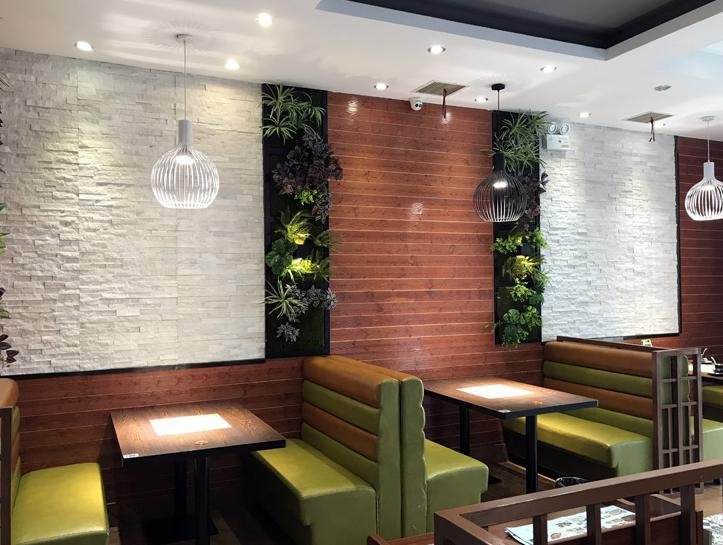
This is the canonical Spanish Mediterranean look, and the safest first choice. Warm sand or cream stucco covers the field of the wall; a natural sandstone or stacked stone wainscot wraps the lower third, from grade up to about window-sill height. The stone takes the abuse — splash-back, garden equipment, kicked corners — while the stucco above stays clean and bright.
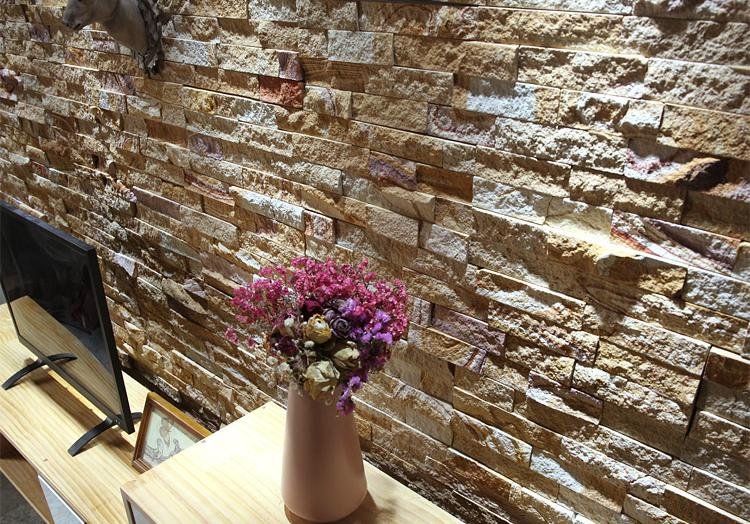
Specify a warm earth-tone stone so the wainscot and stucco share a palette. Top Stone Panels supplies stacked stone panels in 15x60cm and 15x55cm formats with matching L-corners, so the wainscot turns outside corners cleanly without a visible cut edge. The mineral color is UV-stable, so a south-facing wainscot in Arizona or Andalusia will not bleach.
Verdict: The highest curb appeal per unit of stone. If you only clad one part of a stucco exterior, make it the wainscot.
Best for: Street-facing elevations, entry facades, renovation projects working to a moderate stone budget.
Design 2 — Whitewash Stucco with Stacked Stone Columns
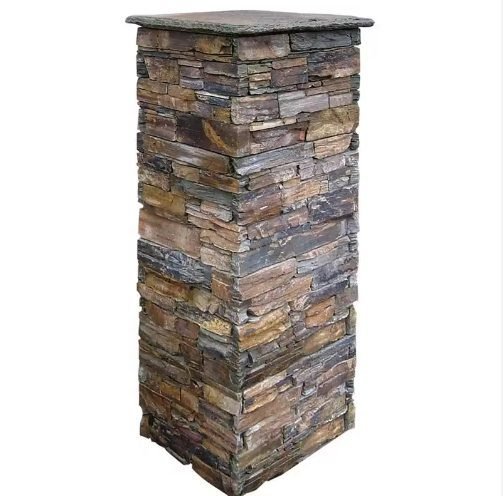
Bright, coastal, courtyard-facing. A soft whitewash stucco reflects sun and reads airy, while stacked stone columns and porch pillars carry all the texture and weight. The contrast is the point: pale plaster against earthy stone piers frames the entry and gives a porch or courtyard gate its structure.
Pre-assembled stacked stone column kits make this the fastest stone element on the list. They come in custom sections such as 40x40cm and 50x50cm with stone pillar caps, so a porch pier or gate post gets wrapped in matched stone without site-built formwork. Columns deliver a strong stone statement at a fraction of the material a full wainscot would take.
Verdict: The best impact-to-material ratio. Columns read as major stonework while using a small fraction of the cladding.
Best for: Porches, porticos, courtyard gates, and entry piers on coastal or bright-climate Mediterranean homes.
Design 3 — Adobe Stucco with a Z-Panel Entry Feature
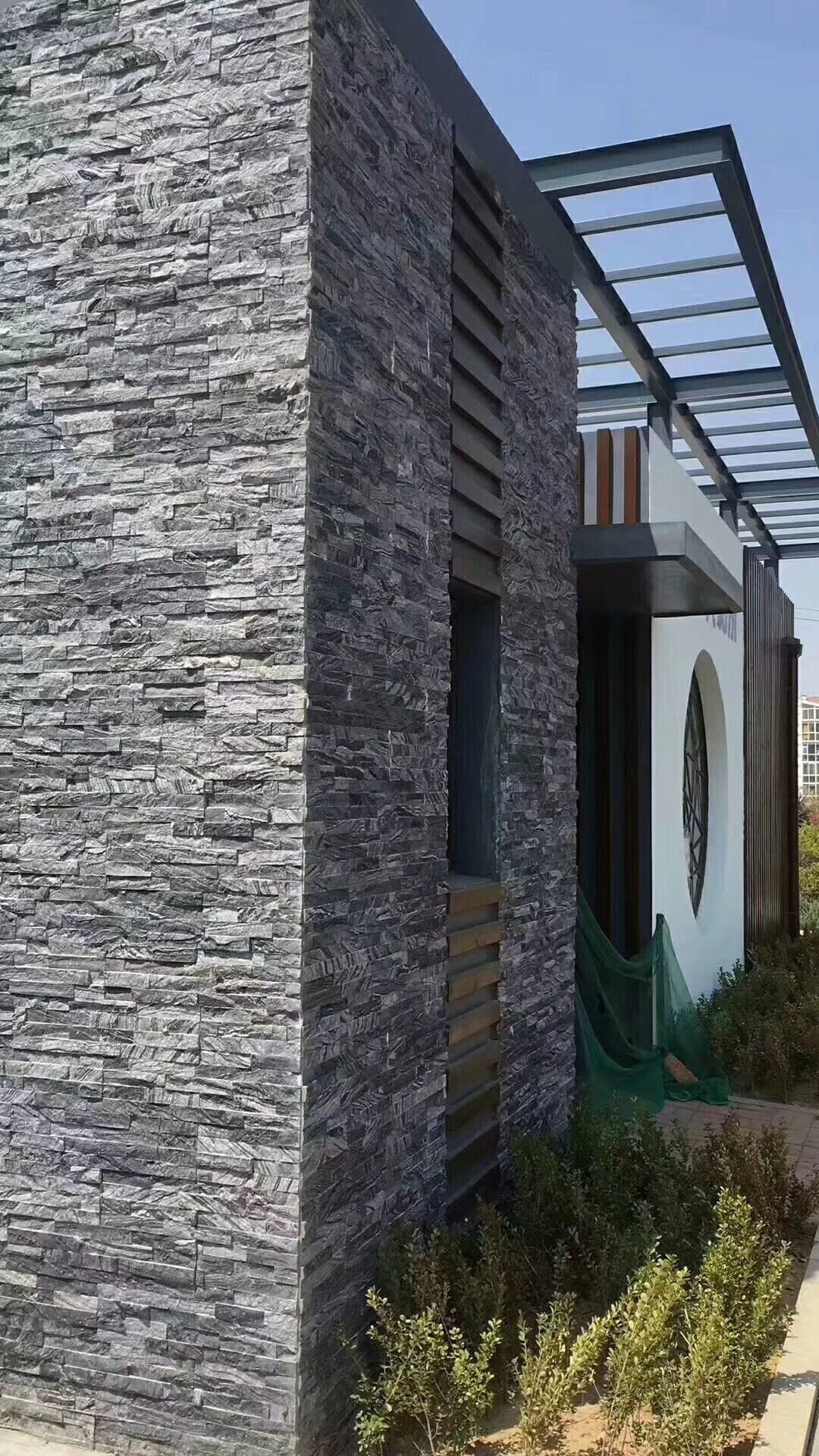
Deeper and more dramatic than the sand palette. Adobe or terra-toned stucco gives the wall a sun-baked warmth, and an interlocking stone panel feature around the entry or a courtyard bay adds the shadow and relief that flat plaster cannot. This is the look for a project that wants the entry to be the event.
The interlocking Z-panel system — 20x55cm and 15.2x61cm units on cement or mesh backing with a male-female connection — installs fast on a flat entry wall and absorbs thermal movement at the joint, which matters on a sun-exposed facade. The interlock keeps the panel field continuous and even, so a large entry feature reads as one composed surface rather than a scatter of individual stones.
Verdict: The most contemporary of the five. Clean interlocking lines suit a modern-Mediterranean entry better than rustic loose stone.
Best for: Entry feature walls, courtyard bays, and commercial Mediterranean facades that need fast, even panel installation.
Match the Stone to Your Stucco Palette
Top Stone Panels supplies the full exterior stone range for Mediterranean combinations — stacked stone, thin ledgestone, interlocking Z-panels, thin stone veneer, and pre-assembled columns — in UV-stable natural slate, quartzite, marble, and sandstone. Physical samples ship in 1-3 working days; MOQ is one 20GP container.
UV-stable color | Class A fire rating | Quarry-direct supply
Design 4 — Warm Stucco with a Thin Veneer Chimney Accent
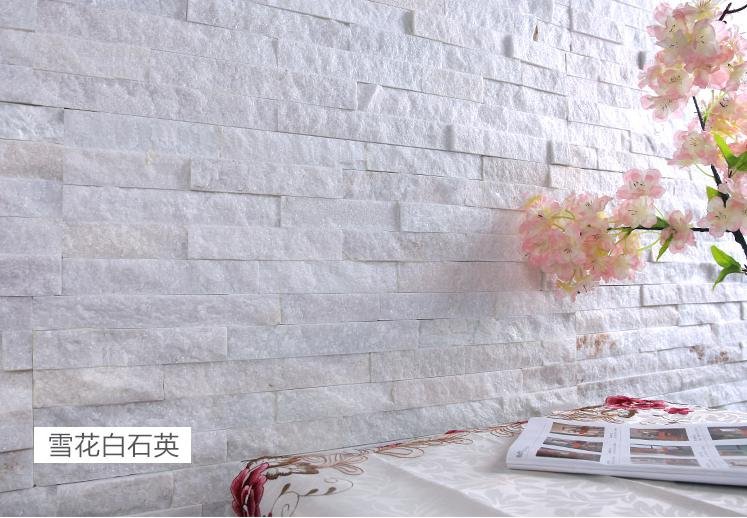
A vertical accent draws the eye up and adds height to a low, spreading Mediterranean mass. Warm stucco fields the wall; a full-height chimney, gable end, or stair-side wall gets clad in thin stone veneer that runs from grade to roofline. The vertical stone element breaks the horizontal plaster and gives the facade a focal point without wrapping the whole building.
Thin stone veneer is real natural stone cut thin, so it loads an existing stucco wall far less than full-thickness masonry and installs over proper substrate without a new footing. It ships as random-length loose strips sorted by color from the same vein, which suits the irregular, hand-laid look a chimney accent wants. For a renovation adding stone to an existing stucco home, this is the lightest, most structural-safe path.
Verdict: The renovation default. Vertical thin veneer adds drama without the structural load of full stone.
Best for: Chimneys, gable ends, and stair-side walls on existing stucco homes being upgraded to a Mediterranean look.
Design 5 — Two-Tone Stucco with a Full-Height Stone Tower
The boldest of the five, and the one for a statement property. Two-tone stucco — a lighter field with a deeper base band or a contrasting upper storey — is anchored by a full-height stacked stone element: a stair tower, an entry mass, or a corner bay clad grade to roofline. Here stone is not a trim; it is a volume that organizes the whole facade.
This design uses the most stone and carries the biggest budget, so the material has to perform. Stacked stone in the 15x60cm format with L-corners wraps the tower’s outside corners cleanly, and vein-locked batch selection keeps color consistent across a large multi-storey run — a full-height element is exactly where a shade mismatch between batches would be impossible to hide. The batch color consistency process is what protects a tower-scale install.
Verdict: The highest impact and highest cost. Reserve it for a signature element, not the whole building.
Best for: Luxury entries, stair towers, and custom Mediterranean estates where one stone volume anchors the design.
How to Choose the Right Combination
Pick by budget, structure, and how much stone the design can carry. The table maps all five designs against the factors that actually decide the specification.
| Design | Stone Product | Stucco Tone | Stone Load / Impact |
|---|---|---|---|
| 1 — Sandstone wainscot | Stacked stone, warm earth tone | Sand / cream | Moderate stone, high appeal |
| 2 — Stone columns | Stacked stone column kits | Whitewash | Low stone, high impact |
| 3 — Z-panel entry feature | Interlocking Z-panels | Adobe / terra | Moderate stone, modern read |
| 4 — Thin veneer chimney | Thin stone veneer strips | Warm sand | Light load, vertical accent |
| 5 — Full-height tower | Stacked stone 15x60cm | Two-tone | Heavy stone, signature |
If you are matching a broader exterior palette, our stone siding design ideas and contemporary facade designs widen the field beyond Mediterranean, and the stone and brick combinations article covers the same accent logic with brick instead of stucco. Whichever direction you take, the proportion rule holds: stone is the accent, and restraint is what keeps it reading as designed rather than heavy.
FAQ
What is a stone and stucco exterior?
A stone and stucco exterior pairs cement-based stucco wall plaster with natural stone cladding used as a wainscot, columns, arch surrounds, or accent walls. Both are mineral, cementitious materials that weather together, which is why the combination is the backbone of Mediterranean, Spanish Revival, and coastal architecture.
What colors of stucco go with natural stone?
Warm, low-saturation stucco colors suit natural stone best: sand, cream, adobe, terra, and whitewash. The rule is to pull the stucco tone from the stone’s own palette so the two read as one material family. Cool grey stucco fights warm sandstone and slate, while warm stucco makes earth-tone stone look intentional.
Is stone veneer better than full stone for a stucco exterior?
For most Mediterranean renovations, thin stone veneer wins. It is real natural stone cut thin, so it loads a stucco wall far less than full-thickness masonry and installs over proper substrate without a new footing. You get the quarried look at a fraction of the weight and structural cost.
How much of a stucco exterior should be stone?
Restraint reads Mediterranean; covering everything reads heavy. A wainscot on the lower third, stone on the columns and entry, or one full-height accent element is usually enough. Let stucco remain the field material and use stone as the accent so the warm plaster does the work it was meant to do.
Does natural stone hold its color on a sunny stucco exterior?
Yes. Natural slate, quartzite, marble, and sandstone carry UV-stable mineral color — the color is the mineral itself, not a printed surface, so decades of direct sun do not bleach or yellow it the way printed concrete products can. The stone also carries inherent Class A fire resistance for exterior duty.
Conclusion
Stone and stucco endure on Mediterranean exteriors because they are compatible materials doing opposite jobs: stucco lightens and shelters, stone grounds and textures. The five combinations above run from a modest sandstone wainscot to a full-height tower, but they all follow the same discipline — match the palette to the stone, keep stone as the accent, and put it where the eye and hand go.
Your decision checklist:
- Working to a budget? Start with Design 1 (wainscot) or Design 2 (columns) — the most stone impact for the least material.
- Renovating an existing stucco home? Choose Design 4 (thin veneer) — real stone at a fraction of the structural load, no new footing.
- Want a modern-Mediterranean entry? Specify Design 3 (interlocking Z-panels) for clean, even, fast-installing lines.
- Building a signature estate? Design 5 (full-height tower) delivers the drama — order the whole run in one vein-locked batch so the color stays consistent.
Before you commit a palette, hold the stone against your stucco sample in daylight. Request samples from Top Stone Panels — physical samples arrive in 1-3 working days so you can check the tone match on site, not on a screen.