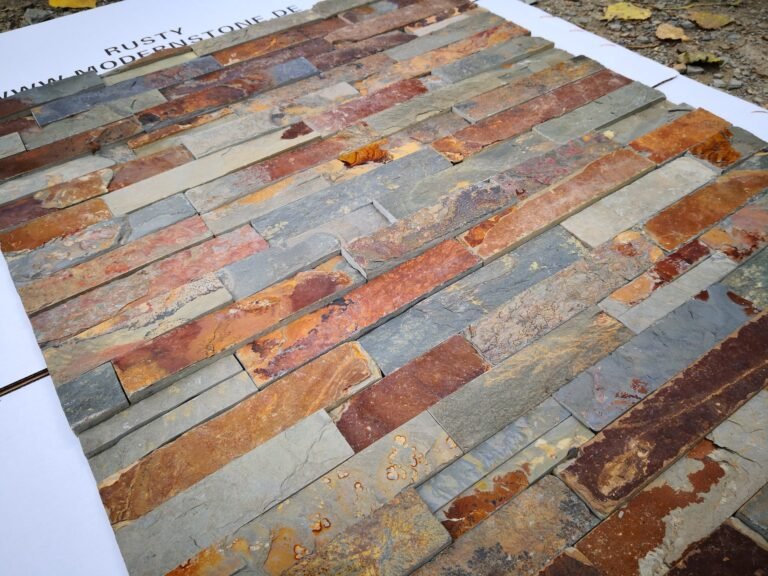
The softest-looking stone on your facade out-crushes the material under your foundation. Structural concrete cures to roughly 20 to 40 MPa. A piece of natural slate — the same material roofers split by hand — typically tests at 100 to 200 MPa, and quartzite commonly lands between 200 and 300 MPa. Buyers who have only handled a small sample often assume natural stone is fragile. The compressive strength data says the opposite.
That number is not decoration. It determines whether a stone column kit carries a porch roof without stress cracks, whether a capstone shrugs off a point load, and whether a supplier’s material belongs in a commercial spec at all. Yet most purchase orders list the product, the color, and the size — and never ask for the test report behind them. This guide gives structural specifiers and wholesale buyers the numbers worth quoting, the test method behind them, and the questions to put to any quarry or factory before you commit to a container.
Below you get the published range for slate and quartzite, a plain-language walk through ASTM C170 and EN 1926, the places where compression actually decides a design, and a red-flag list for reading supplier test sheets.
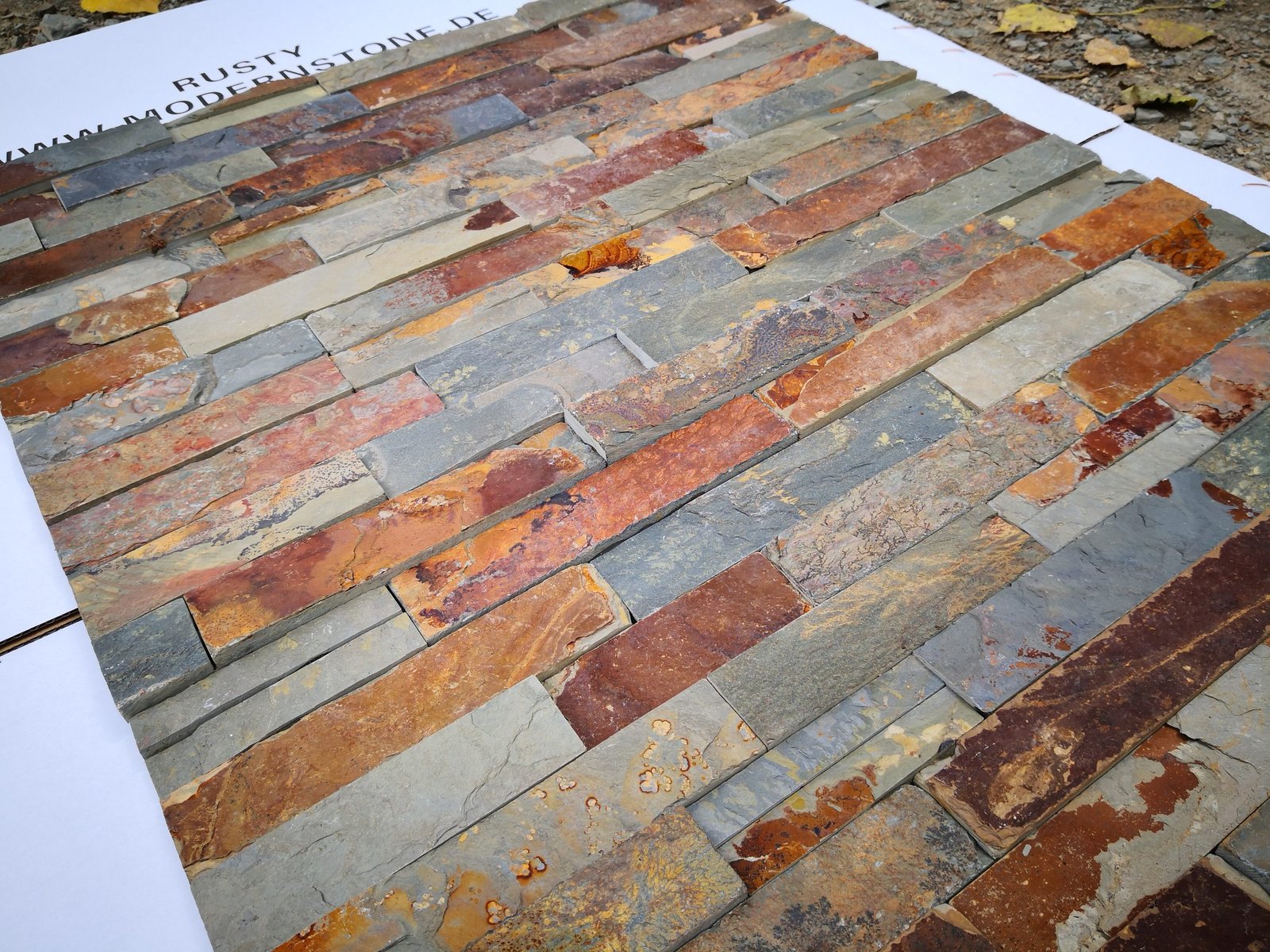
- Quarried slate commonly reports 100-200 MPa compressive strength; quartzite commonly reports 200-300 MPa — several times the 20-40 MPa of structural concrete.
- ASTM C170 is the North American test for compressive strength of dimension stone; EN 1926 is the European equivalent. Specimen sizes differ, so results are only comparable within the same standard.
- Compressive strength decides columns, pillars, caps, and point-loaded elements. For adhered wall panels, flexural strength and water absorption matter more.
- Natural stone is anisotropic: testing a slate specimen across its bedding versus along it can shift the reported value, so always ask for specimen orientation.
- Top Stone Panels produces slate and quartzite panels and column kits with custom cross-sections such as 40×40 cm and 50×50 cm, and ships physical samples in 1-3 days for laboratory verification.
- Factory 3-step QC, batch-specific vein selection, and 95%+ color consistency are the production practices that keep test values stable from order to order.
- Why Compressive Strength Belongs in a Stone Spec
- How Compression Testing Works: ASTM C170 and EN 1926
- Slate Versus Quartzite: What Test Reports Show
- Where Strength Matters: Columns, Panels, and Point Loads
- How Strength Interacts with Freeze-Thaw and Water Absorption
- Reading a Supplier Test Report: Five Numbers That Matter
- Questions to Put in Your Purchase Specification
- FAQ
Why Compressive Strength Belongs in a Stone Spec
Compressive strength is the maximum stress a material resists before it crushes, measured in megapascals (MPa) or pounds per square inch (psi). One MPa is roughly 145 psi, so a slate reading of 150 MPa is about 21,750 psi. The test crushes a prepared cube or cylinder between steel plates and records the load at failure.
Specifiers ask for it in three situations. First, when stone carries load: columns, pillars, caps, hearths, and any element that sits under weight. Second, when engineers need a quality proxy for density and soundness — a stone with high compressive strength is almost always a dense, low-absorption stone. Third, when a project’s structural engineer wants the raw data recorded in the spec instead of a vague “suitable for exterior use” line.
Here is the part most marketing pages skip: for thin veneer panels adhered to a wall, compressive strength rarely limits the design. The stone does not hold up the building; the substrate and the structural frame do. Anchoring your entire procurement decision on one crush number is just as mistaken as ignoring it.
Use it as the screening test it is. A supplier who cannot produce a compressive strength test report for their material cannot produce flexural or water absorption data either, and you want all three in hand.
Building officials reviewing exterior cladding submittals follow the same playbook. Under the International Building Code family, project evidence is built from recognized test methods, and a compressive strength sheet does double duty: it proves the stone, and it proves the supplier knows how to run a laboratory protocol. A material file with named standards and named labs sails through review; a folder of brochure claims does not.
How Compression Testing Works: ASTM C170 and EN 1926
The specimen and the load
ASTM C170, the North American standard, crushes cubes or right circular cylinders of dimension stone between flat platens. A 50 mm specimen is common, conditioned and loaded at a set rate until it fails. EN 1926, the European method, uses 70 mm cubes. Both standards report the peak stress at failure, but the specimen size difference means you should not mix results from the two methods in one comparison table.
Ask which standard the supplier’s lab used, in writing. A report that says “compressive strength: 210 MPa” without naming the method is a report you cannot defend in front of an engineer.
What the number actually measures
The value is the stress at the instant of failure: peak load divided by the loaded area. It is a one-way crush test, not a durability score. It says nothing about how the stone resists bending, moisture, or decades of freeze-thaw — those are separate tests with separate numbers.
Track the number in MPa, convert psi if needed, and always read the unit. A report written in psi instead of MPa can look ten times stronger by accident.
Why the same stone tests differently
Natural stone is anisotropic. Slate has a cleavage plane from its formation, and quartzite has grain orientation; load a specimen perpendicular to the bedding and it resists more crush pressure than a specimen loaded along it. The variance is real, so the best reports state the orientation and test three or more specimens, then average the readings.
One specimen, no orientation noted, no lab name — treat that sheet as a sales document, not test data.
| Standard | Specimen | Region | Notes |
|---|---|---|---|
| ASTM C170 | 50 mm cubes or cylinders | North America | Standard naming convention for US specs |
| EN 1926 | 70 mm cubes | Europe | Typical for CE-marked stone |
Slate Versus Quartzite: What Test Reports Show
Slate and quartzite are the two materials Top Stone Panels builds its exterior lines from, and their compression profiles explain why. Slate reports, in published dimension-stone data and in quarry test sheets, most commonly between 100 and 200 MPa. Quartzite sits higher, between 200 and 300 MPa, because its grains have been fused and hardened under geological heat and pressure.
Both crush concrete. The comparison that matters is not slate versus quartzite in raw MPa — it is whether the number you need for your element matches what the quarry actually produces. A quartzite with 220 MPa and 0.2% water absorption is a different class of material than a soft sandstone at 60 MPa, and that gap shows up first in the compression column.
| Material | Typical compressive strength | Typical density | Failure mode |
|---|---|---|---|
| Slate | 100-200 MPa | 2.6-2.8 g/cm³ | Shear along cleavage plane |
| Quartzite | 200-300 MPa | 2.6-2.7 g/cm³ | Brittle crush, no cleavage |
| Structural concrete (reference) | 20-40 MPa | 2.2-2.5 g/cm³ | Crack and crush under load |
Do not let the raw number bully the decision. Slate’s 150 MPa covers any residential or light commercial column spec. Quartzite’s premium matters when a project demands maximum scratch resistance, extreme freeze-thaw exposure, or a spec that names a minimum 200 MPa. Match the value to the exposure, not to the pride of the higher number.
Put the two figures in family context before you compare. Granite commonly reports 100-250 MPa and marble 50-120 MPa in the same published databases, so a 150 MPa slate already sits in the granite class rather than the soft-stone class. The respectable company is worth remembering when pricing arrives: dense slate earns its place without paying quartzite’s premium.
Whichever you select, verify against the same standards. A supplier mixing ASTM test methods or quoting one favorable orientation across an entire vein selection is giving you a highlight reel, not a material profile.
Where Strength Matters: Columns, Panels, and Point Loads
Columns and pillars
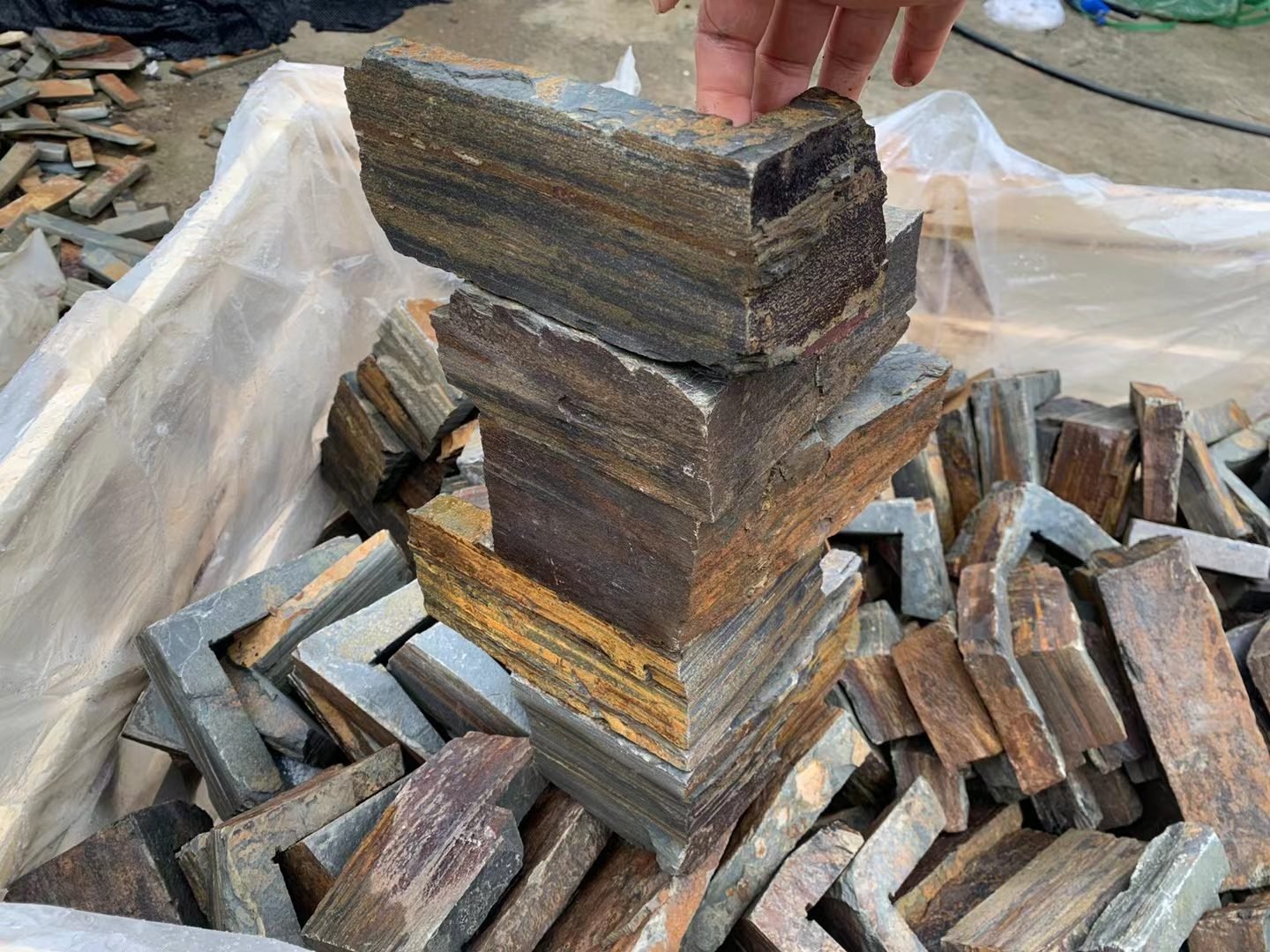
This is compressive strength’s home turf. A stone column kit wraps a structural post, and the stone itself can carry a share of the vertical load at the contact points between courses. Top Stone Panels builds its stacked stone column kits in custom cross-sections such as 40×40 cm and 50×50 cm with pre-made corner pieces, which is why the compression value of the slate and quartzite in those kits matters as much as the fit.
A porch column carrying a roof point load, a pillar wrap over a driveway post, a free-standing entrance column — every one transfers weight down through stacked stone mass. Spec a material you can defend, and print the C170 data in the submittal.
Wall panels
Adhered thin stone veneer does not carry vertical building loads; the substrate and frame do. Wind load and bending, not crushing, drive the panel spec. That is why the flexural strength of stone panels is the number your engineer will quote for cladding safety, not compression. The same dense mineralogy that carries the MPa values powers the no-mortar dry stack panel systems designers keep specifying for clean exterior walls.
Keep compression in the file anyway. It is the cheapest screening test for sound, dense material and the natural companion to the flexural sheet.
Caps, coping, hearths, and mantels
Anything a person stands on or sets weight on returns to compression. Caps and coping sit on top of a wall and transfer the wall’s cover load; hearths take fireplace mass and the occasional dropped log; window sills and commercial stair treads take point loads. A capstone at 120 MPa shrugs off loads that would slowly crush a soft sandstone at 40 MPa.
Put the requirement in the spec line-by-line: capstone and coping minimum 100 MPa (or the C170 value from your approved quarry), with the test sheet delivered before production starts.
You can put real numbers behind your next spec. Top Stone Panels ships physical samples in 1-3 days, so your lab can run C170 on the actual material before you place the container order — production then takes 20-25 working days from an MOQ of one 20GP container.
Highlights: Ranges across 6 product lines | 100% natural slate and quartzite | Test reports and FOB Xingang pricing on request
How Strength Interacts with Freeze-Thaw and Water Absorption
Compressive strength does not exist in isolation. Dense stone resists water, and dry, dense stone survives freeze-thaw cycles; porous stone absorbs moisture, weakens internally, and spalls when that water freezes. A low-absorption slate at 150 MPa will outlast a high-absorption alternative with a better crush number on paper.
That is why the absorption test comes bundled in real specifications. ASTM C97 measures density and absorption, and our water absorption rate guide covers why the number is the single most important metric for exterior stone. Tree-plant the couplet: every compressive strength claim should sit next to a water absorption figure from the same quarry.
Top Stone Panels’ slate and quartzite carry the natural performance markers that make the compression data hold up: freeze-thaw resistance tested to extreme swings, Class A fire performance, UV stability, and salt-spray resistance — properties anchored in the same dense mineralogy that produces the high MPa values.
Read the two numbers together. If a quarry quotes 300 MPa but 1.8% absorption, the moisture figure should scare you more than the crush number impresses you.
Reading a Supplier Test Report: Five Numbers That Matter
Every supplier can print a certificate. The skill is reading which certificate is worth the paper. Our guide to reading stone panel test reports runs the full checklist; the short version holds five numbers.
- Compressive strength (MPa) — the topic of this guide. Confirm the standard: ASTM C170 or EN 1926.
- Specimen orientation — across-bedding or along-bedding values can differ noticeably in slate.
- Water absorption (%) — keep it low for exterior exposure; pair with C97 data.
- Flexural strength (MPa) — the load-bearing criteria for adhered wall panels.
- Sample count and lab name — three or more specimens from a named lab beats one anonymous sample.
The factory side matters too. Top Stone Panels runs a 3-step QC cycle — raw material selection at the quarry, in-process rechecks, and a pre-shipment final inspection — that keeps thickness tolerance and batch-to-batch values stable. Ask how many pieces the certificate covers; a report on one hero sample says nothing about the other 2,000 m² in the container.
Red flags are easy to spot once you look: no lab name, one specimen, “typical values” language, no test date, no quarry or block identification. Any one of them means the sheet is marketing copy in a report’s clothes.
Questions to Put in Your Purchase Specification
Vague specs produce vague deliveries. Put these lines in writing when you request a quote, and a serious quarry will answer them without a meeting.
- Request an ASTM C170 report with at least three specimens per selected stone type, stated orientation, named lab, and test date.
- Request the same standard’s companion data: water absorption (ASTM C97) and flexural strength, so the compression number has context.
- Name the quarry or vein and ask for batch-specific selection — single-vein sourcing keeps color and physical properties consistent across your order.
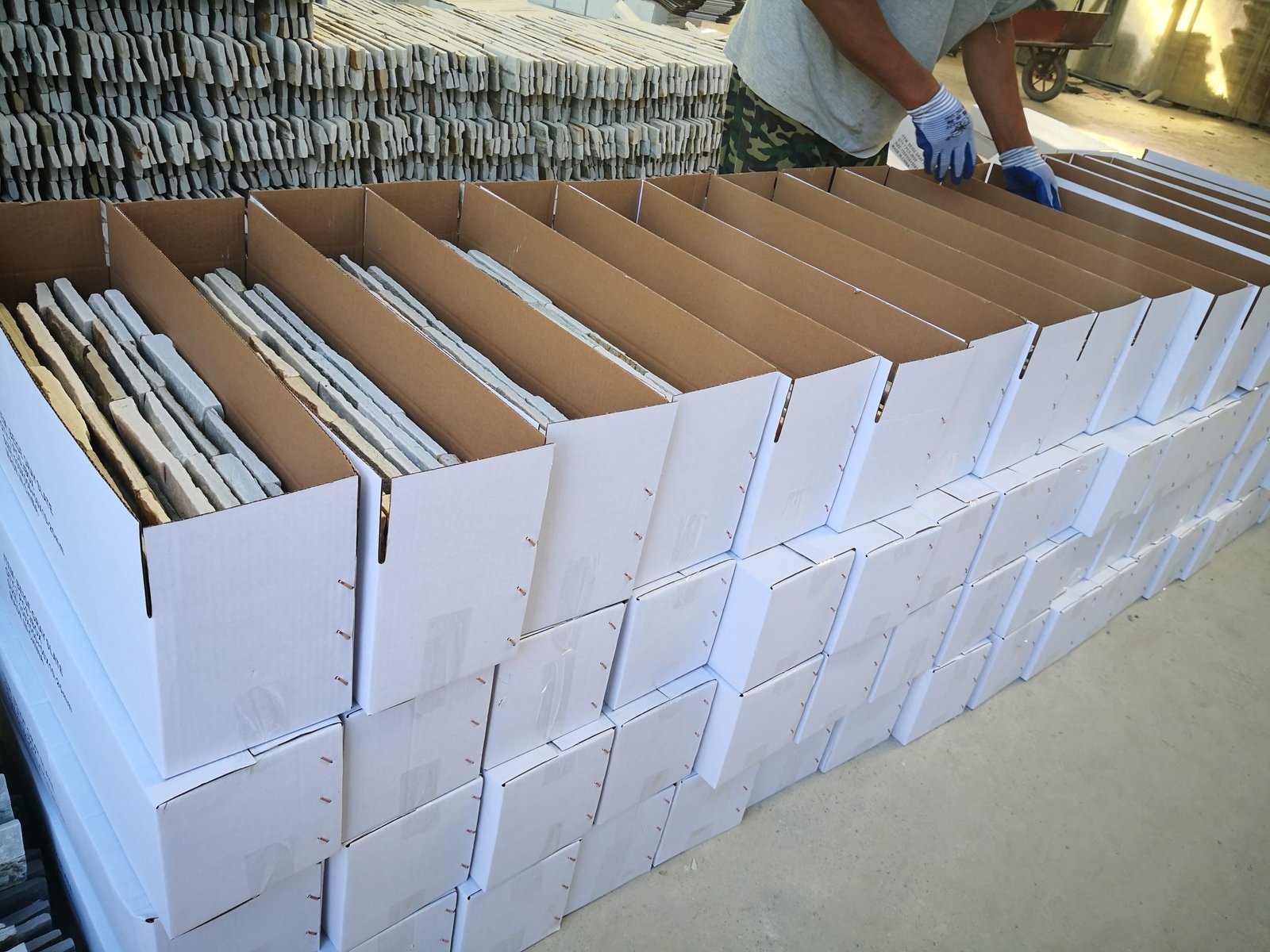
- Ask for physical samples before production, not after. Top Stone Panels ships samples in 1-3 days, letting your lab verify the actual material against the certificate.
- Confirm the MOQ and lead time in the same message: one 20GP container per product line, standard production 20-25 working days, shipped under FOB Xingang, CIF, or DDP.
- If a supplier hesitates on any of the above, that hesitation is the answer.
Wholesale buyers scaling from a first container to a program should also read how factories handle large-volume orders, because QC at scale is where compression claims usually break.
FAQ
What is the compressive strength of slate?
Quarried slate typically tests between 100 and 200 MPa (about 14,500 to 29,000 psi), depending on the quarry and the bedding orientation of the specimen. Values far outside that band call for a check of the test method.
What is the compressive strength of quartzite?
Quartzite commonly reports 200 to 300 MPa (about 29,000 to 43,500 psi), among the highest values in natural dimension stone. The fused, hardened grain structure is what separates it from slate.
ASTM C170 or EN 1926: which standard should the test use?
Use ASTM C170 for North American projects and EN 1926 for European deliverables. The two standards use different specimen sizes, so compare results written under the same method.
Is compressive strength the most important test for stone veneer panels?
No — for adhered wall panels, flexural strength and water absorption decide cladding safety. Compressive strength is the governing figure for columns, caps, and point-loaded elements, and a useful density proxy everywhere.
Do stone veneer panels need to carry building loads?
Adhered veneer carries its own weight on the substrate, not building loads. Compression data still matters for columns, hearths, and heavy elements, and it screens the quality of the stone batch.
Conclusion
Compressive strength is one page of a three-page dossier on any stone you spec: compression for load, flexural for panels, absorption for exposure. Slate’s 100-200 MPa and quartzite’s 200-300 MPa put both materials safely past every practical structural benchmark in residential and light commercial work.
Your checklist before the next container:
- Demand an ASTM C170 or EN 1926 sheet, named lab, three or more specimens, orientation stated.
- Pair it with water absorption and flexural strength from the same quarry.
- Confirm batch-specific vein selection, so the physical values match the approved sample.
- Run samples through your own lab in the 1-3 day sample window before production starts.
Ask the factory for the test package on your target stone types — the data is cheap insurance compared with a spec rejection at inspection time.