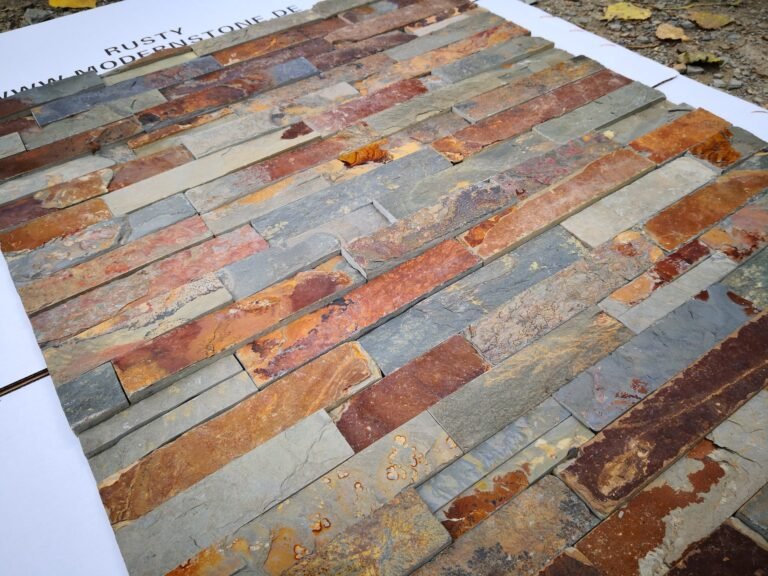
The most important page in a stone cladding deal is often the most ignored: the stone panel test report. Specifiers get boxes of sales material — glossy images, color charts, loading photos — but the report is the only document that separates two suppliers who look identical. The numbers inside decide whether your building envelope survives a real winter, and they are exactly where a weak factory hides its weakest stone.
Test reports answer two questions: how much water the material takes in, and how much force it can carry. Those two numbers explain most field failures before the first frost. This guide walks through the metrics specifiers should actually read, the ASTM and EN standards behind them, the red flags that signal a padded report, and what legitimate documentation looks like — drawn from Top Stone Panels, a direct-from-quarry producer in Yixian, Hebei with 18+ years of exports and 220+ containers shipped a year.
Key Takeaways
- Water absorption (ASTM C97 / EN 13755) is the strongest single predictor of freeze-thaw survival.
- Flexural strength (ASTM C880) matters more than compressive strength for wall-mounted panels.
- Freeze-thaw reports (ASTM C1026) should state cycle counts and weight loss, not just “passed.”
- High-density quartzite and slate at Top Stone Panels support the -30°C to +50°C application range.
- A report binds to a batch: check date, sample source, stone type, and laboratory identity.
- Top Stone Panels runs a three-step QC process and ships physical samples in 1-3 days for independent lab checks.
Why the Test Report Matters Before You Approve
A sample board can charm a room in thirty seconds. A test report takes time to read, which is exactly why some buyers skip it and then pay for that decision on the wall. Stone is a natural product with batch variation; the pretty panel in the showroom and the containers at the port are related, but not identical, unless someone proves it.
The report is the proof. When a specifier signs off on a thin veneer program for a commercial facade, they are risking weeks of installation labor and the project’s reputation on material performance. If the facade delaminates after the first freeze, the conversation turns to who approved what. A report that names the stone type, the test method, and the batch gives every party a shared reference point. One without those details is just decoration.
What a report does and does not tell you
A report tells you how that specific stone behaved under that specific test. It does not guarantee that every panel in the container is identical, and it does not make a low-grade material into a high-grade one. Treat it as baseline evidence, then layer on batch control, sampling, and inspection.
If a supplier cannot name the standard behind a number, the number is marketing. A real report cites a recognizable method — an ASTM or EN designation — because that is how the test can be repeated and verified. That reproducibility is the entire point.
Stone Panel Test Report Metrics at a Glance
Start with the five metrics that carry the most weight for exterior stone cladding: water absorption, flexural strength, compressive strength, modulus of rupture, and freeze-thaw resistance. Each is tied to a standard, a unit, and a direction that makes the number good or bad. Keep this table as your quick reference when a report lands on your desk.
| Metric | Common standard | Unit | Direction | Why it matters |
|---|---|---|---|---|
| Water absorption | ASTM C97 / EN 13755 | % of dry weight | Lower is better | Predicts freeze-thaw and salt attack risk |
| Flexural strength | ASTM C880 / EN 12372 | MPa or psi | Higher is better | How panels resist bending on a wall |
| Compressive strength | ASTM C170 / EN 1926 | MPa or psi | Higher is better | Load capacity, most relevant to structural block |
| Modulus of rupture | ASTM C99 | MPa or psi | Higher is better | Resistance to concentrated edge loads |
| Freeze-thaw resistance | ASTM C1026 | Cycles + weight loss % | More cycles, low loss | Survival in cold climates over years |
The table gives you the skeleton. The rest of this guide explains how each number behaves in practice, where suppliers quietly trim corners, and what to push back on. For a full product comparison of the material families behind your cladding choice, see our guide to stacked stone panels and thin stone veneer.
Water Absorption: The Predictor of Freeze-Thaw Survival
Water absorption is the percentage of dry weight a stone gains when it soaks up water, measured under ASTM C97 by immersion and boiling, or under EN 13755 in European labs. It sounds simple, and it is the single most useful number on the page for exterior use. Water is the enemy of stone walls because water expands when it freezes.
Here is the mechanism: every stone has microscopic pores. Moisture enters those pores, temperatures drop below freezing, the water crystallizes and expands, and the pressure pries apart the surface grain. Repeat the cycle through enough winters and you see what builders call spalling — surface flakes, chips, and a dulled face. Low-absorption stone simply has fewer pores to fill.
High-density metamorphic stones win on this test by nature. Quartzite and slate form under heat and pressure, which closes up most of their pore space. That is why Top Stone Panels builds its exterior programs around these families and documents an application range from -30°C to +50°C, a span that covers Canadian winters and Gulf summers without changing the recommendation. Our comparison of quartzite vs slate for exterior performance walks through the differences in detail.
How to judge the number
Lower absorption is better, but stop treating isolated numbers as gospel until you ask two questions. First, what was the sample? A report built on one hand-picked block says little about the next container. Second, was the test run wet or dry — many standards report both, and wet values matter more for a wall that lives outdoors. If the supplier quotes only the dry number, ask for the wet one.
One more caution: a shiny surface does not mean low absorption. Honed and polished finishes change surface texture, not porosity. Only the lab test tells you what sits underneath.
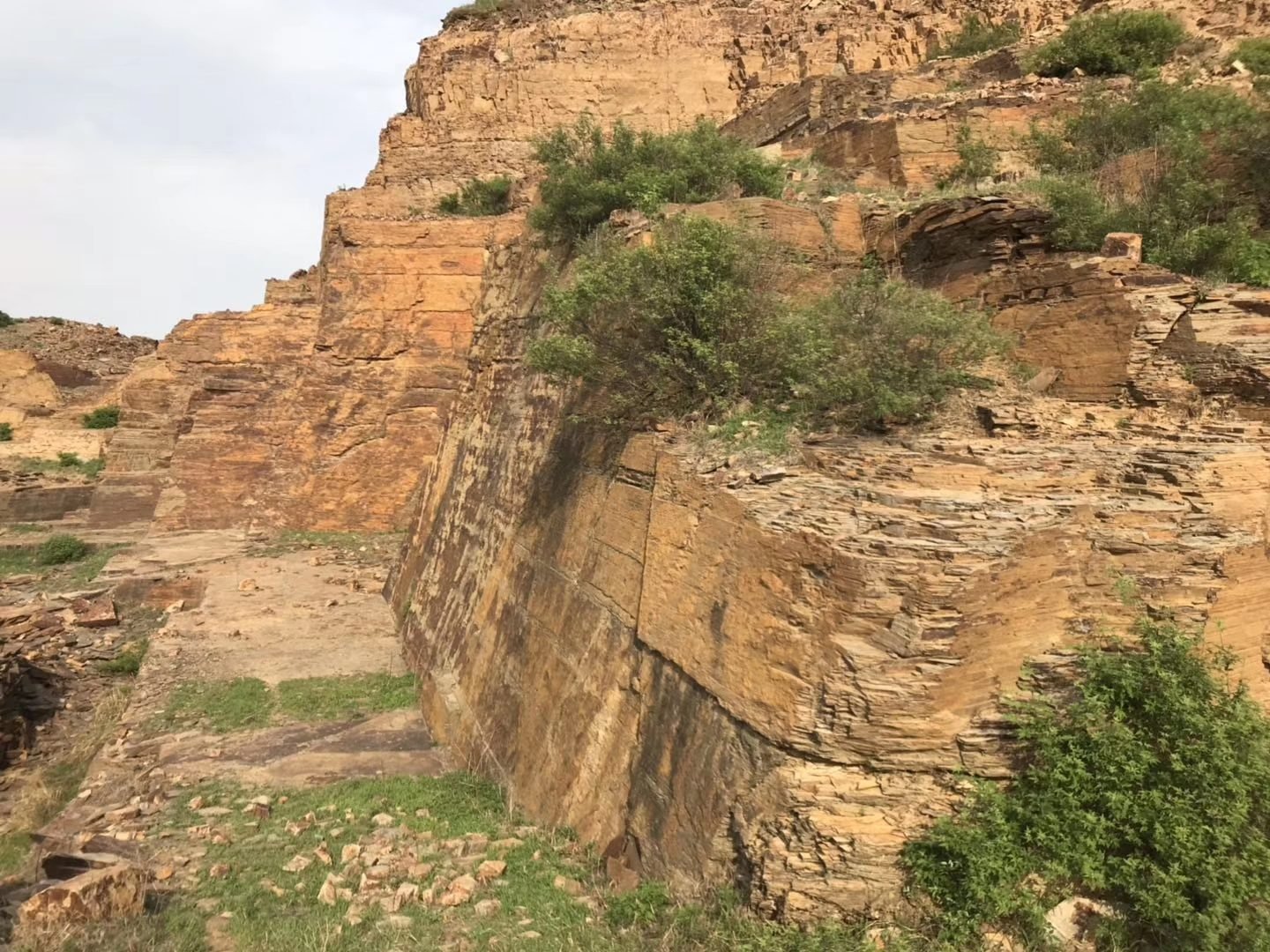
Strength Metrics: Flexural, Compressive, and Modulus of Rupture
Strength columns look impressive, and buyers fixate on the biggest megapascal number on the report. That instinct is backwards for thin veneer. Wall-mounted panels do not carry building loads; they carry their own weight and the wind, which is a bending situation, not a crushing one. Flexural strength, measured by ASTM C880 or EN 12372, tells you how the panel tolerates that bending — so it outranks compressive strength for cladding.
Compressive strength (ASTM C170 / EN 1926) is the number people instinctively ask for, because it dominates the marketing pages. It genuinely matters for structural block, columns, and load-bearing stonework. For a 15x60cm veneer panel fixed to an exterior wall, it is interesting context, not the deciding metric. A supplier who only ever quotes compressive strength is often steering you away from the number they know is weaker.
Modulus of rupture (ASTM C99) fills a third role: it measures the stone’s behavior under concentrated loads at the point and edge, which matters when a panel gets knocked, drilled, or notched during installation. Thin panels and split-face veneers live closer to edge-load limits than massive blocks, so a solid modulus of rupture number is worth having in the file.
Wet versus dry strength
Demand clarity on test condition. Many stones lose some strength when saturated, and an exterior wall is routinely saturated for weeks at a time. If a report lists strength for dry samples only, it shows the best case. Ask whether the laboratory also ran wet-conditioned samples, and use the lower figure in your assessment. That split-second of friction with the sales team pays off over the warranty period.
Freeze-Thaw Resistance: Reading Beyond Pass or Fail
ASTM C1026 conditions stone samples through repeated freeze-thaw cycles and then compares their state to baseline, looking for weight loss, cracks, and surface deterioration. The metric on the page is not a pass or fail stamp — it is a cycle count and a condition statement. Specifiers who read only the conclusion miss the engineering.
A serious report states how many cycles were run, how much weight the samples lost, and whether visible cracking appeared after conditioning. A vague phrase like “resistant to freezing” without a cycle count is a sentence, not a test result. If the number of cycles falls far below what your climate will deliver over a decade of service, the material may be fine elsewhere and simply wrong for your site.
Cold-climate buyers in North America and Scandinavia should treat this metric as a gate, not a tick-box. Our guide to natural stone panels in extreme temperatures explains how the -30°C to +50°C range is reached with the material families Top Stone Panels ships, and where panel thickness changes the risk profile. The short version: low absorption plus enough density to resist ice lensing is what keeps a cladding alive in Montreal or Oslo.
Weather Resistance and Other Surface Parameters
Beyond the headline numbers, three surface parameters earn a place in your review: weathering resistance, abrasion performance, and dimensional control. They answer quieter questions — will the face turn blotchy, will the tread wear down, will the panels lie flat — and each maps to a standard.
Weathering resistance, commonly assessed for slate under ASTM C217, evaluates how the material holds up against the sulfur-rich compounds and moisture that drive surface changes in outdoor air. Abrasion resistance (ASTM C1353) matters more for paving and stair treads than for wall cladding, so read it in context of your application. For a vertical facade, a beautiful abrasion figure is a nice-to-have, not a gate.
Dimensional control deserves attention because it decides installation speed on site. Precision infrared cutting holds panel thickness and edge geometry to tight tolerances, which keeps joints uniform and reduces the 20%-plus waste that loose material produces. Our article on thickness tolerance standards and how to verify them gives you the exact numbers to request, and batch color consistency covers how to stop one container arriving visibly different from the next.
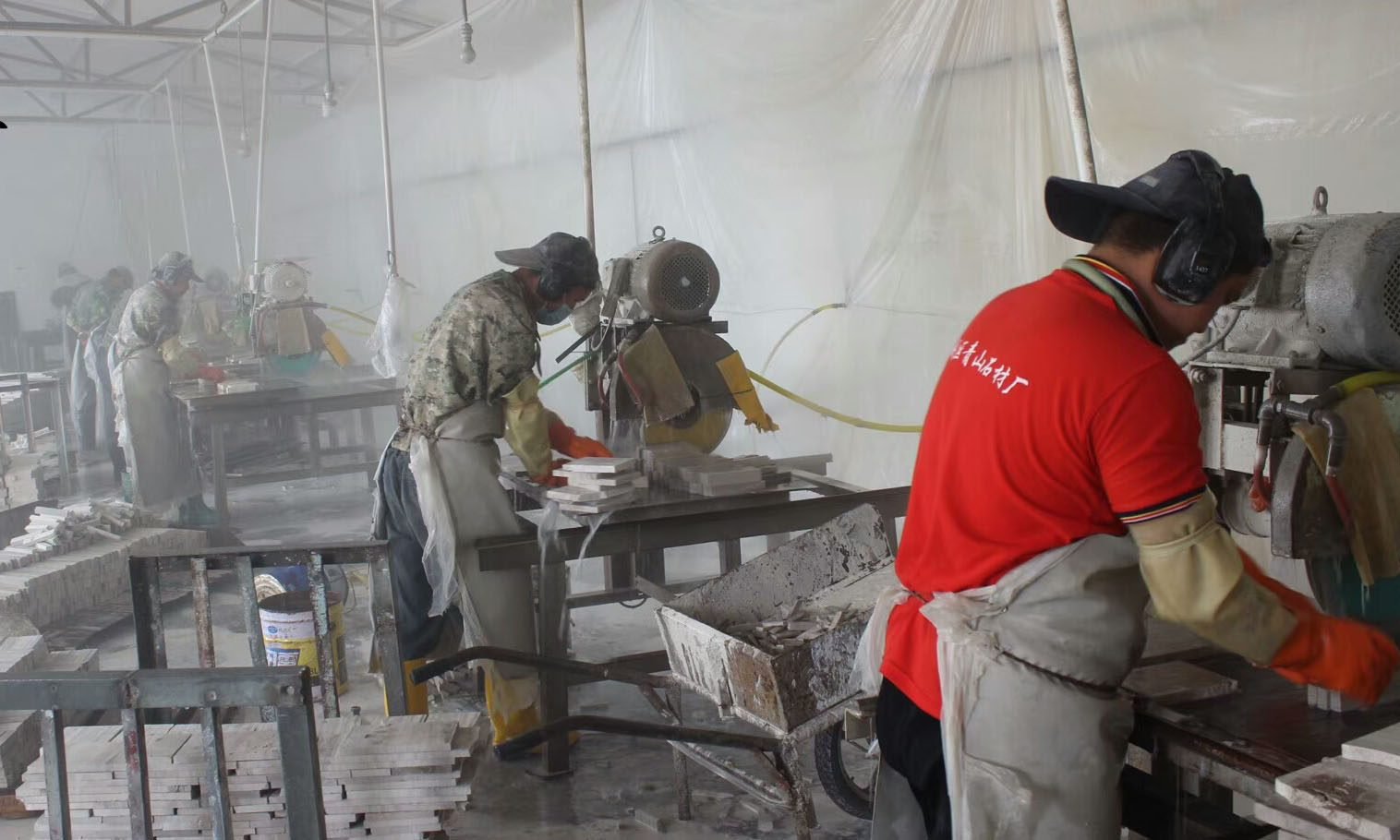
Red Flags in a Stone Panel Test Report
Eight patterns separate a working report from a decoration. Read every report against this list before you circulate it for approval.
- Old dates. A report from four years ago may describe a quarry face that no longer exists. Ask for one tied to the current production period.
- No batch or sample source. If the report does not say what was tested and when, it cannot be connected to your shipment.
- Compressive strength only. It flatters marketing, but a cladding file needs absorption, flexural, and freeze-thaw data too.
- No standard number. Figures without a method designation cannot be repeated or verified; they are numbers, not test results.
- Unverifiable lab. No lab name, no address, no way to confirm the testing organization exists.
- Wrong material or thickness. A granite report attached to a slate veneer quotation is a file mismatch, and it happens more often than it should.
- Absolutes like “0% absorption.” Natural stone absorbs some water; a pristine zero is either a different material class or a rounded-down figure.
- PDF sales banners. The report arrives embedded in a glossy brochure rather than as a clean scan with a laboratory header and signature.
When you spot a red flag, ask for a correction before you escalate to a complaint later. The suppliers who rebuild reports with real data are usually the ones with real data to show. Pair the report review with our sample evaluation checklist and the stone cladding purchase specification template to keep every verification step on paper.
Need a test report you can actually trust?
Top Stone Panels publishes QC documentation for every program: three-step factory inspection, pre-shipment sampling video, and physical samples shipped in 1-3 days for your lab. Ask for the file set before you commit a container.
QC documentation | 3-step inspection | 1-3 day samples
What Top Stone Panels Documents for Its Buyers
Every article in this series circles back to the same point: a factory’s quality story is only as strong as its documents. Inside the Top Stone Panels program, that means a three-step quality process — raw material selection at the factory QC level, in-process re-check during cutting and assembly, and a final inspection before loading — plus the paperwork that lets a buyer verify each step.
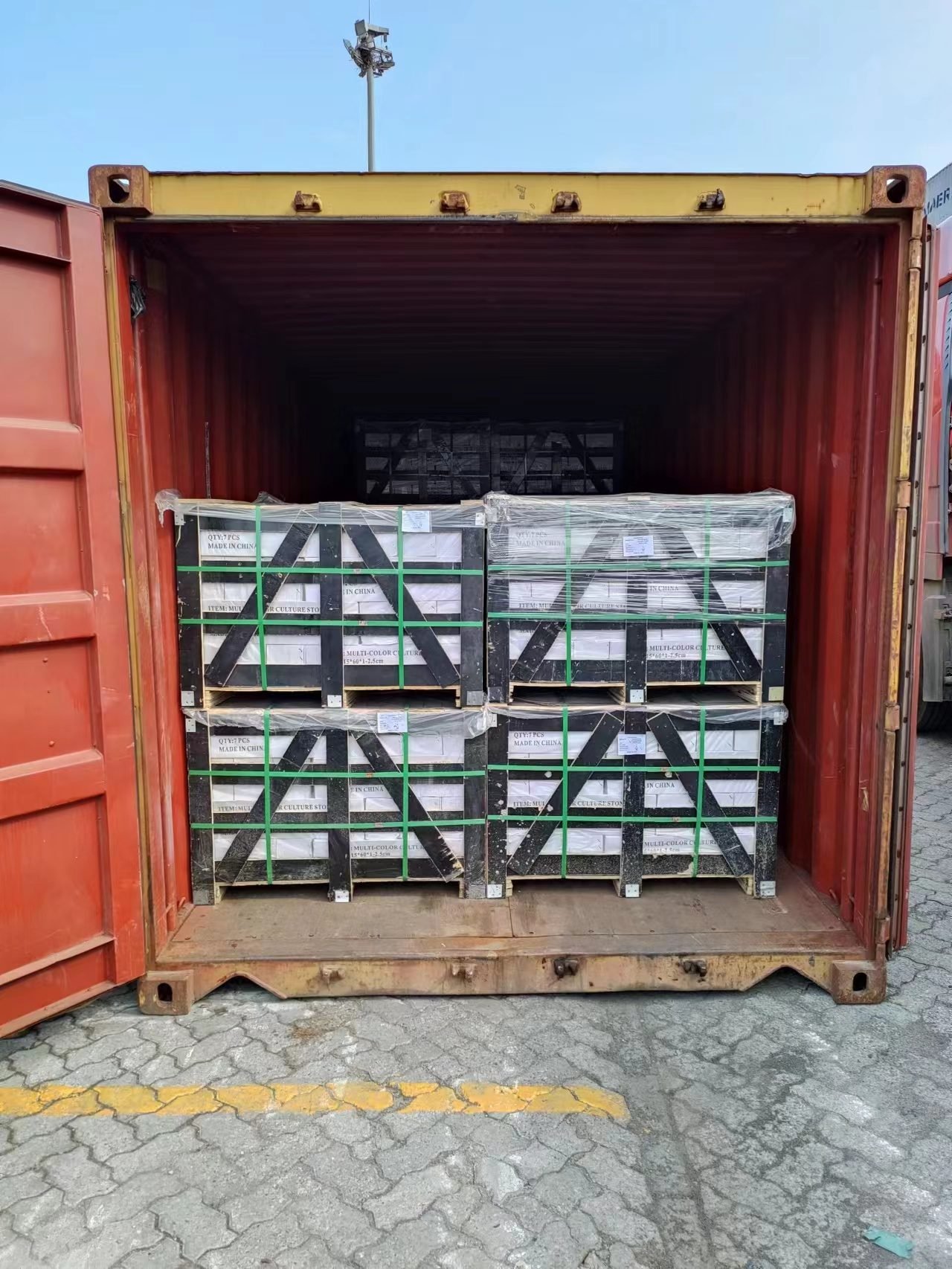
The file set buyers receive covers the practical chain: a pre-shipment sampling video recorded during final inspection, certificates of origin where the destination requires them, ISPM 15 fumigation documentation for wooden packaging, and a clear thickness-tolerance statement alongside the color-blend approval. Physical samples leave the factory within 1-3 days so an independent laboratory can confirm the same material family before production starts.

That documentation stack sits on top of a production line that runs 220+ containers per year out of Tianjin Xingang, with an MOQ of one 20GP container and a standard lead time of 20-25 working days. If a buyer trusts the reports and wants verification at the port, our pre-shipment inspection guide lists exactly what to check before container loading. The paperwork is not an afterthought; it is the delivery vehicle for the quality promise.
Checklist Before You Accept a Test Report
Run this eight-line checklist the moment a report arrives. It takes under a minute and it turns a conversation starter into an acceptance decision.
| Check | Passing condition | Where to look |
|---|---|---|
| Stone type matches | Slate, quartzite, or specified family named | Report header |
| Date is current | Within last two years | Page header or signature line |
| Standards cited | ASTM or EN method named per test | Methods column |
| Absorption figure present | % value tied to C97 or EN 13755 | Results page |
| Flexural strength present | Value with wet/dry condition stated | Results page |
| Freeze-thaw detail | Cycle count and weight loss shown | Results page |
| Lab identity | Name, address, contact verifiable | Footer of report |
| Sample described | Stone type, surface, size, batch stated | Sample description section |
If any line fails, do not reject the supplier outright — request the missing item in writing. Suppliers with real test programs answer within days. The ones who go silent were probably hoping you never looked.
Frequently Asked Questions
What is a stone panel test report?
A stone panel test report is a laboratory document that records how a specific stone material performed under standardized tests, covering metrics such as water absorption, strength, and freeze-thaw resistance. It is the measurable evidence behind a supplier’s quality claims.
What metrics matter most for exterior stone veneer panels?
For exterior panels, water absorption, flexural strength, and freeze-thaw resistance matter most. Water absorption predicts frost risk, flexural strength tells you how the panel handles bending loads on a wall, and freeze-thaw cycling shows survival in cold climates.
Which ASTM standards apply to natural stone cladding?
Common ASTM standards include C97 for absorption and specific gravity, C99 for modulus of rupture, C170 for compressive strength, C880 for flexural strength, and C1026 for freeze-thaw conditioning. European buyers often see EN 13755, EN 12372, and EN 1926 instead.
How long is a stone test report valid?
Treat reports older than two years with caution, because quarries change faces and deposits vary. Ask the supplier whether the report matches the current production batch, and request a fresh sample test when the source or color has changed.
Can I request additional testing on stone samples?
Yes. Reliable suppliers ship physical samples for independent lab verification, often within days. Top Stone Panels sends samples in 1-3 days so buyers can verify the same material family in their own laboratory before committing to a container.
Conclusion
A test report is the difference between guessing and knowing. Read it before you approve, read it again before the container loads, and keep it in the project file next to the purchase order. The metrics that protect you are small in number: absorption for frost risk, flexural strength for wall behavior, freeze-thaw cycles for climate survival, and lab identity for trust.
- Water absorption and freeze-thaw cycles decide winter survival; flexural strength decides wall behavior.
- Demand named ASTM or EN standards, dated reports, and described samples on every file.
- Top Stone Panels documents each step with 3-step QC, inspection video, and 1-3 day samples.
- Reject vague absolutes, old dates, and mismatched materials — then demand the corrected report in writing.
The next step is concrete: ask your supplier for the full documentation set, or contact Top Stone Panels for ours. The files travel in 1-3 days with the samples.