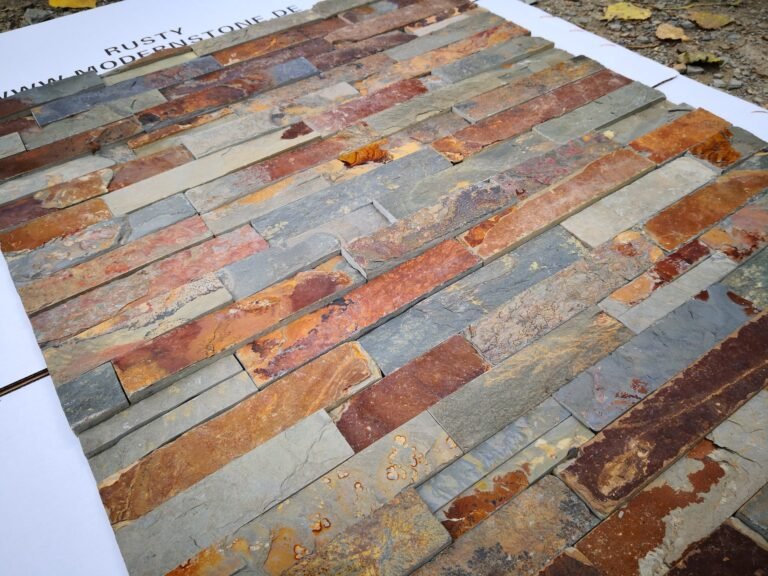
A stone panel can pass every visual check and still fail on the wall. It arrives with the right color, the right texture, flat and square — then a wind event pulls at the facade, or a scaffold leg presses into the veneer, and the panel cracks in a way no photograph would have predicted. Flexural strength stone panels is the specification that predicts that failure, and most buyers never ask for it.
Bending is the load mode cladding actually experiences. Gravity pushes down, wind pushes and suctions, people and equipment bump the surface, and temperature swings make panels want to bow. Every one of those loads bends the panel across the span between its support points. The material’s flexural strength is the number that tells you whether the panel bends and returns or bends and breaks. For a factory-direct buyer, that single figure separates a facade that survives twenty winters from one that gets repaired within the first.
- Flexural strength measures how much bending stress a stone panel takes before cracking — the load mode wind, impact, and thermal movement put on real facades.
- ASTM C880 is the standard test for dimension stone flexural strength; ASTM C99 covers modulus of rupture; EN 12372 is the European equivalent. All three use a two-support, center-load rig.
- Cladding specifications commonly cite a mean flexural strength of about 1,500 psi (10.3 MPa) as a design benchmark for anchored full-thickness stone.
- Panel assembly changes real-world bending behavior: marine-grade epoxy, cement backing, and mesh backing carry load differently, so test the finished panel, not just the raw stone.
- Bending stiffness grows with the cube of thickness, which is why thin veneer depends on the backing and substrate system rather than raw material strength alone.
- Verification is cheap and fast: Top Stone Panels ships physical samples in 1-3 days and supports third-party laboratory testing before a container order.
What Is Flexural Strength in Stone Panels?
Flexural strength, sometimes called bending strength or modulus of rupture, is the maximum stress a material tolerates under bending before fracture. Imagine a panel resting on two supports with a load pressing down in the middle. One face stretches, the other compresses, and the internal stress rises until the stone lets go. The stress at that breaking point, reported in megapascals (MPa) or pounds per square inch (psi), is the flexural strength.
You can read the number as a safety figure. But the more useful read is operational: flexural strength tells you how well the panel absorbs the incidental loads of an installed facade. A dense slate panel with high bending capacity shrugs off a dropped tool, a wind gust pulling at the corner, or thermal movement against the adhesive. A low-strength product makes the whole wall brittle, and brittleness in cladding is a liability no color or texture compensates for.
Stone buyers compare compressive strength — how much squeeze a stone takes — because masonry language talks about it constantly. Compressive strength tells you how the rock behaves in a column or foundation. Cladding is not a column. Cladding hangs on a wall and bends. For veneer panels, bending, not compression, is the failure mode that matters, which is why flexural strength stone panels is the figure a specifier should demand first. The distinction gets covered properly in the test report guide we published after the how to read a test report walkthrough.
Why Bending Performance Decides Cladding Safety
Consider what happens on a real facade over a working day. Wind pushes against the wall, then shifts and suctions outward, loading each panel like a leaf on a hinge. Temperature drops overnight and the panel contracts against its adhesive bed. A ladder goes up for gutter work and a rail presses a point load into the veneer. Each of these moments bends the panel between its support points.
If flexural strength clears the applied stress with margin, the panel returns to flat and nothing happens. If it does not, the crack starts on the tension face — the side facing the substrate — where nobody sees it until the surface lets go. That is why flexural failures surprise owners. The panel looks intact while the fracture grows from behind. The fix is not better installation; it is a higher flexural strength specification at the material stage, verified by test data before the panels ship.
The stakes climb with building height and wind exposure. A ground-floor retail strip sees different bending loads than a two-story elevation in an open field, and cold-climate facades add the freeze-thaw dynamic on top of mechanical stress. Dense, low-absorption stones handle that combination; porous ones absorb water, freeze, and lose bending capacity over cycles. We mapped that interaction in the anti-freeze testing guide, and the extreme temperature performance study shows the same physics at -30°C to +50°C.
None of this argues against natural stone. It argues for panels whose mechanical properties are measured, not assumed. A factory that cannot produce a flexural strength report on its own product line is asking you to gamble a structural decision on a brochure photo.
How Laboratories Test Flexural Strength: ASTM C880, C99, EN 12372
Flexural strength is measured on a simple rig: a rectangular stone specimen rests on two supports, and a load applies in the middle at a controlled rate until the specimen fractures. The test records the force, the specimen dimensions, and the support span, then converts them into a stress value. The machines look unglamorous. The discipline behind them is what makes values comparable between factories.
Three standards dominate the reporting you will see:
| Standard | What it covers | When you see it |
| ASTM C880 | Flexural strength of dimension stone by center-point and 3-point loading | Exterior cladding, structural stone, most US specifications |
| ASTM C99 | Modulus of rupture — a simplified center-point bending test | Quick quality checks, natural stone products |
| EN 12372 | Flexural strength under concentrated load for natural stone | European project specifications and CE documentation |
C880 and C99 sound similar; the difference is loading geometry and purpose. C880 is the standard for dimension stone used in building, which is why cladding specs and anchor designs reference it. C99 gives a faster single-point reading useful for product-line QC. Regardless of standard, the report must state which one was used, the specimen count, and the units — a number with no standard attached is a number with no meaning. Our ASTM cladding standards guide walks through the whole battery of tests a facade specifier should expect.
What Test Values Mean by Stone Type
Published test ranges cluster by mineral family, and the cluster tells you what to expect before you read a specific report. Dense, fine-grained stones generally record higher flexural strength than open-grained, porous ones, all else equal.
| Stone family | Typical published range | What buyers see in practice |
| Slate | Wide spread; fine-grained slate often among the highest of the cladding stones | Roofing-grade slate is chosen for bending toughness; dense slate panels translate that into facade performance |
| Quartzite | High hardness and density; strong performers under C880 | The premium exterior choice for clean edges and wide temperature tolerance |
| Sandstone | Lower by family; varies with cementation and porosity | Check the report before using in bending-heavy or freeze-thaw zones |
| Marble | Moderate; veining can create weak planes | Best in covered or interior applications; limit exterior bending exposure |
Use published ranges as a market map, not a substitute for data. The value that matters is the one on the report for the exact lot you are buying, because quarry blocks vary within a deposit. A spec sheet that says “slate” tells you the family; only laboratory numbers tell you the panel. Where the raw stone sits in the range matters far less than whether it clears the project’s minimum with margin.
A commonly cited design benchmark for anchored, full-thickness dimension stone is a mean flexural strength of about 1,500 psi (10.3 MPa) under ASTM C880. Projects with severe wind or impact exposure push higher, and the structural engineer’s design manual, not the stone supplier, should set the final number. What the supplier must provide is data that lets the engineer do that calculation. The quartzite vs slate comparison gives the fuller mineral-level run-down for exterior use.
How Panel Assembly Changes Strength: Epoxy, Cement, Mesh
Raw stone strength and panel strength are different numbers. Panels are assemblies: stone face plus backing system plus adhesive. The finished panel bends across gaps between its support points, and the backing decides how that load flows. Test the finished product, not the raw block.
| Construction | How bending load behaves | Best fit |
| Marine-grade epoxy bond | Each stone bonded to the backing; the adhesive spreads load across the panel and limits relative movement between stones | Covered and interior walls, tight joint looks |
| Cement backing | Stones bedded in a rigid cement base; the unit acts as a stiff composite element | Full masonry-look exteriors, thermal mass projects |
| Mesh backing | Flexible mesh holds stones in layout; bending resistance depends on mesh tension and the stones’ own thickness | Irregular layouts, curved walls, flagstone looks |
Assembly quality shows up in bending behavior long before it shows up cosmetically. A panel with a dry epoxy line or a poorly bedded stone carries a hidden weak point; the flexural test surfaces it, which is exactly the job of a finished-panel test. For detail on why assembly quality drives panel performance, our marine-grade epoxy assembly study examines the bond layer as a structural component, and the 3-step quality control guide shows where in production the factory catches these defects.
Thickness, Span, and the Geometry Factor
Here is the number every buyer should internalize: bending stiffness scales with the cube of thickness. Double a panel’s thickness and it resists roughly eight times the bending load before deflecting the same amount. The material value — MPa on the stone itself — stays similar. The panel’s practical strength climbs anyway, because geometry, not just mineralogy, resists bending.
That geometry reality explains the entire thin-veneer engineering model. A 15mm ultra-thin panel relies on the backing system and the substrate to provide bending stiffness, because the stone alone cannot span the loads a thick panel carries. This is not a defect; it is a design assumption, and it is why veneer thickness guidance matches panel thickness to application. Top Stone Panels produces stacked stone panels at 15x60cm and 15x55cm, ultra-thin ledgestone at 36x10cm, and interlocking z-panels at 20x55cm and 15.2x61cm — each profile with its own backing assumption.
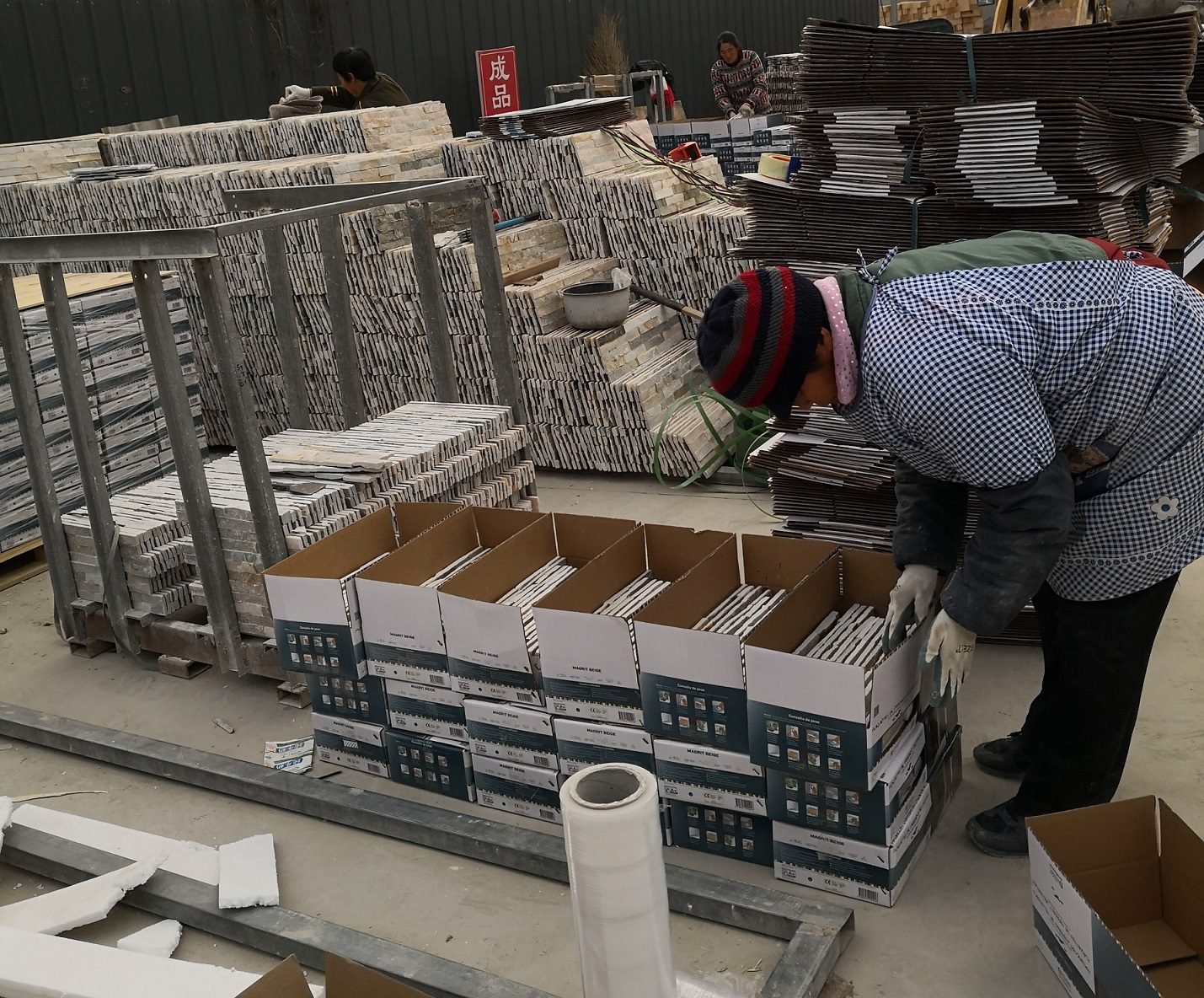
Precision cutting adds a quiet contribution to the geometry story. Infrared CNC diamond-blade cutting holds panel dimensions tight, which keeps joints even and avoids the stress concentrations that a wobbling hand-cut edge creates. Consistent geometry means the tested panel represents the delivered panel. The thickness tolerance guide explains how to verify that consistency at the factory gate.
How to Read a Factory Test Report
A flexural strength report is a short document with five fields worth your attention:
- Test standard. The report must name ASTM C880, C99, EN 12372, or an equivalent. A value with no named standard cannot be compared to anything.
- Sample size. Single specimens give anecdotes. Five or more specimens give a distribution, and the mean tells you the lot’s central tendency.
- Minimum value. The lowest specimen result is more useful than the average for safety. A wide gap between mean and minimum signals inconsistent stone, and inconsistency is a QC flag.
- Specimen orientation. Stone is anisotropic; the same block tests differently with and against the grain. The report should state the orientation relative to the panel face.
- Units and conversion. 1 MPa equals 145 psi, roughly. Do the conversion yourself before comparing values quoted in different units by different suppliers.
Red flags are easy to spot once you look: a report with no standard name, a sample size of one, values quoted in no units, or a supplier who says the data “is available on request” and then never sends it. The same report-reading discipline applies across freeze-thaw, water absorption, and every other property on the sheet — the stone panel test report guide runs the whole checklist.
Verifying Flexural Strength Before You Buy
Verification does not require a full container order. It requires two things: a report on the production lot, and a physical sample tested the way your project will load the panel. Both are available at commodity speed.
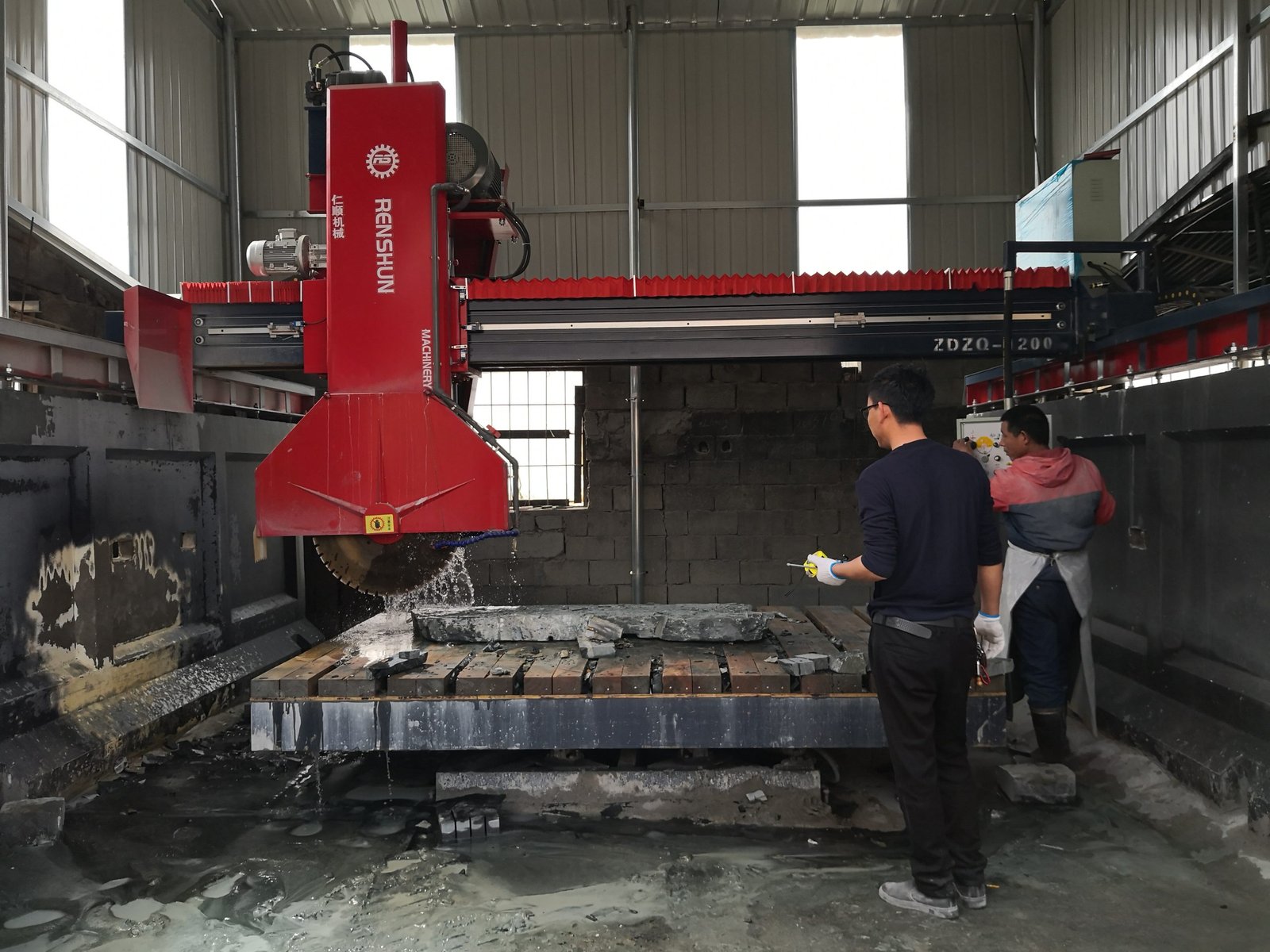
Top Stone Panels runs a 3-step internal quality control sequence on every order — raw material selection, in-process re-inspection, and a pre-shipment final check — and supports documentation from certificate of origin through pre-shipment inspection reports. Physical samples ship in 1-3 days precisely so a buyer can hold the actual slate or quartzite, and if the project demands third-party verification, the sample goes to an independent laboratory before the container leaves the port.
For a container-scale purchaser the sequence looks like this: request the property data sheet with test reports, check the standard and the minimum values, order samples and send them to the lab in parallel with your specification review, then confirm thickness and dimension tolerance against the approved sample in the pre-shipment inspection. A supplier who resists any of those steps is telling you something about their quality culture. A supplier who sends the sample in three days and hands over the test reports without being asked is telling you the opposite.
Direct sourcing makes the paperwork part of the deal. MOQ is one 20GP container, standard production runs 20-25 working days, and payment settles as 30% deposit with 70% before loading after the loading video and batch photos are confirmed. You lock the strength data before you lock the payment.
Frequently Asked Questions
What is flexural strength in stone panels? The maximum bending stress a panel takes before cracking, reported in MPa or psi. It predicts how the panel behaves under wind, impact, and thermal loading — the real loads on a facade.
Is flexural strength the same as compressive strength? No. Compressive strength measures resistance to squeezing and matters for columns and foundations. Flexural strength measures resistance to bending and matters for cladding panels, which hang on walls and bend between supports.
Which stone type has the highest flexural strength? Dense, fine-grained families like slate and quartzite generally record the highest values. Sandstone and marble tend lower, with veining and porosity creating weak planes. Verify the actual lot on the test report rather than trusting family averages.
Why do thin veneer panels crack even when the stone is strong? Thin panels lack the thickness needed for bending stiffness, so they depend on the backing system and substrate. Failures usually trace back to the assembly bond or substrate, not the raw stone strength.
How do I compare two suppliers quoting in different units? Convert to one unit first: 1 MPa equals about 145 psi. Then compare the mean and minimum values under the same test standard, and check sample size and orientation statements.
Conclusion
Flexural strength is the quiet specification behind every safe natural stone facade. Buy it like the structural figure it is: demand the test report under a named standard, check the mean and the minimum, understand how backing and thickness change the real panel, and verify with a physical sample before the container commits.
- Ask for ASTM C880 or an equivalent report before shortlisting any stone panel supplier.
- Read the minimum value, not just the mean, and verify the standard is named.
- Match thickness and backing to application — thin veneer leans on the backing and substrate, thick panels stand on their own geometry.
- Use the 1-3 day physical sample window to run third-party lab testing before placing the order.
If you are sourcing direct from the quarry, the strength conversation is the trust conversation. A supplier that produces the report without being asked — and sends samples in three days — is a supplier you can build a facade on.
Top Stone Panels produces natural slate and quartzite panels factory-direct from the quarry in Yixian, Hebei — 100% natural stone, infrared CNC precision cutting, 3-step quality control, and physical samples shipped in 1-3 days. Browse the stacked stone product line or thin stone veneer options, and ask for the property data sheet with flexural strength test reports.