Most stone panel orders go wrong before the container is booked. Buyers pick a product by photograph and compare prices per square meter. The difference between a wall-ready panel and a box of loose stone shows when the installer opens the cartons on site. A complete stone panel buying guide exists to prevent that failure. It turns a one-time import decision into a checklist: product line, material, backing, color control, QC documents, and shipping terms.
Top Stone Panels runs six product lines from one quarry-direct facility in Yixian, Hebei. The factory ships more than 220 containers a year to North American and European distributors. Every line carries published numbers — sizes, capacities, MOQ, payment, lead times. Each recommendation below can be checked against a supplier invoice before you commit a dollar.
This guide walks a wholesale buyer through the decision chain in order. It covers what stone panels are, how to choose among six product lines, and which face materials survive which climates. It explains how backing changes on-site behavior, how color consistency is controlled, and what finishing pieces to order. It closes with the MOQ, QC, packaging, and payment terms to expect from a factory that runs this kind of operation.
- Six product lines cover almost every facade job: stacked stone, thin ledgestone, interlocking Z-panels, thin stone veneer, flagstone, and stone columns.
- Face material decides climate survival — high-density slate and quartzite handle -30°C to +50°C, A-class fire, UV exposure, and salt spray.
- Backing type changes on-site behavior: marine-grade epoxy bond for durability, cement backing for weight and feel, mesh backing for random layouts.
- Color consistency is a factory process, not luck: batch-specific vein selection holds color transition consistency above 95% across an order.
- Pre-made L-corners and caps should be ordered with the panels, not improvised on site — corners alone save about 50% of installation labor.
- The wholesale terms are fixed and repeatable: MOQ one 20GP, samples in 1-3 days, production in 20-25 working days, 30/70 T/T, FOB Xingang or DDP.

- Six Product Lines at a Glance
- Choose the Product Line by Project
- Face Material: Slate, Quartzite, Sandstone, Marble
- Panel Construction and Backing
- Sizes, Thickness, and Coverage Math
- Colors and Batch Consistency
- Corners, Caps, and Finishing Pieces
- Quality Control and Test Documents
- MOQ, Payment, and Pricing Reality
- Logistics and Zero-Breakage Packaging
- How to Place a Stone Panel Order
- FAQ
- Conclusion
Six Product Lines at a Glance
A stone panel is a factory-made unit: natural stone cut to a fixed size, laid on a backing, and shipped ready to install. The product line decides the joint pattern, the scale of the stones, the backing, and the coverage rate. Buyers who understand the six lines before comparing prices can match the panel system to the project instead of forcing one product into every wall.
The table below is the working map of what Top Stone Panels produces. Capacities and sizes are factory data, not marketing ranges.
| Product line | Typical size | Best for | Capacity |
|---|---|---|---|
| Stacked Stone | 15x60cm / 15x55cm | Exterior walls, fireplaces | 80,000 m²/month |
| Thin Ledgestone | 36x10cm ultra-thin | Small walls, light containers | 60,000 m²/month |
| Interlocking Z-Panels | 20x55cm / 15.2x61cm | Fast commercial cladding | 50,000 m²/month |
| Thin Stone Veneer | Random length strips | Natural split-face scatter walls | 40,000 m²/month |
| Flagstone and Crazy Paving | Random geometry mats | Patios, walkways, pool decks | 30,000 m²/month |
| Stacked Stone Columns | 40x40cm / 50x50cm custom | Pillar wraps and entries | 10,000 sets/month |
One factory producing all six matters more than it sounds. A buyer can mix product lines in a single container, keep one shipping relationship, and lock every surface to the same quarry region so facade tones stay related. The alternative is three suppliers, three color standards, and three sets of documents.
MOQ applies per product line — one 20-foot container each — which is deliberately low enough for a distributor to trial a line before committing a long-term program.
Choose the Product Line by Project
Match the panel system to what the wall will do. Exterior cladding, interior feature walls, fireplaces, and horizontal surfaces put different demands on a panel, and each of the six lines was built for a specific job.
Stacked stone for exterior walls and fireplaces
Stacked stone panels use a tight ledger layout — stones stacked edge to edge with thin joints, so the wall reads as a continuous brick of natural stone. The 15x60cm and 15x55cm panels are the workhorse line: they suit facades, fireplace surrounds, and accent walls, and they carry the factory’s largest capacity at 80,000 m² per month. For a distributor, that capacity is a lead-time guarantee, not a decoration.
Thin ledgestone for scale and container economics
Thin ledgestone runs smaller — 36x10cm ultra-thin strips — and it changes the math on two fronts. The smaller scale suits interiors and compact walls where full-size panels overwhelm the space, and the thin profile packs more coverage into a container. European buyers typically pick this line because the lighter panel weight lowers freight and on-site handling cost.
Interlocking Z-panels for commercial speed
Z-panels interlock mechanically on the wall, which cuts installation time on commercial jobs where labor is the critical cost. The 20x55cm and 15.2x61cm panels come with cement or mesh backing and behave like true cladding: modular, fast, and repeatable across large facades. Buyers who quote against a construction schedule choose this line first.
Thin stone veneer for a split-face random look
Scatter strips of thin stone veneer give the most natural, hand-split appearance because each piece is a random length from the same quarry vein. This line is the right call for feature walls where the client wants visibly irregular stone rather than a regular grid. It takes a more experienced installer than panels do, so price the labor before you commit.
Flagstone for horizontal surfaces
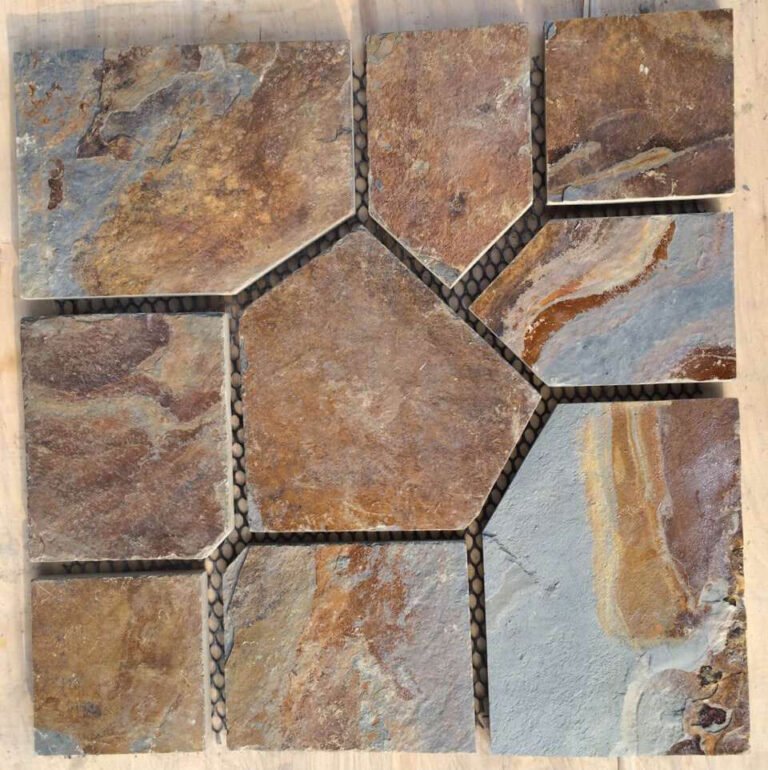
Flagstone and crazy paving mats are the non-wall line: mesh-backed random geometry pieces for patios, walkways, coping, and pool surrounds. They are slip-resistant, salt-resistant, and rated for the same freeze-thaw conditions as wall panels. Order them when the project includes ground surfaces adjacent to a cladding wall.
Stone columns for entries and porticos
Column kits wrap existing structural posts or stand as decorative pillars in 40x40cm, 50x50cm, or custom sections. Roofed entries, porches, and porticos are the classic application. Ordering columns from the same factory as the wall panels keeps every surface of the building on one color program.
Most buyers run two or three lines in their first order. That is the efficient way to test a new factory: one container, one inspection, and a showroom that demonstrates range to the customer.
Face Material: Slate, Quartzite, Sandstone, Marble
The face material is the part of the panel a client will touch for thirty years. Slate, quartzite, sandstone, and marble each behave differently in freezing climates, coastal air, and fire-rated assemblies, and the difference shows up in failures, not in photographs.
| Material | Cold-climate behavior | Best used for |
|---|---|---|
| Slate | High density, low water absorption | Exteriors, floors, fireplaces |
| Quartzite | Very hard, freeze-thaw resistant | Exterior cladding, high-traffic walls |
| Sandstone | Softer, more porous | Interiors, sheltered facades |
| Marble | Prone to etching, needs care | Interior features, accents |
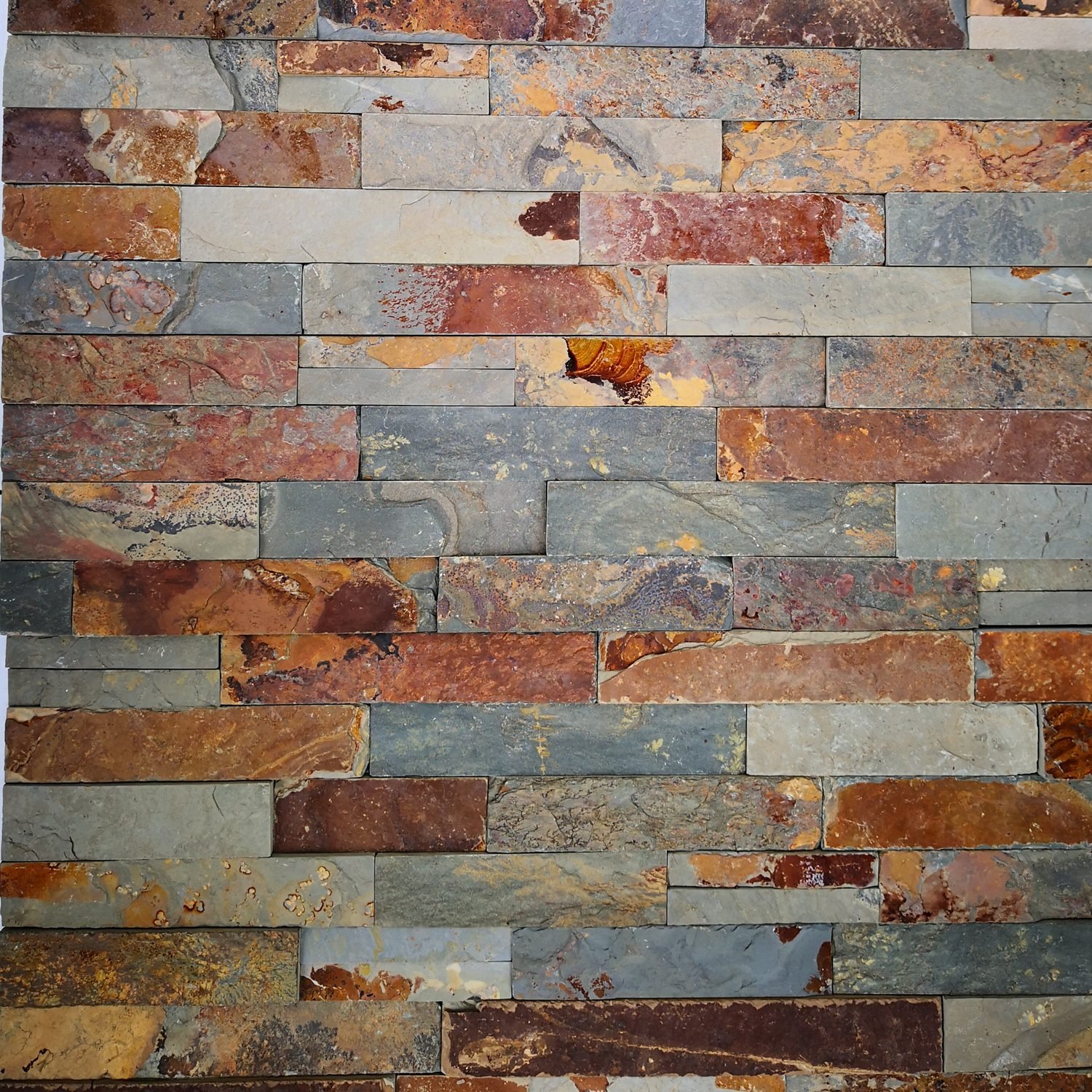
High-density slate and quartzite are the exterior defaults from Top Stone Panels because their physical properties are the argument. The panels carry a -30°C to +50°C temperature rating, behave as A-class fire-rated material because they are 100% natural stone, resist UV fading, and tolerate salt spray in coastal projects. Sandstone and marble belong inside or in sheltered positions where their porosity and softness will not be punished by weather.
The practical warning for buyers: do not let a single attractive photograph override the climate spec. A sandstone facade looks warm in a brochure and spalls in a Minnesota winter. State the project climate to the factory and let them steer the material.
Panel Construction and Backing
The backing is the invisible half of a stone panel. It decides how the panel behaves on site: how it cuts, how much it weighs, how it bonds to the wall, and how long the assembly holds. Buyers who compare only face appearance miss the specification that separates a twenty-year wall from a five-year repair bill.
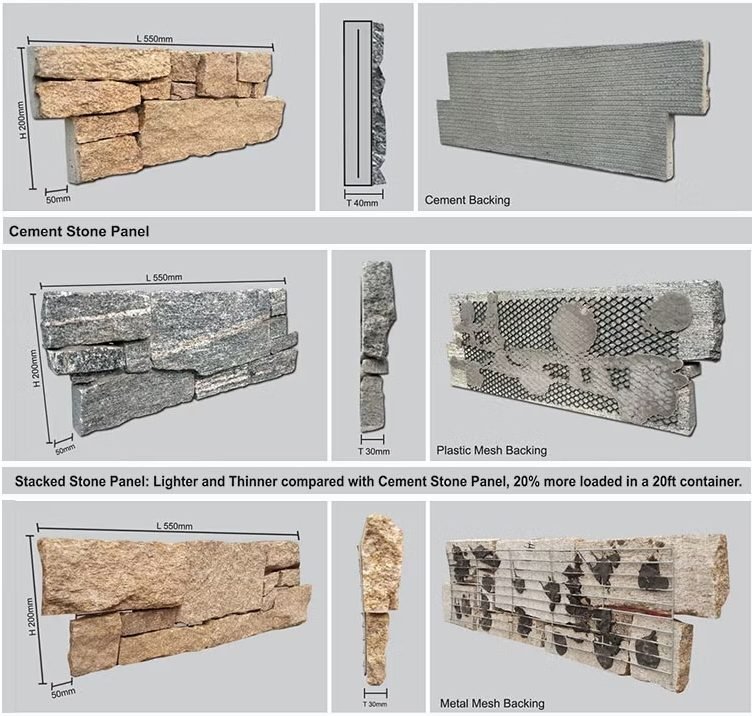
Top Stone Panels builds panels with three backing systems. The premium option is a marine-grade epoxy bond, which laminates the stone pieces into a panel with high adhesive strength and reduced weight. Cement-backed panels deliver a heavier, more substantial feel familiar to masons. Mesh-backed panels carry loose or random layouts — the thin stone veneer scatter and flagstone mats use this system.
Choose the backing by installer and substrate. Epoxy-bonded panels cut cleanly with standard blades and suit retrofit walls where weight matters. Cement backing feels like traditional masonry and performs the way crews expect. Mesh backing is for the hand-laid, random-format products. All three are factory-applied, which eliminates the worst on-site variable: an installer who improvises the bond.
One detail separates factory panels from local fabrication: precision. Panels are cut with infrared CNC diamond blades, and the factory holds thickness tolerance through its 3-step quality control — raw material selection, in-process re-inspection, and pre-shipment final inspection. Precise panels close the joints expected on the drawing, and precision cutting also reduces on-site waste by roughly 20% versus hand-cut work.
Sizes, Thickness, and Coverage Math
Buying stone panels by photograph is expensive. Buying by coverage math is how the order arrives that actually fits the facade. Sizes are fixed per line: 15x60cm and 15x55cm for stacked stone, 36x10cm for thin ledgestone, 20x55cm and 15.2x61cm for Z-panels, random lengths for veneer scatter. Area calculation is a spreadsheet exercise, not a guess.
Convert the building’s wall area into square meters, add a cutting and breakage allowance, then divide by the coverage per unit. The factory estimator does this with the buyer. A distributor who shows up with measured areas instead of “a chimney and a wall” gets a faster, more accurate quote and keeps the conversation focused on product.
Thickness follows the line and the use. Wall panels run the same nominal thin profile across the line; flagstone and coping are specified thicker for horizontal and traffic loads. If the project includes a fireplace hearth, a window sill, or column base, those pieces are cut thicker on purpose and are not interchangeable with wall stock.
Three numbers should be on the order before anyone cuts stone: total wall area in square meters, corner count with direction, and the allowance you want for waste. Everything else — color, finish, backing — refines that core quantity.
Colors and Batch Consistency
The color story of a natural stone facade lives or dies in the quarry sorting, not the catalog. Top Stone Panels offers more than 50 colors across the six lines, but the selling point is how the factory keeps those colors consistent from one box to the next.
Batch-specific vein selection is the controlling process. The factory sorts stone pieces by quarry vein during production, so an order stays locked to one vein family and the color transition across panels holds above 95% consistency. That number is the difference between a facade that reads as one material and a wall of visible patchwork.
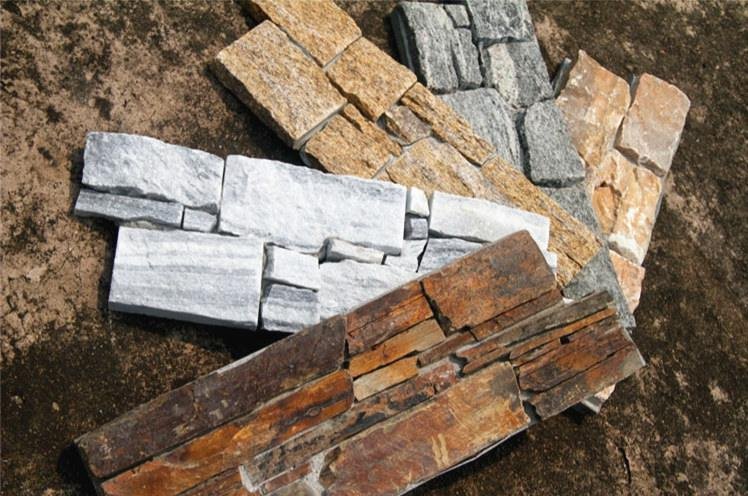
Color matching is a two-stage process in ordering. First, physical samples are shipped in 1-3 days for approval; the buyer holds the approved sample as the reference. Second, production is locked to that sample’s vein, and the 3-step QC flow verifies color against it through the run. Reorders follow the same rule: as long as the buyer reorders the same product and color code, the factory re-sorts to the same vein family. The full technique for blending tones on one wall is covered in our guide on mixing stone colors on a single wall.
The buyer’s requirement is procedural: approve a physical sample before mass production and keep a signed reference. Distributors who skip this step discover color drift in the container, not at the showroom.
For facades, keep all product lines on one vein program. A wall of stacked stone plus window trim plus columns should be sourced from the same quarry family so the tones relate. That is the structural reason the six-line, one-source model exists.
Corners, Caps, and Finishing Pieces
Corners are where stone panel jobs reveal their true cost. Cutting miter corners on site consumes labor, produces waste, and frequently leaves a corner that does not match the panel joints. Ordering finished pieces with the panels removes that entire class of problems.
Top Stone Panels supplies pre-made L-corners as a standard companion to stacked stone and Z-panel lines. The corner units are manufactured with the same staggered-joint design as the panels, so a 90-degree turn continues the ledger pattern instead of interrupting it. The labor effect is dramatic: pre-made corners eliminate about 50% of installation labor versus on-site miter cutting, a number worth putting in every contractor quote.
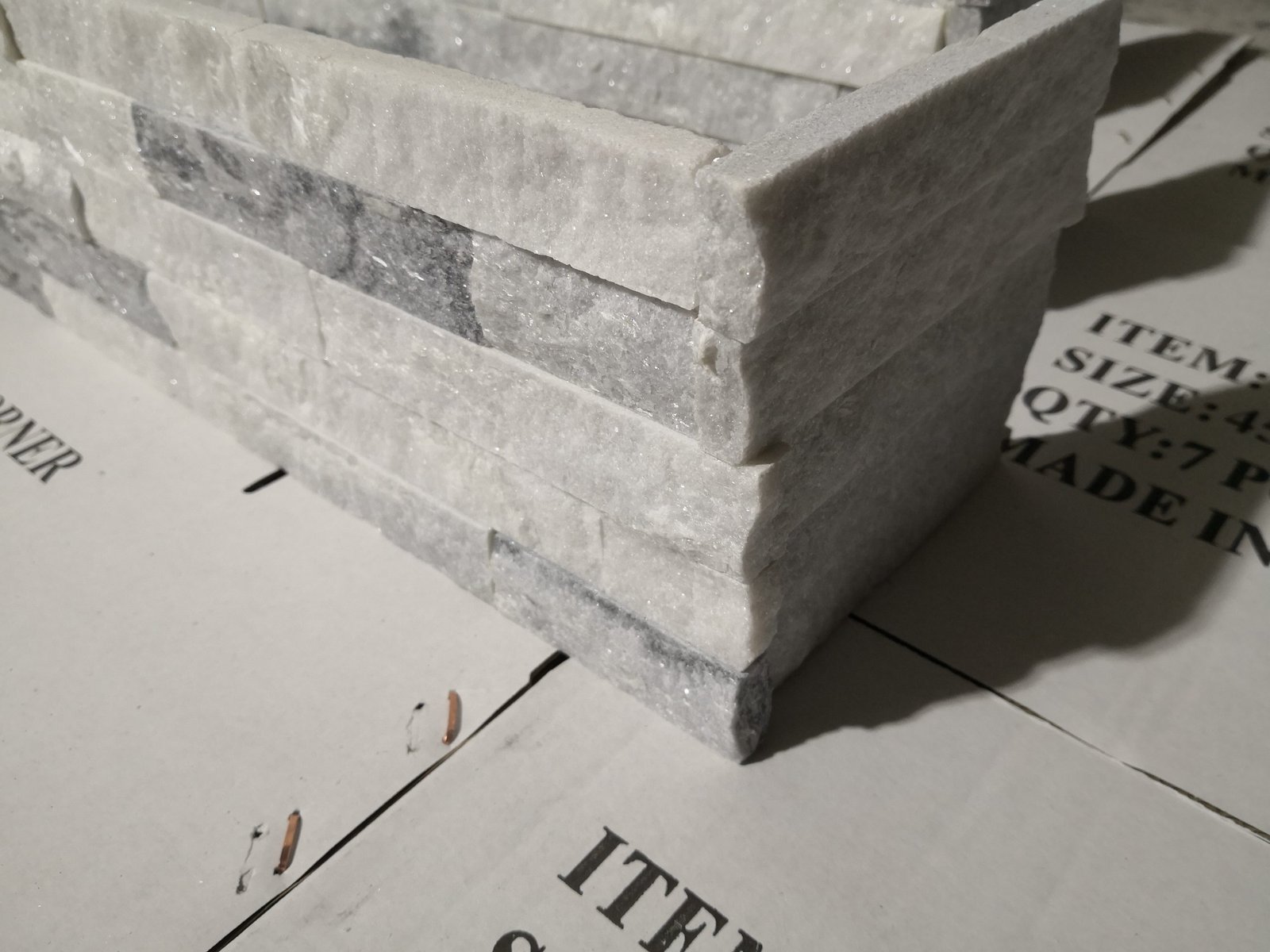
Finishing pieces extend beyond corners. Caps and coping finish the tops of retaining walls, columns, and piers; window sills and surrounds protect openings; hearth pieces carry fireplace floors. These are cut thicker and produced from the same vein as the wall panels. A complete order lists every transition — inside and outside corners, caps, sills, column bases — so the estimator can cut everything in one program. For the topping pieces most buyers overlook, see our stone veneer caps and coping guide.
The buying rule is to specify finishing pieces at order time, not to discover them mid-installation. A second order for sills and caps weeks after the panels have shipped adds freight, ties the job schedule to another production run, and risks a slightly different vein.
Quality Control and Test Documents
Wholesale stone buying is document business. The container will clear customs and the wall will be judged on numbers that exist on paper before the ship leaves port. A serious factory runs a documented QC flow and can produce the files on request.
The Top Stone Panels QC loop is a fixed 3-step process: raw material selection at the quarry and receiving, in-process re-inspection during cutting and assembly, and a pre-shipment final inspection before packing. Thickness tolerance is checked in the final stage. Out-of-tolerance panels refuse to lie flat on the wall.
Buyers should request and file four things per order. First, the test data the factory holds on flexural strength, water absorption, and freeze-thaw performance. Second, the thickness tolerance statement. Third, the Certificate of Origin (COO). Fourth, the ISPM 15 fumigation certificate for the wood packaging. Top Stone Panels can also provide pre-shipment sample inspection video and loading photos. The buyer keeps visual evidence of what was packed.
The inspection habit separates wholesalers from one-time importers: one container of stone is an experiment, ten containers is a supply chain, and supply chains run on documents.
MOQ, Payment, and Pricing Reality
The financial terms of a stone order are fixed and repeatable, which is exactly what a buyer wants before comparing suppliers. Top Stone Panels works on a 30% T/T deposit with 70% balance before shipment, after the loading video and layout photos are approved. Payment structure does not vary by mood — it is the standard hedge that keeps both sides honest.
| Term | Value | Why it matters |
|---|---|---|
| MOQ | One 20-foot container per line | Low enough to trial a line |
| Samples | 1-3 days | Fast color approval path |
| Production | 20-25 working days | First order 25-30 with custom boxes |
| Incoterms | FOB Xingang / EXW / CIF / DDP | Choose by freight control |
Pricing on natural stone follows the spec, not the color chart. Finish type — split face versus sawn — changes cutting cost and yield. Edge treatment, custom sizes, and private-label cartons add to the line. Capacity is the quiet variable. A factory running 80,000 m² per month on stacked stone schedules production differently from a workshop jobbing small runs. That capacity shows up in realistic delivery dates.
One pricing trap worth naming: freight dominates thin panel economics, so compare quote-scope carefully. A low FOB price paired with poor packaging disappears into the ocean. The zero-breakage packaging protocol is not overhead; it is the difference between a saleable container and a claims file. The same logic applies to the guarantee side — our stone panel warranty guide lists what B2B buyers should expect from suppliers.
Need a line-item plan for your next stone import?
Tell the factory your wall areas and project climate. You get product-line recommendations, coverage math, color samples, and a firm MOQ and lead-time quote — all from one source.
Logistics and Zero-Breakage Packaging
Stone crosses an ocean inside a box that was designed for the trip. The inspection question buyers should ask is not whether the factory packs well, but whether it packs to a protocol.
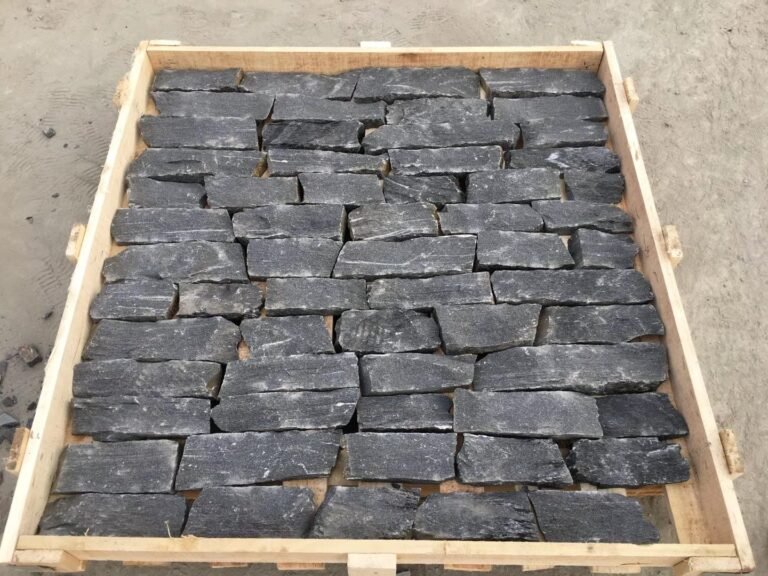
Top Stone Panels ships under the Zero-Breakage Packaging Protocol. The system uses 3-5 layer corrugated cartons, fumigation-free solid wood or plywood pallets, 4-6 high-strength steel bands per pallet, and industrial air bags filling the container void. The pallets are IPPC-compliant wood, which keeps the ISPM 15 certificate simple. The air bags stop load-shift in transit.
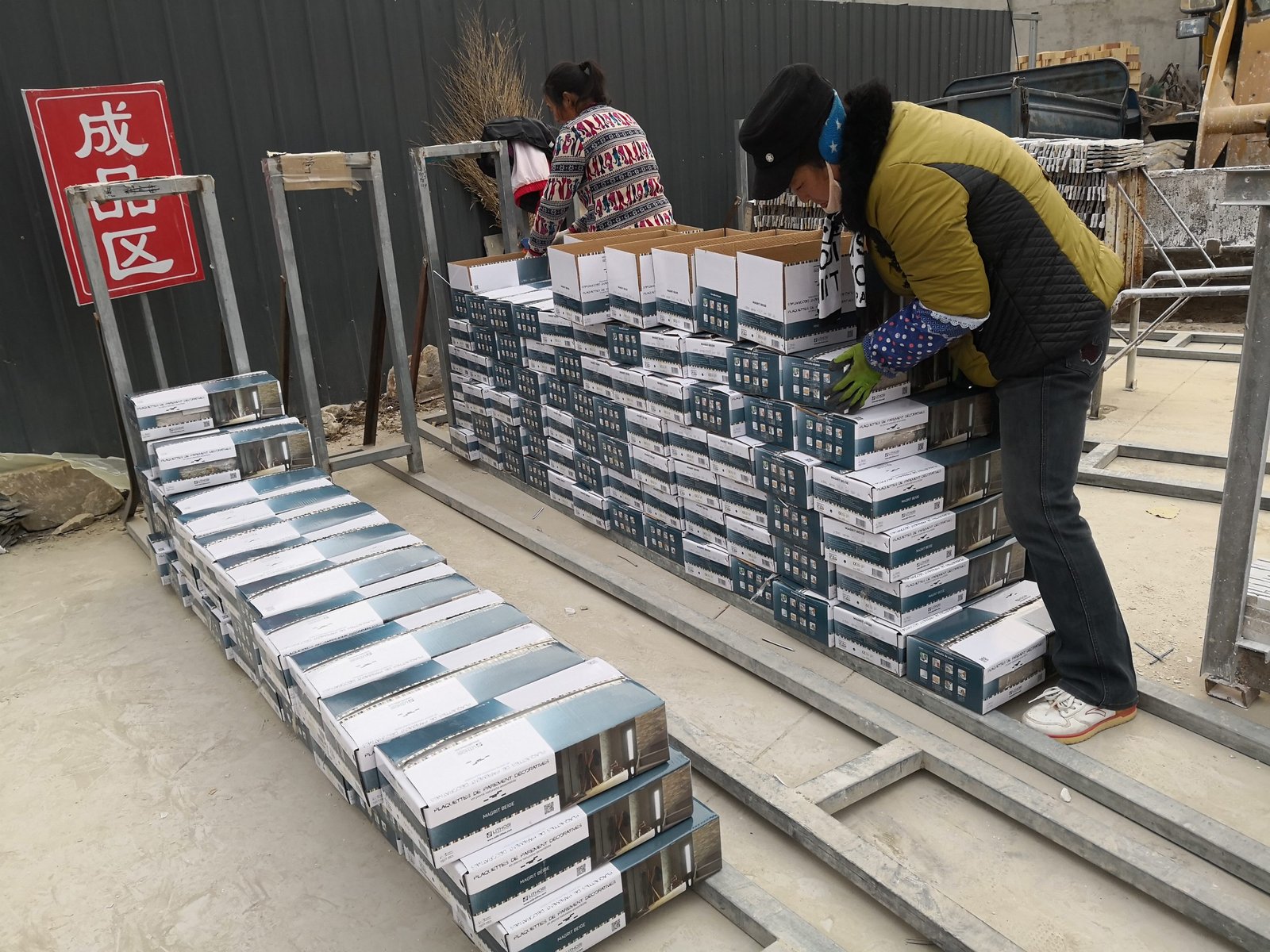
Shipments leave from Xingang, the Tianjin port, under FOB, EXW, CIF, or DDP terms. Production runs 20-25 working days for a standard order, and first orders with custom private-label cartons run 25-30 days because the packaging print adds a cycle. Those are the real planning numbers; a factory that quotes faster is quoting a schedule it cannot keep.
Landed cost thinking should close the logistics section. Add freight, insurance, port costs, customs duties, and inland haul to the FOB price before comparing quotes. When thin ledgestone packs more coverage per container, or Z-panels cut installation days, the cheaper price per square meter is not always the cheaper wall.
How to Place a Stone Panel Order
A clean stone order starts with a clean brief. The factory needs five inputs to quote accurately: total wall areas per product line, color selection, corner counts, project climate, and installation substrate. Photographs of the intended style help the estimator match the look. The numbers do the work.
The order sequence with Top Stone Panels runs on a fixed rhythm. Request samples — they move in 1-3 days. Approve the physical sample against the product and color code. Lock the order with the 30% deposit, which secures the production slot. The factory cuts and assembles under the 3-step QC flow, sends the loading video and layout photos, and the buyer releases the 70% balance before the container sails. From deposit to departure runs about 20-25 working days on standard product.
Two operational habits keep the process clean. First, keep one order per product line and one color per line; mixing multiple colors within a single line complicates vein sorting. Second, collect the document set — test data, COO, ISPM 15, loading records — before the ship sails, not after customs flagging pauses the container.
Mixed projects need a broader review. When wall paneling, fireplace surrounds, window trim, and entry columns share one job, compare the stacked stone panels, thin ledgestone panels, flagstone and crazy paving, and stone columns lines side by side. Then let the factory plan one vein program across the surfaces.
FAQ
What are the different types of stone panels?
The six types are stacked stone panels, thin ledgestone panels, interlocking Z-panels, thin stone veneer strips, flagstone and crazy paving mats, and stone column kits. Each suits a different wall, scale, and installation method.
What is the MOQ for wholesale stone panels?
The standard MOQ is one 20-foot container per product line. Physical samples ship in 1-3 days, and production runs 20-25 working days after order confirmation.
How do I choose between stacked stone and ledgestone?
Pick stacked stone for tight ledger joints at 15x60cm or 15x55cm scale on facades and fireplaces. Choose thin ledgestone when you need an ultra-thin 36x10cm scale for smaller walls or lighter containers.
Can I mix colors in one stone panel container?
Yes, through batch-specific vein selection. Keep all products in the order locked to one quarry vein, and color transition consistency holds above 95% across the container.
What test reports should a stone supplier provide?
Ask for factory data on flexural strength, water absorption, freeze-thaw performance, and thickness tolerance, plus the COO and ISPM 15 fumigation certificate needed for customs clearance.
How long does a stone panel order take?
Samples arrive in 1-3 days. Standard production runs 20-25 working days, and first orders with custom private-label cartons run 25-30 days because box printing adds a cycle.
Conclusion
The complete stone panel buying guide ends where the order begins. A buyer who can name the product line, the face material, the backing, the color program, and the corner count has removed most of the uncertainty from an import. The remaining work is execution: samples, deposit, QC review, balance, and the container.
Here is the checklist that travels with the order:
- Product line matched to project: stacked stone, thin ledgestone, Z-panels, veneer, flagstone, or columns.
- Face material matched to climate: high-density slate or quartzite for exteriors rated -30°C to +50°C.
- Backing selected: marine-grade epoxy, cement, or mesh, and named in the order.
- Physical sample approved against the color code before production.
- Corners, caps, sills, and columns counted and included in the same order.
- Documents collected at deposit: test data, COO, ISPM 15, loading photos.
- Terms confirmed: MOQ one 20GP, 30/70 T/T, FOB Xingang or DDP, 20-25 working days.
Top Stone Panels runs the six lines, 50+ colors, and one QC and packaging program so this checklist is a single conversation instead of a vendor circus. Request the samples and the line-item quote with your wall areas, and the factory will plan the order that actually ships.