Every importer has the same story lurking in the second container: a few panels arrive cracked, a batch of corners shows up with a thickness mismatch, and suddenly the “warranty” conversation starts — with nobody sure what the warranty actually said. Stone panel warranty B2B buyers discuss it only at the moment of failure, which is exactly the wrong time to negotiate it.
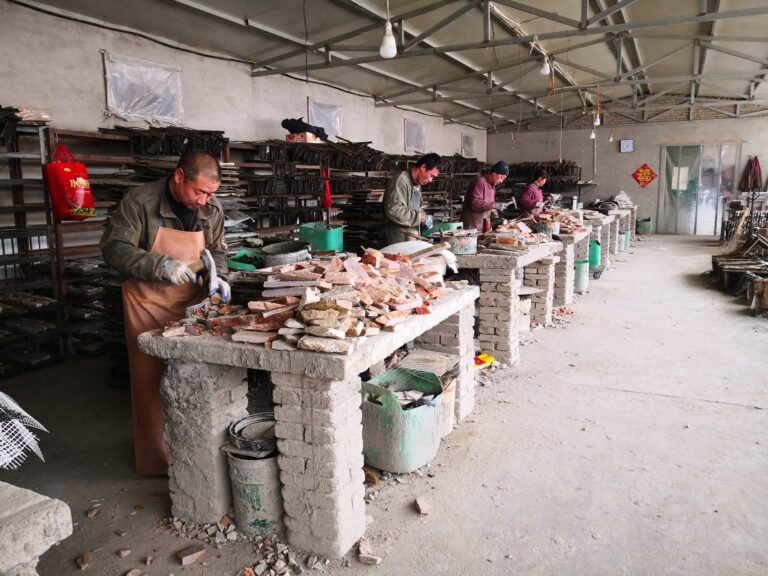
The good news is that a sensible warranty structure for imported natural stone is easy to define before the order. It covers a short list of manufacturing defects. It names the evidence required — photos, video, inspection reports. It specifies the remedy. And it is backed by processes the factory already runs: quality control at three points, pre-shipment inspection, batch documentation, and a payment structure that settles after you see the goods. This guide tells you what to expect, what to demand, and what to walk away from.
- A B2B stone panel warranty is a negotiated contract term covering a defined list of manufacturing defects — not a blanket promise that stone will never break.
- Warrantable defects: transit breakage under agreed packaging, backing or adhesive failure, dimension and thickness out of tolerance, delivered color off the approved sample.
- Non-warrantable by nature: natural color variation inside the sample range, installation errors, post-install impact, and flashing or waterproofing mistakes.
- Pre-shipment inspection reports, batch photos, and loading video create the baseline that makes claims fast and honest — demand them before payment settles.
- Payment structure is the hidden warranty: settle the 70% balance only after loading video and batch photos are confirmed, so both sides share the evidence.
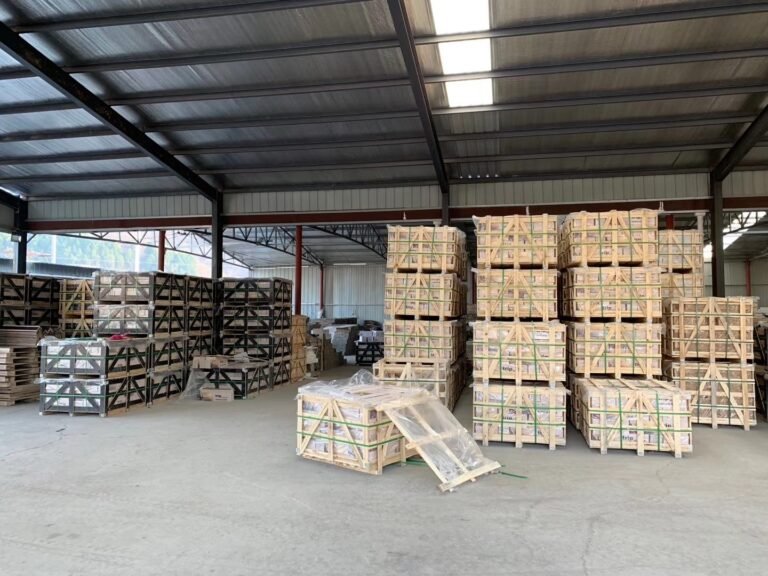
- The zero-breakage packaging protocol — reinforced cartons, plywood pallets, steel strapping, container airbags — prevents most arrival claims before they exist.
What a Stone Panel Warranty Should Cover
Start with what a factory can honestly warrant: the condition of the product as it leaves the factory gate and the integrity of the manufacturing process. Those two things produce a short, checkable list of defects:
- Panels broken in transit. If the buyer agreed to a defined packaging specification and the panels still arrive cracked, the packaging failed its contract — that is a warrantable event, not bad luck.
- Backing or adhesive failure. Stones separating from the mesh, cement, or epoxy backing before installation indicates an assembly defect inside the factory. A delaminating panel is exactly what inspection should have caught.
- Dimension, thickness, or tolerance drift. Panels that do not meet the ordered profile — a 15x60cm panel delivered at 14.5cm, a thickness outside the agreed tolerance — break the contract even if they look fine.
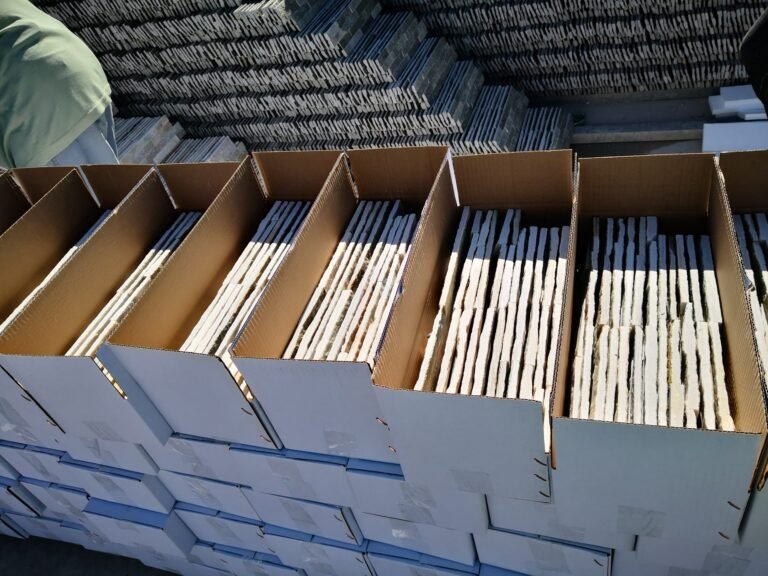
- Color that misses the approved sample. Delivered stone should sit inside the range of the physical sample the buyer approved. A wholesale color shift — grey shipped when the sample read warm gold — is a manufacturing and sorting failure.
Each of these has a test: the inspection report, the measurement, the batch photo, the sample. That is why good warranties are short — every clause maps to a verifiable artifact. For a deeper look at what belongs on the property side of a stone order, the stone panel sample evaluation checklist walks the ten checks a buyer should run before committing.
What No Serious Supplier Warranty Covers
Equally important is what a warranty cannot cover, because expecting the impossible is how buyers end up disappointed by honest suppliers:
- Natural color variation inside the sample range. Stone is a mineral product. Two panels from the same quarry block vary slightly; that variation is the product, not the defect. What matters is staying within the approved sample range — batch consistency, not replication.
- Installation errors. Wrong substrate bonding, missing flashings, and improper mortar mix put loads on the panel the manufacturer never promised to tolerate. The waterproofing guide shows how much of a “stone failure” is actually a water-management failure.
- Damage after installation. A forklift hit, a falling tree limb, or a scaffold collapse is an impact claim, not a product claim.
- Moisture damage from flashing and weather barrier mistakes. When the top edge of a wall is not terminated, water runs behind the stone. The stone did not cause it and cannot fix it.
Setting the exclusions up front is not a supplier dodging responsibility. It is a scope statement that protects both parties from arguing about weather, installation, and minerals — three variables no factory controls. A supplier that offers an unlimited, no-exclusions warranty is offering you a marketing line, and marketing lines pay out poorly in claims.
Warranty vs Inspection: The Baseline Question
Most B2B warranty disputes die on the same question: what condition was the goods in when they shipped? If the container was loaded with everything square and whole, and panels arrive cracked, the claim is clear. If nobody knows what left the factory, every broken panel becomes a courtroom over he-said-she-said with a 10,000-kilometer shipping lane in between.
That baseline is why pre-shipment inspection is the backbone of any workable warranty. A pre-shipment inspection report, batch photos, and a loading video freeze the condition of the goods at the moment of handover. Top Stone Panels settles its 70% balance payment only after the buyer confirms those records, which means the buyer approves the evidence before the money clears — not in a dispute three months later.
The pre-shipment inspection guide lists exactly what to check at the factory gate: panel counts, thickness measurements, surface condition, packaging integrity, and container loading sequence. Treat the inspection not as an optional service but as the warranty’s evidence base. No inspection evidence, no meaningful warranty — whichever supplier you choose.
Five Documents That Back Up a Claim
A claim without documents is a negotiation. A claim with documents is a process. These five records should be standard on any factory-direct stone order, and they double as your claim evidence:
| Document | What it proves |
| Pre-shipment inspection report | Condition, quantity, dimensions, and packaging state at factory handover |
| Batch layout photos in HD | Color, sorting, and layout of the actual production batch, not a catalog image |
| Loading video | Container loading sequence, pallet condition, and strapping applied before closing |
| Certificate of origin | Origin claim for customs and trade compliance, breaking the chain of provenance questions |
| ISPM 15 fumigation certificate | Wood packaging compliance, which otherwise stalls the container and triggers arrival damage from re-handling |
Notice what this list does not include: no marketing brochures, no “celebrated” factory badges. These are operational records. A supplier that produces them as a matter of course treats warranty logistics as part of the product. The customs clearance guide shows how the same documentation chain keeps the container moving at the destination port.
Payment Terms as the Hidden Warranty
The strongest warranty clause in an import deal is often the payment schedule, because it decides who holds the leverage when a claim appears. On a standard factory-direct order, the buyer pays 30% as a deposit and the remaining 70% before loading — but only after confirming the loading video and batch photos.
Read that sequence twice. It means the buyer never fully funds the shipment before seeing evidence of what the shipment contains. If the goods show up visibly wrong, the conversation starts with the buyer holding the 70%, and a factory knows exactly how that conversation ends. That is a warranty with enforcement built in.
Buyers sometimes push for 100% on delivery or a heavy discount on deposit terms; factories sometimes push for 50/50. The mechanics of T/T deposits and letter of credit alternatives are covered in the payment terms comparison, and the Incoterms guide shows where the ownership and risk transfer lands — because the same term that protects your bank balance also defines whose claim it is if the container is damaged at sea.
Packaging and Arrival Claims: Zero-Breakage Protocol
Most stone arrival claims are not stone failures. They are packaging failures — panels sliding inside under-filled cartons, pallets shifting against the container wall, straps snapping under 26.5 tons of stacked weight.
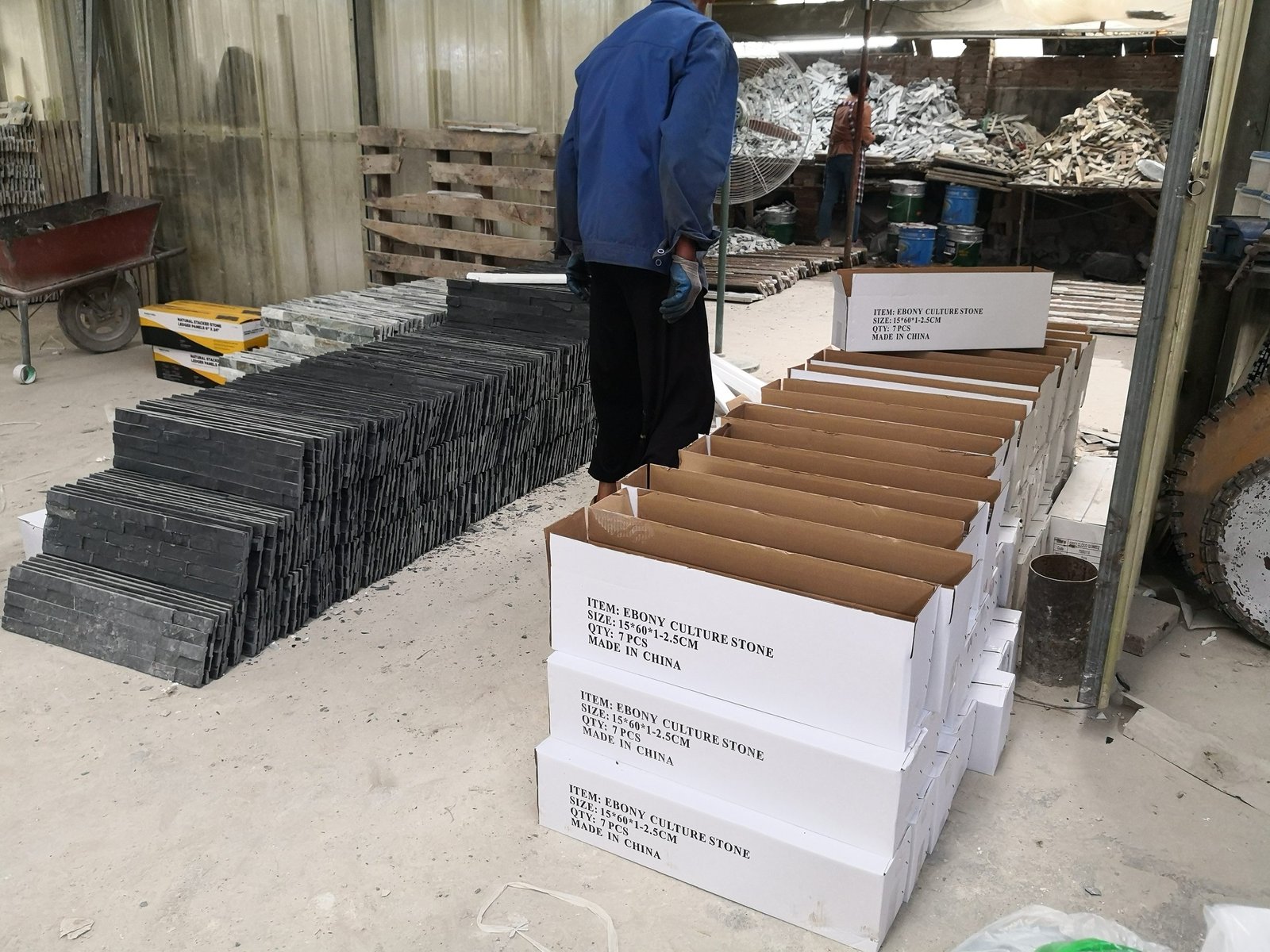
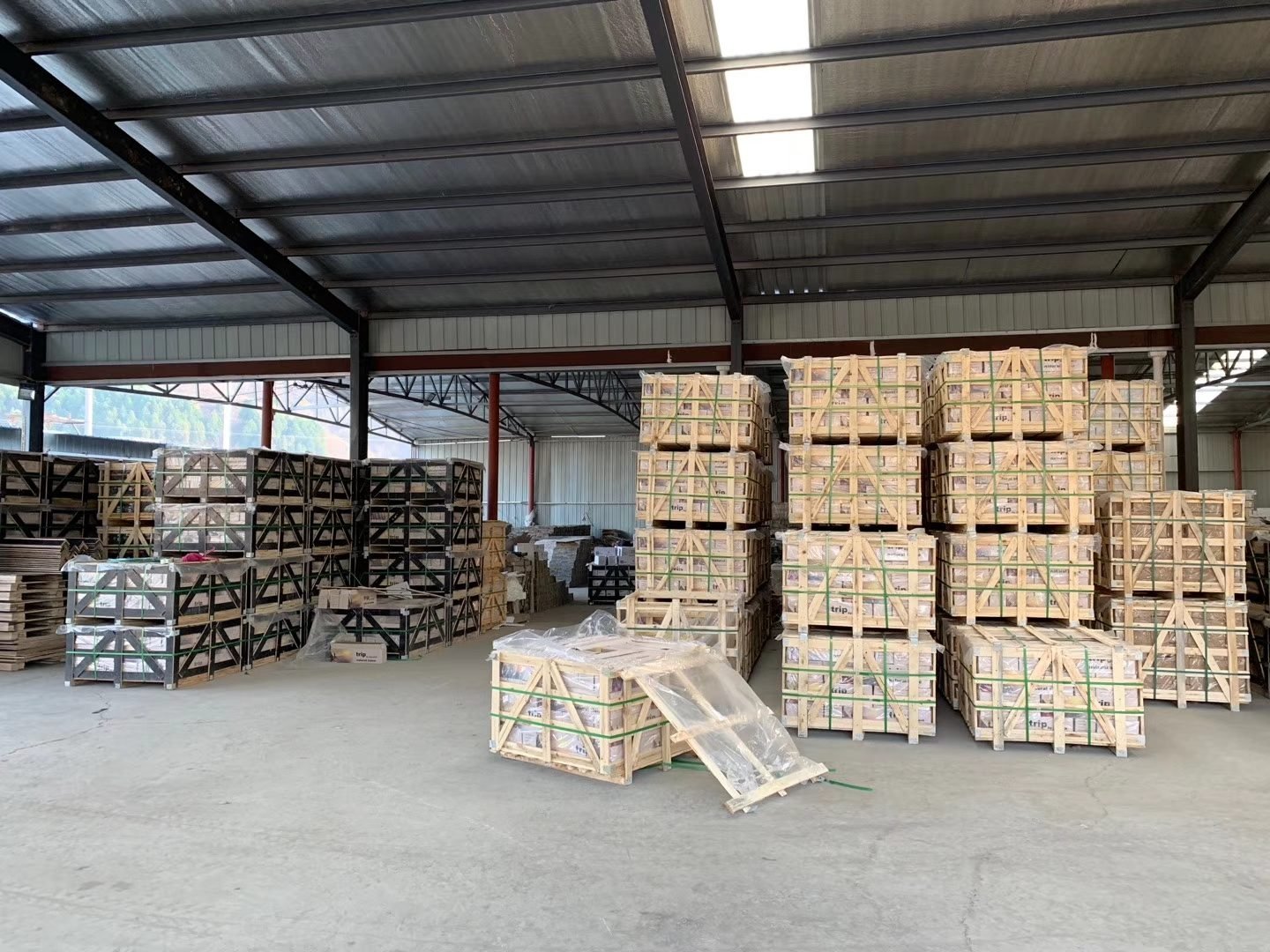
The zero-breakage packaging protocol exists to make arrival claims structurally unlikely: reinforced cartons in 3-5 layers, fumigation-free plywood or composite pallets, 4-6 high-tensile steel straps, and industrial airbags pressed between the cargo and the container wall to stop shifting. Every element has a job. The cartons absorb stacking loads; the pallets bridge forklift handling; the straps hold the unit together when the container heels in a swell; the airbags lock everything in place so nothing travels.
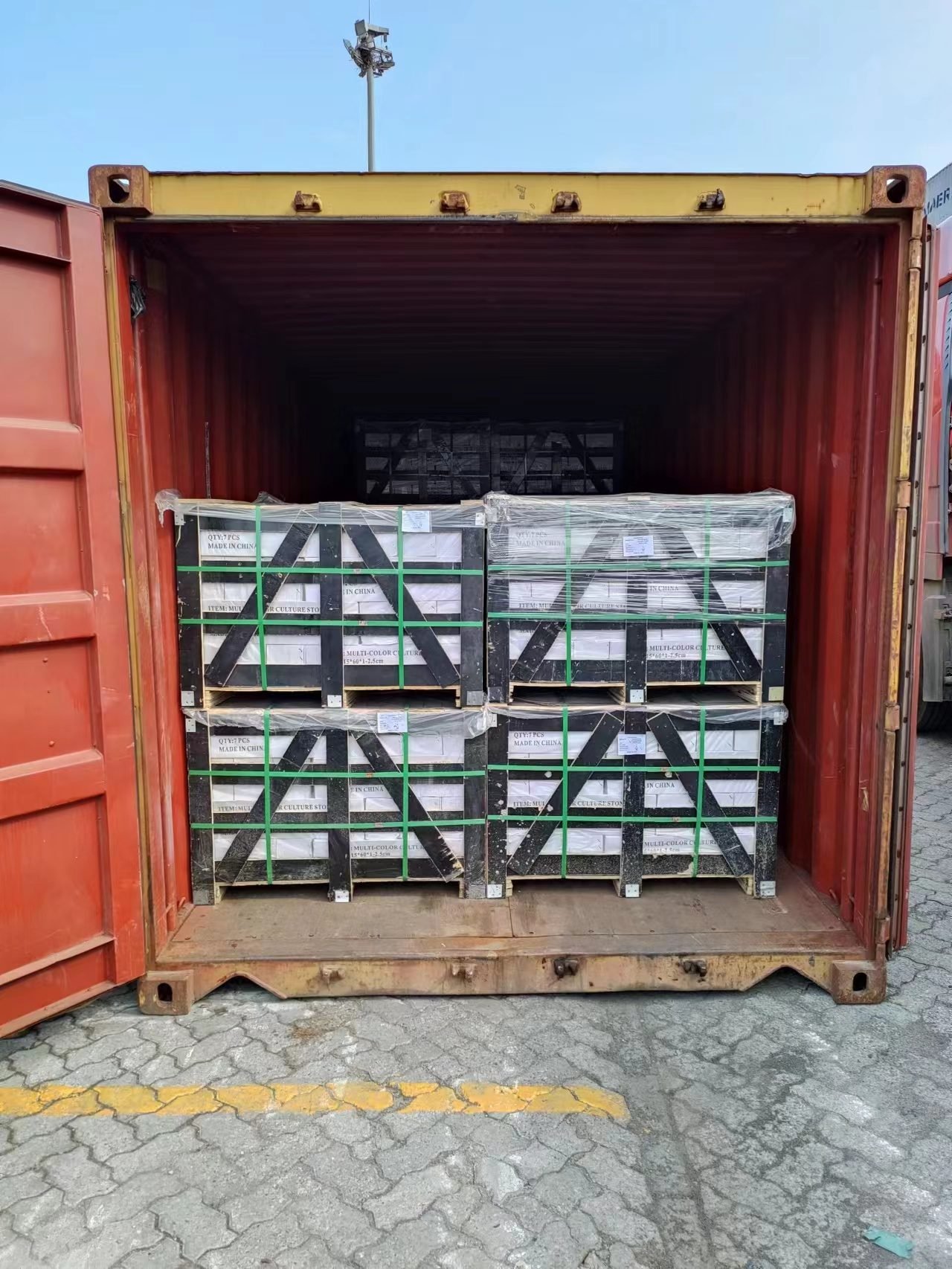
When you negotiate a warranty, tie it to the packaging specification — the number of layers, the strapping count, the airbag requirement — because the warranty should be judged against the agreed duty of care. If the factory ships under the agreed packaging and panels arrive broken, that is a clear claim. If they follow the agreed protocol and breakage still occurs at the industry-accepted level, that is what freight insurance is for. The container loading guide lays out the full protocol item by item.
How to Negotiate Warranty Terms Before the Order
Warranty terms are priced, whether they look like it or not. A supplier quoting a “full replacement” warranty may simply have folded the expected claim rate into the unit price, and you end up paying for your own claims. The professional approach is to define four things in writing before signing:
- Acceptance criteria. Reference the approved physical sample and the order specification. “Matches sample” is a phrase with a definition; “looks about right” is a lawsuit.
- Reporting window. Agree how many days after arrival the buyer can register a claim, and require photo or video evidence within that window. The window is a commercial decision between the parties — choose one that fits your logistics reality, then write it down.
- The remedy. Replacement goods, reprocessing, or a credit against the next order. Replacement is the cleanest for visible defects; credit works when time pressure makes retooling a line impractical. Decide which applies to which defect class.
- The evidence lane. Fix who issues the paperwork and when: pre-shipment report, batch photos, loading video from the factory; arrival photos and forwarder’s report from your side.
No supplier should blink at these four items. Buyers who request them early separate themselves from the crowd that argues about claims later — the exact signal a serious factory partnership is built on. The factory relationship guide explains how the early-contract tone sets the whole working relationship, and the lead time guide helps you schedule claims margin into the project calendar.
What a Professional Claim Process Looks Like
When the claim does arrive, a professional process protects both sides. Yours should look like this:
- Photograph everything. Shoot the damage against the carton markings, the pallet ID, and the container number. A photo without context is a photo of a broken panel; a photo with context is evidence.
- Notify the supplier and your forwarder in writing within the agreed window. Email, not phone. The clock starts at the agreed trigger — typically arrival or goods-in inspection.
- Keep the packaging. The carton, strapping, and pallet are the proof of what the factory’s protocol did or did not do. Destroy nothing until the claim closes.
- Cross-reference against the pre-shipment baseline. Pull the loading video and the inspection report. If the panel was whole and properly packed at loading, the issue is transit; if the video shows a damaged exit from the factory, the issue belongs to the supplier.
- Agree the remedy against the contract. Replacement, credit, or freight claim — the pre-agreed lane decides it, not whoever argues louder.
Buyers who run this sequence get paid. Buyers who send a single phone call and a mood get the runaround, because the supplier cannot process what it cannot verify. Evidence is not hostility; it is the professional language of the trade. For the quantity-math counterpart of a claim — how many spare panels to keep from the same lot — the quantity calculation guide has the numbers.
Red Flags: Warranty Language That Means Nothing
Certain phrases belong in marketing, not in contracts. Learn to hear them:
- “We guarantee the highest quality.” A sentiment with no acceptance criteria, no defect list, and no remedy. It cannot be measured, so it cannot be enforced.
- “Full replacement, no questions asked.” Usually priced into the goods, or quietly withdrawn when the first real claim creates a “question” after all.
- “Long-term warranty.” Without a defect scope and an evidence procedure, a ten-year warranty on natural stone is often a longer version of nothing.
- “Natural stone varies, so anything goes.” The honest inverse of this is true: natural stone varies within the approved sample range, and a culture that uses variation as a blanket excuse is a culture that will not stand behind a sorting error either.
Compare those phrases with a supplier who hands you the QC procedure, the inspection report format, and the packaging spec before you even ask. One is a promise, the other is a process. In B2B stone, buy the process. The factory capacity and QC guide shows how process-heavy suppliers run inspection at scale across a 220+ container annual volume.
Frequently Asked Questions
How long should a stone panel warranty last? There is no universal clock, and the useful question is not years but scope: what defects are covered, what evidence proves them, and what remedy applies. Negotiate those three things with a realistic window for your logistics, and the duration takes care of itself.
Should I buy extended warranty coverage for stone panels? Extended commercial warranties from factories are usually re-branded risk pricing rather than added protection. Your real protections are inspection evidence, packaging compliance, and the payment schedule — not an extra line of fine print.
Who is responsible if the container is damaged at sea? It depends on the Incoterm: under FOB the risk transfers to the buyer once the goods cross the ship’s rail, while CIF covers the transit risk. That is why freight insurance and the Incoterm choice matter as much as the product warranty.
Can natural color variation be included in a warranty claim? Only if the delivered batch leaves the range of the approved physical sample. Variation inside that range is the natural product; variation outside it is a sorting defect. Make sure “matches the approved sample” is written into the acceptance criteria.
What is the difference between a warranty and a guarantee? In practice, close to nothing unless the document defines a defect list, an evidence procedure, and a remedy. Whatever the word, read the scope — a “guarantee” with no enforceability is a marketing sentence.
Conclusion
Stone panel warranty B2B buyers can actually use is a short contract, not a slogan. It covers a defined list of manufacturing defects, excludes what no factory can control, and leans on inspection records, batch photos, and loading video as its evidence base. It is paired with a payment schedule that keeps the buyer’s leverage intact, and a packaging protocol that prevents most claims from ever happening.
- Define the defect list, the reporting window, and the remedy in writing before the order — not when the container arrives.
- Treat the pre-shipment inspection report, batch photos, and loading video as the warranty’s evidence backbone.
- Keep payment structuring on your side: settle the balance only after you confirm the loading evidence.
- Buy a factory’s process, not its adjectives. The QC procedure and documentation formats reveal the real warranty.
When a supplier treats documentation as routine, the warranty conversation becomes simple. That is the partner worth a container order.
Top Stone Panels backs factory-direct orders with a 3-step quality control sequence, pre-shipment inspection reports, batch photos, loading video, and zero-breakage packaging — with the 70% balance settled only after you confirm the evidence. Browse the stacked stone product line, or request a physical sample to lock your acceptance criteria before the order.