Most stone distributors never leave the one-container club. They buy a container, sell it over six months, buy another, repeat — and describe the business as a “lifestyle wholesale business” without noticing that the cash cycle is the same every year. The one-container model has one honest advantage: it is hard to lose catastrophic money. It also has a ceiling, and the ceiling is math, not effort.
The step from one container to ten is not “sell harder.” It is a different operating model: more product lines per shipment, faster stock turns, reorder discipline that keeps color consistent, and a sourcing relationship that plans capacity instead of chasing quotes. This guide maps that transition with the numbers a distributor actually controls.
Every figure below follows the factory economics at Top Stone Panels — the MOQ, production lead times, payment terms, packaging, and capacity a distributor plans against when they move from a first container to a running program.
- The one-container plateau is a cash-cycle problem: slow turns and a single product line cap revenue before market size does.
- Grow by adding product lines per shipment, not just volume — mixed containers let you test new stone types at the same MOQ.
- Faster inventory turns and reorder discipline matter more than chasing a lower FOB quote; a 95%+ color consistency guarantee protects reorders.
- Private label and custom color mixes are the highest-margin step in the 1-to-10 path because you sell a brand, not a commodity.
- Plan against factory lead times (20-25 working days, samples in 1-3) and 30/70 payment terms so cash lines up before the container books.
- Top Stone Panels ships 220+ containers a year across six product lines, so capacity planning is a conversation, not a request.
- Why Distributors Stall at One Container
- The Unit Economics of the Second Container
- Expand Product Lines Before You Expand Volume
- Turn Inventory Faster with Reorder Discipline
- Private Label: The Margin Step
- Sales Channels That Absorb Volume
- Cash Flow and Payment Planning for Bigger Orders
- Working with the Factory as a Growth Partner
- The 1-to-10 Roadmap, Stage by Stage
- FAQ
- Conclusion
Why Distributors Stall at One Container
The one-container model fails quietly. A distributor buys one 20GP of stacked stone, sells it to contractors and showrooms over months, and every dollar of revenue waits on stock that sits in a warehouse. If the container cost $12,000 landed and the margin is 40%, the business made $4,800 on roughly six months of capital — before rent, labor, and the risk of breakage. The market may be ready to buy four times that amount; the business simply cannot fund the inventory.
Compounding the problem, one-product distributors cannot answer the question every serious buyer asks: “what else do you carry?” A contractor planning an entrance rebuild needs wall panels, a pillar wrap, and a floor option. If the answer is “we only do stacked stone,” the contractor splits the order and the distributor competes on price for the piece they won.
The first step in the 1-to-10 transition is recognizing that revenue is capped by turns and line count, not by territory. That reframing changes every decision after it — starting with what goes into the second container.
The Unit Economics of the Second Container
One container pays off when it sells through. Ten containers only make sense if each one sells through faster than the last, because the money to pay for container number three comes out of the profit of container number two. That is why stock turns — not gross margin — are the metric that governs scaling.
Work the math on your own numbers: divide your annual cost of goods by your average inventory value. One turn a year means a distributor covered the container’s cost twelve months of holding it. Three turns a year is the difference between a business that doubles inventory and one that needs cash injections every season.
Quantity planning per project directly improves turns because it stops over-ordering a single SKU. When a distributor knows a 100 m² wall needs about 100 m² of material plus corners and waste, they order coverage, not cushions, and the inventory line behaves like a pipeline instead of a warehouse.
| Model | Stock turns/year | Capital behavior | Scaling limit |
|---|---|---|---|
| One-container hobby | 1-1.5 | Profit consumed by the next container | Cash, then demand |
| Line-broadening distributor | 2-3 | Orders pull the next order; stock flows | Sales capacity |
| Program buyer (5-10 containers) | 3-5 | Replenishment rhythm; standing schedule | Only market size |
The second container is where this math becomes real. Order it only when two conditions hold: sell-through has passed the point where the original stock is no longer earning, and the reorder list shows products you did not carry the first time. If both are true, the second container should be different from the first.
Expand Product Lines Before You Expand Volume
A second container that repeats the first container doubles inventory risk. A second container that broadens the line converts a single-SKU business into a stone distributor. The fastest way to broaden is the mixed container — multiple product lines in one shipment at the same one-20GP MOQ.
The MOQ and container mix guide covers the mechanics; the strategy here is word choice. A program buyer plans the container by sell-price, not by stone type: wall panels for the facade jobs, thin ledgestone for the fireplace and backsplash work, flagstone for the patio segment, and a column kit to test. Six product lines exist for exactly this reason:
- Stacked stone panels (15x60cm / 15x55cm) — the entry product, 80,000 m²/month capacity
- Thin ledgestone (36x10cm ultra-thin) — high-loading interior line, 60,000 m²/month
- Interlocking z-panels (20x55cm / 15.2x61cm) — fast commercial install, 50,000 m²/month
- Thin stone veneer — random-length split face, 40,000 m²/month
- Flagstone and crazy paving — landscape and pool decks, 30,000 m²/month
- Stacked stone columns — pillars and wraps, 10,000 sets/month
Each line uses the same slate and quartzite veins and the same packaging protocol, which makes mixed containers operationally simple: one factory, one QC standard, one shipping schedule. The six-panel-type distributor guide shows which lines carry which traffic in the North American and European markets, and it is the natural next read when you are deciding the second container’s mix.
Turn Inventory Faster with Reorder Discipline
Broadening the line only helps if the new lines actually move. Reorder discipline is the habit that separates distributors who accumulate dead stock from distributors who build inventory that compounds. Three rules do most of the work.
First, sell the seasons the market buys. Bathroom and backsplash work peaks in renovation season, exterior projects follow the building calendar, and seasonal demand cycles affect both pricing and lead times. A distributor who orders flagstone in October for an April patio season is buying at the right part of the factory schedule at the right price.
Second, reorder against a physical target, not a feeling. When a SKU sells down, reorder it on the next production slot. Because Top Stone Panels locks each order to one quarry vein — batch-specific vein selection holds color transition consistency above 95% — a reorder from the same factory matches the first shipment, which means you can sell the restock without a color-match fire drill.
Third, grade every SKU after its first season. Products that turn are reordered at higher proportion; products that sit are cut. The inventory line is the fastest and cheapest feedback system a distributor has — much cheaper than a showroom mistake.
Private Label: The Margin Step
Commodity pricing is the one-container business. Brand pricing is the ten-container business. The step between them is private label: your company name on the box, your catalog name on the sample board, and the same factory quality behind both.
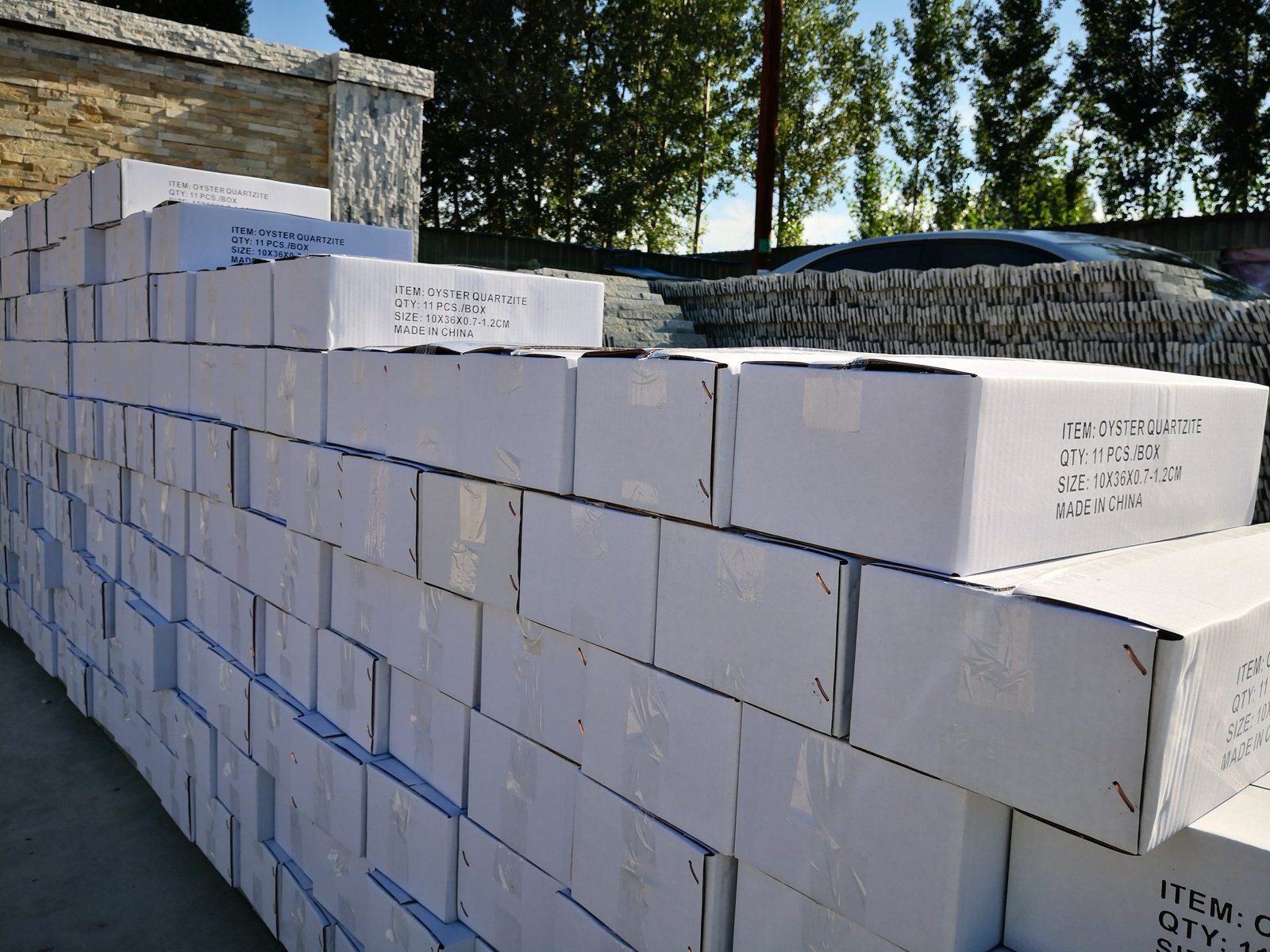
Top Stone Panels runs a full OEM program — custom packaging, branding, and custom color mix ratios set before production. The private label branding guide walks through the options; the business case is simple. A contractor buying “stacked stone” compares quotes on price. The same contractor buying “your brand stacked stone” compares on availability and service, because the brand makes the product feel specified rather than interchangeable.
Private label also changes reorder economics. A branded SKU that sells at a 50% markup can fund the next container at a lower sales volume than a commodity SKU at 30%. And because the color mix is an OEM input — the custom color mix process accepts ratios like 60/30/10 on a production sheet — a distributor can create a wall story that no other local competitor stocks, which is the closest stone distribution gets to a moat.
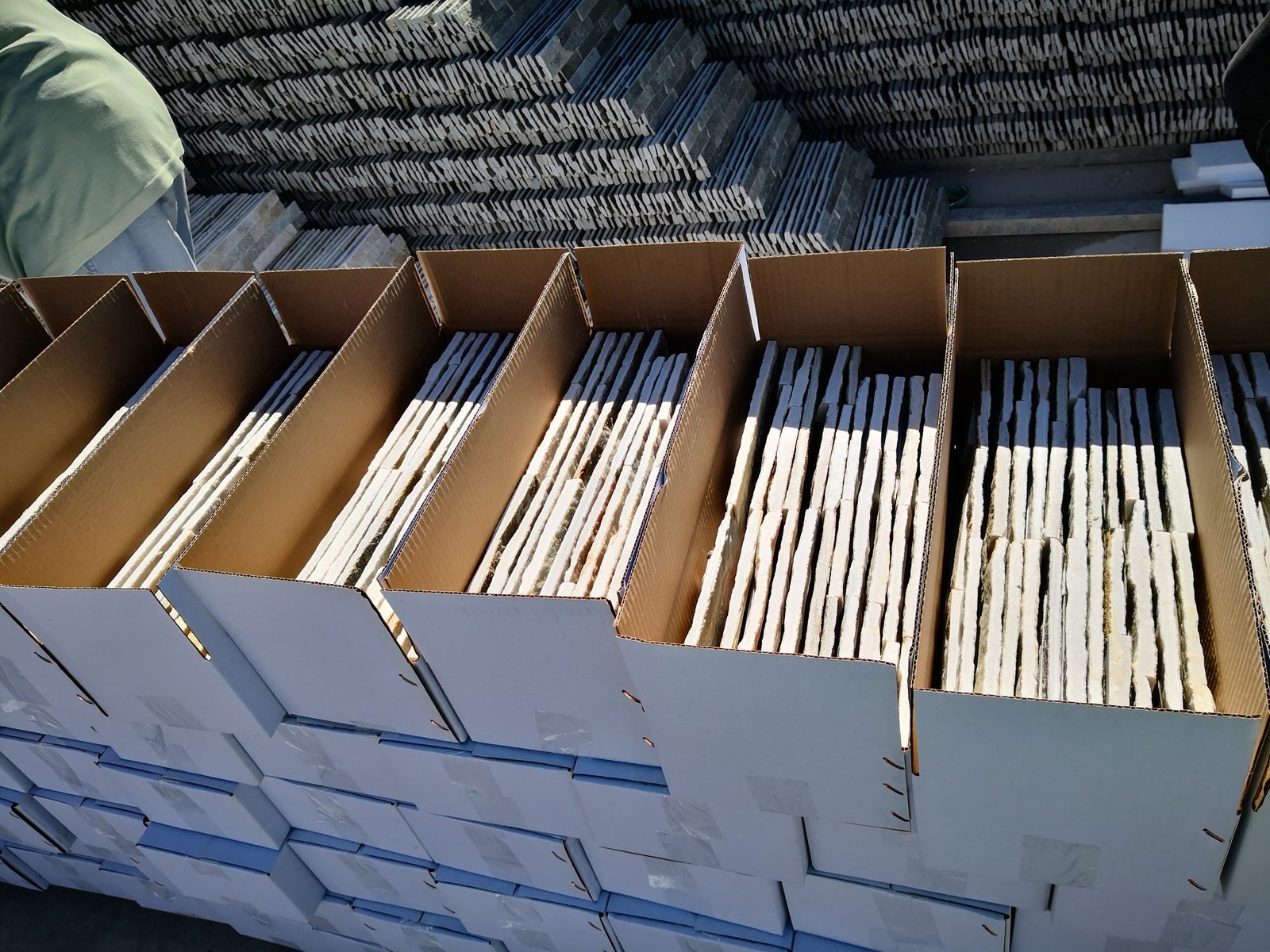
Sales Channels That Absorb Volume
More inventory requires more sell-through surface. The one-container distributor sells to whoever walks in; the program distributor builds channels that each absorb a slice of every container.
- Contractor and builder accounts take the wall panels and corner systems — the 50% labor saving from pre-made L-corners is a sales argument, not a footnote.
- Landscape and pool firms buy flagstone and crazy paving in project quantities.
- Interior designers and kitchen studios consume ledgestone and thin stone veneer on fireplace and backsplash work.
- Showroom sales convert walk-in consumers into small job orders that add turns between project deliveries.
The showroom display wall guide covers how to present the range so a customer walks in, touches the material, and orders; a display wall is the highest-leverage sales asset a distributor owns, and it costs material that doubles as inventory. The distribution startup guide covers the channel math for the first year, including the pricing and packaging questions that set the tone for the whole program.
Cash Flow and Payment Planning for Bigger Orders
A ten-container program is a cash-flow machine in both directions. Buyers want the landed price; suppliers want the money before shipment. The distributor’s job is to line the two up and to fund the gap between them without ever paying retail interest on it.
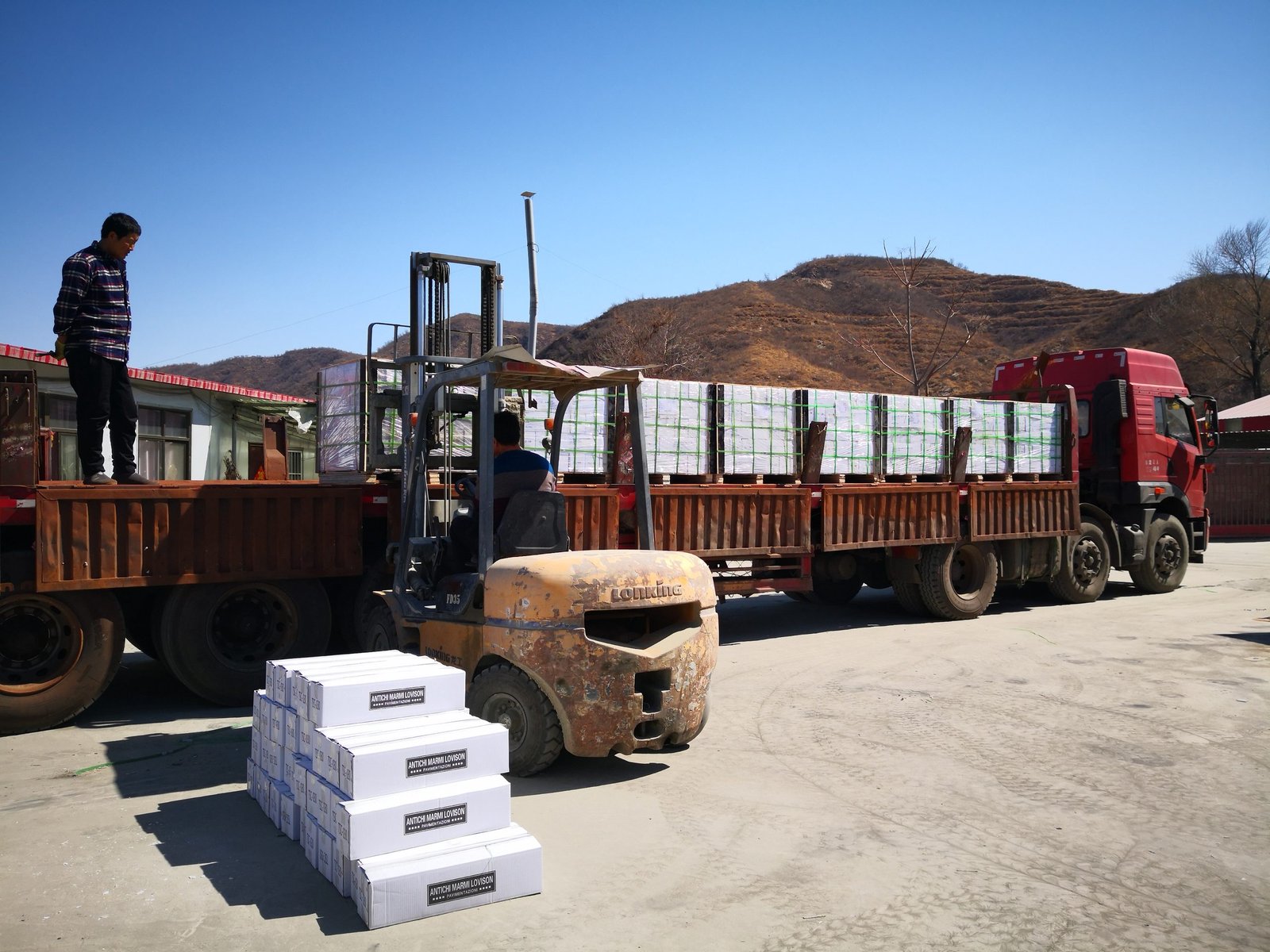
The factory terms are honest and fixed: 30% T/T deposit, 70% balance before loading, confirmed against layout photos and the container-loading video. Standard production runs 20-25 working days, or 25-30 on a first order with custom packaging. Samples ship in 1-3 days, which means a distributor can validate a new stone type before committing container space.
Planned against the selling season, those terms are a scheduling problem, not a financing problem. Order so the balance is due two weeks before the season opens, receive the stock as demand is reaching its first peak, and the 70% payment comes out of pre-sold or fast-moving positions. The import lead time guide builds the calendar; the FOB vs CIF vs DDP guide decides where the landed-cost risk sits. Both matter more at ten containers than at one, because the dollar amounts are ten times larger.
One rule protects every stage: use the landed cost, not the FOB quote, for margin math. FOB Xingang pricing leaves ocean freight, insurance, duty, and inland transport to the buyer. Distributors who quote inside the gate price-rule themselves out of the market exactly when they can least afford it.
Working with the Factory as a Growth Partner
At one container, the factory is a vendor. At ten, it has to be a capacity partner — because the schedule, not the price, is what keeps a program running.
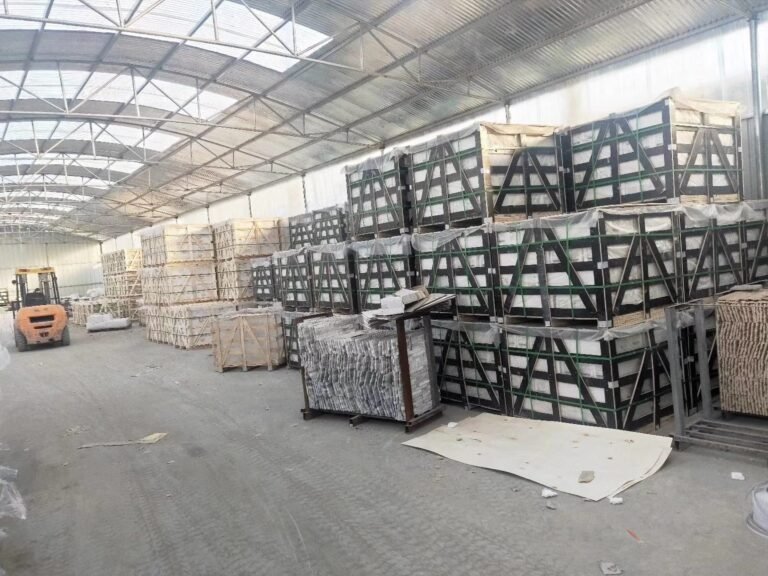
Capacity is the first filter. Top Stone Panels ships more than 220 containers a year with stacked stone capacity of 80,000 m² per month, so a ten-container program is a scheduling slot, not a strain. The second filter is quality at scale: the 3-step in-house QC (material selection, mid-production check, final inspection) plus pre-shipment inspection videos means a distributor can verify the batch before the balance clears — the check documented in the pre-shipment inspection guide.
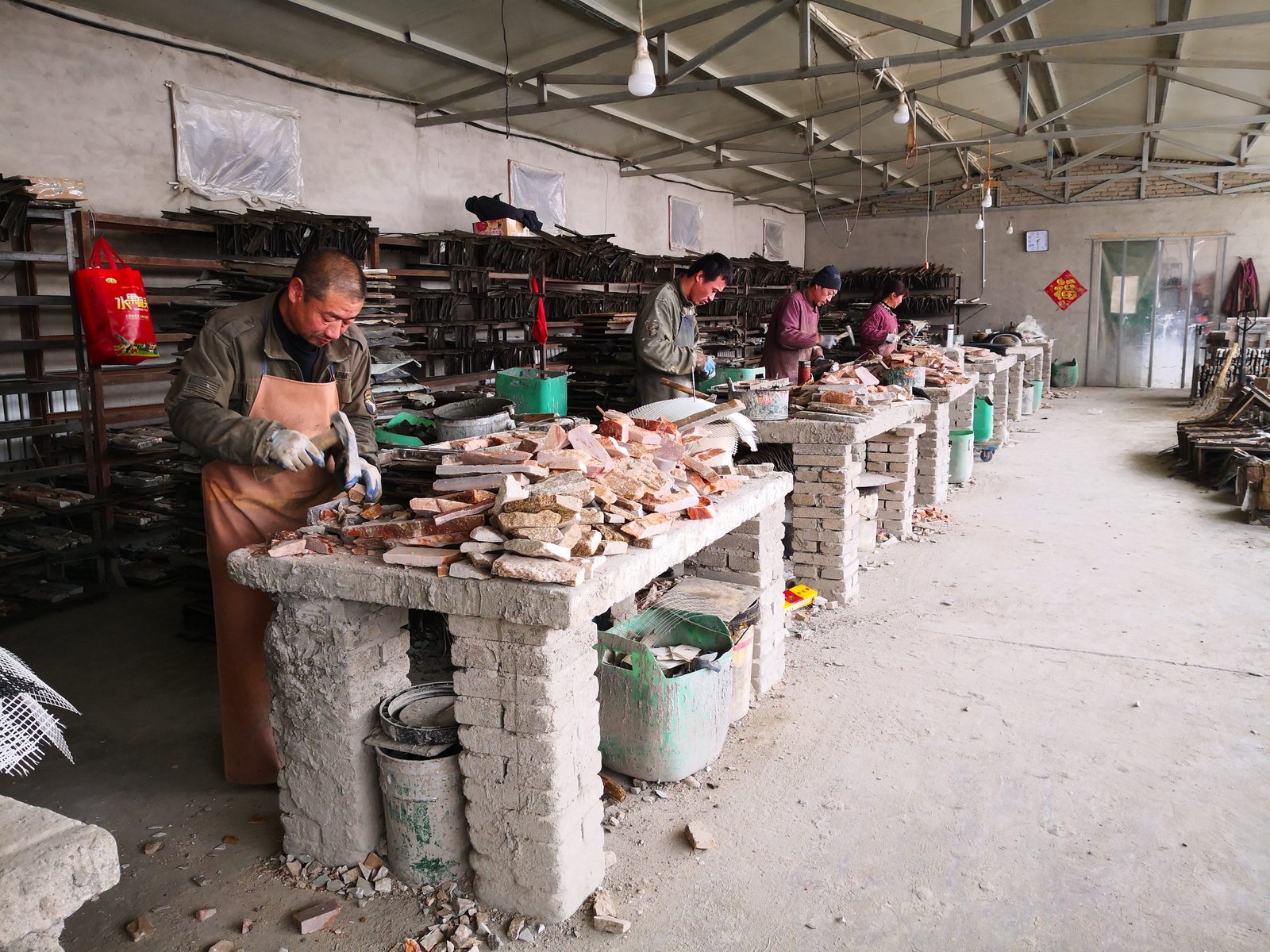
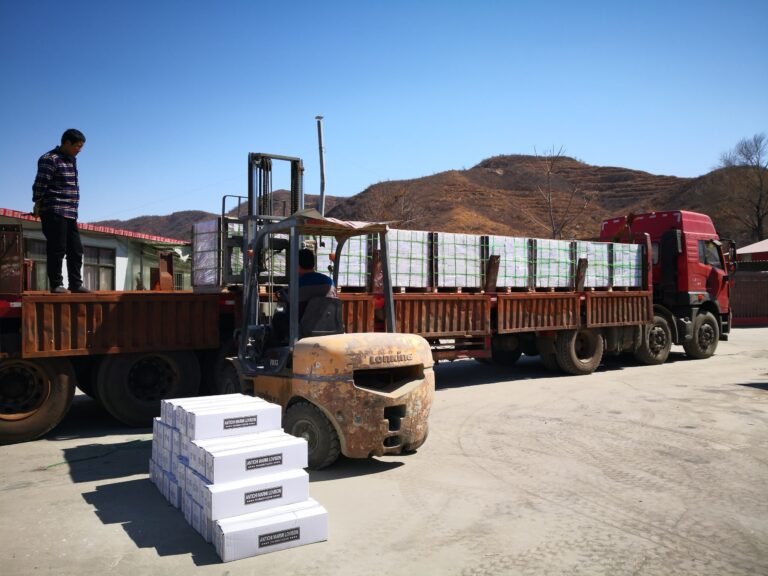
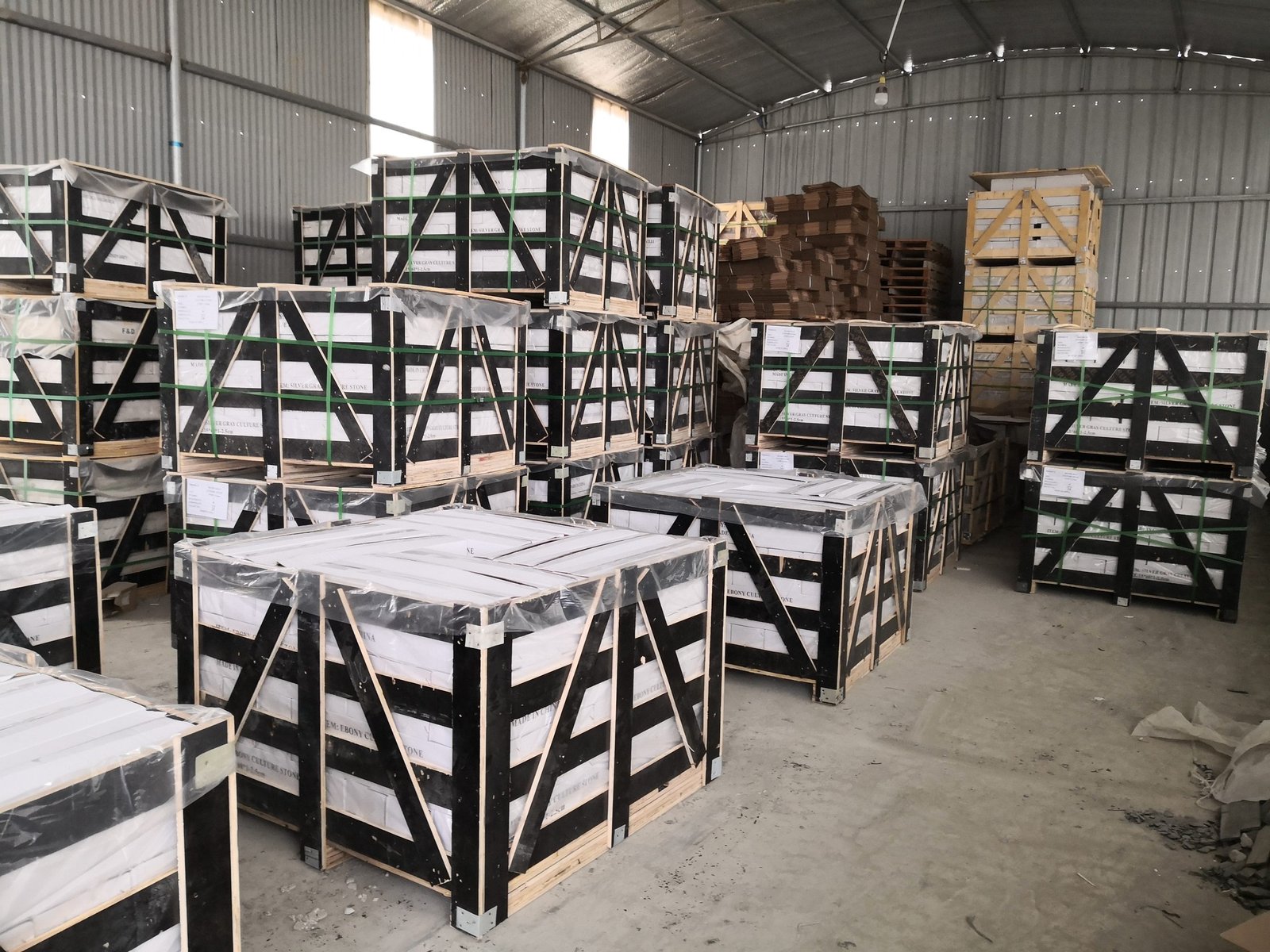
The third filter is the steep slope of damage and warranty history. The stone panel warranty guide explains what a good factory stands behind, and the zero-breakage packaging protocol — 3-5 layer cartons, steel banding, and in-container air bags — is the operational answer to the costliest line item in stone distribution. At volume, a low breakage rate is a direct margin contributor.
The 1-to-10 Roadmap, Stage by Stage
The transition is not a jump; it is four stages, each with a clear exit condition. Do not move to the next stage on ambition — move on numbers.
| Stage | Container count | Focus | Exit condition |
|---|---|---|---|
| 1. Validate | 1 | Sell one line cleanly; test samples; build reorder list | 60-70% sell-through with restock requests |
| 2. Broaden | 2-3 | Mixed containers; add ledgestone, flagstone, thin veneer | Two lines turning at 2+ turns/year |
| 3. Brand | 3-5 | Private label; custom color mixes; display wall | Branded SKUs at higher markup; stable reorders |
| 4. Program | 5-10 | Standing replenishment schedule; season-weighted buying | 3+ turns/year across the catalog |
Stage 2 is where most distributors stumble, because mixed containers require a merchandising decision: which lines to trust with space. The distributor partnership and margin guide breaks down the economics line-by-line, and the retail markup guide shows how the 1-to-10 revenue model prices at the counter.
FAQ
How do I grow from one stone container to ten?
Expand product lines per shipment, raise inventory turns with reorder discipline, add private label or OEM mixes for margin, and use the factory’s capacity planning to schedule 10-30 day replenishment cycles instead of one-off orders.
When should a distributor order a second container?
When sell-through of the first container passes roughly 60-70% within the planned season window and repeat customers are asking for products you did not carry — the second container should broaden the line, not just repeat it.
Can I mix stone products in one container?
Yes. Mixed-container ordering combines multiple product lines such as stacked stone and thin ledgestone in a single 20GP or 40HQ, which lowers the MOQ barrier for testing new products.
Does the factory help distributors grow?
Top Stone Panels supports distributors with OEM and private label packaging, custom color mixes, batch-specific vein selection for reorder consistency, pre-shipment inspection videos, and volume capacity across six product lines.
What is the standard payment for larger stone orders?
30% T/T deposit with the 70% balance before shipment, with layout photos and the container-loading video provided for confirmation.
How long does a restock order take?
Standard production runs 20-25 working days; a first order with custom packaging runs 25-30 days. Physical samples ship in 1-3 days for pre-order validation.
Conclusion
The path from one container to ten is boring on purpose. Broaden the mix, turn the inventory, reorder against the vein-locked batches, put a brand on the box, and let the factory’s capacity carry the schedule. None of these steps requires a new market or a brilliant product idea — they require a different operating discipline.
Your checklist before the next container decision:
- Measure turns per line, not margin per item — turns are the constraint on scaling.
- Build the second container as a mix, not a repeat, using the mixed-container MOQ.
- Reorder from the same factory and same vein so color consistency stays above 95%.
- Move toward private label and custom color mixes as the margin layer.
- Schedule around 20-25 working days of production and 30/70 payment terms so cash is ready at loading.
Top Stone Panels is set up for distributor growth: six product lines, 220+ containers of annual shipping capacity, OEM and private label support, and a Zero-Breakage Packaging Protocol that protects margin from the factory gate to your warehouse. Send your current container mix and sales history, and the factory will build the next shipment plan with you.