Green building buyers are asking stone suppliers a harder question than “is your stone natural?” They want the data behind that word. What is the global warming potential of your panels? Which lifecycle stages does your Environmental Product Declaration cover? Watch which suppliers go quiet.
An Environmental Product Declaration (EPD) is a Type III environmental report built on ISO 14025. It converts “eco-friendly” marketing into standardized numbers that a specifier, an architect, or a LEED reviewer can compare across products. For natural stone cladding, the EPD conversation is younger than it is for steel or concrete, and most importers do not know what to ask for. This guide explains what EPD data means for stone panels, where the lifecycle impact actually sits, and what documents a factory like Top Stone Panels should be able to produce.

- An EPD is a Type III data file under ISO 14025, not a marketing badge, and it reports verified global warming potential across declared lifecycle stages.
- Natural stone is a single-ingredient material: no kiln firing, no VOCs, and the Natural Stone Institute documents these properties as part of its sustainability campaign.
- The biggest controllable variable in delivered impact is shipping distance, so container utilization is a real sustainability metric, not just a freight cost.
- LEED v4/v4.1 and similar rating systems award credit for products with verified Type III EPDs in material disclosure programs.
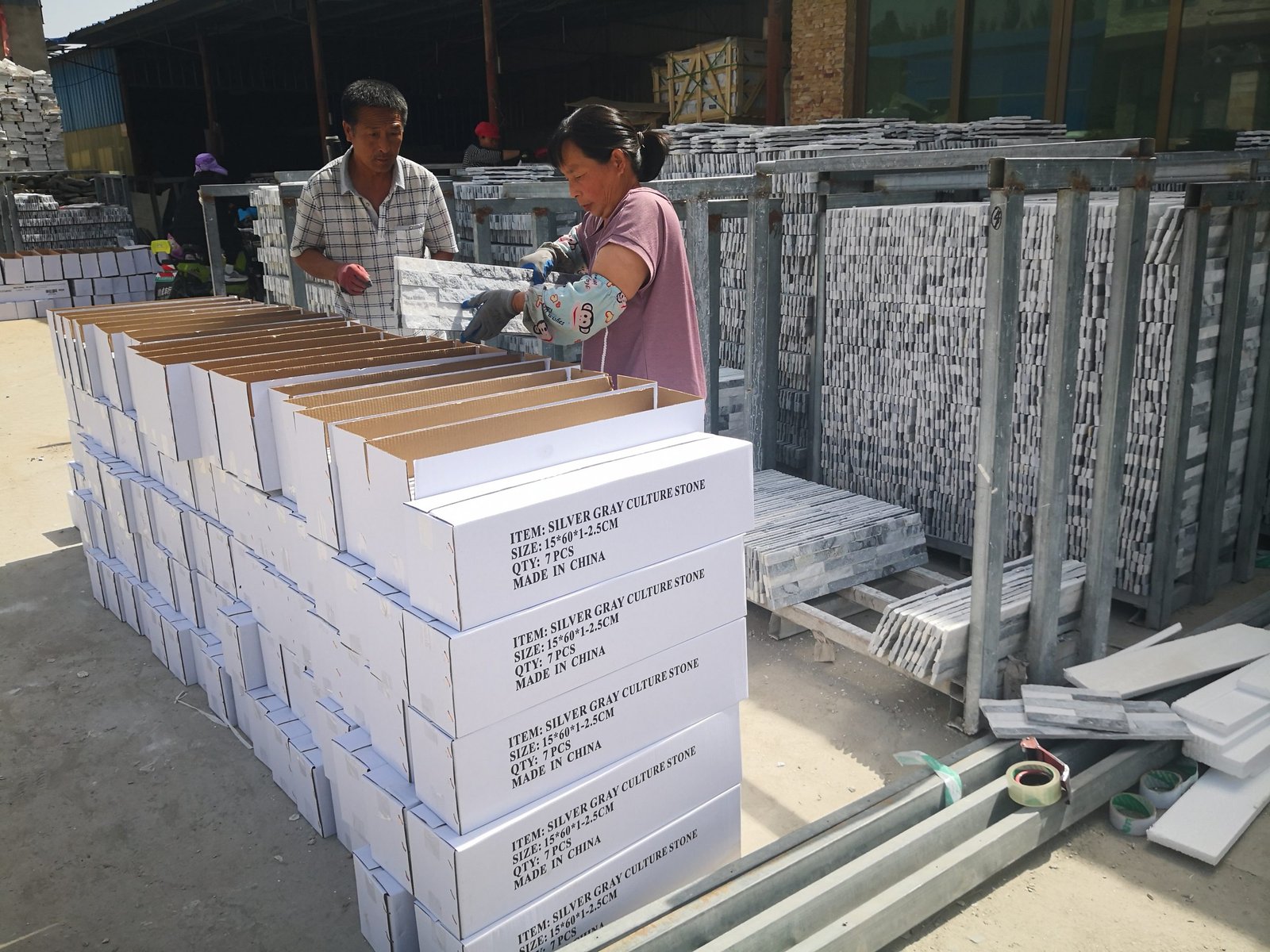
- Factory fundamentals that cut lifecycle waste — infrared CNC cutting, 3-step QC, and Zero-Breakage Packaging — are documented by Top Stone Panels: 220+ containers shipped per year.
- Demand supplier-specific documentation — EPD, test report, COO, ISPM 15 — because industry averages never prove your shipment’s footprint.
- What an EPD Actually Tells a Buyer
- Why Stone Cladding Starts With a Clean Sheet
- The Lifecycle of a Stone Panel: Where Emissions Sit
- Green Building Credits That Reward EPDs
- What to Demand From a Stone Supplier
- The Factory View: What Top Stone Panels Documents
- Where Sustainability Claims Break Down
- FAQ
- Conclusion
What an EPD Actually Tells a Buyer
An EPD reports a product’s environmental impact in declared stages using standardized indicators. The headline figure is global warming potential (GWP), usually expressed as kilograms of CO2 equivalent per functional unit. The document also covers primary energy demand, water use, and material inputs.
The framework matters as much as the numbers. International EPDs follow ISO 14025, which requires third-party review of the underlying lifecycle assessment. European building-product EPDs add EN 15804, the core rules for construction products, which define how the declared stages are split. When a supplier hands you an EPD, check the standard on the cover: ISO 14025 is the floor, and EN 15804 signals a more rigorous construction-specific process.
Read the stage boundaries before you compare products. The most common boundary is cradle-to-gate, covering stages A1-A3: raw material extraction, transport to the plant, and manufacturing. Cradle-to-grave extends through installation, use, and end of life. Two EPDs with similar GWP numbers may still not be comparable if one stops at the factory gate and the other runs to the building site.
| What to check | Ask the supplier | Why it matters |
|---|---|---|
| Standard | ISO 14025 / EN 15804? | Sets review and comparability rules |
| Stage boundary | Cradle-to-gate or cradle-to-grave? | Defines which life is included |
| GWP figure | kg CO2e per unit? | The comparability headline |
| Functional unit | Per m2 or per kg? | Panels must be compared per coverage |
| Review | Who verified the LCA? | Third-party review is the integrity test |
One warning before you trust any number: an EPD is product- and quarry-specific. A slate panel from one quarry is not the same environmental object as slate from another, because extraction, block yield, and processing differ. If a supplier cannot produce their own EPD, treat shared industry data as background, not as proof for your shipment.
Why Stone Cladding Starts With a Clean Sheet
Natural stone carries structural advantages that show up before any lifecycle calculation runs. It is a single-ingredient material. The face that lands on your wall is the rock from the ground. No kiln firing, no resin binder, no polymer matrix — none of the energy-hungry chemistry behind imitation products and tiles.
The Natural Stone Institute documents these properties in its sustainability program. Stone emits no VOCs and needs minimal processing, which cuts embodied carbon relative to manufactured facades. Add a service life measured in decades and the math improves further. A facade that stands for 50 years spreads its manufacturing footprint over a far longer use phase than products built for a 15-year refresh cycle.
Slate and quartzite, the workhorses of the Top Stone Panels range, add cold-climate and coastal durability. They hold a -30C to +50C tolerance, A-class fire behavior, UV stability without fading, and salt-spray resistance. A wall that does not need replacement is the quietest sustainability claim of all, because avoided replacement avoids everything upstream.
Craft the claim honestly, though. Natural stone is a strong start, not a free pass. Long shipping legs and heavy panels can inflate delivered footprint faster than any material virtue. That is exactly why the lifecycle section below matters more than the marketing section.
The Lifecycle of a Stone Panel: Where Emissions Sit
Run a stone panel through its lifecycle and the impact concentrates in a few predictable places. Extraction moves overburden and cuts blocks. Processing uses water-cooled diamond blades and CNC machinery. Binding adds epoxy, cement, or mesh. Ocean freight adds distance-related emissions. Installation and a decades-long use phase add almost nothing.
For a Chinese factory shipping to North America, freight is the variable buyers can actually influence. Cutting energy and material yield are largely fixed by the quarry and plant. Distance, utilization, and packaging weight are not. A 40HQ container loaded with thin panels covers far more square meters per carbon unit than a half-empty box of heavy blocks. That puts container utilization squarely in the sustainability conversation. Top Stone Panels documents load plans for prefabricated column kits and thin veneer that pack with minimal air volume.
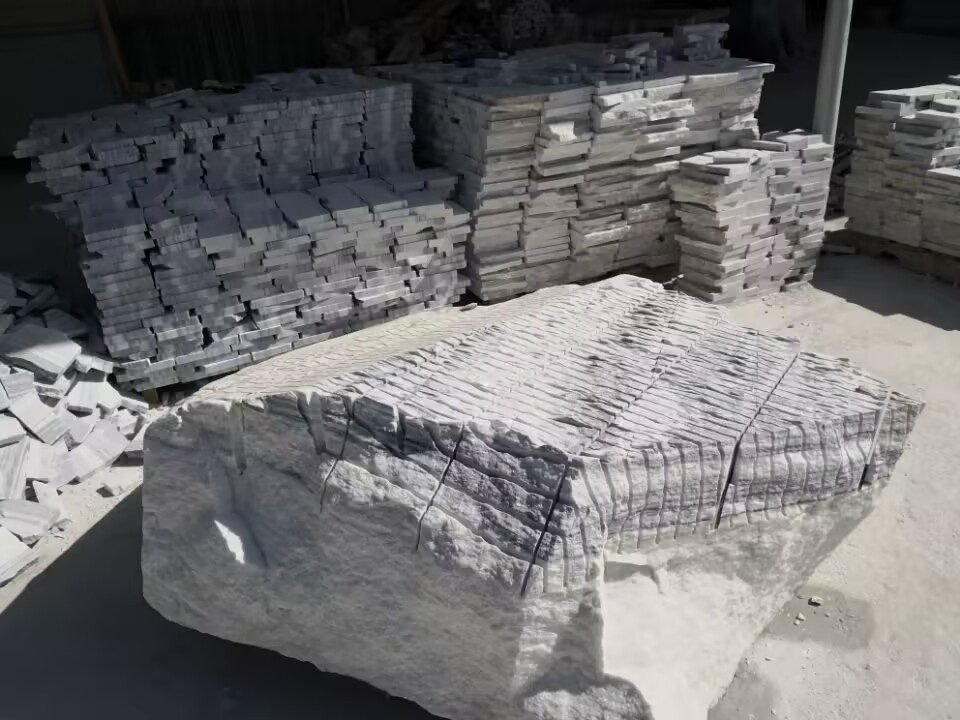
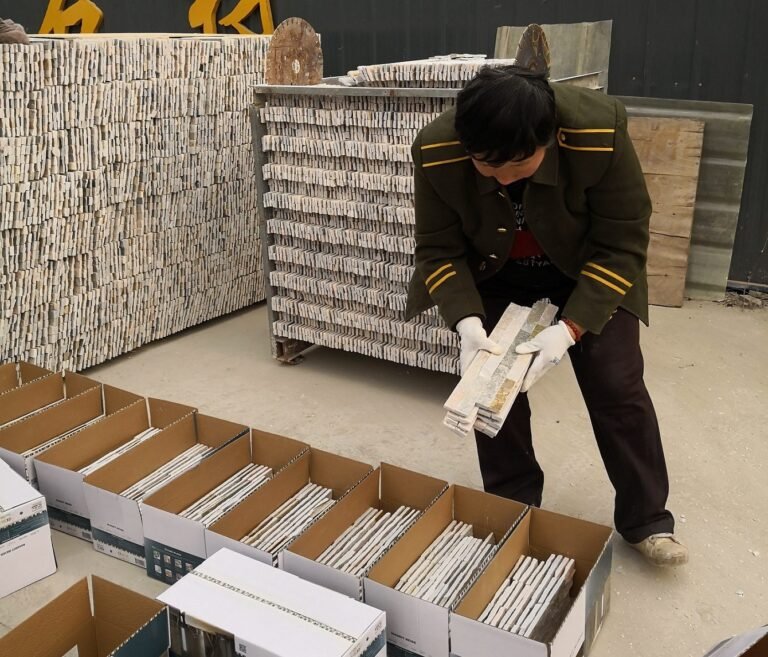
Processing efficiency cuts the other side of the ledger. Infrared CNC diamond-blade cutting reduces on-site fitting waste for project buyers, and factory sizing keeps the offcut at the plant, not on your scaffold. The 3-step QC flow — raw material selection, in-process re-inspection, and pre-shipment final inspection — also keeps defective panels out of the container. Emissions spent shipping a reject are emissions wasted.
| Lifecycle stage | Main driver | What the buyer controls |
|---|---|---|
| Extraction | Overburden removal, block cutting | Quarry and vein selection |
| Processing | Diamond blades, CNC, binding | Panel type, thickness, backing |
| Logistics | Ocean freight distance, weight | Utilization, container size, mix |
| Installation | Adhesive, labor, minor waste | Precision of factory sizes |
| Use and end of life | None in use; reuse or landfill | Durability, single-ingredient reuse |
Stone’s end-of-life profile deserves a mention. A single-ingredient panel can be cleaned and reused, with natural stone’s long service life and recyclability setting it apart from composite boards that cannot be separated back into raw materials. For a masonry facade that outlives the building, that is a defensible circular economy story.
Green Building Credits That Reward EPDs
Rating systems moved sustainability from narrative to procurement. LEED v4/v4.1, BREEAM, and similar frameworks include material disclosure points that reward products with verified Type III EPDs. The LEED credit sits under Building Product Disclosure and Optimization — Environmental Product Declarations, and it values documentation that any serious supplier can assemble.
What this means for a distributor or specifier: an EPD is no longer an eco-extra. It is a procurement precondition on green projects. When your competitor’s stone panel comes with a published EPD and yours comes with a promise, the specification sheet decides before installation day.

Green building pressure also explains why the EPD question is arriving now. Architects assembling LEED documentation need a set number of products with EPDs, so demand ripples down the supply chain. Suppliers who answer with data get specified; suppliers who answer with adjectives get value-engineered out. The complete buying guide for stone panels covers which documents to collect at order time, and the EPD belongs on that list.
What to Demand From a Stone Supplier
Put the sustainability request in writing, and make it specific. A buyer who asks for “green credentials” receives brochures. A buyer who asks for a documented list receives files. Here is the list that separates documented suppliers from marketing suppliers.
- EPD or lifecycle-based test report: the standard, boundary, and GWP figure per square meter or per kilogram.
- Material and physical test data: water absorption, freeze-thaw, flexural strength, and thickness tolerance, linked to the quarry vein.
- COO (Certificate of Origin) and ISPM 15 fumigation certificate for the shipment.
- Pre-shipment inspection records and loading photos or video, proving what left the factory.
- Quarry and processing documentation that ties the shipment to a defined source, not to a regional average.
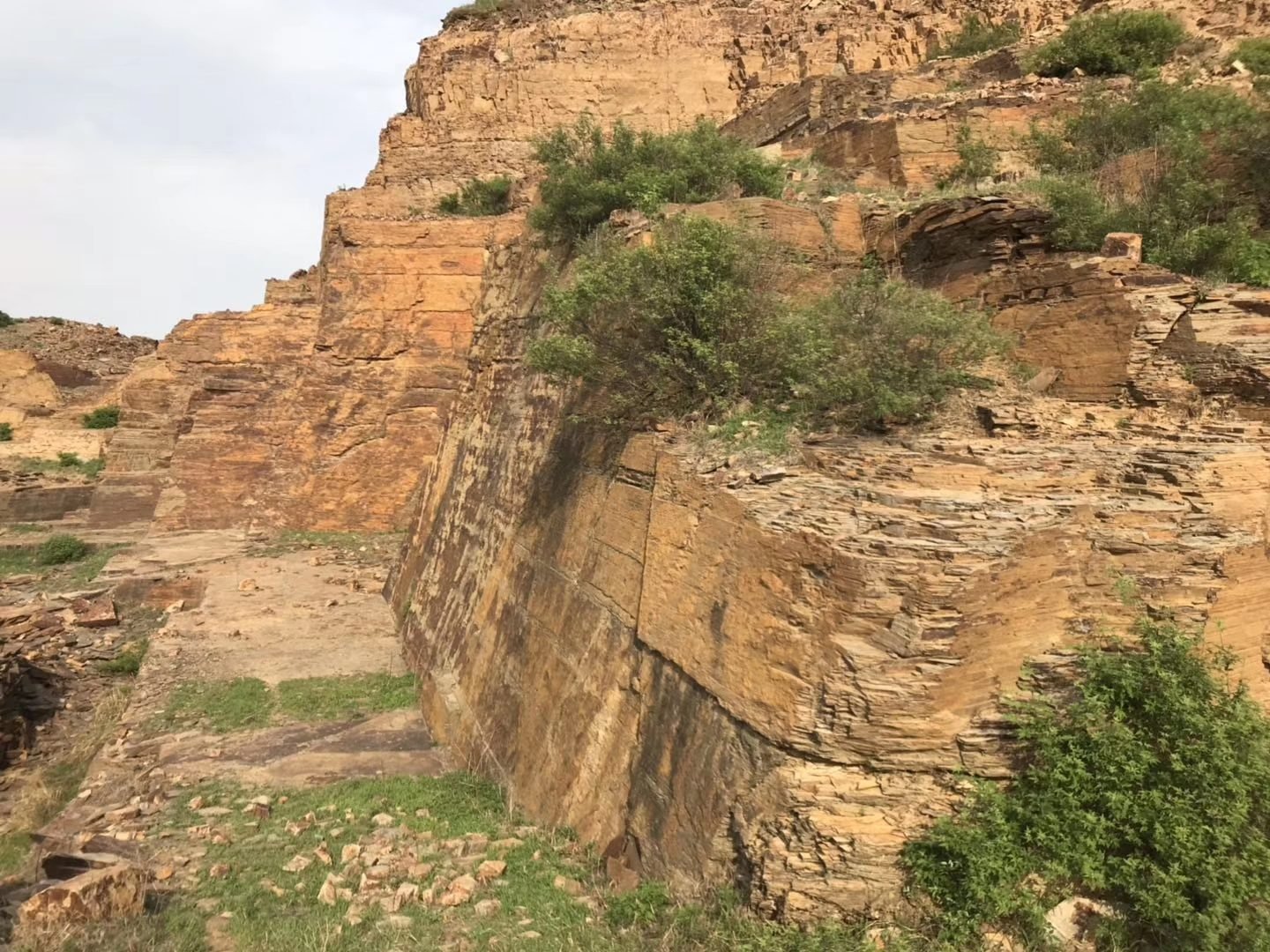
A supplier that runs an own-quarry, own-plant operation can answer all five. A trading company relabeling another mill’s stone usually stalls at the last one, because the source is someone else’s claim. Top Stone Panels ships from its own quarry in Baoding, Hebei, with 220+ containers a year, so source documentation is native to the operation rather than borrowed.
Physical samples remain the fastest verification step. Top Stone Panels ships samples in 1-3 days for lab testing, and independent tests on the same panels that will fill your container are worth more than any brochure. Sample testing pairs with the QC documents: thickness, absorption, and bond performance are all measurable before you commit to production runs of 20-25 working days.
The Factory View: What Top Stone Panels Documents
Match the checklists above against the actual factory operation and the answer becomes concrete. Top Stone Panels runs six product lines from one site. Stacked stone, thin ledgestone, interlocking Z-panels, thin stone veneer, flagstone, and columns. Slate, quartzite, sandstone, and marble faces, across more than 50 colors.
The sustainability-relevant facts are factory-level, not aspirational. Infrared CNC diamond-blade cutting controls dimensions and reduces fitting waste on site. Marine-grade epoxy, cement, and mesh backings arrive factory-applied, so bonding energy happens at the plant where efficiency is controlled, not on a scaffold. Batch-specific vein selection keeps color transition consistency above 95%, which prevents rejected facade batches and the waste they create.
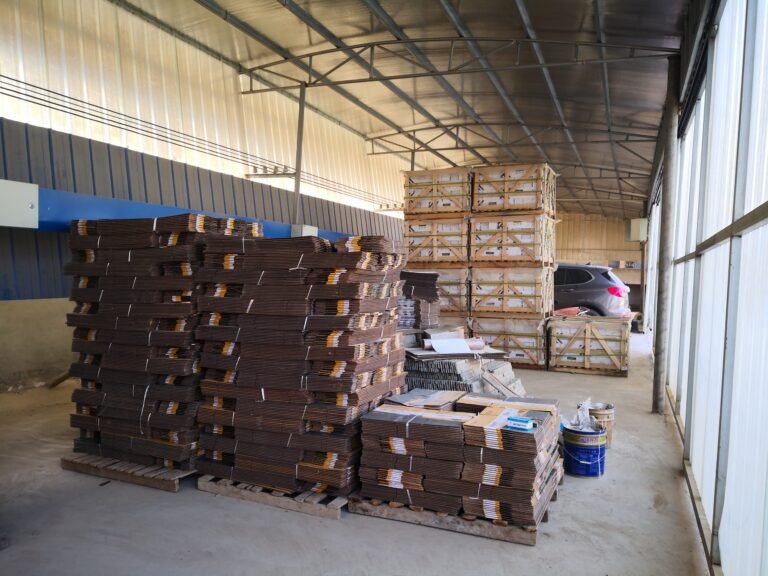
Logistics follows the Zero-Breakage Packaging Protocol: 3-5 layer reinforced cartons, fumigation-free pallets, 4-6 steel bands, and industrial airbags inside the container. Damaged goods are a double sustainability loss — the material and the freight both wasted. Packaging that actually protects the load is an environmental control, not just a commercial courtesy.
| Factory control | What it prevents | Sustainability effect |
|---|---|---|
| Infrared CNC cutting | On-site fitting waste | Lower installed footprint |
| Vein-locked batch selection | Color mismatch rejections | No wasted facade batches |
| 3-step QC | Defective panels shipped | No wasted freight emissions |
| Zero-Breakage Packaging | Transit damage | Material and carbon not wasted |
| Own quarry supply | Unverified sourcing | Traceable material chain |
These are the controls worth auditing on a factory visit, and several related articles in this library go deeper on the same theme. The water absorption guide explains the metric that decides exterior durability. The compressive strength data documents structural performance. The radiation safety guide answers the companion environmental question buyers ask about stone.
Where Sustainability Claims Break Down
The fastest way to check a sustainable-stone claim is to ask which stage boundary it uses. A claim built only on “natural material” ignores freight, and on a trans-Pacific route that omission can hide more than half the delivered footprint. Demand the full lifecycle view, and the conversation changes from adjectives to data.
Watch for four failure modes. An EPD copied from another quarry. A GWP figure without its functional unit. A test report older than the current production line. A supplier that cannot name the third-party reviewer. Any one of them means the number is decorative.
Industry-average EPDs deserve the same suspicion. They are useful market context, but a facade specification is a contract, not a research paper. The numbers in your contract should come from the factory that builds your panels, the quarry that cuts your vein, and the shipping plan that lands your container.
Finally, beware the reverse mistake: treating missing documentation as disqualifying for every Chinese factory. Some mills simply have not been asked before. A buyer who sends the documentation list in the quote request changes that. Suppliers that respond with files, tests, and samples — as Top Stone Panels does with its 1-3 day sample program — are the ones building the long-term relationship the distribution scaling guide describes.
FAQ
What does an EPD measure in stone cladding?
An EPD reports verified environmental impacts across declared lifecycle stages, including global warming potential, primary energy demand, and material inputs, using the ISO 14025 Type III framework.
Is natural stone cladding sustainable?
Natural stone is a single-ingredient material that emits no VOCs and needs no kiln firing, but the profile depends on quarry, processing, and shipping distance, which is why suppliers document EPD data.
Do green building credits accept stone EPDs?
Yes. LEED v4/v4.1 and similar rating systems recognize verified Type III EPDs in material disclosure and optimization credits, making documentation a procurement precondition on green projects.
What documents should a stone supplier provide for sustainability?
Ask for an EPD or third-party test report, COO, ISPM 15 fumigation certificate, pre-shipment inspection records, and quarry documentation that ties the shipment to a defined source.
Does freight cancel out natural stone’s sustainability?
Freight is the variable buyers control. High container utilization on thin panels, dense packing, and one mixed shipment per order minimize distance-related emissions per square meter installed.
Conclusion
Sustainability in stone cladding settles down to one question: can the supplier prove the story? Natural stone starts with real advantages — single ingredient, no firing, no VOCs, durability that stretches the use phase — and the Natural Stone Institute documents those properties. But the EPD era moves the argument to standardized, verified numbers.
- Demand a Type III EPD or lifecycle test report with its standard, boundary, and GWP figure stated.
- Check the stage boundary before comparing any two products.
- Treat freight and container utilization as sustainability decisions, not just costs.
- Document every shipment: EPD, test reports, COO, ISPM 15, and pre-shipment records.
Top Stone Panels supplies six product lines from an own-quarry operation in Hebei, with 220+ containers shipped per year and documentation that follows each load. To put the checklist into practice, request samples and the factory document pack, or start with the stacked stone and thin stone veneer lines that carry most exterior projects.