Every few years the same question lands in a stone buyer’s inbox: “Is this stone radioactive? I read something about granite and radon, and my customer is asking.” It usually arrives right before a sale, and it costs orders when the sales person cannot answer it cleanly. The problem is not the stone. The problem is that the 2008 granite countertop scare created a myth that never got a proper burial.
Natural stone is one of the oldest building materials in existence, and it is used in millions of homes, offices, and public buildings across North America and Europe. It is also a naturally occurring rock, which means it contains the same trace elements found in the soil beneath those buildings. Understanding the actual numbers — what radon is, where it comes from, and what agencies like the U.S. EPA actually say — turns a scary customer question into a thirty-second professional answer.
This guide breaks down the science of stone radiation, the real source of home radon, the standards importers should know, and the documents a B2B buyer can request before a container ships.
- The U.S. EPA does not consider granite countertops a major source of radon and is not aware of evidence showing cause for concern.
- Home radon comes mainly from the soil and rock under the building, not from stone countertops or cladding.
- The American Cancer Society states that radiation from building materials is very low and rarely impacts exposure.
- China’s GB 6566-2010 standard grades building materials A/B/C by radionuclide content; Class A is unrestricted, including residential interiors.
- Slate and quartzite sit in the low range of naturally occurring radioactivity — the same materials used in stacked stone panels and stone veneer.
- Buyers can verify any stone with a physical sample sent to an accredited lab; Top Stone Panels ships samples in 1-3 days.
- Why the Granite Radon Myth Keeps Costing Sales
- What Radon Is and Where It Really Comes From
- The 2008 Scare: What Actually Happened
- What Measurements Actually Show
- The Science in Plain Numbers
- GB 6566-2010: The Export Standard Buyers Should Know
- Where Slate and Quartzite Cladding Sit
- What Documents to Request from a Stone Supplier
- FAQ
- Conclusion
Why the Granite Radon Myth Keeps Costing Sales
A distributor quotes a kitchen or a commercial lobby in natural stone. The client pauses and says they heard stone emits radiation. One weak answer — a shrug, a rumor confirmed, a “we can look into it” — and the project quietly drifts to porcelain or laminate. The buyer never tests anything; they just lose confidence.
The myth persists for three reasons. First, the 2008 media coverage was dramatic and widely repeated, while the formal agency responses were published quietly afterward. Second, the words “radiation” and “radon” sound alarming to a layperson even when the measured quantities are trivial. Third, most stone suppliers have never trained their sales teams to answer the question, so the buyer’s unverified fear becomes the deciding factor.
The fix is a short, neutral, factual answer backed by the two most credible names in the field: the U.S. Environmental Protection Agency and the American Cancer Society. Both have addressed the question directly, and both land on the same conclusion.
What Radon Is and Where It Really Comes From
Radon is a colorless, odorless radioactive gas produced when radium — a trace element in all rock and soil — decays. It is everywhere outdoors at low levels, and it becomes a concern only when it accumulates inside an enclosed space.
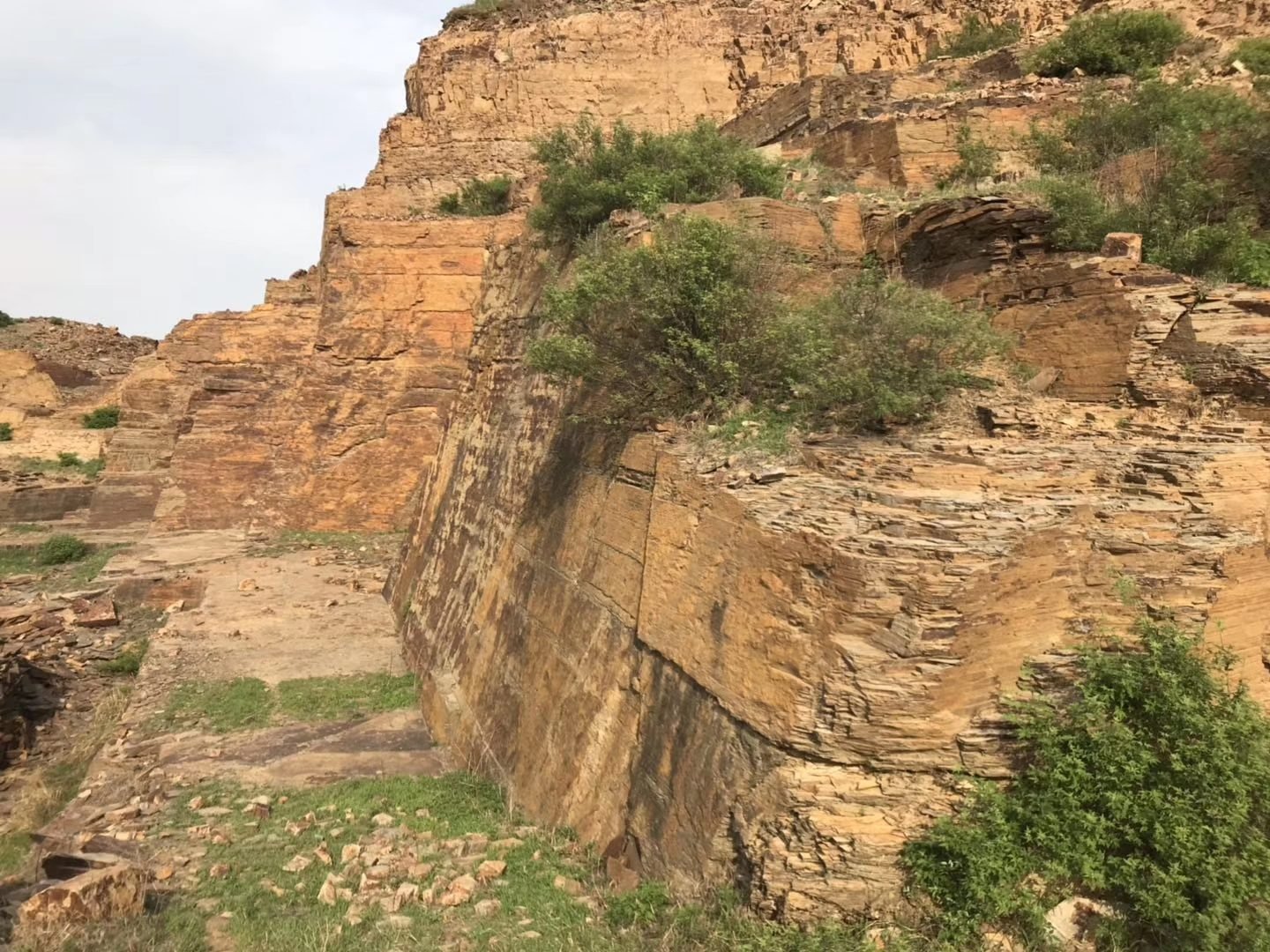
In a home, radon does not arrive from a countertop or a feature wall. It comes from the ground. The U.S. EPA’s position is unambiguous: the main source of radon in homes is the soil and rock beneath the building. The gas enters through cracks in floors and walls, construction joints, and gaps around utility penetrations, and it collects at the lowest level — which is why the American Cancer Society notes that radon levels are usually highest in basements and crawl spaces.
This is why EPA’s recommendation is so simple: test the house, not the stone. Home radon varies widely from one neighborhood to the next depending on geology, and the only way to know a specific level is a cheap passive test kit or a professional measurement. EPA recommends fixing a home at 4 pCi/L or above and considering action between 2 and 4 pCi/L.
The 2008 Scare: What Actually Happened
In July 2008, a wave of news coverage claimed certain granite countertops were emitting radon and other radiation at levels that could be dangerous. The reports frightened homeowners, hit the countertop market, and produced a generation of “radiation scare” questions that stone dealers still field today.
What happened next is the part that never made headlines. The U.S. EPA reviewed the issue and did not issue any guidance or regulation about radiation levels in stone countertops. EPA stated it was not aware of any evidence indicating that typical granite countertops pose a health concern. The American Cancer Society took the same position in its radon educational materials: some granite counters might give off slightly more radon, but the amount is very low — less than the soil and rocks that sit under nearly every foundation.
Testing conducted after the scare, including surveys of countertop samples by independent laboratories, found emission levels far below any regulatory threshold. No public health agency in the United States, Europe, or China has recommended removing natural stone from homes.
What Measurements Actually Show
Every material on earth carries trace radioactivity, and that reality is the confusing part of the story. Concrete, brick, drywall, and stone all contain small amounts of radium, thorium, and potassium-40. A stone countertop is not radioactive in a special sense; it is radioactive in the same everyday sense as the concrete slab it sits on.
What measurements show is a matter of scale. The radon a granite slab can release is measured in fractions of picocuries per liter, and it drops off quickly because the surface is sealed with coatings and sealers. The radon entering a home from soil, by comparison, is measured in whole picocuries per liter — commonly 1 to 4 — and in some geological areas far higher. That is why EPA’s guidance treats soil gas as the problem and stone countertops as a non-issue.
| Radon contributor | Relative contribution | What the agencies say |
|---|---|---|
| Soil and rock under the home | Dominant | Main source of home radon per EPA; entry through cracks and joints |
| Granite countertops | Very low | Not a major source per EPA; ACS: less than soil and rocks |
| Natural building materials (slate, quartzite, brick, concrete) | Very low | ACS: levels are very low and rarely impact exposure |
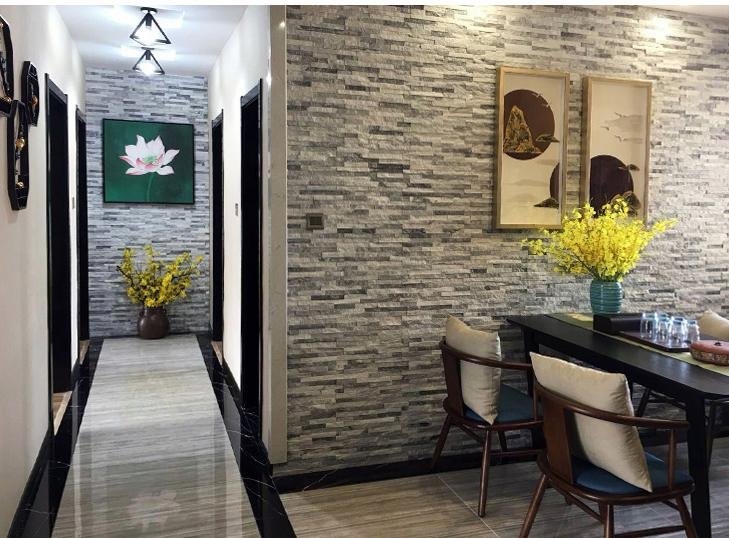
The same logic applies to wall cladding. A stacked stone feature wall or exterior veneer system exposes far less surface area than a countertop, is often installed with an air gap, and is made from slate and quartzite — both of which sit at the low end of natural radioactivity among common stones.
The Science in Plain Numbers
For a buyer who wants more than reassurance, the underlying physics is simple. Natural stone contains three radioactive isotopes of interest: radium-226, thorium-232, and potassium-40. Their concentrations vary by stone type and quarry, which is exactly why countries that manufacture building stone at scale publish classification limits instead of banning the category.
Granite is the densest and most variable of the common dimension stones, which is why it became the subject of the myth in the first place. Slate and quartzite — the two materials used in most thin stone veneer and stacked stone panels — typically report lower activity concentrations because of their mineral makeup and metamorphic origin. Both are widely used indoors across North America and Europe, and neither has produced a documented case linking wall cladding to elevated indoor radon.
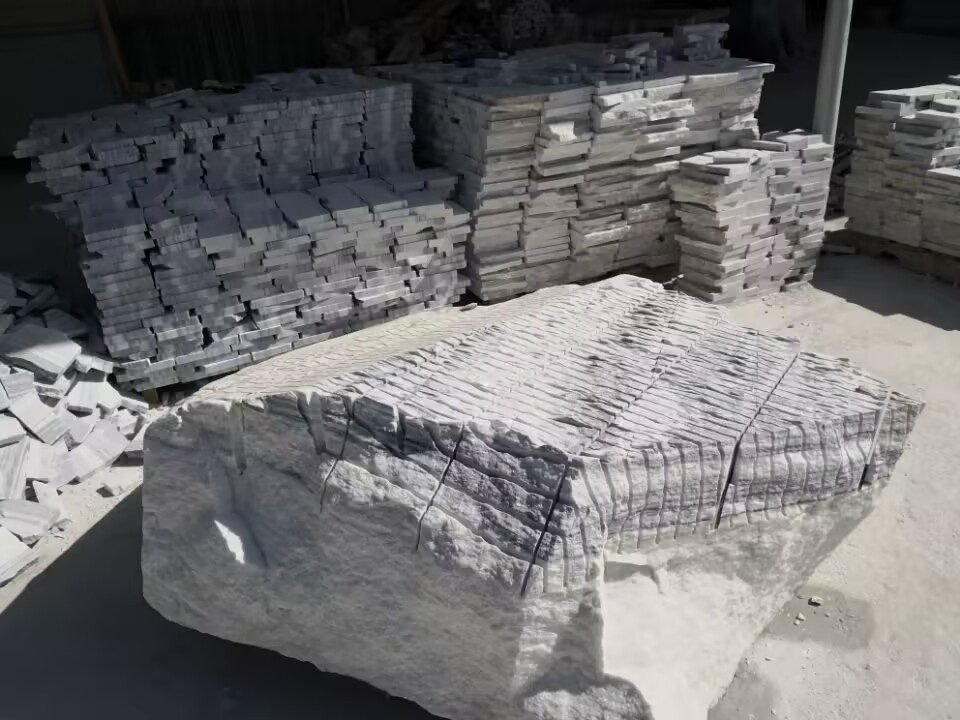
One more point keeps the fear in perspective: you cannot avoid background radiation. Cosmic rays, medical scans, and the potassium in food all contribute to the radiation every person absorbs each year. The contribution of a bathroom vanity or a fireplace surround made of natural stone is a rounding error against that total — and the entire stone panel, not a single slab, is the realistic object under discussion.
GB 6566-2010: The Export Standard Buyers Should Know
China, the largest producer of natural stone cladding, regulates exactly this question. The national standard GB 6566-2010, “Limits of Radionuclides in Building Materials,” sets maximum activity concentrations for radium-226, thorium-232, and potassium-40, then sorts materials into three classes.
| Class | Internal exposure index (Ra) | External exposure index (gamma) | Allowed use |
|---|---|---|---|
| Class A | No more than 1.0 | No more than 1.3 | Unrestricted — including residential interiors |
| Class B | Higher than Class A | Higher than Class A | Limited to exterior and non-residential interior use |
| Class C | Highest permitted band | Highest permitted band | Non-residential applications only |
Class A is the classification a buyer wants for anything that ends up inside a home, and it is the normal classification for the slate and quartzite panels used in wall cladding. The standard exists so that the question “is it safe?” has a testable answer rather than an opinion. When you import stone from China, asking the supplier for the GB 6566 classification is as routine as asking for the ASTM performance test records on the same material.
Where Slate and Quartzite Cladding Sit
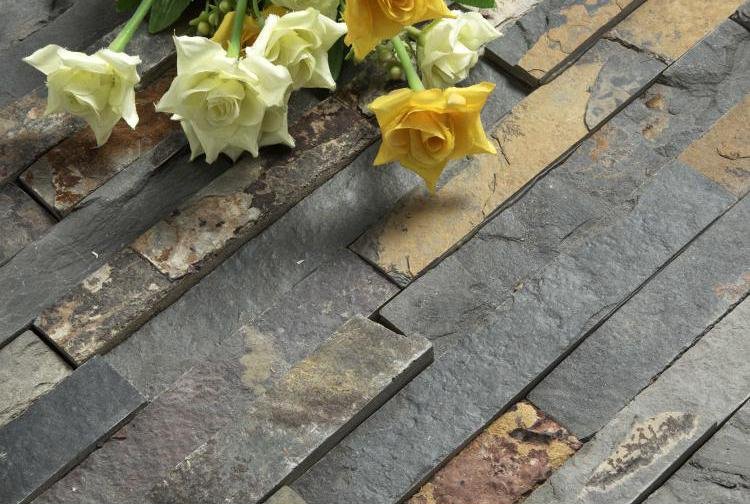
Wall cladding has one advantage the countertop myth never addresses: coverage versus mass. A countertop is a thick slab under direct contact with food prep surfaces; a cladding panel is 15 to 40 millimeters thick, adhered to a wall, and frequently in a ventilated cavity. The surface area that could theoretically release gas is a small fraction of the floors and walls around it — which already contain concrete and soil-derived materials with the same trace elements.
Top Stone Panels manufactures 100% natural slate and quartzite across its product lines: stacked stone panels at 15x60cm and 15x55cm, ultra-thin ledgestone at 36x10cm, interlocking z-panels, and thin stone veneer. These are the same materials specified in the fire-rating guide for slate and quartzite and the freeze-thaw resistance guide — dense, metamorphic stones with strong physical test results and low naturally occurring radioactivity.
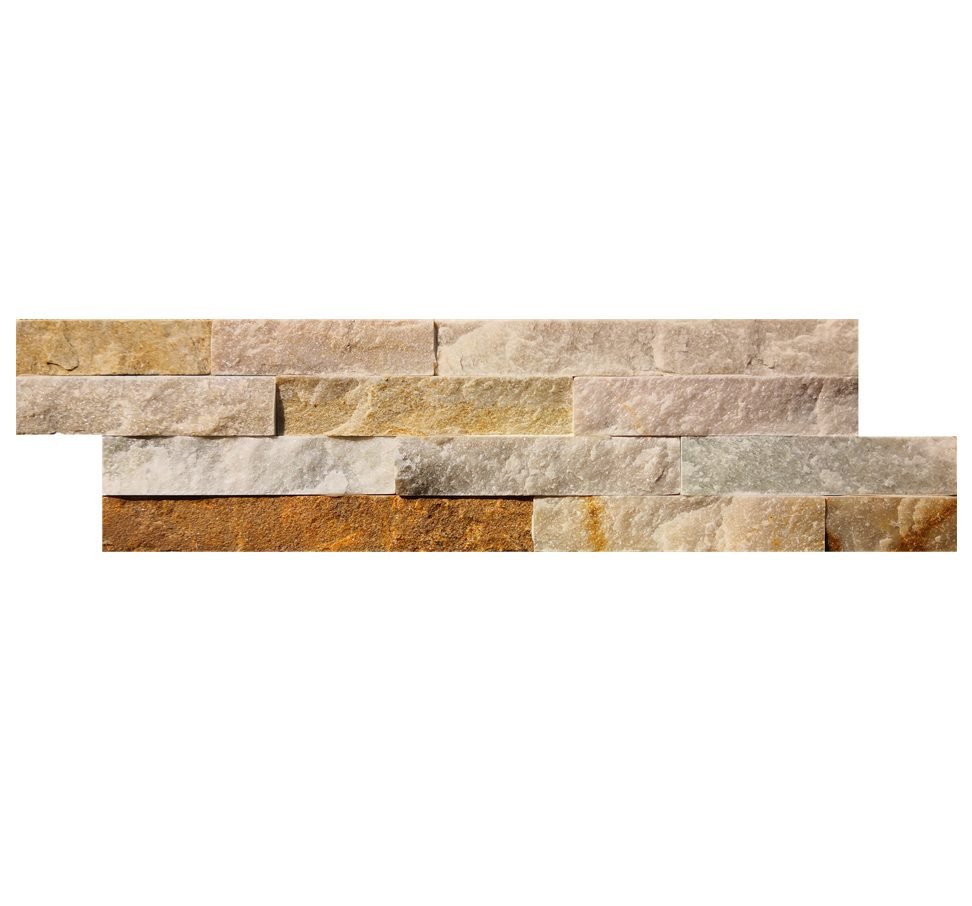
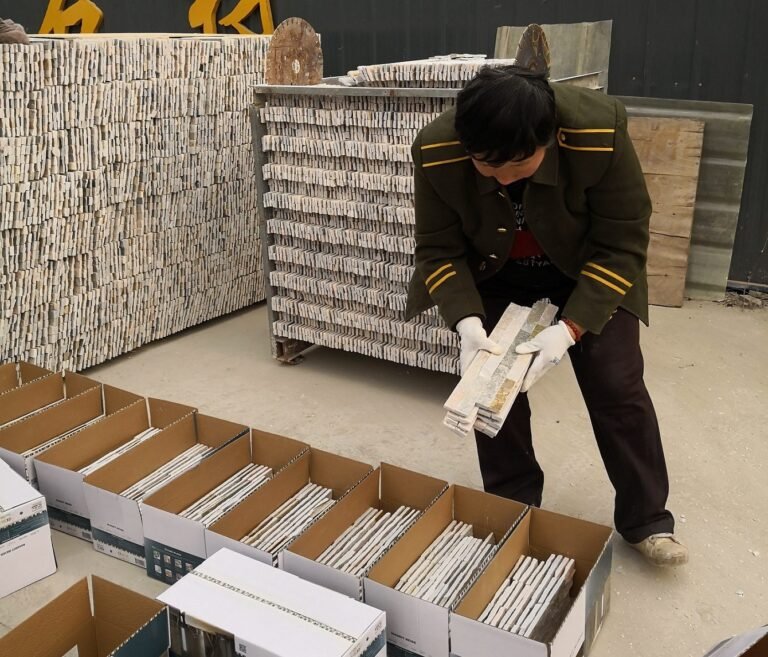
When this question comes up in a showroom, the conversation should move from scare to specimen: put a sample board on the counter, open the test report walkthrough, and explain that density and stability are the same properties that make stone resistant to water absorption and freeze-thaw damage. A physical sample also makes a stronger selling tool than any paragraph, which is why factories that ship samples fast — Top Stone Panels ships physical samples in 1-3 days — tend to close these conversations.
What Documents to Request from a Stone Supplier
A B2B buyer should not rely on a supplier’s word about radiation any more than about flexural strength. The process is the same as for any other material claim: request the documentation, then verify with an independent test.
- Ask for the radionuclide test report or GB 6566 classification on the specific product and color you are ordering — not a general stone certificate.
- Request the physical test package (flexural strength, water absorption, freeze-thaw, slip resistance) and check that the sample tested matches the batch, following the sample evaluation checklist.
- Order physical samples in parallel — a 15x60cm panel costs little to ship — and send one to an accredited laboratory for radionuclide analysis if your end customer insists.
- Confirm the order can carry the standard export documents (COO, ISPM 15, pre-shipment inspection report) listed on the factory’s quality dossier; the same dossier documents the warranty terms for panel reorders.
Because slate and quartzite cladding sits comfortably inside GB 6566 Class A, the test comes back cleaner than most buyers expect — and the piece of paper turns a fear into a selling point. The same discipline that verifies water absorption verifies this, because both are material facts a serious factory can prove on request.
FAQ
Is natural stone radioactive?
Every natural building material contains trace amounts of naturally occurring radioactive material, including the soil under a home. Emissions from slate, quartzite, and even granite used in buildings are very low and are not considered a health concern by the U.S. EPA.
Do granite countertops cause radon in homes?
No. EPA does not consider granite countertops a major source of radon. Radon in homes comes mainly from the soil and rock beneath the building, entering through cracks and construction joints, with levels typically highest in basements.
Is the radiation in natural stone safe?
Yes. The American Cancer Society notes that levels from building materials are very low and rarely impact exposure. The dominant radon risk to a home is soil gas, which is why EPA recommends a simple home radon test rather than stone testing.
How do I verify stone radiation for an import order?
Request radionuclide test documentation such as a GB 6566-2010 test report from the supplier, and send a physical sample to an accredited laboratory yourself. Samples from Top Stone Panels ship within 1-3 days.
What is the EPA radon action level?
The U.S. EPA recommends fixing a home when the radon level reaches 4 pCi/L and considering mitigation when levels sit between 2 and 4 pCi/L.
Is slate or quartzite safer than granite?
Slate and quartzite typically report lower naturally occurring radioactivity than granite because of their mineral makeup and metamorphic origin. Both are safe building materials; granite’s countertop contribution is still very low compared with soil gas.
Conclusion
The granite radon myth survives on vibes, not data. The U.S. EPA names soil gas as the real source of home radon, the American Cancer Society confirms that building materials rarely move the needle, and the manufacturing standard that governs Chinese stone exports grades materials with clear, testable limits. A buyer with this three-part answer stops rescuing the conversation and starts closing it.
Your checklist before the next customer asks about stone radiation:
- Lead with EPA’s position — soil is the main source of home radon, not stone countertops or cladding.
- Keep the ACS one-liner ready: building materials give off very low levels that rarely impact exposure.
- Know the standard: GB 6566-2010 Class A (internal exposure index up to 1.0, external up to 1.3) applies to unrestricted residential use.
- Ask the supplier for the radionuclide test report on the exact product and color.
- Order physical samples and, if the end customer insists, send one to an accredited lab — samples ship in 1-3 days.
Top Stone Panels produces 100% natural slate and quartzite panels that sit comfortably within GB 6566 Class A limits, and every order can be documented with physical samples and a pre-shipment inspection report. Send the project details and the factory will provide the paperwork your client needs to move forward.
Request stone samples and test documentation from Top Stone Panels →