A wine cellar is one of the few rooms where buyers ask for the wall to look old and wet-proof at the same time. Full stone delivers the cave look but weighs, costs, and complicates the build. Thin stone veneer delivers the same mineral texture at panel weight — and because it is real stone, it behaves in damp air better than most of the painted and paneled alternatives people build cellars from.
This article runs four wine cellar directions we see hold up in real installs: full stacked stone grottos, ledgestone rack-and-bin walls, split-face tasting nooks, and pale grey climate rooms. Each one names the format, the layout logic, and the honest trade-off for wine storage and for the room around it.
- Stone veneer gives a wine cellar the cave or vault look at a fraction of full-stone weight, using formats from 36x10cm ledgestone strips to 15x60cm stacked panels.
- Natural stone is mineral: A-class non-combustible, mold-resistant on the face, and tolerant of the damp air a cellar is built to hold.
- Humidity and condensation are controlled at the assembly level — insulation, ventilation behind racks, and a vapor plan — not by the stone alone.
- Ledgestone strips suit rack surrounds; stacked panels suit full-height walls; pale greys keep a cellar bright enough for tastings.
- Wholesale cellar orders start at one 20GP container, with batch-matched panels and 1-3 day samples from the factory.
Why Stone Works in a Climate Room
Wine cellars put walls through conditions most rooms avoid. Relative humidity stays high — typically in the 50-70 percent band — and the temperature stays low enough that condensation becomes a real design problem (the wine cellar standards overview summarizes the target conditions). In that envelope, the wall face matters less than the wall assembly. But the face still has to tolerate the job: it will sit in damp air, get a wet bottle or two leaned against it, and occasionally be wiped down.
Natural stone handles that well. It is a mineral product: the cleft slate and quartzite faces on veneer panels do not feed mold the way wood paneling can, and they take a wiping without showing it. The stone is also A-class non-combustible, which keeps a cellar’s flame-spread story clean. And because these are veneer panels, the cave look arrives without the thermal mass and moisture problems of building thick full-stone walls inside a room that is deliberately cold.
One procurement note before the designs: wine cellar walls are compact, so color consistency across nearby panels is critical — a cellar wall is inspected up close, bottle after bottle. Batch-specific vein selection at the factory is how one container reads as one wall. The media wall design guide spells out the same close-to-the-eye consistency logic for another TV-adjacent space.
Design 1: The Stacked Stone Grotto
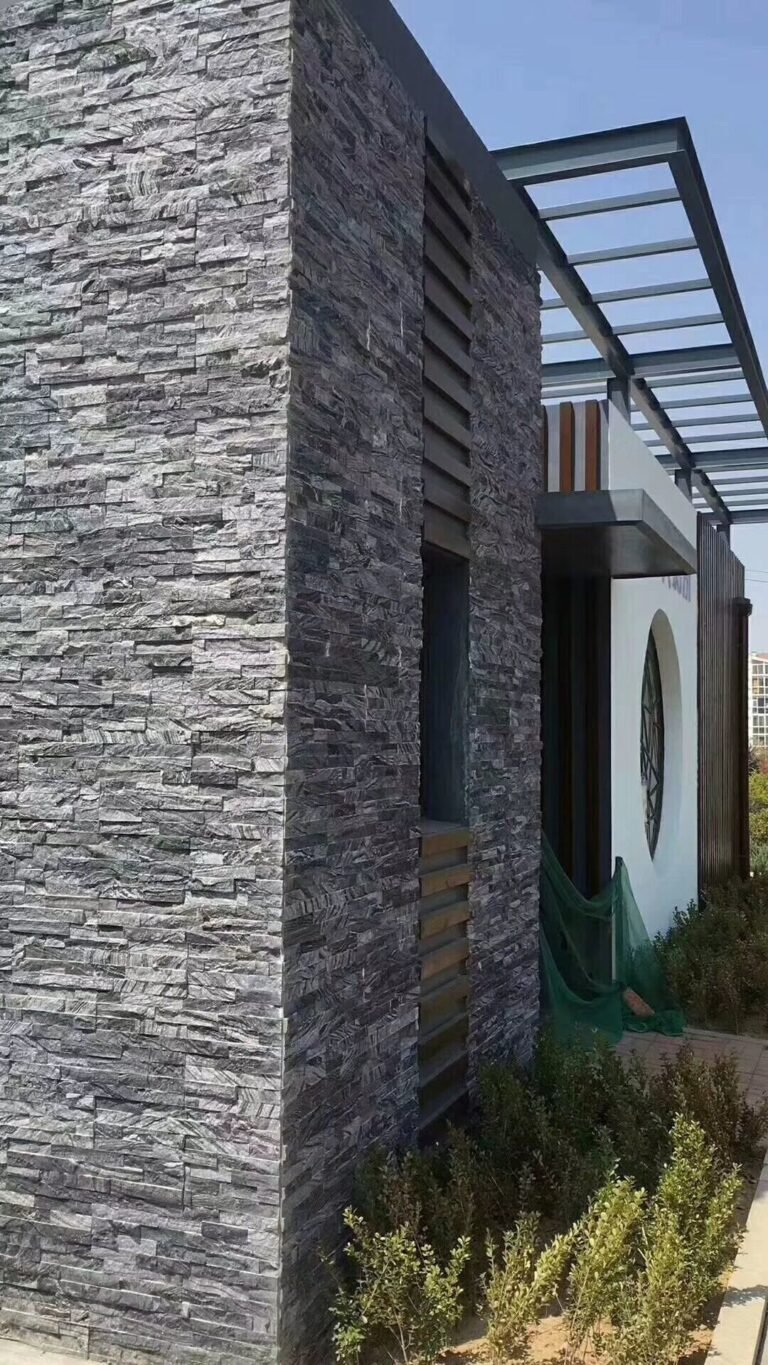
The idea: run full-height stacked stone across the cellar walls, floor to ceiling, for the vaulted, cave-sheltered look — the room feels like it was carved out rather than finished.
Best for: larger cellars and collectors who entertain; when the cellar is a destination, the walls carry the room and the racks are furniture inside it.
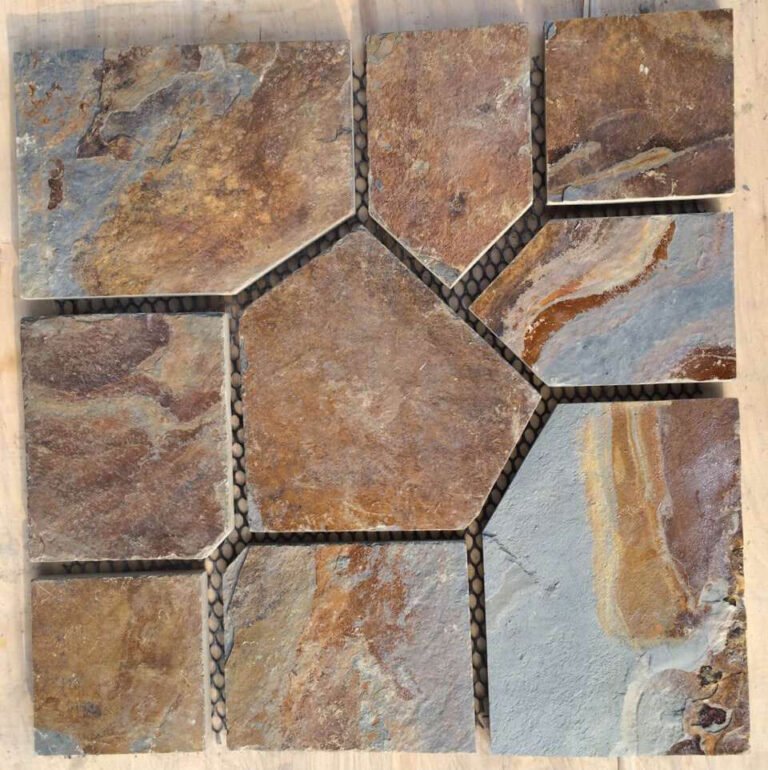
How it works: stacked stone panels in the standard 15x60cm / 15x55cm format lay in horizontal courses with a clean repeat. Because the panels are pre-made, a tall wall stays orderly — fewer puzzle moments than loose stone on a full-height run. Keep one tone family across the room — warm greys, brown-greys, or a rust-tinged blend — so the grotto reads as one material instead of a collage.
The verdict: the most dramatic and the most hotel-and-resort direction of the four. The trade-off is weight of feeling: in a small closet-sized cellar, full stacked stone can swamp the room. If the room is under 3 by 4 meters, treat it as a feature wall behind the racks rather than a full envelope.

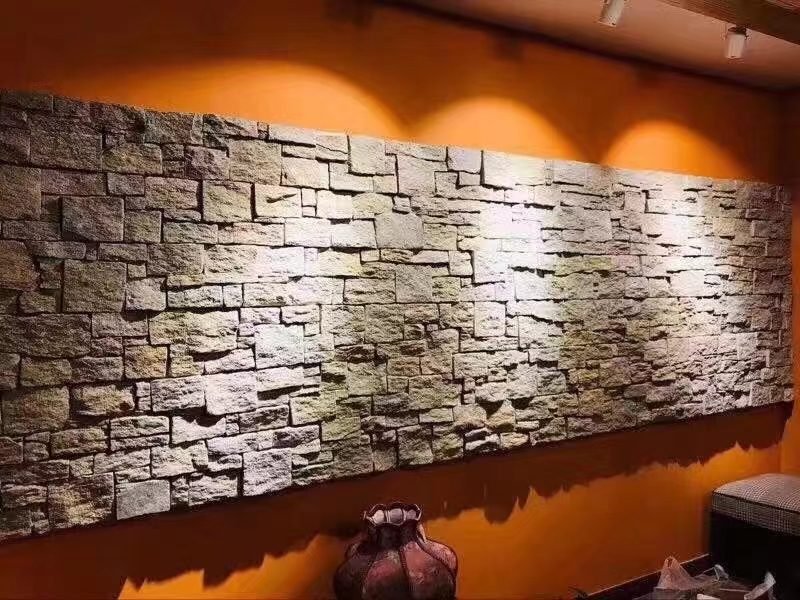
For texture variety inside a grotto, the loose thin stone veneer family layers random-length pieces over the stacked field, and the eight interior feature wall directions article has more full-wall cave compositions that carry to a cellar volume.
Design 2: Ledgestone Rack and Bin Wall
The idea: build the wall around the racking system — thin ledgestone strips framing recessed bins and wall racks, so the stone and the bottle storage share one composition.
Best for: cellar rooms where capacity wins; this is the design that marries the cave look with real storage density.
How it works: thin 36x10cm ledgestone strips hug the wall in horizontal lines that echo rack runs. Recess the bins into the wall — framed before the stone goes on — so the bottles sit behind the stone face line. The narrow strip format keeps the frames around the recesses tight and precise, which matters when openings are the whole point of the wall.
The verdict: the most functional of the four because the stone gives the racks a reason to exist. The trade-off is planning: bin depths, bottle sizes, and the cooling unit’s airflow all have to be settled before the ledgestone goes up, and recesses without a measured bottle depth become wasted voids. The thin ledgestone panels line runs the narrow strips and matching corner pieces that make the frames continuous.
If the cellar shares a wall with a tasting counter or fireplace zone, the ledgestone fireplace design guide shows the same strip framing logic in a warmer room.
Design 3: Split-Face Tasting Nook
The idea: carve one corner of the cellar into a tasting nook — split-face stone behind a small bar or counter, with the stone carrying the room’s character and the counter doing the work.
Best for: cellars sized to entertain; when the room is not just storage but a place to open bottles, the nook becomes the destination.
How it works: split-face ashlar panels give a taller, chunkier texture than ledger strips. Run them on the nook wall behind the bar, pair the split-face with a wood or black-steel countertop, and light the stone with a cove or sconce so the cleft texture shows at tasting height. Because the nook is a small area, you can afford the boldest texture in the room without it reading harsh.
The verdict: the most hospitality-minded option, and where the room earns back its square footage. The trade-off is that a nook needs the same climate discipline as the racks — a tasting corner that sweats condensation on the counter is a design problem, not a decoration one. Keep the nook inside the insulated envelope and ventilate behind the bar.

The restaurant feature wall designs carries the stone-plus-bar logic into hospitality scale if you are planning a cellar tasting room for a venue.
Design 4: Pale Grey Ledger Museum Room
The idea: a restrained cellar of pale-to-mid grey ledgestone strips, kept as one quiet field — the mineral wall as gallery backdrop for the bottles.
Best for: modern homes, small and medium cellars, and anyone who actually works in the room — the pale tone keeps it bright enough to read labels and taste without added drama.
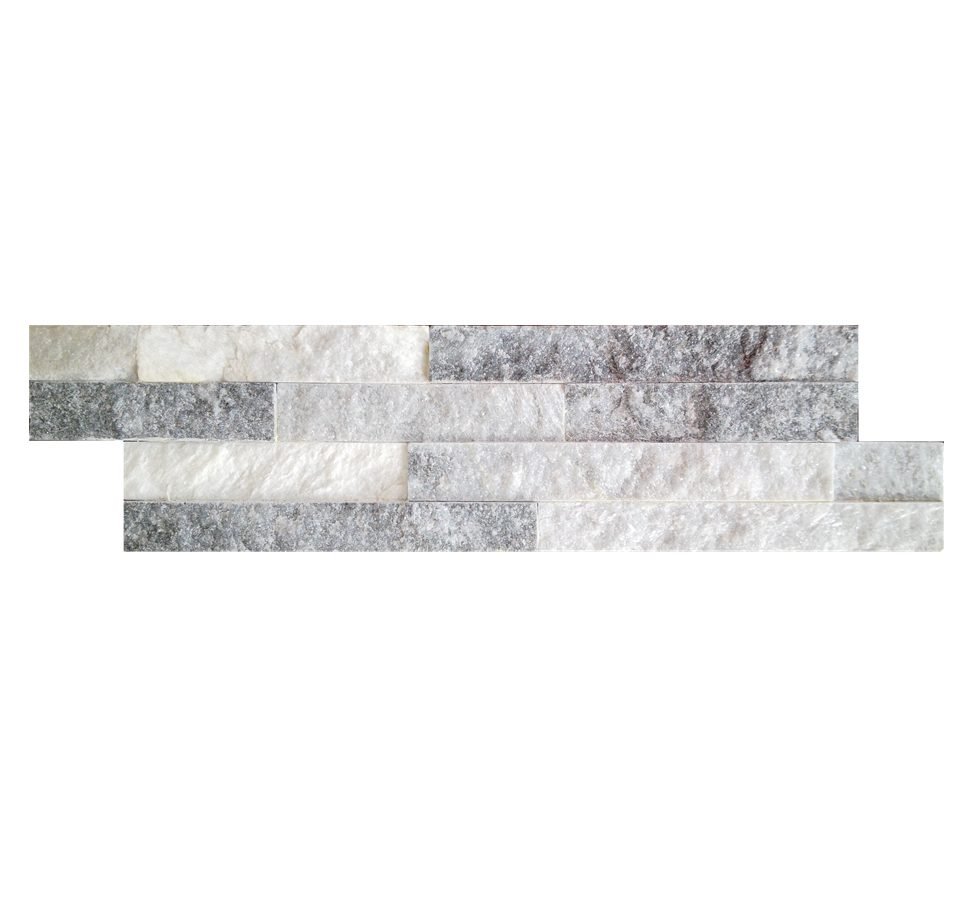
How it works: a single consistent grey tone — sparkle ice grey, grey quartzite mini-ledgestone — laid in horizontal strips. The low contrast keeps the eye on the racks, and the subtle shadow lines between strips give the wall life without shouting. This is the least cave-like of the four and the most practical: pale stone reads clean under the task lighting a working cellar needs.
The verdict: the safest and most repeatable choice — it photographs well, matches wood or steel racking, and keeps the room feeling bigger than dark grotto tones. The trade-off: minimalism leaves no place to hide, so batch color control is load-bearing. Grey quartzite mini-ledgestone in the 10x36cm format with matching detail pieces is the strip profile to spec, and the grey stone veneer color guide breaks down the tone differences hard to see on a phone screen.
Climate and Moisture Notes
Designs fail in cellars from moisture, not from looks. Whatever the stone, the assembly has to be right.
- Insulate and vapor-plan: keep the wall warm on the room side so damp cellar air does not condense on a cold surface. Insulation and a vapor retarder behind the stone are the first line of defense; the stone face is the second.
- Vent behind racks: wall racks should sit on spacers or a small standoff so air moves behind the bottles; a rack pressed flat against stone creates a damp pocket that no sealer fixes.
- Seal deliberately: a penetrating sealer on the stone reduces water absorption and makes cleaning easier without adding a glossy film. Skip glossy coatings on the stone — they collect fingerprints and look wrong in low light. The sealing guide has the application steps.
- Cooling unit airflow: keep the wine cooling unit’s intake and outflow clear of the stone and racking; a unit boxed into stone stays hotter and works harder.
- Condensation at the stone’s temperature: cleft slate and quartzite tolerate damp air, but liquid water on the surface stains and breeds problems. Wipe down wet walls after a humid week, and fix the assembly rather than sealing over the symptom.
The wet-area waterproofing guide is the bathroom-grade version of the same moisture rules and reads well as a cellar checklist.
How to Choose: Format, Color, and Lighting
Four directions, one fast filter.
| Design | Format | Best-fit cellar | Watch-out |
|---|---|---|---|
| Stacked stone grotto | 15x60cm / 15x55cm panels | Large, entertaining | Can swamp small rooms |
| Ledgestone rack wall | 36x10cm strips | Capacity-first cellars | Bin depth must be measured first |
| Split-face tasting nook | Split-face ashlar panels | Entertaining, hospitality | Needs climate discipline |
| Pale grey ledger room | 10x36cm ledgestone, one tone | Small, modern, working cellars | Color consistency critical |
Color rule of thumb: warm tones (rust, brown-grey, multicolor blends) bring the cave feel; pale greys keep a working cellar bright; near-black stones photograph dramatically but disappear in a dim room. If the cellar has wood racking, choose the stone tone second — wood and stone should frame each other, not fight.
Lighting decides whether the texture reads. A low-voltage strip under a rack rail or a narrow sconce grazing the cleft face will show the stone’s micro-relief; light the labels too, because a cellar that hides its bottles is a wasted investment. For a deeper color walk-through, the living room accent wall directions covers the same tone logic in a brighter room.
FAQ
Can you use stone veneer in a wine cellar?
Yes. Thin stone veneer is a strong cellar wall choice because the mineral face tolerates damp air and resists mold growth, and it gives the cave look at a fraction of full-stone weight. Control humidity and condensation at the assembly level.
Does moisture hurt stone veneer in a cellar?
Mild damp air does not damage cleft slate or quartzite, but liquid condensation against the wall can. Keep the wall assembly warm on the room side, ventilate behind racks, and apply a penetrating sealer on the face.
What stone veneer looks best in a wine cellar?
Full-height stacked panels give a vaulted cave look, thin ledgestone strips frame racks and bins precisely, split-face ashlar suits a tasting nook, and pale grey ledgestone keeps the room light for working with bottles.
Do you need to seal stone veneer in a wine cellar?
A penetrating sealer is recommended on cellar stone: it reduces water absorption and makes cleaning easier without adding a glossy film. Skip glossy coatings on the walking or wiping surfaces.
How much stone veneer do I need for a wine cellar?
Measure the wall widths by the height the stone will run, subtract openings, then add roughly 8-10 percent for cutting. A 4 m by 2.6 m cellar wall is about 10.4 m² of coverage, and that number plus waste is what to quote.
Conclusion
A stone veneer wine cellar stops being a storage closet and becomes the room collectors show off, in the four directions above: stacked stone grottos for drama, ledgestone rack walls for capacity, split-face nooks for tasting, and pale grey rooms for working cellars. All four share one rule — fix the climate at the assembly level, ventilate behind the racks, and let the mineral wall stay a clean backdrop for the wine.
Key takeaways:
- Choose the format by the room: stacked panels for full walls, ledgestone strips for rack surrounds, ashlar for nooks, pale grey ledgestone for working cellars.
- Insulate and vapor-plan behind the stone; ventilate behind racks; seal with a penetrating sealer.
- Keep color consistent with batch-matched panels from one source — cellar walls are inspected up close.
- Order a sample wall section before the container, and confirm corner and trim pieces ship with the panels.
Start with a stone sample before you commit the cellar’s palette. Contact Top Stone Panels for wine cellar samples in 1-3 days, or browse the stacked stone, thin ledgestone, and thin stone veneer lines that anchor these four designs.