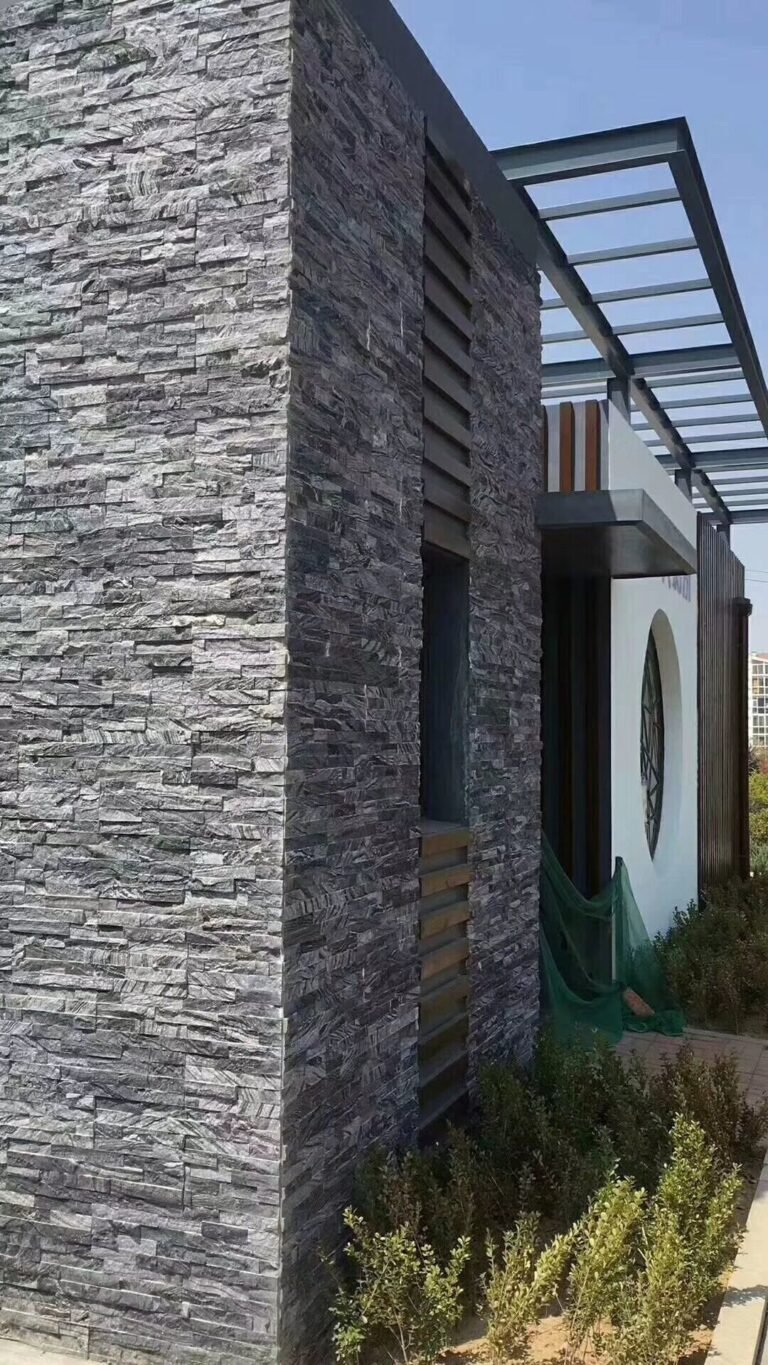
Walk into a room where the fireplace is clad in thin ledge stone and the eye goes to one line: the long, even courses of the stone running across the wall. That is the ledger pattern — narrow strips laid in horizontal bands, precise but never sterile. It works next to fire because firelight is low and warm, and warm light flatters natural stone the way it flatters nothing manufactured.
This guide covers the design moves that matter for a ledgestone fireplace — texture choices, color direction, hearth and mantel pairing, and the construction realities around a firebox — written for designers, builders, and the distributors who supply them. The product context is B2B: the panels referenced here are the 36x10cm ultra-thin ledgestone format produced at 60,000 m² per month by Top Stone Panels, a quarry-direct factory shipping 220+ containers a year.

- Ledgestone reads as a horizontal linear texture — the scale fits a fireplace surround better than large-format panels and calmer than random stacked stone.
- Natural stone is non-combustible with A-class fire behavior, which simplifies the surround specification next to a firebox.
- Warm quartzite tones (bronze sparkle, rustic copper, cream) are the dependable choice because they hold color under low, warm firelight.
- Buy in the ultra-thin 36x10cm panel format: it loads more square meters per container and cuts waste, with an MOQ of one 20GP container.
- Order samples before you commit a color — 1-3 day sample turnaround from the factory decides the tone long before the container ships.
- Why Ledgestone Suits a Fireplace
- Ledgestone vs Stacked Stone Around a Firebox
- Design Direction 1: Full-Height Linear Wall
- Design Direction 2: Partial Surround with Contrast Mantel
- Design Direction 3: Double-Sided and Multi-Sided Units
- Color Direction: Warm Tones for Firelight
- Hearth and Mantel Pairing
- Installation Realities Around the Firebox
- What to Order: Coverage Math for a Fireplace
- FAQ
- Conclusion
Why Ledgestone Suits a Fireplace
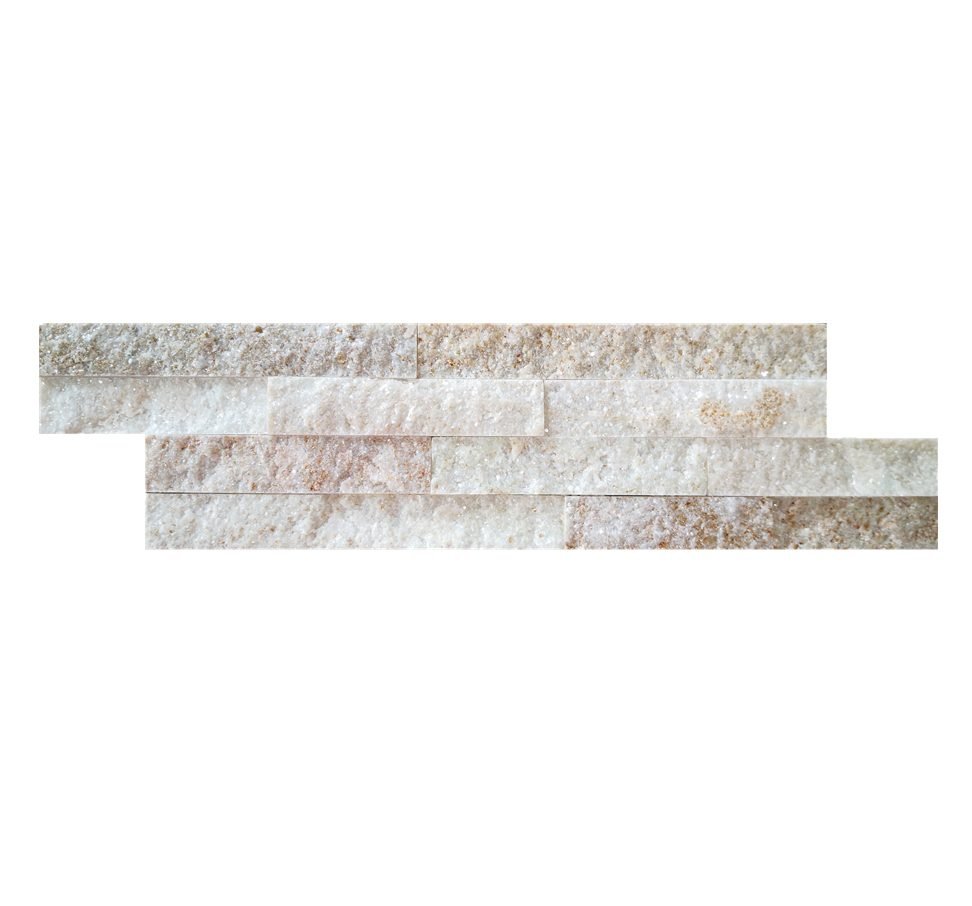
A fireplace wall asks a material to do two jobs at once: survive heat and carry a room. Ledgestone does both with a horizontal rhythm that a firebox does not fight. The strips are long and thin — the standard panel reads roughly 36x10cm — so the courses stack up fast, and the narrow reveal between rows keeps the eye moving sideways, which is exactly the direction a wide mantel wants to go.
Scale is the part books on materials skip. Full-size stone panels dwarf a residential fireplace and leave you with one heavy slab behind the firebox. Flagstone and random crazy-paving read like garden hardscaping, not interior. Thin ledge stone sits in the middle: small enough to feel crafted, long enough to feel architectural. Designers who want a modern, calm, repeated texture land on it for that reason, and it is the same reason ledgestone panels show up on accent walls that do nothing but carry texture.
Heat is the second half of the job. The panels are 100% natural quartzite and slate, quarried rock that carries an A-class fire rating and will not burn, melt, or off-gas the way manufactured veneers can in a close heat zone. That is not a styling claim — it is why natural stone shows up in fire-rated cladding specifications in the first place. The surround still has to follow the appliance manufacturer’s clearance, but the panel material itself stops being the weak link.
Ledgestone vs Stacked Stone Around a Firebox
Both formats are natural stone, both carry the same fire performance, and the decision between them is texture, not material. Stacked stone panels use irregular ledges in a random ashlar pattern — think a rustic exterior chimney. Ledgestone is cut into uniform horizontal strips, so the courses run true and the look lands contemporary.
| Consideration | Ledgestone | Stacked Stone |
|---|---|---|
| Panels | 36x10cm ultra-thin strips | 15x60cm / 15x55cm random ledges |
| Texture | True horizontal courses, modern | Random ashlar, rustic chimney look |
| Coverage per container | High — thin strips pack tight | Good — standard panels load well |
| Best near fire | Linear, contemporary surrounds | Rustic and farmhouse hearths |
Neither format works around every fireplace. A country stone fireplace in a timber house wants the irregular motion of stacked stone; a penthouse gas unit wants the discipline of ledger lines. Pick the behavior of the wall, not the popularity of the name, and keep the mantel decision for later — it changes the read more than the panel format does.
Design Direction 1: Full-Height Linear Wall
Run the ledger panels from floor to ceiling and the fireplace stops being an object and becomes the wall. This is the direction that sells the modern apartment interior: one continuous field of horizontal stone, the firebox cut into it like a recess, nothing else competing on the surface. The fire reads as a slot of light inside a textured plane.
Three details make this direction fail or fly. First, keep the courses continuous across the entire wall — no band of clean wall interrupting the texture unless it is a deliberate shelf. Second, set the firebox surround in a darker tone than the field around it so the opening reads as an object; bronze sparkle or rustic copper surround panels inside a cream or grey field is the pairing that recurs in the best installs. Third, plan the panel layout so the cut edges land at the corners, not mid-wall, which is where random lengths create small, awkward slivers. Prepared corner pieces remove most of that pain on outside corners.
For a distributor, the full-height direction is also the highest-value sale: a floor-to-ceiling wall on a 3 m ceiling runs roughly 6-8 m² of panel coverage plus corners, which makes the fireplace project a real line-item order rather than a sample purchase. Stock the two or three warm colors in this layout and you can quote the same design in three different tones from one call.
Design Direction 2: Partial Surround with Contrast Mantel
Not every fireplace deserves a floor-to-ceiling commitment. A partial surround — panels running from the hearth up past the opening, stopping a designed distance below the ceiling — keeps the stone where the eye goes and lets a wood mantel do the top of the job. The contrast between the dense, cool stone field and a warm oak or walnut shelf is the oldest trick in interior design, and it still wins because it works with firelight instead of against it.
The mantel height becomes the design decision. Set the shelf roughly 1.2-1.5 m off the hearth on a standard residential unit, and keep the ledger courses running horizontally underneath it so the eye is led toward the shelf line. A steel or stone mantel reads modern and minimal; a thick timber slab reads Scandinavian and warm. Both work — the mistake is a thin, floating mantel that neither matches the stone nor contrasts it enough to register.
Keep the hearth element in the same stone family. A capstone or hearth slab in a complementary quartzite ties the surround to the floor plane, and pairing the surround with hearth design details closes the composition. If you sell wholesale, this partial direction moves fewer square meters per project but buys more frequent reorders — it is the entry-level fireplace sale that graduates into full walls later.
Design Direction 3: Double-Sided and Multi-Sided Units
Linear fireplaces run on two materials: glass and stone. On a double-sided unit — the fire visible from two rooms — ledgestone carries a special advantage because its thin courses wrap tight corners cleanly. Random stacked panels at a corner create a thick, lumpy turn; thin ledger strips bend the corner with almost no visual interruption, which matters when the same wall is being read from two rooms.
Multi-sided designs need a corner plan. Outside corners take L-shaped return pieces cut to the panel thickness, and the ledger format’s narrow depth keeps those returns small and neat. Inside corners, where the stone turns into a perpendicular wall, simply extend the courses and land the cut lengths at the joint line. Plan the joint before the install: an intentional inside corner with a square, clean shadow line looks better than a shimmed gap.
For the commercial side of this design — condominiums, hotel lobby bars, lounge fireplaces — the repeatability is the sell. The same ledger color, the same corner kit, the same crew approach install after install. That consistency is one reason fireplace veneer installation work at scale tends to standardize on panel systems rather than hand-laid field stone.
Color Direction: Warm Tones for Firelight
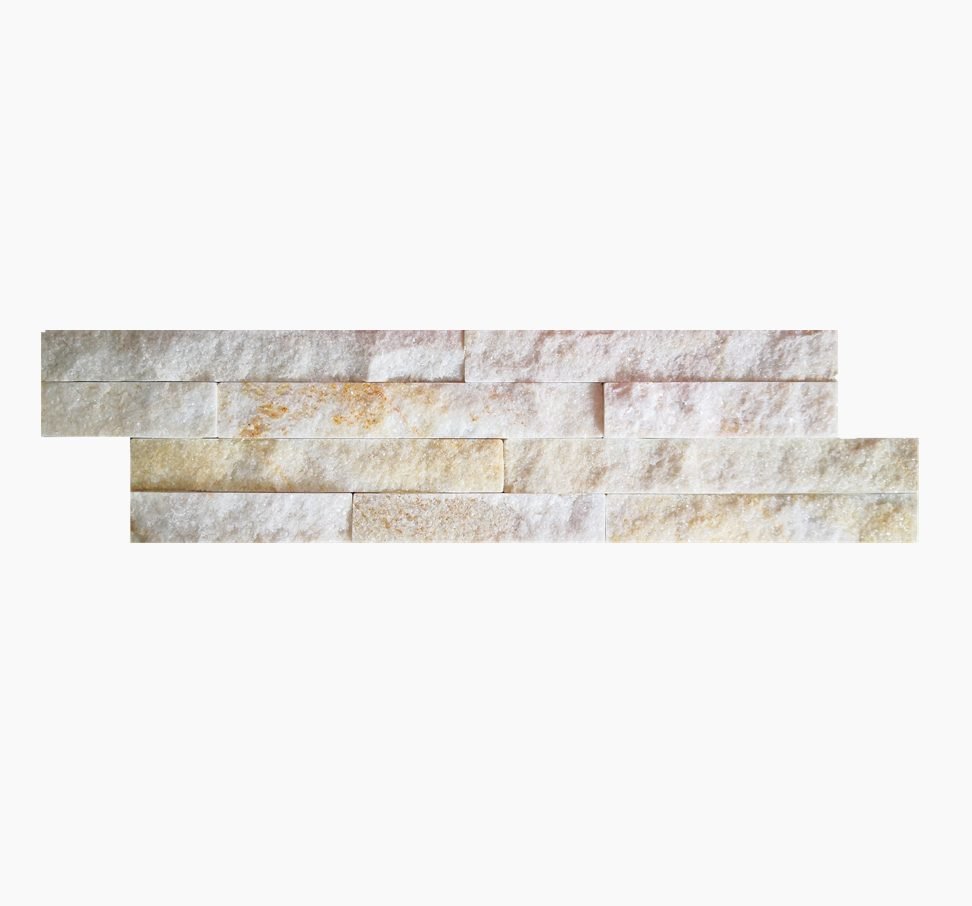
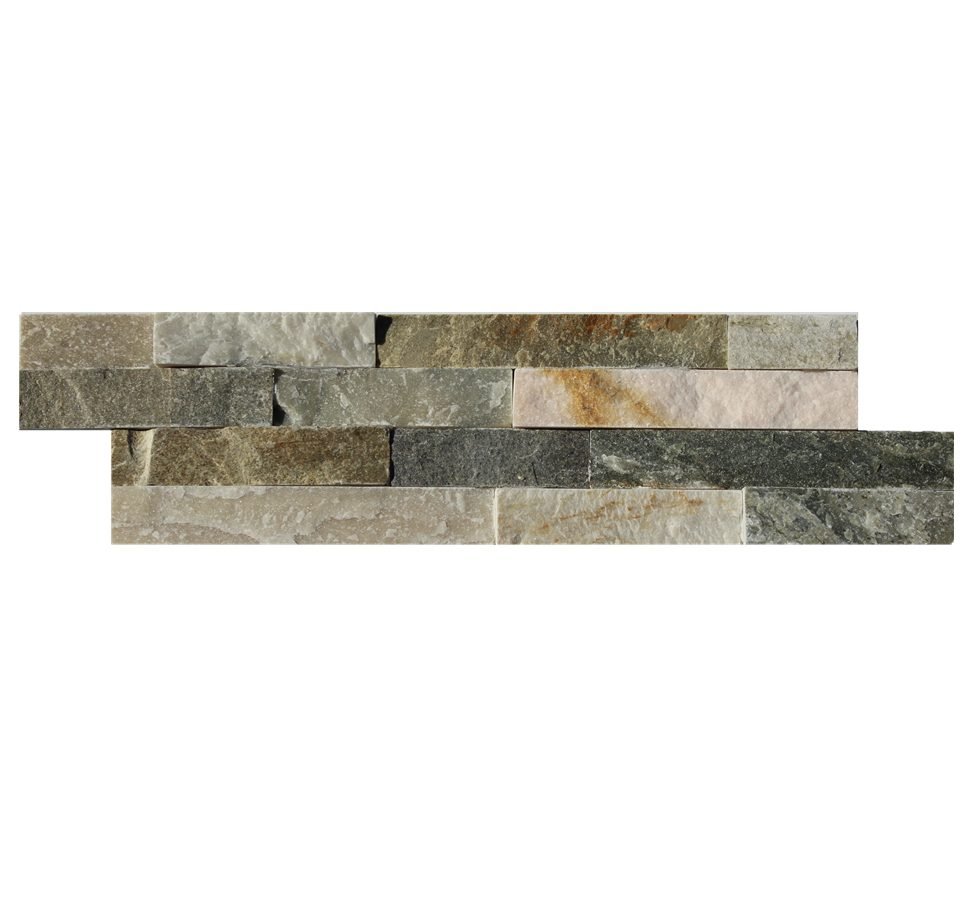
Firelight is amber, orange, and low. A stone that looks right in daylight can flatten in that light, which is why warm quartzite tones dominate fireplace photography and cool grey tones dominate exterior cladding. The catalog of ledgestone colors maps cleanly onto this rule.
| Color | Read near firelight | Best room mood |
|---|---|---|
| Bronze sparkle quartzite | Deep warm brown with mineral sparkle | Luxury lounges, dark linear units |
| Rustic copper quartzite | Rust and ochre, holds up in low light | Farmhouse and rustic modern |
| Cream quartzite | Soft warm white, brightens the room | Scandinavian, light minimalism |
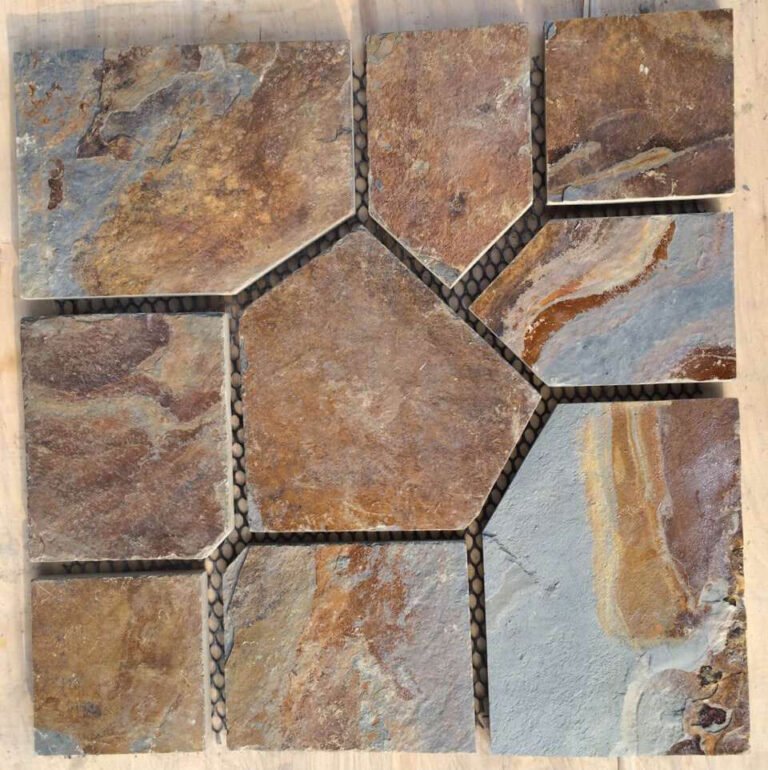
| Multicolor slate | Breaks the monotone, adds depth | Cottage and transitional designs |
| Sparkle ice grey quartzite | Cool contrast — pair warns the firebox opening | Urban minimal, cool grey interiors |
Colors also carry a practical angle for the person ordering stock. Warm quartzite ledger sells across interior and exterior uses, so a distributor can hold one warm color and feed fireplace, kitchen, and facade projects from the same inventory. A single cold specialty color, by contrast, sits tied to one design style and one set of projects.
Hearth and Mantel Pairing
The hearth is the floor plane of the fireplace and the one place you should refuse to cheapen. A capstone or hearth slab in a dense quartzite gives the firebox a base that is easy to sweep and impossible to scorch. Keep the hearth projection and its height compliant — the stone itself is non-combustible, so the geometry, not the material, drives the code limits.
Mantel pairing runs on a simple rule: match the finish or sharply contradict it. A ledge stone surround with a wood mantel works when the stone is a cool, flat tone and the wood is warm and textured; it fights when both materials carry busy grain. For a clean, continuous look, spec a mantel slab in the same quartzite family as the surround — the relationship reads intentional, and the two surfaces will age identically.
Height and proportion close the specification. The mantel line should sit comfortably above the opening, and the stone field should extend past the mantel ends far enough to frame it — a mantel that hangs over the edge of its own stone looks unfinished. When in doubt, run the ledger courses at least 30-40 cm beyond each side of the mantel before you finish the wall.
Installation Realities Around the Firebox
Fireplace installation fails in predictable places, and none of them are the stone. The sequence is substrate, firebox clearance, and joints — in that order. Ledgestone panels mount on a sound non-combustible substrate such as cement board or metal lath backed with mortar. Verify the substrate before the panels arrive: a surround installed over drywall in a zero-clearance application shows up later as movement and cracked joints.
Clearances are the second checkpoint. Follow the appliance manufacturer’s minimum distances to combustible materials — that is the figure that drives the design, not the panel. Natural stone is non-combustible, but the framing behind it may not be, and local code or the appliance manual decides the geometry. Install the firebox, dry-fit the stone around it, then commit adhesive.
Joints decide whether the wall reads as one surface or a collection of tiles. On ledger courses, keep grout lines consistent and flush or slightly recessed; the pattern is repeated, so any variation shows. Use a sanded grout or mortar matched to the stone tone, and tool all joints before they harden. Cutting at the firebox edges should happen off the wall, with a wet saw or angle grinder fitted with a diamond blade — the same approach documented for cutting stone veneer panels — so the dust and chips never touch the finished surround.
Sealing is a judgment call. Interior surrounds away from splash do not strictly need a sealer, but a penetrating sealer makes cleaning easier and deepens the color of warm quartzite. Apply it after grout cures, test on a sample first, and never film-seal a fireplace surround — the surface needs to breathe in the heat zone. Sealing natural stone veneer the right way is a one-day task that protects a ten-year wall.
Source the fireplace panels direct from the quarry.
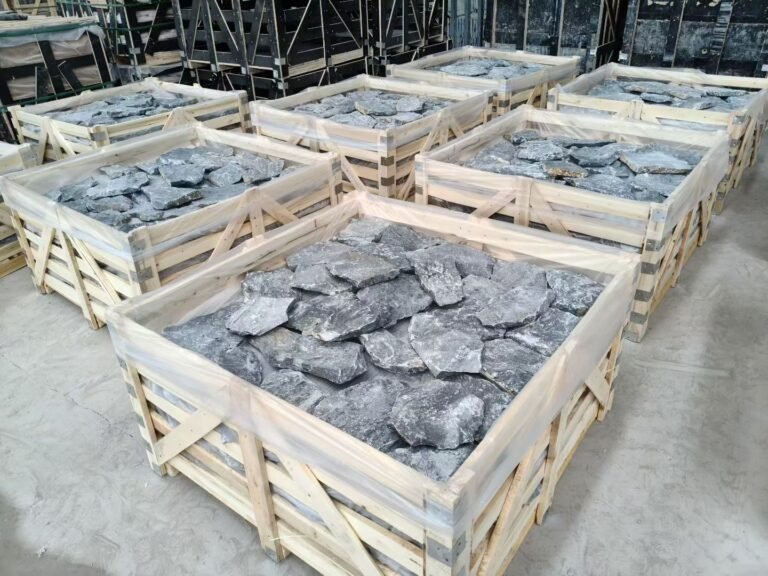
Top Stone Panels cuts thin ledgestone panels in the 36x10cm ultra-thin format across five warm quartzite and slate colors, with prepared corner pieces and 1-3 day samples for approval. Wholesale MOQ is one 20GP container, production runs 20-25 working days, and every shipment leaves Xingang under the zero-breakage packaging protocol.
36x10cm thin format Corner pieces included 1-3 day samples
What to Order: Coverage Math for a Fireplace
Fireplace orders fail on the same numbers every time: square meters, waste allowance, and lead time. Measure the facing area — the full stone field, not just the surround around the opening — multiply by 1.10 to 1.15 for cuts, corners, and returns, and order panels by coverage. A single-sided residential unit with a partial surround typically lands between 3 and 6 m²; a full-height wall doubles it.
L-corner pieces are the hidden line item. Thin ledger panels turn outside corners with prefabricated corners or field-cut returns, and the difference in install labor is real — prepared corners cut the job by roughly half on corner-heavy designs. Confirm the corner count before Production starts; adding corners after the order is placed changes the cutting schedule.
| Project size | Coverage to order | Notes |
|---|---|---|
| Partial surround, single side | 3-6 m² | Add L-corners for the jambs |
| Full-height feature wall | 6-8 m² | Floor-to-ceiling on 3 m ceilings |
| Double-sided / room divider | 8-12 m² | Two faces plus edge returns |
Lead time is the number that actually plans a project. Standard production at the factory runs 20-25 working days, and a first order with custom printed cartons runs 25-30 days because the box artwork takes a pass. Add shipping from Xingang to the port. Plan the fireplace order the way a sample evaluation checklist plans the tones: approve the 1-3 day sample first, lock the color, then let production run.
FAQ
Is ledgestone good for fireplace surrounds?
Yes. Thin ledgestone panels are natural stone laid in horizontal strips, and the material is non-combustible with A-class fire behavior, which suits the heat zone around a firebox while delivering a clean linear texture.
What color ledgestone looks best around a fireplace?
Warm tones do the work in firelight: bronze sparkle quartzite, rustic copper, and cream quartzite stay lively under low warm light, while grey and charcoal read more minimal. Confirm the tone with a physical sample first.
Can I install ledgestone over a wood mantel?
Only if the mantel is built to the appliance manufacturer and local code clearances. Natural stone mounts on a non-combustible substrate, and the wood mantel itself must sit outside the required clearance zone.
How much ledgestone do I need for a fireplace surround?
Measure the stone-facing area in square meters, add 10-15 percent for cut waste at corners and returns, then order panels by coverage. A standard residential surround uses roughly 3-6 m².
Why does ledgestone look better than stacked stone on a fireplace?
Ledgestone runs in true horizontal courses that read modern and calm, while stacked stone uses random ledges that read rustic. Both are natural stone; the choice is wall texture, not performance.
Conclusion
A ledgestone fireplace is a texture decision, not a material compromise. The horizontal courses give the firebox a scale it can live in, the natural stone body carries non-combustible behavior, and the warm quartzite tones hold their character exactly where a fireplace spends its life — under low, warm light.
Key takeaways:
- Spec the 36x10cm ultra-thin ledgestone format for the cleanest linear read and the best coverage per container.
- Prefer warm quartzite tones (bronze sparkle, rustic copper, cream) for interiors; they hold color in firelight.
- Confirm firebox clearances from the appliance manual, then install on non-combustible substrate with consistent grout lines.
- Order 1-3 day samples before the container, and add 10-15% coverage for corners and returns.
Ready to put a warm quartzite ledger wall in front of a fire? Contact Top Stone Panels with the wall dimensions and the crew will quote panels, corners, and lead time from the quarry floor.