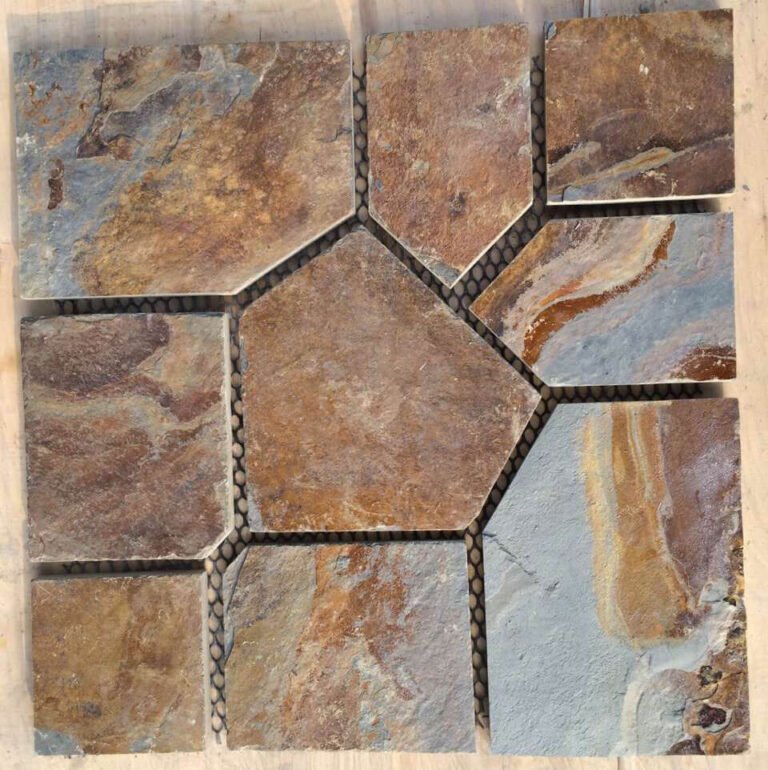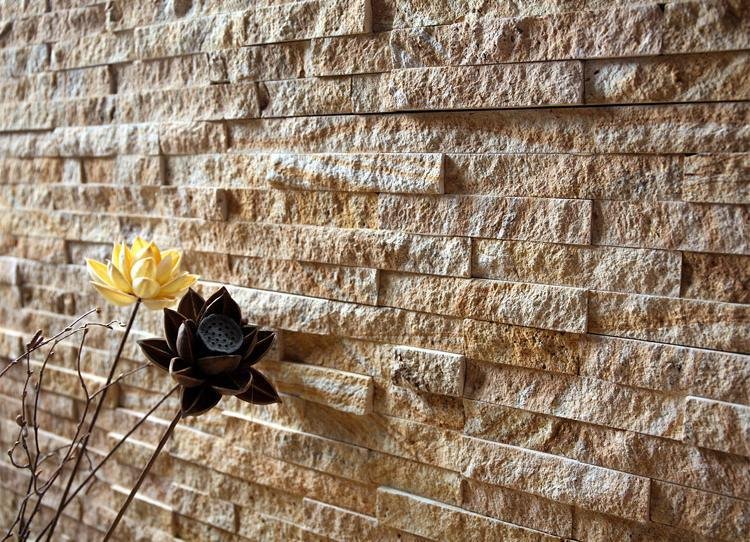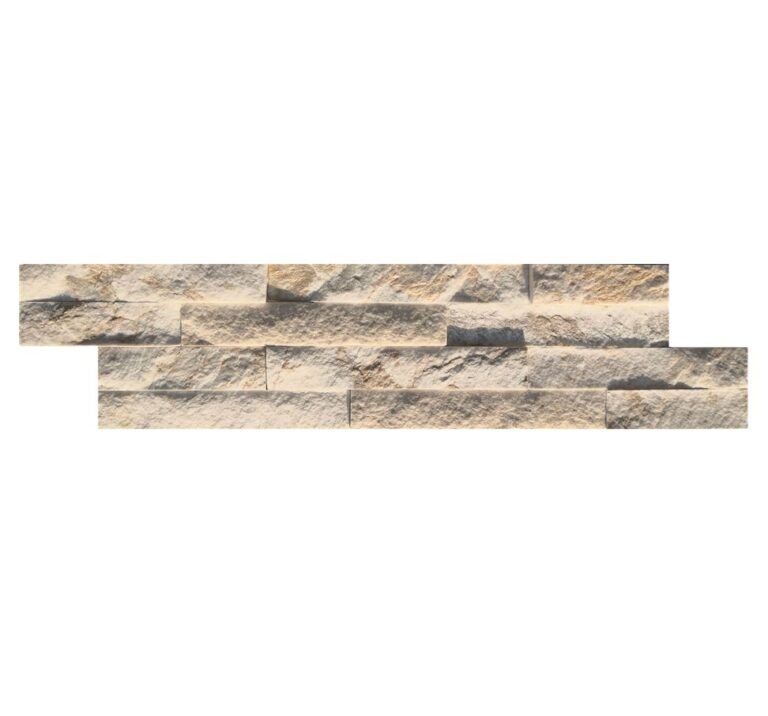
Most specifications for natural stone veneer say “cleft face” or “sawn face” as if the two were opposite product categories. In a panel factory they are not. A split-face panel is cleft on the visible face so it looks like quarried rock, and sawn on the top and bottom edges so it stacks in a straight course. A sawn-finish panel is cut flat because the designer wants the geometry, not the texture. The real question you are answering when you choose between sawn vs cleaved stone veneer is which face your project needs to live with for the next thirty years.
This comparison is written for specifiers, contractors, and distributors who order veneer in container quantities, not in boxes. You will get the production difference behind each face, a side-by-side table you can lift into a spec, the joint and water behavior each face forces, and a clear choice framework. The factory numbers come from Top Stone Panels, the slate and quartzite quarry exporter in Yixian County, Hebei, which has exported natural stone panels for 18+ years and ships 220+ containers a year.
- Cleft (split-face) veneer is split along the stone’s natural cleavage plane; sawn veneer is cut flat with a diamond blade. Many panels combine both: cleft face, sawn top and bottom edges.
- Thickness tolerance and straight edges come from the sawn pass, which is why infrared CNC diamond cutting and a three-step factory QC keep panels uniform.
- Joint and water behavior follow the face: cleft wants wider, variable mortar joints; sawn allows tight 1/8-inch lines that shed water in a predictable plane.
- Choose cleft for rustic, random, weathered looks; choose sawn for modern minimal facades where line rhythm and flat light matter.
- Top Stone Panels produces cleft-face thin veneer, ledgestone, and stacked stone panels at 15x60cm and 15x55cm, with samples in 1-3 days and an MOQ of one 20GP container.
1. What Cleft and Sawn Mean on a Panel
Cleft comes from splitting. Slate and quartzite have a natural cleavage plane, a direction in which the rock splits into flat layers. When a worker or a hydraulic splitter breaks veneer along that plane, the result is a cleft face: rough, irregular, and distinctly textured, with no two pieces identical. This is the classic “natural stone” look buyers picture when they order split-face cladding.
Sawn comes from cutting. A diamond blade slices the stone to a controlled flat plane, so the face is smooth and the thickness is consistent edge to edge. At Top Stone Panels the cutting pass runs on infrared CNC diamond saws, which hold the panel to a tight tolerance. Sawn faces read as precise and architectural; they show the mineral pattern of the stone, but they do not show the irregular rock-face texture of cleft.
The two terms also describe edges. A “sawn edge” is a straight, square-cut edge; a “cleft edge” is the ragged end of a split piece. In panel production the practical product combines them: the face is cleft for texture, and the top and bottom edges are sawn so the next course sits flat. Thin stone veneer from the slate and quartzite quarries is assembled from natural split-face pieces, sorted by same-vein color to keep the wall uniform while every piece stays individual.
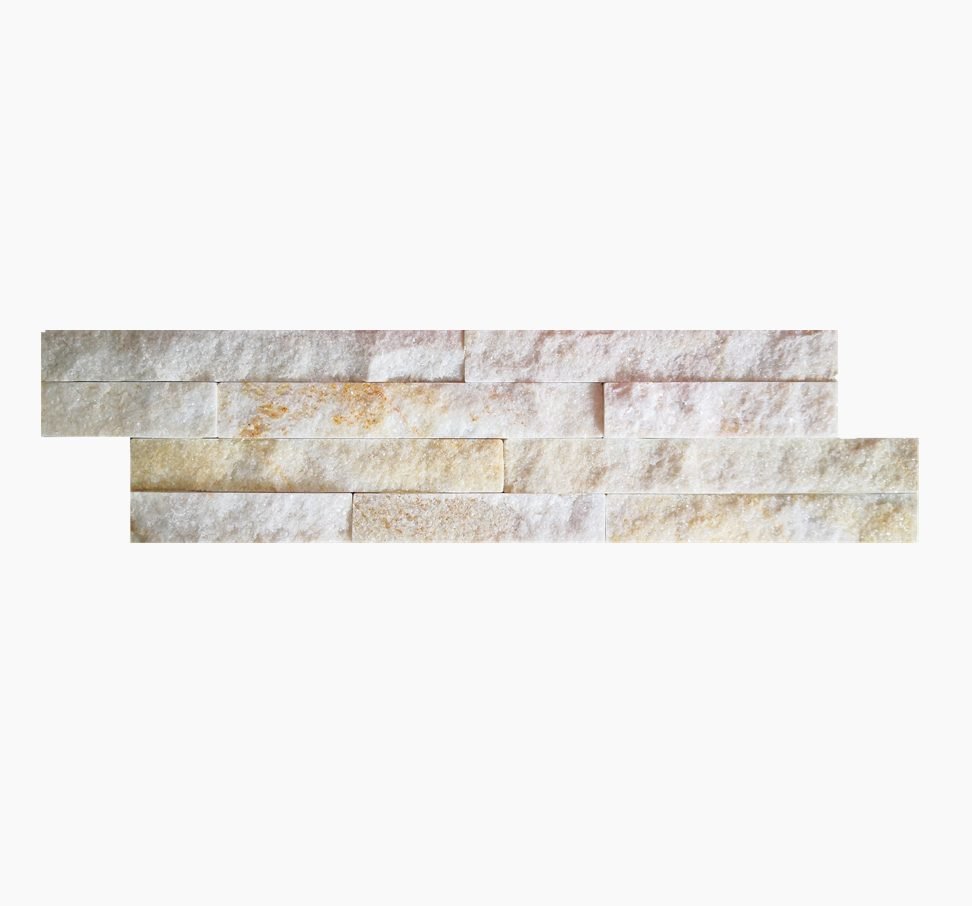
That combination is the reason “sawn vs cleaved” is a face-finish question rather than a product-category question. If a supplier tells you a panel is “100 percent cleft,” ask how the top and bottom edges were straightened. If a buyer tells you sawn always looks fake, show them a flat quartzite panel cut across a vivid vein pattern. Both finishes are genuine natural stone; the finish describes how the face was made, and the material beneath is the same. The Natural Stone Institute’s stone type guide maps hardness, water absorption, and frost resistance by family, so the finish conversation can stay where it belongs: on appearance and joints.
2. Cleft vs Sawn at a Glance
Use this table when you need to translate a design conversation into a purchase specification. The rows are the decision points that actually change cost, installation, or performance. Values in the “Practical result” column are the typical patterns you will encounter on panelized thin veneer; your project’s specific product data sheet should confirm them.
| Decision point | Cleaved / split-face | Sawn finish |
|---|---|---|
| Face texture | Rough, irregular, each piece unique | Flat, smooth, consistent surface |
| Edges | Ragged cleft ends; sawn top/bottom for stacking | Straight, square, uniform on all cut edges |
| Thickness consistency | Varies piece to piece within tolerance | Held tight by the saw pass |
| Joint style | Wider, variable mortar joints | Tight, uniform 1/8-inch lines |
| Look | Rustic, random, quarry-weathered | Modern, linear, architectural |
| Installation | More mortar to bed; forgiving of wavy substrate | Flat plane bonds easier; reveals substrate waviness |
| Water behavior | Texture sheds and scatters; joints manage runoff | Predictable plane; tight joints shed evenly |
| Typical machining cost | Lower per piece; more color sorting labor | Adds the sawing pass; less sorting needed |
Two rows deserve emphasis because they surprise buyers. First, cleaved work is not automatically cheaper: the factory pays for face sorting instead of sawing, and same-vein color selection is real labor. Second, sawn faces do not hide substrate problems. A flat panel bonded to a wavy wall shows every high and low spot in the reflection of light, which is why the flat surface is a spec decision, not a shortcut. If you are choosing between the two for the first time, the texture pattern reference in the random, linear, and ashlar layout guide shows how each face type behaves on a real elevation.
3. Why the Face Drives Joints and Water
Joint width is not a grouting preference; it is a consequence of the face. A cleft wall with tight joints looks wrong, because the irregular edges leave wedges and voids that mortar must fill. Standard practice for cleft work is a variable joint that widens and narrows along the piece, usually a half-inch to a full inch in bed depth, which means more mortar per square meter and more patience at the trowel. A sawn wall takes the opposite discipline: uniform 1/8-inch lines that read as crisp grid lines across the elevation.
Water management follows the same logic. On a sawn face, water hits a smooth plane and runs down it in a predictable path, so flashings and drip edges do their job evenly. On a cleft face, the texture arrests some water and lets it find crevices, which is fine for a vertical wall with a proper weather barrier but a reason to inspect horizontal ledges and window sills more closely. Natural slate and quartzite panels are rated for -30°C to +50°C cycling, so the stone itself is not the weak link in a freeze-thaw climate; the water that sits in a badly sloped joint is. That is why our weatherproofing guide for veneer joints and seams pushes the same three details for both faces: positive slope on ledges, flashing at terminations, and a continuous weatherproofing layer behind the veneer.
There is one place the two faces genuinely differ in installation technique. Cleft pieces bed into a full mortar bed more easily because the rough back and wavy face hide minor coverage gaps. Sawn panels demand full mortar coverage against a flat back, and a skilled installer checks coverage by pulling a panel or inspecting the notched trowel lines in a test area. Flat faces make bond easier to verify; they also make it easier to fail if the crew skips the coverage check. The lesson is not that one face is better, but that the choice assigns a different installation skill to your project.
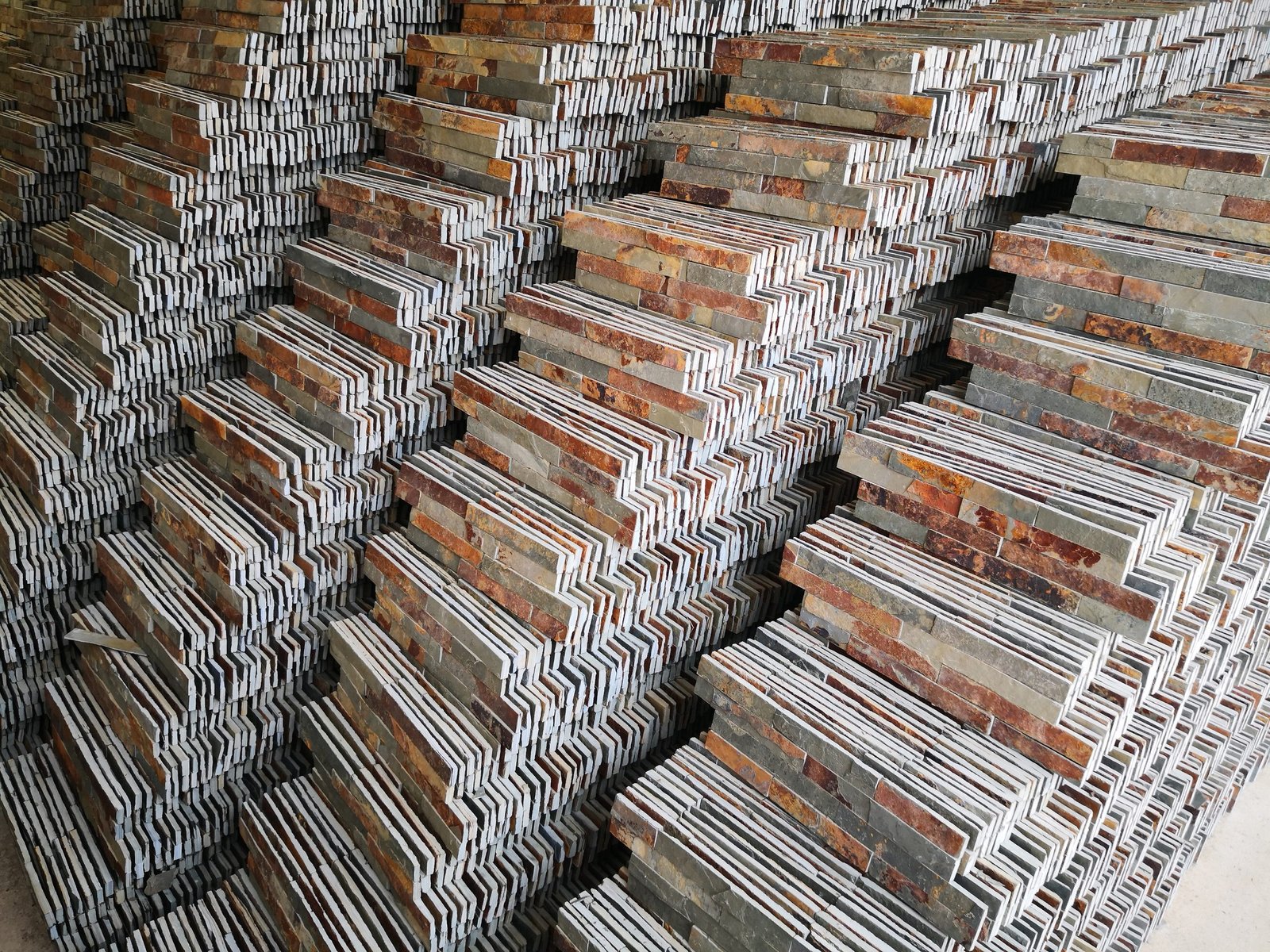
4. Inside the Factory: How Both Finishes Are Made
A thin veneer panel starts as quarried slate or quartzite, split or sawn into pieces, then assembled on a backing. The face finish is set by two decisions: which plane the piece comes from and whether a blade touches it after splitting. At Top Stone Panels the sequence runs through infrared CNC diamond cutting, batch-specific vein selection, and a three-step factory QC: raw material selection, in-process inspection, and pre-shipment inspection.
The thin ledgestone panel in the 36x10cm ultra-thin format is the clearest example of the mixed-finish product. The face is split or tumbled to look like ledger stone; the top and bottom edges are sawn so the thin course lines up. If you hold one panel, the contradiction resolves itself: texture where the eye looks, geometry where the trowel works. The same logic applies to stacked stone panels at 15x60cm and 15x55cm, where sawn top and bottom edges plus prefabricated L-corners keep the corner pieces in the same course rhythm.
Color control is a factory process, not a face finish. Because natural stone varies across a quarry block, Top Stone Panels picks material by vein and sorts batches so one wall does not mix a light end and a dark end of the same color family. Sawn faces show this discipline more plainly because a flat polished surface makes color shifts obvious; cleft faces absorb some variation in the texture. Buyers who want a uniform modern look should ask for batch-specific vein selection in the purchase specification, and buyers who want a natural mixed wall should confirm which color percentages they are signing up for. The quartzite range is the hardest material in the lineup and shows the same behavior on both finishes.

5. The Cost Trade-Off Buyers Skip
Buyers assume cleft is cheaper because it skips the sawing pass. The factory ledger says otherwise. Cleft sorting is labor-intensive: a worker reviews each split piece for thickness, color, and breakage before it reaches assembly. Sawn material passes through a machine with a predictable yield. For comparable panelized product, the two finishes land within a few percent of each other, and the bigger price drivers are thickness, backing type, and corner pieces.
Run the arithmetic on a typical facade and the finish cost becomes noise. A 100-square-meter wall at the 15mm to 40mm veneer thickness range takes roughly 5 to 6 tonnes of stone at around 50 kg per square meter. A modest per-meter delta between cleft and sawn finishes changes the total by a few hundred dollars on a container-scale order, while the joint decision changes installation labor by measurable days. If a supplier quotes a dramatic price jump for sawn or a dramatic discount for cleft, question the material quality rather than celebrate the finish.
| Cost line | What moves it | Cleft vs sawn effect |
|---|---|---|
| Material selection | Vein, color family, waste rate | Cleared pieces add sorting labor |
| Machining | Sawing, edge finishing | Sawn adds the cutting pass |
| Backing and corners | Cement, mesh, epoxy; L-corners | Same for both; corners dominate |
| Installation | Mortar volume, joint labor | Cleft uses more mortar and joint time |
Specify the face the design needs, not the price the finish suggests.
Top Stone Panels supplies cleft-face thin veneer, sawn-edge ledgestone and stacked stone panels, flagstone, column kits, and interlocking z-panels, all quarry-direct from Yixian County with an MOQ of one 20GP container. Ask for physical samples of both finishes side by side; they ship in 1-3 days.
6. Which Finish Should You Specify?
The decision table below states the rule this section argues for: the finish should follow the building language, not the brochure. If the architecture asks for rough masonry, natural variation, and weathered patina, specify cleft. If it asks for clean lines, flat light, and tight geometry, specify sawn.
| Project language | Specify | Why |
|---|---|---|
| Rustic, farmhouse, Tuscan, natural garden | Cleft face | Texture carries the design; variable joints read as hand-laid |
| Modern minimal, commercial lobby, mixed-use | Sawn finish | Flat faces hold tight joint grids and clean elevation rhythm |
| High-traffic low zone | Cleft or rockface | Texture hides scuffs and handprints visible on flat faces |
| Facade with complex soffits and banding | Sawn finish | Straight edges mate with metal flashings and trim |
Two professional notes to carry into the conversation. First, interior versus exterior rarely changes the finish choice; it changes the joint and sealing detail. A cleft wall in a hotel lobby is a texture statement, and the same wall outside a beach club needs the weatherproofing system behind it. Second, if your project straddles the two looks, specify a mixed elevation deliberately: sawn panels for the main plane with cleft accents at columns and entries, so the contrast reads as designed rather than inherited. The natural thin stone veneer guide covers how the 15mm class of sawn and cleft products fits facades that used to require full-thickness stone.
7. Sourcing Notes for B2B Buyers
Ordering veneer in container volumes makes the finish decision easier, because the factory can lock both aesthetics into one production run. At Top Stone Panels the standard arrange is split-face natural veneer as loose stone, ledgestone and stacked stone panels with sawn edges, and interlocking z-panels for faster installs, all from the same quarry sourcing and vein-selection process.
- Ask for a face-finish control sample in the spec: a physical sample of the exact cleft intensity or sawn surface, plus the color range you approve. Samples ship in 1-3 days.
- Confine the finish to the face, not the edge: confirm whether top and bottom edges are sawn for stacking, and whether corner pieces match the same course height.
- Budget the production clock: standard orders run 20-25 working days, first orders with custom boxes run 25-30, and the MOQ is one 20GP container per product line.
- Lock the batch: specify same-vein batch selection so reorders color-match the approved sample rather than drifting.
- Ship under the zero-breakage protocol: steel-strapped crates, multi-layer cartons, and container air bags protect sawn edges, which are more fragile than cleft faces.
The thin stone veneer explainer remains the best starting point for buyers new to the format, and the slate panel guide covers the cleaving behavior of the most popular export material. Between the two, you can write a finish decision that survives the transition from design review to purchase order.
FAQ
What is a cleaved stone veneer face?
A cleft or cleaved face is made by splitting stone along its natural cleavage plane. The result is a rough, irregular, textured surface where each piece is visually unique.
Is sawn stone veneer real stone?
Yes. Sawn veneer is real natural stone cut flat with a diamond blade. It is often a higher-purity presentation of the same slate or quartzite used for split-face work.
Which veneer finish is easier to install?
Sawn panels bond to a flat plane and accept tight uniform joints; cleft pieces need a fuller mortar bed and wider variable joints. Each takes a different installer skill, not a different difficulty level.
Can I mix cleft and sawn veneer on one wall?
Yes, and it is a deliberate design move when planned: sawn panels for the main plane with cleft accents at columns, entries, or banding lines. Order both finishes from the same batch to keep color aligned.
Does cleft or sawn veneer cost more per square meter?
For comparable panelized product the two are close; sawn adds a machining pass while cleft adds color-sorting labor. Thickness, backing type, and corner pieces move the price more than the face finish.
Conclusion
Sawn vs cleaved stone veneer is a face-finish decision, not a material-quality decision. Cleft gives you the quarried irregular texture and variable joints; sawn gives you the flat plane, the tight grid, and the reliable water path. Most panelized products quietly combine both, with cleft faces and sawn stacking edges, which is why a physical sample beats a written description every time.
Key Takeaways
- Cleft faces come from splitting along the natural cleavage plane; sawn faces come from diamond-blade cutting. Many panels use cleft faces with sawn top and bottom edges.
- Joint width and water behavior follow the face: cleft needs variable half-inch-plus joints, sawn runs tight 1/8-inch lines with a predictable runoff plane.
- Finish cost is minor next to thickness, backing, corners, and installation; a flat-face or textured-face premium of a few percent should not drive the spec.
- Specify cleft for rustic and textured projects, sawn for modern and geometric ones, and confirm batch-specific vein selection so reorders match.
Ready to compare both finishes on real stone? Top Stone Panels ships samples of cleft-face thin veneer and sawn-edge ledgestone or stacked stone panels in 1-3 days, at an MOQ of one 20GP container. Send your elevation dimensions and we will quote the mix your design needs.