If you distribute or specify natural stone cladding, you already know that stone veneer thickness isn’t just an aesthetic choice. It determines how much weight your substrate must carry, how many square meters fit in a container, and whether the product survives a Canadian winter or a Florida summer without blinking.
Yet most supplier data sheets bury these numbers — or leave them ambiguous. You’ll see “thin stone veneer” listed without anyone clarifying whether that means 8mm face stone or 25mm total panel depth. That ambiguity costs money. It leads to over-ordering freight, under-engineering wall ties, or specifying a product that can’t handle the climate it’s headed for.
We’ve spent 18 years manufacturing and exporting natural stone cladding at Top Stone Panels. This guide lays out exactly what the thickness numbers mean, where each range performs best, and how it hits your bottom line at the container level.
Understanding Stone Veneer Thickness — What the Numbers Mean
Before comparing products, let’s sort out three measurements that get confused constantly:
- Face stone thickness — the natural stone strip you see and touch. This is the slate, quartzite, marble, or sandstone layer. Typically 5–15mm.
- Total panel thickness — face stone plus whatever backs it (mesh, epoxy, cement). This is what sits against the wall after installation. Typically 10–40mm.
- Installed depth — total panel thickness plus adhesive or mortar bed. This is what your architect needs for clearance calculations.
When a supplier quotes “20mm stone veneer,” ask which of those three they mean. The difference matters — a 12mm face stone on cement backing might total 25mm, while a 12mm face stone on thin mesh might total 16mm. Same face, very different product.
Thickness Comparison at a Glance
| Category | Face Stone | Total Panel | Installed Depth | Typical Product |
|---|---|---|---|---|
| Ultra-Thin | 5–8 mm | 10–15 mm | 15–20 mm | Thin Ledgestone (36×10 cm) |
| Standard | 8–15 mm | 15–25 mm | 20–32 mm | Stacked Stone Panels, Z-Panels |
| Full-Thickness | 15–30 mm | 25–40 mm | 30–50 mm | Loose Stone Veneer |
Each range has its place. The right pick depends on your substrate, climate, design intent, and — let’s be honest — your freight budget.
Ultra-Thin Stone Veneer (5–15mm) — Where Weight Savings Pay Off
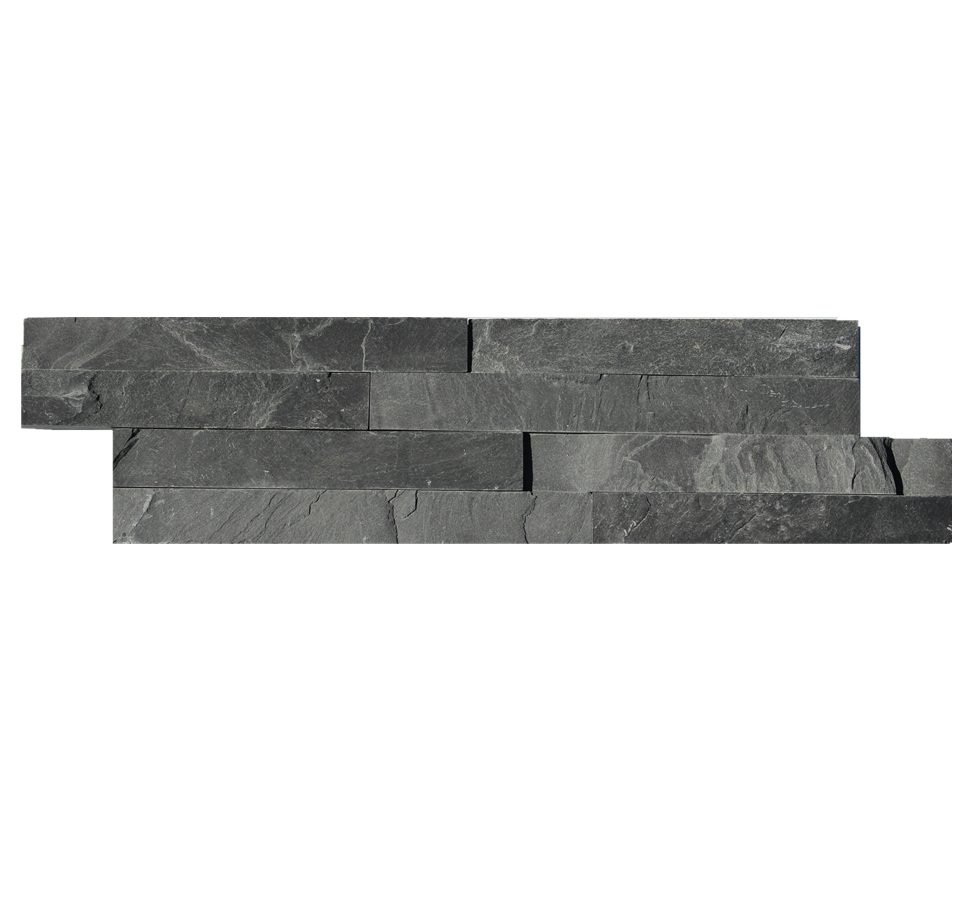
Ultra-thin stone veneer exists for one reason: when every kilogram counts. That covers more projects than you’d think.
Where It Works Best
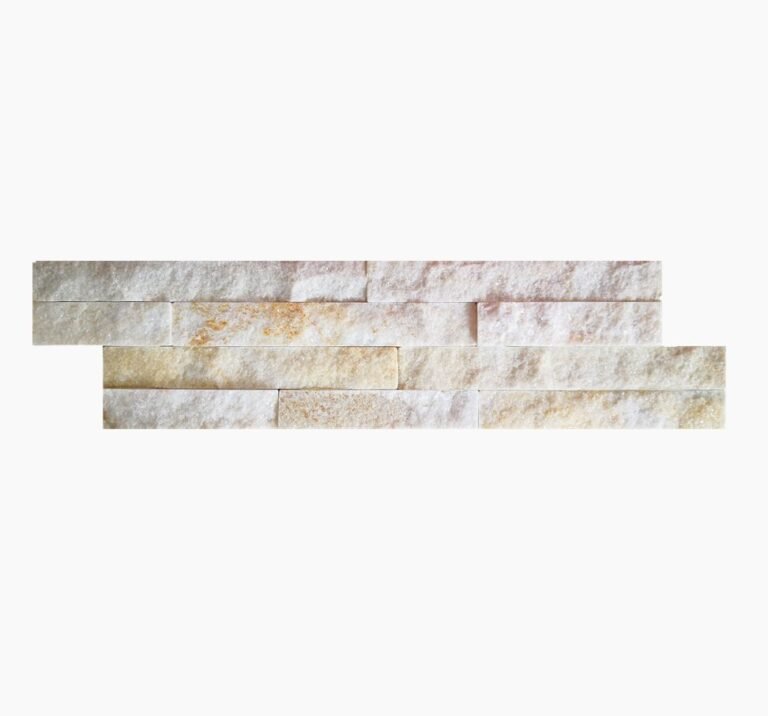
Interior renovations over existing walls. You’re not tearing out drywall or tile. You’re bonding stone directly to a sound substrate. At 5–8mm face stone with mesh backing, our thin ledgestone panels (36×10 cm) add minimal load. A standard interior wall in decent condition handles it without reinforcement.
High-rise and curtain-wall applications. Structural engineers charge by the dead load. Shaving 10–15 kg/m² off a facade specification can mean fewer steel supports, which cascades into real cost savings on a multi-story build.
Renovation over existing cladding. Got a tired brick or stucco exterior that’s structurally sound? Ultra-thin veneer goes straight over it. No demo, no disposal fees, no surprises behind the wall.
The Shipping Advantage Nobody Talks About
Here’s a number that matters to any distributor: at ultra-thin specs, a 20GP container can hold roughly 900–1,100 m² of thin ledgestone before hitting the container weight limit. Compare that to 400–550 m² for full-thickness loose stone in the same box. That’s close to double the coverage per shipment — and it directly reduces your per-m² landed cost.
For importers managing container mix orders across multiple stone types, thin products are the easiest way to maximize volume without blowing past weight restrictions.
Pro tip: If your market is renovation-heavy — think hotel remodels, retail refreshes, residential upgrades — ultra-thin should be a significant chunk of your inventory. The weight savings compound at every stage: shipping, handling, installation labor.
Standard Thickness Panels (15–25mm) — The Workhorse Range
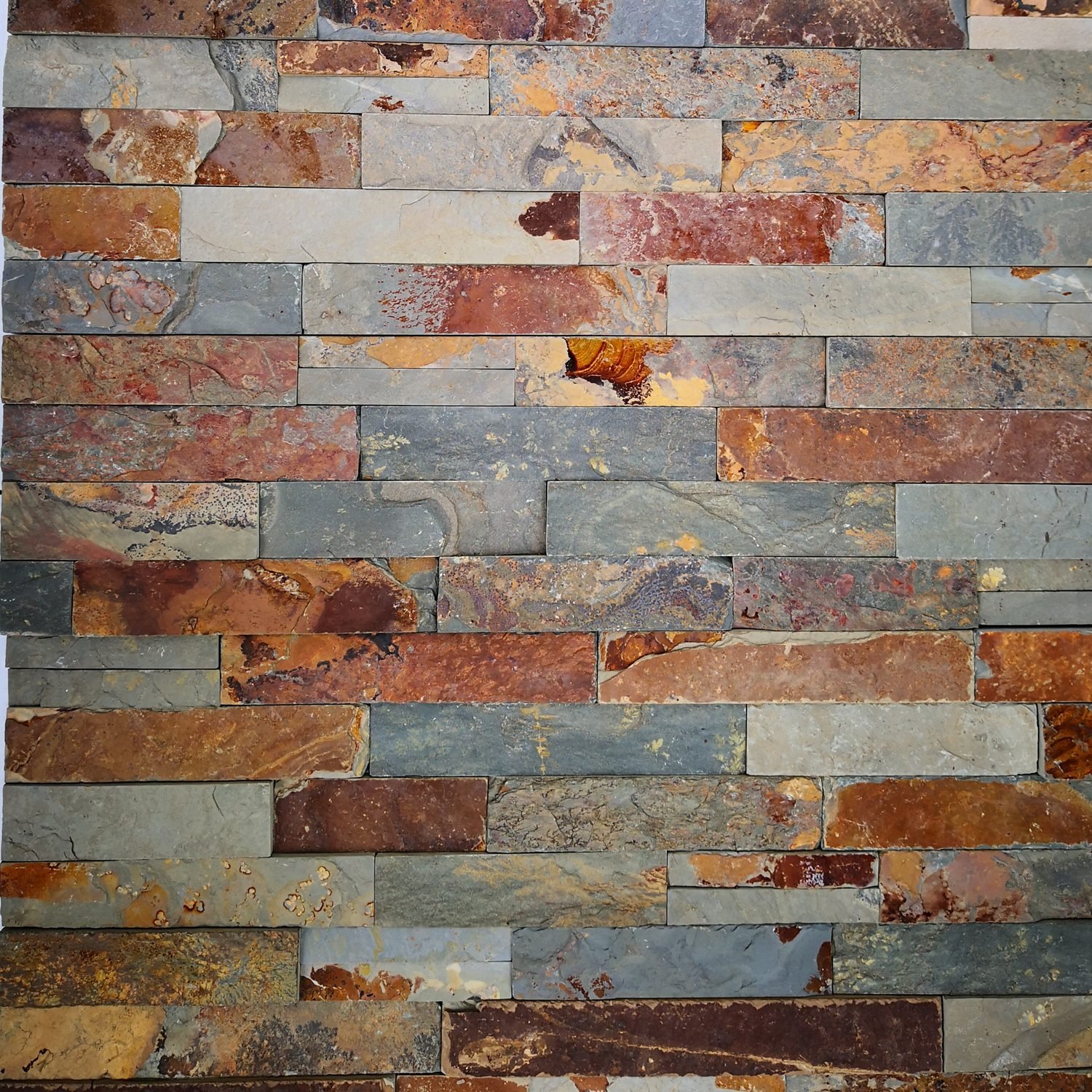
If ultra-thin is the specialist, standard thickness is the everyday carry. This is where most of the volume moves in the stone cladding trade, and for good reason.
Stacked Stone Panels
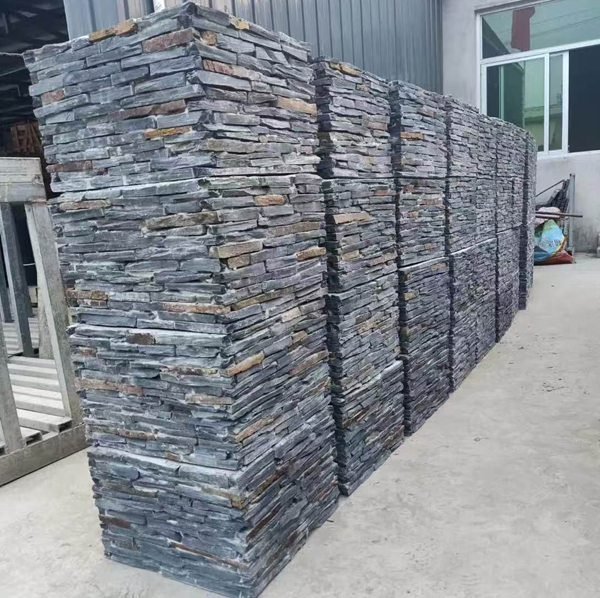
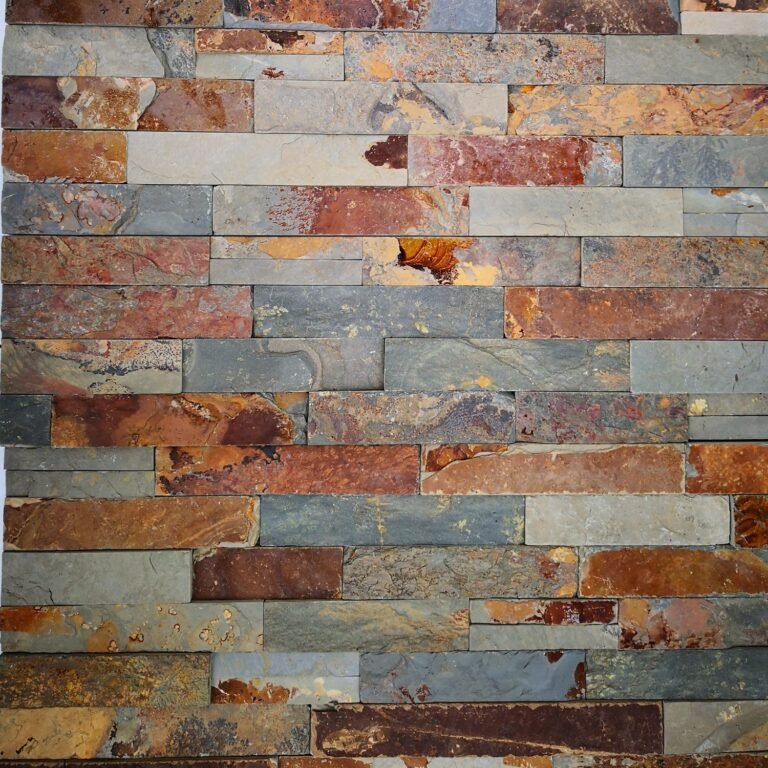
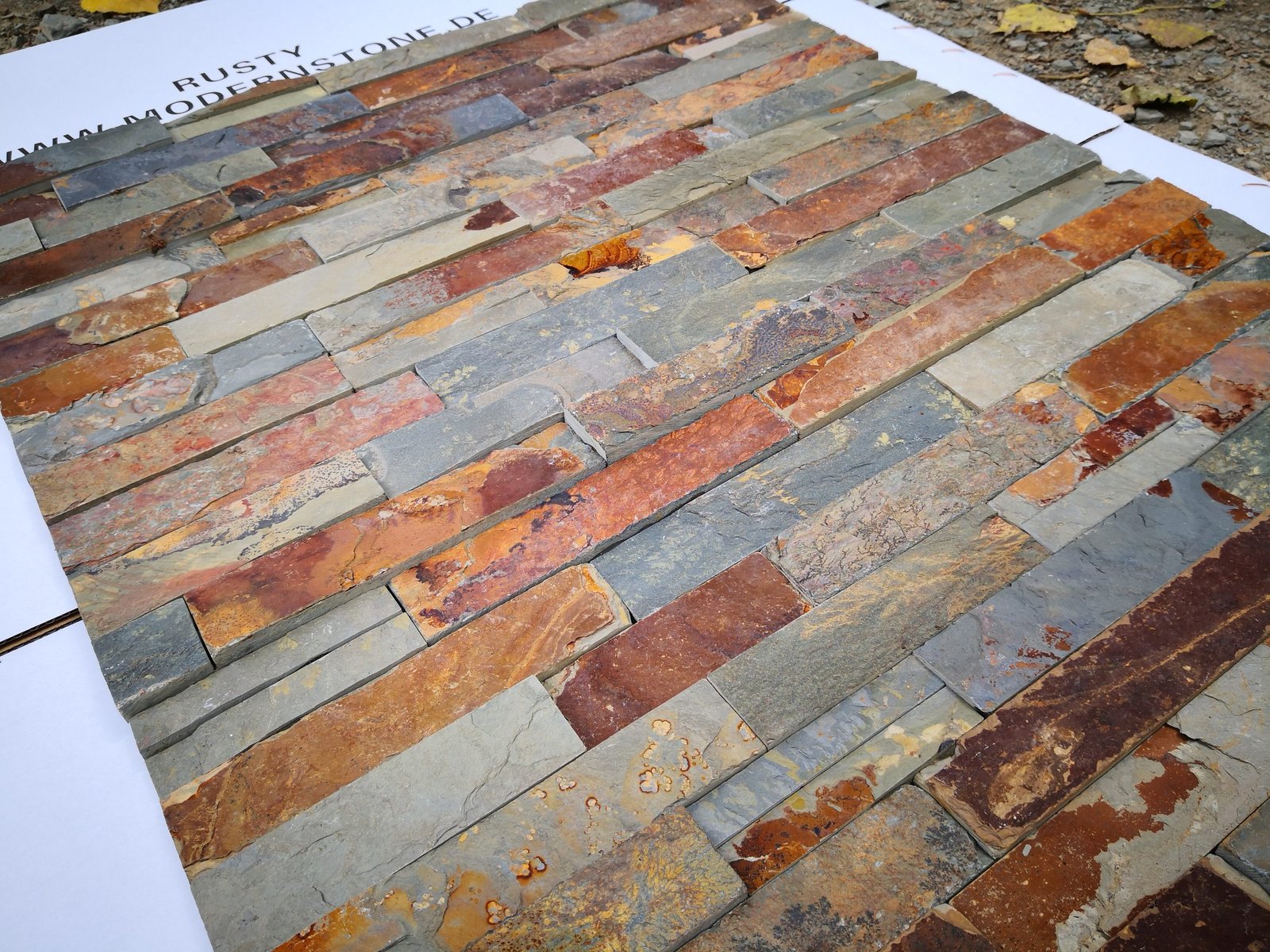
Our stacked stone panels come in 15×60 cm and 15×55 cm standard sizes. The natural stone strips run 8–15mm thick, bonded to either marine-grade epoxy or mesh backing. Total panel thickness lands between 20–30mm.
This is the range that balances durability with manageability. A single panel is light enough for one person to install, heavy enough to feel substantial. The interlocking strip pattern hides joints and creates that continuous split-face texture architects love.
Z-Panels and Stone Cladding
Our Z-panels (20×55 cm and 15.2×61 cm) use cement-backed or mesh-backed construction at 15–25mm total thickness. The Z-profile interlock simplifies alignment on large runs — installers don’t need to eyeball every course.
For a deeper look at exterior specifications including substrate prep and adhesive selection, see our stone cladding specification guide for exterior walls.
Best Applications for Standard Thickness
- Exterior walls on new construction — CMU, poured concrete, or properly prepared wood-frame with cement board
- Commercial facades — retail storefronts, office lobbies, restaurant exteriors
- Feature walls — both interior and exterior, where the design calls for visible texture and depth
- Foundation cladding — covering poured concrete or block foundations to match upper-wall aesthetics
Standard thickness handles freeze-thaw cycling without issue. Our products are rated from -30°C to +50°C, which covers everything from Scandinavian winters to Middle Eastern summers. The stone itself doesn’t care about temperature swings — what matters is the bond integrity, and that’s where manufacturing quality separates the reliable suppliers from the ones who generate warranty claims.
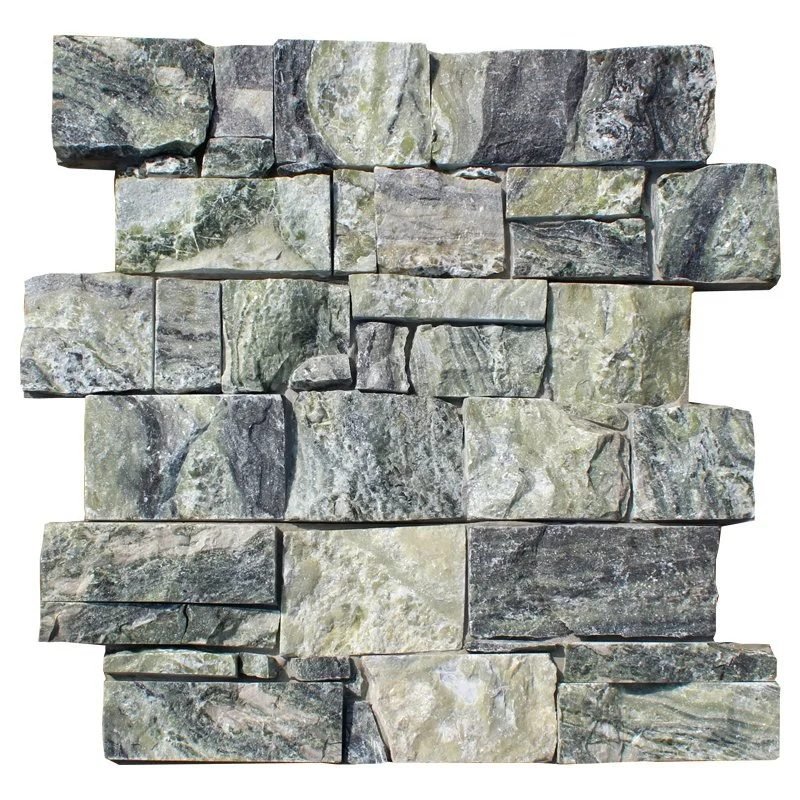
Full-Thickness Veneer (25–40mm) — When Structural Depth Matters
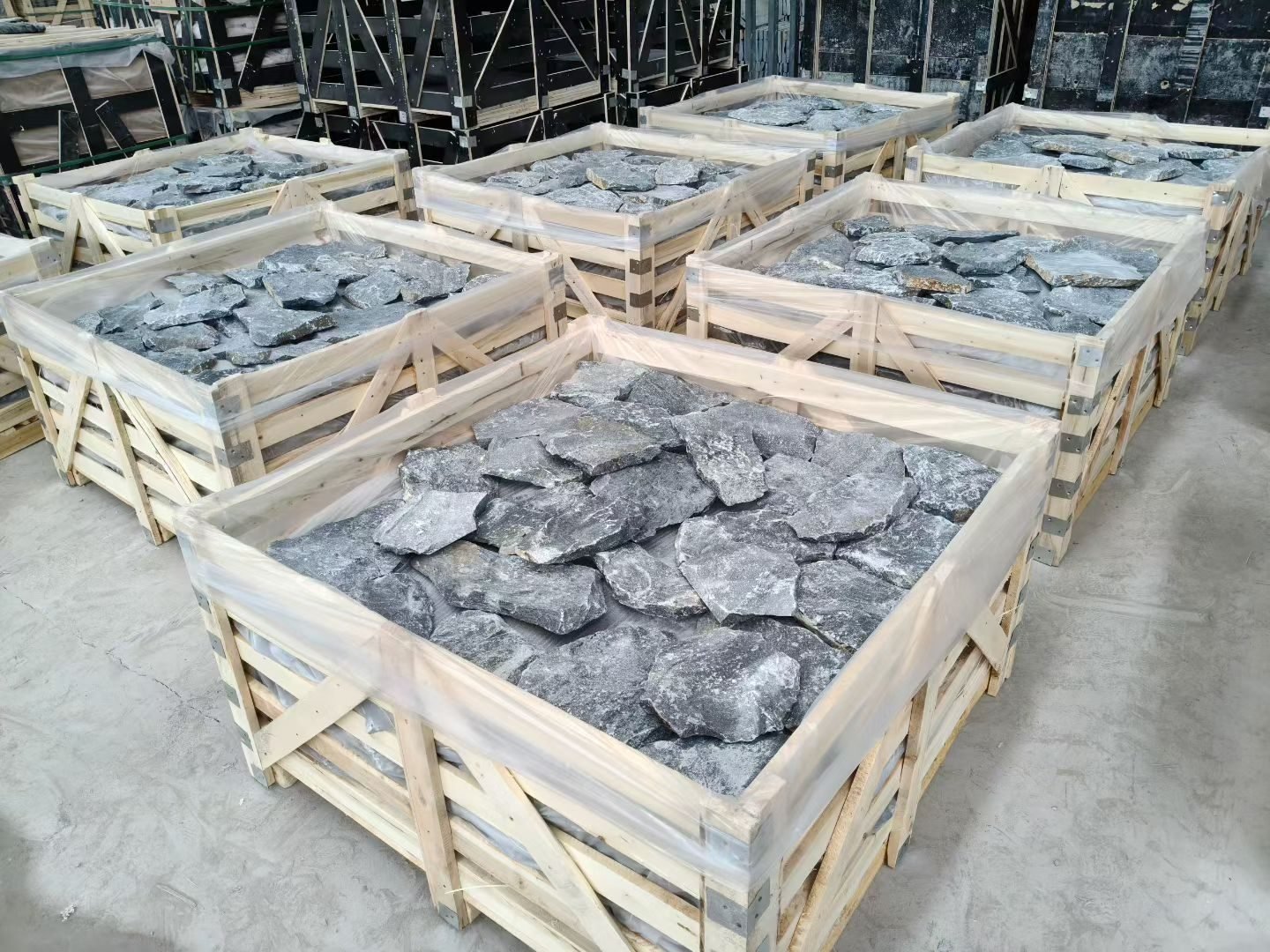
Full-thickness veneer occupies the space between standard panel cladding and traditional full-bed masonry. It’s not for every project, but when you need it, nothing else will do.
Loose Stone Veneer
Our loose stone veneer ships as random strips — batch-sorted from the same quarry to maintain color consistency. Face thickness runs 15–30mm, and because there’s no panel backing, the installed depth depends entirely on the mortar bed. Total installed depth typically falls in the 30–50mm range.
This product gives masons maximum creative freedom. Each stone is hand-placed, which means irregular patterns, variable shadow lines, and a look that panel-based systems can’t fully replicate. For more on how thin veneer compares to full-thickness traditional stone, check our thin veneer vs full-thickness comparison.
Where Full-Thickness Makes Sense
- Landscape feature walls — garden walls, retaining-wall caps, entry columns
- Pool surrounds and water features — the extra mass resists impact and handles constant moisture exposure
- Commercial lobbies with heavy traffic — elevator surrounds, reception walls, columns that might take a hit from carts or luggage
- Historic renovation — matching the depth and shadow profile of existing masonry
We also produce flagstone sheets for paving applications where thickness contributes to load-bearing performance, not just aesthetics.
How Thickness Affects Shipping Weight and Container Loading
This is where thickness stops being a design conversation and becomes a logistics spreadsheet. Let’s put real numbers on it.
Weight per Square Meter by Thickness
| Product Category | Approx. Total Thickness | Weight per m² | m² per 20GP (approx.) |
|---|---|---|---|
| Thin Ledgestone | 10–15 mm | 22–28 kg | 900–1,100 m² |
| Stacked Stone Panels | 20–30 mm | 35–45 kg | 550–700 m² |
| Z-Panels (cement-backed) | 15–25 mm | 38–48 kg | 500–650 m² |
| Loose Stone Veneer | 25–40 mm | 45–65 kg | 400–550 m² |
A 20GP container maxes out around 21–22 metric tons of payload (varies by shipping line and route). Natural stone is dense — roughly 2,600–2,800 kg/m³ for slate and quartzite. So the math is straightforward: thinner product = more square meters before you hit the weight ceiling.
What This Means for Your Landed Cost
Let’s say you’re ordering from Hebei, China, shipping through Xingang/Tianjin port. A container from Top Stone Panels carries:
- Thin ledgestone: ~1,000 m² at $X freight → freight cost per m² = $X ÷ 1,000
- Stacked stone: ~600 m² at $X freight → freight cost per m² = $X ÷ 600
- Loose stone: ~450 m² at $X freight → freight cost per m² = $X ÷ 450
Same container, same ocean rate. But the per-m² freight cost for loose stone can be 2–2.5× higher than thin ledgestone. For distributors pricing against local competition, that gap can be the margin between a competitive quote and a lost bid.
Our production capacity runs at 80,000 m²/month for stacked stone panels, with standard lead times of 20–25 working days (25–30 for first orders requiring custom packaging). We ship through Xingang/Tianjin with zero-breakage packaging: 3–5 layer corrugated cartons, fumigated pallets, 4–6 steel bands, and container airbags.
Choosing the Right Thickness for Your Project
No single thickness is “best.” The right answer depends on four factors. Here’s a decision matrix we’ve refined across thousands of orders:
| Factor | Ultra-Thin (5–15mm) | Standard (15–25mm) | Full-Thickness (25–40mm) |
|---|---|---|---|
| Substrate | Drywall, existing tile, lightweight framing | CMU, concrete, cement board on wood-frame | Masonry, poured concrete, engineered footings |
| Climate | All climates (with proper bond) | All climates | All climates; extra mass aids thermal stability |
| Application | Interior walls, renovation, high-rise facades | Exterior walls, commercial facades, new build | Landscape walls, pool surrounds, heavy-traffic areas |
| Budget (landed) | Lowest freight cost/m² | Moderate freight cost/m² | Highest freight cost/m² |
| Installation | Adhesive bond; fast install | Adhesive or thin-set; standard install | Mortar bed; mason labor required |
Quick Decision Guide
- Renovating a hotel lobby without demolishing existing walls? Ultra-thin ledgestone. Minimal disruption, fast install, low weight.
- Building a new mixed-use development with stone-clad ground floor? Standard stacked stone or Z-panels. Best balance of cost, durability, and installer familiarity.
- Designing a resort pool area with natural stone throughout? Full-thickness loose stone for the feature walls, flagstone for the deck. The extra mass handles moisture, impact, and heavy foot traffic.
- Exporting to a market where freight cost is the primary competitive pressure? Maximize the thin-product ratio in your container mix.
If you’re comparing our products against alternative cladding materials, our thin stone veneer explained guide covers the performance advantages of real stone vs manufactured alternatives.
How Top Stone Panels Controls Thickness Consistency
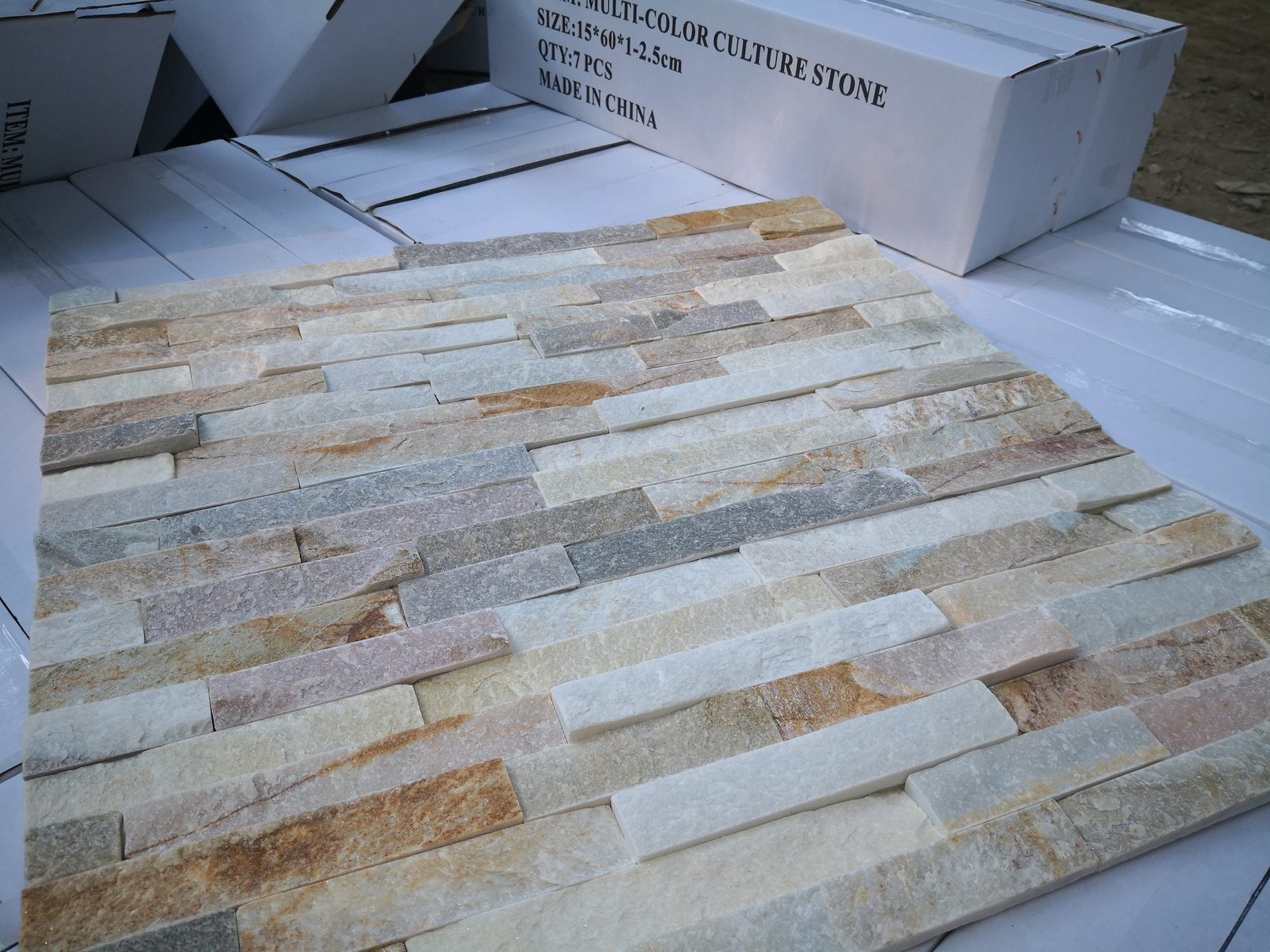
Thickness variation is the silent killer in stone cladding. A panel that’s 22mm on one end and 28mm on the other creates lippage, shadow lines where you don’t want them, and adhesive gaps that invite moisture. Over a 200 m² facade, those small deviations become visible waves.
Here’s how we keep it tight.
CNC Infrared Precision Cutting
Every stone strip passes through CNC infrared cutting equipment. The tolerance is ±1mm on face stone thickness. That’s not marketing language — it’s what our production floor is held to. When you order 12mm face stone, you get 11–13mm across every strip in the batch.
3-Step Quality Control
Our 3-step QC process catches thickness issues before they leave the factory:
- Raw material selection — stone blocks are graded and sorted before cutting. Off-spec material gets rejected at this stage, not after it’s bonded to a panel.
- In-process recheck — during panel assembly, strips are spot-measured for thickness and bond quality. Any panel outside tolerance is pulled from the line.
- Pre-shipment final inspection — before container loading, we run a final dimensional check and provide sampling video documentation. You see what’s in your container before it ships.
Backing System Integrity
Thickness consistency isn’t just about the face stone. The backing matters too. We use three backing methods, each suited to different product lines:
- Marine-grade epoxy bond — used on stacked stone panels for maximum adhesion strength and moisture resistance
- Cement backing — used on Z-panels for rigidity and compatibility with thin-set installation
- Mesh backing — used on thin ledgestone for flexibility and minimum weight
Each backing type is matched to the face stone thickness and the intended installation method. A 6mm ledgestone strip on mesh backing behaves differently than a 14mm strip on epoxy — and both are correct for their application.
Frequently Asked Questions
What is the most common stone veneer thickness for exterior walls?
The most common range is 20–25mm total panel depth. This covers standard stacked stone panels and Z-panels, which offer the right balance of durability, weight, and installer familiarity for exterior cladding. At Top Stone Panels, our 15×60 cm stacked stone and 20×55 cm Z-panels are the highest-volume products we export — and they sit squarely in this range.
How does stone veneer thickness affect shipping cost?
Thinner veneer weighs less per square meter, so you get more coverage per container. Ultra-thin ledgestone can ship roughly 900–1,100 m² in a 20GP container, while full-thickness loose stone fits about 400–550 m² in the same box. The ocean freight is the same either way — so the per-m² shipping cost for thin products can be less than half that of thick products.
Can thin stone veneer be used outdoors in freeze-thaw climates?
Yes. All Top Stone Panels products — from ultra-thin ledgestone to full-thickness loose stone — are tested for freeze-thaw resistance across a -30°C to +50°C range. Performance in cold climates depends on bond quality and proper installation, not just thickness. Our marine-grade epoxy bond and A1 fire-rated materials maintain integrity through repeated thermal cycling.
What’s the difference between face stone thickness and total panel thickness?
Face stone thickness is just the visible natural stone layer — typically 5–15mm. Total panel thickness adds the backing (mesh, epoxy, or cement), which can contribute another 5–15mm. For example, our stacked stone panels have 8–15mm face strips but measure 20–30mm total. Always ask suppliers to specify both numbers.
Does thicker stone veneer mean better quality?
No. Quality comes from stone grade, cutting precision, and bonding method — not thickness alone. A well-manufactured 15mm panel with CNC-cut stone and marine-grade epoxy will outperform a poorly made 35mm panel every time. Match the thickness to the application, not to an assumption that heavier equals better.
Wrapping Up
Stone veneer thickness isn’t a one-size-fits-all specification. It’s a set of tradeoffs between weight, durability, aesthetics, shipping economics, and substrate compatibility. Getting it right starts with understanding the three measurements — face stone, total panel, and installed depth — and matching them to the job at hand.
Ultra-thin (5–15mm) wins on weight and freight cost, making it the go-to for renovations and weight-sensitive applications. Standard (15–25mm) is the workhorse that handles the majority of exterior and commercial projects. Full-thickness (25–40mm) brings the mass needed for landscape work, pool surrounds, and high-impact environments.
Whatever range you need, the manufacturing quality behind those numbers matters as much as the numbers themselves. CNC precision at ±1mm tolerance, 3-step QC, and backing systems matched to application — that’s what separates cladding that performs for decades from cladding that generates callbacks.
Ready to discuss your project specs?
Top Stone Panels manufactures natural slate, quartzite, marble, and sandstone cladding across all thickness ranges — from 5mm thin ledgestone to 40mm full-thickness veneer. MOQ: 1×20GP per product line. Delivery: 20–25 working days from Xingang/Tianjin.
Request a quote with your project dimensions, preferred stone type, and target thickness — we’ll come back with container loading calculations and FOB pricing within 24 hours.