Black stone exterior cladding is the boldest choice that still ages gracefully. The reason is chemistry: the black in natural slate and quartzite is mineral color packed into the rock. There is no pigment to fade, no coating to peel, and no paint line to repaint. Architects who specify it once tend to specify it again.
Top Stone Panels cuts black exterior veneer in two workhorse stones — natural black slate and sparkle black quartzite — in 36x10cm thin ledgestone and stacked panel formats. This guide covers five facade designs that use black stone well, the material data that matters, and the specification details that keep a dark wall looking sharp for years.
- Black slate and quartzite derive their color from minerals, so UV exposure does not fade a black stone exterior.
- High-density natural stone tolerates -30°C to +50°C cycling and carries a natural A-class fire rating.
- The five strongest designs: full black facade, black plus wood, black entry portal, black with light joints, and black accent bands.
- Sparkle black quartzite provides a subtle crystalline surface that reflects light and photographs well.
- Black panels ship with factory L-corner kits; MOQ is one 20GP container and production runs 20-25 working days.
Why Black Stone Works on Exteriors
Dark cladding fails on most buildings for one reason: the finish fades or changes color. Black paint turns grey, dark stain turns muddy, and black cement panels chalk. Black stone sidesteps the whole problem because there is no finish. The color runs through the full thickness of the panel, and slate and quartzite hold their tone under decades of UV exposure.
Black also reads differently than grey on a facade. Grey recedes into the background; black anchors the composition. Against a black stone wall, a single material — the window frame, the front door, a cedar soffit — becomes the focal point. Designers use that contrast for entries, gable accents, and full-height feature walls.
The practical performance is the same dense-stone story this site documents for every exterior product. Black slate and quartzite panels carry an A-class fire rating, resist salt spray in coastal zones, and tolerate the -30°C to +50°C temperature cycle that kills porous cladding. Heat gain is worth planning for — a black surface absorbs more solar radiation than a light wall. The wall system’s insulation, not the stone, controls what the building feels inside. For the full data pass on temperature performance, our extreme temperature performance guide covers the testing picture.
Design 1: Full Black Facade
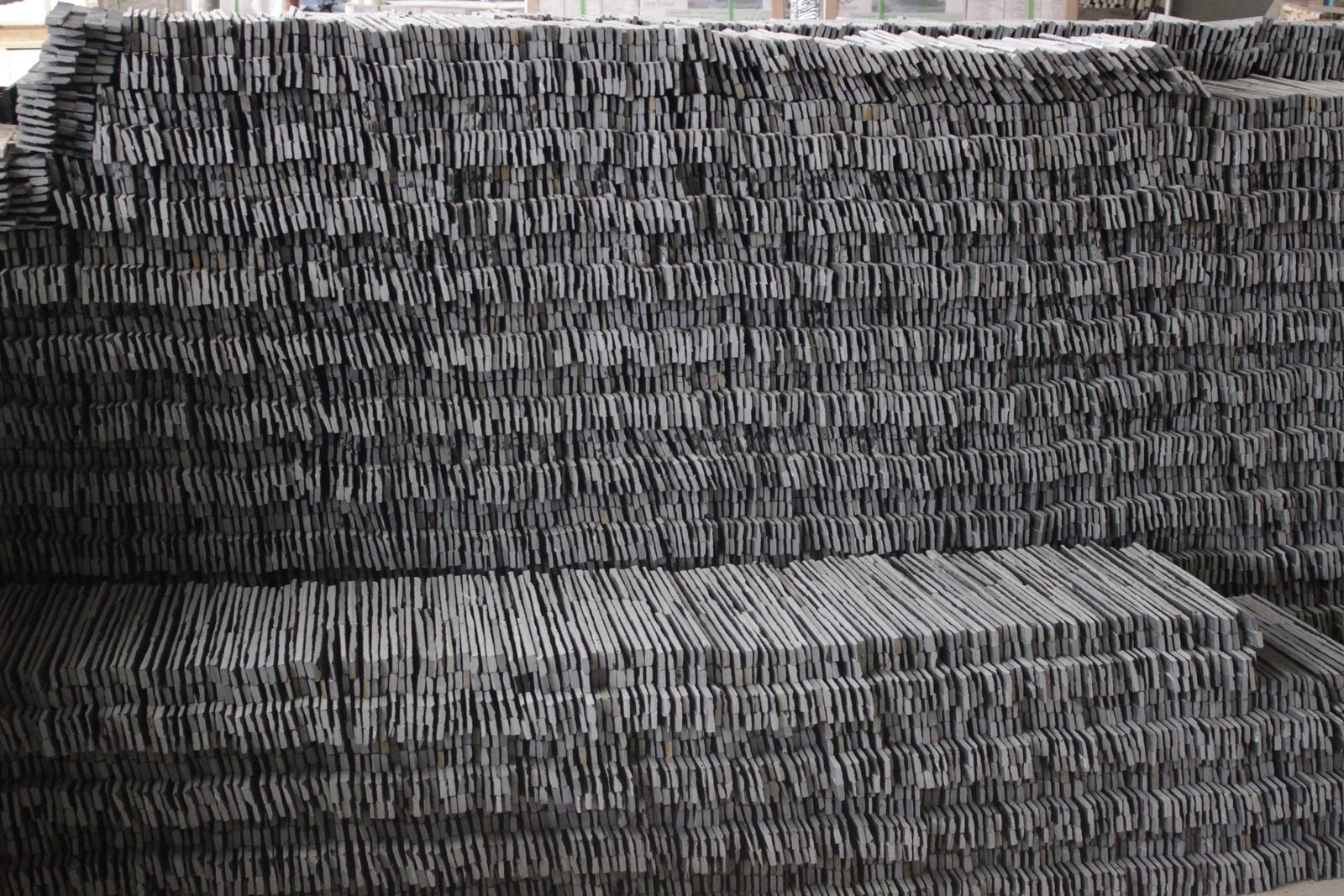
The full black facade is the dramatic end of the spectrum: a whole elevation in black thin ledgestone or stacked panels, from grade to roofline. It reads as a solid monolith, which is exactly the effect modern residential and hospitality projects chase on signature walls.
Make it work with three details. First, use 36x10cm ledgestone for a clean linear rhythm, or 15x60cm stacked panels for a heavier, more textured face. Second, wrap every outside corner with factory L-corner kits so the dark wrap looks like a single carved block rather than a covered surface. Third, plan the glazing and trim contrast before you order; black glass, grey frames, and a warm wood door all hold their own against a black wall.
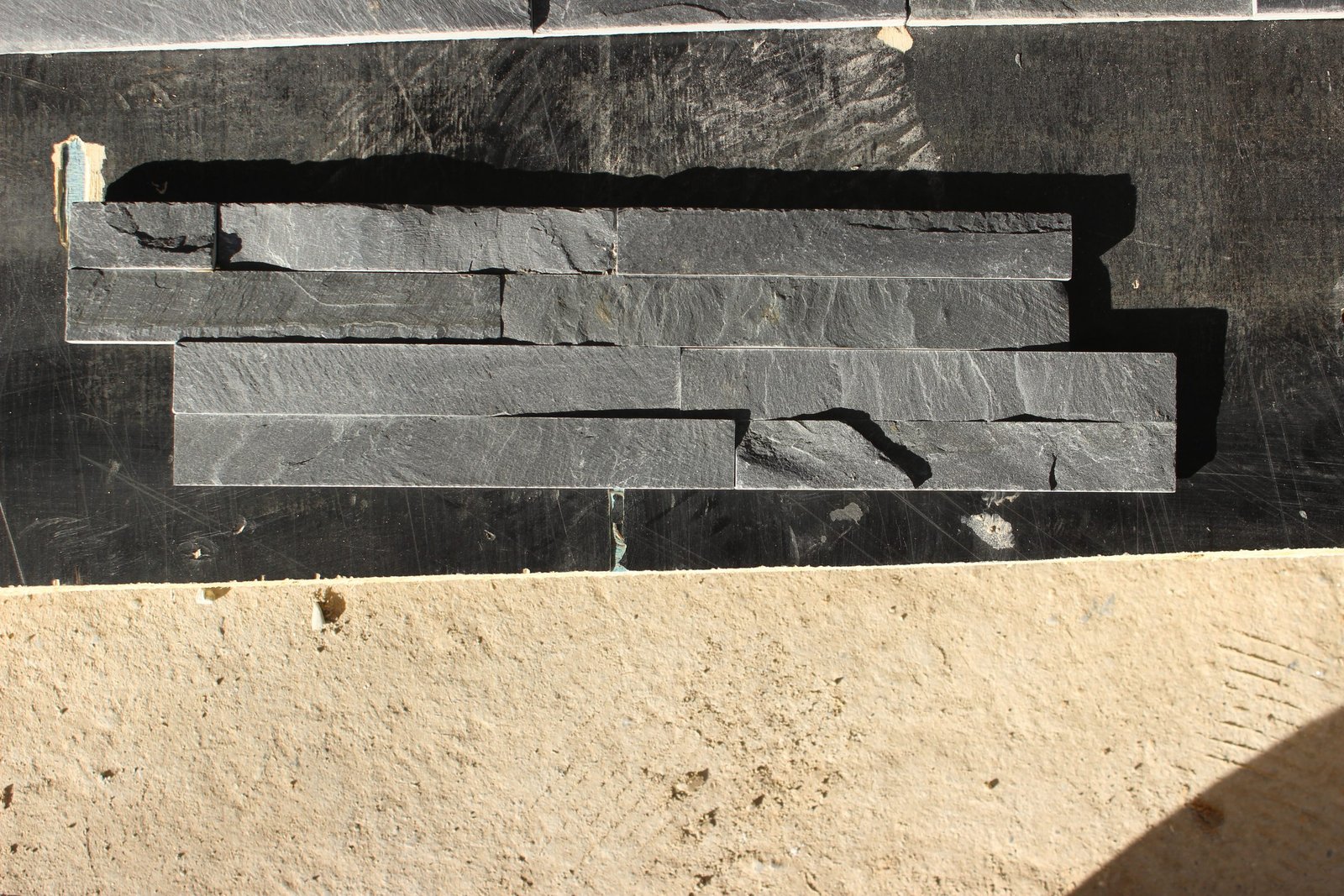
Watch out: dust shows on dark faces in dry regions; keep a hose-and-brush maintenance line on the spec.
- Advantage: the strongest visual statement, consistently photographs well.
- Advantage: mineral color means no repaint cycles.
- Consideration: full coverage raises the area of dark surface you must maintain and detail.
Full-facade dark stone is the same family of ideas our stacked stone exterior curb appeal guide treats in lighter tones; the layout logic transfers, only the mood changes.
Design 2: Black and Wood Contrast
Black stone next to warm wood is the highest-contrast pairing that still feels natural. Rain-screen wood slats, a cedar soffit, or timber posts against a black ledgestone wall make each material look better. The wood warms the black, and the black grounds the wood.
This combination hits its stride on gable ends and mix-material facades. Run black panels on the dominant gable and soffit line, then bring wood in as vertical battens or a porch ceiling. The joints between materials need clean termination; end the stone with a manufactured edge or an aluminum profile rather than a ragged cutoff.
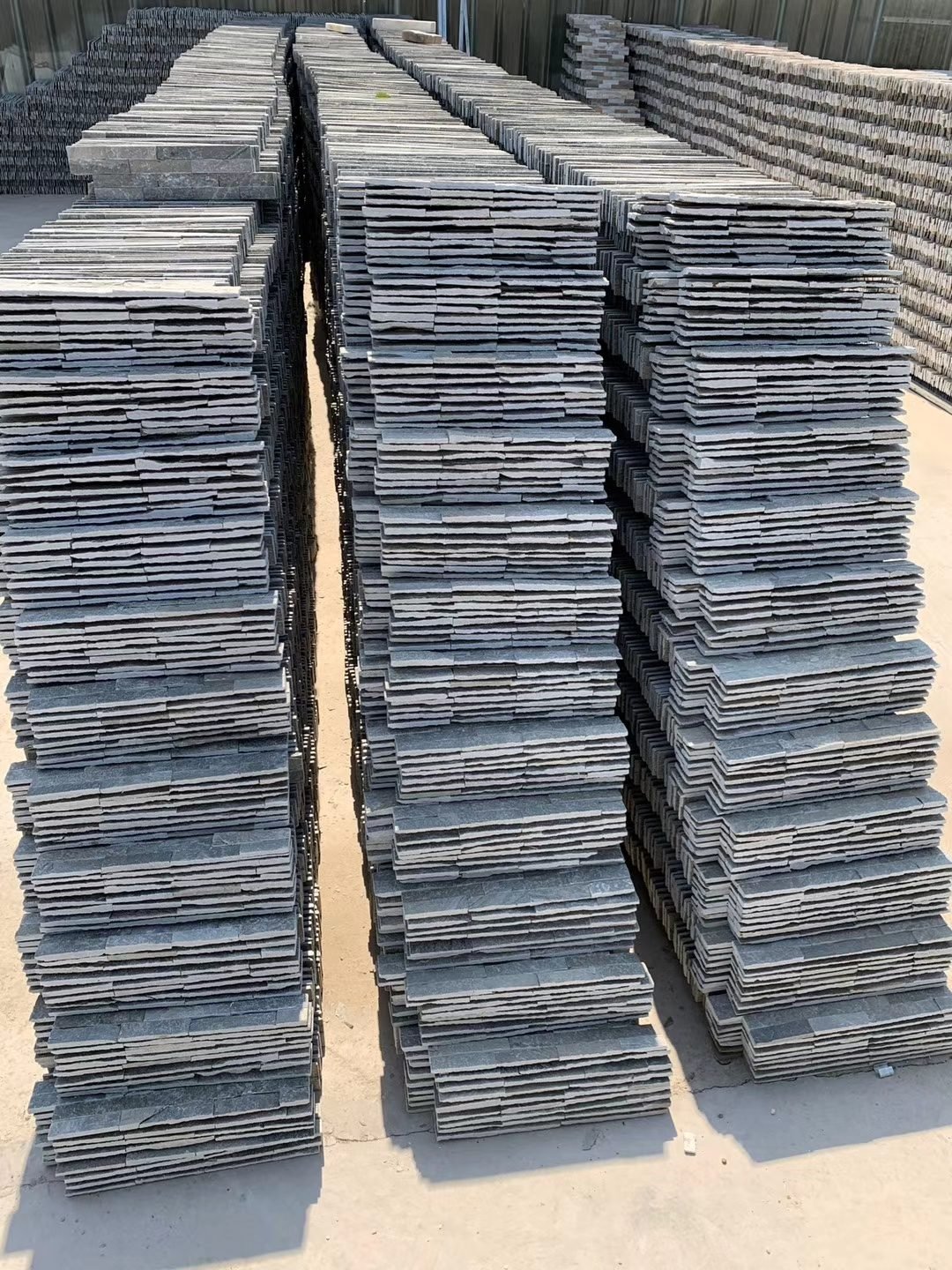
Watch out: wood must be rated for exposure next to stone; untreated softwood will gray faster than the stone ages.
- Advantage: both materials stay maintenance-simple; no paint either side.
- Advantage: the contrast hides seams and panel edges.
- Consideration: plan material transitions on section details before ordering panel quantities.
Design 3: Black Entry Portal
The entry is where a black stone exterior earns its keep on the smallest area of wall. Clad the wall plane around the front door, then wrap the porch columns. The entrance becomes a portal — a dark threshold that frames the first moment of the house. It is the highest-value use of black stone for most projects.
Columns change the geometry, so order the package together: panels for the flat planes, factory L-corner kits, and ready-built column wraps sized to the actual column section. Our stacked stone columns line covers the wrap formats.
For the full combination playbook, see the stone entrance design guide, which covers pillars, cladding, and the details that sell an entry upgrade.
Watch out: door hardware and trim should be specified in a non-competing finish; too many grays muddy the monochrome move.
- Advantage: concentrates the dramatic color on a small, high-visibility area.
- Advantage: column wraps add perceived value out of proportion to material spend.
- Consideration: measure column sections precisely; wraps are cut to the column, not the reverse.
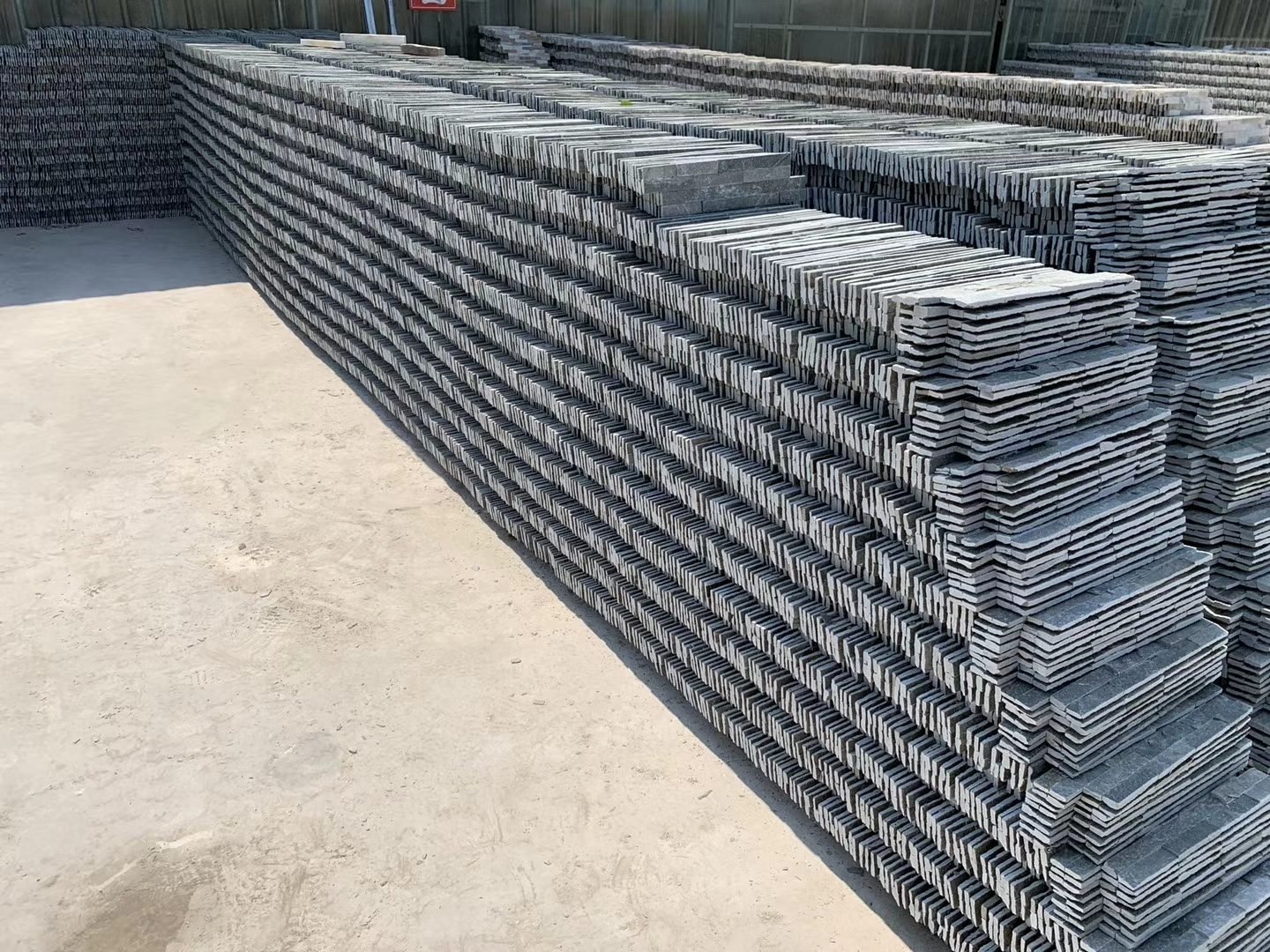
Design 4: Black With Light Joints
Black panels with light mortar joints trade the monolith look for a graphic, almost mosaic rhythm. The white or grey joint lines read against the dark face, and on a sunny elevation the pattern casts its own shadow line. It is the design move that keeps a black facade from reading as one flat silhouette.
It works best in stacked or ledgestone formats with a controlled joint width, tooled flush on a consistent grid. Require a clean, consistent joint in the spec; a sloppy tooled joint on black shows twice as much as on grey. On long runs, break the surface with a recessed accent or a banding course so the grid does not hypnotize the eye.
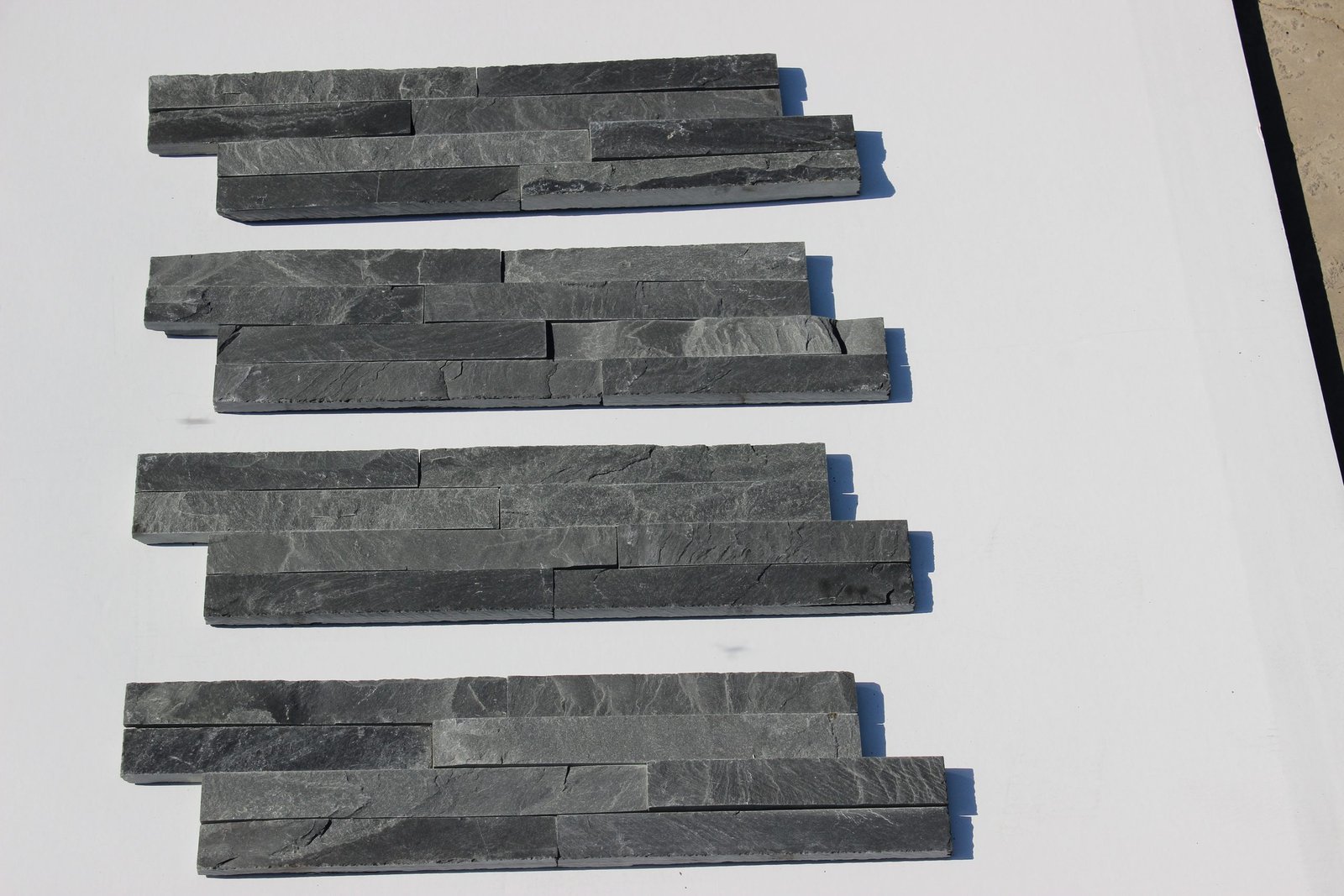
Watch out: joint consistency is a craftsmanship spec — insist on sample mockup before approval.
- Advantage: creates daytime shadow texture on an otherwise dark plane.
- Advantage: light joints visually separate panels, easing the monolithic massing.
- Consideration: adds a jointing step to the install schedule and a maintenance line for dark-wall washdown.
Design 5: Black Accent Bands
Not every black exterior needs a full wall. Accent bands — a black plinth at the base, a black gable triangle, a feature band at sill level — break up a light facade and give the elevation a designed hierarchy. It is also the budget-sensible way to use black stone, because it concentrates the premium material where it reads most.
The composition rule is simple: the accent must relate to a real building line. Run the band at the base course, along the eave, or up the gable — never float it mid-wall without a window or material change to justify it. Black panels end cleanly against stucco, brick, or wood with a straight edge. Add a drip detail at the top of the band to keep water off the lighter material below.
Watch out: termination details matter; plan the band edges on the elevation drawing before ordering.
- Advantage: highest cost-to-effect ratio of the five designs.
- Advantage: leaves most of the wall in lower-cost materials.
- Consideration: band edges need drip and termination details that a full wall does not.
Accent-band thinking and gable treatments borrow from the stone siding ideas series, which covers partial coverage patterns in every tone.
Material Choices for Black Facades
Two natural stones carry black exterior projects, and they serve different design briefs.
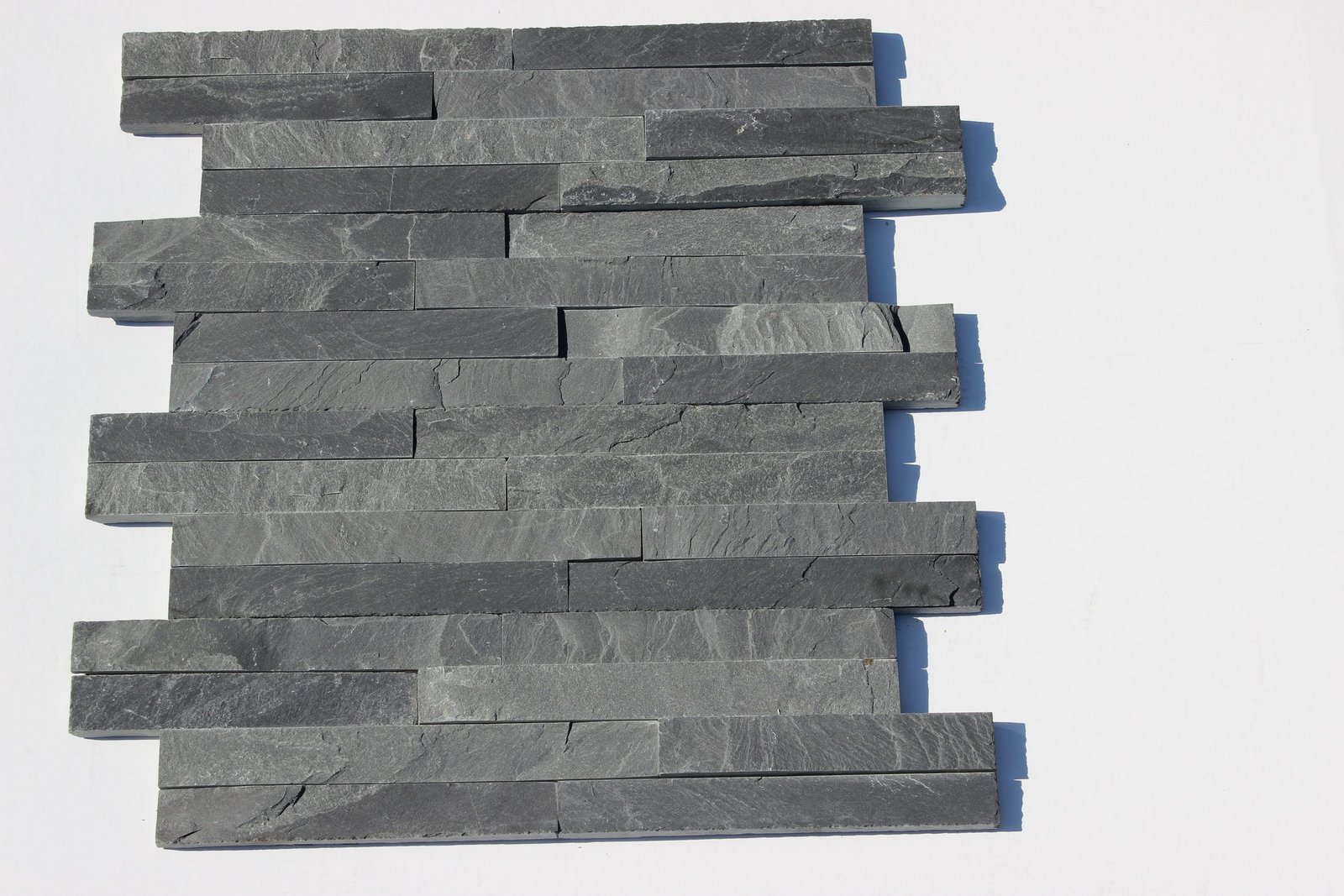
Black slate. The classic dark stone. Slate splits into a layered, matte black with subtle variation, which reads as depth on a full facade. It is the best match for rustic-modern elevations and mate interiors that already use the same tone.
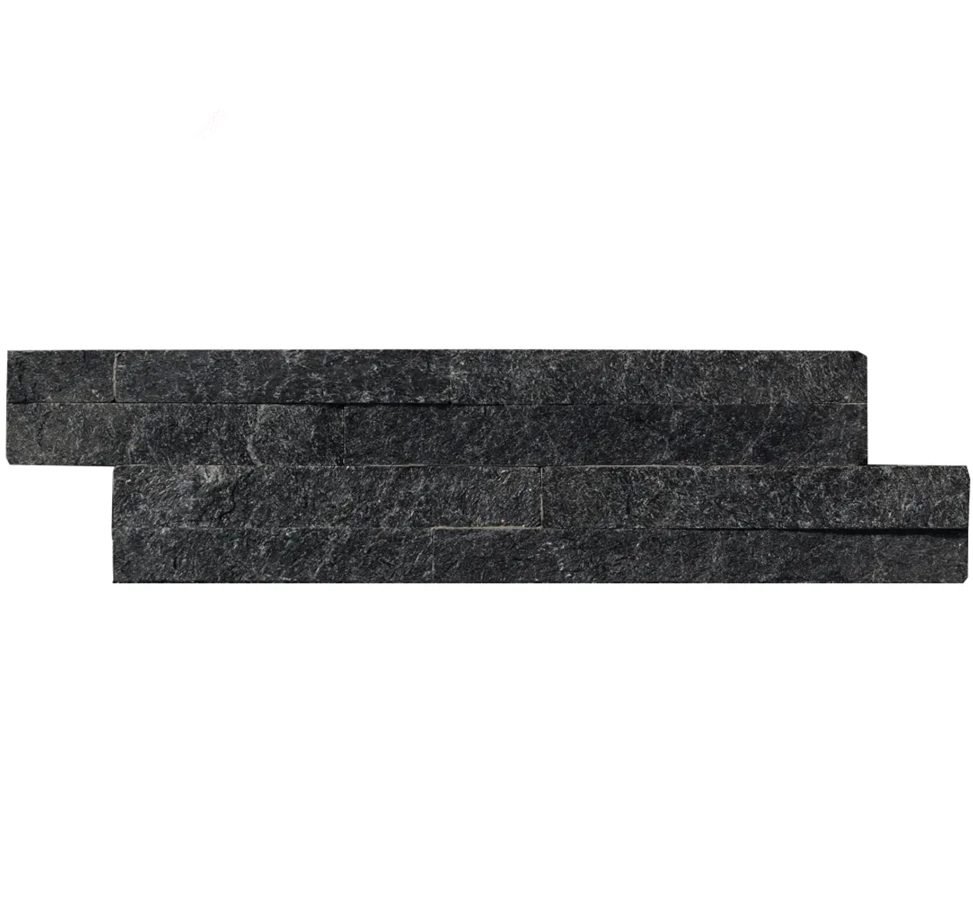
Sparkle black quartzite. A dense, hard stone with quartz crystals that catch light. At certain sun angles the wall flashes gently, which keeps a big black plane from looking flat and dead. It is the better match for clean modern and commercial work, and it photographs exceptionally well at dusk.
| Property | Black Slate | Sparkle Black Quartzite |
|---|---|---|
| Surface | Matte, layered, natural variation | Dense with quartz sparkle |
| Typical formats | 15x60cm stacked panels, split faces | 36x10cm thin ledgestone |
| Exterior duty | Freeze-thaw tolerant, UV stable | Highest density, low absorption |
| Best for | Rustic-modern feature walls | Clean modern and commercial facades |
Both materials ship as 100% natural stone with the same backing options — mesh, cement, or marine-grade epoxy — and the same factory QC. The black thin ledgestone panels page carries the current product line and format availability.
What to Specify
A black exterior order fails on details, not on the stone. Use this checklist when you write the spec.
- Material and finish. Name the stone (black slate vs sparkle black quartzite), the face treatment, and accept the natural variation that makes each black panel slightly different. That variation is the product, not a defect.
- Format and corners. Specify 36x10cm ledgestone or 15x60cm stacked panels, and declare the corner count so factory L-corner kits cover the wraps. Pre-formed corners are the difference between a clean black monolith and a seam-riddled box.
- Quantity. MOQ is one 20GP container. Measure elevations and deduct openings; a sample panel is the surest way to confirm tone before committing a container.
- Timeline. Production runs 20-25 working days standard; first orders with custom carton printing run 25-30 days. Book the container around those dates.
- Transition details. For design 2 and design 5, draw the material terminations — aluminum profiles, drips, and end conditions — before you order. Black stone has no forgiveness at a messy joint.
- Maintenance line. Dark exteriors show dust and water spotting. Include a washdown and, where required, a sealer approved for the stone and climate.
Planning a black stone facade?
Get a sample of sparkle black quartzite or black slate before you commit a container. Samples ship in 1-3 days; production runs 20-25 working days at MOQ of one 20GP container.
Black slate | Sparkle black quartzite | L-corner kits | FOB Xingang terms
Performance documentation travels with the order: certificate of origin, ISPM 15 fumigation certificate, and a pre-shipment inspection report video. The Natural Stone Institute publishes the test-method context that makes those documents useful to specifiers.
Frequently Asked Questions
Does a black stone exterior fade over time?
No. Black slate and quartzite get their color from mineral content, so UV exposure cannot lighten or change the surface. This is the core durability advantage over painted dark finishes.
Does black stone make the building hotter?
The dark face absorbs more solar heat than a light wall, but the stone itself tolerates the temperature swing, and wall insulation controls interior temperature. Dense slate and quartzite handle -30°C to +50°C cycling without damage.
How do you clean and maintain black stone cladding?
Most facades need a periodic washdown with plain water and a soft brush. Sealers are optional and climate-dependent; ask the factory for the sealer recommendation matched to your stone.
Is black stone exterior cladding more expensive?
FOB pricing depends on material, format, and quantity. Sparkle black quartzite generally prices differently from black slate in the same format. Request physical samples and a current FOB quote for your port.
What colors match a black stone facade?
Warm wood, white and light-grey mortar, concrete, and corten steel all contrast cleanly with black stone. Keep the palette to one accent material to preserve the monochrome move.
Can black stone cover an entire house exterior?
Yes. Full-facade coverage works with black thin ledgestone or stacked panels plus L-corner kits, and the factory can quote full-elevation packages at one 20GP container minimum.
Conclusion
Black stone exteriors work because the color is real. No fading, no repainting, no coating failures — just a mineral skin that reads dramatic at a distance and stays sharp up close. The five designs here cover the range from a full black facade to a gable accent band, and the material table settles which black stone fits which brief.
- Full black facades and black-plus-wood are the highest-impact moves; entry portals and accent bands refine the same idea on a budget.
- Black slate suits rustic-modern texture, and sparkle black quartzite suits clean modern and commercial work.
- Factory L-corner kits keep black wraps seam-free; transitions and terminations deserve drawing-level attention.
- MOQ is one 20GP container, production runs 20-25 working days, and samples ship in 1-3 days.
Order samples of black slate and sparkle black quartzite together, set them against your wood and white materials, and let daylight pick your black. The choice between the two stones gets obvious the moment they sit on the same wall.