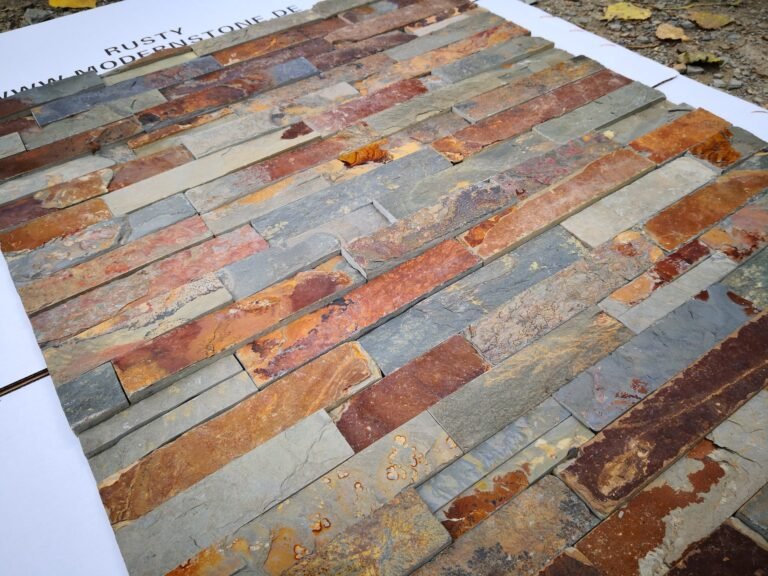
Every natural stone panel on a wall started as a rock in a specific mountain. The difference between a responsible supplier and a reseller is whether that journey is documented. Traceability is the paper and process trail that links your order back to the quarry, the block, and the production batch — and it is becoming a procurement requirement, not a nice-to-have.
Top Stone Panels is a direct-from-quarry source factory in the Yixian slate belt of Hebei, China, with 18+ years of mining and export experience. This guide explains how quarry-to-panel traceability works in practice, which documents you should demand, how to verify a supplier’s claims, and the red flags that separate real sourcing control from marketing.
- Traceability links a finished panel to its quarry, block, and batch through documents — it answers “where did this stone come from?” with records, not promises.
- Six stages create the paper trail: mining rights, block extraction, vein-batch selection, processing, QC, and shipping documentation.
- The document set buyers should collect: mining license reference, block source record, batch number, QC records, COO, ISPM 15, packing list, and bill of lading.
- Top Stone Panels runs batch-specific vein selection and a three-step QC process, and will ship physical samples in 1-3 days for independent testing.
- Refusals — no source info, no visit, no samples — are the strongest red flag in stone sourcing.
What “Quarry-to-Panel” Traceability Actually Means
Furniture and textiles have chain-of-custody certificates; gemstones have Kimberley Process documentation; dimension stone has something simpler but less standardized: a working record kept from the quarry face to the shipping container. Traceability for stone panels means you can point to a piece of paper — or a batch number on a carton — and follow it backward to a specific quarry opening and a specific block.
It is useful to separate two closely related ideas. Sourcing control is the supplier’s internal discipline: it quarries from licensed sites, allocates blocks to orders, and keeps batches separate. Traceability documentation is what proves that discipline to a buyer: records, photos, certificate numbers, and inspection reports that survive the order. A factory can have good sourcing control and weak documentation — and then a buyer has no way to verify the claim. A factory with strong documentation but no real control is running a paper theater. You want both.
For a buyer, the practical question is rarely philosophical. It is: “When my customer or the specifying engineer asks where this stone came from, can I answer with a document?” In commercial and hospitality projects, that question is being asked more often. Green building certifications, institutional procurement policies, and coastal or cold-climate warranties all push the same direction.
Why Traceability Became a Procurement Requirement
Ten years ago, a stone supplier’s word was usually enough. Today, three forces changed that.
1. Green building and responsible-sourcing credits. LEED and BREEAM evaluate material transparency and responsible sourcing. The natural stone industry responds with programs such as the Natural Stone Council’s NSC 373 sustainable production standard and the NSI TrueSource certification. Specifiers working toward these credits need suppliers who can document their production chain — or at least prove where material is quarried.
2. Project liability and brand risk. One high-profile story of a structural stone failure, or a shipment of material quarried illegally, is enough for a chain to tighten its supplier policy. Building material distributors increasingly want the file, not the handshake, because their own liability sits downstream.
3. Batch performance. Stone is a natural material with real variance. Two shipments from the same quarry can differ in density, color depth, and frost behavior if the quarry moved faces. Buyers who have been burned once stop accepting “trust us, it’s the same stone” and start asking for batch records.
None of this means a small distributor must become an auditor overnight. It means the sourcing file should exist, and your supplier should be able to produce it on request. If a factory cannot produce a basic sourcing file, that is information about the factory.
The Quarry-to-Panel Journey in Six Stages
The journey from mountain to wall follows the same skeleton at every real stone factory. The differences are control and documentation at each step. Here is what happens — and what should be recorded — at each stage.
| Stage | What happens | Record created |
|---|---|---|
| 1. Mining rights | Extraction happens under a licensed quarry holding mining rights. The license ties the operation to a legal site, a registered operator, and production limits. | Mining license reference; quarry name and location |
| 2. Block extraction | Blocks are cut from the quarry face, graded for quality, and moved to the production yard. Not every block becomes veneer; fractured or heavily veined blocks are sorted out. | Block source record, extraction date, quality grade |
| 3. Vein-batch selection | Blocks from the same vein are grouped so color and texture stay consistent across an order. This is where the batch identity is created. | Batch number, vein/color code, block allocation list |
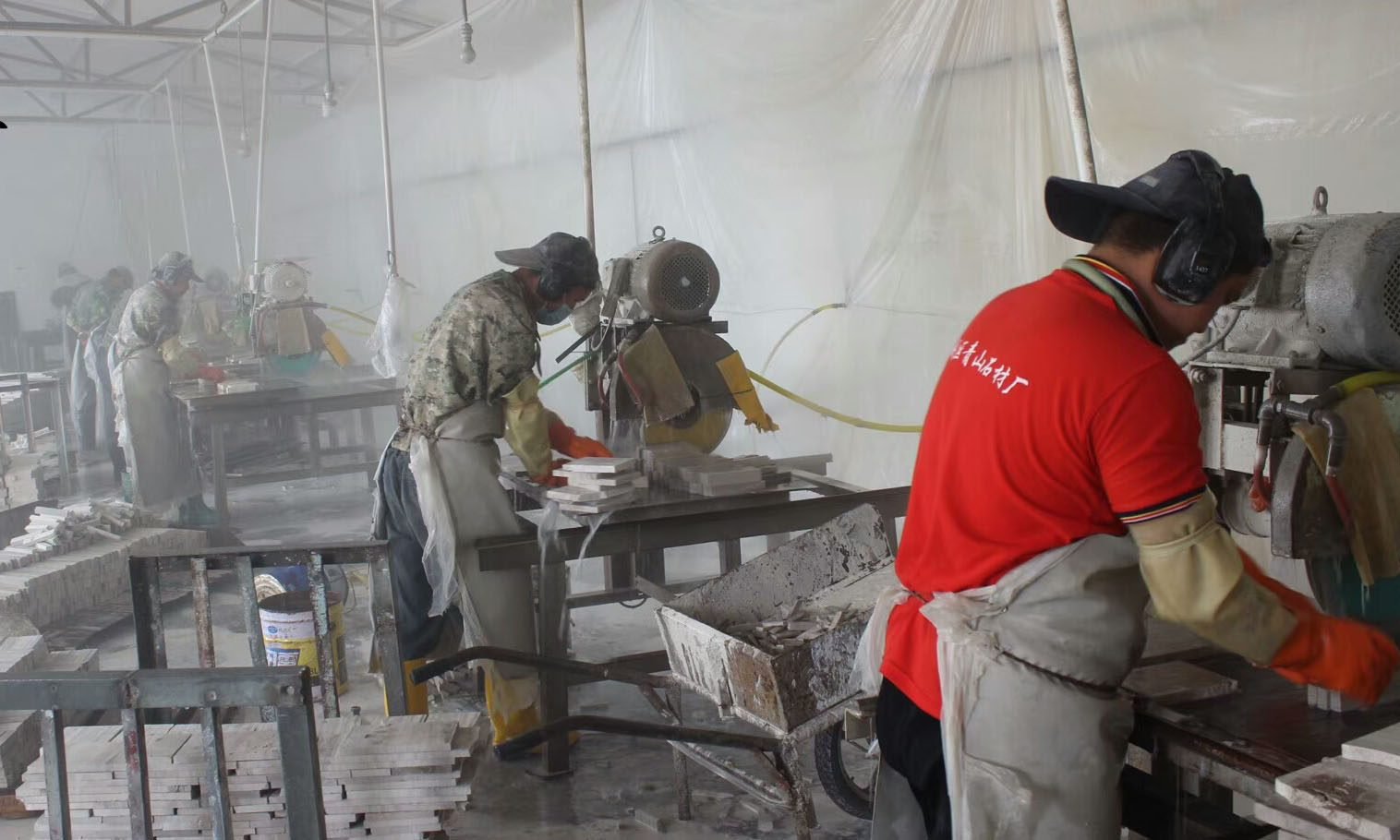
| 4. Processing | Blocks are split and cut into panels — stacked stone, ledgestone, z-panels, or loose veneer — with backing applied as specified. | Production records, cutting line, backing batch |
| 5. Quality control | Three checkpoints: raw material selection, in-process recheck, and pre-shipment final inspection. Thickness, edges, color, and breakage are checked against the order. | QC records per batch, inspector sign-off, photos |
| 6. Shipping documentation | The batch is packed, loaded, and documented for export: packing list, certificate of origin, fumigation certificate, bill of lading. | Packing list, COO, ISPM 15, B/L, container number |
Read the table from the buyer’s side and the logic is simple: each stage produces a record, and the batch number travels with the goods from step 3 onward. If your supplier cannot name its quarry and its batch, stages one through five effectively did not happen.
Batches, Veins, and Color Control
The batch is the unit that makes traceability possible in a factory that handles thousands of square meters a month. A batch is a group of panels cut from selected blocks of the same vein in the same production window. It is the answer to two buyer questions that matter every single order: will this match the last order? and can I trace a defect back to its cause?
Color control is where batch discipline pays off visibly. Natural slate and quartzite vary from one part of a quarry to another — a “grey” stone can run from silver to charcoal depending on the face. A supplier that sells straight from a stock yard of mixed blocks can ship two containers that look like different products. A supplier that practices batch-specific vein selection groups blocks by vein, so repeat orders land within a controlled color range.
This site’s guide to batch color consistency walks through how quarries actually control vein selection across large orders, including the pre-production color approval step that serious buyers demand before production starts. The key point for this article: batch identity is the spine of traceability. No batch number, no traceability.
The Paper Trail: Documents That Prove Origin
Here is the document set that turns “trust us” into a verifiable file. You do not need every document on every order, but each one answers a specific question, and the absence of any of them is a question in itself.
| Document | What it proves | When buyers need it |
|---|---|---|
| Mining license / quarry permit | Extraction is legal and tied to a registered site, not a grab-and-run operation | First order with a new supplier; institutional tenders |
| Block source record | Which blocks, from which quarry, produced this order | Color-sensitive projects; repeat orders |
| Production batch number | Panels share a vein group and production window; traceable if defects appear | Every container, ideally printed on cartons |
| QC records and photos | The three-step check actually ran: raw material, in-process, pre-shipment | Quality-sensitive buyers; cold-climate specs |
| Certificate of origin (COO) | Country and origin statements for customs and procurement | Customs clearance, tariff programs, project compliance |
| ISPM 15 fumigation certificate | Wood packaging meets international phytosanitary rules | Every container with wood packing; border inspections |
| Packing list + bill of lading | What shipped, in which cartons, on which container | Receiving, claims, and destination customs |
Two of these documents get their own deep dives on this site: the certificate of origin guide explains which COO type your shipment needs, and the ISPM 15 guide covers wood-packing rules that stop containers at the border when wrong.
What Top Stone Panels Documents on Every Order
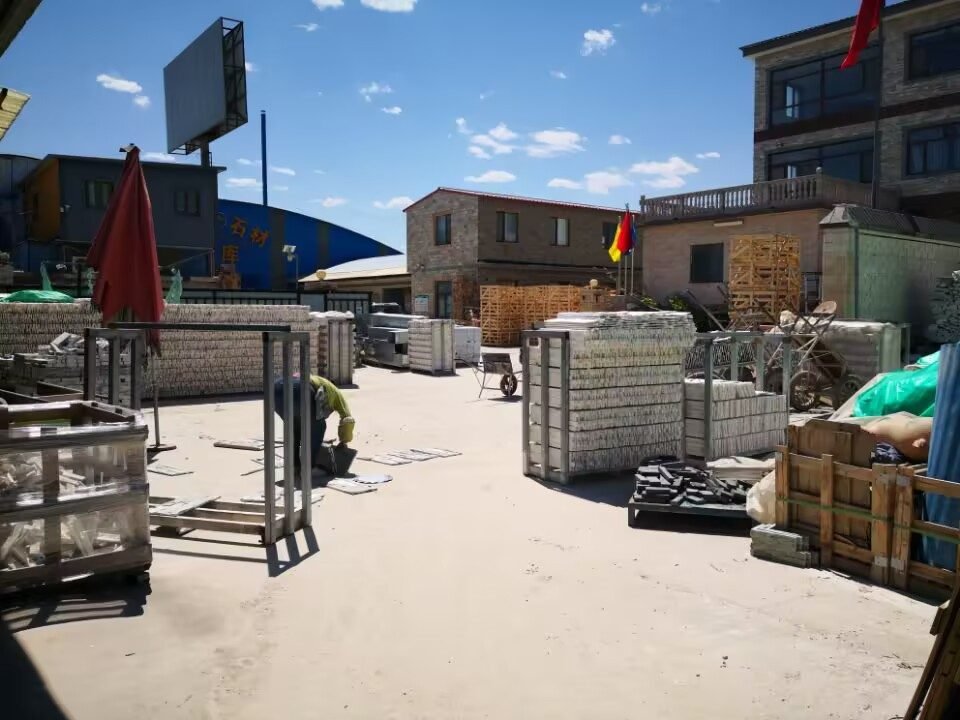
To make this concrete, here is what a sourcing file looks like from a direct-from-quarry factory. Top Stone Panels operates from the Yixian slate belt in Hebei — one of China’s main slate and culture-stone producing districts — with its own quarry supply, 18+ years of mining and export history, and annual shipments of 220+ containers.
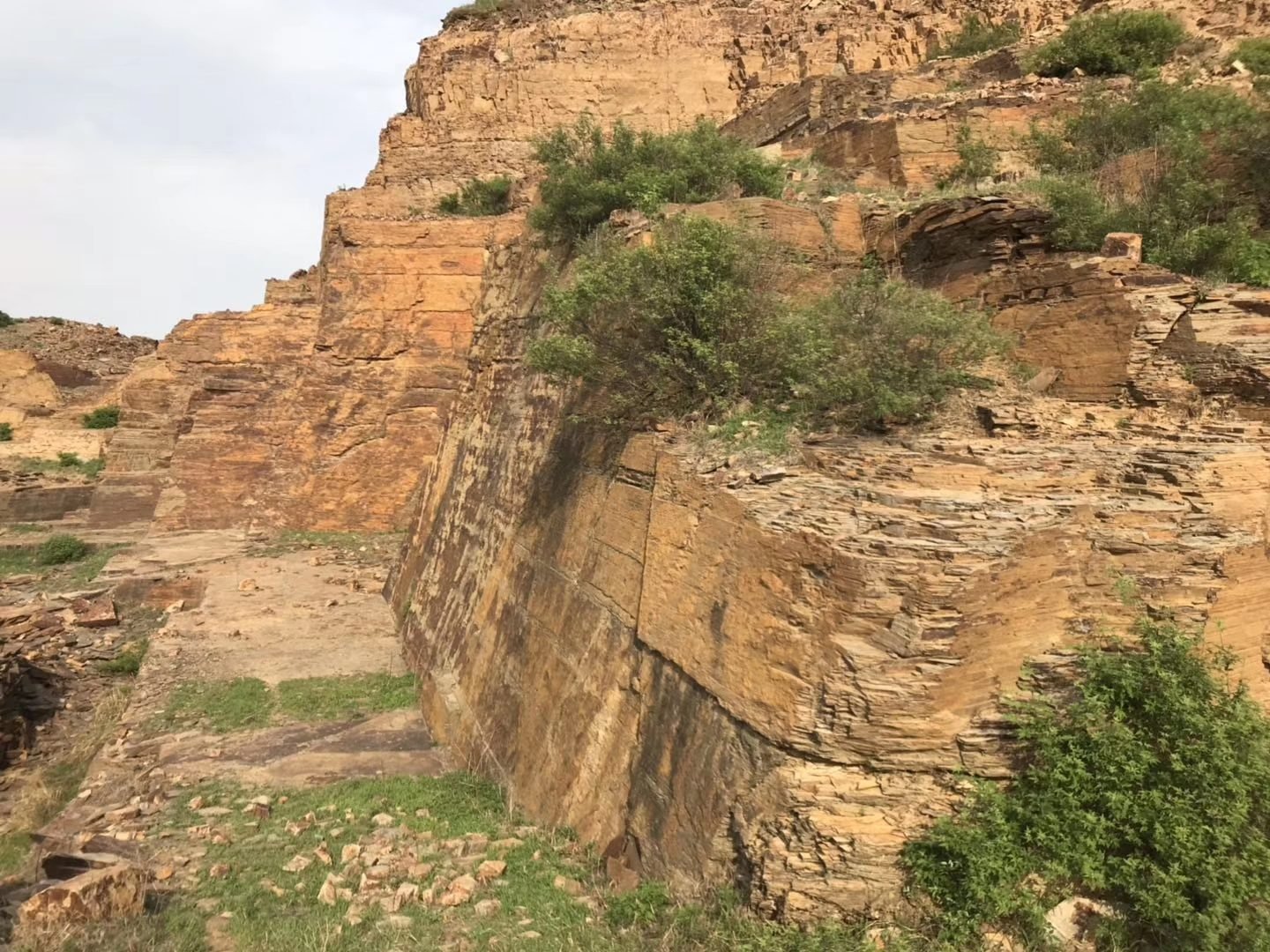
- Quarry identity. Raw slate and quartzite come from owned quarry openings in the Yixian belt; the factory does not buy random mixed stone from central markets, which is why it describes itself as a source factory rather than a trading company.
- Batch-specific vein selection. Panels for an order are grouped from blocks of the same vein so color stays in control across the container. The batch color consistency process is documented per order.
- Three-step QC. Raw material selection, in-process recheck, and pre-shipment final inspection. The same 3-step process is described in depth in our quality control guide, including how thickness tolerances are checked.
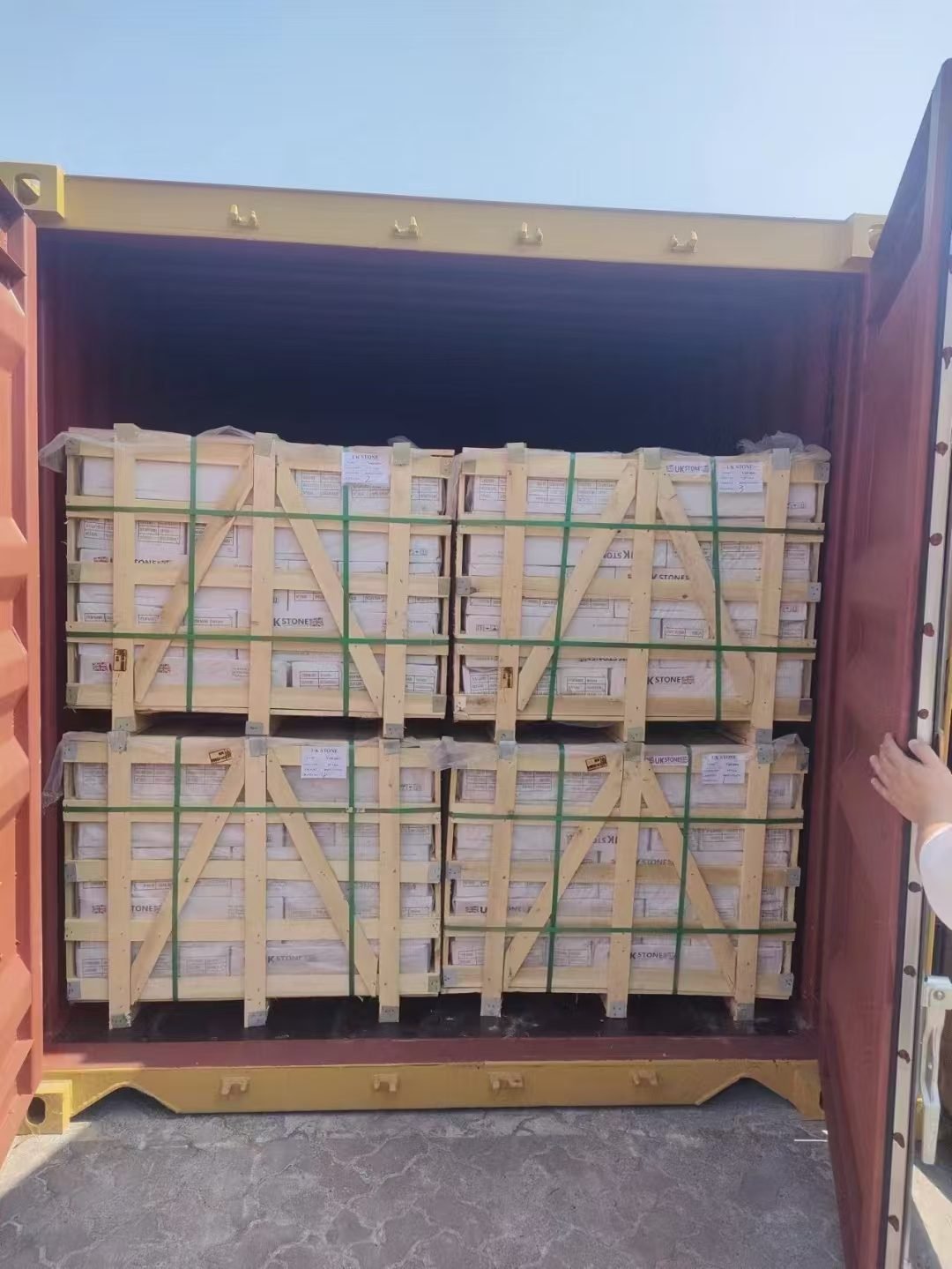
- Export documentation. Certificate of origin, ISPM 15 fumigation certificates, and a pre-shipment inspection report with video are available on request. The pre-shipment inspection guide shows what a thorough loading check covers.
- Physical samples. Samples ship in 1-3 days so buyers can run independent laboratory testing before committing. Our sample evaluation checklist tells you what to test.
The products flowing through this traceable pipeline include stacked stone panels, thin ledgestone panels, thin stone veneer, flagstone and crazy paving, interlocking z-panels, and stone columns — every order carrying the same batch records and source file.
On the material side, the same traceability logic feeds the numbers specifiers need: slate and quartzite panels carry a natural A-class fire rating, hold color under UV, and tolerate -30°C to +50°C cycling. Our guide to reading test reports explains how to verify those claims against an actual laboratory document rather than a brochure.

How to Verify a Supplier’s Traceability Claims
Verification does not require a flight to Hebei, though a factory visit is the gold standard. It requires a sequence of checks that escalate in cost and effort as doubt grows.
Step 1 — Ask for the source file before you order. Email this exact list: quarry name and mining license reference, batch/vein selection process for the product you want, QC records from a recent order, sample COO, and ISPM 15 template. A real factory responds with documents and invites scrutiny. A trading desk stalls.
Step 2 — Run a video or on-site audit. At minimum, a live video walkthrough: quarry or block yard, cutting line, QC bench, packing station. Our factory audit checklist breaks down what to look for at every station — including the questions that expose third-party sourcing dressed up as a factory.
Step 3 — Inspect the batch, not the brochure. Order samples, check physical thickness and color against the specification, and if the project is large or cold-climate, spend the money on third-party laboratory testing for water absorption and freeze-thaw behavior. Samples ship in 1-3 days from a responsive supplier, so independent testing is a week-long step, not a month-long one.
Step 4 — Use pre-shipment inspection with reporting. A third-party inspector (or a skilled agent) checks the loaded container against the packing list, confirms batch labels, photographs condition, and files a report before your payment clears. This closes the loop: the batch that left the factory is the batch that arrived.
For buyers stacking these steps into a repeatable routine, the pre-shipment inspection guide and the supplier audit checklist cover the checklists in full.
Red Flags in Sourcing Claims
The warning signs below are the ones that show up again and again when a “factory” is actually a trader buying from open markets. Any single one is worth a follow-up; two or more is reason to walk.
- No named quarry. “We have our own source” without a quarry name, location, or license reference. There is no reason a genuine source factory cannot name its quarry.
- Batch numbers that do not exist. Cartons arrive without batch labels, or the batch number on the paperwork matches nothing on the boxes. Traceability ends at the factory gate.
- Refusal to sample or test. A supplier that will not send physical samples in 1-3 days, or refuses independent lab testing, is protecting something — usually variability.
- No export file. No COO, no ISPM 15, no packing list detail. Customs eventually forces this paperwork anyway; its absence signals an inexperienced or informal operator.
- Price that is too clean. Licensed quarry blocks and controlled production cost real money. A price far below the market for the same product usually means unlicensed extraction, mixed sources, or skipped QC — the three costs that traceability exists to expose.
- Refused visits. No video tour, no on-site visit, always “next month.” Genuine factories show their production because it is their best sales asset.
Does Traceable Stone Cost More?
Honest answer: documentation adds very little to unit cost. A COO, an ISPM 15 certificate, and a QC record are administrative work, not material cost. The price difference comes from what traceability forces you to buy: licensed quarry blocks, controlled vein selection, and tested, inspected production.
That controlled pipeline costs more to run than open-market aggregation, and the price reflects it. The trade is predictable quality: fewer rejects on site (precision cutting alone can reduce on-site waste by roughly 20%), no surprises between containers, and a compact failure path if something is wrong — you know the batch, the quarry, and the QC record to pull for a claim. For a distributor selling to contractors, that file has resale value. For a specifier, it is the difference between a defensible project and a lawsuit magnet.
On production terms, a one 20GP container minimum order, 20-25 working days standard production (25-30 on first orders with custom retail cartons), FOB Xingang or CIF/DDP, and 30% T/T advance with the balance before shipment keeps the whole chain manageable regardless of order size. The natural stone cost breakdown guide walks through what actually composes FOB price, shipping, and landed cost.
Frequently Asked Questions
Can I visit the Top Stone Panels quarry and factory?
Yes. Direct-from-quarry factories expect scrutiny. A visit can be coordinated through the site’s contact page; for buyers who cannot travel, a live video walkthrough of the quarry yard, cutting line, QC bench, and packing station can be arranged instead.
What stone materials are traceable through your pipeline?
All six product lines source from the same controlled slate and quartzite pipeline: stacked stone panels, thin ledgestone, thin stone veneer, flagstone and crazy paving, interlocking z-panels, and stone columns. Marble and sandstone are available on a project basis.
Do you provide certificate of origin and ISPM 15 on every order?
Yes, both are available on request for export orders. The ISPM 15 certificate covers fumigation-free wood packaging per the international phytosanitary standard, and the COO supports customs clearance and procurement compliance.
How do I know the batch in my container is the batch I approved?
Pre-shipment inspection. The report and loading video are filed before the balance payment is due (30% advance, 70% before shipment), so the batch that is inspected is the batch that ships. Batch labels should also appear on the cartons to match against the packing list at receiving.
Why does your guide keep mentioning -30°C to +50°C?
Because traceability matters most when performance is worst-case. High-density slate and quartzite tolerate that full temperature cycle, but only if the actual stone in your container is the same dense material the test report describes — which is exactly the ‘same stone’ question traceability answers. Our extreme temperature performance guide covers the testing picture.