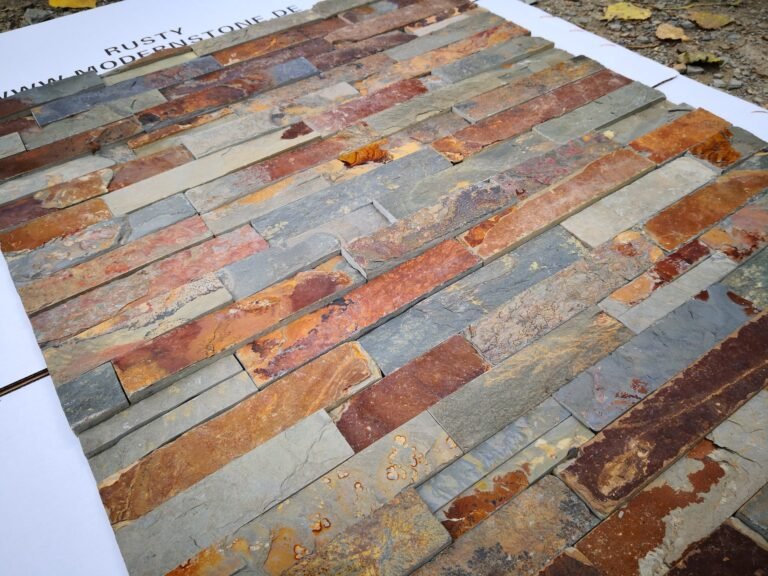
A call comes in every January. A commercial building owner in Minneapolis discovers that the stone cladding installed on their lobby feature wall two years ago has started spalling. Hairline cracks spider-web across the panels. Several pieces have delaminated entirely, exposing the substrate underneath. The repair estimate runs into five figures, and the building’s property manager wants to know who specified a material that couldn’t handle a Minnesota winter.
Stories like this repeat across North America and Northern Europe every year. The global cost of freeze-thaw damage to building envelopes is measured in the billions. And here’s what makes the problem both preventable and frustrating: the single most important factor determining whether a natural stone panel survives repeated freeze-thaw cycles is its density. Not its color, not its pattern, not its price per square meter. Densit. For the product-level details on freezing-region walls, see the exterior stone veneer cold climate guide.
If you’re a building material distributor sourcing stone veneer panels for cold-climate markets, or an architect specifying thin stone veneer for an exterior wall in a frost-prone region, this technical guide will give you the data and decision framework you need.
The Science Behind Freeze-Thaw Damage in Stone
Freeze-thaw deterioration follows a deceptively simple mechanism. Water enters the stone’s pore structure through capillary action or direct surface absorption. When temperatures drop below 0°C (32°F), that water transforms into ice, expanding approximately 9% in volume. This expansion generates internal hydraulic pressure that can exceed 2,000 psi in saturated stone — enough to fracture mineral bonds and create micro-cracks invisible to the naked eye.
The damage doesn’t happen in a single dramatic event. It accumulates over hundreds of cycles, each one weakening the stone a fraction more. A panel that handles 20 freeze-thaw cycles in its first winter might show no visible damage. By winter five, after 100+ cycles, the cumulative stress has opened fissures large enough to admit more water, which accelerates the next round of damage. The feedback loop is ruthless.
Two variables control the severity of each cycle. First is the stone’s saturation level — how much water it holds relative to its dry weight. Stone that absorbs 1% of its weight in water generates far less internal pressure than stone holding 8%. Second is the rate of temperature change. A slow overnight freeze allows water to migrate outward toward the surface, partially relieving internal pressure. A sudden cold snap after rain traps water deep inside the stone with nowhere to go.
The practical takeaway: freeze-thaw damage isn’t about whether stone freezes — it will. It’s about how much water the stone contains when it freezes. And that, fundamentally, is a question of density.
How Stone Density Protects Against Freeze-Thaw Cycles
Density in natural stone reflects how tightly its mineral grains are packed together. Dense stone has fewer voids, narrower capillary channels, and less internal surface area for water to occupy. When a dense quartzite panel absorbs only 0.25% of its weight in water, there simply isn’t enough internal moisture to generate destructive ice pressure during freezing.
Think of it like a sealed glass bottle versus an open sponge. The sponge absorbs water throughout its structure; freeze it, and the expanding ice tears the material apart from the inside. The sealed bottle takes in almost no water; freeze it, and nothing changes. Dense stone behaves more like the bottle.
This relationship between density and absorption is so reliable that geologists and materials engineers use water absorption percentage as a proxy measurement for density in field conditions. You don’t need to weigh the stone and calculate its volume — just measure how much water it absorbs, and you have a strong indicator of its freeze-thaw resilience.
The threshold that separates reliable exterior stone from risky exterior stone is generally accepted at 3% water absorption by weight. Below 3%, natural stone panels consistently perform well through decades of freeze-thaw exposure. Above 5%, the risk of spalling, delamination, and surface deterioration rises sharply. Between 3% and 5% lies a grey zone where performance depends on installation quality, surface sealing, and local climate severity.
Comparing Stone Types: Quartzite, Slate, Sandstone, and Limestone
Not all natural stone is created equal when it comes to freeze-thaw performance. Here’s how the four most common cladding materials compare.
Quartzite: The Freeze-Thaw Champion
Quartzite forms when sandstone undergoes intense heat and pressure during metamorphism, fusing individual sand grains into a continuous matrix of interlocking quartz crystals. This recrystallization process virtually eliminates the pore spaces that existed in the original sandstone. The result is stone with density of 2,650–2,750 kg/m³ and water absorption typically below 0.5%.
Top Stone Panels sources quartzite from the geological formations of Yixian County, Hebei Province — a region where metamorphic activity produced stone with the tight grain structure that makes freeze-thaw resistance almost a given. For B2B buyers serving cold-climate markets, quartzite stacked stone panels represent the lowest-risk specification for exterior cladding.
Slate: Dense, Layered, and Proven
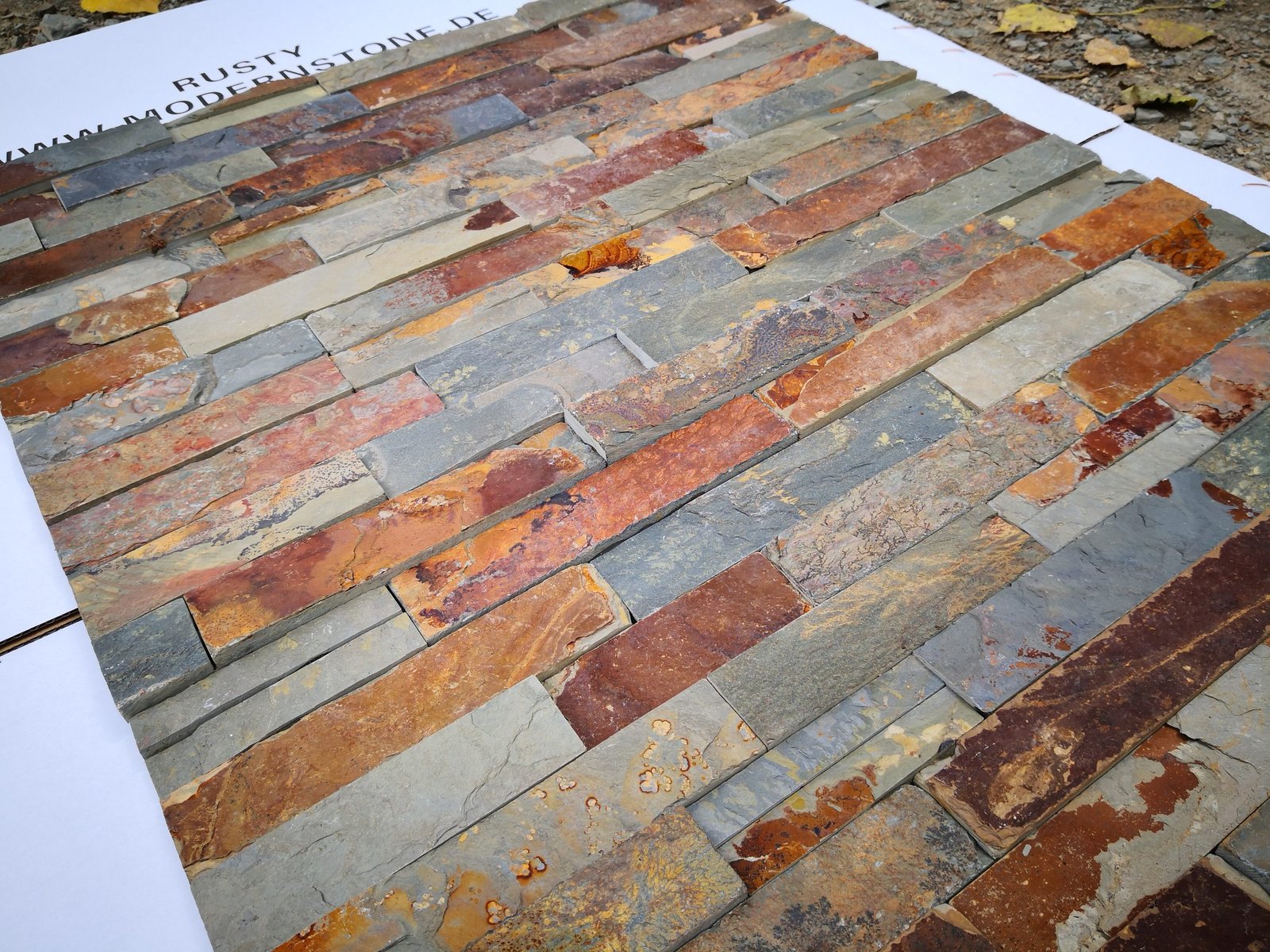
Slate forms from compressed clay and volcanic ash through low-grade metamorphism. Its characteristic foliation — the ability to split into thin, flat sheets — actually works in its favor for freeze-thaw resistance. The layered structure creates natural planes that shed surface water efficiently rather than trapping it.
Typical slate density ranges from 2,700–2,800 kg/m³ with water absorption between 0.4% and 2.0%. High-quality architectural-grade slate sits at the lower end of this range, making it highly resistant to frost damage. The Yixian County slate quarries that supply Top Stone Panels produce stone consistently in the 0.4%–1.2% absorption range, verified through routine quality testing.
Sandstone: Variable and Risk-Dependent
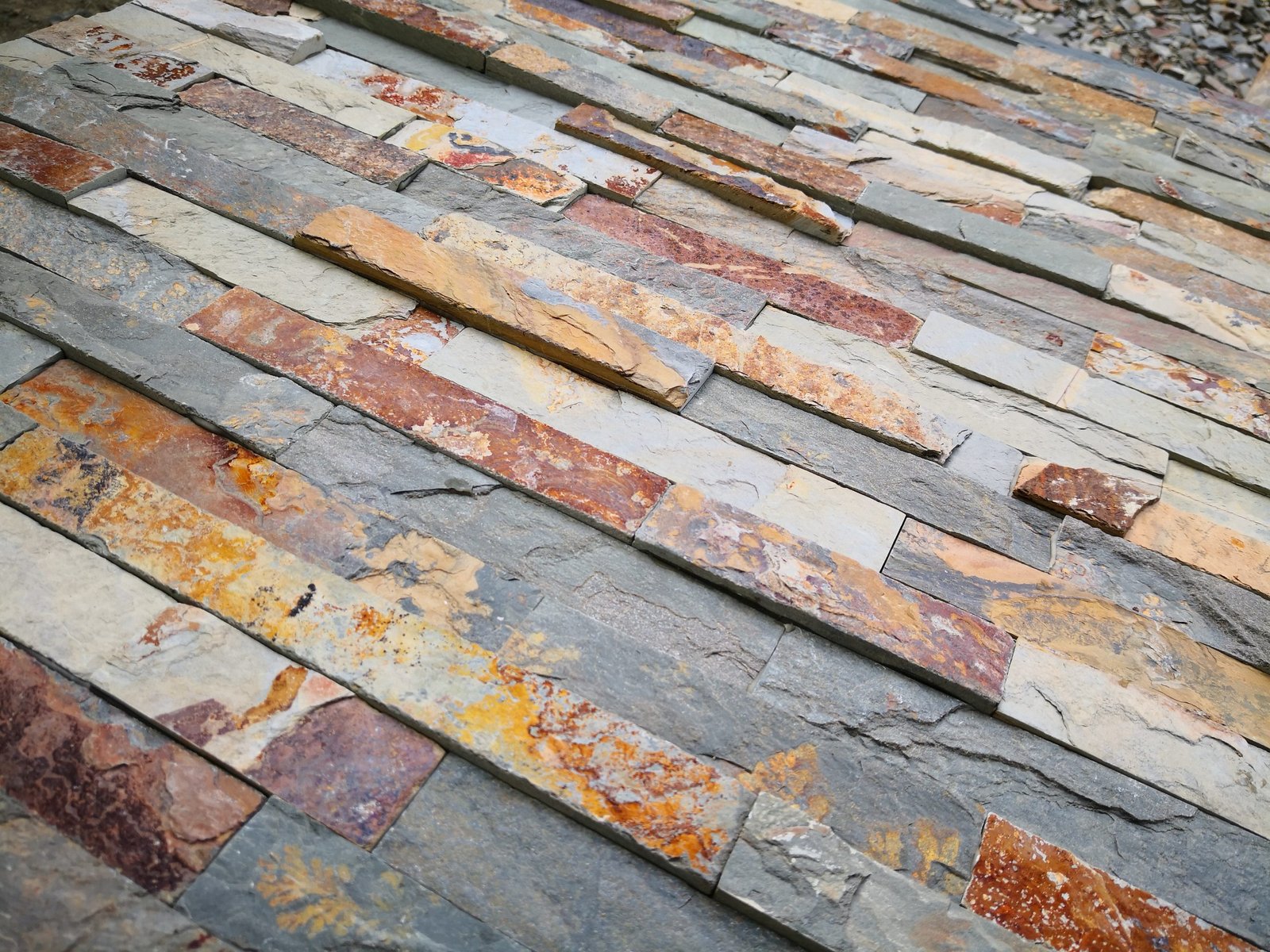
Sandstone is a sedimentary rock composed of cemented sand grains. Its porosity varies enormously depending on the degree of cementation and the mineral composition of the binding material. Some sandstones are remarkably dense with absorption below 2%; others are almost sponge-like at 8% or higher.
The inconsistency makes sandstone a risky choice for exterior cladding in freeze-thaw regions unless every batch is individually tested. A distributor who sources sandstone from three different quarries might receive material with absorption rates of 2%, 5%, and 7% — and only the first would perform reliably in Minnesota or Scandinavia.
Limestone: Generally Unsuitable for Frost Zones
Limestone forms from compressed marine sediments, primarily calcium carbonate. It tends toward higher porosity (3%–10% absorption) and is also vulnerable to chemical weathering from acid rain, which widens pore channels over time and makes freeze-thaw performance progressively worse.
Some dense limestones do perform adequately in mild frost conditions, but as a class, limestone is rarely specified for exterior cladding in severe freeze-thaw zones. Most architects working in cold climates exclude it from their specifications entirely.
Freeze-Thaw Performance at a Glance
| Stone Type | Typical Density (kg/m³) | Water Absorption | Freeze-Thaw Rating | Best Climate Fit |
|---|---|---|---|---|
| Quartzite | 2,650–2,750 | 0.1%–0.5% | Excellent | All climates including severe frost |
| Slate | 2,700–2,800 | 0.4%–2.0% | Excellent to Good | All climates including severe frost |
| Dense Sandstone | 2,200–2,600 | 1.0%–3.0% | Good (batch-dependent) | Moderate frost with verification |
| Soft Sandstone | 2,000–2,300 | 4.0%–8.0% | Poor | Frost-free climates only |
| Limestone | 2,300–2,700 | 3.0%–10.0% | Poor to Fair | Mild and frost-free climates |
The pattern is clear: quartzite and slate consistently outperform sedimentary stone in freeze-thaw conditions. This is why they dominate the natural stone cladding market in regions where winter durability is non-negotiable.
Key Metrics Specifiers Should Evaluate
When reviewing a stone panel test report for freeze-thaw suitability, four metrics tell the story.
Water absorption (ASTM C97): The cornerstone metric. Specified as a percentage of the stone’s dry weight. For exterior cladding in freeze-thaw regions, require less than 3% for quartzite and less than 2% for slate. These thresholds provide a substantial safety margin below the danger zone.
Density / specific gravity (ASTM C97): Measured alongside absorption. Higher density correlates with lower absorption and better freeze-thaw performance. Quartzite at 2,650+ kg/m³ and slate at 2,700+ kg/m³ are reliable benchmarks.
Flexural strength (ASTM C99): Measures the stone’s ability to resist bending forces. Important because freeze-thaw damage manifests partly through loss of flexural strength — each cycle weakens the internal structure. Specifiers should compare flexural strength before and after freeze-thaw cycling to assess degradation.
Compressive strength (ASTM C170): While less directly relevant to thin veneer panels, compressive strength indicates overall stone integrity. Dense, well-bonded stone scores high on both compressive and flexural tests.
For B2B buyers evaluating samples from potential suppliers, requesting these four test results is standard practice. Any reputable manufacturer — including Top Stone Panels, which operates a three-step quality control process from raw material selection through final inspection — can provide this data for every stone type they produce.
Regional Performance: Where Freeze-Thaw Resistance Matters Most
North American Climate Zones
Zones 5–7 (Minnesota, Wisconsin, Michigan, Colorado, Mountain States): These regions experience 100–150+ freeze-thaw cycles per year, with temperature swings of 30–40°C between daytime highs and nighttime lows during transition seasons. Only stone with water absorption below 2% should be specified for exterior cladding. Quartzite is the default choice; slate is a close second.
Zones 4–5 (Northeast, Mid-Atlantic): Moderate-to-severe freeze-thaw exposure with 60–100 cycles annually. Low-absorption stone (below 3%) performs reliably without special precautions. Sealing provides additional insurance but isn’t strictly necessary for dense quartzite or slate.
Zones 3–4 (Pacific Northwest, Coastal California): Milder winters with fewer freeze-thaw cycles. Most stone types perform adequately, but the wet climate means saturation risk is high. Proper drainage design matters as much as stone density in these regions.
European and International Markets
Scandinavia and the Baltics: Winters stretch from October through April with persistent sub-zero temperatures. Slate has a long tradition in Norwegian construction; quartzite veneer panels are gaining market share as a lighter-weight, faster-installation alternative that delivers equivalent freeze-thaw performance.
Alpine regions (Switzerland, Austria, Southern Germany): High altitude means extended freeze periods and aggressive thermal cycling. Stone cladding on commercial buildings must pass European EN 12371 freeze-thaw testing, which subjects specimens to up to 168 cycles depending on the declared frost resistance class.
Gulf States and Desert Climates: Freeze-thaw itself is irrelevant, but extreme thermal cycling — 50°C daytime to 10°C nighttime in desert environments — creates analogous expansion-contraction stress. Dense stone resists thermal expansion cracking just as effectively as it resists freeze-thaw damage. The same properties that protect a panel in Winnipeg protect it in Dubai.
How Factory Quality Control Protects Freeze-Thaw Performance
Freeze-thaw resistance starts at the quarry, not the fabrication shop. The geological origin of the raw material is the single largest determinant of density, and responsible manufacturers control this variable at the source.
Top Stone Panels operates from Yixian County, Hebei Province — a geological formation known for producing metamorphic slate and quartzite with consistently favorable density characteristics. With 18+ years of quarry management experience, the factory tests raw blocks using ultrasonic velocity measurement before they enter the production line. Sound wave speed through stone correlates directly with density and internal integrity; blocks with anomalous readings are excluded from exterior-grade production runs.
Beyond raw material selection, three manufacturing processes directly affect freeze-thaw performance in finished panels:
Thickness consistency. Panels with uneven thickness create stress concentration points where freeze-thaw damage initiates. Top Stone Panels uses infrared-guided CNC diamond cutting to maintain thickness tolerances of ±1mm or tighter across every panel in a production run. This precision means uniform structural performance across the entire facade.
Batch-specific vein selection. Stone from different veins within the same quarry can have meaningfully different absorption characteristics. The factory’s batch control protocol ensures that every container shipment contains panels from a single geological vein, eliminating the risk of mixed-density material creating uneven weathering patterns on a building facade.
Marine-grade epoxy bonding. For assembled panels where individual stone pieces are bonded to a backing mesh or cement board, the adhesive matters. Portland cement-based adhesives absorb moisture and can degrade through their own freeze-thaw cycles, eventually releasing the stone from its backing. Top Stone Panels uses marine-grade epoxy bond — the same adhesive chemistry used in boat construction — which maintains adhesion through repeated temperature cycling and resists moisture penetration at the bond line.
Installation Practices That Support Freeze-Thaw Durability
The best stone in the world fails if installed incorrectly. For exterior stone veneer in frost-prone climates, four installation principles protect against freeze-thaw damage regardless of stone type.
Drainage plane and ventilation gap. A drained and ventilated air cavity behind the stone veneer allows any water that penetrates the cladding to drain downward and exit through weep holes. Without this cavity, trapped water saturates both the stone and the substrate, creating maximum freeze-thaw stress. Most cladding failures in cold climates trace back to missing or compromised drainage planes.
Proper mortar and grout selection. Use polymer-modified, Type S mortar with low water absorption for stone veneer installation. Full mortar coverage behind each panel eliminates voids where water can collect and freeze. Joint treatment should be flush or slightly recessed, with no gaps that invite water entry. In freeze-thaw climates, some installers specify epoxy-based grout for its near-zero absorption, though polymer-modified cementitious grout performs well in most applications.
Flashing and weep holes. Metal or membrane flashing above windows, doors, and horizontal projections diverts water away from the stone. Weep holes at the base of the installation allow any trapped moisture to escape. These details are non-negotiable in freeze-thaw zones — they’re the difference between a facade that lasts 30 years and one that needs repair after three winters.
Sealing (when appropriate). Dense quartzite with absorption below 0.5% rarely needs sealing for freeze-thaw protection. However, a penetrating silane or siloxane sealer provides an additional moisture barrier and is recommended for installations in severe climates (Zone 6+) or where the stone will be exposed to de-icing salt spray at ground level. Always test sealer compatibility on a sample panel first — some sealers alter the stone’s surface appearance.
Freeze-Thaw Testing Standards Every B2B Buyer Should Know
ASTM C97 / C97M: Standard test method for absorption and bulk specific gravity of dimension stone. The foundational test — every exterior stone specification should require C97 results as a minimum.
ASTM C170 / C170M: Compressive strength test. Provides an indirect measure of stone density and internal integrity.
EN 12371: European standard for freeze-thaw resistance of natural stone. Specimens undergo a specified number of cycles (typically 48, 56, or 168) and are then tested for residual flexural strength. Stone that retains above 80% of its original strength after the full cycle count is classified as frost-resistant.
BS EN 14617-5: Tests flexural strength of agglomerated stone after freeze-thaw cycling. Relevant primarily for engineered stone products, but occasionally referenced when comparing natural and manufactured alternatives.
For B2B distributors building a product catalog for cold-climate markets, requiring ASTM C97 absorption data and EN 12371 freeze-thaw test results from every supplier is a minimum quality gate. Manufacturers who can’t provide these results — or whose results show absorption above 3% — should not be considered for exterior-grade inventory.
Frequently Asked Questions
What is the freeze-thaw cycle test for natural stone?
A freeze-thaw cycle test exposes saturated stone specimens to repeated cycles of freezing (typically at -20°C) and thawing (at 20°C). After a specified number of cycles — usually 48 to 168 depending on the standard — the stone is tested for changes in weight, appearance, and mechanical strength. The test simulates years of winter exposure in a compressed timeframe.
Does quartzite resist freeze-thaw damage better than slate?
Yes, marginally. Quartzite typically has water absorption below 0.5%, while slate ranges from 0.4% to 2.0%. Both materials are considered excellent for freeze-thaw resistance. The practical difference matters primarily in extreme climates (150+ cycles per year), where quartzite’s near-zero absorption provides an additional margin of safety.
Can I use sandstone for exterior cladding in cold climates?
Only with caution. Dense sandstone (absorption below 3%) from a verified quarry source can work in moderate freeze-thaw zones. However, the variability between sandstone types makes batch testing essential. Never assume all sandstone performs equally — always verify absorption data for the specific material in your shipment.
What water absorption rate is acceptable for exterior stone panels?
For freeze-thaw regions, specify below 3% for quartzite and below 2% for slate. These thresholds provide a comfortable safety margin. For frost-free climates, absorption up to 5% is generally acceptable, though lower is always better for long-term durability.
Is natural stone better than manufactured stone veneer in freeze-thaw conditions?
Generally yes. High-density natural stone (quartzite, slate) has water absorption below 2% and uniform internal structure. Manufactured stone veneer, made from Portland cement and lightweight aggregates, typically absorbs 5%–15% by weight and is inherently more vulnerable to freeze-thaw damage. The denser the material, the better it resists frost damage — and natural stone wins on density.
How often should stone panel suppliers test for freeze-thaw resistance?
Testing should be performed at least once per quarry source and repeated whenever the stone type or quarry vein changes. Best-practice manufacturers test quarterly or per production batch. Top Stone Panels’ three-step QC process includes absorption testing at the raw material stage, in-process inspection, and final pre-shipment verification.